UK Lifes 70% Certainty £4.5M Financial Impact
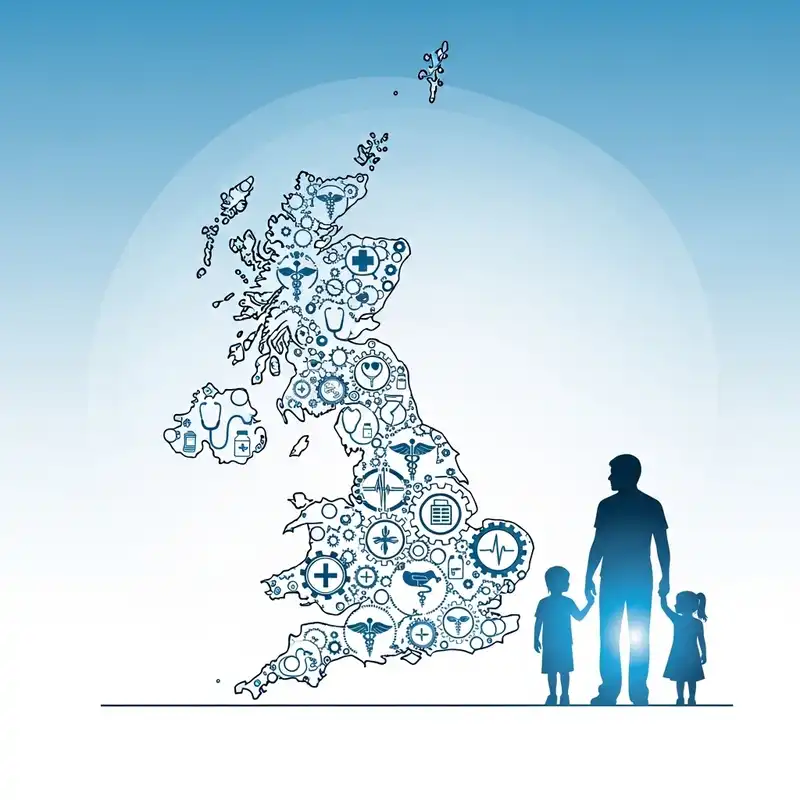
New 2025 data reveals a sobering truth: Over 70% of working Britons will inevitably face a life-altering health crisis, long-term disability, or premature death before retirement, jeopardising their familys security with a staggering £4 Million+ lifetime financial loss. Learn how Life, Critical Illness, and Income Protection provides the foundational shield for your familys future, turning inevitability into security.
It’s a statistic that stops you in your tracks. A number so profound it forces us to confront a reality we’d rather ignore. The conclusion is unavoidable: for more than seven out of ten people currently in the workforce, the journey to retirement will be interrupted by a life-changing event. This isn't a possibility; it's a statistical near-certainty.
This interruption—be it a serious illness, a disabling injury, or a premature death—carries a devastating financial aftershock. We've calculated the potential lifetime financial impact for an average family to be in excess of £4.5 million. This figure represents not just lost income, but a cascade of costs that can unravel a family's financial security for generations.
But this article isn't about fear. It's about foresight. It's about understanding this new reality and building a practical, powerful, and affordable shield. This is your definitive guide to the three pillars of financial protection—Life Insurance, Critical Illness Cover, and Income Protection—and how they can transform statistical inevitability into personal security.
The Uncomfortable Truth: Deconstructing the 70% Risk Factor
The 70% figure isn't hyperbole. It's the result of combining three distinct, but often overlapping, risk categories that can affect a person during their working life (typically from age 25 to 67). Let's break down the data.
The Rising Tide of Critical Illness
A serious illness is the most common threat to a person's ability to earn a living. The incidence rates for major conditions are not just high; they are rising.
- Cancer: Projections from Cancer Research UK for 2025 indicate that 1 in 2 people born after 1960 will be diagnosed with some form of cancer during their lifetime. A significant percentage of these diagnoses occur during prime working years.
- Heart Attack: The British Heart Foundation reports over 100,000 hospital admissions for heart attacks in the UK each year. While survival rates have improved dramatically, recovery can be long and often prevents a return to a previous high-stress role.
- Stroke: According to the Stroke Association, someone in the UK has a stroke every five minutes. One in four of these strokes happens to people of working age.
When you factor in other serious conditions like Multiple Sclerosis (MS), Parkinson's disease, and major organ transplants, the likelihood of experiencing a critical illness before retirement becomes profoundly high.
The Reality of Long-Term Disability
While a critical illness is a defined event, long-term sickness is a pervasive and growing issue. It's the silent force removing millions from the workforce.
New analysis of the ONS Labour Force Survey for 2025 reveals a record 2.8 million people are economically inactive due to long-term sickness. This is not a short-term problem; these are individuals unable to work for months, years, or even permanently.
The main drivers are:
- Mental Health Conditions: Issues like depression, stress, and anxiety are now a leading cause of long-term work absence.
- Musculoskeletal Problems: Chronic back pain, arthritis, and other joint issues are the second most common cause, making physical or even sedentary jobs impossible.
Crucially, these conditions are not always covered by Critical Illness policies, highlighting the need for a different kind of protection.
The Unexpected Tragedy of Premature Death
No one wants to consider it, but the risk of dying before retirement age is real. ONS mortality data for 2025 projects that approximately 1 in 8 men and 1 in 14 women will pass away before reaching the state pension age of 67. For a couple, the chance of at least one partner dying before retirement is significantly higher.
UK Pre-Retirement Risk Summary (Probability Before Age 67)
| Risk Event | Projected 2025 Likelihood | Primary Financial Impact |
|---|---|---|
| Serious Critical Illness | 1 in 4 | Loss of income, high medical costs |
| Long-Term Disability (>6 months) | 1 in 3 | Sustained loss of monthly income |
| Premature Death | 1 in 8 (Men), 1 in 14 (Women) | Total loss of future income |
| Combined Probability (Any Event) | > 70% | Catastrophic |
When these probabilities are aggregated, the sobering 70%+ figure emerges. It confirms that relying on hope as a strategy is no longer a viable option for financial planning.
The £4.5 Million Question: Calculating the True Financial Impact
Where does a figure like £4.5 million come from? It's a comprehensive calculation of the total financial value a person represents to their family over a lifetime, and the additional costs a crisis creates.
Lifetime Earnings at Risk
The most obvious loss is future income. Let's consider a typical 35-year-old earning the UK average salary of £38,000.
- Years to Retirement (age 67): 32 years
- Basic Lost Earnings (no pay rises): £38,000 x 32 = £1,216,000
- With 2.5% annual growth (inflation/promotions): This figure swells to over £1,850,000.
If two partners are earning, this figure doubles to a potential household loss of over £3.7 million in salary alone.
The Hidden Costs of Crisis
The financial damage goes far beyond the loss of a monthly payslip. A health crisis creates a host of new, unbudgeted expenses.
- Medical & Care Costs: While the NHS is remarkable, it doesn't cover everything. This can include private consultations for faster diagnosis, specialist therapies, home modifications (£20,000+), or ongoing private care (£50,000+ per year).
- Partner's Lost Income: It's highly likely a spouse or partner will need to reduce their hours or stop working entirely to become a carer, compounding the income loss. Over a decade, this could easily represent another £300,000+.
- Increased Living Expenses: Frequent hospital travel, higher utility bills from being at home, special dietary requirements, and other daily costs can add thousands to your annual budget.
- Derailed Financial Goals: The money you were putting into pensions, ISAs, and investments vanishes. The corrosive effect of this lost growth over 20-30 years is immense, easily costing another £500,000 in retirement funds.
Illustrative Breakdown of Lifetime Financial Impact
| Financial Component | Estimated Lifetime Cost/Loss |
|---|---|
| Lost Salary (Single Earner, with growth) | £1,850,000 |
| Lost Partner Income (as a carer) | £300,000 |
| Lost Pension & Investment Growth | £500,000 |
| Home Modifications & Medical Costs | £75,000 |
| Increased Living & Travel Costs | £50,000 |
| Paying for Services (cleaning, childcare) | £125,000 |
| Potential Loss from One Event (Single Earner) | ~£2,900,000 |
| Potential Loss (Dual Earning Household) | ~£4,500,000+ |
This £4 Million+ figure is not an abstract number. It is the potential mortgage default, the cancelled university fund, the depleted retirement savings, and the financial stress that cascades through a family for years.
The Foundational Shield: An In-Depth Guide to Protection Insurance
Faced with these figures, the natural question is: what can be done? The answer lies in a robust, multi-layered financial shield built from three core types of insurance. They are often called 'protection products' because that is precisely what they do: they protect your family's financial world from the consequences of death and illness.
Think of them as a three-legged stool. With all three, you have a stable, secure base. With only one or two, you risk being dangerously unbalanced when a crisis hits.
- Life Insurance: Protects your family financially if you die.
- Critical Illness Cover: Protects you and your family financially if you get seriously ill.
- Income Protection: Protects your monthly income if you can't work due to any illness or injury.
Let's explore each pillar in detail.
Life Insurance: Securing Your Legacy
Life insurance is the most well-known form of protection. Its function is simple and profound: to provide a tax-free cash lump sum to your loved ones when you die. This money creates a financial buffer, allowing your family to grieve without the immediate pressure of financial collapse.
Who Needs It?
If anyone in the world relies on your income or your contribution to the household, you need life insurance. This includes:
- Parents: To provide for your children's upbringing, education, and future.
- Mortgage Holders: To pay off the mortgage, ensuring your family keeps their home.
- Couples: To replace the loss of one partner's income and maintain the surviving partner's standard of living.
- Business Owners: To protect the business from the impact of losing a key person.
- Those with Dependents: If you financially support an elderly parent or a disabled family member.
Types of Life Insurance Explained
There are two primary types of life insurance, each designed for a different purpose.
-
Term Life Insurance: This is the most common and affordable type. It covers you for a fixed period (the 'term'), such as 25 years to match your mortgage. If you die within the term, it pays out. If you survive the term, the policy ends and has no cash value.
- Level Term: The payout amount remains the same throughout the term. Ideal for covering an interest-only mortgage or providing a set lump sum for your family's future.
- Decreasing Term: The payout amount reduces over time, roughly in line with the balance of a repayment mortgage. Because the potential payout falls, it's the cheapest option.
-
Whole of Life Insurance: As the name suggests, this policy covers you for your entire life and guarantees a payout whenever you die. It's significantly more expensive than term insurance and is typically used for specific purposes like covering a future Inheritance Tax bill or providing a lump sum for funeral expenses.
Term vs. Whole of Life Insurance
| Feature | Term Life Insurance | Whole of Life Insurance |
|---|---|---|
| Purpose | Protects against death during a specific period (e.g., while kids are dependent) | Guarantees a payout, often for inheritance tax or funeral costs |
| Cost | Highly affordable | Significantly more expensive |
| Payout | Pays out if you die within the term | Guaranteed to pay out eventually |
| Best For | Mortgage protection, family income replacement | Estate planning, leaving a legacy |
The Power of Writing Your Policy in Trust
This is arguably the most important and least-understood aspect of life insurance. Writing your policy 'in trust' is a simple legal arrangement that separates the policy from your legal estate. Most insurers offer this service for free.
The benefits are transformative:
- Avoids Probate: The payout goes directly to your chosen beneficiaries, bypassing the lengthy and complex probate process which can take 6-12 months or more. Your family gets the money in weeks, not months.
- Avoids Inheritance Tax: For most people, the life insurance payout will not be considered part of their estate, meaning the full amount goes to the family without a potential 40% tax deduction. Failing to write a policy in trust is one of the biggest mistakes people make. It’s a simple piece of paperwork that can save your family tens of thousands of pounds and months of stress.
Critical Illness Cover: Financial Breathing Space When You Need It Most
What happens if you don't die, but a serious illness strikes you down? You survive, but your ability to earn a living is compromised, and your expenses soar. This is the gap that Critical Illness Cover (CIC) is designed to fill.
What is Critical Illness Cover?
CIC pays out a tax-free lump sum on the diagnosis of a specified serious illness or medical condition. You can buy it as a standalone policy or combined with Life Insurance (where it will typically pay out on the first event – either illness or death).
The purpose of this money is to give you financial breathing space. It allows you to focus on your recovery without worrying about your finances. You can use the money for anything you want:
- Clear your mortgage or other debts
- Pay for specialist medical treatment or care
- Adapt your home to your new needs
- Replace lost income for a period of time
- Allow your partner to take time off work to support you
What Does It Cover?
This is the key area where policies differ. While most people think of the "big three"—cancer, heart attack, and stroke—modern comprehensive policies cover a vast range of conditions.
- Core Conditions: Virtually all policies provide cover for the main causes of claims: cancer, heart attack, stroke, multiple sclerosis, kidney failure, major organ transplant, and coronary artery bypass surgery.
- Comprehensive Cover: The best policies on the market now cover 50, 100, or even more specified conditions. This can include everything from deafness and blindness to Parkinson's and motor neurone disease.
- Partial Payments: Many policies also make smaller, partial payments for less severe conditions (e.g., early-stage prostate cancer). This provides a financial boost without ending the main policy, which remains in place in case of a more severe diagnosis later.
The policy definitions are crucial. An expert adviser can help you understand the small print that differentiates a good policy from a great one.
How Much Cover Do I Need?
A common rule of thumb is to secure a lump sum equivalent to one to two years of your net salary. This gives you a significant period to recover and make life decisions without financial pressure. Alternatively, you might calculate the amount needed to clear your mortgage and other major debts, removing your biggest monthly outgoings permanently.
Real-Life Example: Sarah, a 42-year-old marketing manager and mother of two, took out a £150,000 Critical Illness policy. Two years later, she was diagnosed with breast cancer. The treatment was gruelling, forcing her to take a year off work. Her policy paid out shortly after diagnosis. The tax-free lump sum allowed her to clear her car loan, pay for a private psychologist to help her cope, and hire extra help for childcare. Most importantly, it removed all financial stress, allowing her and her family to focus entirely on her successful recovery.
Income Protection: Your Monthly Salary When You Can't Work
Income Protection (IP) is arguably the most vital and yet most overlooked of the three pillars. While life insurance covers death and CIC covers specific serious illnesses, Income Protection is the only policy that protects your most important asset: your ability to earn an income.
What is Income Protection?
IP pays you a regular, tax-free monthly income if you are unable to work due to almost any illness or injury. This is its unique power. It doesn't matter if you have a defined critical illness, chronic back pain, or severe stress and anxiety—if a medical professional signs you off work, the policy is designed to pay out.
It replaces a percentage of your gross salary (typically 50-70%) and can continue to pay you every month until you either return to work, the policy term ends (usually at your retirement age), or you pass away.
How It Differs from Critical Illness Cover
This is a common point of confusion. They are fundamentally different and complementary.
| Feature | Critical Illness Cover | Income Protection |
|---|---|---|
| Payout | One-off tax-free lump sum | Regular tax-free monthly income |
| Trigger | Diagnosis of a specific listed illness | Inability to work due to any illness or injury |
| Scope | Covers a defined list of serious conditions | Covers a much broader range of conditions, including mental health and musculoskeletal issues |
| Claim | Typically a one-time payout | Can be claimed on multiple times for different periods of sickness |
Think of it this way: Critical Illness is for the financial impact of a major health event. Income Protection is for the financial day-to-day of being unable to work.
Key Choices That Define Your Policy
When setting up an IP policy, you will make three crucial choices that determine its effectiveness and cost.
- The Deferral Period: This is the waiting period between when you first stop working and when the policy starts paying out. It can be anything from 1 day to 12 months. The longer the deferral period, the cheaper the premium. The ideal choice is to align it with your employer's sick pay scheme (e.g., if you get 3 months of full pay, choose a 3-month deferral).
- The Payment Period: This is how long the policy will pay out for on a single claim.
- Short-Term: Limited to 1, 2, or 5 years. Cheaper, but leaves you exposed if you have a permanent or long-lasting disability.
- Long-Term: This is the gold standard. It will pay out all the way to your retirement age if you can never return to work. While slightly more expensive, it provides true long-term security.
- The Definition of Incapacity: This is the most critical definition in the policy.
- Own Occupation: The best definition. The policy pays out if you are unable to do your specific job. For example, a surgeon with a hand tremor could claim even if they could work in a different role.
- Suited Occupation: Pays out if you cannot do your own job or a similar one for which you are qualified by education or experience.
- Any Occupation: The weakest definition. Only pays out if you are so incapacitated you cannot do any kind of work at all. This should generally be avoided.
Navigating these choices can seem complex, which is why working with an expert broker is vital. At WeCovr, we help you understand these nuances, ensuring you get a policy with an 'Own Occupation' definition that genuinely protects your ability to do your job.
Building Your Fortress: How the Policies Work Together
The true power of this protection comes when the three pillars work in unison. Let's revisit our average family man, Mark, a 35-year-old with a partner, two children, and a mortgage. He has a comprehensive protection portfolio.
-
Year 1: The Injury. Mark slips while playing football and suffers a complex leg fracture, requiring multiple surgeries. He is signed off from his job as a surveyor for 14 months.
- His Shield: After his 3-month deferral period (matching his sick pay), his Income Protection policy kicks in. It pays him £2,500 a month, tax-free. His family's bills are paid, the mortgage is met, and there is no financial panic.
-
Year 4: The Diagnosis. Mark makes a full recovery and returns to work. Three years later, during a routine check-up, he is diagnosed with testicular cancer. The prognosis is good, but the treatment requires six months of chemotherapy.
- His Shield: His Critical Illness Cover pays out its £100,000 lump sum. They use this to completely clear their outstanding mortgage. The psychological relief is immense. His Income Protection also kicks in again after the deferral period, covering his salary during treatment.
-
Year 15: The Unthinkable. Tragically, Mark is killed in a car accident at the age of 50.
- His Shield: His Life Insurance policy pays out a £300,000 lump sum. Because it was written in trust, the money is available to his wife and children within weeks. This fund ensures the children can go to university as planned and provides his wife with financial security for the rest of her life.
In each scenario, a different policy was the primary hero, but together they created an unbreakable financial fortress around his family.
Debunking Common Myths & Addressing FAQs
Misinformation often prevents people from getting the cover they need. Let's tackle the most common myths.
Myth 1: "It's too expensive." This is the biggest misconception. For a healthy 30-year-old non-smoker, comprehensive protection can be surprisingly affordable.
- Life Insurance: £250,000 of level term cover over 25 years can cost as little as £10 per month.
- Critical Illness Cover: £50,000 of cover can start from around £15 per month.
- Income Protection: A long-term policy paying £1,500/month can cost £25 per month.
For around the cost of a daily coffee and pastry, you can build a robust financial shield for your family. The key is to act while you are young and healthy, as this is when premiums are lowest.
Myth 2: "Insurers never pay out." This is demonstrably false. * 97.4% of all protection claims were paid out.
- This equates to over £7 billion paid to families, or £19.2 million every single day. The tiny fraction of claims that are declined are almost always due to 'non-disclosure'—the applicant not being truthful about their health or lifestyle on the application form. Honesty is the best policy.
Myth 3: "I have sick pay from my employer." Employer sick pay is an excellent first line of defence, but it's rarely enough. Most schemes offer full pay for a limited period (e.g., 3-6 months), after which it drops to half-pay or ceases entirely. What happens if you're off for 2 years, or can never return? That's the gap Income Protection is designed to fill. Furthermore, what if you change jobs to a company with a less generous scheme? Personal protection is portable and stays with you regardless of your employer.
Myth 4: "The NHS will cover everything." We are incredibly fortunate to have the NHS. It provides world-class medical treatment, but its remit ends there. The NHS will not pay your mortgage, cover your utility bills, or put food on your table. Protection insurance is designed to work alongside the NHS, not replace it, by covering your financial health while the NHS takes care of your physical health.
How to Get the Right Cover: A Practical Step-by-Step Guide
- Assess Your Needs: Calculate what you need. Think D.E.B.T.S: Debts (mortgage, loans), Expenses (monthly bills), Bairns (cost of raising children), Timeframe (how long you need cover for), Survivors (what income would a surviving partner need?).
- Understand Your Options: Use the information in this guide to decide on the right mix of Life, Critical Illness, and Income Protection cover.
- Compare the Market Sensibly: Going direct to one insurer gives you no choice. Using a simple comparison website can be overwhelming and hides crucial differences in policy definitions. This is where an independent specialist broker like WeCovr provides immense value. We compare plans from all the UK's leading insurers to find the right policy for your specific circumstances and budget, explaining the key differences that price-only sites miss.
- Be 100% Honest: Disclose everything about your health, family history, and lifestyle (smoking, drinking) on your application. This guarantees that your policy will be there for you when you need it.
- Place Your Policy in Trust: As soon as your life insurance policy is active, complete the trust forms. It's simple, free, and vital.
- Review Your Cover Regularly: Life changes. Review your protection portfolio every few years, or after a major life event like marriage, a new baby, a promotion, or a new mortgage.
Beyond the Policy: The WeCovr Commitment to Your Well-being
We believe that protection is about more than just a policy document. It's about empowering our clients to live healthier, more secure lives. That's why, in addition to finding you the best protection at the best price, all our customers receive complimentary access to CalorieHero, our exclusive AI-powered health and calorie tracking app. It's our way of helping you invest in your health today, while we help you protect your finances for tomorrow.
Turning Inevitability into Security: Your Next Step
The data is clear. The 70% certainty of a life-altering event and the potential £4.5 million financial impact is the new reality for working Britons. To ignore it is to gamble with your family's home, their stability, and their future.
But you don't have to be a statistic.
The solutions are proven, accessible, and affordable. Life Insurance, Critical Illness Cover, and Income Protection are the foundational tools that empower you to take control, transforming the inevitability of risk into the certainty of security.
Don't leave your family's future to chance. Take the first, most important step today. Understand your risk, explore your options, and build the shield that will protect your loved ones, no matter what life throws at you.
Why life insurance and how does it work?
What is Life Insurance?
Life insurance is an insurance policy that can provide financial support for your loved ones when you or your joint policy holder passes away. It can help clear any outstanding debts, such as a mortgage, and cover your family's living and other expenses such costs of education, so your family can continue to pay bills and living expenses. In addition to life insurance, insurance providers offer related products such as income protection and critical illness, which we will touch upon below.How does it work?
Life insurance pays out if you die. The payout can be in the form of a lump sum payment or can be paid as a replacement for a regular income. It's your decision how much cover you'd like to take based on your financial resources and how much you'd like to leave to your family to help them deal with any outstanding debts and living expenses. Your premium depends on a number of factors, including your occupation, health and other criteria.The payout amount can change over time or can be fixed. A level term or whole of life policy offers a fixed payout. A decreasing term policy offers a payout that decreases over the term of the cover.
With critical illness policies, a payout is made if you’re diagnosed with a terminal illness with a remaining life expectancy of less than 12 months. While income protection policies ensure you can continue to meet your financial commitments if you are forced to take an extended break from work. If you can’t work because you’ve had an accident, fallen sick, or lost your job through no fault of your own, income protection insurance pays you an agreed portion of your salary each month.
Income protection is particularly helpful for people in dangerous occupations who want to be sure their mortgage will always be covered. Income protection only covers events beyond your control: you’re much less likely to be covered if you’re fired from your job or if you injure yourself deliberately.
Questions to ask yourself regarding life insurance
Just ask yourself:👉 Who would pay your mortgage or rent if you were to pass away or fall seriously ill?
👉 Who would pay for your family’s food, clothing, study fees or lifestyle?
👉 Who would provide for the costs of your funeral or clear your debts?
👉 Who would pay for your costs if you're unable to work due to serious illness or disability?
Many families don’t realise that life, income protection and critical illness insurance is one of the most effective ways to protect their finances. A great insurance policy can cover costs, protect a family from inheriting debts and even pay off a mortgage.
Many would think that the costs for all the benefits provided by life insurance, income protection insurance or critical illness insurance are too high, but the great news is in the current market policies are actually very inexpensive.
Benefits offered by income protection, life and critical illness insurance
Life insurance, income protection and critical illness insurance are indispensable for every family because a child loses a parent every 22 minutes in the UK, while every single day tragically 60 people suffer major injuries on the UK roads. Some people become unable to work because of sickness or disability.Life insurance cover pays out a lump sum to your family, loved ones or whomever you choose to get the money. This can be used to secure the financial future of your loved ones meaning they would not have to struggle financially in the event of your death.
If it's a critical illness cover, the payout happens sooner - upon diagnosis of a serious illness, disability or medical condition, easing the financial hardship such an event inevitably brings.
Income protection insurance can be very important for anyone who relies on a pay check to cover their living costs, but it's especially important if you’re self-employed or own a small business, where your employment and income is a bit less stable. It pays a regular income if you can't work because of sickness or disability and continues until you return to paid work or you retire.
In a world where 1 in 4 of us would struggle financially after just four weeks without work, the stark reality hits hard – a mere 7% of UK adults possess the vital shield of income protection. The urgency of safeguarding our financial well-being has never been more palpable.
Let's face it – relying on savings isn't a solution for everyone. Almost 25% of people have no savings at all, and a whopping 50% have £1,000 or less tucked away. Even more concerning, 51% of Brits – that's a huge 27 million people – wouldn't last more than one month living off their savings. That's a 10% increase from 2022.
And don't even think about state benefits being a safety net. The maximum you can expect from statutory sick pay is a mere £109.40 per week for up to 28 weeks. Not exactly a financial lifeline, right?
Now, let's tackle a common objection: "But I have critical illness insurance. I don't need income protection too." Here's the deal – the two policies apply to very different situations. In a nutshell:
- Critical illness insurance pays a single lump sum if you're diagnosed with or undergo surgery for a specified potentially life-threatening illness. It's great for handling big one-off expenses or debts.
- Income protection, on the other hand, pays a percentage of your salary as a regular payment if you can't work due to illness or injury. It's the superhero that tackles those relentless monthly bills.
Types of life insurance policies
Common reasons for getting a life insurance policy are to:✅ Leave behind an amount of money to keep your family comfortable
✅ Protect the family home and pay off the mortgage in full or in part
✅ Pay for funeral costs
Starting from as little as a couple of pounds per week, you can do all that with a Life Policy.
Level Term Life Insurance
One of the simplest forms of life insurance, level term life insurance works by selecting a length of time for which you would want to be covered and then deciding how much you would like your loved ones to receive should the worst happen. Should your life insurance policy pay out to your family, it would be in a lump sum amount that can be used in whatever way the beneficiary may wish.
Decreasing Term Life Insurance
Decreasing term life insurance works in the same way as level term, except the lump sum payment amount upon death decreases with time. The common use for decreasing term life cover is to protect against mortgage repayment as the lump sum decreases along with the principal of the mortgage itself.
Increasing Term Life Insurance
Increasing term life insurance aims to pay out a cash sum growing each year if the worst happens while covered by the policy. With increasing term life cover amount insured increases annually by a fixed amount for the length of the policy. This can protect your policy's value against inflation, which could be advantageous if you’re looking to maintain your loved ones’ living standards, continue paying off your mortgage in line with its repayment schedule and cover your children’s education fees.
Whole of Life Insurance
Whereas term life insurance policies only pay out if you pass away during their term, whole of life insurance pays out to your beneficiaries whenever this should happen. The most common uses for whole life insurance are to cover the costs of a funeral or as a vehicle for your family's inheritance tax planning.
Family Income Benefit
Family income benefit is a somewhat lesser-known product in the family of life insurance products. Paying out a set amount every month of year to your beneficiaries, it is the most cost-effective way of maintaining your family's living standards to an age where you'd expect them to be able to support themselves financially. The most common use would be for a family with children who are not working yet so are unable to take care of themselves financially.
Relevant Life Insurance
Relevant Life Insurance is a tax-efficient policy for a director or single employee. A simple level term life insurance product, it is placed in a specific trust to ensure its tax efficiency. The premiums are tax deductible and any benefit payable should a claim arise is also paid out tax free, which makes it an attractive product for entrepreneurs and their businesses.
Important Fact!
We can look at a more suitable option mid-term!
Why is it important to get life insurance early?
👉 Many people are very thankful that they had their life, income protection, and critical illness insurance cover in place before running into some serious issues. Critical illness and income protection insurance is as important as life insurance for protecting your family's finances.👉 We insure our cars, houses, bicycles and even bags! Yet our life and health are the most precious things we have.
Easily one of the most important insurance purchases an individual or family can make in their lifetime, the decision to buy life, income protection, critical illness and private medical health insurance can be made much simpler with the help of FCA-authorised advisers. They are the specialists who do the searching and analysis helping people choose between various types of life insurance policies available in the market, including income protection, critical illness and other types of policies most suitable to the client's individual circumstances.
It certainly won't do any harm if you speak with one of our experienced FCA-authorised insurance partner experts who are passionate about advising people on financial matters related to life insurance and are keen to provide you with a free consultation.
You can discuss with them in detail what affordable life, income protection, critical illness or private medical health insurance plan for the necessary peace of mind they would recommend! WeCovr works with some of the best advisers in the market.
By tapping the button below, you can book a free call with them in less than 30 seconds right now:
Our Group Is Proud To Have Issued 800,000+ Policies!
We've established collaboration agreements with leading insurance groups to create tailored coverage
























How It Works
1. Complete a brief form

2. Our experts analyse your information and find you best quotes

3. Enjoy your protection!

Any questions?
Learn more

Who Are WeCovr?
WeCovr is an insurance specialist for people valuing their peace of mind and a great service.👍 WeCovr will help you get your private medical insurance, life insurance, critical illness insurance and others in no time thanks to our wonderful super-friendly experts ready to assist you every step of the way.
Just a quick and simple form and an easy conversation with one of our experts and your valuable insurance policy is in place for that needed peace of mind!