UK 2025 Caregiving Shock: 1 in 4 Families Face £500k Costs
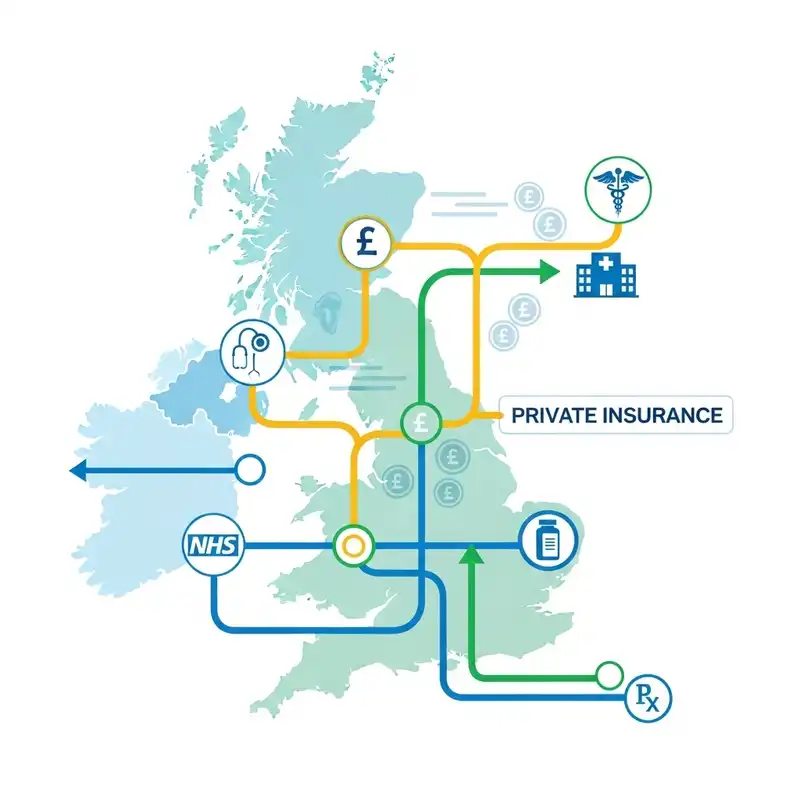
UK 2025 Shock: One in Four Families Face a Major Caregiving Role Before Retirement – Is Your LCIIP Shield Protecting Against the Staggering £500,000+ Lifetime Cost?
UK 2025 Shock: 1 in 4 Families Face a Major Caregiving Role Before Retirement – Is Your LCIIP Shield Protecting Against the £500,000+ Lifetime Cost?
A quiet crisis is unfolding in homes across the United Kingdom. It doesn't make the nightly news, but its impact is profound, reshaping family dynamics, careers, and finances. New analysis based on ONS and Carers UK data projects a startling reality for 2025: one in every four UK households will find themselves taking on a significant, often unexpected, caregiving role for a loved one before they reach retirement age.
This isn't a distant problem for our later years; it's happening now, to people in their 30s, 40s, and 50s. The "sandwich generation" is no longer a niche term but a widespread reality, as millions juggle the needs of ageing parents, a partner with a sudden health crisis, or a child with a serious illness, all while trying to maintain their own careers and financial futures.
The emotional toll is immense, but the financial devastation is often the untold story. The lifetime cost of becoming a family carer can easily exceed £500,000 when you factor in lost earnings, sacrificed pension contributions, and direct care expenses.
This article is your definitive guide to understanding this looming challenge and, more importantly, how to build a robust financial defence. We will explore the true cost of caregiving and reveal how a powerful combination of Life Insurance, Critical Illness Cover, and Income Protection (LCIIP) can act as a comprehensive shield, protecting your family from the financial fallout of a health crisis.
The Unseen Crisis: Britain's Looming Caregiving Challenge
The statistics paint a stark picture of a nation under pressure. The convergence of an ageing population, medical advancements that help people live longer with serious conditions, and stretched public services has created a perfect storm.
- The Scale of the Issue: Projections for 2025 suggest that over 8 million people in the UK will be providing unpaid care, a significant increase driven by post-pandemic health trends and demographic shifts.
- The Working Carer: According to Carers UK, a staggering 1 in 7 people in the workforce are currently juggling work and care. This often leads to a painful choice: reduce hours, turn down promotions, or leave the workforce entirely.
- The Financial Sacrifice: Research from the University of Sheffield estimates that the economic contribution of unpaid carers in the UK is a colossal £162 billion a year – that's the equivalent of a second NHS. This is value that comes directly out of carers' own pockets and potential earnings.
For millions, a single phone call—a diagnosis, an accident, a sudden downturn in a parent's health—is the trigger. Overnight, life plans are upended. The focus shifts from saving for retirement to managing medication schedules, from career progression to hospital appointments. Without a financial safety net, this noble act of love can become a pathway to poverty.
Deconstructing the £500,000+ Caregiving Cost: A Financial Reality Check
Where does a figure like £500,000 come from? It’s not just about buying medical supplies. The true cost is a combination of direct, out-of-pocket expenses and the far larger, often devastating, indirect costs of lost income and financial opportunity.
Direct Costs: The Immediate Financial Drain
These are the tangible expenses that begin to mount almost immediately after a caregiving journey begins. While some costs may be covered or subsidised by the NHS or local authorities, many families face significant shortfalls.
| Direct Cost Item | Average Estimated Cost | Notes |
|---|---|---|
| Home Adaptations | £5,000 - £40,000+ | Stairlift (£2k-£5k), wet room (£5k-£10k), ramps, widened doors. |
| Specialist Equipment | £1,000 - £15,000 | Hoists, profiling beds, wheelchairs, communication aids. |
| Private Domiciliary Care | £25 - £35 per hour | For respite or specialist tasks, costs can quickly reach £1,000+ a month. |
| Travel & Transport | £50 - £200+ per month | Fuel for hospital visits, adapted vehicles, taxis. |
| Medical Supplies | £30 - £150+ per month | Specialist nutritional supplements, continence products, prescriptions. |
| Increased Household Bills | £40 - £100+ per month | Higher heating for someone less mobile, running medical equipment. |
These costs alone can drain tens of thousands of pounds from a family's savings in the first few years. But they are merely the tip of the iceberg.
Indirect Costs: The Life-Altering Financial Hit
The most significant financial damage isn't what you spend, but what you fail to earn. This is the financial engine that drives the total cost towards and beyond the half-a-million-pound mark over a decade or more.
1. Lost Earnings & Career Derailment
This is the largest and most damaging component. When a person reduces their hours or leaves their job to care for a loved one, the financial consequences are immediate and long-lasting.
- A 2025 Reality: Projections indicate that over 600 people a day will be forced to leave their job to provide unpaid care. For women, the impact is disproportionately severe.
Let's consider a realistic example:
Meet Rebecca, a 45-year-old Senior Project Manager earning £60,000 a year. Her husband, Tom, suffers a debilitating stroke. Rebecca decides she has no choice but to leave her job to become his full-time carer.
- Immediate Income Loss: Her £60,000 salary vanishes. The family's household income is instantly halved, or worse.
- Ten-Year Projection: Assuming her salary would have increased by a modest 2% a year, over the next decade, Rebecca will have sacrificed over £650,000 in gross income.
- Career Trajectory: She also loses out on potential promotions, bonuses, and the ability to re-enter the workforce at the same level later in life. The "career gap" penalty is severe.
2. The Pension Catastrophe
The hidden time bomb within the caregiving crisis is the long-term impact on retirement savings. When you stop working, your pension contributions stop too.
- Employer Contributions Vanish: For someone earning £60,000, they could be losing out on around £4,800 a year in employer pension contributions (assuming a typical 8% contribution).
- The Power of Compounding Lost: Over 10 years, that's £48,000 in lost contributions. With compound growth (assuming 5% annually), the total loss to her pension pot could easily exceed £65,000.
- A Bleak Retirement: For many carers, the result is a retirement funded solely by the State Pension, leading to a drastically reduced standard of living in their old age.
3. The Toll on Health and Wellbeing
The stress, anxiety, and physical strain of being a full-time carer are well-documented. A 2024 study by Age UK highlighted that 70% of older carers say their health has suffered as a result of their caring duties. This leads to further indirect costs:
- Increased personal medical expenses.
- The need for therapy or mental health support.
- Reduced capacity to look after one's own health, leading to future problems.
When you combine a decade of lost £60,000+ earnings, a £65,000+ hole in your pension, and tens of thousands in direct costs, the £500,000+ figure becomes not just plausible, but for many, a conservative estimate.
The Government Safety Net: Is It Enough?
"But surely the government provides support?" is a common and understandable question. While there is a system of benefits in place, it was not designed to replace a full-time income or cover the extensive costs we've outlined.
The primary support for carers is the Carer's Allowance.
- The Benefit: As of 2024/25, this is a taxable benefit of £81.90 per week.
- The Catch: To be eligible, you must provide at least 35 hours of care per week and, crucially, you cannot earn more than £151 per week after tax and expenses.
This earnings cap means you cannot work more than a few hours a week at minimum wage before you lose the entire benefit. It forces people into a devastating financial choice.
| Financial Support Comparison | | :--- | :--- | | Maximum Annual Carer's Allowance | £4,258 | | Minimum Lost Salary (e.g., £35k role) | -£35,000 | | Annual Financial Deficit | -£30,742 |
Other benefits like Personal Independence Payment (PIP) or Attendance Allowance are paid to the person with the disability to help with their costs of living, not to the carer to replace their income.
The Verdict: The state safety net is a cushion, not a mattress. It can help with some minor weekly expenses, but it comes nowhere close to plugging the financial abyss created by leaving a career. Relying on it as your sole plan is a recipe for financial hardship.
Forging Your LCIIP Shield: A Three-Pronged Defence Strategy
If the state cannot protect you, you must protect yourself. This is where a personal insurance strategy becomes not a luxury, but an essential component of modern financial planning. The "LCIIP Shield" – Life Insurance, Critical Illness Cover, and Income Protection – provides a powerful, multi-layered defence against the financial consequences of a health crisis striking you or your family.
1. Income Protection (IP): The Bedrock of Financial Stability
Often misunderstood, Income Protection is arguably the most important financial product you can own during your working life.
What it is: A policy that pays you a regular, tax-free monthly income if you are unable to work due to any illness or injury. It continues to pay out until you can return to work, your policy term ends (usually at retirement age), or you pass away.
How it protects you in a caregiving scenario:
- Direct Protection: If you suffer from stress, burnout, depression, or a physical injury as a result of your caregiving duties, and this prevents you from doing your job, your IP policy could be triggered. It protects the protector.
- Indirect Protection: Its primary role is to protect your family from a "double disaster". Imagine you are the primary carer for your elderly mother, and you also get sick or injured and can't work. Without IP, your household income would be wiped out. With IP, your income continues, ensuring bills are paid and financial pressure doesn't force a family crisis.
It is the foundation upon which all other financial security is built. It ensures your mortgage, bills, and lifestyle are maintained, no matter what health challenges you face personally.
2. Critical Illness Cover (CIC): The Financial Fire Extinguisher
This is the part of the shield that directly addresses the huge, immediate costs associated with a serious diagnosis.
What it is: A policy that pays out a tax-free lump sum if you are diagnosed with one of a list of specified serious conditions (e.g., most cancers, heart attack, stroke, multiple sclerosis).
How it acts as a caregiver's financial superpower:
- If you get sick: The lump sum gives you choices. You could use it to clear your mortgage, removing your biggest monthly expense. You could pay for private medical treatment to speed up recovery. You could adapt your home. Crucially, it could provide a fund to pay for professional care, so your partner doesn't have to sacrifice their career to look after you.
- If your partner gets sick: A joint policy or two separate policies provide the same function. The payout can replace the ill partner's income or allow the healthy partner to take a step back from work to provide care without financial panic.
- Children's Critical Illness Cover: This is a vital and often-included benefit. If your child is diagnosed with a serious illness, the payout (typically £25,000 to £50,000) can be a financial lifeline. It allows one parent to stop working for a year or more to focus entirely on their child's care and treatment, without having to worry about the mortgage. This directly prevents the career sacrifice that starts the downward financial spiral.
How a CIC Payout Could Be Used (Example: £200,000 Payout)
| Use of Funds | Amount | Impact |
|---|---|---|
| Clear Mortgage Remainder | £120,000 | Eliminates the largest monthly bill, freeing up cash flow. |
| Home Adaptations | £30,000 | A downstairs wet room and stairlift are installed immediately. |
| Income Replacement Fund | £40,000 | Allows a partner to reduce work to 3 days a week for 2 years. |
| Contingency/Wellbeing | £10,000 | Funds for therapy, respite care, or a much-needed break. |
3. Life Insurance: The Ultimate Legacy of Care
Life insurance provides the final layer of protection, ensuring that those who depend on you are cared for, even if you're no longer there.
What it is: A policy that pays a lump sum to your loved ones upon your death.
How it relates to caregiving:
- Securing a Dependant's Future: If you are the primary carer for a disabled child or partner, a life insurance payout can fund their ongoing professional care for the rest of their life. It ensures your death doesn't trigger a care crisis for them.
- Replacing a Breadwinner's Income: If the main earner in the family passes away, the payout replaces their lost income, allowing the surviving partner to manage financially and, if necessary, step into a caregiving role for children or parents without financial ruin.
Crucially, for all life and critical illness policies, it is vital to have them written in trust. This simple legal step ensures the payout goes directly to your chosen beneficiaries, bypassing lengthy probate processes and potentially avoiding a 40% Inheritance Tax bill.
The Modern LCIIP Policy: More Than Just a Cheque
In 2025, the best insurance policies offer far more than a financial payout. Insurers recognise that during a health crisis, practical and emotional support is just as valuable. These "value-added services" are often available from day one of your policy, at no extra cost.
- 24/7 Virtual GP: Get a GP appointment via your phone within hours, not weeks. Perfect for a stressed carer worried about their own health or seeking quick advice for their loved one.
- Mental Health Support: Access to a set number of counselling or therapy sessions per year. This is an invaluable tool for carers dealing with the immense psychological strain of their role.
- Second Medical Opinion Services: If you or a family member receives a life-changing diagnosis, you can have the case reviewed by a world-leading specialist to confirm the diagnosis and explore treatment options.
- Rehabilitation Support: Practical help, from physiotherapy to occupational therapy, designed to get you back on your feet and back to work faster after an illness or injury.
Here at WeCovr, we don't just find you the cheapest policy; we prioritise plans that include these vital wrap-around support services. We understand that practical help during a crisis is a game-changer. As part of our commitment to our customers' long-term wellbeing, we also provide complimentary access to our AI-powered calorie tracking app, CalorieHero. We believe in proactive health management, helping you and your family stay healthier for longer.
Case Study: The Thompson Family - A Tale of Two Futures
To see the power of an LCIIP shield in action, let's look at a fictional family facing the same crisis but with two different outcomes. Mark, 48, is an engineer, and his wife Lisa, 46, is a primary school teacher. They have two teenage children.
Scenario 1: The Thompsons Without an LCIIP Shield
Mark has a sudden, severe stroke, leaving him with significant mobility and speech problems.
- The Aftermath: Lisa is forced to take unpaid leave, which eventually leads to her giving up her £38,000-a-year teaching job to provide 24/7 care. Their household income is slashed by 40%.
- The Financial Spiral: Their £50,000 in savings is quickly eroded by the £25,000 cost of adapting their home. They have to remortgage to release equity for day-to-day living costs.
- The Future: Lisa's pension contributions cease. The family cancels holidays and cuts back on all non-essentials. The stress on Lisa and the children is immense. Their dream of a comfortable retirement is replaced by the fear of future financial insecurity. The lifetime financial cost to their family will likely exceed £600,000.
Scenario 2: The Thompsons With a WeCovr-Sourced LCIIP Shield
Mark and Lisa took out a comprehensive plan five years earlier. It includes joint Life & Critical Illness Cover for £150,000 and separate Income Protection for Mark.
- The Aftermath: Mark's stroke triggers their Critical Illness policy. Within weeks, £150,000 is paid directly to them, tax-free.
- The Financial Response: They use the money strategically:
- £80,000 clears the remaining balance on their mortgage. Their biggest monthly outgoing is gone.
- £25,000 pays for immediate, high-quality home adaptations without touching their savings.
- £45,000 is placed in a separate account. This allows Lisa to reduce her work to a 2-day week, keeping her foot in the door at school and maintaining her pension, while using the fund to top up their income.
- The Added Support: They use the insurer's included services to get a second medical opinion on Mark's rehabilitation plan and access therapy sessions for Lisa to help her cope with the stress.
- The Future: The family is financially stable. Their savings are intact. Lisa maintains her career and pension. The situation is still emotionally challenging, but the crippling financial pressure has been removed. They are in control of their future.
How to Build Your Own LCIIP Shield: A Practical Guide
Taking action can feel daunting, but it's a straightforward process when broken down into steps.
-
Assess Your Reality: Don't bury your head in the sand. Sit down and calculate your family's essential monthly outgoings (mortgage/rent, bills, food, travel). How long could you sustain these if your income stopped tomorrow? Who depends on you? Do you have ageing parents who might need care in the future?
-
Understand the Components: Remember the role of each part of the shield. Income Protection is for your monthly bills. Critical Illness Cover is for the big, one-off costs and adaptations. Life Insurance is for the long-term future of your dependents.
-
Don't Go It Alone - The Value of Expert Advice: A price comparison website can give you a quote, but it can't give you advice. It won't tell you if a policy's definition of "stroke" is robust, or if another insurer is better for your specific health or occupation.
This is where a specialist broker like WeCovr is invaluable. We provide the expert guidance that comparison sites lack. Our role is to:
- Listen: We take the time to understand your unique family situation, budget, and concerns.
- Search the Market: We compare plans from all the UK's leading insurers, including Aviva, Legal & General, Royal London, and Zurich, to find the right fit.
- Translate the Jargon: We explain the complex terms and conditions in plain English.
- Handle the Application: We help you through the application process, ensuring full and proper disclosure to prevent problems at the point of claim.
- Provide Trust Guidance: We provide the forms and guidance to place your policy in trust, ensuring your family gets the money quickly and tax-efficiently.
-
Review and Adapt: Your protection needs aren't static. Getting married, having children, taking on a bigger mortgage, or changing jobs are all key moments to review your cover. A quick check-in every 3-5 years ensures your shield remains strong enough for your life's journey.
Frequently Asked Questions (FAQ)
Q: Isn't this type of insurance really expensive? A: The cost is relative to the risk it covers. For a healthy 35-year-old, a comprehensive LCIIP package can cost less than a daily cup of coffee. The younger and healthier you are when you take it out, the cheaper it is. The real question is: can you afford not to have it? The cost of a few pounds a day pales in comparison to the £500,000+ cost of being unprotected.
Q: I'm self-employed. Is Income Protection even more important for me? A: Absolutely. If you're self-employed, you have no sick pay from an employer to fall back on. You are your entire financial safety net. Income Protection is a non-negotiable tool to protect your business and your family's finances.
Q: What if I have a pre-existing medical condition? A: It's still possible to get cover. You must disclose it on your application. Some insurers may place an exclusion on that specific condition or increase the premium, but others may offer standard terms. This is where a broker is essential, as we know which insurers are more sympathetic to certain conditions.
Q: Does Critical Illness Cover include my children automatically? A: Most comprehensive policies do, typically covering them from birth up to age 18 or 21. The level of cover is usually a percentage of the parent's cover (e.g., 50% up to a maximum of £25,000). It's a crucial benefit to check for.
Q: What's the difference between Terminal Illness Benefit and Critical Illness Cover? A: They are very different. Terminal Illness Benefit is usually included with Life Insurance and pays out the death benefit early if you are diagnosed with a condition that is expected to lead to death within 12 months. Critical Illness Cover pays out on diagnosis of a specified condition, from which you may make a full recovery. You can live for decades after a critical illness diagnosis.
Q: Why use a broker like WeCovr instead of going direct to an insurer? A: Going direct means you only see one company's products. Using a broker gives you a view of the whole market, ensuring you get the best policy, not just the one an insurer wants to sell you. We work for you, not the insurance company. We provide impartial advice, handle the complex administration, and offer support at the point of claim – all for no extra fee.
From Unseen Risk to Financial Certainty
The statistics are not meant to scare, but to prepare. The 1-in-4 chance of becoming a carer before retirement is a defining challenge of our time, with the potential to derail the financial futures of millions of unprepared families.
Relying on hope or a limited state safety net is no longer a viable strategy. The financial consequences—lost income, depleted savings, and ruined retirement plans—are too severe to ignore.
The solution is to take control. By building your own LCIIP shield, you transform an unseen risk into a manageable one. You create a fortress around your family's finances, giving you the freedom to provide care out of love and choice, not financial necessity.
Don't wait for a crisis to reveal the gaps in your financial plan. Take the first step today to protect your income, your home, your family, and your future. It is the most profound act of care you can provide.
Why life insurance and how does it work?
What is Life Insurance?
Life insurance is an insurance policy that can provide financial support for your loved ones when you or your joint policy holder passes away. It can help clear any outstanding debts, such as a mortgage, and cover your family's living and other expenses such costs of education, so your family can continue to pay bills and living expenses. In addition to life insurance, insurance providers offer related products such as income protection and critical illness, which we will touch upon below.How does it work?
Life insurance pays out if you die. The payout can be in the form of a lump sum payment or can be paid as a replacement for a regular income. It's your decision how much cover you'd like to take based on your financial resources and how much you'd like to leave to your family to help them deal with any outstanding debts and living expenses. Your premium depends on a number of factors, including your occupation, health and other criteria.The payout amount can change over time or can be fixed. A level term or whole of life policy offers a fixed payout. A decreasing term policy offers a payout that decreases over the term of the cover.
With critical illness policies, a payout is made if you’re diagnosed with a terminal illness with a remaining life expectancy of less than 12 months. While income protection policies ensure you can continue to meet your financial commitments if you are forced to take an extended break from work. If you can’t work because you’ve had an accident, fallen sick, or lost your job through no fault of your own, income protection insurance pays you an agreed portion of your salary each month.
Income protection is particularly helpful for people in dangerous occupations who want to be sure their mortgage will always be covered. Income protection only covers events beyond your control: you’re much less likely to be covered if you’re fired from your job or if you injure yourself deliberately.
Questions to ask yourself regarding life insurance
Just ask yourself:👉 Who would pay your mortgage or rent if you were to pass away or fall seriously ill?
👉 Who would pay for your family’s food, clothing, study fees or lifestyle?
👉 Who would provide for the costs of your funeral or clear your debts?
👉 Who would pay for your costs if you're unable to work due to serious illness or disability?
Many families don’t realise that life, income protection and critical illness insurance is one of the most effective ways to protect their finances. A great insurance policy can cover costs, protect a family from inheriting debts and even pay off a mortgage.
Many would think that the costs for all the benefits provided by life insurance, income protection insurance or critical illness insurance are too high, but the great news is in the current market policies are actually very inexpensive.
Benefits offered by income protection, life and critical illness insurance
Life insurance, income protection and critical illness insurance are indispensable for every family because a child loses a parent every 22 minutes in the UK, while every single day tragically 60 people suffer major injuries on the UK roads. Some people become unable to work because of sickness or disability.Life insurance cover pays out a lump sum to your family, loved ones or whomever you choose to get the money. This can be used to secure the financial future of your loved ones meaning they would not have to struggle financially in the event of your death.
If it's a critical illness cover, the payout happens sooner - upon diagnosis of a serious illness, disability or medical condition, easing the financial hardship such an event inevitably brings.
Income protection insurance can be very important for anyone who relies on a pay check to cover their living costs, but it's especially important if you’re self-employed or own a small business, where your employment and income is a bit less stable. It pays a regular income if you can't work because of sickness or disability and continues until you return to paid work or you retire.
In a world where 1 in 4 of us would struggle financially after just four weeks without work, the stark reality hits hard – a mere 7% of UK adults possess the vital shield of income protection. The urgency of safeguarding our financial well-being has never been more palpable.
Let's face it – relying on savings isn't a solution for everyone. Almost 25% of people have no savings at all, and a whopping 50% have £1,000 or less tucked away. Even more concerning, 51% of Brits – that's a huge 27 million people – wouldn't last more than one month living off their savings. That's a 10% increase from 2022.
And don't even think about state benefits being a safety net. The maximum you can expect from statutory sick pay is a mere £109.40 per week for up to 28 weeks. Not exactly a financial lifeline, right?
Now, let's tackle a common objection: "But I have critical illness insurance. I don't need income protection too." Here's the deal – the two policies apply to very different situations. In a nutshell:
- Critical illness insurance pays a single lump sum if you're diagnosed with or undergo surgery for a specified potentially life-threatening illness. It's great for handling big one-off expenses or debts.
- Income protection, on the other hand, pays a percentage of your salary as a regular payment if you can't work due to illness or injury. It's the superhero that tackles those relentless monthly bills.
Types of life insurance policies
Common reasons for getting a life insurance policy are to:✅ Leave behind an amount of money to keep your family comfortable
✅ Protect the family home and pay off the mortgage in full or in part
✅ Pay for funeral costs
Starting from as little as a couple of pounds per week, you can do all that with a Life Policy.
Level Term Life Insurance
One of the simplest forms of life insurance, level term life insurance works by selecting a length of time for which you would want to be covered and then deciding how much you would like your loved ones to receive should the worst happen. Should your life insurance policy pay out to your family, it would be in a lump sum amount that can be used in whatever way the beneficiary may wish.
Decreasing Term Life Insurance
Decreasing term life insurance works in the same way as level term, except the lump sum payment amount upon death decreases with time. The common use for decreasing term life cover is to protect against mortgage repayment as the lump sum decreases along with the principal of the mortgage itself.
Increasing Term Life Insurance
Increasing term life insurance aims to pay out a cash sum growing each year if the worst happens while covered by the policy. With increasing term life cover amount insured increases annually by a fixed amount for the length of the policy. This can protect your policy's value against inflation, which could be advantageous if you’re looking to maintain your loved ones’ living standards, continue paying off your mortgage in line with its repayment schedule and cover your children’s education fees.
Whole of Life Insurance
Whereas term life insurance policies only pay out if you pass away during their term, whole of life insurance pays out to your beneficiaries whenever this should happen. The most common uses for whole life insurance are to cover the costs of a funeral or as a vehicle for your family's inheritance tax planning.
Family Income Benefit
Family income benefit is a somewhat lesser-known product in the family of life insurance products. Paying out a set amount every month of year to your beneficiaries, it is the most cost-effective way of maintaining your family's living standards to an age where you'd expect them to be able to support themselves financially. The most common use would be for a family with children who are not working yet so are unable to take care of themselves financially.
Relevant Life Insurance
Relevant Life Insurance is a tax-efficient policy for a director or single employee. A simple level term life insurance product, it is placed in a specific trust to ensure its tax efficiency. The premiums are tax deductible and any benefit payable should a claim arise is also paid out tax free, which makes it an attractive product for entrepreneurs and their businesses.
Important Fact!
We can look at a more suitable option mid-term!
Why is it important to get life insurance early?
👉 Many people are very thankful that they had their life, income protection, and critical illness insurance cover in place before running into some serious issues. Critical illness and income protection insurance is as important as life insurance for protecting your family's finances.👉 We insure our cars, houses, bicycles and even bags! Yet our life and health are the most precious things we have.
Easily one of the most important insurance purchases an individual or family can make in their lifetime, the decision to buy life, income protection, critical illness and private medical health insurance can be made much simpler with the help of FCA-authorised advisers. They are the specialists who do the searching and analysis helping people choose between various types of life insurance policies available in the market, including income protection, critical illness and other types of policies most suitable to the client's individual circumstances.
It certainly won't do any harm if you speak with one of our experienced FCA-authorised insurance partner experts who are passionate about advising people on financial matters related to life insurance and are keen to provide you with a free consultation.
You can discuss with them in detail what affordable life, income protection, critical illness or private medical health insurance plan for the necessary peace of mind they would recommend! WeCovr works with some of the best advisers in the market.
By tapping the button below, you can book a free call with them in less than 30 seconds right now:
Our Group Is Proud To Have Issued 800,000+ Policies!
We've established collaboration agreements with leading insurance groups to create tailored coverage
























How It Works
1. Complete a brief form

2. Our experts analyse your information and find you best quotes

3. Enjoy your protection!

Any questions?
Learn more

Who Are WeCovr?
WeCovr is an insurance specialist for people valuing their peace of mind and a great service.👍 WeCovr will help you get your private medical insurance, life insurance, critical illness insurance and others in no time thanks to our wonderful super-friendly experts ready to assist you every step of the way.
Just a quick and simple form and an easy conversation with one of our experts and your valuable insurance policy is in place for that needed peace of mind!