UK Health & Career Risk: Protect Your £500k+ Earnings
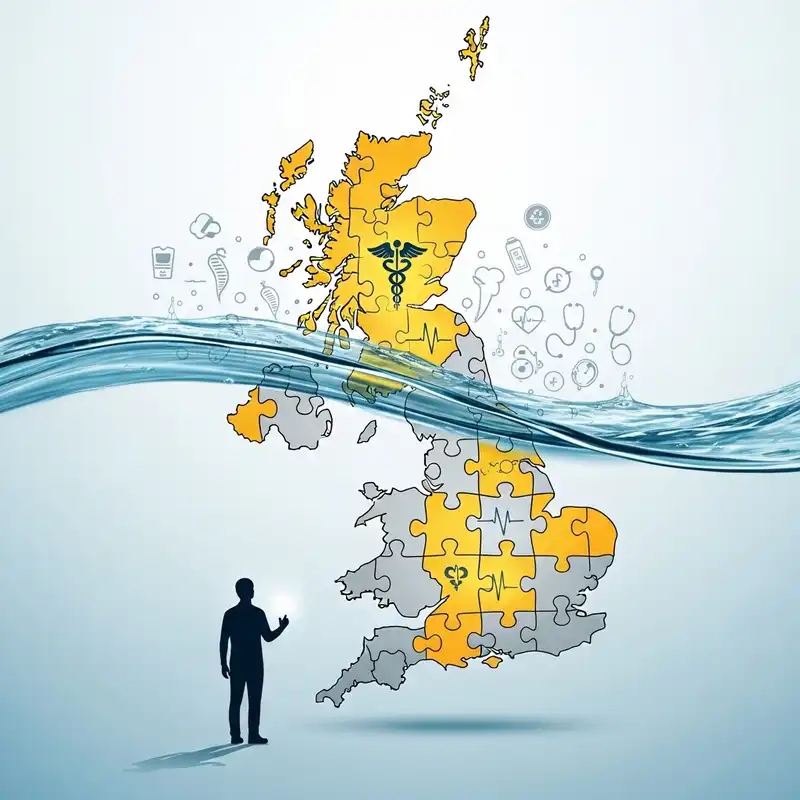
The UK's 2025 Career Shock: One in Three Working Adults Now Report Health Issues Blocking Their Progression. Is Your LCIIP Shield Protecting Your £500,000+ Lifetime Earning Potential?
UK 2025 Shock: 1 in 3 Working Adults Report Health Issues Blocking Career Progression
A startling new report reveals a silent crisis unfolding across the UK workforce. As of 2025, an unprecedented one in three working-age adults now report that their physical or mental health is a direct barrier to their career progression. This isn't just about taking sick days; it's about missed promotions, stagnant salaries, and dreams being quietly shelved.
For decades, we’ve focused on skills, experience, and networking as the primary drivers of a successful career. Yet, the data now paints a different, more sobering picture. Your health is no longer just a personal matter—it has become the single most significant, and often unpredictable, variable in your long-term financial success.
Consider this: for an average professional in the UK, their lifetime earning potential can easily exceed £500,000, and for many, it's well over £1,000,000. This figure represents your single greatest financial asset. It's the engine that powers your mortgage, your family's lifestyle, your children's education, and your retirement.
Now, imagine a hidden fault line running beneath that asset. That fault line is your health. The question is no longer if a health issue might affect your career, but how you are prepared for when it does. Is your financial future shielded? This is where a robust Life, Critical Illness, and Income Protection (LCIIP) strategy ceases to be an optional extra and becomes an essential component of modern financial planning.
The Sobering Reality: The UK's Worsening Health Landscape in 2025
The statistics are impossible to ignore. A perfect storm of factors has converged to make UK workers more vulnerable than ever before. The days of a "job for life" with a gold-plated sick pay scheme are a distant memory for most.
According to the latest Office for National Statistics (ONS) data, long-term sickness absence is at a record high, with over 2.8 million people out of the workforce due to health reasons. But this only tells part of the story. The more insidious trend is the number of people still in work but whose capacity to perform and progress is severely hampered.
Let's break down the key drivers of this health crisis:
- The Mental Health Epidemic: Conditions like anxiety, depression, and burnout are now the leading cause of work-related illness. This directly impacts focus, creativity, and the resilience needed for senior roles.
- Musculoskeletal Disorders: Our increasingly sedentary, screen-based work lives are taking a physical toll. Back pain, neck strain, and repetitive strain injury (RSI) are rampant. These "low-level" but chronic conditions can make a standard 40-hour week unbearable, let alone the extra effort required to climb the career ladder.
- The Rise of "Long-Health" Conditions: The legacy of the pandemic, including Long COVID, has introduced a new category of chronic illness that the workforce is still struggling to adapt to. Characterised by fatigue, "brain fog," and fluctuating symptoms, these conditions make consistent high performance incredibly challenging.
- Strained NHS Services: With NHS waiting lists remaining stubbornly high in 2025, timely access to diagnosis and treatment is a significant challenge. A minor issue that could be resolved quickly can escalate into a chronic problem, prolonging the impact on an individual's working life.
UK Worker Health Challenges at a Glance (2025)
| Health Challenge | Key Statistic/Trend | Impact on Career |
|---|---|---|
| Mental Health | Now the #1 reason for long-term sickness absence. | Reduced focus, burnout, 'presenteeism'. |
| Musculoskeletal | Affects 1 in 4 adults; linked to remote work ergonomics. | Chronic pain limits hours & tasks. |
| Long-Health (e.g. Long COVID) | ONS estimates 1.9M+ people affected. | Unpredictable symptoms, severe fatigue. |
| Delayed NHS Treatment | Record waiting lists for diagnostics & surgery. | Conditions worsen, prolonging time off work. |
This isn't just about being unable to work at all. It's about a slow, corrosive effect on your ability to fulfil your potential.
How Health Issues Derail Your Career: Beyond Just Sick Days
When we think of illness impacting work, we often picture someone being signed off for an extended period. While that's a major risk, the reality for millions is far more subtle and, in many ways, more damaging to long-term prospects.
Your career is built on momentum. A health issue, even a seemingly manageable one, acts like a brake on that momentum.
The "Presenteeism" Trap
This is the phenomenon of being physically at work (or logged on at home) but being mentally and emotionally absent due to health struggles. You're going through the motions, but your productivity plummets. Your creativity dries up, you make uncharacteristic errors, and you struggle to engage with colleagues. Management notices the drop-off in quality, even if they don't know the cause.
Missed Opportunities for Growth
Career advancement relies on saying "yes" to opportunities.
- The chance to lead a high-profile project that requires extra hours.
- An invitation to a crucial industry networking event in the evening.
- The opportunity to travel to another office to build key relationships.
When you're managing chronic pain or battling anxiety, your energy reserves are depleted. You're forced to say "no" to these career-building moments, not out of a lack of ambition, but out of a need for self-preservation.
The Promotion Bypass
Promotions are awarded to those perceived as reliable, energetic, and capable of handling more responsibility. If your health issues lead to frequent short-notice absences or a visible lack of energy, you can be unconsciously, and unfairly, labelled as "not up to the next level." You watch as peers with less experience but more visible vitality get the nod ahead of you.
Forced Career Changes
For some, the strain becomes too much. A high-pressure sales director suffering from burnout may have to step down to an account management role. A construction project manager with a bad back might be forced into a lower-paid, office-based administrative position. These aren't choices driven by desire, but by necessity, and they almost always come with a significant pay cut and a cap on future earnings.
Let's consider a hypothetical but highly realistic example:
Meet David, a 42-year-old IT consultant. David is excellent at his job and on track for a partnership at his firm, a move that would boost his £80,000 salary to over £120,000. However, he develops a chronic digestive condition. The condition isn't severe enough to stop him from working entirely, but it causes unpredictable pain and fatigue. He has to turn down international projects, he misses key client dinners, and his focus during long workshops wanes. Over two years, he is passed over for promotion twice. His career stalls. The £40,000-a-year pay rise, and the subsequent increases, never materialise. Over the remaining 25 years of his career, this "stalling" could cost him over £1,000,000 in lost earnings.
Calculating the Cost: The £500,000+ Hole in Your Financial Plan
David's story illustrates a crucial point: the financial cost of poor health isn't just about the salary you lose when you're off sick. It's about the future income you never get the chance to earn.
Your lifetime earning potential is a tangible asset. Let's look at what that means in simple terms, before considering the impact of health.
Potential Lifetime Earnings (Simplified)
| Current Annual Salary | Years to Retirement | Potential Gross Lifetime Earnings (no pay rises) |
|---|---|---|
| £35,000 | 35 | £1,225,000 |
| £50,000 | 30 | £1,500,000 |
| £75,000 | 25 | £1,875,000 |
This is a basic calculation and doesn't account for inflation, promotions or pay rises, which would make the actual figures much higher.
Now, let's see how a health issue can systematically dismantle this potential:
- Career Stagnation: You keep your job, but promotions and pay rises stop. Even missing out on a modest 3% annual pay rise can have a colossal impact over time. On a £50,000 salary, the difference between getting that 3% rise annually for 20 years versus staying flat is over £340,000 in lost earnings.
- Reduced Hours: Your health forces you to move from a full-time role at £60,000 to a three-day week, pro-rata at £36,000. That's an immediate loss of £24,000 per year. Over 15 years, that's £360,000 gone from your financial plan.
- Complete Work Stoppage: This is the most catastrophic scenario. You're unable to work in your profession at all. Your professional salary of, say, £4,000 per month is replaced by... what?
Many people mistakenly believe the state will provide a sufficient safety net. Let's be clear: it will not. The main state benefit for those unable to work due to illness, the Employment and Support Allowance (ESA), is around £138 per week as of 2025.
Can your mortgage, bills, and family expenses survive on roughly £550 a month? For the vast majority of professionals, the answer is a resounding no. This is the financial abyss that a proper LCIIP shield is designed to protect you from.
Your Financial Shield: A Deep Dive into LCIIP Insurance
Life, Critical Illness, and Income Protection (LCIIP) are three distinct types of insurance that work together to create a comprehensive financial safety net. They are not "one-size-fits-all" products. They are sophisticated tools that, when configured correctly, can protect your income, your assets, and your family's future from the fallout of an unexpected health crisis.
Let's break down each component of the shield.
Income Protection (IP): Your Monthly Paycheque Replacement
If your ability to earn is your greatest asset, then Income Protection is the most fundamental insurance you can own. It is the bedrock of any solid financial protection plan.
- What it is: A policy that pays you a regular, tax-free monthly income if you are unable to work due to any illness or injury that prevents you from doing your job.
- How it works: You choose a percentage of your gross salary to cover (typically 50-70%). You also select a "deferment period"—the length of time you wait after stopping work before the payments begin (e.g., 4, 8, 13, 26, or 52 weeks). The longer the deferment period, the lower the premium. The policy will then pay out every month until you can return to work, the policy term ends (often at your chosen retirement age), or you pass away.
- The Golden Rule - "Own Occupation" Cover: For professionals, this is the most critical definition. "Own Occupation" means the policy will pay out if you are unable to perform your specific job. For example, a surgeon who develops a hand tremor can no longer perform surgery. Under an "own occupation" policy, they would receive a payout, even if they were able to work in a different role, like lecturing. This is vital for protecting your specialised, hard-earned salary.
Critical Illness Cover (CIC): Your Lump Sum for Major Health Crises
While Income Protection shields your monthly cash flow, Critical Illness Cover provides a significant capital injection to deal with the immediate financial shock of a serious diagnosis.
- What it is: A policy that pays out a one-off, tax-free lump sum if you are diagnosed with one of a list of predefined serious conditions. Core conditions almost always include specific types of cancer, heart attack, and stroke, but modern policies can cover 50+ conditions.
- How it works: If you are diagnosed with a qualifying illness and survive for a short period (typically 10-14 days), the insurer pays the full sum assured. The policy then usually ends. Many modern policies also offer partial payments for less severe conditions (e.g., an early-stage cancer), providing some financial support without terminating the full policy.
- What the lump sum is for: This money is completely flexible. It could be used to:
- Pay off your mortgage or other large debts, drastically reducing your monthly outgoings.
- Fund private medical treatment to bypass NHS waiting lists.
- Make disability-friendly adaptations to your home.
- Allow a partner to take time off work to care for you.
- Simply provide a financial cushion to allow you to recover without money worries.
Life Insurance: The Ultimate Protection for Your Loved Ones
Life Insurance addresses the ultimate risk, ensuring that the people who depend on you are financially secure if you are no longer around.
- What it is: A policy that pays a tax-free lump sum to your chosen beneficiaries upon your death. It can also often pay out early if you are diagnosed with a terminal illness with a life expectancy of less than 12 months.
- How it works: The most common type is Term Life Insurance, where you choose an amount of cover (the "sum assured") and a period of time (the "term"), for example, £250,000 over a 25-year mortgage term. If you pass away within the term, the policy pays out. If you outlive the term, the policy ends and has no value. Whole of Life policies, as the name suggests, run for your entire life and are guaranteed to pay out eventually, but are more expensive.
- Why it's essential: Its primary purpose is to replace your future income for your family. The payout can clear a mortgage, cover ongoing living costs, and fund future goals like university fees, ensuring your family's quality of life is maintained.
The LCIIP Shield: A Comparison
| Feature | Income Protection | Critical Illness Cover | Life Insurance |
|---|---|---|---|
| Payout Type | Regular Monthly Income | Tax-Free Lump Sum | Tax-Free Lump Sum |
| Trigger Event | Inability to work | Diagnosis of specified illness | Death or terminal illness |
| Primary Purpose | Replace lost salary | Cover major one-off costs | Provide for dependents |
| Benefit Duration | Until return to work/retirement | One-time payout | One-time payout |
| Core Question | "How will I pay my bills?" | "How will I handle a big crisis?" | "How will my family cope?" |
WeCovr: Your Expert Guide in a Complex Market
Navigating the world of LCIIP insurance can be daunting. The market is filled with different providers, policy definitions, and optional extras. A small difference in the policy wording—like the definition of "own occupation" on an income protection plan—can be the difference between a successful claim and financial disaster.
This is where using an independent, expert broker is not just helpful, but crucial.
At WeCovr, we help thousands of people navigate this landscape. We are not tied to any single insurer. Our role is to act as your advocate, searching the entire market—including major providers like Aviva, Legal & General, Zurich, Royal London, and Vitality—to find the policy or combination of policies that offers the best possible protection for your specific circumstances and budget. We translate the jargon, highlight the critical details, and ensure your LCIIP shield is built on a rock-solid foundation.
Furthermore, we believe in supporting our clients' holistic well-being. Proactive health management is the first line of defence. That's why every WeCovr customer receives complimentary access to our proprietary AI-powered nutrition app, CalorieHero. It's our way of going above and beyond, helping you manage your health goals while we take care of your financial safety net.
Common Myths and Misconceptions – Debunked
Many people put off arranging protection insurance because of common, but often false, assumptions. Let's tackle them head-on.
- Myth: "I'm young and healthy, I don't need it yet."
- Fact: While you may be healthy now, illness and injury can strike at any age. The irony is that the best time to buy insurance is when you are young and healthy, as this is when your premiums will be at their absolute lowest. Locking in a low premium for life is one of the smartest financial moves you can make.
- Myth: "The state will support me if I can't work."
- Fact: As we've seen, state benefits are a minimal safety net, not an income replacement. The £138 per week from ESA is unlikely to even cover the average person's mortgage or rent payment, let alone all other bills.
- Myth: "My employer's sick pay scheme is enough."
- Fact: You must check the details of your contract. Many company schemes offer full pay for a very limited time (e.g., 1-3 months), followed by a period of half-pay, before dropping to zero. A serious illness can easily last longer than your employer's generosity. Income Protection is designed to kick in precisely when your employer's support runs out.
- Myth: "Insurers never pay out."
- Fact: This is one of the most damaging and persistent myths. The industry regulator, the Financial Conduct Authority (FCA), and the Association of British Insurers (ABI) publish official payout rates annually. The latest ABI data for 2024 showed that 97.3% of all protection claims were paid, amounting to a staggering £6.85 billion paid out to families and individuals. The overwhelming majority of the few claims that are declined are due to non-disclosure (not being truthful on the application) or the condition not meeting the policy definition—problems an expert broker can help you avoid.
- Myth: "It's all too expensive."
- Fact: The cost of cover varies hugely depending on your age, health, occupation, and the level of cover you need. However, meaningful protection is often far more affordable than people think. For a healthy 30-year-old, comprehensive income protection can cost less than a daily cup of coffee. A broker like WeCovr can run a market comparison in minutes to show you the most cost-effective options available.
Building Your Personalised LCIIP Shield: A Step-by-Step Guide
Ready to take control? Here’s a simple framework for building your protection strategy.
- Assess Your Financials: Get a clear picture of your finances. What are your essential monthly outgoings (mortgage/rent, utilities, food, transport)? What debts do you have? Who is financially dependent on you?
- Review Your Existing Cover: Look at your employment contract. What sick pay do you receive, and for how long? Do you have any "death in service" benefit (typically a multiple of your salary)? This is your starting point.
- Prioritise Your Needs: What is the biggest risk you need to cover?
- If you have dependents and a mortgage, Life and Critical Illness cover are paramount.
- For almost every working professional, the risk of being unable to earn your salary is the most immediate threat to your lifestyle, making Income Protection the foundation.
- Determine Your Budget: Be realistic about what you can comfortably afford each month. It's better to have a slightly lower level of cover that you can maintain, than an expensive policy you cancel after a year.
- Speak to an Expert: This is the most important step. Don't try to go it alone. An independent broker can perform the complex task of matching your needs and budget to the most suitable products from across the market, saving you time, money, and potentially preventing a catastrophic mistake.
- Get Covered & Review: Once your policies are in place, don't just file them away and forget about them. It's vital to review your cover every few years, or after any major life event like getting married, having a child, taking on a larger mortgage, or receiving a significant promotion.
The Future of Work and Health: Why Protection is More Critical Than Ever
The trends we're seeing in 2025 are not a blip; they are the new reality. The world of work is changing, and our approach to financial security must change with it.
The rise of the gig economy, freelance contracts, and "portfolio careers" means millions of workers have zero employer benefits to fall back on. They are their own safety net.
Furthermore, as medical science allows us to live longer, we are also working for longer. A 40 or 50-year career significantly increases the statistical probability of experiencing a major health event during your working life.
In this environment, relying on luck is not a strategy. Financial resilience, underpinned by a robust LCIIP shield, is the only logical response. It's what allows you to take career risks, pursue your ambitions, and live your life with confidence, knowing that you have a plan for the unexpected.
Take Control of Your £500,000+ Asset Today
Your ability to get up every day and earn a living is the most valuable financial asset you will ever possess. It's worth hundreds of thousands, if not millions, of pounds over your lifetime.
The stark reality is that one in three of your peers now feels their health is actively holding their career back. Don't let an unpredictable illness or injury have the final say on your financial future and a lifetime of hard work.
Protecting that asset is not a cost; it's an investment in certainty for you and your family. It is the defining feature of a responsible, modern financial plan. Take the first step today. Understand your risks, explore your options, and build the shield that will protect your potential, come what may.
Why life insurance and how does it work?
What is Life Insurance?
Life insurance is an insurance policy that can provide financial support for your loved ones when you or your joint policy holder passes away. It can help clear any outstanding debts, such as a mortgage, and cover your family's living and other expenses such costs of education, so your family can continue to pay bills and living expenses. In addition to life insurance, insurance providers offer related products such as income protection and critical illness, which we will touch upon below.How does it work?
Life insurance pays out if you die. The payout can be in the form of a lump sum payment or can be paid as a replacement for a regular income. It's your decision how much cover you'd like to take based on your financial resources and how much you'd like to leave to your family to help them deal with any outstanding debts and living expenses. Your premium depends on a number of factors, including your occupation, health and other criteria.The payout amount can change over time or can be fixed. A level term or whole of life policy offers a fixed payout. A decreasing term policy offers a payout that decreases over the term of the cover.
With critical illness policies, a payout is made if you’re diagnosed with a terminal illness with a remaining life expectancy of less than 12 months. While income protection policies ensure you can continue to meet your financial commitments if you are forced to take an extended break from work. If you can’t work because you’ve had an accident, fallen sick, or lost your job through no fault of your own, income protection insurance pays you an agreed portion of your salary each month.
Income protection is particularly helpful for people in dangerous occupations who want to be sure their mortgage will always be covered. Income protection only covers events beyond your control: you’re much less likely to be covered if you’re fired from your job or if you injure yourself deliberately.
Questions to ask yourself regarding life insurance
Just ask yourself:👉 Who would pay your mortgage or rent if you were to pass away or fall seriously ill?
👉 Who would pay for your family’s food, clothing, study fees or lifestyle?
👉 Who would provide for the costs of your funeral or clear your debts?
👉 Who would pay for your costs if you're unable to work due to serious illness or disability?
Many families don’t realise that life, income protection and critical illness insurance is one of the most effective ways to protect their finances. A great insurance policy can cover costs, protect a family from inheriting debts and even pay off a mortgage.
Many would think that the costs for all the benefits provided by life insurance, income protection insurance or critical illness insurance are too high, but the great news is in the current market policies are actually very inexpensive.
Benefits offered by income protection, life and critical illness insurance
Life insurance, income protection and critical illness insurance are indispensable for every family because a child loses a parent every 22 minutes in the UK, while every single day tragically 60 people suffer major injuries on the UK roads. Some people become unable to work because of sickness or disability.Life insurance cover pays out a lump sum to your family, loved ones or whomever you choose to get the money. This can be used to secure the financial future of your loved ones meaning they would not have to struggle financially in the event of your death.
If it's a critical illness cover, the payout happens sooner - upon diagnosis of a serious illness, disability or medical condition, easing the financial hardship such an event inevitably brings.
Income protection insurance can be very important for anyone who relies on a pay check to cover their living costs, but it's especially important if you’re self-employed or own a small business, where your employment and income is a bit less stable. It pays a regular income if you can't work because of sickness or disability and continues until you return to paid work or you retire.
In a world where 1 in 4 of us would struggle financially after just four weeks without work, the stark reality hits hard – a mere 7% of UK adults possess the vital shield of income protection. The urgency of safeguarding our financial well-being has never been more palpable.
Let's face it – relying on savings isn't a solution for everyone. Almost 25% of people have no savings at all, and a whopping 50% have £1,000 or less tucked away. Even more concerning, 51% of Brits – that's a huge 27 million people – wouldn't last more than one month living off their savings. That's a 10% increase from 2022.
And don't even think about state benefits being a safety net. The maximum you can expect from statutory sick pay is a mere £109.40 per week for up to 28 weeks. Not exactly a financial lifeline, right?
Now, let's tackle a common objection: "But I have critical illness insurance. I don't need income protection too." Here's the deal – the two policies apply to very different situations. In a nutshell:
- Critical illness insurance pays a single lump sum if you're diagnosed with or undergo surgery for a specified potentially life-threatening illness. It's great for handling big one-off expenses or debts.
- Income protection, on the other hand, pays a percentage of your salary as a regular payment if you can't work due to illness or injury. It's the superhero that tackles those relentless monthly bills.
Types of life insurance policies
Common reasons for getting a life insurance policy are to:✅ Leave behind an amount of money to keep your family comfortable
✅ Protect the family home and pay off the mortgage in full or in part
✅ Pay for funeral costs
Starting from as little as a couple of pounds per week, you can do all that with a Life Policy.
Level Term Life Insurance
One of the simplest forms of life insurance, level term life insurance works by selecting a length of time for which you would want to be covered and then deciding how much you would like your loved ones to receive should the worst happen. Should your life insurance policy pay out to your family, it would be in a lump sum amount that can be used in whatever way the beneficiary may wish.
Decreasing Term Life Insurance
Decreasing term life insurance works in the same way as level term, except the lump sum payment amount upon death decreases with time. The common use for decreasing term life cover is to protect against mortgage repayment as the lump sum decreases along with the principal of the mortgage itself.
Increasing Term Life Insurance
Increasing term life insurance aims to pay out a cash sum growing each year if the worst happens while covered by the policy. With increasing term life cover amount insured increases annually by a fixed amount for the length of the policy. This can protect your policy's value against inflation, which could be advantageous if you’re looking to maintain your loved ones’ living standards, continue paying off your mortgage in line with its repayment schedule and cover your children’s education fees.
Whole of Life Insurance
Whereas term life insurance policies only pay out if you pass away during their term, whole of life insurance pays out to your beneficiaries whenever this should happen. The most common uses for whole life insurance are to cover the costs of a funeral or as a vehicle for your family's inheritance tax planning.
Family Income Benefit
Family income benefit is a somewhat lesser-known product in the family of life insurance products. Paying out a set amount every month of year to your beneficiaries, it is the most cost-effective way of maintaining your family's living standards to an age where you'd expect them to be able to support themselves financially. The most common use would be for a family with children who are not working yet so are unable to take care of themselves financially.
Relevant Life Insurance
Relevant Life Insurance is a tax-efficient policy for a director or single employee. A simple level term life insurance product, it is placed in a specific trust to ensure its tax efficiency. The premiums are tax deductible and any benefit payable should a claim arise is also paid out tax free, which makes it an attractive product for entrepreneurs and their businesses.
Important Fact!
We can look at a more suitable option mid-term!
Why is it important to get life insurance early?
👉 Many people are very thankful that they had their life, income protection, and critical illness insurance cover in place before running into some serious issues. Critical illness and income protection insurance is as important as life insurance for protecting your family's finances.👉 We insure our cars, houses, bicycles and even bags! Yet our life and health are the most precious things we have.
Easily one of the most important insurance purchases an individual or family can make in their lifetime, the decision to buy life, income protection, critical illness and private medical health insurance can be made much simpler with the help of FCA-authorised advisers. They are the specialists who do the searching and analysis helping people choose between various types of life insurance policies available in the market, including income protection, critical illness and other types of policies most suitable to the client's individual circumstances.
It certainly won't do any harm if you speak with one of our experienced FCA-authorised insurance partner experts who are passionate about advising people on financial matters related to life insurance and are keen to provide you with a free consultation.
You can discuss with them in detail what affordable life, income protection, critical illness or private medical health insurance plan for the necessary peace of mind they would recommend! WeCovr works with some of the best advisers in the market.
By tapping the button below, you can book a free call with them in less than 30 seconds right now:
Our Group Is Proud To Have Issued 800,000+ Policies!
We've established collaboration agreements with leading insurance groups to create tailored coverage
























How It Works
1. Complete a brief form

2. Our experts analyse your information and find you best quotes

3. Enjoy your protection!

Any questions?
Learn more

Who Are WeCovr?
WeCovr is an insurance specialist for people valuing their peace of mind and a great service.👍 WeCovr will help you get your private medical insurance, life insurance, critical illness insurance and others in no time thanks to our wonderful super-friendly experts ready to assist you every step of the way.
Just a quick and simple form and an easy conversation with one of our experts and your valuable insurance policy is in place for that needed peace of mind!