UK Mental Health Wait Collapse
UK 2025 1 in 4 Britons Facing a Mental Health Crisis Will Endure Over 12 Months for NHS Specialist Support, Undermining Recovery & Fuelling a £30 Billion+ Annual Economic Burden – Is Your Private Health Insurance Your Vital Bridge to Immediate Care & Lifelong Well-being
The United Kingdom is standing on the precipice of a profound mental health crisis. The statistics for 2025 paint a stark and unsettling picture: an unprecedented number of us are struggling, and the very system designed to be our safety net, the National Health Service (NHS), is stretched to its breaking point.
New analysis reveals a devastating reality. One in every four Britons experiencing a significant mental health challenge will now face a wait of over 12 months for specialist NHS support. This isn't just a delay; it's a chasm in care that allows conditions to worsen, hope to fade, and lives to unravel.
This silent epidemic carries a staggering economic price tag, costing the UK economy upwards of £30 billion annually in lost productivity, benefits, and direct healthcare costs. But the true cost is measured in human suffering—in careers stalled, relationships strained, and the erosion of personal well-being.
In this landscape of critical delays and overwhelming demand, a crucial question emerges for individuals and families across the nation: Is it time to look beyond the traditional routes? Could private health insurance be the essential bridge, not just to immediate treatment, but to a future of sustained mental wellness? This guide will explore the crisis in-depth and provide the clear, authoritative answers you need.
The Stark Reality: Unpacking the UK's Mental Health Crisis in 2025
The numbers are more than just data points on a chart; they represent our friends, family, colleagues, and ourselves. The scale of the UK's mental health challenge has reached a critical mass, driven by a perfect storm of post-pandemic anxiety, the cost-of-living crisis, and deep-seated societal pressures.
- Record Demand: NHS mental health services received an estimated 5.2 million referrals in the past year, a figure that continues to climb. This surge means services are overwhelmed before they can even begin to address the backlog.
- The Waiting List Chasm: As of early 2025, the official waiting list for specialist NHS mental health treatment stands at a staggering 1.8 million people. However, leading think tanks like the Centre for Mental Health(centreformentalhealth.org.uk) suggest the true number needing care is closer to 8 million, with many not meeting the threshold for referral or simply giving up due to the daunting process.
- Children and Young People at Risk: The crisis is particularly acute for the younger generation. Over 400,000 children and young people are currently on the waiting list for Children and Adolescent Mental Health Services (CAMHS). Some face waits of up to two years for an initial assessment, a period that spans a significant portion of their formative years.
- The £30 Billion Burden: The economic impact is a national emergency in itself. A report by the NHS Confederation breaks down this colossal figure into three main areas:
- Lost Productivity (£20bn+): This includes absenteeism (days off work) and "presenteeism," where employees are physically at work but mentally unwell and unable to function effectively.
- Healthcare Costs (£6bn+): The direct cost to the NHS of providing mental health services, A&E visits for mental health crises, and managing the physical health complications that often accompany poor mental health.
- Social Benefits (£4bn+): The cost of welfare payments and social support for those unable to work due to mental illness.
This isn't a future problem; it's a present-day reality. The system designed to catch us when we fall is struggling to keep its head above water, forcing millions to wait while their health deteriorates.
The NHS Under Pressure: Why Are Mental Health Waiting Lists So Long?
Understanding why the system is failing is key to finding a personal solution. The crisis in NHS mental health provision is not due to a lack of dedication from its staff, but a result of decades-long systemic issues that have now reached a boiling point.
Several key factors contribute to these unprecedented waiting times:
- Historic Underfunding and the Parity of Esteem Paradox: For years, "parity of esteem"—valuing mental health equally with physical health—has been a government ambition. In reality, mental health services have consistently received a smaller slice of the NHS budget compared to the scale of the need. This historic gap has created a fragile infrastructure unable to cope with the current surge.
- A Tsunami of Demand: The COVID-19 pandemic acted as a major catalyst, exacerbating existing mental health issues and triggering new ones related to isolation, grief, and health anxiety. This was immediately followed by the cost-of-living crisis, adding immense financial stress—a known driver of anxiety and depression. Demand has simply outstripped the planned capacity.
- Critical Workforce Shortages: You cannot deliver care without clinicians. The UK is facing a severe shortage of qualified mental health professionals. There are not enough psychiatrists, clinical psychologists, mental health nurses, or therapists to meet the demand. This leads to burnout among existing staff and an inability to open up new appointment slots.
- The Postcode Lottery: Access to care is not uniform across the country. Where you live can dramatically affect how long you wait for treatment. Some regions have better-funded services and shorter waits, while others are "cold spots" where accessing even basic support is a monumental challenge.
This combination of factors creates a bottleneck, leaving millions in limbo. For an individual, this means their initial call for help can be followed by a deafening silence, turning a manageable condition into a debilitating crisis.
The Widening Gap: Demand vs. NHS Capacity
| Metric | Estimated UK Need (2025) | Current NHS Capacity (Annual) | The Consequence |
|---|---|---|---|
| Referrals Received | 4 Million+ | Struggling to process existing caseload | Growing waiting list |
| Specialist Therapists | Significant Shortfall | Limited appointment availability | Long waits for therapy |
| Psychiatrist Consults | High Demand | Severe national shortage | Delays in diagnosis & medication |
| CAMHS Capacity | 1.5 Million+ need support | ~400,000 on waiting list | Children's conditions worsen |
The Ripple Effect: How Delays in Treatment Impact Your Life and the UK Economy
A 12-month wait for mental health treatment is not a passive pause. It is an active period of decline that sends destructive ripples through every aspect of a person's life, their family, and the wider community.
The Personal Cost:
- Worsening Symptoms: An initial case of manageable anxiety can escalate into debilitating panic attacks. Mild depression can deepen into a major depressive episode, making work and daily life feel impossible. Early intervention is critical, and its absence is deeply damaging.
- Impact on Work and Career: Mental ill-health is a leading cause of long-term work absence. The ONS reports over 2.8 million people are now economically inactive due to long-term sickness, with mental health being a primary driver. This can lead to job loss, financial instability, and a loss of purpose and identity.
- Strain on Relationships: Living with an untreated mental health condition puts immense pressure on family and friends. It can lead to conflict, isolation, and the breakdown of vital support networks, further compounding the individual's distress.
- Physical Health Deterioration: The mind and body are intrinsically linked. Chronic stress and anxiety can lead to physical symptoms like high blood pressure, digestive issues, and a weakened immune system.
The Economic Cost:
Beyond the headline £30 billion figure, the economic impact is felt in tangible ways:
- Productivity Drain: A workforce struggling with its mental health is not a productive workforce. Presenteeism alone is estimated to cost UK businesses twice as much as absenteeism.
- Increased A&E Burden: When community support is unavailable, people in crisis have nowhere to turn but A&E. This is not the right environment for a mental health emergency and places a huge strain on already busy emergency departments.
- A Cycle of Dependency: Delayed treatment can lead to long-term incapacity, shifting the individual from being a tax-paying contributor to someone reliant on the welfare state, deepening the economic burden for everyone.
Example: The Story of Sarah
Sarah, a 35-year-old marketing manager, started experiencing severe anxiety and panic attacks after a stressful period at work. Her GP referred her to NHS Talking Therapies. She was told the wait for high-intensity Cognitive Behavioural Therapy (CBT) would be 9-12 months. During that wait, her performance at work plummeted. She had to take extended sick leave, straining her relationship with her employer and using up her savings. Her anxiety worsened, making it difficult to even leave the house. By the time her NHS appointment came through, her condition was far more complex and entrenched than it was when she first asked for help.
Sarah's story is a common one. It illustrates how a treatable, acute condition can spiral when immediate support is not available.
Private Health Insurance: A Bridge Over Troubled Waters?
For those caught in the NHS waiting list quagmire, the situation can feel hopeless. However, there is a proactive and increasingly vital alternative: Private Medical Insurance (PMI).
Once seen as a luxury, PMI is now being viewed by many as an essential tool for safeguarding their health and well-being. When it comes to mental health, its primary benefit is clear and powerful: speed of access.
Instead of waiting months or years, a PMI policy can give you access to a qualified specialist—a psychiatrist, psychologist, or therapist—in a matter of days or weeks. This single factor can be the difference between a swift recovery and a prolonged period of suffering.
At WeCovr, we frequently speak with individuals and families who are at their wits' end with NHS delays. They are looking for a way to regain control, and a well-chosen private health plan provides exactly that.
The core advantages of using PMI for mental health include:
- Rapid Access to Specialists: Bypass the NHS queue and get a diagnosis and treatment plan quickly.
- Choice and Control: You can often choose the specialist you want to see and the hospital or clinic where you receive your treatment.
- Comfort and Privacy: Treatment is delivered in comfortable, private settings, which can be more conducive to recovery.
- Access to a Range of Therapies: Many policies offer a set number of sessions for talking therapies like CBT, counselling, and psychotherapy as standard.
- Integrated Digital Tools: Modern insurers often include access to digital mental health platforms, apps, and 24/7 support lines for immediate, on-demand help.
For many, PMI is no longer just about skipping queues for knee surgery; it's a lifeline for the mind. It provides the peace of mind that if you or a family member starts to struggle, expert help is just a phone call away.
What Does Private Mental Health Cover Actually Include?
Navigating the specifics of an insurance policy can feel daunting. When it comes to mental health, it's crucial to understand what is typically included, as cover can vary significantly between providers and policy tiers.
Most insurers structure their mental health support around out-patient, day-patient, and in-patient care, often with specific limits on therapy sessions or an overall financial cap for the year.
Here’s a breakdown of what you can generally expect at different levels of cover:
| Feature / Treatment Type | Basic / Entry-Level Cover | Mid-Range / Standard Cover | Comprehensive / Premium Cover |
|---|---|---|---|
| Out-patient Consults | Often excluded or a low limit (£300-£500) | Included, with a higher limit (£1,000-£1,500) | Often fully covered |
| Talking Therapies (e.g., CBT) | May be an add-on or limited to digital only | Included, typically 8-10 sessions | Included, often 10+ sessions or up to out-patient limit |
| Day-patient Care | Usually covered, subject to overall limits | Fully covered | Fully covered |
| In-patient Care (Hospital Stay) | Usually covered, subject to overall limits | Fully covered | Fully covered |
| Digital GP & Mental Health Apps | Often included as a standard feature | Included, often with more features | Included, with premium features |
| Overall Annual Limit | £1,000 - £5,000 for mental health | £10,000 - unlimited (check policy) | Generally unlimited (check policy) |
Key Terms Explained:
- Out-patient: You visit a hospital or clinic for an appointment with a specialist (e.g., a psychiatrist or therapist) but are not admitted. Most mental health treatment falls into this category.
- Day-patient: You are admitted to a hospital or clinic for a day of treatment (e.g., a structured therapy programme) but do not stay overnight.
- In-patient: You are admitted to a hospital and stay overnight or longer for intensive treatment. This is typically for more severe mental health crises requiring a safe and structured environment.
- Cognitive Behavioural Therapy (CBT): A highly effective, evidence-based talking therapy that helps you manage your problems by changing the way you think and behave. It is a cornerstone of treatment for anxiety and depression.
When choosing a policy, pay close attention to the out-patient limit, as this is what will typically govern your access to talking therapies.
The Critical Caveat: Understanding Exclusions, Especially Pre-Existing & Chronic Conditions
This is the single most important section for any prospective policyholder to understand. To avoid disappointment and ensure you are buying the right product for your needs, you must be aware of the limitations.
Standard UK private medical insurance is designed to cover acute conditions that arise after your policy begins. It does not cover chronic or pre-existing conditions.
This rule is fundamental to how insurance works and applies to mental health just as it does to physical health.
What is a Chronic Condition? A chronic condition is one that is long-lasting, requires ongoing management, and has no known cure. In mental health, this would typically include:
- Bipolar disorder
- Schizophrenia
- Recurrent, severe depression
- Personality disorders
- Dementia
- Addiction (though some policies offer short-term detox programmes)
Insurers do not cover these conditions because they require continuous, long-term management rather than a short-term treatment course aimed at resolution. The NHS remains the primary provider for long-term chronic care.
What is a Pre-Existing Condition? This is any medical condition, including any mental health condition, for which you have experienced symptoms, sought advice, or received treatment before the start date of your policy.
How insurers handle this depends on the type of underwriting you choose:
| Underwriting Type | How It Works for Mental Health | Pros | Cons |
|---|---|---|---|
| Moratorium | Automatically excludes any condition you've had in the last 5 years. If you then go 2 continuous years without symptoms, advice or treatment for it after your policy starts, it may become eligible for cover. | Quicker to set up; no initial medical questionnaire. | Lack of certainty; claims process can be slower as checks are made then. |
| Full Medical Underwriting (FMU) | You declare your full medical history on an application form. The insurer then tells you upfront what is excluded from cover. | Provides absolute clarity from day one; you know exactly what is and isn't covered. | Application process is longer; exclusions are often permanent. |
The Bottom Line: If you are currently being treated for anxiety, you cannot take out a new policy and expect it to cover that specific condition. However, if you are in good mental health and later develop work-related stress or PTSD following an accident, your policy would be there to provide swift support for that new, acute condition.
Navigating the Market: How to Choose the Right Private Health Insurance for Mental Health
Choosing the right policy requires careful consideration of your potential needs and budget. Here are the key factors to assess:
- Check the Mental Health Pathway: How do you access care? Is a GP referral required? Some insurers now offer self-referral for mental health, which speeds things up even more.
- Analyse the Out-patient Cover: This is crucial. A policy with a low out-patient limit (£500) might only cover 2-3 therapy sessions after the initial psychiatric consultation. Look for policies with limits of £1,500 or more, or those that offer a set number of therapy sessions (e.g., 8 or 10) separate from the main out-patient limit.
- Review the List of Therapies: Does the policy just cover CBT, or does it include other valuable modalities like psychotherapy, counselling, or eye movement desensitisation and reprocessing (EMDR) for trauma?
- Consider the Excess: The excess is the amount you agree to pay towards a claim. A higher excess (£250 or £500) will significantly lower your monthly premium.
- Explore Digital Offerings: Don't underestimate the value of insurer-provided apps. These often give you 24/7 access to a virtual GP, mental health support lines, and self-help resources, providing invaluable support while you wait for a specialist appointment.
Finding the right policy can be complex, which is why working with an expert broker like WeCovr is invaluable. We compare plans from all the major UK insurers, including Aviva, Bupa, AXA Health, and Vitality. Our expertise allows us to break down the jargon, compare the fine print on mental health cover, and find a policy that genuinely meets your needs and budget.
Furthermore, we believe that well-being is holistic. As part of our commitment to our customers' health, all WeCovr policyholders receive complimentary access to our proprietary AI-powered nutrition app, CalorieHero. We understand the powerful link between what you eat and how you feel, and this tool empowers you to support your mental resilience through better physical health.
A Cost-Benefit Analysis: Is Private Health Insurance Worth the Investment?
The cost of PMI can vary based on your age, location, level of cover, and chosen excess. However, it's essential to weigh this cost against the potential cost of not having cover.
| Cost Comparison | Private Health Insurance | Self-Funding Private Care | Waiting for NHS Care |
|---|---|---|---|
| Monthly Outlay | £40 - £120+ (estimate) | £0 | £0 |
| Cost of Therapy | Included (up to policy limits) | £80-£200 per session | Free at point of use |
| Psychiatrist Consult | Included (up to policy limits) | £300-£500 per hour | Free at point of use |
| Wait Time | Days / Weeks | Days / Weeks | 9-18+ Months |
| Hidden Costs | None (if within limits) | Can quickly become unaffordable | Lost earnings, worsening health, relationship strain |
| Value Proposition | Peace of mind, rapid access, protection of income & well-being. | Immediate access but financially draining for most. | No financial cost, but a huge personal and economic cost. |
When you consider that a single course of 10 private CBT sessions could cost £1,000-£2,000 if paid for out-of-pocket, an annual PMI premium can quickly look like a very sound investment. It’s an investment in your ability to work, your relationships, and your overall quality of life.
Beyond Insurance: Complementary Support for Your Mental Well-being
While PMI is a powerful tool, a comprehensive approach to mental health includes utilising all available resources. Don't overlook these valuable avenues of support:
- Employer Assistance Programmes (EAPs): Many companies offer EAPs that provide free, confidential access to a limited number of counselling sessions. Check if your employer has one.
- Mental Health Charities: Organisations like Mind(mind.org.uk), Samaritans, and Rethink Mental Illness offer incredible free resources, helplines, and information.
- NHS Talking Therapies: Despite the waits, you should still get a referral from your GP. It is a vital service, and you can be on the waiting list while exploring other options.
- Lifestyle and Self-Care: The importance of regular exercise, a balanced diet, good sleep hygiene, and mindfulness practices cannot be overstated. These form the foundation of good mental resilience.
Taking Control of Your Mental Health in 2025 and Beyond
The UK's mental health system is facing its greatest challenge in a generation. The stark reality is that relying solely on the NHS for timely mental health support is becoming an increasingly high-risk strategy. The long waits are not just inconvenient; they are detrimental to recovery and carry immense personal and economic costs.
In this climate, private health insurance has evolved from a "nice-to-have" to a "need-to-have" for many. It acts as a vital bridge, providing rapid access to the high-quality care you need, when you need it most. It is a tool for empowerment, allowing you to take decisive action to protect your mental well-being, your career, and your family's future.
By understanding what a policy covers, being crystal clear on its limitations—especially regarding chronic and pre-existing conditions—and choosing a plan that fits your needs, you can secure invaluable peace of mind.
The first step is often the hardest, but you don't have to take it alone. Let us help you navigate the options and find the protection that allows you to face the future with confidence, knowing that expert support is always within reach.
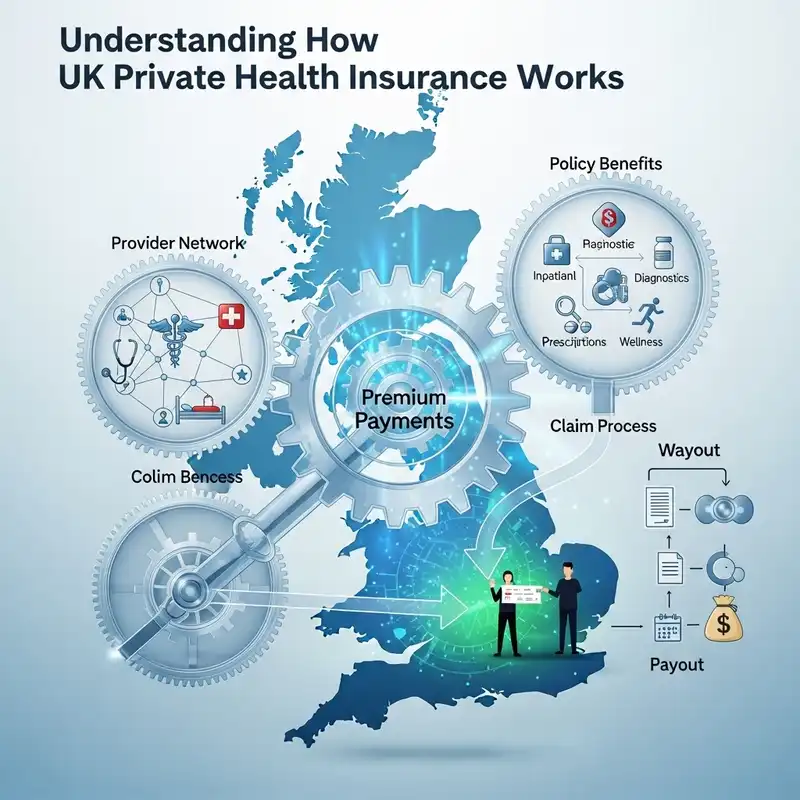
Why private medical insurance and how does it work?
What is Private Medical Insurance?
Private medical insurance (PMI) is a type of health insurance that provides access to private healthcare services in the UK. It covers the cost of private medical treatment, allowing you to bypass NHS waiting lists and receive faster, more convenient care.How does it work?
Private medical insurance works by paying for your private healthcare costs. When you need treatment, you can choose to go private and your insurance will cover the costs, subject to your policy terms and conditions. This can include:• Private consultations with specialists
• Private hospital treatment and surgery
• Diagnostic tests and scans
• Physiotherapy and rehabilitation
• Mental health treatment
Your premium depends on factors like your age, health, occupation, and the level of cover you choose. Most policies offer different levels of cover, from basic to comprehensive, allowing you to tailor the policy to your needs and budget.
Questions to ask yourself regarding private medical insurance
Just ask yourself:👉 Are you concerned about NHS waiting times for treatment?
👉 Would you prefer to choose your own consultant and hospital?
👉 Do you want faster access to diagnostic tests and scans?
👉 Would you like private hospital accommodation and better food?
👉 Do you want to avoid the stress of NHS waiting lists?
Many people don't realise that private medical insurance is more affordable than they think, especially when you consider the value of faster treatment and better facilities. A great insurance policy can provide peace of mind and ensure you receive the care you need when you need it.
Benefits offered by private medical insurance
Private medical insurance provides numerous benefits that can significantly improve your healthcare experience and outcomes:Faster Access to Treatment
One of the biggest advantages is avoiding NHS waiting lists. While the NHS provides excellent care, waiting times can be lengthy. With private medical insurance, you can often receive treatment within days or weeks rather than months.
Choice of Consultant and Hospital
You can choose your preferred consultant and hospital, giving you more control over your healthcare journey. This is particularly important for complex treatments where you want a specific specialist.
Better Facilities and Accommodation
Private hospitals typically offer superior facilities, including private rooms, better food, and more comfortable surroundings. This can make your recovery more pleasant and potentially faster.
Advanced Treatments
Private medical insurance often covers treatments and medications not available on the NHS, giving you access to the latest medical advances and technologies.
Mental Health Support
Many policies include comprehensive mental health coverage, providing faster access to therapy and psychiatric care when needed.
Tax Benefits for Business Owners
If you're self-employed or a business owner, private medical insurance premiums can be tax-deductible, making it a cost-effective way to protect your health and your business.
Peace of Mind
Knowing you have access to private healthcare when you need it provides invaluable peace of mind, especially for those with ongoing health conditions or concerns about NHS capacity.
Private medical insurance is particularly valuable for those who want to take control of their healthcare journey and ensure they receive the best possible treatment when they need it most.
Important Fact!
We can look at a more suitable option mid-term!
Why is it important to get private medical insurance early?
👉 Many people are very thankful that they had their private medical insurance cover in place before running into some serious health issues. Private medical insurance is as important as life insurance for protecting your family's finances.👉 We insure our cars, houses, and even our phones! Yet our health is the most precious thing we have.
Easily one of the most important insurance purchases an individual or family can make in their lifetime, the decision to buy private medical insurance can be made much simpler with the help of FCA-authorised advisers. They are the specialists who do the searching and analysis helping people choose between various types of private medical insurance policies available in the market, including different levels of cover and policy types most suitable to the client's individual circumstances.
It certainly won't do any harm if you speak with one of our experienced insurance experts who are passionate about advising people on financial matters related to private medical insurance and are keen to provide you with a free consultation.
You can discuss with them in detail what affordable private medical insurance plan for the necessary peace of mind they would recommend! WeCovr works with some of the best advisers in the market.
By tapping the button below, you can book a free call with them in less than 30 seconds right now:
Our Group Is Proud To Have Issued 800,000+ Policies!
We've established collaboration agreements with leading insurance groups to create tailored coverage
























How It Works
1. Complete a brief form

2. Our experts analyse your information and find you best quotes

3. Enjoy your protection!

Any questions?
Learn more

Who Are WeCovr?
WeCovr is an insurance specialist for people valuing their peace of mind and a great service.👍 WeCovr will help you get your private medical insurance, life insurance, critical illness insurance and others in no time thanks to our wonderful super-friendly experts ready to assist you every step of the way.
Just a quick and simple form and an easy conversation with one of our experts and your valuable insurance policy is in place for that needed peace of mind!