UK Private Health Insurance Guide
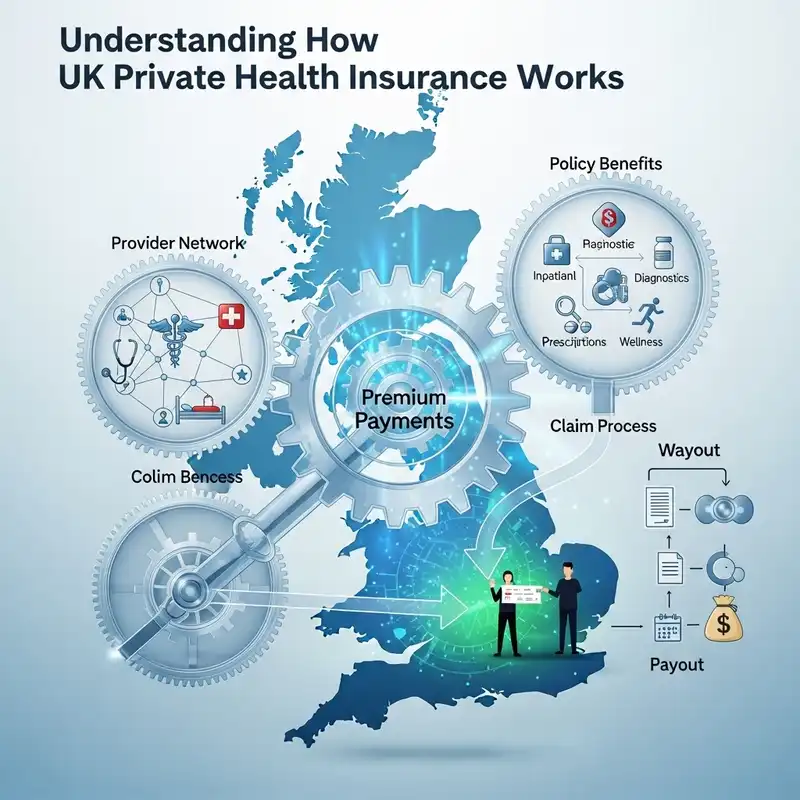
Your Annual Health & Wellness Action Plan: Maximising the Value of Your UK Private Health Insurance
UK Private Health Insurance: Your Annual Health & Wellness Action Plan
In the hustle and bustle of modern life, it's easy to put our health on the back burner. We rely on the National Health Service (NHS), a cherished institution, to be there when we need it most. However, the realities of increasing demand, funding pressures, and growing waiting lists mean that prompt access to diagnosis and treatment is not always guaranteed. This is where proactive health management becomes not just a luxury, but a vital component of your overall well-being strategy.
Private Health Insurance (PHI), often referred to as Private Medical Insurance (PMI), is not merely a safety net for when things go wrong; it's a powerful tool to empower you to take control of your health journey. It transforms the reactive approach to healthcare into a proactive, annual health and wellness action plan. This comprehensive guide will walk you through how to integrate private health insurance into your life, from understanding its core benefits and choosing the right policy to effectively utilising it throughout the year and ensuring it continues to meet your evolving needs.
Think of this article as your definitive roadmap to leveraging private health insurance for a healthier, more secure future. We'll delve deep into the nuances of policies, shed light on common misconceptions, and equip you with the knowledge to make informed decisions that serve your best interests, year after year.
The Foundation: Why Private Health Insurance is Your Health Cornerstone
Before we lay out your annual action plan, it’s crucial to understand the fundamental role private health insurance plays in securing your well-being. It’s about more than just avoiding NHS queues; it’s about choice, speed, and comfort.
NHS vs. Private Healthcare: A Clear Distinction
The NHS provides comprehensive, free-at-the-point-of-use healthcare to all UK residents. It's a lifeline for millions and a source of national pride. However, its universal nature comes with significant challenges, particularly concerning waiting times for non-emergency procedures and specialist consultations.
Private healthcare, funded by individuals or their insurance, offers an alternative pathway.
Here’s a comparison to illustrate the key differences:
| Feature | NHS | Private Healthcare |
|---|---|---|
| Funding | General taxation | Private insurance, self-pay |
| Access | Universal, free at point of use | Via insurance or direct payment |
| Waiting Times | Can be significant for non-urgent care | Generally much shorter, often days/weeks not months |
| Choice of Consultant | Limited, typically assigned | Often able to choose your preferred consultant |
| Choice of Hospital | Limited to local NHS trusts | Wide network of private hospitals and units |
| Accommodation | Shared wards common | Private rooms with en-suite facilities usually standard |
| Visiting Hours | Strict | Often flexible |
| Catering | Standard hospital meals | Often higher standard, more choices |
| Speed of Diagnosis | Can be delayed due to demand | Faster access to diagnostic tests (MRI, CT, X-ray) |
| Continuity of Care | May see different doctors/specialists | Often see the same consultant throughout treatment |
The Core Benefits of Private Health Insurance
Investing in private health insurance unlocks a range of advantages designed to provide peace of mind and prompt care:
- Faster Access to Treatment: This is arguably the most significant benefit. For non-emergency conditions, PHI allows you to bypass lengthy NHS waiting lists for consultations, diagnostics, and procedures. This means quicker diagnosis and earlier intervention.
- Choice of Specialist and Hospital: With PHI, you often have the flexibility to choose your consultant and the hospital where you receive treatment. This allows you to select specialists based on their expertise, reputation, or location.
- Private Facilities: Most private hospitals offer individual rooms with en-suite bathrooms, greater privacy, and more flexible visiting hours, significantly enhancing the patient experience.
- Access to Advanced Treatments: Some policies may cover access to new drugs or treatments not yet widely available on the NHS.
- Mental Health Support: Many modern policies include coverage for mental health services, offering faster access to therapists, psychiatrists, and counselling.
- Preventative Care and Wellness Programmes: A growing number of insurers offer benefits like health assessments, discounts on gym memberships, and incentives for healthy living, shifting the focus towards proactive wellness.
- Peace of Mind: Knowing that you have a plan for swift, high-quality care if health issues arise can reduce stress and anxiety for you and your family.
In essence, private health insurance empowers you to take control of your health timeline, ensuring that when you need medical attention, you receive it promptly, comfortably, and on your terms.
Your Annual Health & Wellness Action Plan: Phase 1 – Assessing Your Needs (Before You Buy)
The first step in any effective action plan is understanding your starting point. When it comes to private health insurance, this means a thorough assessment of your individual or family needs, your lifestyle, and your budget. This proactive approach ensures you find a policy that truly fits, rather than a generic one-size-fits-all solution.
Understanding Your Health Priorities
Begin by considering what aspects of healthcare are most important to you.
- Individual vs. Family Cover: Are you looking to cover just yourself, or your partner and children too? Family policies can sometimes be more cost-effective than multiple individual policies.
- Age and Health Status: Your age will impact premiums, and any past medical history is crucial. Remember, private health insurance does not cover pre-existing or chronic conditions. We will elaborate on this vital point later.
- Specific Concerns: Do you have a family history of certain conditions that might lead you to prioritise specific diagnostic capabilities or specialist access? Are you particularly concerned about mental health support or physiotherapy?
Budget Considerations
Private health insurance is an investment. It's essential to set a realistic budget for your monthly or annual premiums.
- Premium Affordability: How much are you comfortable spending each month? This will directly influence the level of cover you can afford.
- Excess Options: Most policies offer an "excess" – an amount you pay towards a claim before the insurer pays the rest. Choosing a higher excess can significantly lower your premium.
- No-Claims Discount: Similar to car insurance, many health insurance policies offer a no-claims discount, rewarding you for not making claims. This can also impact your long-term costs.
Geographic Factors
Where you live can influence the cost and availability of certain networks.
- Hospital Networks: Insurers typically have different "hospital lists" or networks. These can vary from highly extensive lists covering central London private hospitals (which are often more expensive) to more restricted regional networks. Ensure the hospitals available are convenient for you.
- Accessibility: Consider if you need a policy that offers access to hospitals and specialists close to your home or work.
Lifestyle Factors
Your lifestyle can play a part in your health profile and, consequently, your insurance options.
- Smoking Status: Smoking almost always leads to higher premiums.
- Occupational Health: Some companies offer health insurance as part of their employee benefits package. If so, check what's covered before seeking individual cover.
- Preventative Care: Are you interested in policies that include health checks, wellness programmes, or discounts on fitness memberships?
A Crucial Clarification: Pre-existing and Chronic Conditions
This is perhaps the most critical point to understand about private health insurance.
-
Pre-existing Conditions: Private health insurance policies do not cover pre-existing conditions. A pre-existing condition is typically defined as any disease, illness, or injury for which you have received medication, advice, or treatment, or had symptoms, in the period immediately before your policy starts (usually within the last 5 years). This is irrespective of whether you had a diagnosis at the time. For example, if you had knee pain and saw a physio a year ago, any future treatment for that specific knee pain or related issues would likely be excluded.
-
Chronic Conditions: Similarly, private health insurance does not cover chronic conditions. A chronic condition is generally defined as an illness, disease, or injury that has one or more of the following characteristics:
- It continues indefinitely.
- It has no known cure.
- It comes and goes.
- It requires long-term monitoring, control, or relief of symptoms.
- It requires rehabilitation.
- It requires the policyholder to be permanently on medication.
Examples include diabetes, asthma, epilepsy, or long-term heart conditions. While private health insurance might cover acute flare-ups or diagnostic tests leading to a chronic diagnosis, the ongoing management and treatment of the chronic condition itself will fall to the NHS.
It is absolutely vital that you understand these exclusions. Misconceptions about coverage for pre-existing or chronic conditions are a common source of disappointment and frustration for policyholders. Always be transparent about your medical history during the application process to avoid issues with claims later.
Here's a table summarising key factors to assess your needs:
| Factor | Considerations |
|---|---|
| Who to Cover? | Individual, couple, or family? What are their ages and general health? |
| Budget | What can you realistically afford monthly/annually? How does excess choice impact this? |
| Location | Are there private hospitals conveniently located? Which hospital network suits your needs? |
| Health Status | Are there any pre-existing conditions? (Remember, these are not covered). |
| Specific Needs | Is mental health support, physiotherapy, or wellness benefits a priority? |
| Desired Access | How quickly do you want to see a specialist? How important is choice of consultant? |
| Lifestyle | Are you a smoker? Do you have an employer scheme? Are preventative benefits important? |
Your Annual Health & Wellness Action Plan: Phase 2 – Decoding Private Health Insurance Policies (What to Look For)
Once you've assessed your needs, the next phase is to understand the language and components of private health insurance policies. Policies can seem complex, but breaking them down into core elements makes them much easier to decipher.
Core Coverage Types
Most policies are built around these fundamental components:
- Inpatient Treatment: This is the cornerstone of all private health insurance policies. It covers treatment requiring an overnight stay in hospital, or a day-case admission for a procedure requiring a hospital bed for a few hours. This includes surgery, specialist consultations while an inpatient, and diagnostic tests (like MRI or CT scans) performed during an inpatient stay.
- Outpatient Treatment: This covers consultations with specialists, diagnostic tests (like blood tests, X-rays, MRI, CT scans) and physiotherapy without an overnight hospital stay. This is usually an optional add-on or comes with a specific financial limit. It’s crucial to check if outpatient cover is included and what its limits are, as initial consultations and diagnostics often occur on an outpatient basis.
- Day-patient Treatment: This refers to treatment received at a hospital or medical facility that does not require an overnight stay, but does require a bed or facility that would normally be used for an overnight stay.
Understanding Outpatient Limits
This is a key area of confusion. Many basic policies focus heavily on inpatient care. If you want faster access to diagnosis before any potential hospital admission, comprehensive outpatient cover is vital.
- Full Outpatient Cover: No limit on consultations or diagnostic tests.
- Limited Outpatient Cover: A specific financial cap (e.g., £1,000, £2,500) per policy year for outpatient consultations and diagnostic tests. Once this limit is reached, you’d pay for further outpatient services yourself.
- No Outpatient Cover: You would pay for all outpatient consultations and diagnostic tests yourself, relying on the NHS or self-funding for these initial stages. The policy would only kick in if an inpatient procedure was required.
Additional Benefits and Add-ons
Beyond core coverage, policies often offer a range of optional extras:
- Mental Health Support: Cover for talking therapies (counselling, psychotherapy), psychiatric consultations, and inpatient mental health treatment. This is increasingly vital.
- Physiotherapy and Osteopathy: Often included, sometimes with limits on the number of sessions or a total monetary limit.
- Cancer Cover: While cancer treatment is typically included in inpatient cover, some policies offer enhanced benefits for cancer care, such as access to specific drugs, reconstructive surgery, or palliative care.
- Optical and Dental Cover: Usually a separate add-on, covering routine check-ups, glasses, contact lenses, and dental treatments.
- Health Assessments/Screening: Some policies include or offer discounts on annual health checks or specific screenings (e.g., for heart health).
- Travel Cover: Limited emergency medical cover while abroad might be an option, but this is usually basic and not a substitute for dedicated travel insurance.
- Therapies: Cover for complementary therapies like chiropractic treatment, acupuncture, or podiatry, often with limits.
Hospital Lists
Insurers categorise hospitals into networks, which affect both your choice and your premium:
- Comprehensive List: Includes most private hospitals, including those in central London. Offers the widest choice but comes at the highest premium.
- Standard/Mid-range List: Excludes some of the most expensive central London hospitals, providing a good balance of choice and cost.
- Restricted/Local List: Limited to a specific network of hospitals, often outside major city centres. This is typically the most affordable option.
It's crucial to check which hospitals are on the list you choose, ensuring they are accessible and meet your preferences.
Excesses
An excess is the initial amount you agree to pay towards any claim in a policy year. Choosing a higher excess will reduce your annual premium, but means you'll pay more out-of-pocket when you make a claim. For example, a £250 excess means you pay the first £250 of your claim, and the insurer covers the rest.
Underwriting Methods
This is how an insurer assesses your medical history and decides what to cover.
- Moratorium Underwriting: This is the most common and often the simplest method. You don't need to declare your full medical history upfront. Instead, the insurer automatically excludes any medical conditions you've had symptoms of, received treatment for, or sought advice on, in a specified period (e.g., the last 5 years) before your policy starts. After a continuous symptom-free period (usually 2 years) since your policy began, these conditions may then become eligible for cover.
- Full Medical Underwriting (FMU): You declare your complete medical history upfront. The insurer then assesses this information and decides immediately what conditions (if any) will be permanently excluded from your policy. This provides clarity from day one.
- Continued Personal Medical Exclusions (CPME): If you are switching from an existing private health insurance policy, some insurers may offer to carry over the exclusions from your previous policy, provided certain conditions are met. This can be beneficial as it means you don't face new exclusions just by switching.
Importance of Underwriting
The underwriting method directly impacts what is covered and what is excluded from your policy. Moratorium is simpler to set up but can lead to surprises if you need to claim for something you thought would be covered. FMU requires more upfront work but gives you a definitive answer on exclusions.
Here’s a table outlining common policy features:
| Feature | Description | Importance |
|---|---|---|
| Inpatient Cover | Hospital stays (overnight or day-case), surgery, and related costs. | Mandatory: Core of all policies. |
| Outpatient Cover | Consultations with specialists, diagnostic tests (MRI, X-ray), physiotherapy without hospital stay. | Crucial for quick diagnosis: Often optional or limited. |
| Hospital List | Network of private hospitals available to you. | Affects choice, location convenience, and premium cost. |
| Excess | Amount you pay towards a claim before the insurer pays. | Higher excess = lower premium; lower excess = higher premium. |
| Underwriting Method | How your medical history is assessed (Moratorium, FMU). | Determines what pre-existing conditions are excluded. |
| Mental Health Cover | Access to therapy, psychiatry, inpatient mental health treatment. | Increasingly important for holistic well-being. |
| Physiotherapy | Cover for physical therapy sessions. | Essential for recovery from injuries or post-surgery. |
| Cancer Cover | Enhanced benefits for cancer diagnosis, treatment, and aftercare. | Provides comprehensive support for a serious illness. |
| No-Claims Discount | Reduction in premium for not making claims. | Rewards healthy living and careful claiming. |
Navigating these options can feel overwhelming. This is precisely where expert guidance becomes invaluable. We can help you cut through the jargon, understand the implications of each choice, and compare offerings across the entire market. Our goal is to ensure you select a policy that aligns perfectly with your individual needs and budget, providing genuine value and comprehensive protection.
Your Annual Health & Wellness Action Plan: Phase 3 – Securing Your Ideal Policy (The Purchase Process)
Once you're clear on what you need and what policy features are available, the next phase is to actually secure your private health insurance. This involves comparing options, understanding the application process, and making an informed final decision.
Comparison is Key
The private health insurance market in the UK is competitive, with a variety of providers offering different levels of cover, benefits, and pricing structures. Simply picking the first insurer you see might mean you miss out on better value or more suitable options.
- Direct vs. Broker: You can approach insurers directly, but this means you're limited to their specific products. Alternatively, you can use an independent health insurance broker.
- The Role of a Broker: An independent broker, like us, works on your behalf, not for a single insurer. Our role is to:
- Provide Impartial Advice: We assess your needs and recommend policies that genuinely suit you, explaining the pros and cons of each.
- Access the Entire Market: We have relationships with all major UK private health insurance providers, allowing us to compare a wide range of options.
- Simplify Complex Information: We translate insurance jargon into plain English, ensuring you understand exactly what you're buying.
- Save You Time and Effort: Instead of you spending hours researching and comparing, we do the legwork for you.
- Find Best Coverage at No Cost: Crucially, our service to you is free. We are remunerated by the insurer if you take out a policy, meaning you get expert advice and broad market access at no additional cost to your premium. We work to find you the best coverage from all major insurers at no cost to you.
The Application Process
Once you've chosen a policy, the application process typically involves:
- Providing Personal Details: Name, address, date of birth, contact information for all individuals to be covered.
- Medical Declaration: This is where your chosen underwriting method comes into play.
- For Moratorium, you simply answer a few lifestyle questions (e.g., smoking status) and agree to the moratorium terms.
- For Full Medical Underwriting (FMU), you will complete a detailed medical questionnaire, declaring all past medical conditions, treatments, and symptoms. The insurer may then contact your GP for further information with your consent.
- Policy Terms and Conditions: You'll receive the full policy document. It’s essential to read this carefully, paying particular attention to the exclusions, benefits limits, and claims procedure.
- Payment Setup: Arrange for payment of your premiums, usually via direct debit.
Reading the Fine Print
This cannot be stressed enough. The policy document is your contract with the insurer. It details:
- What is covered: Specific treatments, consultations, and therapies.
- What is excluded: Critically, your personal exclusions (e.g., pre-existing conditions), general exclusions (e.g., cosmetic surgery, fertility treatment), and chronic conditions.
- Limits: Monetary limits on outpatient consultations, physiotherapy, mental health, etc.
- Claims procedure: The exact steps you need to follow to make a claim.
- Renewal terms: How your policy will be reviewed and potentially repriced at renewal.
Common Pitfalls to Avoid:
- Not Disclosing Medical History Fully (FMU): Any omissions, even accidental, could lead to a claim being declined.
- Not Understanding Exclusions: Assuming something is covered when it is explicitly excluded.
- Underestimating Outpatient Costs: Choosing a policy with minimal outpatient cover, then being surprised by the cost of initial diagnostic tests.
- Ignoring the Hospital List: Realising after purchase that your preferred hospital isn't covered.
- Focusing Solely on Price: The cheapest policy isn't always the best. It might have significant limitations or higher excesses that could cost you more in the long run.
By partnering with an independent broker, you can navigate these complexities with confidence, ensuring you secure a policy that not only fits your budget but also genuinely meets your healthcare needs. We streamline the application process, clarify any confusing terms, and ensure you're fully informed before committing.
Your Annual Health & Wellness Action Plan: Phase 4 – Utilising Your Policy (Throughout the Year)
Once your policy is active, it becomes a valuable resource for your health and wellness journey. Understanding how to use it effectively is just as important as choosing the right one. This phase focuses on how to engage with your policy when you need it.
How to Make a Claim: The Essential Steps
The process for making a claim is relatively standard across most insurers, though minor variations exist. Always check your specific policy document or contact your insurer directly for precise instructions.
- See Your GP First: In almost all cases, your journey begins with a visit to your NHS GP. They are your primary care provider and will assess your condition.
- Request a Private Referral: If your GP determines you need to see a specialist or undergo diagnostic tests, they can provide you with an 'open' referral letter. This letter should clearly state the suspected condition and the type of specialist or diagnostic test required (e.g., "Referral to an orthopaedic specialist for knee pain" or "Referral for an MRI scan of the spine"). It does not usually need to name a specific private consultant or hospital at this stage.
- Contact Your Insurer for Pre-authorisation: This is a crucial step. Do not book any appointments or procedures before speaking to your insurer. Provide them with:
- Your policy number.
- Details of your symptoms and the condition.
- The GP referral letter (you may need to send a copy).
- The name of the specialist or hospital you wish to see (if you have one in mind; the insurer can also help you find one within their network).
- The insurer will review your request against your policy terms, confirming if the condition is covered and if the chosen specialist/hospital is within their approved network. They will then provide you with an 'authorisation code' or 'claim number'. This code is your green light for proceeding.
- Book Your Appointment: Once you have authorisation, you can book your consultation or diagnostic test. Provide your authorisation code to the private clinic or hospital.
- Direct Billing: In most cases, the private hospital or consultant will bill your insurer directly for the authorised treatment. You may only be required to pay your excess, if applicable. Always confirm direct billing arrangements.
- Ongoing Treatment: If further treatment (e.g., surgery, additional diagnostics, follow-up consultations) is required, you will generally need to seek further pre-authorisation from your insurer. This ensures all stages of your treatment remain covered.
Choosing Your Consultant and Hospital
With private health insurance, you often have a choice.
- Consultant: Your insurer can provide a list of approved consultants within their network for your specific condition. You might research their experience or specialisms.
- Hospital: Similarly, you can choose from the hospitals on your policy’s approved list that are convenient for you.
Navigating the Claims Process
- Keep Records: Maintain copies of all referral letters, authorisation codes, and correspondence with your insurer and healthcare providers.
- Understand Your Policy Limits: Be aware of any financial limits on outpatient consultations, physiotherapy, or other benefits. The insurer will advise you if you are approaching these limits.
- What if Treatment Isn't Covered? If a claim is declined (e.g., due to a pre-existing condition, general exclusion, or exceeding limits), the insurer will explain why. In such cases, the cost of treatment would fall to you, or you would rely on the NHS. This reiterates the importance of understanding your exclusions upfront.
Here’s a table outlining the steps to making a claim:
| Step | Action | Key Consideration |
|---|---|---|
| 1. GP Visit | Consult your NHS GP for initial assessment. | Essential first step for almost all private claims. |
| 2. Obtain Referral | Ask your GP for an 'open' private referral letter to a specialist. | Letter should state suspected condition and type of specialist. |
| 3. Contact Insurer | Call your insurer with your GP referral details for pre-authorisation. | CRITICAL: Do this before booking anything. Get an authorisation code. |
| 4. Book Appointment | With authorisation, book your consultation/diagnostic test with approved specialist/hospital. | Provide your authorisation code when booking. |
| 5. Receive Treatment | Attend your appointment. | Most reputable facilities will bill your insurer directly. |
| 6. Follow-up | For further treatment, repeat Step 3 (re-authorisation). | Don't assume ongoing treatment is automatically covered. Always re-authorise. |
Using your policy effectively means being proactive, understanding the process, and communicating clearly with both your medical providers and your insurer. This ensures a smooth and efficient healthcare journey when you need it most.
Your Annual Health & Wellness Action Plan: Phase 5 – The Annual Review (Keeping Your Plan Optimal)
Private health insurance isn't a "set it and forget it" product. Your life changes, your health needs evolve, and the insurance market itself is dynamic. The final, and arguably most important, phase of your annual action plan is the annual policy review. This ensures your cover remains relevant, cost-effective, and aligned with your current circumstances.
Why an Annual Review is Essential
- Changes in Your Health: You might have developed new conditions (non-pre-existing), or recovered from past issues.
- Changes in Family Situation: Marriage, divorce, new children, children leaving home – all impact who needs cover.
- Changes in Lifestyle: A new job, moving house, or changes in smoking status can affect your premiums.
- Policy Renewal Price Increases: Insurers often increase premiums at renewal due to age, claims history (if applicable to your policy type), and general medical inflation.
- Benefit Changes: Insurers may update their policy terms, add new benefits, or adjust limits.
- Market Competitiveness: New policies or better deals might have become available from other providers.
The Annual Review Process
-
Review Your Current Policy:
- Examine your renewal invitation: This will detail your new premium and any significant changes to your cover.
- Assess your claims history: Did you make any claims last year? How did the process work?
- Check your current coverage: Does it still meet your needs? For example, if you now have young children, do you need more robust mental health or paediatric cover?
- Revisit your hospital list: Are the hospitals still convenient for you?
- Re-evaluate your excess: Is it still appropriate given your current financial situation?
-
Compare Against Your Needs (Again):
- Refer back to Phase 1: Are your needs the same? Have your priorities shifted?
- Consider any new health concerns that are not pre-existing and would now be eligible for cover.
-
Explore the Market:
- Don't just accept the renewal price without question.
- Research what other insurers are offering for a comparable level of cover. This is where an independent broker truly shines.
-
Negotiating Renewal (or Switching):
- With your current insurer: If you're happy with your current provider but not the price increase, you might try to negotiate. Highlighting competitive quotes from other providers can sometimes help.
- Switching Providers: If a significantly better deal or more suitable policy exists elsewhere, switching can be advantageous. Be mindful of underwriting methods when switching. If you were on moratorium, starting a new policy means a new 2-year symptom-free period for past conditions. If you were on FMU, a new insurer might offer Continued Personal Medical Exclusions (CPME) to honour your previous exclusions, but this isn't guaranteed. Always discuss this with an expert.
How WeCovr Can Assist with Your Annual Review:
We understand that reviewing and potentially switching private health insurance can be time-consuming and complex. That's why we're here to help:
- Proactive Review: We can conduct an impartial review of your existing policy at renewal time, assessing its competitiveness against your current needs.
- Market Scan: We’ll scour the market to identify the best alternative policies from all major insurers that offer comparable (or better) cover at a more favourable price.
- Seamless Transition: If switching is the best option, we guide you through the process, helping to minimise any disruption and ensure continuity where possible, especially regarding underwriting.
- Expert Advice: We'll explain any changes in policy terms, exclusions, or benefits, ensuring you make an informed decision.
By engaging in an annual review, you ensure your private health insurance remains a dynamic, responsive part of your health and wellness action plan, always providing the best possible value and protection.
Here's an annual policy review checklist:
| Checklist Item | Action | Why it's Important |
|---|---|---|
| Review Renewal Notice | Check new premium, terms, and any benefit changes. | Understand impact on budget and cover. |
| Assess Life Changes | Any new family members, location changes, lifestyle shifts? | Policy needs to reflect current personal circumstances. |
| Evaluate Health Needs | Any new concerns (non-pre-existing)? Have past conditions become symptom-free for 2+ years (moratorium)? | Ensure your cover aligns with your evolving health profile. |
| Check Claims Experience | Were claims handled smoothly? Any issues with covered benefits or exclusions? | Identifies if the insurer is meeting expectations. |
| Re-evaluate Excess | Is your current excess level still appropriate for your financial situation? | Optimise premiums vs. out-of-pocket costs. |
| Revisit Hospital List | Are listed hospitals still convenient and preferred? | Ensures practical access to care. |
| Compare Market Options | Get quotes from other insurers for similar cover (use a broker!). | Ensure you're getting the best value and coverage available. |
| Understand Underwriting on Switch | If considering switching, understand how new underwriting (e.g., CPME, new moratorium) affects cover. | Avoid unintended exclusions for pre-existing conditions. |
| Confirm Decision | Decide to renew, negotiate, or switch. | Proactive decision-making to maintain optimal cover. |
Beyond Illness: Proactive Health & Wellness with Private Insurance
While private health insurance is primarily about acute medical care, its role is expanding to encompass a more holistic approach to well-being. Many modern policies, or their accompanying wellness programmes, now offer benefits that encourage proactive health management and preventative measures.
Mental Health Support: A Growing Priority
The recognition of mental health as being equally important as physical health has led to significant improvements in PHI coverage. Many policies now include:
- Access to Talking Therapies: Coverage for sessions with psychologists, psychotherapists, and counsellors. This can provide much faster access to support than long NHS waiting lists.
- Psychiatric Consultations: Cover for consultations with psychiatrists, including diagnosis and medication management.
- Inpatient Mental Health Treatment: For more severe conditions requiring hospital admission.
This proactive access to mental health support is invaluable for managing stress, anxiety, depression, and other conditions, preventing them from escalating.
Physiotherapy and Rehabilitation
For musculoskeletal issues, sports injuries, or post-surgical recovery, timely access to physiotherapy, osteopathy, or chiropractic treatment can be crucial. Many policies cover these therapies, allowing you to commence rehabilitation swiftly and effectively, speeding up recovery and preventing chronic issues.
Diagnostic Tests: Early Detection is Key
While we've discussed diagnostic tests as part of outpatient cover for specific symptoms, the rapid access they provide is fundamentally proactive. Swift diagnosis of conditions, from lumps and pains to unexplained symptoms, can lead to earlier treatment and better outcomes. This minimises anxiety and allows for timely intervention before a condition becomes more severe.
Health Assessments and Screening
A growing number of private health insurance providers integrate preventative health into their offerings:
- Annual Health Checks: Some policies include or offer discounted comprehensive health assessments, including blood tests, fitness assessments, and discussions about lifestyle. These can identify risk factors early.
- Screening Programmes: Access to specific screenings (e.g., heart health, cancer screening) that might not be routinely available on the NHS for certain age groups or risk profiles.
Wellness Programmes and Incentives
To encourage healthy behaviours, many insurers have partnered with wellness programmes (e.g., Vitality, AXA Health's wellbeing initiatives) that offer:
- Discounts on Gym Memberships: Encouraging regular physical activity.
- Rewards for Healthy Living: Points or cashback for hitting fitness targets, eating well, or quitting smoking.
- Discounts on Healthy Food: Incentives for purchasing nutritious groceries.
- Wearable Tech Integration: Linking fitness trackers to earn rewards.
These initiatives shift private health insurance from merely being about treating illness to actively supporting a healthy lifestyle, rewarding you for proactive choices that reduce your risk of needing medical intervention in the first place. This makes private health insurance a true partner in your annual health and wellness action plan.
Important Considerations & Exclusions (The Small Print Matters)
To avoid disappointment and ensure you maximise the value of your private health insurance, it is paramount to be fully aware of what is generally not covered. We've touched on some of these, but a dedicated section is crucial for clarity.
Pre-existing Conditions
As stated earlier, this is the most significant exclusion. Any condition for which you have had symptoms, received treatment, or sought advice within a specified period (typically the last 5 years) prior to taking out the policy will be excluded. This exclusion usually remains unless, under moratorium underwriting, you complete a continuous symptom-free period (usually 2 years) since the policy started. Under Full Medical Underwriting, these exclusions are typically permanent.
Example: If you had back pain a year before getting your policy and saw a chiropractor, any future treatment for that back pain would likely be excluded.
Chronic Conditions
Private health insurance is designed for acute conditions (conditions that are likely to respond quickly to treatment and return you to your previous state of health). It does not cover chronic conditions – those that are long-term, ongoing, have no known cure, or require long-term management (e.g., diabetes, asthma, epilepsy, multiple sclerosis, severe arthritis).
Example: If you are diagnosed with Type 2 diabetes after your policy starts, your insurance might cover the diagnostic tests that led to the diagnosis. However, the ongoing management, medication, and regular check-ups for diabetes would not be covered by your private health insurance and would fall under NHS care.
General Exclusions (Common Across Policies)
Beyond personal pre-existing conditions, most policies have a list of standard general exclusions:
- Emergency Services: Private health insurance does not replace the NHS for emergency medical care. If you have an accident or life-threatening emergency, you should always go to A&E.
- Maternity Care: Basic policies generally exclude maternity care. It can sometimes be added as a separate, often costly, option.
- Fertility Treatment: Typically excluded.
- Cosmetic Surgery: Procedures primarily for aesthetic improvement are not covered. (Reconstructive surgery following an accident or illness might be covered if it's medically necessary and not purely cosmetic).
- Organ Transplants: Generally excluded or have very specific conditions for coverage.
- Experimental/Unproven Treatments: Treatments not widely recognised or approved by medical bodies.
- Overseas Treatment: Policies are usually for treatment within the UK. If you need cover for medical emergencies abroad, you'd need travel insurance.
- HIV/AIDS: Treatment for HIV/AIDS is typically excluded.
- Self-inflicted Injuries or Drug/Alcohol Abuse: Treatment arising from these circumstances is usually excluded.
- Dental and Optical (Routine): Routine check-ups, fillings, eye tests, glasses, or contact lenses are generally excluded unless added as an optional extra. Serious dental or eye surgeries may be covered if medically necessary.
The Moral of the Story: Read Your Policy Document!
We cannot stress this enough. The full terms and conditions, along with the schedule of benefits and exclusions, are contained within your policy document. It is your responsibility to read and understand this document. If anything is unclear, ask your insurer or, better yet, consult with your independent health insurance broker. Understanding the small print prevents misunderstandings and ensures you know exactly what level of protection you have.
The Cost of Peace of Mind: Factors Influencing Premiums
The premium you pay for private health insurance is not a fixed sum. It's a calculation based on several factors, reflecting the perceived risk and the level of cover you choose. Understanding these factors can help you make informed decisions to manage your costs.
Key Factors Influencing Your Premium:
- Age: This is arguably the most significant factor. As you age, the likelihood of needing medical treatment generally increases, leading to higher premiums. Premiums typically increase each year as you get older.
- Location: Healthcare costs can vary significantly across the UK. For example, accessing private hospitals in central London is considerably more expensive than in regional areas, which will be reflected in your premium if your chosen hospital list includes these higher-cost facilities.
- Level of Cover Chosen:
- Inpatient Only vs. Comprehensive: A basic policy covering only inpatient treatment will be cheaper than one that includes extensive outpatient, mental health, and other additional benefits.
- Outpatient Limits: Policies with higher outpatient limits (e.g., unlimited vs. a £500 cap) will have higher premiums.
- Additional Benefits: Adding on dental, optical, or travel cover will increase the cost.
- Excess Amount: As discussed, the excess is the amount you pay towards a claim. Choosing a higher excess (e.g., £500 or £1,000) will lower your annual premium because you're taking on more of the initial financial risk.
- Underwriting Method: Full Medical Underwriting (FMU) can sometimes result in lower premiums than Moratorium underwriting if your medical history is very clear, as the insurer has a complete picture upfront.
- No-Claims Discount (NCD): Similar to car insurance, many health insurance policies offer an NCD. If you don't make a claim, your NCD percentage increases, reducing your premium. If you make a claim, your NCD may decrease, leading to a higher premium the following year.
- Smoker Status: Smokers typically pay significantly higher premiums due to the increased health risks associated with smoking.
- Occupation (less common for individual policies): For corporate schemes, certain high-risk occupations might influence group premiums, but this is less common for individual policies.
- Inflation and Medical Costs: The overall cost of medical treatment (including new technologies, drugs, and consultant fees) generally increases over time, leading to annual increases in premiums across the board.
Here's a table summarising the factors affecting your premium:
| Factor | Impact on Premium |
|---|---|
| Age | Higher age = Higher premium (most significant factor). |
| Location | More expensive areas (e.g., London) = Higher premium (due to hospital costs). |
| Level of Cover | More comprehensive cover / more add-ons = Higher premium. |
| Excess | Higher excess = Lower premium; Lower excess = Higher premium. |
| Underwriting Method | FMU might be slightly lower if very healthy, Moratorium generally standard. |
| No-Claims Discount | Higher NCD = Lower premium. |
| Smoker Status | Smoker = Higher premium. |
| Health Inflation | General increase in healthcare costs impacts all premiums annually. |
Understanding these factors allows you to tailor a policy that balances comprehensive cover with affordability, ensuring your annual health and wellness action plan remains sustainable.
Conclusion: Take Control of Your Health Journey
In an increasingly demanding world, taking proactive steps to safeguard your health has never been more crucial. UK private health insurance, far from being a mere luxury, is an empowering tool that allows you to take control of your health journey, offering choice, speed, and comfort when you need it most.
By embracing the five phases of your annual health and wellness action plan – assessing your needs, decoding policy options, securing the ideal cover, effectively utilising your policy, and conducting regular annual reviews – you transform a reactive approach to healthcare into a strategic, ongoing commitment to your well-being.
Remember, private health insurance is designed to complement the NHS, providing an alternative pathway for acute conditions, faster diagnostics, and a higher degree of personal choice. It's not a substitute for emergency care, nor does it cover chronic or pre-existing conditions. Understanding these distinctions is fundamental to making an informed decision.
At WeCovr, we are dedicated to helping you navigate the complexities of the UK private health insurance market. We believe everyone deserves access to the best possible healthcare solutions, tailored to their individual circumstances. That's why we work impartially with all major insurers, providing expert advice and securing the best coverage for you at no cost.
Don't leave your health to chance. Take the reins, build your annual health and wellness action plan, and invest in the peace of mind that comes with knowing your health is a priority. Your future self will thank you for it.
Why private medical insurance and how does it work?
What is Private Medical Insurance?
Private medical insurance (PMI) is a type of health insurance that provides access to private healthcare services in the UK. It covers the cost of private medical treatment, allowing you to bypass NHS waiting lists and receive faster, more convenient care.How does it work?
Private medical insurance works by paying for your private healthcare costs. When you need treatment, you can choose to go private and your insurance will cover the costs, subject to your policy terms and conditions. This can include:• Private consultations with specialists
• Private hospital treatment and surgery
• Diagnostic tests and scans
• Physiotherapy and rehabilitation
• Mental health treatment
Your premium depends on factors like your age, health, occupation, and the level of cover you choose. Most policies offer different levels of cover, from basic to comprehensive, allowing you to tailor the policy to your needs and budget.
Questions to ask yourself regarding private medical insurance
Just ask yourself:👉 Are you concerned about NHS waiting times for treatment?
👉 Would you prefer to choose your own consultant and hospital?
👉 Do you want faster access to diagnostic tests and scans?
👉 Would you like private hospital accommodation and better food?
👉 Do you want to avoid the stress of NHS waiting lists?
Many people don't realise that private medical insurance is more affordable than they think, especially when you consider the value of faster treatment and better facilities. A great insurance policy can provide peace of mind and ensure you receive the care you need when you need it.
Benefits offered by private medical insurance
Private medical insurance provides numerous benefits that can significantly improve your healthcare experience and outcomes:Faster Access to Treatment
One of the biggest advantages is avoiding NHS waiting lists. While the NHS provides excellent care, waiting times can be lengthy. With private medical insurance, you can often receive treatment within days or weeks rather than months.
Choice of Consultant and Hospital
You can choose your preferred consultant and hospital, giving you more control over your healthcare journey. This is particularly important for complex treatments where you want a specific specialist.
Better Facilities and Accommodation
Private hospitals typically offer superior facilities, including private rooms, better food, and more comfortable surroundings. This can make your recovery more pleasant and potentially faster.
Advanced Treatments
Private medical insurance often covers treatments and medications not available on the NHS, giving you access to the latest medical advances and technologies.
Mental Health Support
Many policies include comprehensive mental health coverage, providing faster access to therapy and psychiatric care when needed.
Tax Benefits for Business Owners
If you're self-employed or a business owner, private medical insurance premiums can be tax-deductible, making it a cost-effective way to protect your health and your business.
Peace of Mind
Knowing you have access to private healthcare when you need it provides invaluable peace of mind, especially for those with ongoing health conditions or concerns about NHS capacity.
Private medical insurance is particularly valuable for those who want to take control of their healthcare journey and ensure they receive the best possible treatment when they need it most.
Important Fact!
We can look at a more suitable option mid-term!
Why is it important to get private medical insurance early?
👉 Many people are very thankful that they had their private medical insurance cover in place before running into some serious health issues. Private medical insurance is as important as life insurance for protecting your family's finances.👉 We insure our cars, houses, and even our phones! Yet our health is the most precious thing we have.
Easily one of the most important insurance purchases an individual or family can make in their lifetime, the decision to buy private medical insurance can be made much simpler with the help of FCA-authorised advisers. They are the specialists who do the searching and analysis helping people choose between various types of private medical insurance policies available in the market, including different levels of cover and policy types most suitable to the client's individual circumstances.
It certainly won't do any harm if you speak with one of our experienced insurance experts who are passionate about advising people on financial matters related to private medical insurance and are keen to provide you with a free consultation.
You can discuss with them in detail what affordable private medical insurance plan for the necessary peace of mind they would recommend! WeCovr works with some of the best advisers in the market.
By tapping the button below, you can book a free call with them in less than 30 seconds right now:
Our Group Is Proud To Have Issued 800,000+ Policies!
We've established collaboration agreements with leading insurance groups to create tailored coverage
























How It Works
1. Complete a brief form

2. Our experts analyse your information and find you best quotes

3. Enjoy your protection!

Any questions?
Learn more

Who Are WeCovr?
WeCovr is an insurance specialist for people valuing their peace of mind and a great service.👍 WeCovr will help you get your private medical insurance, life insurance, critical illness insurance and others in no time thanks to our wonderful super-friendly experts ready to assist you every step of the way.
Just a quick and simple form and an easy conversation with one of our experts and your valuable insurance policy is in place for that needed peace of mind!