UK Regional Growth: Insurers Adapting for LCIIP
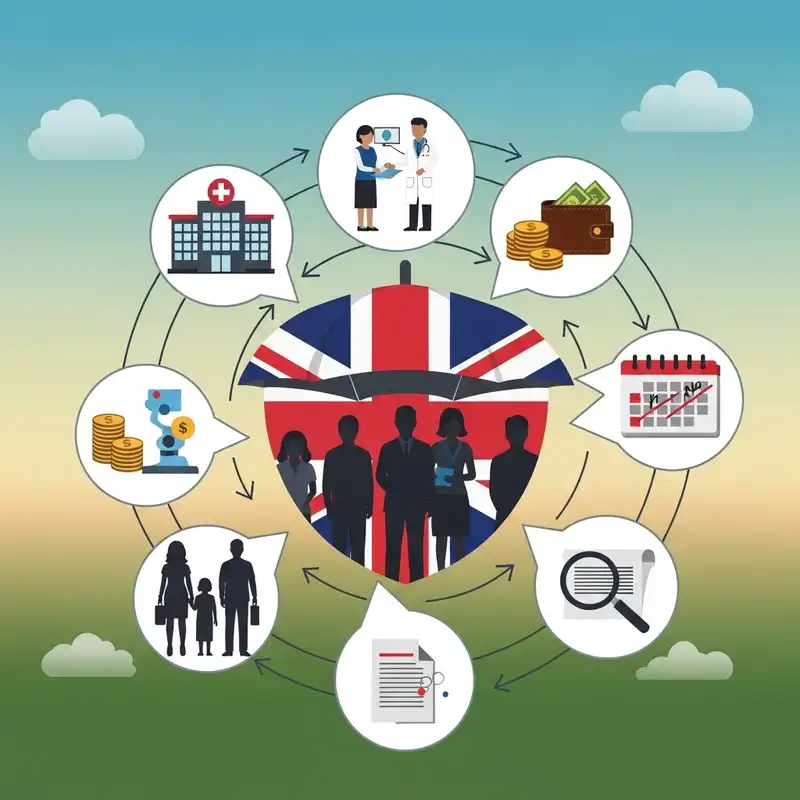
Powering Your Region's Future: How Insurers Are Evolving Cover for UK Economic Transformation & Workforce Growth
UK LCIIP & Your Regional Growth Story: Insurers Adapting Cover for Local Economic Transformation & Workforce Evolution
The United Kingdom is a dynamic tapestry of regional economies, each with its unique character, challenges, and growth trajectories. From the bustling financial hubs of London to the burgeoning green energy clusters of the North East, and from the digital innovation centres of Manchester to the rural agricultural landscapes of the South West, the economic landscape is in constant flux. This profound regional economic transformation, coupled with significant shifts in how and where we work, is fundamentally reshaping the risks individuals and families face.
In this ever-evolving environment, traditional life insurance, critical illness cover, and income protection (LCIIP) models, once designed for a more uniform, industrialised workforce, are increasingly being challenged. Insurers are now at a pivotal juncture, compelled to adapt their offerings to reflect the nuanced realities of regional growth stories and the evolving nature of work. This article delves deep into how the UK's diverse economic landscape and the transformation of its workforce are influencing the LCIIP market, and how forward-thinking insurers are rising to meet these complex new demands.
Understanding these intricate connections is not merely an academic exercise; it's vital for every individual and business seeking robust financial protection in 21st-century Britain. Your insurance needs are not static; they are intimately tied to where you live, what you do, and the economic tides of your local area.
Understanding LCIIP: A Foundation for Financial Resilience
Before we explore the intricate dance between regional economics and insurance, it's crucial to solidify our understanding of the core components of LCIIP. These three forms of protection act as critical safety nets, designed to provide financial stability when life takes an unexpected turn.
Life Insurance: Protecting Loved Ones
Life insurance is designed to provide a lump sum or regular payments to your beneficiaries if you pass away during the policy term. Its primary purpose is to offer financial security to those you leave behind, helping them cope with mortgage payments, everyday living expenses, outstanding debts, or even future costs like children's education.
Types of Life Insurance:
- Term Life Insurance: Covers you for a specific period (e.g., 10, 20, 30 years). If you die within this term, your beneficiaries receive the payout. There are typically two forms:
- Level Term: The payout remains the same throughout the policy term.
- Decreasing Term: The payout decreases over the term, often aligning with a repayment mortgage.
- Whole of Life Insurance: Guarantees a payout whenever you die, as long as premiums are paid. It's generally more expensive but offers lifelong cover.
- Family Income Benefit: Instead of a lump sum, this pays a regular tax-free income to your family for the remainder of the policy term if you pass away.
The relevance of different life insurance types varies significantly depending on an individual's regional context and workforce role. For instance, in regions with high property prices and large mortgages, such as London and the South East, robust decreasing term or level term cover is often essential. Conversely, self-employed individuals or those in the gig economy, who may have less stable incomes, might find family income benefit particularly appealing, ensuring a consistent safety net for their dependants.
Critical Illness Cover: Battling the Unexpected
Critical illness cover pays out a tax-free lump sum if you are diagnosed with a specified serious illness during the policy term. While policies vary, common conditions typically covered include certain types and stages of cancer, heart attack, stroke, multiple sclerosis, and major organ transplants. The payout can be used for anything, from covering medical expenses not met by the NHS, adapting your home, replacing lost income, or simply reducing financial stress during a difficult time.
The incidence and prevalence of certain illnesses can vary regionally across the UK due to a complex interplay of socioeconomic factors, lifestyle choices, environmental influences, and healthcare access. For example, areas with higher levels of deprivation or specific industrial legacies might exhibit different health profiles. Insurers are increasingly looking at these regional health disparities and their potential impact on claims, though underwriting remains largely individualised. The rising pressure on the NHS also means individuals increasingly seek critical illness cover as a means to access private medical treatment or simply have financial freedom during recovery.
Income Protection: Safeguarding Your Livelihood
Perhaps the most immediately relevant LCIIP product in a rapidly changing workforce is income protection. This type of policy pays out a regular, tax-free income if you're unable to work due to illness or injury. It continues to pay until you recover, return to work, or reach the end of the policy term (often retirement age). This differs significantly from short-term payment protection insurance (PPI) or statutory sick pay (SSP), offering a much more comprehensive and long-term safety net.
Key Features of Income Protection:
- Deferred Period: The length of time you must be unable to work before payments begin (e.g., 4, 8, 13, 26, 52 weeks). This should align with any sick pay you receive from an employer or your emergency savings.
- Benefit Amount: Typically, you can cover between 50% and 70% of your gross income. This is designed to replace lost earnings without incentivising not working.
- Own Occupation vs. Suited Occupation vs. Any Occupation: This clause is crucial. 'Own occupation' is the most comprehensive, meaning you're covered if you can't perform your specific job. 'Any occupation' is the least, only paying out if you can't do any job at all.
For the growing ranks of self-employed individuals, freelancers, and gig economy workers, who typically lack employer-sponsored sick pay schemes, income protection is not just beneficial – it's often an absolute necessity. Even for those in stable employment, the increasing demands and pressures of modern work, coupled with evolving regional economies, make a robust income protection plan more vital than ever.
The UK's Regional Economic Tapestry: A Driver for Change
The UK's economic landscape is far from homogenous. Each region possesses distinct characteristics, strengths, and vulnerabilities, all of which have profound implications for the types of risks individuals face and, consequently, their LCIIP needs.
North vs. South Divide (and Nuances)
Historically, the UK has been characterised by a significant North-South economic divide, with the South East, particularly London, acting as the primary economic engine. While this broad disparity persists, recent years have seen concerted efforts towards "levelling up" and fostering growth in other regions, leading to more nuanced economic stories.
For example, while London remains a global financial and tech powerhouse, generating a disproportionately high Gross Value Added (GVA), regions like the North West and West Midlands are experiencing significant investment in advanced manufacturing, digital industries, and infrastructure. Conversely, some areas still grapple with the legacy of declining traditional industries, facing challenges in unemployment, health outcomes, and access to new economic opportunities.
Key Regional Economic Transformations:
Let's explore some specific regional dynamics and their implications:
-
London & South East:
- Economy: Dominated by finance, technology, digital services, creative industries, and professional services. High concentration of global corporations and startups. High property costs.
- Workforce: Highly competitive, fast-paced, often long working hours. High proportion of high earners, but also a significant gig economy presence in sectors like delivery and ride-sharing.
- LCIIP Implications: High mortgage values necessitate substantial life cover. Critical illness cover is vital given the intense work culture and potential for stress-related illnesses. Income protection is crucial for high earners, particularly those in performance-driven roles where sick pay might be limited after a short period. The high cost of living means any loss of income can be devastating.
-
Midlands (West & East):
- Economy: A powerhouse for advanced manufacturing (automotive, aerospace), logistics, engineering, and increasingly, digital and clean energy technologies. Major infrastructure projects like HS2 are also driving growth.
- Workforce: Strong manufacturing base, but also a growing professional services sector. A focus on re-skilling and automation.
- LCIIP Implications: Individuals in manufacturing or heavy industry may face specific occupational risks, making income protection for injury or critical illness important. For those in growing tech or advanced manufacturing sectors, protecting highly specialised skills and income is paramount. The shift from traditional roles to new ones highlights the need for flexible income protection that covers a broad range of eventualities, not just specific accidents.
-
North West:
- Economy: A diverse economy with strengths in digital and creative industries (especially Manchester and Liverpool), life sciences, advanced materials, and energy. Significant urban regeneration.
- Workforce: A growing young professional base in cities, alongside established industrial workforces. A mix of office-based and practical roles.
- LCIIP Implications: The burgeoning tech sector creates a demand for robust income protection for highly skilled workers. The older industrial legacy may mean a higher incidence of certain health conditions, making critical illness cover particularly valuable. Urban regeneration projects mean more construction jobs, where accident cover within income protection is key.
-
North East:
- Economy: Traditionally reliant on heavy industry (shipbuilding, coal), but now a leader in green energy (offshore wind), life sciences, advanced manufacturing, and electric vehicle production.
- Workforce: Transitioning from traditional industries, with a focus on re-skilling for new sectors. Potential for long-term health issues from historical industries.
- LCIIP Implications: Protecting income during career transitions or re-skilling periods is vital. Individuals in new, physically demanding green energy roles may benefit from comprehensive income protection. The legacy of industrial health issues might lead to a greater need for critical illness cover among older workers.
-
Yorkshire & The Humber:
- Economy: Strong in digital tech (Leeds, Sheffield), health-tech, food and drink manufacturing, financial services, and renewables (Hull and the Humber estuary).
- Workforce: Diversifying, with growing professional sectors alongside traditional manufacturing and agricultural bases.
- LCIIP Implications: The growth of health-tech and digital sectors means intellectual capital is key, requiring protection for highly skilled individuals. For those in physical industries, protecting against injury and illness remains a core need. The region's diverse economic base means insurance solutions need to be adaptable.
-
South West:
- Economy: Tourism, aerospace (Bristol), rural and agricultural economy, marine industries, and emerging tech clusters.
- Workforce: A mix of seasonal workers in tourism, highly skilled engineers, and traditional rural occupations. High levels of self-employment in some areas.
- LCIIP Implications: Seasonal income in tourism presents challenges for income protection, potentially requiring policies that account for fluctuating earnings. High-value jobs in aerospace demand significant income protection. The prevalence of self-employment means many lack employer benefits, making personal LCIIP essential.
-
Wales:
- Economy: Manufacturing, public sector, tourism, agriculture, and increasing investment in renewable energy and digital sectors.
- Workforce: Diverse, with a focus on national industries, but also efforts to grow high-tech sectors.
- LCIIP Implications: The mix of heavy industry and public sector work requires a nuanced approach to LCIIP. Emphasis on critical illness cover for specific occupational health risks in manufacturing, and income protection that caters to both public sector stability and private sector volatility.
-
Scotland:
- Economy: Strong in energy (historical oil & gas, now a global leader in offshore wind), finance, life sciences, tourism, and higher education.
- Workforce: Highly skilled workforce in energy and finance. Significant rural population involved in agriculture and tourism.
- LCIIP Implications: For those in high-risk energy sectors, robust critical illness and income protection are vital. The financial services sector demands comprehensive LCIIP for high earners. Scotland's distinct legal system also means financial planning, including insurance, needs to be considered within that context.
-
Northern Ireland:
- Economy: Growing tech sector, agri-food, tourism, and advanced manufacturing. Significant cross-border trade with the Republic of Ireland.
- Workforce: A young, educated workforce in tech, alongside established sectors.
- LCIIP Implications: The burgeoning tech sector drives demand for income protection for highly skilled professionals. The agri-food sector implies a need for cover for more physically demanding roles. Unique geopolitical considerations might also influence economic stability and therefore insurance needs.
Table 1: Regional Economic Specialisations & Insurance Implications
| UK Region | Key Economic Sectors | Workforce Characteristics | LCIIP Implications |
|---|---|---|---|
| London & South East | Finance, Tech, Digital, Professional Services | High earners, fast-paced, significant gig economy | High life cover for mortgages; robust income protection for high salaries; critical illness for stress-related conditions. |
| Midlands | Advanced Manufacturing, Logistics, Engineering, Green | Industrial base, re-skilling focus, growing digital | Income protection for occupational risks; critical illness for evolving health profiles; flexible cover for career transitions. |
| North West | Digital, Creative, Life Sciences, Advanced Materials | Young professionals, diverse, urban regeneration | High income protection for tech/creative roles; critical illness for older industrial health legacies; adaptable cover for mixed employment. |
| North East | Green Energy, Life Sciences, Advanced Manufacturing | Transitioning workforce, re-skilling focus | Income protection for new physically demanding roles; critical illness for long-term health concerns from historical industries; support during economic shifts. |
| Yorkshire & Humber | Digital, Health-Tech, Food & Drink, Renewables | Diversifying, professional growth, traditional sectors | Income protection for specialised tech roles; critical illness for varying health needs; comprehensive cover for diverse occupations. |
| South West | Tourism, Aerospace, Rural, Marine, Emerging Tech | Seasonal workers, highly skilled engineers, self-employed | Flexible income protection for fluctuating earnings; high value income protection for aerospace; essential LCIIP for high proportion of self-employed. |
| Wales | Manufacturing, Public Sector, Tourism, Green Energy | Diverse, national industries focus | Income protection for manufacturing roles; critical illness for occupational hazards; adaptable cover for mixed employment types. |
| Scotland | Energy (Renewables), Finance, Life Sciences | Highly skilled (energy/finance), rural | High critical illness & income protection for high-risk/high-value sectors; tailored cover for distinct Scottish legal and economic context. |
| Northern Ireland | Tech, Agri-Food, Advanced Manufacturing, Tourism | Young, educated tech workforce, established sectors | Income protection for tech professionals; critical illness for agri-food/manufacturing; adaptable cover for unique economic circumstances and cross-border considerations. |
Workforce Evolution: New Risks, New Needs
Beyond regional economic shifts, the very nature of work in the UK is undergoing a profound transformation. This evolution introduces new risks and fundamentally alters individuals' insurance requirements.
The Gig Economy and Self-Employment Boom
The rise of the gig economy and a surge in self-employment have been defining features of the UK labour market over the last decade. As of Q1 2024, the ONS reported approximately 4.2 million self-employed individuals in the UK, representing about 12.8% of the total workforce. While offering flexibility, this model often comes without traditional employer benefits such as sick pay, paid holidays, or workplace pensions.
- Challenges for Traditional LCIIP: Standard income protection policies were largely designed for employees with a fixed salary and clear employment contracts. For gig workers whose income fluctuates and employment status can be ambiguous, traditional policies may not fit.
- Need for Flexible Income Protection: Insurers are now developing solutions for the self-employed, offering policies that can accommodate variable income, and often a shorter deferred period to bridge immediate income gaps. Some policies are also exploring ways to cover periods where work is unavailable due to market conditions, rather than just illness or injury.
Automation and AI: Job Displacement and Re-skilling
The accelerating pace of automation and the integration of Artificial Intelligence (AI) are poised to reshape many industries. While these technologies promise increased productivity, they also raise concerns about job displacement, particularly in routine or manual roles. Research by the Bank of England in 2015 suggested that up to 15 million UK jobs (around 48% of the workforce) could be automated. While this figure is often debated and actual displacement may be slower, the long-term trend is undeniable.
- Impact on Long-Term Career Stability: For individuals whose roles are susceptible to automation, the prospect of long-term income stability can be uncertain. This might influence the desired term of an income protection policy.
- Implications for Income Protection Duration: If a long-term illness prevents someone from working in their highly specialised, potentially automatable field, income protection needs to cover a period of re-skilling or transition to a new career, rather than just a return to the original role.
Remote and Hybrid Work
The COVID-19 pandemic dramatically accelerated the adoption of remote and hybrid working models. This shift has implications for LCIIP:
- Changes in Commute Risks: Fewer commutes may reduce certain accident risks, but ergonomic issues from home office setups or sedentary lifestyles might increase other health problems.
- Mental Health Implications: While hybrid work offers flexibility, it can also lead to feelings of isolation, blurred work-life boundaries, and increased screen time, potentially impacting mental wellbeing. Insurers are seeing an increase in claims related to mental health, highlighting the need for policies that provide robust support for these conditions.
An Ageing Workforce
The UK's population is ageing, and people are working longer due to factors like increased life expectancy, changing retirement ages, and financial necessity. The ONS projected in 2020 that by 2045, one in four people in the UK will be aged 65 years or over.
- Later Retirement: Working into older age increases the likelihood of experiencing long-term health conditions that could prevent work.
- Increased Prevalence of Long-Term Health Conditions: Older workers are more susceptible to conditions like cardiovascular disease, diabetes, and musculoskeletal issues. This drives demand for critical illness cover and income protection that extends to later working ages, with suitable premiums and comprehensive coverage for age-related illnesses.
Mental Health in the Workplace
There has been a significant and welcome increase in awareness and reporting of mental health conditions. Recent statistics from the Labour Force Survey (LFS) for 2022/23 show that stress, depression, or anxiety accounted for 49% of all work-related ill health cases.
- Rising Claims for Mental Health Conditions: Insurers are seeing a rise in claims related to mental health issues, making it a key area of focus for product development and support services.
- How LCIIP Policies Are Adapting: Many income protection policies now explicitly cover mental health conditions, and some critical illness policies are beginning to include severe mental health diagnoses. Furthermore, insurers are increasingly offering value-added services such as mental health support lines, counselling, and cognitive behavioural therapy (CBT) access as part of their offerings.
Table 2: Workforce Trends and Their LCIIP Impact
| Workforce Trend | Description | LCIIP Impact & Adaptation Needed |
|---|---|---|
| Gig Economy / Self-Employment Boom | Increase in independent contractors, freelancers, and gig workers (e.g., delivery drivers, consultants). | Income Protection: Flexible policies to accommodate variable income, shorter deferred periods, no employer sick pay. Critical Illness: Essential for sole traders with no safety net. Life: Crucial for dependants if primary earner is self-employed. |
| Automation & AI | Robotics and AI replacing routine tasks, creating demand for new skills. | Income Protection: Need for longer payout periods to cover re-skilling; consideration of 'any occupation' vs. 'own occupation' clauses given potential job obsolescence. Life/Critical Illness: Less direct impact, but general economic stability affects premium affordability. |
| Remote & Hybrid Work | Significant proportion of workforce working from home or a mix of home/office. | Income Protection: Increased focus on mental health cover (anxiety, depression from isolation/burnout); assessment of ergonomic-related injuries. Critical Illness: Attention to lifestyle-related conditions (sedentary behaviour). Life: Less direct impact, but changing family dynamics. |
| Ageing Workforce | People working longer due to increased life expectancy and changing retirement ages. | Income Protection: Demand for policies with longer terms (to retirement age); tailored underwriting for older age-related conditions. Critical Illness: Higher likelihood of claims for age-related illnesses (e.g., heart disease, cancer). Life: Continued need for cover well into later life. |
| Mental Health Awareness in Workplace | Growing recognition and reporting of mental health conditions like stress, anxiety, depression. | Income Protection: Comprehensive cover for mental health conditions; integration of wellbeing support (e.g., counselling, CBT). Critical Illness: Potential for inclusion of severe mental health conditions in some policies. Life: Mental health can impact overall wellbeing and longevity, influencing underwriting. |
| Skill Gaps & Re-skilling | Mismatch between available skills and industry needs, driving need for continuous learning. | Income Protection: Policies that support career transition if illness/injury prevents return to specific previous role; potentially longer benefit periods to allow for re-training. Life/Critical Illness: Broader financial stability for families during periods of career change or unemployment due to skills mismatch. |
How Insurers Are Adapting: Innovation and Regional Focus
Recognising these profound shifts, forward-thinking LCIIP providers are not standing still. They are actively innovating to ensure their products remain relevant, accessible, and truly protective for the modern UK individual.
Tailored Products and Flexible Policies
One of the most significant adaptations is the move away from 'one-size-fits-all' policies towards more modular and flexible offerings:
- Self-Employed/Gig Worker Solutions: Specific income protection products designed for those with variable earnings, often requiring evidence of income over a longer period (e.g., 2-3 years) rather than just the last payslip. Some even offer a "fixed payment" option regardless of fluctuating income.
- Modular Policies: Allowing customers to build their own protection package, adding or removing components (e.g., adding critical illness to life cover) or adjusting benefit amounts as their lives and regional economic circumstances change.
- Guaranteed Insurability Options: These allow policyholders to increase their cover at certain life events (e.g., marriage, birth of a child, salary increase, taking on a larger mortgage) without further medical underwriting. This is crucial in dynamic regional economies where financial commitments can change rapidly.
- Shorter-Term Income Protection: While long-term cover is ideal, some insurers offer shorter-term income protection (e.g., 1 or 2 years payout maximum) which can be more affordable and suitable for specific short-term risks or for younger individuals starting their careers.
Data-Driven Underwriting
The availability of vast datasets and advanced analytics is transforming how insurers assess risk:
- Utilising Regional Health Data: While not yet a primary driver for individual underwriting, aggregated regional health statistics (e.g., obesity rates, prevalence of certain diseases from Public Health England or ONS) are informing insurers about general population health trends, potentially influencing product design and pricing strategies at a macro level.
- Economic Forecasts: Insurers are increasingly integrating regional economic forecasts and employment trends into their risk models, helping them understand the stability of different occupations and industries across the UK. This might inform their occupational classifications for income protection.
- Personalised Risk Assessment: Beyond regional data, insurers are using individual data (with consent) to offer more personalised premiums. This could include insights from wearable tech (though less common for LCIIP than health insurance), or detailed occupational questionnaires that assess specific risks of emerging jobs.
Holistic Health and Wellbeing Services
Many LCIIP providers are moving beyond merely paying claims to actively supporting policyholders' health and wellbeing, aiming to prevent claims or facilitate faster recovery:
- GP Helplines: Access to 24/7 remote GP services.
- Mental Health Support: Helplines, online counselling, cognitive behavioural therapy (CBT) services. This is particularly relevant given the rise in mental health claims and regional variations in NHS mental health service access.
- Second Medical Opinions: Access to expert opinions for serious diagnoses.
- Rehabilitation Services: Support and guidance to help individuals return to work after illness or injury, often tailored to specific occupational demands, which varies significantly by region.
- Gym Discounts/Wellness Programs: Incentivising healthier lifestyles.
These added-value services are a win-win: they provide tangible benefits to policyholders and can potentially reduce claims for insurers by fostering better health outcomes.
Partnerships and Community Engagement
To truly understand and serve regional needs, some insurers are forging local partnerships:
- Collaborating with Local Councils: Understanding regional economic development plans, specific health challenges, or social deprivation factors.
- Working with Regional Businesses/Chambers of Commerce: Gaining insights into local employment trends, emerging industries, and the specific protection needs of regional workforces.
- Community Programmes: Investing in local health or education initiatives, which not only builds goodwill but also provides ground-level insight into regional dynamics.
Technology Integration
Digital transformation is key to improving efficiency, accessibility, and customer experience:
- Online Application Portals: Streamlined, user-friendly processes for obtaining quotes and applying for cover.
- Digital Claims Processes: Faster and more transparent claims handling.
- Telematics/Wearables (Emerging): While more prevalent in car or health insurance, the potential exists for LCIIP providers to integrate data from wearables (with consent) for risk assessment or to offer premium discounts based on healthy behaviours, though this is still nascent in the LCIIP space.
- AI-Powered Chatbots: For initial enquiries and basic support, freeing up human advisors for more complex cases.
Table 3: Insurer Adaptations to Regional & Workforce Dynamics
| Adaptation Category | Specific Insurer Actions | Benefit to Policyholders / Market Relevance |
|---|---|---|
| Tailored Products | Self-employed income protection (variable income focus); modular policies; guaranteed insurability options; short-term IP. | Addresses specific needs of gig workers/freelancers lacking traditional benefits. Allows policies to evolve with changing regional employment and life circumstances (e.g., new job in a growth sector, higher mortgage in a thriving city). Provides affordable entry points. |
| Data-Driven Underwriting | Utilisation of regional health data (macro level); integration of economic forecasts; personalised risk assessment. | Potentially more accurate pricing based on regional/occupational risks. Faster and more efficient underwriting processes. Recognises the impact of local economic stability on long-term earnings and ability to pay premiums. |
| Holistic Wellbeing Services | 24/7 GP helplines; mental health support (counselling/CBT); second medical opinions; rehabilitation programmes; wellness incentives. | Proactive health management to reduce likelihood of claims. Supports faster recovery and return to work. Addresses rising mental health concerns across all regions and work types. Provides tangible value beyond a payout, crucial in areas with stretched public health services. |
| Partnerships & Engagement | Collaboration with local councils, regional businesses, community groups; sponsoring local initiatives. | Deeper understanding of specific regional economic challenges and workforce needs. Builds trust and relevance within local communities. Helps identify emerging risks (e.g., new industrial health hazards) and opportunities. |
| Technology Integration | Online applications & digital claims; AI chatbots; potential future use of wearables/telematics for risk assessment (with consent). | Streamlined, convenient access to services. Faster claims processing when financial support is most needed. Improved customer experience. Facilitates greater data analysis for better product development in line with changing regional dynamics. |
The Role of Expert Advice: Navigating Complexity
The increasing complexity of the LCIIP market, driven by regional economic shifts and workforce evolution, makes independent, expert advice more crucial than ever. For individuals trying to navigate the myriad of options, understanding the nuances of different policies and how they align with their unique circumstances can be overwhelming.
This is where specialist insurance brokers like WeCovr come in. As an expert insurance broker, we are dedicated to helping people compare plans from all major UK insurers to find the right coverage. We pride ourselves on our deep understanding of the UK's diverse insurance landscape and the specific regional and occupational factors that can influence your needs.
We don't just offer you a generic quote; we take the time to understand your personal regional growth story. Are you a freelancer in the booming tech scene of Bristol? Are you a seasoned engineer in the manufacturing heartland of the Midlands? Or perhaps a small business owner in a regenerating coastal town? Your individual circumstances, including your job, income stability, family structure, and local economic environment, all play a vital role in determining the most appropriate and cost-effective LCIIP solution.
We work by:
- Assessing Your Unique Needs: We conduct a thorough needs analysis, considering your regional economic context, employment type, dependants, debts, and lifestyle.
- Market Comparison: We compare a wide array of policies from across the entire UK LCIIP market, identifying insurers that offer innovative solutions tailored to evolving workforce models and regional risks.
- Explaining the Fine Print: We help you understand the crucial details – deferred periods, 'own occupation' clauses, critical illness definitions, exclusions – ensuring you make an informed decision.
- Finding the Right Fit: We guide you towards policies that offer the best value and most comprehensive cover for your specific situation, rather than just the cheapest option. When you choose WeCovr, you're not just getting a policy; you're gaining a partner who understands the intricacies of your regional story and workforce journey.
Case Studies: Regional Resilience in Action
To illustrate how these adaptations play out in real life, let's look at a few hypothetical scenarios.
Case Study 1: The Renewable Energy Engineer in the North East
Sarah, 38, lives in Teesside. She left a traditional manufacturing role five years ago and re-skilled into offshore wind engineering, now working for a company developing new turbine technology. Her income has increased significantly, but her job involves demanding physical work and travel. Her partner also works in a related field, and they have a young child and a mortgage.
- Regional Context: North East England is a hub for green energy. While offering new opportunities, these roles can be physically demanding and sometimes involve working in challenging environments. The region is still transitioning from older industries.
- Workforce Evolution: Sarah is a prime example of re-skilling for an emerging industry. Her specialised skills are valuable, but any injury could significantly impact her ability to work in this specific field.
- LCIIP Solution: Sarah sought comprehensive income protection with an 'own occupation' definition, ensuring she'd be covered if she couldn't perform her specific engineering tasks. A shorter deferred period (4 weeks) was chosen to bridge the gap until her company's sick pay ended. She also opted for critical illness cover to provide a lump sum if she were diagnosed with a serious illness, allowing her to focus on recovery without financial stress. Her level term life insurance covers their mortgage and provides a financial safety net for her family, reflecting the value of her significant, yet potentially vulnerable, income stream.
Case Study 2: The Freelance Digital Artist in Bristol
Liam, 30, lives in Bristol. He's a talented freelance digital artist, primarily working on animation projects for various clients. His income is good but fluctuates, depending on projects. He rents a flat and lives alone. He loves the flexibility but often worries about what would happen if he couldn't work.
- Regional Context: Bristol is a dynamic tech and creative hub with a large freelance and self-employed population. Rents are high, and the gig economy thrives.
- Workforce Evolution: Liam epitomises the self-employed, gig economy worker. He lacks traditional sick pay or employer benefits. His income stability relies entirely on his ability to work.
- LCIIP Solution: Liam chose a flexible income protection policy designed for the self-employed. This policy allowed him to declare his average income over the last two years, accounting for fluctuations. He opted for a longer deferred period (13 weeks) as he had a small emergency fund, making the premiums more affordable. This cover provides a regular income if he's too ill or injured to work, safeguarding his livelihood. While he considered life cover, his immediate priority was income protection due to his solo living situation and lack of a stable employer. He also added a basic critical illness cover to ensure a lump sum if a severe illness strikes, as any long-term recovery would deplete his savings quickly.
Case Study 3: The Hospitality Worker in Cornwall
Maria, 45, works year-round in a popular hotel in Cornwall. Her income is fairly stable, but during quieter seasons, she often works fewer hours. She has two school-age children and relies on her income to support them. Public transport is limited in her rural area, making a car essential.
- Regional Context: Cornwall's economy is heavily reliant on tourism, leading to seasonal employment patterns. Rural areas can have limited access to healthcare facilities compared to urban centres.
- Workforce Evolution: While not strictly 'gig economy', the seasonal nature of some traditional jobs can lead to fluctuating income or fewer hours during off-peak times, posing challenges for traditional income calculations.
- LCIIP Solution: Maria's income protection was carefully structured to accommodate her fluctuating hours, based on her average annual earnings. A policy that factors in a slightly lower but consistent annual income was chosen, ensuring she receives a payout if she can't work due to illness or injury. Given the importance of her car for commuting in a rural area, and the general health challenges that can arise from physically demanding hospitality work, a critical illness policy was also taken out. This lump sum would allow her to cover essential bills, continue car payments, and potentially pay for private medical consultations if NHS waiting lists were long, ensuring her and her children's financial stability during a difficult period. Her decreasing term life insurance ensures the mortgage is covered, offering peace of mind for her children's future.
Looking Ahead: The Future of LCIIP in the UK
The forces of regional economic transformation and workforce evolution are relentless, and the LCIIP market will continue to evolve in response. What can we expect in the coming years?
- Greater Personalisation and Granularity: Expect even more refined underwriting and product design, moving beyond broad occupational categories to highly specific risk profiles influenced by regional and local economic data, lifestyle choices, and even genetic predispositions (with strict ethical guidelines and consent).
- Proactive Health Management Integration: Insurers will likely deepen their involvement in preventative health, offering more extensive wellness programmes, digital health tools, and proactive support to keep policyholders healthy and reduce claim instances. This proactive approach benefits everyone, fostering a healthier society and more sustainable insurance models.
- Modular and On-Demand Cover: The rise of flexible work might lead to more "on-demand" or pay-as-you-go insurance options, particularly for income protection, where cover can be scaled up or down based on current work patterns.
- Collaboration with Fintech and Healthtech: Expect stronger partnerships between insurers and innovative technology companies to leverage data, improve customer experience, and deliver more efficient and tailored services.
- Focus on Financial Resilience Beyond Payouts: Insurers may increasingly offer financial wellbeing advice, debt management support, and career transition resources as part of their holistic offering, especially relevant for those navigating volatile regional economies or career changes.
- Sustainability and ESG Considerations: As climate change impacts regional economies (e.g., increased flooding in specific areas), insurers will integrate environmental, social, and governance (ESG) factors into their risk assessments and investment strategies, potentially influencing premium calculations or product availability in at-risk areas.
Conclusion: Protecting What Matters in a Changing UK
The UK's regional growth story is one of constant evolution, innovation, and adaptation. From the reindustrialisation of the North to the booming digital economies of the South, and from the rise of the gig economy to the ageing workforce, the landscape of risk is continuously shifting.
In this dynamic environment, Life, Critical Illness, and Income Protection insurance are more than just financial products; they are essential pillars of resilience. The adaptability of insurers to these regional economic transformations and workforce evolutions is paramount to ensuring that individuals and families across the UK can continue to protect what matters most – their health, their income, and their loved ones.
As you navigate your own professional and personal journey within this evolving UK, it’s crucial to ensure your LCIIP strategy aligns with your unique regional context and work-life realities. Don't rely on outdated assumptions or generic policies. Seek advice that understands your specific needs.
When you choose WeCovr, you're not just getting a policy; you're gaining a partner who understands the intricacies of your regional story and workforce journey. We're here to help you compare the market, understand your options, and secure the tailored protection you deserve, ensuring you're financially resilient, no matter where your UK growth story takes you.
Why life insurance and how does it work?
What is Life Insurance?
Life insurance is an insurance policy that can provide financial support for your loved ones when you or your joint policy holder passes away. It can help clear any outstanding debts, such as a mortgage, and cover your family's living and other expenses such costs of education, so your family can continue to pay bills and living expenses. In addition to life insurance, insurance providers offer related products such as income protection and critical illness, which we will touch upon below.How does it work?
Life insurance pays out if you die. The payout can be in the form of a lump sum payment or can be paid as a replacement for a regular income. It's your decision how much cover you'd like to take based on your financial resources and how much you'd like to leave to your family to help them deal with any outstanding debts and living expenses. Your premium depends on a number of factors, including your occupation, health and other criteria.The payout amount can change over time or can be fixed. A level term or whole of life policy offers a fixed payout. A decreasing term policy offers a payout that decreases over the term of the cover.
With critical illness policies, a payout is made if you’re diagnosed with a terminal illness with a remaining life expectancy of less than 12 months. While income protection policies ensure you can continue to meet your financial commitments if you are forced to take an extended break from work. If you can’t work because you’ve had an accident, fallen sick, or lost your job through no fault of your own, income protection insurance pays you an agreed portion of your salary each month.
Income protection is particularly helpful for people in dangerous occupations who want to be sure their mortgage will always be covered. Income protection only covers events beyond your control: you’re much less likely to be covered if you’re fired from your job or if you injure yourself deliberately.
Questions to ask yourself regarding life insurance
Just ask yourself:👉 Who would pay your mortgage or rent if you were to pass away or fall seriously ill?
👉 Who would pay for your family’s food, clothing, study fees or lifestyle?
👉 Who would provide for the costs of your funeral or clear your debts?
👉 Who would pay for your costs if you're unable to work due to serious illness or disability?
Many families don’t realise that life, income protection and critical illness insurance is one of the most effective ways to protect their finances. A great insurance policy can cover costs, protect a family from inheriting debts and even pay off a mortgage.
Many would think that the costs for all the benefits provided by life insurance, income protection insurance or critical illness insurance are too high, but the great news is in the current market policies are actually very inexpensive.
Benefits offered by income protection, life and critical illness insurance
Life insurance, income protection and critical illness insurance are indispensable for every family because a child loses a parent every 22 minutes in the UK, while every single day tragically 60 people suffer major injuries on the UK roads. Some people become unable to work because of sickness or disability.Life insurance cover pays out a lump sum to your family, loved ones or whomever you choose to get the money. This can be used to secure the financial future of your loved ones meaning they would not have to struggle financially in the event of your death.
If it's a critical illness cover, the payout happens sooner - upon diagnosis of a serious illness, disability or medical condition, easing the financial hardship such an event inevitably brings.
Income protection insurance can be very important for anyone who relies on a pay check to cover their living costs, but it's especially important if you’re self-employed or own a small business, where your employment and income is a bit less stable. It pays a regular income if you can't work because of sickness or disability and continues until you return to paid work or you retire.
In a world where 1 in 4 of us would struggle financially after just four weeks without work, the stark reality hits hard – a mere 7% of UK adults possess the vital shield of income protection. The urgency of safeguarding our financial well-being has never been more palpable.
Let's face it – relying on savings isn't a solution for everyone. Almost 25% of people have no savings at all, and a whopping 50% have £1,000 or less tucked away. Even more concerning, 51% of Brits – that's a huge 27 million people – wouldn't last more than one month living off their savings. That's a 10% increase from 2022.
And don't even think about state benefits being a safety net. The maximum you can expect from statutory sick pay is a mere £109.40 per week for up to 28 weeks. Not exactly a financial lifeline, right?
Now, let's tackle a common objection: "But I have critical illness insurance. I don't need income protection too." Here's the deal – the two policies apply to very different situations. In a nutshell:
- Critical illness insurance pays a single lump sum if you're diagnosed with or undergo surgery for a specified potentially life-threatening illness. It's great for handling big one-off expenses or debts.
- Income protection, on the other hand, pays a percentage of your salary as a regular payment if you can't work due to illness or injury. It's the superhero that tackles those relentless monthly bills.
Types of life insurance policies
Common reasons for getting a life insurance policy are to:✅ Leave behind an amount of money to keep your family comfortable
✅ Protect the family home and pay off the mortgage in full or in part
✅ Pay for funeral costs
Starting from as little as a couple of pounds per week, you can do all that with a Life Policy.
Level Term Life Insurance
One of the simplest forms of life insurance, level term life insurance works by selecting a length of time for which you would want to be covered and then deciding how much you would like your loved ones to receive should the worst happen. Should your life insurance policy pay out to your family, it would be in a lump sum amount that can be used in whatever way the beneficiary may wish.
Decreasing Term Life Insurance
Decreasing term life insurance works in the same way as level term, except the lump sum payment amount upon death decreases with time. The common use for decreasing term life cover is to protect against mortgage repayment as the lump sum decreases along with the principal of the mortgage itself.
Increasing Term Life Insurance
Increasing term life insurance aims to pay out a cash sum growing each year if the worst happens while covered by the policy. With increasing term life cover amount insured increases annually by a fixed amount for the length of the policy. This can protect your policy's value against inflation, which could be advantageous if you’re looking to maintain your loved ones’ living standards, continue paying off your mortgage in line with its repayment schedule and cover your children’s education fees.
Whole of Life Insurance
Whereas term life insurance policies only pay out if you pass away during their term, whole of life insurance pays out to your beneficiaries whenever this should happen. The most common uses for whole life insurance are to cover the costs of a funeral or as a vehicle for your family's inheritance tax planning.
Family Income Benefit
Family income benefit is a somewhat lesser-known product in the family of life insurance products. Paying out a set amount every month of year to your beneficiaries, it is the most cost-effective way of maintaining your family's living standards to an age where you'd expect them to be able to support themselves financially. The most common use would be for a family with children who are not working yet so are unable to take care of themselves financially.
Relevant Life Insurance
Relevant Life Insurance is a tax-efficient policy for a director or single employee. A simple level term life insurance product, it is placed in a specific trust to ensure its tax efficiency. The premiums are tax deductible and any benefit payable should a claim arise is also paid out tax free, which makes it an attractive product for entrepreneurs and their businesses.
Important Fact!
We can look at a more suitable option mid-term!
Why is it important to get life insurance early?
👉 Many people are very thankful that they had their life, income protection, and critical illness insurance cover in place before running into some serious issues. Critical illness and income protection insurance is as important as life insurance for protecting your family's finances.👉 We insure our cars, houses, bicycles and even bags! Yet our life and health are the most precious things we have.
Easily one of the most important insurance purchases an individual or family can make in their lifetime, the decision to buy life, income protection, critical illness and private medical health insurance can be made much simpler with the help of FCA-authorised advisers. They are the specialists who do the searching and analysis helping people choose between various types of life insurance policies available in the market, including income protection, critical illness and other types of policies most suitable to the client's individual circumstances.
It certainly won't do any harm if you speak with one of our experienced FCA-authorised insurance partner experts who are passionate about advising people on financial matters related to life insurance and are keen to provide you with a free consultation.
You can discuss with them in detail what affordable life, income protection, critical illness or private medical health insurance plan for the necessary peace of mind they would recommend! WeCovr works with some of the best advisers in the market.
By tapping the button below, you can book a free call with them in less than 30 seconds right now:
Our Group Is Proud To Have Issued 800,000+ Policies!
We've established collaboration agreements with leading insurance groups to create tailored coverage
























How It Works
1. Complete a brief form

2. Our experts analyse your information and find you best quotes

3. Enjoy your protection!

Any questions?
Learn more

Who Are WeCovr?
WeCovr is an insurance specialist for people valuing their peace of mind and a great service.👍 WeCovr will help you get your private medical insurance, life insurance, critical illness insurance and others in no time thanks to our wonderful super-friendly experts ready to assist you every step of the way.
Just a quick and simple form and an easy conversation with one of our experts and your valuable insurance policy is in place for that needed peace of mind!