TL;DR
With NHS waiting lists remaining a significant concern for millions across the UK, many are exploring private healthcare. At WeCovr, an FCA-authorised broker that has helped arrange over 900,000 policies, we understand that the first question is often: "How much does it actually cost?" This guide demystifies the price of private medical insurance and treatment. A 2025 guide to the price of common private treatments, from consultations to surgery Navigating the world of private healthcare can feel like a maze of confusing terms and hidden costs.
Key takeaways
- Speed of Access: This is the number one reason people go private. You can often see a specialist within days and have a procedure scheduled within weeks.
- Choice and Control: You can choose your consultant, select the hospital you're treated in, and schedule appointments at times that suit you.
- Comfort and Privacy: Treatment often includes a private, en-suite room, more flexible visiting hours, and a quieter, more comfortable environment.
- Self-funding (Pay-As-You-Go): You pay for every consultation, scan, and procedure directly out of your own pocket. This offers complete freedom but comes with financial risk. A straightforward procedure can quickly become eye-wateringly expensive if complications arise.
- Private Medical Insurance (PMI): You pay a regular monthly or annual premium to an insurance company. In return, the insurer covers the cost of eligible private treatment, up to the limits of your policy. This provides a safety net against unexpected medical bills.
With NHS waiting lists remaining a significant concern for millions across the UK, many are exploring private healthcare. At WeCovr, an FCA-authorised broker that has helped arrange over 900,000 policies, we understand that the first question is often: "How much does it actually cost?" This guide demystifies the price of private medical insurance and treatment.
A 2025 guide to the price of common private treatments, from consultations to surgery
Navigating the world of private healthcare can feel like a maze of confusing terms and hidden costs. This comprehensive guide is designed to give you a clear, honest, and realistic picture of what you can expect to pay for private medical treatment in the UK in 2025. We'll break down the costs of everything from an initial consultation to major surgery, helping you decide whether paying as you go or investing in private medical insurance is the right path for you.
Why Are More People in the UK Considering Private Treatment?
The National Health Service (NHS) is a national treasure, providing exceptional care to millions, especially for emergencies and complex chronic conditions. However, the system is under immense pressure. As of mid-2025, NHS England figures show that the waiting list for routine hospital treatment remains stubbornly high, with millions of people waiting for procedures. For many, waiting months or even over a year for a diagnosis or surgery isn't just an inconvenience; it can impact their quality of life, ability to work, and overall wellbeing.
This is where the private sector offers a compelling alternative. The primary benefits include:
- Speed of Access: This is the number one reason people go private. You can often see a specialist within days and have a procedure scheduled within weeks.
- Choice and Control: You can choose your consultant, select the hospital you're treated in, and schedule appointments at times that suit you.
- Comfort and Privacy: Treatment often includes a private, en-suite room, more flexible visiting hours, and a quieter, more comfortable environment.
It’s crucial to see private healthcare not as a replacement for the NHS, but as a complementary service for planned, non-emergency care.
How to Pay for Private Treatment: The Two Main Options
If you decide to pursue private healthcare, you have two primary ways to fund it:
- Self-funding (Pay-As-You-Go): You pay for every consultation, scan, and procedure directly out of your own pocket. This offers complete freedom but comes with financial risk. A straightforward procedure can quickly become eye-wateringly expensive if complications arise.
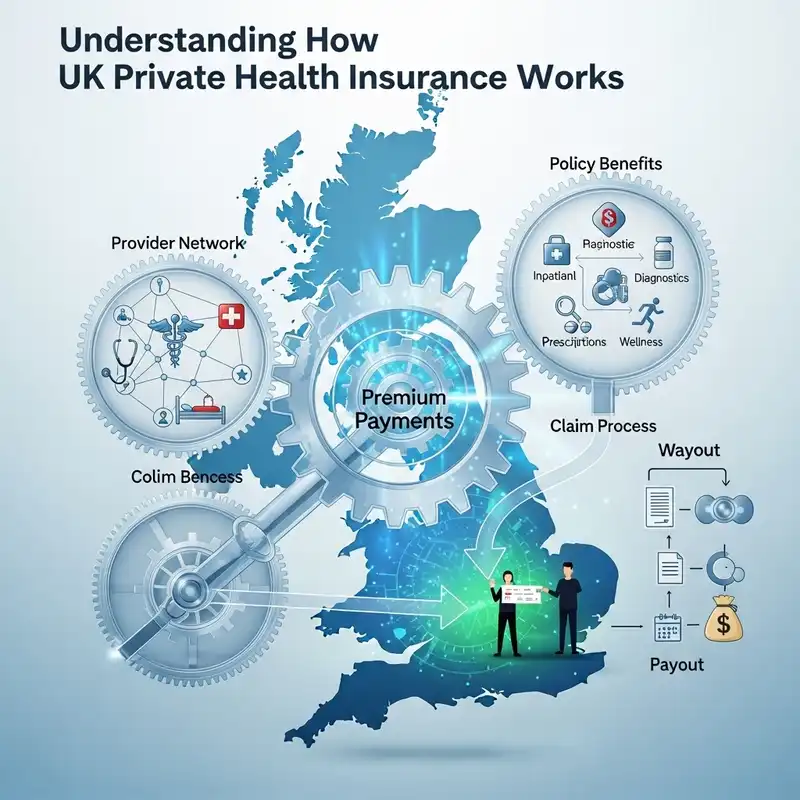
- Private Medical Insurance (PMI): You pay a regular monthly or annual premium to an insurance company. In return, the insurer covers the cost of eligible private treatment, up to the limits of your policy. This provides a safety net against unexpected medical bills.
While self-funding might seem cheaper for a one-off minor issue, the unpredictable nature of health means that costs can spiral. A private medical insurance policy provides peace of mind, knowing that if you need eligible treatment, the financial side is taken care of.
A Critical Note: What UK Private Medical Insurance Does and Doesn't Cover
This is the single most important concept to understand. Standard private medical insurance in the UK is designed to cover acute conditions that begin after your policy starts.
- An acute condition is a disease, illness, or injury that is likely to respond quickly to treatment and lead to a full recovery. Think of things like joint injuries requiring surgery, hernias, cataracts, or appendicitis.
Conversely, standard PMI policies do not cover:
- Pre-existing Conditions: Any illness or injury you had symptoms of, received advice for, or were treated for before taking out the policy. Some policies may cover them after a set period (usually two years) without symptoms or treatment, which is known as 'moratorium underwriting'.
- Chronic Conditions: Long-term, incurable conditions that require ongoing management, such as diabetes, asthma, high blood pressure, or arthritis. The NHS remains the primary provider for managing these conditions.
- Emergencies: If you have a heart attack or are in a serious accident, you should go straight to an NHS A&E department.
- Standard Maternity Care: Normal pregnancy and childbirth are typically excluded.
- Cosmetic Surgery: Procedures done purely for aesthetic reasons are not covered.
An expert PMI broker like WeCovr can help you navigate these exclusions and find a policy that clearly outlines what is and isn't included.
A Detailed Breakdown of Private Treatment Costs in the UK (2025 Estimates)
So, how much does it actually cost to "pay as you go"? The price of private treatment varies significantly based on the hospital, the consultant's reputation, and your location (London is typically 20-30% more expensive than other parts of the UK).
The following tables provide realistic cost ranges for 2025. These are "package prices" where available, which often bundle the hospital, surgeon, and anaesthetist fees together for a fixed cost.
Table 1: Private Consultation & Diagnostic Scan Costs
Before any treatment, you'll need a diagnosis. This journey almost always starts with a consultation and is often followed by diagnostic imaging.
| Service | Low-End Estimate | High-End Estimate (London) | Notes |
|---|---|---|---|
| Private GP Appointment (15 mins) | £80 | £150 | Can be virtual or in-person. |
| Initial Consultant Consultation | £200 | £350 | Follow-up appointments are usually less. |
| MRI Scan (one part) | £350 | £900 | Prices vary hugely by body part and hospital. |
| CT Scan (one part) | £450 | £1,100 | Often more expensive than an MRI. |
| Ultrasound Scan | £250 | £600 | Used for a wide range of diagnostics. |
| X-Ray (one part) | £100 | £250 | One of the most affordable scans. |
| Standard Blood Tests | £100 | £400+ | Cost depends on the complexity of the panel. |
Disclaimer: These are estimated costs for 2025 and can vary. Always get a fixed quote from the hospital before proceeding.
Table 2: Common Private Day-Case & Minor Surgery Costs
These are procedures where you are typically in and out of the hospital on the same day.
| Procedure | Low-End Estimate | High-End Estimate (London) | Notes |
|---|---|---|---|
| Cataract Surgery (per eye) | £2,500 | £4,500 | Price depends on the type of replacement lens. |
| Knee Arthroscopy (diagnostic) | £3,000 | £5,500 | A keyhole surgery to look inside the knee. |
| Inguinal Hernia Repair | £3,000 | £5,000 | A very common procedure. |
| Gastroscopy / Endoscopy | £1,800 | £3,000 | To investigate digestive issues. |
| Wisdom Tooth Removal (all four) | £2,500 | £4,000 | Price is for surgical removal, often under general anaesthetic. |
| Carpal Tunnel Release | £2,000 | £3,500 | Surgery to relieve pressure on a nerve in the wrist. |
Disclaimer: These are estimated costs for 2025 and can vary. Always get a fixed quote from the hospital before proceeding.
Table 3: Major Private Surgical Procedure Costs
For more complex operations that require an overnight hospital stay, the costs increase significantly.
| Procedure | Low-End Estimate | High-End Estimate (London) | Notes |
|---|---|---|---|
| Total Hip Replacement | £13,000 | £18,000 | One of the most successful and common major surgeries. |
| Total Knee Replacement | £14,000 | £19,500 | Similar in cost to a hip replacement. |
| Prostate Removal (Prostatectomy) | £15,000 | £25,000 | Robotic surgery options are often at the higher end. |
| Hysterectomy | £8,000 | £14,000 | Price varies based on the surgical method (e.g., keyhole). |
| Heart Bypass Surgery (CABG) | £25,000 | £40,000+ | A highly complex procedure with significant costs. |
| Spinal Fusion (1-2 vertebrae) | £18,000 | £30,000 | Complex spinal surgery costs can vary dramatically. |
Disclaimer: These are estimated costs for 2025 and can vary. Always get a fixed quote from the hospital before proceeding.
As you can see, the cost of a single major operation could easily wipe out years of savings. This is the primary risk that private medical insurance is designed to mitigate.
Is Private Health Cover a Cost-Effective Alternative?
When you compare the £15,000 potential cost of a knee replacement to the annual premium for a mid-range PMI policy, the value proposition becomes clear.
A typical private medical insurance UK policy for a healthy, non-smoking 40-year-old might cost between £45 and £80 per month (£540 - £960 per year). For the price of a couple of daily coffees, you gain protection against medical bills that could run into the tens of thousands.
The exact cost of your premium depends on several key factors:
- Age: This is the most significant factor. Premiums increase as you get older.
- Location: Living in or near London will result in higher premiums.
- Level of Cover: Do you want a basic plan that covers surgery, or a comprehensive plan with outpatient diagnostics, therapies, and mental health support?
- Policy Excess: This is the amount you agree to pay towards a claim. A higher excess (e.g., £500) will lower your monthly premium.
- Hospital List: Policies with a limited list of local hospitals are cheaper than those offering access to premium central London centres.
Working with an independent broker like WeCovr is invaluable here. We don't work for the insurance companies; we work for you. Our experts will help you compare policies from the UK's leading providers, explaining the differences in plain English to find a plan that fits your budget and your needs.
WeCovr's Added Value: More Than Just an Insurance Policy
We believe in supporting our clients' overall health and wellbeing, not just providing a policy number. When you arrange your cover through WeCovr, you get more than just peace of mind.
- Complimentary Access to CalorieHero: All our PMI and life insurance clients receive free access to our AI-powered calorie and nutrition tracking app, CalorieHero. It's a fantastic tool to help you maintain a healthy diet and active lifestyle, which is the best long-term investment in your health.
- Discounts on Other Policies: We value your loyalty. Our PMI and life insurance customers can often access exclusive discounts on other types of cover they may need, such as home or travel insurance.
- Expert, Unbiased Advice: As an FCA-authorised firm with high customer satisfaction ratings, our primary goal is to provide you with the best advice. Our service is completely free to you, as we are paid by the insurer you choose.
A Real-Life Example: David's Hernia Repair
Let's look at a common scenario to see how PMI works in practice.
David is a 52-year-old self-employed builder. He develops an inguinal hernia, which is uncomfortable and affects his ability to work.
- The NHS Route: His GP confirms the hernia and refers him to a consultant. The waiting list in his area for this surgery is currently 9 months. This means 9 months of discomfort and potential lost income.
- The Self-Funded Route: David looks into paying privately. He is quoted around £3,500 for the procedure. This is a significant, unplanned expense for his family.
- The PMI Route: Fortunately, David took out a private medical insurance policy with WeCovr two years ago. He pays £65 per month. He gets a GP referral, calls his insurer, and is given an authorisation code. He sees a private consultant the following week and has the keyhole surgery ten days later. He is back to light duties within two weeks. His total cost? His £250 policy excess.
For David, the value of his £780 annual premium was proven many times over, providing fast treatment and protecting both his health and his finances.
Frequently Asked Questions (FAQs)
Can I get private health insurance for a condition I already have?
Is private healthcare better than the NHS?
How much does private medical insurance cost per month?
Do I need a GP referral to use my private medical insurance?
Take Control of Your Health Today
The cost of private medical treatment can be daunting, with even minor procedures running into the thousands of pounds. While self-funding is an option, it carries significant financial risk.
Private medical insurance offers a predictable and affordable way to gain access to the benefits of private healthcare, ensuring that if you need eligible treatment, your biggest concern is your recovery, not the bill. It provides a vital safety net, giving you and your family invaluable peace of mind.
Ready to explore your options? Get a free, no-obligation quote from WeCovr today. Our friendly experts will help you compare the UK's best PMI providers and find the perfect cover for your needs and budget.