TL;DR
As an FCA-authorised expert that has helped arrange over 900,000 policies, WeCovr explains the essentials of osteopathy and how private medical insurance in the UK can help cover its costs. This guide will walk you through what osteopathy involves, how it differs from other therapies, and the crucial details of insurance coverage. WeCovr explains osteopathy and when PMI may cover it A sudden twinge in your back, a nagging ache in your neck, or a sports injury that just won't heal.
Key takeaways
- The body is a single unit: Your mind, body, and spirit are interconnected. A problem in one area can have ripple effects throughout.
- Structure governs function: If your body's structure (your musculoskeletal system) is out of alignment, its ability to function correctly is impaired.
- The body has a natural ability to self-heal: Osteopathic treatment aims to remove the barriers preventing your body from healing itself.
- Generalised aches and pains
- Lower back pain (lumbago) and sciatica
As an FCA-authorised expert that has helped arrange over 900,000 policies, WeCovr explains the essentials of osteopathy and how private medical insurance in the UK can help cover its costs. This guide will walk you through what osteopathy involves, how it differs from other therapies, and the crucial details of insurance coverage.
WeCovr explains osteopathy and when PMI may cover it
A sudden twinge in your back, a nagging ache in your neck, or a sports injury that just won't heal. These are common complaints that lead millions of Britons to seek help beyond their GP. One of the most effective and popular "hands-on" treatments for such issues is osteopathy.
But what exactly is it, and more importantly, will your private health cover pay for it?
In this comprehensive guide, we'll break down everything you need to know about osteopathy and its place within the UK's private medical insurance landscape. We'll explore what to expect from treatment, how it compares to other therapies, and the specific steps you need to take to get your sessions covered.
What is Osteopathy? A Gentle Approach to Whole-Body Health
Osteopathy is a system of diagnosis and treatment that focuses on the structural integrity of the body. Its core principle is that our well-being depends on our bones, muscles, ligaments, and connective tissues all working smoothly together.
Think of your body like a complex, finely-tuned machine. If one part is misaligned or stiff, it can affect the entire system, causing pain and dysfunction elsewhere. An osteopath's job is to identify these structural problems and use manual techniques to restore balance.
The Guiding Principles of Osteopathy:
- The body is a single unit: Your mind, body, and spirit are interconnected. A problem in one area can have ripple effects throughout.
- Structure governs function: If your body's structure (your musculoskeletal system) is out of alignment, its ability to function correctly is impaired.
- The body has a natural ability to self-heal: Osteopathic treatment aims to remove the barriers preventing your body from healing itself.
Common Conditions Treated by Osteopaths:
Osteopaths are best known for treating back pain, but their scope is much wider. They can help with a variety of musculoskeletal issues, including:
- Generalised aches and pains
- Lower back pain (lumbago) and sciatica
- Neck and shoulder pain
- Headaches arising from neck issues (cervicogenic headaches)
- Joint pain, including hip, knee, and ankle problems
- Arthritic pain management
- Sports injuries and muscle spasms
- Pain and stiffness associated with poor posture or driving
According to the Office for National Statistics (ONS), musculoskeletal problems are a leading cause of sickness absence in the UK. In 2022, they accounted for millions of lost working days, highlighting the significant impact these conditions have on the nation's health and productivity.
Understanding the Osteopath's Role: What to Expect During a Consultation
If you've never been to an osteopath, you might be unsure what the process involves. It's a highly professional and regulated practice focused on understanding you as an individual.
Your First Appointment will typically involve:
- A Detailed Case History: Your osteopath will ask you lots of questions about your symptoms, general health, lifestyle, and medical history. This helps them build a complete picture of what might be causing your issue.
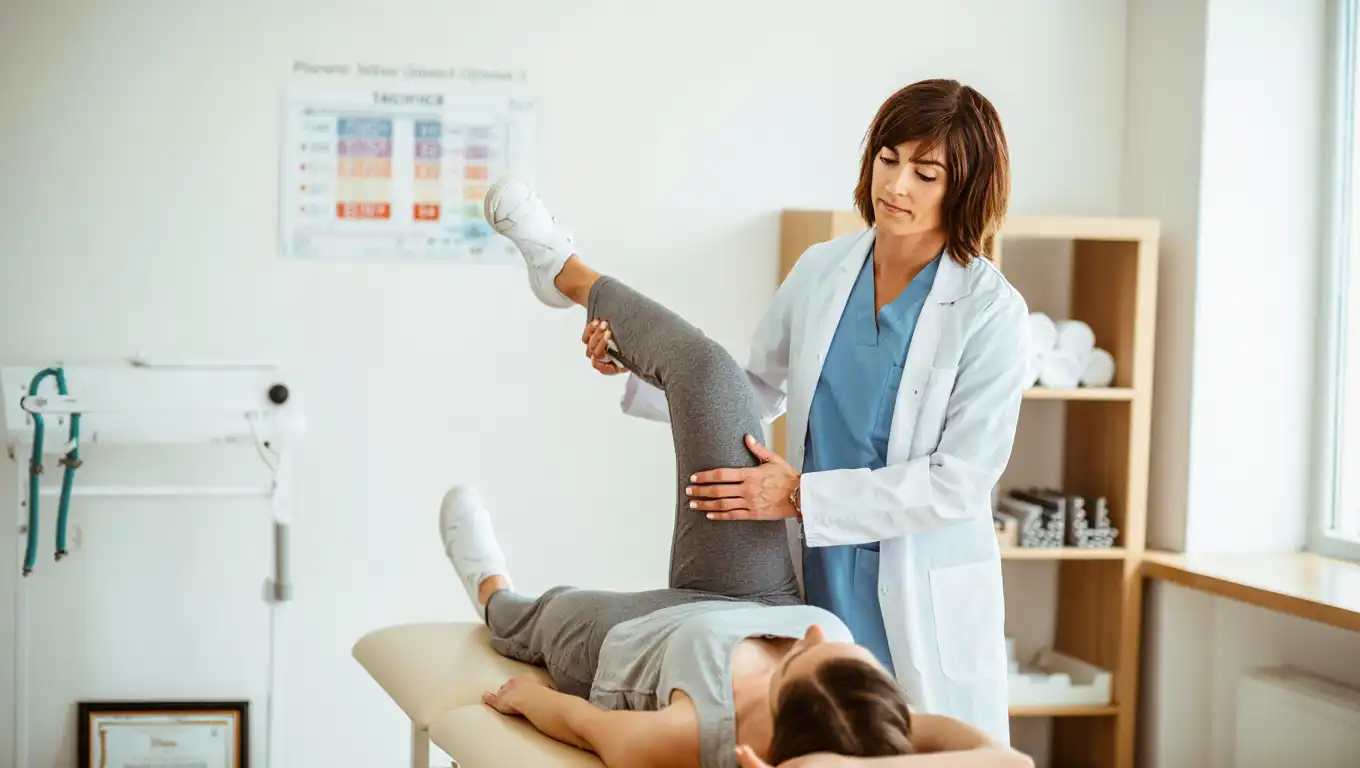
- A Physical Examination: You may be asked to perform simple movements and stretches to help the osteopath assess your posture and mobility. They will use their highly trained sense of touch (palpation) to identify areas of weakness, tenderness, or restriction in your muscles and joints. You'll likely be asked to remove some outer clothing, so it's a good idea to wear comfortable underwear or bring shorts.
- Diagnosis and Treatment Plan: Based on their findings, the osteopath will explain their diagnosis in plain English. They'll discuss a proposed treatment plan, explaining what techniques they will use and how many sessions you might need.
Common Osteopathic Techniques:
Osteopathy is a "hands-on" therapy. Your practitioner will use a variety of gentle techniques tailored to your specific needs:
- Soft Tissue Massage: To release muscle tension and improve circulation.
- Stretching: To increase the flexibility of muscles and joints.
- Articulation: Gentle, rhythmic movements of your joints to improve their range of motion.
- Mobilisation: Slower, more passive movements of the joints and spine.
- High-Velocity, Low-Amplitude Thrusts (HVT): The technique that sometimes produces a "click" or "pop". It's used to restore motion to a restricted joint but is only used when appropriate and with your consent.
In the UK, all osteopaths must be registered with the General Osteopathic Council (GOsC). This is a legal requirement and your guarantee that the practitioner has completed rigorous training and adheres to strict professional standards.
Osteopathy vs. Other Therapies: Chiropractic and Physiotherapy Compared
People often get confused between osteopathy, chiropractic, and physiotherapy. While they all treat similar conditions and can be highly effective, they come from different philosophical backgrounds and often have slightly different focuses.
Here’s a simple comparison to help clarify the differences:
| Therapy | Primary Focus | Typical Techniques | UK Regulatory Body |
|---|---|---|---|
| Osteopathy | The whole body's structure and its influence on function. Aims to improve overall health by treating the musculoskeletal system. | Soft tissue massage, articulation, stretching, mobilisation, some HVT. | General Osteopathic Council (GOsC) |
| Chiropractic | The spine and its relationship with the nervous system. Primarily focused on "adjustments" to correct vertebral misalignments. | Primarily spinal manipulation (adjustments), HVT is very common. | General Chiropractic Council (GCC) |
| Physiotherapy | Restoring movement and function after injury, illness, or disability. Often focuses on rehabilitation through exercise. | Exercise prescription, massage, electrotherapy (e.g., ultrasound), manual therapy. | Health and Care Professions Council (HCPC) |
In simple terms:
- An osteopath looks at the whole body to see how it's functioning as a unit.
- A chiropractor often focuses more specifically on the spine and nervous system.
- A physiotherapist is often focused on rehabilitating a specific injury or condition with exercise-based plans.
The best therapy for you depends on your specific condition and personal preference. Many private medical insurance policies in the UK offer cover for all three.
Does Private Medical Insurance Cover Osteopathy in the UK?
This is the key question for many people considering treatment. The good news is that yes, most private medical insurance UK policies do offer cover for osteopathy.
However, this cover is not automatic and comes with some very important rules and limitations. Understanding these is essential to avoid unexpected bills.
Coverage for osteopathy is typically included as part of an outpatient benefit or a specific therapies benefit. It is designed to help you recover from specific medical conditions, not for general wellness or maintenance.
The Golden Rule of PMI: Acute vs. Chronic Conditions
This is the single most important concept to understand about private health cover.
- Acute Condition: An illness or injury that is sudden, unexpected, and of short duration. It is expected to respond fully to treatment. For example, pulling a muscle in your neck while lifting a heavy box.
- Chronic Condition: A condition that is long-lasting, ongoing, or likely to recur. It cannot be 'cured', only managed. For example, long-term degenerative arthritis or back pain you've had for many years.
Standard UK private medical insurance is designed to cover the diagnosis and treatment of acute conditions that arise after you take out your policy. It does not cover pre-existing conditions (any ailment you had before your policy started) or chronic conditions.
Real-Life Example:
- Covered: You are a keen runner and develop sudden, sharp knee pain after a race (an acute sports injury). Your GP refers you to an osteopath. Your PMI is likely to cover the sessions needed to resolve the injury.
- Not Covered: You have suffered from dull, persistent lower back pain for the last 10 years (a chronic condition). You decide to see an osteopath for ongoing management. Your PMI will not cover this, as it is considered a chronic and pre-existing issue.
Navigating Your PMI Policy: How to Claim for Osteopathy
Getting your osteopathy sessions paid for by your insurer involves a clear, step-by-step process. Skipping a step can result in your claim being denied, so it's vital to follow your provider's procedure.
Here is the typical claims journey:
- Check Your Policy Documents: Before you do anything else, read your policy certificate and wording. Look for sections on "Outpatient Cover," "Therapies," or "Complementary Medicine." This will tell you if osteopathy is included and, crucially, what your limits are.
- Get a GP Referral: Nearly all UK insurers require a referral from your GP. Your GP needs to assess your condition and agree that osteopathic treatment is medically necessary. Some modern policies may offer access to a digital GP service, which can speed this up.
- Contact Your Insurer for Authorisation: This step is non-negotiable. You must call your insurer's claims line with your GP referral details before you book any treatment. They will check your cover, confirm the condition is eligible, and give you a pre-authorisation number. This number is your proof that they have approved the treatment.
- Choose a Recognised Osteopath: Your insurer will have a list or network of approved osteopaths. You must choose a practitioner from this list. A key requirement is that the osteopath is registered with the General Osteopathic Council (GOsC).
- Understand Your Limits: Your policy will have limits on therapy cover. This could be:
- A financial limit: For example, up to £750 per policy year for all therapies combined.
- A session limit: For example, up to 10 sessions per condition.
- It's your responsibility to track your usage so you know when you are approaching your limit.
An expert PMI broker like WeCovr can be invaluable here. We help our clients understand the small print of different policies, ensuring they choose a plan with the right level of therapy cover for their potential needs, all at no extra cost.
Which UK PMI Providers Offer Osteopathy Cover?
Most of the UK's leading private health insurance providers include osteopathy in their plans, usually as part of an outpatient module. However, the specifics of the cover can vary significantly.
Here is a general overview of what to expect from major providers:
| Provider | Typical Osteopathy Coverage | Key Considerations |
|---|---|---|
| AXA Health | Often included in outpatient options. Cover is usually for a set number of sessions following a GP referral. | They have a network of recognised specialists. A GP referral is essential. Limits apply per policy year. |
| Bupa | Included under therapies cover on most comprehensive plans. Cover is for acute conditions. | Bupa has an extensive network of recognised therapists. Pre-authorisation is required. |
| Aviva | Offered as part of their "Expert Select" outpatient module. You can choose your level of therapy cover (e.g. £500, £1,000). | A GP referral is standard. Using their approved network of specialists can help manage costs. |
| Vitality | Therapies, including osteopathy, are a core benefit. The amount of cover can be linked to your Vitality status. | Vitality's model encourages a healthy lifestyle, and therapy cover is often generous, but a GP referral and pre-authorisation are still needed. |
Important Note: This table is a simplified guide. The exact terms depend on the specific policy you choose. Comparing quotes and policy details is crucial.
The Cost of Osteopathy: NHS vs. Private Treatment
While osteopathy is a recognised allied health profession, its availability on the NHS is limited and varies by geographical location. In some areas, your GP may be able to refer you to an NHS osteopathy service, but waiting lists can be long.
Most people in the UK access osteopathy privately. The costs can vary depending on where you live and the practitioner's experience, but you can generally expect to pay:
- Initial Consultation (45-60 minutes): £55 - £100
- Follow-up Sessions (30 minutes): £45 - £90
If you need a course of 6-8 sessions, the total cost could easily be £300-£700. This is where private medical insurance proves its value, by covering these costs for eligible acute conditions and providing swift access to treatment.
Beyond Treatment: Wellness Tips from an Osteopathic Perspective
A good osteopath doesn't just treat your symptoms; they empower you with knowledge to prevent them from recurring. Maintaining good musculoskeletal health is about making small, consistent changes to your daily life.
Posture and Your Workspace: With many of us working from home, poor desk setups are a leading cause of neck and back pain.
- Ensure your screen is at eye level.
- Your keyboard should be positioned so your elbows are at a 90-degree angle.
- Use a chair with good lumbar support, and make sure your feet are flat on the floor.
- Take a short break to stand up and stretch every 30 minutes.
Movement is Medicine: Our bodies are designed to move. A sedentary lifestyle is one of the biggest risk factors for musculoskeletal pain.
- Aim for at least 30 minutes of moderate activity, like a brisk walk, most days.
- Incorporate gentle stretching into your morning or evening routine. Focus on your hamstrings, hips, and neck.
- Activities like yoga, Pilates, and swimming are excellent for building core strength and flexibility.
Sleep Hygiene: The position you sleep in can have a huge impact on your spine.
- Back sleepers: Place a pillow under your knees to reduce strain on your lower back.
- Side sleepers: Place a pillow between your knees to keep your hips aligned.
- Avoid sleeping on your stomach, as this forces your neck into an unnatural position.
- Invest in a supportive mattress and pillows that are right for your body type and sleeping style.
Diet and Hydration: What you eat affects every tissue in your body, including your muscles and joints.
- A balanced diet rich in anti-inflammatory foods (like leafy greens, berries, nuts, and oily fish) can help reduce generalised aches.
- Staying well-hydrated is crucial for keeping your joints lubricated and your muscles functioning properly.
To help you manage your diet effectively, WeCovr provides all our health and life insurance clients with complimentary access to CalorieHero, our advanced AI-powered calorie and nutrition tracking app. It's another way we support your overall well-being.
Why Use a PMI Broker like WeCovr?
The private medical insurance UK market can be complex. Policies are full of jargon, and comparing different levels of cover from multiple providers is time-consuming and confusing. This is where an independent, expert broker makes all the difference.
- Expert Guidance: We are specialists in the PMI market. We know the ins and outs of every major policy and can explain the differences in simple, clear terms.
- Personalised Recommendations: We take the time to understand your needs, your budget, and what's important to you—like having comprehensive therapy cover for osteopathy—before recommending a policy.
- Market Comparison: We compare policies from a wide range of top UK insurers to find you the best possible cover at a competitive price.
- No Cost to You: Our service is completely free for you to use. We are paid a commission by the insurer you choose, but this does not affect the price you pay.
- Ongoing Support: Our relationship doesn't end when you buy a policy. We're here to help with renewals and answer any questions you may have in the future.
Furthermore, clients who purchase PMI or Life Insurance through WeCovr may be eligible for discounts on other types of cover, providing even greater value.
Do I need a GP referral for osteopathy on my PMI?
Is osteopathy for chronic back pain covered by private health insurance?
How many osteopathy sessions will my private medical insurance cover?
Can I choose any osteopath I want with my health insurance?
Ready to find a private medical insurance policy that supports your musculoskeletal health and provides access to therapies like osteopathy?
The friendly experts at WeCovr are here to help. We'll guide you through the options, compare the UK's leading providers, and find a policy that fits your needs and budget perfectly. Get your free, no-obligation quote today and take the first step towards peace of mind.