Private MRI Scan Costs vs Insurance Cover

WeCovr explains why scans cost £250–£2,000 privately and how PMI covers them
As an FCA-authorised motor insurance broker in the UK, WeCovr has helped over 900,000 clients secure the right protection for their vehicles. We know that the aftermath of a road accident often involves more than just vehicle repairs. Personal injuries can lead to diagnostic uncertainty and long NHS waiting lists, pushing many to explore private healthcare. This comprehensive guide breaks down the costs of private MRI scans, explains why they are necessary, and details how different insurance policies can provide a vital financial safety net.
The Foundation: Understanding UK Motor Insurance Law
Before exploring the medical side of a claim, it is essential to grasp your legal duties as a UK vehicle owner. The Road Traffic Act 1988 makes it a legal requirement for any vehicle used on public roads to be insured to at least a third-party level. Driving without valid insurance is a serious offence, potentially resulting in an unlimited fine, 6-8 penalty points on your licence, and even disqualification.
At WeCovr, we help thousands of drivers navigate the different types of cover. Here’s what they mean in plain English:
-
Third-Party Only (TPO): This is the minimum cover required by law. It protects you financially if you injure another person or damage their property (their car, home, etc.) in an accident. Crucially, a TPO policy provides no cover for damage to your own vehicle or for your own injuries.
-
Third-Party, Fire and Theft (TPFT): This level includes everything offered by TPO, with two important additions: it also covers your vehicle if it is stolen or damaged by fire. It will not, however, pay for repairs to your car if it’s damaged in an accident that was your fault.
-
Comprehensive: As the name suggests, this is the highest level of motor insurance. It provides full TPO and TPFT protection, and it also covers damage to your own vehicle, even if you were to blame for the incident. Most comprehensive policies also include a small amount of Personal Accident Cover for the driver, but as we'll explain, this is very different from medical insurance.
Special Considerations for Business and Fleet Insurance
The legal obligation extends firmly into the commercial world. Any vehicle used for work purposes—from a plumber's van to a sales director's car—must have the correct business use class on its insurance. For companies operating multiple vehicles, fleet insurance is the most efficient solution. It consolidates cover for all vehicles under a single policy, simplifying administration and often reducing overall costs. These policies must also meet the minimum third-party requirements and are frequently enhanced with specialist cover like Goods in Transit, Public Liability, and Employers' Liability to safeguard the business against a wider range of risks.
What is an MRI Scan and Why Is It Vital After a Car Accident?
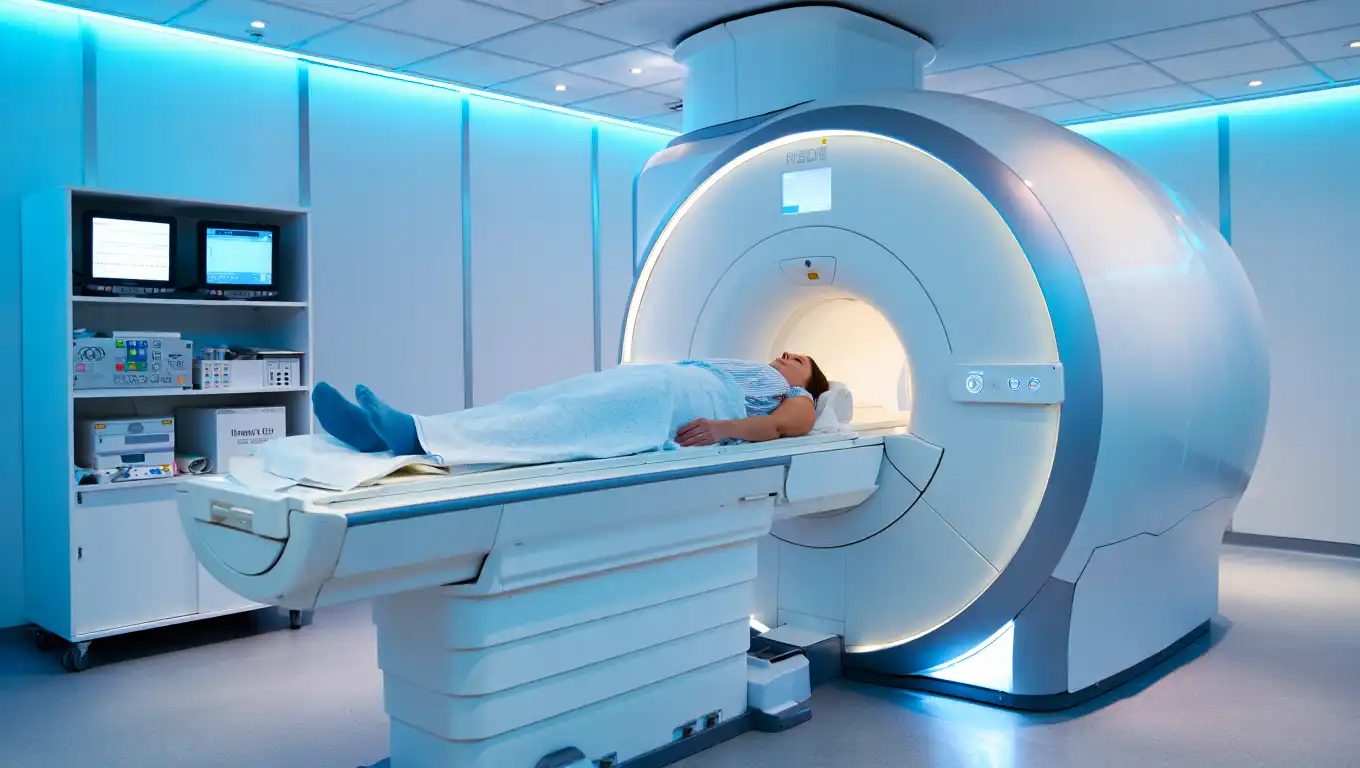
An MRI (Magnetic Resonance Imaging) scan is a highly sophisticated diagnostic tool. It uses a powerful magnet, radio waves, and a computer to produce incredibly detailed cross-sectional images of the inside of your body.
While X-rays are effective for spotting bone fractures, an MRI's strength lies in its ability to visualise soft tissues—the muscles, ligaments, tendons, nerves, and spinal discs that are often injured in a car crash.
Common injuries sustained in a road traffic accident that may require an MRI scan for accurate diagnosis include:
- Whiplash: A sudden jolting of the head can strain or tear the delicate ligaments and muscles in the neck and upper back. An MRI can pinpoint the source of persistent pain.
- Herniated or 'Slipped' Discs: The impact of a collision can cause the cushioning discs between your vertebrae to rupture or bulge, pressing on spinal nerves and causing severe back pain or sciatica (nerve pain running down the leg).
- Torn Ligaments: The knee's anterior cruciate ligament (ACL) or the shoulder's rotator cuff are particularly vulnerable to tearing when joints are twisted or hit during an accident.
- Brain Injuries: If a driver or passenger hits their head, a brain MRI can be used to check for subtle signs of trauma, swelling, or bleeding that might not be visible on a CT scan.
Getting a clear and timely diagnosis is the first step toward an effective treatment plan, faster rehabilitation, and a better long-term recovery.
The NHS Route vs. Going Private: A Question of Time
The National Health Service provides outstanding medical care to millions, free at the point of use. If you are injured in an accident, your GP will be your first stop. However, the NHS is facing unprecedented demand, which has led to substantial waiting times for non-emergency procedures, including diagnostic scans.
According to NHS England performance data, the target is for 99% of patients to wait no more than six weeks for a diagnostic test after a referral. In reality, in recent years, this target has been consistently missed, with hundreds of thousands of people waiting longer. For someone suffering from debilitating back pain or a suspected ligament tear after a crash, a wait of several weeks or even months for an MRI can feel like an eternity, delaying treatment and prolonging their discomfort and time off work.
This is the primary reason why many people choose to pay for a private scan.
| Feature | The NHS Route | The Private Route |
|---|---|---|
| Cost | Free (funded by taxation) | Self-funded or covered by PMI |
| Access | Referral from a GP is essential | GP referral usually needed for PMI, but direct self-referral is possible for self-pay |
| Waiting Time | Can be weeks or months; median waits often exceed the 6-week target | Typically a few days to a week |
| Choice of Facility | You are usually sent to a designated NHS hospital or partner diagnostic centre | You can choose the hospital or clinic that is most convenient for you |
| Report Turnaround | Can take a week or more after the scan | Often within 24-48 hours |
Deconstructing the Cost: Why a Private MRI Scan Costs £250–£2,000
The ability to get a scan within days is a significant benefit of the private route, but this speed comes at a price. The cost of a private MRI scan in the UK is not fixed; it varies based on a number of key factors.
- The Area Being Scanned: A scan of a single, relatively simple area like a knee or an ankle is the least expensive. A more complex scan of the entire spine or a detailed brain scan requires more time in the scanner and more complex analysis, increasing the cost.
- Geographical Location: As with many services, location matters. A scan at a state-of-the-art clinic in Central London or another major city will invariably cost more than one at a regional diagnostic centre.
- Use of a Contrast Agent: For some diagnoses, a special dye (a gadolinium-based contrast agent) is injected into your bloodstream. This dye makes certain tissues, blood vessels, or inflammations show up more clearly on the scan. Its use adds to the complexity and cost of the procedure.
- The Radiologist's Fee: The price includes not just the scan itself but also the professional fee for a consultant radiologist to review the hundreds of images produced and write a comprehensive diagnostic report for your referring doctor.
- The Clinic's Reputation and Equipment: Premier private hospitals and clinics invest millions in the latest scanning technology, such as high-field 3T (Tesla) MRI machines that produce higher-resolution images than standard 1.5T scanners. This advanced technology commands a higher price.
This table provides an estimated cost breakdown for common private MRI scans in the UK for 2025.
| Body Part Scanned | Typical Private Cost Range (UK, 2025) | Common Reasons Following a Road Accident |
|---|---|---|
| One Joint (e.g., Knee, Shoulder) | £250 – £600 | Investigating pain, swelling, or instability from impact. Checking for torn ligaments or cartilage damage. |
| Lumbar Spine (Lower Back) | £350 – £700 | Diagnosing the cause of persistent lower back pain or sciatica, often linked to whiplash or seatbelt strain. |
| Cervical Spine (Neck) | £350 – £700 | Assessing damage to neck muscles, ligaments, and discs following a whiplash-type injury. |
| Full Spine (All three sections) | £700 – £1,500 | Required for complex injuries involving widespread pain or neurological symptoms affecting multiple body parts. |
| Brain / Head | £400 – £800 | To rule out bleeds, swelling, or other traumatic brain injuries after a head impact, even if concussion seems mild. |
| Scan with Contrast Dye | An additional £150 – £300 | Used to get a clearer view of inflammation, tumours, or specific types of tissue damage. |
| Full Body Scan | £1,000 – £2,500+ | Rarely used for accident diagnosis; more common as a preventative health check-up. |
How Private Medical Insurance (PMI) Steps In
For many people, finding an extra £500 or £1,000 for a scan is a significant financial burden. This is precisely the scenario that Private Medical Insurance (PMI) is designed for. A PMI policy is a type of health insurance that pays for the costs of private medical care for acute conditions—illnesses or injuries that are new and likely to respond to treatment.
Your Journey to a Scan with PMI
If you have a PMI policy and need an MRI scan after an accident, the process is well-established:
- Consult Your GP: Your journey always begins with your GP. You will describe your symptoms, and if they agree that a specialist opinion is needed, they will write you an open referral letter or one addressed to a specific consultant.
- Contact Your Insurer: You then phone your PMI provider's claims line. You'll need your policy number handy. You explain the situation and provide the details from your GP's referral.
- Get Claim Authorisation: The insurer will review your case against your policy's terms. They will confirm that the condition is covered and issue an authorisation number for the consultation and any subsequent tests. They will also remind you of any excess you need to pay.
- Book Your Appointments: With authorisation in place, you can book an appointment with a private specialist (like an orthopaedic consultant). That specialist will then arrange the MRI scan for you at an approved private hospital or clinic.
- Direct Settlement: In the vast majority of cases, the financial side is handled directly between the hospital/clinic and your insurer. You simply pay your policy excess (if applicable), and the insurer settles the rest of the bill.
Key PMI Policy Features to Understand
PMI policies are not all created equal. When choosing a plan, or reviewing your existing one, it's vital to understand these terms:
- Excess: Similar to your motor policy, this is the fixed amount you contribute towards any claim you make. A higher excess (£500 or £1,000) will result in a significantly lower monthly or annual premium.
- Outpatient Cover: This is a crucial part of your policy. It covers costs incurred when you are not admitted to a hospital bed. This includes specialist consultations and all diagnostic tests, like MRI scans. Cheaper policies may have a limit on outpatient cover (e.g., £1,000 per year), so you need to ensure it’s adequate.
- Hospital List: Insurers use tiered hospital lists to manage costs. A standard policy will give you access to a broad nationwide network of private hospitals, while a more comprehensive (and expensive) policy will include premium central London hospitals.
- Underwriting Type: Most policies are underwritten on a 'moratorium' basis. This means the policy automatically excludes treatment for any medical conditions for which you have had symptoms, medication, or advice in the five years before the policy started. However, after two continuous years on the policy without any issues relating to that condition, it can become eligible for cover. A new injury from a car accident would be an 'acute condition' and therefore should be covered from day one.
As an FCA-authorised broker, WeCovr understands the importance of having the right protection in all areas of your life. That’s why we also offer our motor insurance customers preferential rates and discounts on other types of cover, such as life insurance, helping you build a comprehensive safety net for your family.
For Fleet Managers: Protecting Your Most Valuable Asset—Your Drivers
For a business operating a vehicle fleet, a driver off work due to injury is more than a personal issue; it's a significant business disruption.
- Prolonged Absence: A driver facing a three-month NHS wait for an MRI scan is three months of lost productivity, missed deliveries, and operational challenges.
- Recruitment and Overtime Costs: Covering that driver's role often means paying overtime to other staff or hiring temporary cover, both of which increase operational costs.
- Duty of Care: Providing access to swift medical care is a powerful way for an employer to show it values its employees' health and well-being, boosting morale and loyalty.
Offering company-paid Private Medical Insurance as an employee benefit is a strategic decision. By giving drivers access to a private diagnosis within days, a business can dramatically shorten the period of absence. A driver who gets a scan, a diagnosis, and a treatment plan within a week will return to full fitness and productivity far sooner. This investment in driver health directly translates into a more resilient and efficient operation.
Maximising Value: Top Tips for Managing Your Motor Insurance
Your motor policy is a dynamic contract. Managing it wisely can save you money and ensure you have the best possible protection when you need it.
- Honesty is the Best Policy: When you apply for cover, provide completely accurate information about your driving history, annual mileage, vehicle modifications, and how you use the vehicle (e.g., for commuting or business). Any inaccuracies, even if unintentional, could give the insurer grounds to reject a claim.
- Guard Your No-Claims Bonus (NCB): Your NCB is your reward for safe driving and is one of the biggest discounts available. If you have five or more years of NCB, consider paying a small extra premium to protect it. This allows you to make one or two claims within a set period without your bonus being reduced.
- Choose Your Excess Wisely: The total excess is made up of a compulsory part (set by the insurer) and a voluntary part (chosen by you). Increasing your voluntary excess will lower your premium, but you must ensure you can comfortably afford to pay the total amount if you have to claim.
- Never Settle for Auto-Renewal: Loyalty rarely pays in the insurance market. Insurers often reserve their best rates for new customers. Use an independent broker like WeCovr each year to run a full market comparison. We help you find the best car insurance provider for your specific circumstances at no extra cost to you.
- Understand Your Optional Extras: Add-ons like Breakdown Cover and Courtesy Car cover provide convenience. Motor Legal Protection is particularly important in injury scenarios. It provides up to £100,000 in legal fees to help you pursue a claim against a negligent driver to recover uninsured losses. This can include your policy excess, loss of earnings while you were injured, and even the cost of private medical treatments like physiotherapy or an MRI scan if not covered elsewhere.
Does my comprehensive car insurance pay for a private MRI scan?
Will claiming for personal injury on my motor insurance affect my No-Claims Bonus?
Do I need a GP referral to get a private MRI scan?
What is the difference between Personal Accident Cover and Private Medical Insurance?
The aftermath of a road accident can be a stressful and confusing time. Understanding how your insurance works can provide peace of mind and financial security when you need it most. Whether you're insuring your family car, a commercial van, or a large corporate fleet, WeCovr offers expert, impartial advice to help you compare the UK's leading insurers.
Get your free, no-obligation motor insurance quote from WeCovr today!
Related guides




Any questions?
Learn more

Who Are WeCovr?
WeCovr is an insurance specialist for people valuing their peace of mind and a great service.👍 WeCovr will help you get your private medical insurance, life insurance, critical illness insurance and others in no time thanks to our wonderful super-friendly experts ready to assist you every step of the way.
Just a quick and simple form and an easy conversation with one of our experts and your valuable insurance policy is in place for that needed peace of mind!