The Resilience Reset
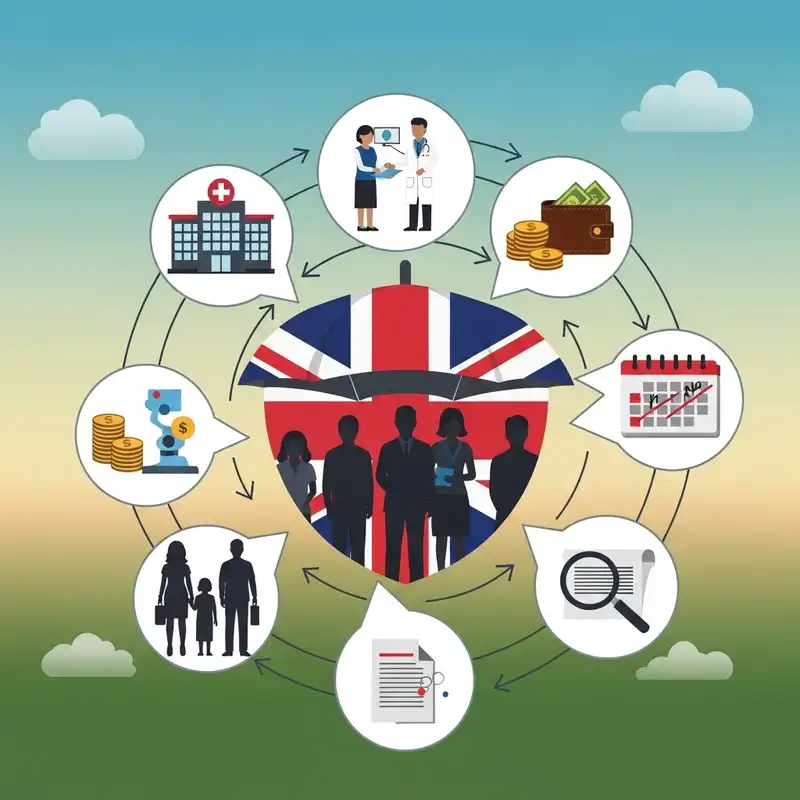
How Strategic Protection – From Income Security to Life Cover and Beyond – Becomes Your 2025 Blueprint for Uninterrupted Growth, Stronger Relationships, and True Freedom, Amidst Rising Health Challenges and the Power of Private Care.
Welcome to the Resilience Reset. In a world of constant change, the old rulebook for financial security is being rewritten. The years of economic flux, coupled with unprecedented pressures on our National Health Service, have exposed a critical truth: hoping for the best is no longer a viable strategy. True security, growth, and freedom in 2025 and beyond demand a proactive approach. They require a blueprint.
This isn't about fear; it's about empowerment. It's about understanding that strategic protection—encompassing everything from the income that fuels your life to the legacy you leave behind—is not an expense. It is the fundamental investment in an uninterrupted life. It’s the financial scaffolding that allows your career to flourish, your business to expand, and your personal relationships to deepen, free from the corrosive anxiety of ‘what if?’.
As we navigate a landscape of rising health challenges and witness the growing reliance on private care to bridge the gaps, securing your financial health has become intrinsically linked to securing your physical and mental wellbeing. This guide is your blueprint for building that resilience, layer by protective layer.
The Shifting Landscape: Why Financial Resilience is Non-Negotiable in 2025
The ground beneath our feet has shifted. The twin pressures of a strained healthcare system and a volatile economy have created a new reality for individuals, families, and business owners across the UK. Recognising these shifts is the first step toward building a robust defence.
The UK Health Challenge: A New Urgency
Our cherished NHS is facing its greatest challenge in a generation. While its staff work tirelessly, the system is under immense strain.
- Waiting Lists: In early 2025, NHS England figures continued to show a significant backlog, with millions of people waiting for routine consultations and elective procedures. This isn't just a statistic; it's a reality that can mean months, or even years, of pain, uncertainty, and an inability to work or live life to the full.
- Long-Term Sickness: The Office for National Statistics (ONS) has consistently reported a stark rise in the number of working-age people economically inactive due to long-term health conditions. This trend, which accelerated post-pandemic, has profound implications for both individual household incomes and the wider economy.
- The Rise of Private Care: Faced with these delays, a growing number of people are turning to the private healthcare sector for diagnostics, consultations, and treatment. While this offers a vital alternative, it comes at a cost. A single consultation or MRI scan can run into hundreds of pounds, with surgical procedures costing many thousands.
This new health landscape makes one thing clear: having the financial means to access care when you need it, or to support yourself during a long period of recovery, is no longer a luxury. It's a cornerstone of modern resilience.
The Economic Squeeze: When Every Pound Counts
Simultaneously, household finances remain under pressure. The lingering effects of high inflation and rising interest rates have eroded savings and stretched budgets.
According to the Money and Pensions Service, a significant portion of the UK population has little to no savings buffer. For millions, an unexpected job loss or a sudden illness that prevents them from working could trigger an immediate financial crisis. Relying solely on Statutory Sick Pay (SSP), which amounts to just over £116 per week in 2025, is simply not sustainable for covering a mortgage, rent, bills, and food.
This fragility underscores the critical need for a private safety net—one you control, that kicks in when you need it most.
The Four Pillars of Personal Resilience: A Deep Dive into Protection
Building your financial fortress isn't a single action but a strategic assembly of key protections. Think of them as the four pillars supporting your financial life. Each one addresses a different vulnerability, and together, they create a comprehensive shield.
Pillar 1: Securing Your Income – The Foundation of Everything
Your ability to earn an income is your single greatest financial asset. It pays for your home, your lifestyle, and your future. Protecting it is the most logical and crucial first step.
Income Protection (IP)
Often called the bedrock of financial planning, Income Protection is designed to do one thing: provide you with a regular, tax-free monthly income if you are unable to work due to any illness or injury.
- How it Works: You choose a level of cover (typically 50-70% of your gross salary) and a "deferred period" (the waiting time before payments start, e.g., 4, 13, 26, or 52 weeks). If you're signed off work by a doctor for longer than this period, the policy starts paying out and continues until you can return to work, the policy term ends, or you retire.
- The 'Own Occupation' Gold Standard: The most robust policies use an 'own occupation' definition of incapacity. This means the policy will pay out if you are unable to perform your specific job, even if you could technically do another, less skilled role. This is vital for professionals, specialists, and skilled tradespeople.
Personal Sick Pay
For some, particularly those in riskier manual trades or the gig economy, a full Income Protection policy might seem out of reach or offer longer deferred periods than is practical. Personal Sick Pay plans are a valuable alternative. They are a type of short-term IP, often with shorter deferred periods (even from day one) and paying out for a limited term, typically 1 or 2 years per claim. They provide an essential cushion to cover immediate bills during a period of illness or after an accident.
Real-Life Example: Meet David, a 42-year-old self-employed electrician and father of two. A serious back injury on a job site left him unable to work. His statutory support was minimal. However, his Income Protection policy, which he'd set up years earlier, kicked in after his 8-week deferred period. It paid him £2,500 a month, allowing him to cover his mortgage and family expenses while he underwent physiotherapy. Without it, his family would have faced financial disaster.
Pillar 2: Protecting Against Life's Toughest Diagnoses
A serious illness is emotionally and physically devastating. It shouldn't also be financially catastrophic. This is where Critical Illness Cover (CIC) comes in.
Critical Illness Cover (CIC)
This type of policy pays out a tax-free lump sum on the diagnosis of a specified serious medical condition. The "big three" covered by almost all policies are:
- Cancer (of a specified severity)
- Heart Attack (of a specified severity)
- Stroke
Most comprehensive policies today cover 50+ conditions, including things like multiple sclerosis, kidney failure, major organ transplant, and permanent paralysis.
How the Lump Sum Provides Freedom: The power of a CIC payout is the freedom it gives you at the most difficult time. You can use the money for anything you need:
- Clear your mortgage or other major debts.
- Fund private medical treatment or specialist consultations without delay.
- Adapt your home for new mobility needs.
- Allow a partner to take time off work to care for you.
- Simply replace lost income, removing financial stress so you can focus 100% on recovery.
With statistics from organisations like Cancer Research UK suggesting that 1 in 2 people in the UK will be diagnosed with cancer in their lifetime, the relevance of this cover has never been greater.
| Feature | Income Protection (IP) | Critical Illness Cover (CIC) |
|---|---|---|
| Payout Type | Regular monthly income | One-off tax-free lump sum |
| Trigger | Inability to work (any illness/injury) | Diagnosis of a specified serious illness |
| Purpose | Replaces lost salary over the long term | Provides a capital sum for immediate needs |
| Best For | Protecting your lifestyle and bills | Clearing debts & funding major costs |
Pillar 3: Leaving a Legacy, Not a Liability
This pillar is about ensuring the people you love are cared for financially when you're no longer around. It’s about peace of mind, knowing your responsibilities are met.
Life Insurance (Life Protection)
The simplest form of protection. A Life Insurance policy pays out a cash sum to your loved ones if you pass away during the policy term. The main types are:
- Level Term Assurance: You choose a lump sum and a term (e.g., £250,000 over 25 years). The amount of cover remains the same throughout. Ideal for covering an interest-only mortgage or providing a family lump sum.
- Decreasing Term Assurance: The amount of cover reduces over time, usually in line with a repayment mortgage. This makes it a very cost-effective way to ensure your mortgage is paid off if you die.
- Family Income Benefit: A thoughtful alternative to a large lump sum. Instead of one big payout, this policy pays your family a regular, tax-free monthly or annual income for the remainder of the policy term. This can be easier to manage and replaces your lost salary in a more direct way.
The Power of a Trust
A crucial piece of planning that is often overlooked. By writing your life insurance policy "in trust," the payout is made directly to your chosen beneficiaries. This has two huge advantages:
- It avoids probate: The money is paid quickly, often within weeks, rather than getting stuck in your estate for months or years.
- It's outside your estate for Inheritance Tax (IHT): The payout won't be counted as part of your estate, meaning your family receives the full amount, free of a potential 40% IHT charge.
Pillar 4: Advanced & Business Protection – Securing Your Enterprise
For company directors, business owners, and the self-employed, personal resilience is intrinsically linked to business resilience. A threat to one is a threat to the other.
For Business Owners & Company Directors:
Your business is more than a job; it's a significant asset and the source of your family's prosperity. Protecting it is paramount.
- Key Person Insurance: Imagine your business loses its most vital employee—the tech genius, the star salesperson, or even you. Key Person Insurance is a policy taken out by the business on the life or health of that individual. If they die or become critically ill, the business receives a lump sum to cover lost profits, recruit a replacement, or repay business loans.
- Executive Income Protection: A highly tax-efficient way for a limited company to provide income protection for its directors and key employees. The company pays the premiums, which are typically an allowable business expense, and if the employee is off sick, the benefit is paid to the company, which then pays it to the employee via PAYE.
- Shareholder or Partnership Protection: What happens if you or your business partner dies? Their shares might pass to a family member with no interest or experience in the business. Shareholder Protection provides the surviving owners with the funds to buy the deceased's shares from their estate, ensuring a smooth transition and business continuity.
For IHT Planning:
- Gift Inter Vivos Insurance: If you gift a significant asset (like cash or property) to a loved one to reduce your estate for Inheritance Tax, a problem arises. If you pass away within seven years of making the gift, it may still be subject to IHT. A Gift Inter Vivos policy is a life insurance plan designed to pay out a lump sum that covers this potential tax bill, ensuring your beneficiaries receive the full value of your gift.
The WeCovr Advantage: More Than Just a Policy
Navigating this complex world of protection requires more than an online search. It requires expert guidance to build a strategy that is tailored, robust, and cost-effective.
This is where a dedicated broker becomes your most valuable ally. At WeCovr, we don't just find you a policy; we help you construct your personal resilience blueprint. By comparing plans from all the major UK insurers, we can identify the cover that truly meets your needs, at the most competitive price. We understand the nuances of policy wordings, from the critical definition of 'own occupation' in an Income Protection plan to the specific conditions covered by a Critical Illness policy.
But our commitment to your wellbeing goes further. We believe that proactive health is a vital part of the resilience journey. That's why we provide all our clients with complimentary access to our proprietary AI-powered calorie tracking app, CalorieHero. It’s our way of supporting your daily health goals, helping you build positive habits that not only improve your quality of life but can also contribute to more favourable insurance premiums.
Building Your 2025 Blueprint: A Practical Step-by-Step Guide
Ready to begin your Resilience Reset? Here's a practical, five-step guide to move from planning to action.
Step 1: The Financial Health Check You can't protect what you don't understand. Sit down and perform a full audit of your financial life.
- Income: What is your monthly take-home pay? Are there bonuses or commissions?
- Outgoings: List all fixed expenses (mortgage/rent, council tax, loans, utilities) and variable spending (food, transport, leisure).
- Debts: List all outstanding debts and their balances (mortgage, car finance, credit cards).
- Savings & Assets: What is your savings buffer? What other assets do you have?
Step 2: Identify Your Vulnerabilities With your financial picture clear, ask the tough 'what if' questions:
- What would happen to my family if my income stopped tomorrow? For a week? A month? A year?
- Who depends on me financially? A partner, children, ageing parents?
- What is my single biggest financial liability? (For most, it's the mortgage).
- What would be the financial impact of a serious health diagnosis?
Step 3: Prioritise Your Protection You may not be able to afford every type of cover at once, and that's okay. The key is to start with the most critical needs. A common hierarchy looks like this:
- Income Protection: Protect your income first, as it pays for everything else.
- Life & Critical Illness Cover: Secure the roof over your family's head by ensuring the mortgage is cleared.
- Wider Family Protection: Add further cover to provide an income or lump sum for your family's ongoing lifestyle.
- Review and Enhance: As your income and responsibilities grow, review and increase your cover.
Step 4: The Power of Proactive Health Your health is your wealth. Small, consistent lifestyle improvements can have a dramatic impact on your long-term wellbeing and can also lead to lower insurance premiums.
- Diet: Focus on a balanced diet rich in whole foods. Small changes, like reducing ultra-processed food intake, can make a big difference.
- Activity: Aim for the NHS-recommended 150 minutes of moderate-intensity activity (like a brisk walk or cycling) or 75 minutes of vigorous activity (like running or swimming) per week.
- Sleep: Prioritise 7-9 hours of quality sleep per night. It is essential for cognitive function, immune response, and mental health.
- Stress Management: Incorporate mindfulness, hobbies, or simple breathing exercises into your day to manage modern life's pressures.
Step 5: Seek Expert Advice This is not a journey to take alone. The protection market is complex, and the cost of getting it wrong can be huge. An expert adviser can save you time, money, and stress. A specialist brokerage like WeCovr can assess your unique circumstances, explain your options in plain English, and search the entire market to build your bespoke resilience blueprint.
Debunking the Myths: Common Misconceptions About Protection Insurance
Misinformation can prevent people from taking vital steps to protect themselves. Let's tackle the most common myths head-on.
| Myth | Reality |
|---|---|
| "It's too expensive." | For a healthy non-smoker in their 30s, meaningful life cover can cost less than a weekly takeaway coffee. The cost of not having cover is infinitely higher. |
| "Insurers never pay out." | This is false. The Association of British Insurers (ABI) consistently reports that around 98% of all protection claims are paid, amounting to billions of pounds each year. |
| "My employer's 'death in service' is enough." | This is a valuable benefit, but it's often only 2-4 times your salary, may not be enough to clear a mortgage and provide for a family, and it ceases the moment you leave your job. |
| "I'm single with no dependents." | You still have yourself to support. If you couldn't work due to illness, who would pay your rent, mortgage, and bills? Income Protection is for everyone who earns a living. |
| "I'll rely on state benefits." | State support is a minimal safety net, not a replacement for an income. Employment and Support Allowance (ESA) and Universal Credit provide a fraction of the average salary. |
Conclusion: From Blueprint to Reality – Owning Your Future
The Resilience Reset is more than a concept; it's a conscious decision to take control. It’s the choice to build a future based on certainty and strength, rather than hope and chance.
In 2025, strategic protection is the financial bedrock that grants you true freedom. It's the freedom to pursue your career ambitions without fear of a setback derailing you. It's the freedom to build stronger, more present relationships, unburdened by financial anxiety. And it's the freedom to know that, no matter what health challenges life may bring, you and your loved ones have the resources to face them with dignity and security.
Your blueprint is before you. The next step is to lay the first stone. Don't wait for a crisis to reveal the cracks in your foundation. Take action today to build a resilient, prosperous, and truly uninterrupted future.
Do I need a medical exam to get life insurance?
What is the difference between 'reviewable' and 'guaranteed' premiums?
Can I get cover if I have a pre-existing medical condition?
How much cover do I actually need?
What does writing a policy 'in trust' mean and why is it important?
Is income from an Income Protection policy taxed?
Why life insurance and how does it work?
What is Life Insurance?
Life insurance is an insurance policy that can provide financial support for your loved ones when you or your joint policy holder passes away. It can help clear any outstanding debts, such as a mortgage, and cover your family's living and other expenses such costs of education, so your family can continue to pay bills and living expenses. In addition to life insurance, insurance providers offer related products such as income protection and critical illness, which we will touch upon below.How does it work?
Life insurance pays out if you die. The payout can be in the form of a lump sum payment or can be paid as a replacement for a regular income. It's your decision how much cover you'd like to take based on your financial resources and how much you'd like to leave to your family to help them deal with any outstanding debts and living expenses. Your premium depends on a number of factors, including your occupation, health and other criteria.The payout amount can change over time or can be fixed. A level term or whole of life policy offers a fixed payout. A decreasing term policy offers a payout that decreases over the term of the cover.
With critical illness policies, a payout is made if you’re diagnosed with a terminal illness with a remaining life expectancy of less than 12 months. While income protection policies ensure you can continue to meet your financial commitments if you are forced to take an extended break from work. If you can’t work because you’ve had an accident, fallen sick, or lost your job through no fault of your own, income protection insurance pays you an agreed portion of your salary each month.
Income protection is particularly helpful for people in dangerous occupations who want to be sure their mortgage will always be covered. Income protection only covers events beyond your control: you’re much less likely to be covered if you’re fired from your job or if you injure yourself deliberately.
Questions to ask yourself regarding life insurance
Just ask yourself:👉 Who would pay your mortgage or rent if you were to pass away or fall seriously ill?
👉 Who would pay for your family’s food, clothing, study fees or lifestyle?
👉 Who would provide for the costs of your funeral or clear your debts?
👉 Who would pay for your costs if you're unable to work due to serious illness or disability?
Many families don’t realise that life, income protection and critical illness insurance is one of the most effective ways to protect their finances. A great insurance policy can cover costs, protect a family from inheriting debts and even pay off a mortgage.
Many would think that the costs for all the benefits provided by life insurance, income protection insurance or critical illness insurance are too high, but the great news is in the current market policies are actually very inexpensive.
Benefits offered by income protection, life and critical illness insurance
Life insurance, income protection and critical illness insurance are indispensable for every family because a child loses a parent every 22 minutes in the UK, while every single day tragically 60 people suffer major injuries on the UK roads. Some people become unable to work because of sickness or disability.Life insurance cover pays out a lump sum to your family, loved ones or whomever you choose to get the money. This can be used to secure the financial future of your loved ones meaning they would not have to struggle financially in the event of your death.
If it's a critical illness cover, the payout happens sooner - upon diagnosis of a serious illness, disability or medical condition, easing the financial hardship such an event inevitably brings.
Income protection insurance can be very important for anyone who relies on a pay check to cover their living costs, but it's especially important if you’re self-employed or own a small business, where your employment and income is a bit less stable. It pays a regular income if you can't work because of sickness or disability and continues until you return to paid work or you retire.
In a world where 1 in 4 of us would struggle financially after just four weeks without work, the stark reality hits hard – a mere 7% of UK adults possess the vital shield of income protection. The urgency of safeguarding our financial well-being has never been more palpable.
Let's face it – relying on savings isn't a solution for everyone. Almost 25% of people have no savings at all, and a whopping 50% have £1,000 or less tucked away. Even more concerning, 51% of Brits – that's a huge 27 million people – wouldn't last more than one month living off their savings. That's a 10% increase from 2022.
And don't even think about state benefits being a safety net. The maximum you can expect from statutory sick pay is a mere £109.40 per week for up to 28 weeks. Not exactly a financial lifeline, right?
Now, let's tackle a common objection: "But I have critical illness insurance. I don't need income protection too." Here's the deal – the two policies apply to very different situations. In a nutshell:
- Critical illness insurance pays a single lump sum if you're diagnosed with or undergo surgery for a specified potentially life-threatening illness. It's great for handling big one-off expenses or debts.
- Income protection, on the other hand, pays a percentage of your salary as a regular payment if you can't work due to illness or injury. It's the superhero that tackles those relentless monthly bills.
Types of life insurance policies
Common reasons for getting a life insurance policy are to:✅ Leave behind an amount of money to keep your family comfortable
✅ Protect the family home and pay off the mortgage in full or in part
✅ Pay for funeral costs
Starting from as little as a couple of pounds per week, you can do all that with a Life Policy.
Level Term Life Insurance
One of the simplest forms of life insurance, level term life insurance works by selecting a length of time for which you would want to be covered and then deciding how much you would like your loved ones to receive should the worst happen. Should your life insurance policy pay out to your family, it would be in a lump sum amount that can be used in whatever way the beneficiary may wish.
Decreasing Term Life Insurance
Decreasing term life insurance works in the same way as level term, except the lump sum payment amount upon death decreases with time. The common use for decreasing term life cover is to protect against mortgage repayment as the lump sum decreases along with the principal of the mortgage itself.
Increasing Term Life Insurance
Increasing term life insurance aims to pay out a cash sum growing each year if the worst happens while covered by the policy. With increasing term life cover amount insured increases annually by a fixed amount for the length of the policy. This can protect your policy's value against inflation, which could be advantageous if you’re looking to maintain your loved ones’ living standards, continue paying off your mortgage in line with its repayment schedule and cover your children’s education fees.
Whole of Life Insurance
Whereas term life insurance policies only pay out if you pass away during their term, whole of life insurance pays out to your beneficiaries whenever this should happen. The most common uses for whole life insurance are to cover the costs of a funeral or as a vehicle for your family's inheritance tax planning.
Family Income Benefit
Family income benefit is a somewhat lesser-known product in the family of life insurance products. Paying out a set amount every month of year to your beneficiaries, it is the most cost-effective way of maintaining your family's living standards to an age where you'd expect them to be able to support themselves financially. The most common use would be for a family with children who are not working yet so are unable to take care of themselves financially.
Relevant Life Insurance
Relevant Life Insurance is a tax-efficient policy for a director or single employee. A simple level term life insurance product, it is placed in a specific trust to ensure its tax efficiency. The premiums are tax deductible and any benefit payable should a claim arise is also paid out tax free, which makes it an attractive product for entrepreneurs and their businesses.
Important Fact!
We can look at a more suitable option mid-term!
Why is it important to get life insurance early?
👉 Many people are very thankful that they had their life, income protection, and critical illness insurance cover in place before running into some serious issues. Critical illness and income protection insurance is as important as life insurance for protecting your family's finances.👉 We insure our cars, houses, bicycles and even bags! Yet our life and health are the most precious things we have.
Easily one of the most important insurance purchases an individual or family can make in their lifetime, the decision to buy life, income protection, critical illness and private medical health insurance can be made much simpler with the help of FCA-authorised advisers. They are the specialists who do the searching and analysis helping people choose between various types of life insurance policies available in the market, including income protection, critical illness and other types of policies most suitable to the client's individual circumstances.
It certainly won't do any harm if you speak with one of our experienced FCA-authorised insurance partner experts who are passionate about advising people on financial matters related to life insurance and are keen to provide you with a free consultation.
You can discuss with them in detail what affordable life, income protection, critical illness or private medical health insurance plan for the necessary peace of mind they would recommend! WeCovr works with some of the best advisers in the market.
By tapping the button below, you can book a free call with them in less than 30 seconds right now:
Our Group Is Proud To Have Issued 800,000+ Policies!
We've established collaboration agreements with leading insurance groups to create tailored coverage
























How It Works
1. Complete a brief form

2. Our experts analyse your information and find you best quotes

3. Enjoy your protection!

Any questions?
Learn more

Who Are WeCovr?
WeCovr is an insurance specialist for people valuing their peace of mind and a great service.👍 WeCovr will help you get your private medical insurance, life insurance, critical illness insurance and others in no time thanks to our wonderful super-friendly experts ready to assist you every step of the way.
Just a quick and simple form and an easy conversation with one of our experts and your valuable insurance policy is in place for that needed peace of mind!