The Unshakeable Life: Growth Redefined
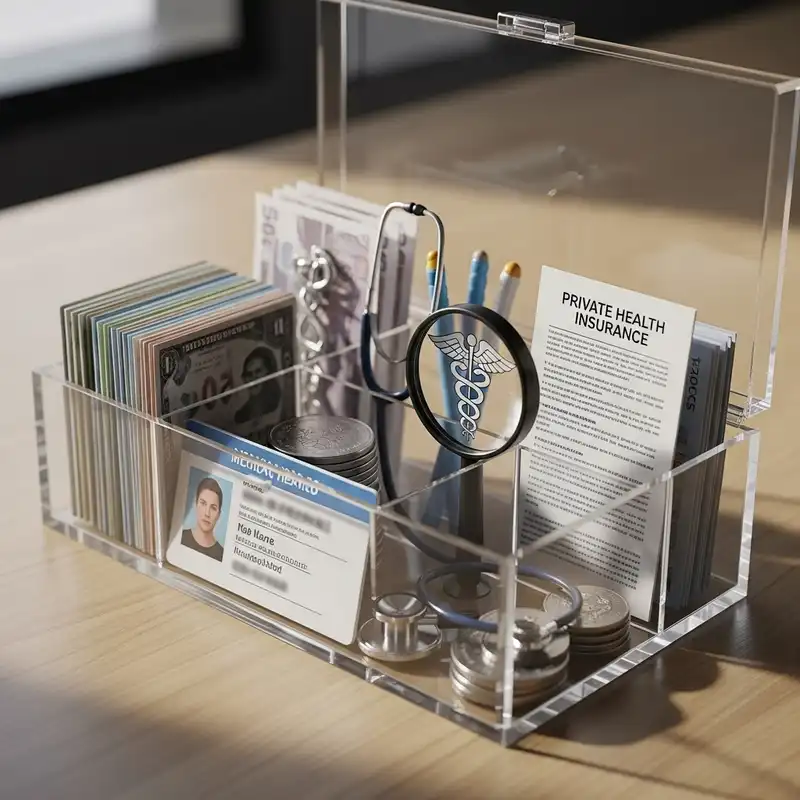
The Untapped Blueprint for Building an Unshakeable Life
In our relentless pursuit of growth—climbing the career ladder, scaling a business, achieving personal milestones—we often overlook the very foundation upon which our ambitions are built. We plan for success, but rarely do we plan for the unexpected detours that life inevitably presents. What if your health, your income, or your ability to work were suddenly compromised? For many, this single event can unravel years of hard work.
How Strategic Protection – Covering Income, Critical Illness, Family Security, and Tailored Sick Pay for Riskier Jobs – Combined with Private Health Care, Offers the Ultimate Pathway to Unrestricted Personal Growth and True Freedom, Especially as 2025 Health Realities, like 1-in-2 UK Cancer Diagnoses, Underscore Proactive Preparedness.
Welcome to a new definition of growth. This isn't just about accumulating wealth or accolades. It's about building an unshakeable life. A life where you have the freedom to pursue your boldest ambitions, secure in the knowledge that you are protected against life's most challenging storms.
The reality of our modern world makes this conversation more urgent than ever. Sobering statistics from leading organisations like Cancer Research UK predict that by 2025, a staggering one in two people in the UK will be diagnosed with cancer in their lifetime. This isn't a scare tactic; it's a call to proactive preparedness. When coupled with NHS waiting lists that continue to stretch into the millions, the need for a personal contingency plan becomes crystal clear.
This guide is your blueprint. It details a powerful, integrated strategy combining four pillars of financial protection with the game-changing advantages of private health care. This is not about focusing on what could go wrong; it is about empowering you to ensure everything continues to go right, no matter what.
Redefining Growth: Why Your Foundation is Everything
For too long, the concept of personal and professional growth has been a one-dimensional pursuit of 'more'—a bigger salary, a larger business, a greater market share. We celebrate the hustle, the grind, and the sacrifice. But this model of success is inherently fragile. It’s a skyscraper built on sand, vulnerable to the first wave of adversity.
A significant health event doesn't just impact your physical wellbeing; its financial aftershocks can be devastating. Consider these facts:
- The Sickness Gap: According to the Association of British Insurers (ABI), over a million UK workers are off work for more than four weeks each year due to illness or injury.
- The Statutory 'Safety Net': Statutory Sick Pay (SSP) in the UK stands at a mere £116.75 per week (2024/25 rate). For most households, this is not enough to cover even the most basic of bills, let alone a mortgage, rent, or childcare costs.
- The Stress Cycle: Financial worries are a leading cause of stress, which in turn can impede recovery from illness. This creates a vicious cycle where financial instability and poor health feed off each other, derailing not just your recovery, but your entire life plan.
True growth, therefore, requires a stronger foundation. It means having the resilience to withstand shocks. It means decoupling your financial security from your immediate ability to work. When you are protected, you are free. Free to take calculated risks in your business. Free to focus entirely on your recovery if you fall ill. Free to be present with your family during challenging times.
This is what it means to build an unshakeable life. It starts with constructing a financial fortress, brick by brick, with strategic protection.
The Four Pillars of Your Financial Fortress
An effective protection strategy is not a single product but a portfolio of coverages, each designed to shield a different aspect of your financial life. Think of them as the four cornerstones of your fortress.
Pillar 1: Securing Your Income – The Engine of Your Life
Your ability to earn an income is your single most valuable asset. It powers everything: your home, your lifestyle, your savings, and your future plans. Income Protection (IP) Insurance is designed to protect this asset.
What is it? Income Protection is a long-term insurance policy that pays you a regular, tax-free monthly income if you are unable to work due to any illness or injury. It continues to pay out until you can return to work, retire, or the policy term ends—whichever comes first.
How does it work? You choose a monthly benefit amount (typically 50-70% of your gross salary) and a "deferred period." The deferred period is the time you wait between being unable to work and when the payments start, for example, 4, 13, 26, or 52 weeks. A longer deferred period means a lower premium.
The gap between what the state provides and what you actually need is vast.
| Provision | Weekly Payout | Duration | Notes |
|---|---|---|---|
| Statutory Sick Pay (SSP) | £116.75 | Max 28 weeks | Paid by employer. Not available to many self-employed. |
| Income Protection (Example) | £625 (based on £50k salary) | Until retirement/return to work | Tax-free. Covers a significant portion of your lifestyle. |
For business owners and freelancers, the need is even more acute. With no employer sick pay to fall back on, an illness can mean your income stops overnight. IP provides the ultimate safety net, ensuring business and personal bills can still be paid while you focus on getting better.
Pillar 2: Facing the Unexpected – Critical Illness Cover
While Income Protection replaces your monthly salary, Critical Illness Cover (CIC) provides a different kind of support. It pays out a one-off, tax-free lump sum upon diagnosis of a specified serious illness.
What is it for? The financial impact of a serious illness like cancer, a heart attack, or a stroke extends far beyond a loss of income. The lump sum from a CIC policy is designed to give you financial breathing space and options. You could use it to:
- Pay off your mortgage or other significant debts.
- Cover the cost of private medical treatment or specialist therapies.
- Adapt your home for new mobility needs.
- Allow a partner to take time off work to support you.
- Simply remove financial stress, which is a critical component of recovery.
Given the stark reality that 1 in 2 people will face a cancer diagnosis, having a plan for the financial consequences is no longer a luxury—it's a fundamental part of responsible life planning.
Pillar 3: Protecting Your Legacy – Life Insurance & Family Security
This is the pillar that protects your loved ones after you're gone. Life Insurance is a promise to your family that they will be financially secure, even in your absence.
There are several forms this can take:
- Term Life Insurance: Provides a lump sum payment if you pass away within a set term (e.g., 25 years, to cover a mortgage). It's the most affordable and common type of life cover.
- Whole of Life Insurance: Guarantees a payout whenever you pass away, as long as you keep up with payments. It's often used for Inheritance Tax (IHT) planning.
- Family Income Benefit: Instead of a single large lump sum, this pays your family a regular, tax-free monthly or annual income for the remainder of the policy term. This can be easier to manage and replaces your lost salary in a more structured way.
- Gift Inter Vivos: A specialist policy for those making large financial gifts. If you pass away within seven years of making the gift, it can become liable for Inheritance Tax. This policy provides a lump sum to cover that potential tax bill, ensuring your beneficiaries receive the full value of your gift.
Your legacy is more than money; it's the peace of mind you leave behind.
Pillar 4: Tailored Protection for Hands-On Professionals – Personal Sick Pay
For the millions of self-employed tradespeople, nurses, electricians, builders, and freelancers in the UK, the "no work, no pay" reality is a constant source of anxiety. Traditional long-term Income Protection is vital, but some also need more immediate, flexible cover.
Personal Sick Pay (also known as Accident & Sickness Insurance) is often the answer.
- What is it? These policies are designed to pay out a monthly benefit for a shorter period, typically 12 or 24 months, if you're unable to work due to an accident or illness.
- Why is it different? They often feature very short deferred periods (sometimes from day one or day eight) and are specifically designed for those in riskier, manual occupations where the chance of an injury-related absence is higher.
- Who needs it? If your emergency fund is limited and you couldn't survive even a few weeks without income, this cover provides an essential bridge, ensuring bills are paid while you recover from a more short-term setback.
The Game-Changer: Integrating Private Health Care
Having a financial fortress is crucial, but what if you could also influence your health outcomes? This is where Private Medical Insurance (PMI) transforms your protection strategy from a defensive plan into a proactive one.
The NHS is a national treasure, but it is under unprecedented strain. As of early 2024, the waiting list for routine consultant-led hospital treatment in England stood at around 7.5 million. This can mean months, or even years, of waiting in pain or anxiety for diagnosis and treatment.
PMI offers a powerful alternative route.
The PMI Advantage:
- Speed of Access: Get prompt referrals to specialists, diagnostic scans (MRI, CT), and treatment, bypassing long NHS queues.
- Choice and Control: Choose your consultant, surgeon, and hospital from an extensive network.
- Advanced Treatments: Gain access to cutting-edge drugs, therapies, and procedures that may not yet be available on the NHS due to cost or approval delays.
- Comfort and Privacy: Recover in a private room with en-suite facilities, creating a better environment for healing.
Let's compare the journey of someone with a worrying health symptom, with and without PMI.
| Stage | Journey with only NHS Access | Journey with Private Medical Insurance |
|---|---|---|
| 1. GP Visit | Refer to NHS specialist. | Refer to a private specialist. |
| 2. Specialist Wait | Weeks or months. | Days. |
| 3. Diagnosis (e.g., MRI) | Further long wait. | Scan performed within a week. |
| 4. Treatment (e.g., Surgery) | Placed on surgical waiting list (months). | Surgery scheduled within a few weeks. |
| 5. Recovery | On a general ward. | In a private, comfortable room. |
When you integrate PMI with your financial protection, the synergy is immense. Speedy treatment through PMI can lead to a better health outcome and a quicker return to work, reducing the length of time you might need to claim on your Income Protection policy. For a Critical Illness, it means getting the best possible care, as fast as possible, while your financial plan takes care of the monetary stress.
The Blueprint in Action: Scenarios for Modern Britain
Let's see how this integrated strategy works in practice.
Scenario 1: Amelie, the 35-year-old Self-Employed Architect
- Situation: Amelie runs a successful small architectural practice from her home office. She has a young child and a mortgage with her partner. Her income is vital.
- The Shock: While training for a charity run, she develops severe back pain, which turns out to be a slipped disc requiring surgery. She is told she will be unable to sit at a desk for at least four months.
- The Unshakeable Solution:
- Private Medical Insurance: Amelie's GP refers her to a private neurosurgeon. She has an MRI within a week and surgery is scheduled for two weeks later, avoiding a six-month NHS wait.
- Income Protection: After her 4-week deferred period, her IP policy kicks in, paying her £3,000 a month—60% of her usual income. This covers her share of the mortgage, bills, and business overheads.
- The Outcome: Amelie can focus completely on her recovery and physiotherapy, free from financial anxiety. Her business stays afloat, and she returns to work six months later, financially unharmed.
Scenario 2: David, the 48-year-old Company Director
- Situation: David is the managing director and a major shareholder of a logistics company he built from the ground up. The business's success is heavily tied to his expertise and contacts.
- The Shock: David suffers an unexpected heart attack.
- The Unshakeable Solution (Personal & Business):
- Personal Cover: His Critical Illness Cover pays out a £250,000 lump sum. He uses this to clear his mortgage and create a significant financial buffer. His PMI ensures he sees a top cardiologist and gets into a leading cardiac rehab programme immediately.
- Business Cover: The company had a Key Person Insurance policy on David. It pays out £500,000 to the business, allowing the board to hire a high-calibre interim CEO to manage operations and reassure clients, ensuring business continuity. David also had Executive Income Protection, paid for by the business, which covers his salary while he is off.
- The Outcome: David makes a full recovery without personal financial stress. His business remains stable and successful in his absence. This is a 360-degree protection strategy.
Scenario 3: Chloe, the 29-year-old Plumber
- Situation: Chloe is self-employed, physically active, and has just bought her first flat. She has minimal savings.
- The Shock: A faulty piece of equipment causes a severe burn to her hand, making it impossible for her to work for three months.
- The Unshakeable Solution:
- Personal Sick Pay: Chloe knew the first few weeks would be the hardest financially. She had taken out a policy with a one-week deferred period. From day eight, it started paying her £400 a week.
- The Outcome: The immediate payout prevents her from falling behind on her new mortgage and bills. It provides the crucial financial bridge she needs to heal properly without the pressure of having to return to work too early.
Beyond the Policy: A Commitment to Proactive Wellness
Building an unshakeable life is also about the daily choices we make. Prevention is always better than cure, and a holistic approach to wellbeing can significantly reduce your health risks.
Modern insurance providers understand this. Many policies now include valuable wellness benefits at no extra cost, such as:
- 24/7 Virtual GP services.
- Mental health support and counselling sessions.
- Discounts on gym memberships and fitness trackers.
- Nutrition consultations and health MOTs.
At WeCovr, we believe in supporting our clients' holistic wellbeing. That’s why, in addition to finding you the most comprehensive protection plans, we provide our customers with complimentary access to CalorieHero, our AI-powered calorie and nutrition tracking app. It’s a small way we can help you take proactive control of your health, one day at a time. This commitment to your overall wellness demonstrates our philosophy: protection is not just about a policy; it's about a partnership in building a healthier, more secure future.
Navigating the Market: How to Build Your Personalised Blueprint
The world of insurance can seem complex, but you don't have to navigate it alone. The key is to get expert, independent advice.
| Protection Type | Who is it primarily for? | What problem does it solve? |
|---|---|---|
| Income Protection | Anyone who relies on their earned income. | Replaces your monthly salary if you can't work due to illness/injury. |
| Critical Illness Cover | Homeowners, parents, business owners. | Provides a lump sum to deal with the financial impact of a serious illness. |
| Life Insurance | Anyone with financial dependants (partner, children). | Provides for your family and clears debts after you're gone. |
| Personal Sick Pay | Self-employed, tradespeople, those with little savings. | Provides a short-term income bridge for accidents and sickness. |
| Private Medical Insurance | Anyone wanting to bypass NHS waits and have choice in their care. | Provides fast access to diagnosis, specialists, and treatment. |
Going direct to an insurer means you only see one set of products. Using an expert broker like WeCovr is different. We work for you, not the insurer. We take the time to understand your unique circumstances—your job, your family, your finances, and your goals. We then search the entire market, comparing policies from all the UK's leading providers to design an integrated protection blueprint that is perfectly tailored to you.
The application process is straightforward, but honesty is paramount. Full disclosure of your medical history and lifestyle ensures that your policy is robust and will pay out when you need it most.
An Unshakeable Life is a Choice, Not a Chance
The world around us may be uncertain, but your future doesn't have to be. The traditional view of success is incomplete. True, lasting growth is only possible when it's built on a foundation of unshakeable security.
By strategically combining Income Protection, Critical Illness Cover, Life Insurance, and Private Medical Insurance, you are not planning for failure; you are engineering your success. You are giving yourself and your family the greatest gifts of all: peace of mind, resilience, and the freedom to live your life to the fullest, without fear of the unknown.
In the face of 2025's health realities, procrastination is a gamble you can't afford to take. The blueprint is here. The choice to build an unshakeable life is yours.
Is protection insurance expensive?
Do I still need income protection if my employer offers sick pay?
Can I get cover if I have a pre-existing medical condition?
What's the difference between Life Insurance and Critical Illness Cover?
Why should I use a broker like WeCovr instead of going direct to an insurer?
How much cover do I actually need?
Why life insurance and how does it work?
What is Life Insurance?
Life insurance is an insurance policy that can provide financial support for your loved ones when you or your joint policy holder passes away. It can help clear any outstanding debts, such as a mortgage, and cover your family's living and other expenses such costs of education, so your family can continue to pay bills and living expenses. In addition to life insurance, insurance providers offer related products such as income protection and critical illness, which we will touch upon below.How does it work?
Life insurance pays out if you die. The payout can be in the form of a lump sum payment or can be paid as a replacement for a regular income. It's your decision how much cover you'd like to take based on your financial resources and how much you'd like to leave to your family to help them deal with any outstanding debts and living expenses. Your premium depends on a number of factors, including your occupation, health and other criteria.The payout amount can change over time or can be fixed. A level term or whole of life policy offers a fixed payout. A decreasing term policy offers a payout that decreases over the term of the cover.
With critical illness policies, a payout is made if you’re diagnosed with a terminal illness with a remaining life expectancy of less than 12 months. While income protection policies ensure you can continue to meet your financial commitments if you are forced to take an extended break from work. If you can’t work because you’ve had an accident, fallen sick, or lost your job through no fault of your own, income protection insurance pays you an agreed portion of your salary each month.
Income protection is particularly helpful for people in dangerous occupations who want to be sure their mortgage will always be covered. Income protection only covers events beyond your control: you’re much less likely to be covered if you’re fired from your job or if you injure yourself deliberately.
Questions to ask yourself regarding life insurance
Just ask yourself:👉 Who would pay your mortgage or rent if you were to pass away or fall seriously ill?
👉 Who would pay for your family’s food, clothing, study fees or lifestyle?
👉 Who would provide for the costs of your funeral or clear your debts?
👉 Who would pay for your costs if you're unable to work due to serious illness or disability?
Many families don’t realise that life, income protection and critical illness insurance is one of the most effective ways to protect their finances. A great insurance policy can cover costs, protect a family from inheriting debts and even pay off a mortgage.
Many would think that the costs for all the benefits provided by life insurance, income protection insurance or critical illness insurance are too high, but the great news is in the current market policies are actually very inexpensive.
Benefits offered by income protection, life and critical illness insurance
Life insurance, income protection and critical illness insurance are indispensable for every family because a child loses a parent every 22 minutes in the UK, while every single day tragically 60 people suffer major injuries on the UK roads. Some people become unable to work because of sickness or disability.Life insurance cover pays out a lump sum to your family, loved ones or whomever you choose to get the money. This can be used to secure the financial future of your loved ones meaning they would not have to struggle financially in the event of your death.
If it's a critical illness cover, the payout happens sooner - upon diagnosis of a serious illness, disability or medical condition, easing the financial hardship such an event inevitably brings.
Income protection insurance can be very important for anyone who relies on a pay check to cover their living costs, but it's especially important if you’re self-employed or own a small business, where your employment and income is a bit less stable. It pays a regular income if you can't work because of sickness or disability and continues until you return to paid work or you retire.
In a world where 1 in 4 of us would struggle financially after just four weeks without work, the stark reality hits hard – a mere 7% of UK adults possess the vital shield of income protection. The urgency of safeguarding our financial well-being has never been more palpable.
Let's face it – relying on savings isn't a solution for everyone. Almost 25% of people have no savings at all, and a whopping 50% have £1,000 or less tucked away. Even more concerning, 51% of Brits – that's a huge 27 million people – wouldn't last more than one month living off their savings. That's a 10% increase from 2022.
And don't even think about state benefits being a safety net. The maximum you can expect from statutory sick pay is a mere £109.40 per week for up to 28 weeks. Not exactly a financial lifeline, right?
Now, let's tackle a common objection: "But I have critical illness insurance. I don't need income protection too." Here's the deal – the two policies apply to very different situations. In a nutshell:
- Critical illness insurance pays a single lump sum if you're diagnosed with or undergo surgery for a specified potentially life-threatening illness. It's great for handling big one-off expenses or debts.
- Income protection, on the other hand, pays a percentage of your salary as a regular payment if you can't work due to illness or injury. It's the superhero that tackles those relentless monthly bills.
Types of life insurance policies
Common reasons for getting a life insurance policy are to:✅ Leave behind an amount of money to keep your family comfortable
✅ Protect the family home and pay off the mortgage in full or in part
✅ Pay for funeral costs
Starting from as little as a couple of pounds per week, you can do all that with a Life Policy.
Level Term Life Insurance
One of the simplest forms of life insurance, level term life insurance works by selecting a length of time for which you would want to be covered and then deciding how much you would like your loved ones to receive should the worst happen. Should your life insurance policy pay out to your family, it would be in a lump sum amount that can be used in whatever way the beneficiary may wish.
Decreasing Term Life Insurance
Decreasing term life insurance works in the same way as level term, except the lump sum payment amount upon death decreases with time. The common use for decreasing term life cover is to protect against mortgage repayment as the lump sum decreases along with the principal of the mortgage itself.
Increasing Term Life Insurance
Increasing term life insurance aims to pay out a cash sum growing each year if the worst happens while covered by the policy. With increasing term life cover amount insured increases annually by a fixed amount for the length of the policy. This can protect your policy's value against inflation, which could be advantageous if you’re looking to maintain your loved ones’ living standards, continue paying off your mortgage in line with its repayment schedule and cover your children’s education fees.
Whole of Life Insurance
Whereas term life insurance policies only pay out if you pass away during their term, whole of life insurance pays out to your beneficiaries whenever this should happen. The most common uses for whole life insurance are to cover the costs of a funeral or as a vehicle for your family's inheritance tax planning.
Family Income Benefit
Family income benefit is a somewhat lesser-known product in the family of life insurance products. Paying out a set amount every month of year to your beneficiaries, it is the most cost-effective way of maintaining your family's living standards to an age where you'd expect them to be able to support themselves financially. The most common use would be for a family with children who are not working yet so are unable to take care of themselves financially.
Relevant Life Insurance
Relevant Life Insurance is a tax-efficient policy for a director or single employee. A simple level term life insurance product, it is placed in a specific trust to ensure its tax efficiency. The premiums are tax deductible and any benefit payable should a claim arise is also paid out tax free, which makes it an attractive product for entrepreneurs and their businesses.
Important Fact!
We can look at a more suitable option mid-term!
Why is it important to get life insurance early?
👉 Many people are very thankful that they had their life, income protection, and critical illness insurance cover in place before running into some serious issues. Critical illness and income protection insurance is as important as life insurance for protecting your family's finances.👉 We insure our cars, houses, bicycles and even bags! Yet our life and health are the most precious things we have.
Easily one of the most important insurance purchases an individual or family can make in their lifetime, the decision to buy life, income protection, critical illness and private medical health insurance can be made much simpler with the help of FCA-authorised advisers. They are the specialists who do the searching and analysis helping people choose between various types of life insurance policies available in the market, including income protection, critical illness and other types of policies most suitable to the client's individual circumstances.
It certainly won't do any harm if you speak with one of our experienced FCA-authorised insurance partner experts who are passionate about advising people on financial matters related to life insurance and are keen to provide you with a free consultation.
You can discuss with them in detail what affordable life, income protection, critical illness or private medical health insurance plan for the necessary peace of mind they would recommend! WeCovr works with some of the best advisers in the market.
By tapping the button below, you can book a free call with them in less than 30 seconds right now:
Our Group Is Proud To Have Issued 800,000+ Policies!
We've established collaboration agreements with leading insurance groups to create tailored coverage
























How It Works
1. Complete a brief form

2. Our experts analyse your information and find you best quotes

3. Enjoy your protection!

Any questions?
Learn more

Who Are WeCovr?
WeCovr is an insurance specialist for people valuing their peace of mind and a great service.👍 WeCovr will help you get your private medical insurance, life insurance, critical illness insurance and others in no time thanks to our wonderful super-friendly experts ready to assist you every step of the way.
Just a quick and simple form and an easy conversation with one of our experts and your valuable insurance policy is in place for that needed peace of mind!