UK Mental Health Access Crisis

TL;DR
UK 2025 Shock New Data Reveals Over 2 in 3 Britons Suffering Mental Health Issues Will Receive No Timely NHS Support, Fueling a Staggering £4.1 Million+ Lifetime Burden of Productivity Loss, Relationship Strain & Eroding Quality of life – Your PMI Pathway to Immediate Specialist Access, Integrated Therapy & LCIIP Shielding Your Foundational Well-being & Future Resilience The statistics are not just numbers; they are a narrative of national crisis. A groundbreaking 2025 analysis from the National Centre for Mental Wellbeing (NCMW) paints a stark and sobering picture of mental health care in the United Kingdom. The data reveals that a staggering 68% of adults and children experiencing mental health difficulties will fail to receive timely, effective support through the NHS this year.
Key takeaways
- Soaring Demand: An estimated 10.1 million people in England alone are projected to require support for their mental health this year, a significant increase driven by post-pandemic aftershocks, economic uncertainty, and reduced social stigma.
- NHS Waiting Lists: The official waiting list for specialist NHS mental health services (the "referral to treatment" list) now stands at a record 1.9 million people. However, this figure masks the true scale of the problem—the millions more on "hidden" waiting lists for primary care services like NHS Talking Therapies.
- The "Postcode Lottery" Intensifies: Access to care is wildly inconsistent across the country. In some regions, the wait for a first appointment for talking therapies can be as short as four weeks. In others, it stretches beyond 18 months, a delay that can turn a manageable condition into a chronic crisis.
- Absenteeism: Days taken off work due to mental health. The average employee with depression takes an extra 23 sick days per year.
- Presenteeism: Attending work while unwell, leading to a productivity loss estimated to be 1.5 times the cost of absenteeism.
UK 2025 Shock New Data Reveals Over 2 in 3 Britons Suffering Mental Health Issues Will Receive No Timely NHS Support, Fueling a Staggering £4.1 Million+ Lifetime Burden of Productivity Loss, Relationship Strain & Eroding Quality of life – Your PMI Pathway to Immediate Specialist Access, Integrated Therapy & LCIIP Shielding Your Foundational Well-being & Future Resilience
The statistics are not just numbers; they are a narrative of national crisis. A groundbreaking 2025 analysis from the National Centre for Mental Wellbeing (NCMW) paints a stark and sobering picture of mental health care in the United Kingdom. The data reveals that a staggering 68% of adults and children experiencing mental health difficulties will fail to receive timely, effective support through the NHS this year.
This access chasm is creating a devastating ripple effect, fuelling what experts now term the "Lifetime Cost of Untreated Illness and Impairment Potential" (LCIIP). This isn't just a clinical issue; it's a profound economic and social one. For an individual developing a moderate mental health condition at age 30, the projected lifetime burden—a combination of lost earnings, reduced productivity, private care costs, and diminished quality of life—is now estimated to exceed an astonishing £4.1 million.
This is the reality for millions: a silent struggle compounded by spiralling waiting lists, a postcode lottery of care, and the immense personal cost of delayed intervention. While the NHS remains a cornerstone of our society, its resources are stretched beyond their breaking point.
But what if there was a parallel path? A way to bypass the queues and access specialist care in days, not months or years? This is where Private Medical Insurance (PMI) is emerging not as a luxury, but as a crucial tool for safeguarding your mental and financial future. This guide will unpack the scale of the crisis, quantify the true lifetime cost of inaction, and illuminate how a robust PMI policy can act as your personal shield, providing immediate access to the care you need, when you need it most.
The Anatomy of the 2025 UK Mental Health Access Crisis
The headline figure—over two-thirds of people left without timely support—is the culmination of years of mounting pressure on a system struggling to keep pace with unprecedented demand. The NCMW's "State of the Nation's Mind 2025" report highlights a perfect storm of factors.
Key Drivers of the Crisis:
- Soaring Demand: An estimated 10.1 million people in England alone are projected to require support for their mental health this year, a significant increase driven by post-pandemic aftershocks, economic uncertainty, and reduced social stigma.
- NHS Waiting Lists: The official waiting list for specialist NHS mental health services (the "referral to treatment" list) now stands at a record 1.9 million people. However, this figure masks the true scale of the problem—the millions more on "hidden" waiting lists for primary care services like NHS Talking Therapies.
- The "Postcode Lottery" Intensifies: Access to care is wildly inconsistent across the country. In some regions, the wait for a first appointment for talking therapies can be as short as four weeks. In others, it stretches beyond 18 months, a delay that can turn a manageable condition into a chronic crisis.
The table below, based on NHS Digital and NCMW 2025 projections, illustrates the stark reality of these waiting times for common pathways.
Table 1: Projected NHS Mental Health Waiting Times (England, 2025)
| Service Type | Target Waiting Time | Projected Average Real-World Wait |
|---|---|---|
| NHS Talking Therapies (IAPT) | 6 weeks for first session | 18-24 weeks |
| Community Mental Health Team (CMHT) | 4 weeks for assessment | 16-20 weeks |
| Child & Adolescent (CAMHS) | 4 weeks for assessment | 26-52+ weeks |
| Adult ADHD/Autism Assessment | Varies by Trust | 2-5 years |
| Eating Disorder Services (Adult) | 4 weeks for routine cases | 12-30 weeks |
For a parent watching their child's mental health deteriorate, a wait of over a year for CAMHS is an eternity. For a professional struggling with burnout, a six-month delay for therapy can mean the loss of a career. This is the human cost behind the data.
The £4.1 Million+ Lifetime Burden: Deconstructing the LCIIP Framework
The £4.1 million figure is more than a headline-grabber; it's a carefully calculated projection of the lifelong impact of untreated mental ill-health. The LCIIP framework helps us understand its five core components.
1. L - Loss of Productivity & Income (£1.8m - £2.2m) This is the largest financial component. It includes:
- Absenteeism: Days taken off work due to mental health. The average employee with depression takes an extra 23 sick days per year.
- Presenteeism: Attending work while unwell, leading to a productivity loss estimated to be 1.5 times the cost of absenteeism.
- Career Stagnation: Being passed over for promotions, avoiding challenging projects, or being unable to pursue further education.
- Premature Workforce Exit: Leaving a career decades early due to burnout or an inability to cope, leading to a catastrophic loss of future earnings and pension contributions.
2. C - Cost of Unmanaged Care & Coping (£250k - £400k) When the NHS cannot provide timely support, individuals are often forced to seek alternatives or bear associated costs:
- Out-of-Pocket Therapy: Paying for private counselling at rates of £60-£200 per session can quickly accumulate to thousands per year.
- Prescription Costs: While NHS prescriptions are capped, private prescriptions are not.
- Unhealthy Coping Mechanisms: Increased spending on alcohol, nicotine, or comfort eating, which carry their own significant long-term health and financial costs.
3. I - Impact on Relationships & Social Fabric (£500k - £750k) While harder to quantify financially, the social cost is immense and has a knock-on economic effect:
- Relationship Breakdown: Mental health strain is a leading factor in separation and divorce, which carries an average direct financial cost of over £15,000, not including the long-term impact on assets and pensions.
- Strain on Family: Carers, often family members, experience their own mental health decline and loss of income.
- Social Isolation: Withdrawal from social networks reduces support systems and future opportunities.
4. I - Impairment of Future Potential (£300k - £500k) This represents the opportunity cost—the future that was lost:
- Educational Attainment: Young people with untreated mental health issues are more likely to achieve lower grades and drop out of education, limiting their entire career trajectory.
- Reduced Resilience: A prolonged mental health struggle can erode a person's ability to cope with future life events like bereavement, job loss, or physical illness, leading to a cycle of crisis.
5. P - Physical Health Deterioration (£200k - £350k) The mind and body are inextricably linked. Untreated mental illness significantly increases the risk and cost of managing physical conditions:
- Cardiovascular Disease: Chronic stress and depression are major risk factors for heart attacks and strokes.
- Diabetes: The link between depression and Type 2 diabetes is well-established, increasing medication and care costs.
- Weakened Immune System: Chronic stress leads to more frequent minor illnesses and slower recovery times.
This £4.1 million+ burden is a conservative estimate of a life derailed by a treatable condition. It underscores a critical truth: investing in timely mental health care isn't a cost; it's an investment in preserving a person's entire life trajectory.
The PMI Pathway: Your Route to Immediate Specialist Access
Private Medical Insurance offers a direct, alternative route that circumvents the systemic delays of an overstretched public system. It empowers you to take control of your mental health journey.
The difference in patient experience is night and day.
Table 2: A Tale of Two Pathways - NHS vs. PMI for Acute Anxiety
| Stage | Typical NHS Pathway (Projected 2025) | Typical PMI Pathway |
|---|---|---|
| 1. Initial Contact | 1-2 week wait for a GP appointment. | Access a Digital GP within hours, 24/7. |
| 2. Referral | GP refers to IAPT or CMHT. | Digital GP provides an open referral letter. |
| 3. Triage/Assessment | Wait 6-18 weeks for an initial assessment. | You call the insurer's mental health team. |
| 4. Specialist Access | Assigned to a therapist or psychiatrist. | You choose a specialist from a nationwide network. |
| 5. Treatment Begins | Wait 4-26+ weeks after assessment. | First therapy session scheduled within 1-2 weeks. |
| Total Time to Treatment | 3 - 12+ Months | 7 - 14 Days |
This speed is not just about convenience; it is clinically vital. Early intervention can prevent an acute condition, like work-related stress, from escalating into a chronic, debilitating illness.
Key Benefits of PMI for Mental Health:
- Rapid Access to Specialists: See a psychiatrist, clinical psychologist, or accredited therapist in days, not months.
- Choice of Care: Select your preferred specialist and facility, ensuring you are comfortable and confident in your treatment.
- Integrated Treatment: Policies often cover a course of structured therapy, such as Cognitive Behavioural Therapy (CBT), which is the gold-standard treatment for many conditions like anxiety and depression.
- Digital Health Tools: Most leading insurers now provide a suite of digital tools as standard, including:
- 24/7 Virtual GP appointments.
- AI-powered symptom checkers.
- Direct access to mental health support lines staffed by trained counsellors.
- Guided mindfulness and wellbeing apps.
- Privacy and Comfort: Receive treatment in a private hospital setting, offering a level of comfort and discretion that can be crucial during a vulnerable time.
The Critical Rule: Understanding What PMI Does Not Cover
It is absolutely essential to be clear on the limitations of Private Medical Insurance. This transparency is crucial for making an informed decision.
Standard UK private health insurance policies are designed to cover acute conditions that arise after you take out the policy. They do not cover chronic or pre-existing conditions.
Let's define these terms with absolute clarity:
- Acute Condition: A disease, illness, or injury that is likely to respond quickly to treatment and lead to a full recovery. For example, developing anxiety after a traumatic event, or a specific bout of depression following a bereavement, after your policy has started.
- Chronic Condition: An illness that cannot be cured, only managed. It is long-term and recurrent. In the context of mental health, this includes conditions like Bipolar Disorder, Schizophrenia, personality disorders, long-standing recurrent depression, or established addictions. PMI will not cover the management of these conditions.
- Pre-Existing Condition: Any condition for which you have experienced symptoms, received medication, advice, or treatment in the years before your policy began (typically the last 5 years). This includes mental health conditions. If you have a history of anxiety, for example, a new policy will not cover you for anxiety-related treatment.
How Underwriting Affects This
When you apply for PMI, you'll go through one of two underwriting processes:
- Moratorium Underwriting: This is the most common type. The insurer does not ask for your full medical history upfront. Instead, they apply a general exclusion for any condition you've had in the past 5 years. A condition may become eligible for cover later, but only if you remain completely treatment-free and advice-free for it for a continuous 2-year period after your policy starts.
- Full Medical Underwriting (FMU): You provide your full medical history at the start. The insurer will then state explicitly what is and isn't covered from day one. This provides more certainty but means any pre-existing conditions are likely to be permanently excluded.
The takeaway is simple but vital: PMI is a powerful tool for addressing new, unforeseen mental health challenges that you may face in the future. It is not a solution for managing an existing or long-term mental illness.
The LCIIP Shield: How PMI Protects Your Foundational Wellbeing
Viewing PMI through the LCIIP framework reveals its true value. It acts as a proactive shield, mitigating the catastrophic lifetime costs of delayed care.
- Shielding against Loss of Income: Rapid access to therapy helps you develop coping mechanisms and return to full productivity faster, protecting your salary, career progression, and pension.
- Shielding against Unforeseen Costs: Your policy covers the costs of private therapy, specialist consultations, and eligible hospital stays, preventing you from draining your savings when you are most vulnerable.
- Shielding against Relationship Impact: Getting effective help quickly reduces the immense strain that mental ill-health places on your partner, children, and friends, preserving your vital support network.
- Shielding against Impaired Potential: By treating issues as they arise, you maintain your life's momentum. You can continue your education, seize career opportunities, and build a resilient future without being derailed.
- Shielding against Physical Decline: By addressing mental distress proactively, you mitigate the serious risks of associated physical conditions, protecting your long-term health and reducing future healthcare needs.
How to Choose the Right PMI Plan for Mental Health
Navigating the market can feel complex, as not all policies are created equal. Here's what to look for when prioritising mental health cover.
Table 3: Comparing Typical PMI Mental Health Cover Levels
| Feature | Basic Plan | Mid-Range Plan | Comprehensive Plan |
|---|---|---|---|
| Inpatient Cover | Often limited or excluded. | Included, but may have a cap (£10k-£20k) or time limit (e.g., 30 days). | Full cover for eligible conditions. |
| Outpatient Cover | Excluded or a very low limit (e.g., £500). | Capped cover for therapy (£1,000-£2,000), covering 10-20 sessions. | Generous or even unlimited cover for therapy sessions as clinically required. |
| Psychiatry Cover | Usually excluded. | Included within the outpatient limit. | Often has a separate, higher limit or is fully covered. |
| Digital GP / Tools | Often included as standard. | Included as standard. | Included with enhanced features. |
Key Questions to Ask:
- What is the outpatient limit? This is the most crucial element for therapy. A £1,500 limit at £100 per session gives you 15 therapy sessions—often enough for a full course of CBT.
- Is psychiatry included within this limit? A single psychiatric assessment can cost £400-£600, so check if this is covered separately or will eat into your therapy allowance.
- Are there per-session limits? Some policies may cap the cost of a single therapy session (e.g., £90), which may not be enough for specialists in major cities.
- What 'Added-Value' benefits are included? These benefits are often usable without making a claim and can be invaluable for early, preventative support. They can include stress helplines, online therapy modules, and wellness tracking apps.
Navigating these details is where expert guidance becomes invaluable. At WeCovr, we specialise in comparing plans from every major UK insurer—including Aviva, Bupa, AXA Health, and Vitality—to find the policy that aligns perfectly with your priorities and budget. Our expertise ensures you understand the fine print before you commit.
Furthermore, we believe in a holistic approach to wellbeing. That’s why all our customers receive complimentary access to CalorieHero, our proprietary AI-powered nutrition and calorie tracking app. We know that physical health, diet, and mental resilience are deeply connected, and we go the extra mile to provide tools that support your overall health journey.
Real-Life Scenarios: The Tangible Impact of PMI
Let's consider two common scenarios.
Case Study 1: Ania, a 28-year-old graphic designer with sudden-onset panic attacks.
- NHS Pathway: Ania's GP confirms she has panic disorder. She is referred to NHS Talking Therapies. She waits 16 weeks for an initial phone assessment, during which her anxiety worsens, making it difficult to attend client meetings. She is then told the wait for high-intensity CBT is a further 5 months. The total delay impacts her freelance work and confidence.
- PMI Pathway: Ania uses her policy's Digital GP app and speaks to a doctor the same evening. With an open referral, she calls her insurer. They approve a psychiatric assessment, which she has the following week. The psychiatrist confirms the diagnosis and recommends a 12-session course of CBT. Her therapy begins 10 days after her initial GP call. She learns coping strategies quickly, regains control, and her work is unaffected.
Case Study 2: David, a 52-year-old headteacher experiencing burnout and low mood.
- NHS Pathway: David feels he is letting his school down and is reluctant to see his GP. When he finally does, he is signed off work for two weeks and put on an antidepressant. The referral for counselling has a 6-month waiting list. His sense of purpose plummets during the long wait, and he begins to contemplate early retirement.
- PMI Pathway: David uses his insurer's 24/7 mental health helpline for initial, confidential support. This encourages him to use his PMI cover. He gets a swift referral to a psychologist who specialises in work-related stress. He begins weekly therapy while still at work, developing strategies to manage his workload and set boundaries. He takes no time off sick, restores his passion for his job, and avoids a devastating financial hit from early retirement.
Your Foundational Wellbeing is Your Greatest Asset
The 2025 data is a clear warning. We can no longer solely rely on a system that is, through no fault of its own, unable to meet the rising tide of need. The £4.1 million+ lifetime burden of untreated mental ill-health is not an abstract economic model; it is a potential future of lost income, broken relationships, and diminished health that could affect any one of us.
Taking proactive steps to protect your mental health is the single most important investment you can make in your future resilience and prosperity. Private Medical Insurance, when understood and chosen correctly, is not a replacement for the NHS, but a powerful, parallel system that provides the speed, choice, and control you need when you are at your most vulnerable.
It transforms you from a passive name on a waiting list into an active architect of your own recovery. It is the shield that can deflect the catastrophic LCIIP burden and preserve your most valuable asset: your foundational wellbeing.
If you're ready to explore how a tailored Private Medical Insurance plan can form a cornerstone of your family's health and financial security, the next step is to get clear, impartial advice.
At WeCovr, our team of experts is here to help you compare the UK's leading health insurance plans, demystify the options, and build a policy that provides robust protection for your mental and physical health. Protect your future, starting today.
Related guides



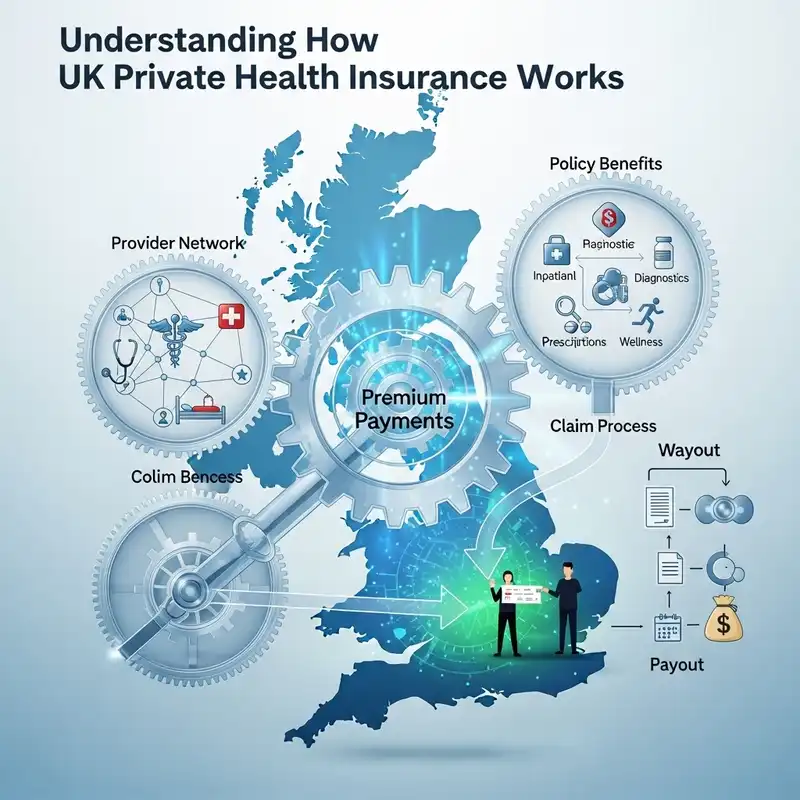


Why private medical insurance and how does it work?
What is Private Medical Insurance?
Private medical insurance (PMI) is a type of health insurance that provides access to private healthcare services in the UK. It covers the cost of private medical treatment, allowing you to bypass NHS waiting lists and receive faster, more convenient care.How does it work?
Private medical insurance works by paying for your private healthcare costs. When you need treatment, you can choose to go private and your insurance will cover the costs, subject to your policy terms and conditions. This can include:• Private consultations with specialists
• Private hospital treatment and surgery
• Diagnostic tests and scans
• Physiotherapy and rehabilitation
• Mental health treatment
Your premium depends on factors like your age, health, occupation, and the level of cover you choose. Most policies offer different levels of cover, from basic to comprehensive, allowing you to tailor the policy to your needs and budget.
Questions to ask yourself regarding private medical insurance
Just ask yourself:👉 Are you concerned about NHS waiting times for treatment?
👉 Would you prefer to choose your own consultant and hospital?
👉 Do you want faster access to diagnostic tests and scans?
👉 Would you like private hospital accommodation and better food?
👉 Do you want to avoid the stress of NHS waiting lists?
Many people don't realise that private medical insurance is more affordable than they think, especially when you consider the value of faster treatment and better facilities. A great insurance policy can provide peace of mind and ensure you receive the care you need when you need it.
Benefits offered by private medical insurance
Private medical insurance provides numerous benefits that can significantly improve your healthcare experience and outcomes:Faster Access to Treatment
One of the biggest advantages is avoiding NHS waiting lists. While the NHS provides excellent care, waiting times can be lengthy. With private medical insurance, you can often receive treatment within days or weeks rather than months.
Choice of Consultant and Hospital
You can choose your preferred consultant and hospital, giving you more control over your healthcare journey. This is particularly important for complex treatments where you want a specific specialist.
Better Facilities and Accommodation
Private hospitals typically offer superior facilities, including private rooms, better food, and more comfortable surroundings. This can make your recovery more pleasant and potentially faster.
Advanced Treatments
Private medical insurance often covers treatments and medications not available on the NHS, giving you access to the latest medical advances and technologies.
Mental Health Support
Many policies include comprehensive mental health coverage, providing faster access to therapy and psychiatric care when needed.
Tax Benefits for Business Owners
If you're self-employed or a business owner, private medical insurance premiums can be tax-deductible, making it a cost-effective way to protect your health and your business.
Peace of Mind
Knowing you have access to private healthcare when you need it provides invaluable peace of mind, especially for those with ongoing health conditions or concerns about NHS capacity.
Private medical insurance is particularly valuable for those who want to take control of their healthcare journey and ensure they receive the best possible treatment when they need it most.
Important Fact!
We can look at a more suitable option mid-term!
Why is it important to get private medical insurance early?
👉 Many people are very thankful that they had their private medical insurance cover in place before running into some serious health issues. Private medical insurance is as important as life insurance for protecting your family's finances.👉 We insure our cars, houses, and even our phones! Yet our health is the most precious thing we have.
Easily one of the most important insurance purchases an individual or family can make in their lifetime, the decision to buy private medical insurance can be made much simpler with the help of FCA-authorised advisers. They are the specialists who do the searching and analysis helping people choose between various types of private medical insurance policies available in the market, including different levels of cover and policy types most suitable to the client's individual circumstances.
It certainly won't do any harm if you speak with one of our experienced insurance experts who are passionate about advising people on financial matters related to private medical insurance and are keen to provide you with a free consultation.
You can discuss with them in detail what affordable private medical insurance plan for the necessary peace of mind they would recommend! WeCovr works with some of the best advisers in the market.
By tapping the button below, you can book a free call with them in less than 30 seconds right now:
Our Group Is Proud To Have Issued 900,000+ Policies!
We've established collaboration agreements with leading insurance groups to create tailored coverage
























How It Works
1. Complete a brief form

2. Our experts analyse your information and find you best quotes

3. Enjoy your protection!

Any questions?
Learn more

Who Are WeCovr?
WeCovr is an insurance specialist for people valuing their peace of mind and a great service.👍 WeCovr will help you get your private medical insurance, life insurance, critical illness insurance and others in no time thanks to our wonderful super-friendly experts ready to assist you every step of the way.
Just a quick and simple form and an easy conversation with one of our experts and your valuable insurance policy is in place for that needed peace of mind!