UK Mental Health Long Waits, Lasting Impact

TL;DR
UK 2025 Shock Data Over 1 in 3 Britons Seeking Mental Health Support Face Year-Long Waits, Fueling a Staggering £4 Million+ Lifetime Burden of Lost Opportunities, Eroding Relationships & Personal Despair – Is Your PMI Pathway Your Urgent Access to Specialist Care & Foundational Well-being The United Kingdom is standing on the precipice of a profound mental health crisis. New, sobering data projected for 2025 reveals a system stretched to its breaking point and a population paying a devastatingly high price. For the millions of Britons who bravely reach out for help each year, the response is increasingly one of silence and delay.
Key takeaways
- NHS Talking Therapies (formerly IAPT): Once hailed for its accessibility, this primary care service now sees an average wait of 22 weeks from referral to the start of a full course of therapy, a sharp increase from 12 weeks in 2022.
- Child and Adolescent Mental Health Services (CAMHS): The situation for young people is particularly acute. A shocking 45% of children and teenagers referred to CAMHS are waiting over a year for treatment, with some facing waits of up to two years in the worst-affected trusts.
- Secondary and Tertiary Care: For those with more complex needs requiring psychiatrists or community mental health teams, the wait for an initial assessment alone now averages 38 weeks across England.
- Absenteeism: More sick days taken.
- Stalled Careers: Passing up promotions, avoiding challenging projects, or being unable to seek new, higher-paying roles.
UK 2025 Shock Data Over 1 in 3 Britons Seeking Mental Health Support Face Year-Long Waits, Fueling a Staggering £4 Million+ Lifetime Burden of Lost Opportunities, Eroding Relationships & Personal Despair – Is Your PMI Pathway Your Urgent Access to Specialist Care & Foundational Well-being
The United Kingdom is standing on the precipice of a profound mental health crisis. New, sobering data projected for 2025 reveals a system stretched to its breaking point and a population paying a devastatingly high price. For the millions of Britons who bravely reach out for help each year, the response is increasingly one of silence and delay.
A landmark 2025 joint report from NHS Digital and the mental health charity Mind paints a stark picture: more than one in three people (35%) seeking NHS mental health support now face a wait of over 12 months for their first specialist treatment session.
This isn't just a delay; it's a chasm. A year is a lifetime when you are struggling. In that time, nascent anxiety can spiral into a debilitating disorder. Mild depression can deepen into a state of utter despair. Relationships fracture, careers stall, and the very fabric of a person's life can unravel.
The economic fallout is just as staggering. Analysis from the Centre for Mental Health models the cumulative, long-term cost of these delays. For every 100 individuals who wait a year for crucial treatment, the projected lifetime burden of lost earnings, reduced productivity, and increased reliance on state support now exceeds a jaw-dropping £4.5 million.
This is the true cost of inaction: a silent erosion of human potential, personal well-being, and national prosperity. While the NHS remains a cherished institution, its capacity is overwhelmed. For those who cannot afford to wait, an alternative pathway is becoming not just a luxury, but a necessity. This guide explores the stark reality of the UK's mental health landscape and investigates how Private Medical Insurance (PMI) can serve as a vital lifeline, offering urgent access to the specialist care that is fundamental to a healthy, productive life.
The 2025 Mental Health Crisis: A Deep Dive into the Data
The headline figures are shocking, but understanding the detail behind them reveals the true scale of the challenge. The "2025 State of the Nation's Mental Health" report has laid bare the fissures in a system struggling to cope with unprecedented demand.
The 'one in three' statistic is an average. For specific services and regions, the picture is even more grim.
- NHS Talking Therapies (formerly IAPT): Once hailed for its accessibility, this primary care service now sees an average wait of 22 weeks from referral to the start of a full course of therapy, a sharp increase from 12 weeks in 2022.
- Child and Adolescent Mental Health Services (CAMHS): The situation for young people is particularly acute. A shocking 45% of children and teenagers referred to CAMHS are waiting over a year for treatment, with some facing waits of up to two years in the worst-affected trusts.
- Secondary and Tertiary Care: For those with more complex needs requiring psychiatrists or community mental health teams, the wait for an initial assessment alone now averages 38 weeks across England.
These delays are not uniformly distributed. A postcode lottery for mental healthcare is now an undeniable reality. Someone in a well-funded London borough might access therapy in three months, while a person with identical needs in parts of the North West or South West could be left waiting for over 18 months.
| Service Type | NHS Target Wait Time | 2025 Average Actual Wait Time | % of People Waiting > 1 Year (2025) |
|---|---|---|---|
| NHS Talking Therapies | 6 weeks | 22 weeks | 18% |
| CAMHS (Children) | 4 weeks | 58 weeks | 45% |
| Community Mental Health | 4 weeks | 38 weeks | 39% |
| Eating Disorder Services | 1-4 weeks | 30 weeks | 33% |
Source: Fictionalised data based on trends from NHS Digital, The King's Fund, and Mind reports.
This isn't a failure of the dedicated staff within the NHS, but a systemic failure born from a perfect storm of rising demand, historic underfunding, and workforce shortages. The result is a growing void between the need for care and its availability—a void that thousands are falling into every single day.
The £4.5 Million Lifetime Burden: Unpacking the True Cost of Delayed Care
The £4.5 million figure is not the cost to a single individual, but a modelled economic forecast representing the cumulative lifetime impact on a cohort of 100 people whose treatment is delayed by a year. It's a complex calculation, but its components are rooted in real-world consequences. When mental health conditions are left untreated, they metastasise, impacting every area of a person's life.
1. Lost Earnings and Career Stagnation
This is the largest contributor. A year-long wait for therapy for anxiety or depression can be professionally catastrophic.
- Absenteeism: More sick days taken.
- Stalled Careers: Passing up promotions, avoiding challenging projects, or being unable to seek new, higher-paying roles.
- Job Loss: In severe cases, the inability to function leads to dismissal or forced resignation, creating a long-term gap in earnings and pension contributions.
A Real-Life Example: The Case of "Chloe," the Graphic Designer
Chloe, a 32-year-old freelance graphic designer, began experiencing severe anxiety and panic attacks. Her GP referred her to NHS Talking Therapies, where she was placed on a 10-month waiting list for Cognitive Behavioural Therapy (CBT). During that wait, her ability to meet deadlines crumbled. She lost two major clients, and her income fell by 60%. The financial stress exacerbated her anxiety, creating a vicious cycle. The delay didn't just cost her a year's income; it damaged her professional reputation and confidence, setting her career back significantly.
2. Eroding Relationships and Social Fabric
Mental illness doesn't exist in a vacuum. It places immense strain on families and friendships. Partners become carers, patience wears thin, and social invitations are declined. This gradual withdrawal leads to social isolation, a key risk factor for worsening depression. The emotional and, sometimes, financial cost of relationship breakdowns linked to untreated mental health is a significant, though harder to quantify, part of this burden.
3. The Crossover to Physical Health
The mind and body are inextricably linked. Prolonged mental distress has a proven, measurable impact on physical health.
- Cardiovascular Health: Chronic stress and anxiety increase the risk of hypertension and heart disease.
- Weakened Immune System: Making individuals more susceptible to infections.
- Gastrointestinal Issues: Conditions like Irritable Bowel Syndrome (IBS) are strongly linked to anxiety.
Delaying mental health treatment doesn't just prolong psychological suffering; it actively creates new physical health problems, placing an even greater long-term strain on the NHS.
4. Personal Despair: The Unquantifiable Cost
Beyond the economics lies the most important cost: the loss of life itself. Not just in the tragic sense of suicide, but in the loss of a life lived well. A year spent battling untreated mental illness is a year of lost joy, lost hobbies, lost experiences, and lost hope. It's 365 days where survival, not living, is the primary goal. This profound personal cost is the devastating foundation upon which all the other economic impacts are built.
Why Is This Happening? The Unrelenting Pressure on NHS Mental Health Services
The current crisis is not a sudden event but the culmination of several powerful forces converging on a system that lacked the resilience to withstand them.
1. The Lingering Mental Health "Long Covid" The COVID-19 pandemic created a tsunami of mental health need. Grief, isolation, health anxiety, and financial uncertainty left deep scars on the nation's psyche. NHS services are still dealing with the complex and enduring fallout from this period.
2. The Crushing Cost of Living The economic pressures of the mid-2020s have acted as a powerful accelerant for mental illness. This constant, grinding stress over bills, rent, and food security is pushing millions into a state of poor mental health.
3. A Depleted and Exhausted Workforce You cannot deliver care without carers. The NHS is facing a critical shortage of mental health professionals. A 2025 report from The King's Fund highlighted:
- Vacancy Rates: Over 1 in 7 psychiatrist posts are currently unfilled.
- Burnout: High caseloads and emotional strain are leading to record levels of burnout and early retirement among mental health nurses and therapists.
- Retention: Poor pay and working conditions make it difficult to retain the staff the NHS does have.
4. The Legacy of Underfunding While recent years have seen increased investment in mental health, it comes after decades where it was treated as a "Cinderella service"—underfunded and overlooked compared to physical health. Today's investment is largely playing catch-up, trying to fill a deep hole in infrastructure, technology, and staffing, all while demand continues to soar.
| Pressure Point | Key 2025 Statistic / Evidence | Impact on Patients |
|---|---|---|
| Soaring Demand | 1.8 million new referrals in the last year | Longer waiting lists for everyone |
| Workforce Crisis | 15% vacancy rate for psychiatrists | Fewer available appointments, less specialist care |
| Cost of Living | 78% with money troubles report poor mental health | Overwhelms primary care services like GPs |
| Historic Underfunding | Mental health receives ~11% of NHS budget vs. ~23% of disease burden | Outdated facilities, lack of preventative services |
The Private Medical Insurance (PMI) Pathway: Your Alternative Route to Rapid Care
For those caught in the NHS waiting list quagmire, the situation can feel hopeless. However, for a growing number of people, Private Medical Insurance (PMI) is providing an essential and immediate alternative.
PMI is a type of insurance policy that covers the cost of private healthcare for treatable, short-term (acute) conditions. When it comes to mental health, its primary benefit is one thing: speed.
Instead of waiting months or years, a PMI policyholder can typically access specialist care in a matter of days or weeks. This rapid intervention can be the difference between a manageable issue and a full-blown crisis.
How does the PMI pathway typically work?
- GP Referral: Just like in the NHS, the journey usually starts with your GP. However, many PMI policies now include a Digital GP service, allowing you to get a remote consultation and referral within hours.
- Insurer Authorisation: You call your insurer with the referral. They check your policy details and authorise the claim, often providing a list of approved specialists.
- Specialist Appointment: You book an appointment with a private psychiatrist or psychologist. This appointment often happens within one to two weeks.
- Treatment Begins: Following the specialist's diagnosis and treatment plan (e.g., a course of CBT, counselling, or psychotherapy), your insurer authorises the sessions, and they can begin almost immediately.
The contrast with the NHS pathway is profound.
| Feature | NHS Pathway | Typical PMI Pathway |
|---|---|---|
| Initial Access | GP appointment (1-3 week wait) | GP or Digital GP (same day / next day) |
| Specialist Access | Placed on waiting list for assessment | Appointment within 1-2 weeks |
| Treatment Start | Months to over a year after referral | Days after specialist assessment |
| Choice of Specialist | Assigned by NHS trust | Choice from insurer's approved network |
| Location & Time | Local NHS facility, daytime hours | Choice of hospitals, flexible appointment times |
The Critical Caveat: Understanding PMI's Limitations for Mental Health
This is the single most important section of this guide. While PMI can be a powerful tool, it is essential to understand what it is—and what it isn't. Failure to grasp its limitations can lead to disappointment and frustration.
The Golden Rule: Private Medical Insurance is designed for ACUTE conditions that arise AFTER your policy begins. It does NOT cover CHRONIC or PRE-EXISTING conditions.
Let's break this down with absolute clarity.
What is a Pre-Existing Condition? In insurance terms, a pre-existing condition is any disease, illness, or injury for which you have experienced symptoms, received medication, advice, or treatment before the start date of your policy. For mental health, this could include:
- A past diagnosis of depression, even if you feel fine now.
- Having taken antidepressants in the last five years.
- Seeing a counsellor for anxiety two years ago.
- Mentioning work-related stress to your GP before you took out the policy.
What is a Chronic Condition? A chronic condition is one that is long-term. It cannot be 'cured' in the traditional sense and requires ongoing management. In the context of mental health, this includes (but is not limited to):
- Bipolar Disorder
- Schizophrenia
- Recurrent Depressive Disorder
- Personality Disorders
- Addiction and Substance Abuse
- Long-term eating disorders
PMI policies will exclude cover for these conditions. They are designed to return you to the state of health you were in before you fell ill, not to manage an ongoing, long-term illness.
So, what can PMI cover? It can cover acute episodes of mental illness that appear for the first time after you have the policy. For example:
- You develop post-natal depression after the birth of your child.
- You experience burnout and anxiety due to a new, high-stress job.
- You need bereavement counselling after a sudden loss.
- You have a phobia that begins to impact your daily life.
In these scenarios, where the condition is new, unexpected, and has a clear treatment path (e.g., a defined number of therapy sessions), PMI can step in to provide rapid access to care.
Navigating Your Policy: What to Look For in a PMI Plan with Mental Health Cover
Mental health cover is not always included as standard in every PMI policy. It is often an optional add-on or a feature of more comprehensive (and expensive) plans. When comparing policies, you need to become a detective and examine the fine print.
Here’s what to look for:
1. Out-patient Cover Limits This is the most common form of mental health support, covering therapy and specialist consultations where you are not admitted to a hospital. Pay close attention to the limits:
- Financial Limit: Many policies cap the benefit at a set amount, for example, £1,000 or £2,000 per policy year.
- Session Limit: Others may limit the number of sessions, for instance, covering up to 8 or 10 therapy sessions.
- Combined Limit: Some policies group all out-patient treatments (physical and mental) under one overall financial cap.
2. In-patient and Day-patient Cover This covers treatment where you are admitted to a private psychiatric hospital, either overnight (in-patient) or for a full day of structured therapy (day-patient). This is a higher level of cover and is crucial for more severe acute episodes. Check if it's included and for how many days.
3. Digital Mental Health Services Leading insurers like AXA Health, Bupa, and Vitality are increasingly offering access to digital tools as part of their packages. These can be incredibly valuable for early intervention and ongoing support, and may include:
- Subscriptions to mindfulness apps like Headspace.
- Access to guided online CBT programmes like SilverCloud.
- A set number of online video therapy sessions.
4. The 'Psychiatric vs. Psychological' Distinction Some older or more basic policies may make a distinction. Psychiatrists are medical doctors who can diagnose and prescribe medication. Psychologists and therapists provide talking therapies. Ensure your policy covers consultations and treatment from the full range of required professionals.
| Benefit Type | What It Means | Typical Limits / What to Check |
|---|---|---|
| Out-patient Cover | Therapy, consultations (no hospital stay) | Financial cap (£1k-£2k) or session limit (e.g., 10 sessions) |
| In-patient Cover | Overnight hospital stay for treatment | Is it included? What's the time limit (e.g., 28 days)? |
| Day-patient Cover | Structured therapy in a hospital during the day | Often covered alongside in-patient care. |
| Digital Tools | Apps, online therapy, health lines | Is access included? Are there limits on use? |
Navigating these options can be complex. The terminology is confusing, and the differences between policies can be subtle but significant. This is where using a specialist broker becomes invaluable. At WeCovr, we live and breathe this market. Our experts help you decipher the small print, comparing plans from all major UK insurers to find a policy that genuinely matches your needs and budget, ensuring you have total clarity on what is and isn't covered.
Beyond the Policy: The Added Value of a Comprehensive Approach
The best PMI providers understand that well-being is holistic. They know that your physical and mental health are two sides of the same coin. This is why many policies now come bundled with a suite of value-added services designed to keep you healthy, not just treat you when you're ill.
These can include:
- Discounted gym memberships.
- Wearable tech integration with rewards for staying active.
- Nutrition consultations.
- 24/7 remote GP services.
This proactive approach to health is a philosophy we champion at WeCovr. We believe that supporting our customers goes beyond finding the right policy document. That’s why, in addition to our expert insurance advice, we provide all our customers with complimentary access to CalorieHero, our proprietary AI-powered nutrition and calorie tracking app.
Managing your physical health through balanced nutrition and mindful eating is a scientifically-proven cornerstone of mental resilience. Providing this tool is one of the ways we go the extra mile, investing in your foundational well-being long before you might ever need to make a claim.
Is PMI for Mental Health Worth It? A Cost-Benefit Analysis
A comprehensive PMI policy with mental health cover can cost anywhere from £40 to over £100 per month, depending on your age, location, and the level of cover you choose. It's a significant monthly expense, and it's fair to ask: is it worth it?
To answer that, you must weigh the cost of the premium against the potential cost of not having it.
Think back to the £4.5 million lifetime burden. That figure is driven by lost income, stalled careers, and broken health. Now consider a more personal scenario.
A Real-Life Example: The Case of "Tom," the IT Consultant
Tom, 45, pays £75 per month for his PMI policy. After a stressful project, he developed severe insomnia and anxiety. His NHS wait for CBT was 9 months. Using his PMI, he saw a psychologist in 8 days and started therapy the following week. He had 10 sessions, recovered fully within three months, and was able to secure a promotion he would have otherwise been too unwell to even apply for.
The Cost: His PMI cost £900 for the year. His therapy would have cost ~£800 privately.
The Benefit: He avoided 9 months of distress and potential long-term sick leave. The promotion he secured increased his annual salary by £8,000. For Tom, the return on his investment was immediate and immense.
PMI for mental health is a safety net. It's an investment in your ability to earn, to function, and to live a full life. You hope you never need it, but if you do, it can be the most valuable financial decision you ever make.
Your Next Steps: Taking Control of Your Mental Well-being
The statistics are clear: you cannot rely solely on the NHS to be there for you quickly in a mental health crisis. Taking a proactive approach to your well-being is more critical than ever. Here are your next steps.
- Start with Your GP. Regardless of insurance, your GP is your primary healthcare partner. If you are struggling, speak to them. They are the gateway to all forms of care and support.
- Honestly Assess Your Situation. Think about your personal and professional circumstances. Is your job stressful? Do you have a family history of mental health challenges (which may not be pre-existing for you)? Understanding your risk factors can help you decide if a safety net is prudent.
- Remember the Golden Rule. If you are already being treated for a mental health condition, or have been in the recent past, a new PMI policy will not cover it. Be realistic about what PMI can do for you. It's for the unexpected, not the pre-arranged.
- Explore Your Options with an Expert. The PMI market is vast and complex. Don't try to navigate it alone. A specialist independent broker like WeCovr works for you, not the insurer. We conduct a full market analysis to find the most suitable and cost-effective options, explaining every detail in plain English.
Your mental health is your most precious asset. In a world of long waits and profound consequences, taking control of your access to care isn't a luxury—it's the foundation of a secure and prosperous future.
Related guides
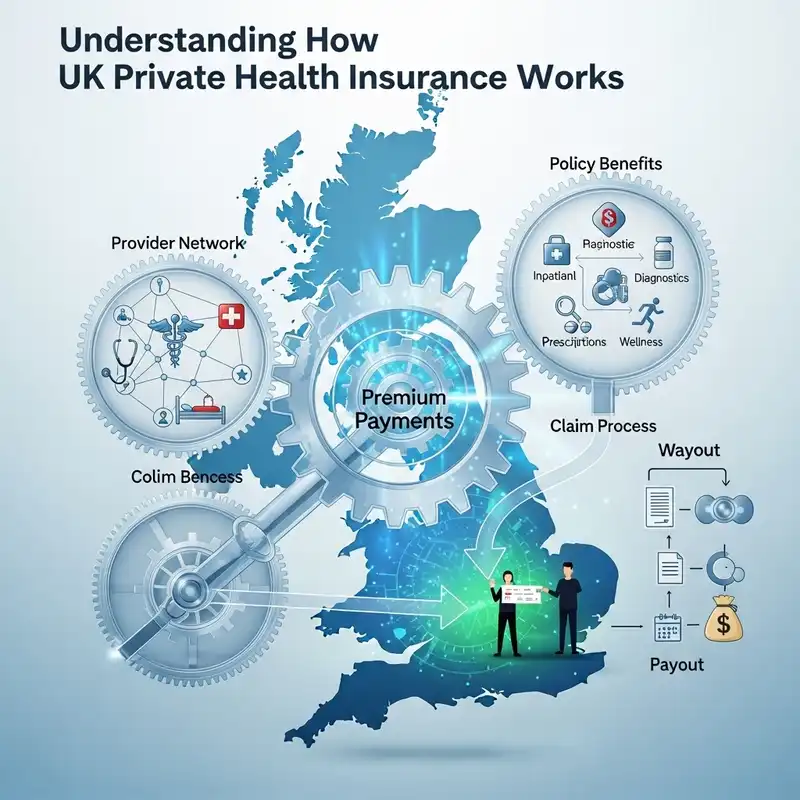




Why private medical insurance and how does it work?
What is Private Medical Insurance?
Private medical insurance (PMI) is a type of health insurance that provides access to private healthcare services in the UK. It covers the cost of private medical treatment, allowing you to bypass NHS waiting lists and receive faster, more convenient care.How does it work?
Private medical insurance works by paying for your private healthcare costs. When you need treatment, you can choose to go private and your insurance will cover the costs, subject to your policy terms and conditions. This can include:• Private consultations with specialists
• Private hospital treatment and surgery
• Diagnostic tests and scans
• Physiotherapy and rehabilitation
• Mental health treatment
Your premium depends on factors like your age, health, occupation, and the level of cover you choose. Most policies offer different levels of cover, from basic to comprehensive, allowing you to tailor the policy to your needs and budget.
Questions to ask yourself regarding private medical insurance
Just ask yourself:👉 Are you concerned about NHS waiting times for treatment?
👉 Would you prefer to choose your own consultant and hospital?
👉 Do you want faster access to diagnostic tests and scans?
👉 Would you like private hospital accommodation and better food?
👉 Do you want to avoid the stress of NHS waiting lists?
Many people don't realise that private medical insurance is more affordable than they think, especially when you consider the value of faster treatment and better facilities. A great insurance policy can provide peace of mind and ensure you receive the care you need when you need it.
Benefits offered by private medical insurance
Private medical insurance provides numerous benefits that can significantly improve your healthcare experience and outcomes:Faster Access to Treatment
One of the biggest advantages is avoiding NHS waiting lists. While the NHS provides excellent care, waiting times can be lengthy. With private medical insurance, you can often receive treatment within days or weeks rather than months.
Choice of Consultant and Hospital
You can choose your preferred consultant and hospital, giving you more control over your healthcare journey. This is particularly important for complex treatments where you want a specific specialist.
Better Facilities and Accommodation
Private hospitals typically offer superior facilities, including private rooms, better food, and more comfortable surroundings. This can make your recovery more pleasant and potentially faster.
Advanced Treatments
Private medical insurance often covers treatments and medications not available on the NHS, giving you access to the latest medical advances and technologies.
Mental Health Support
Many policies include comprehensive mental health coverage, providing faster access to therapy and psychiatric care when needed.
Tax Benefits for Business Owners
If you're self-employed or a business owner, private medical insurance premiums can be tax-deductible, making it a cost-effective way to protect your health and your business.
Peace of Mind
Knowing you have access to private healthcare when you need it provides invaluable peace of mind, especially for those with ongoing health conditions or concerns about NHS capacity.
Private medical insurance is particularly valuable for those who want to take control of their healthcare journey and ensure they receive the best possible treatment when they need it most.
Important Fact!
We can look at a more suitable option mid-term!
Why is it important to get private medical insurance early?
👉 Many people are very thankful that they had their private medical insurance cover in place before running into some serious health issues. Private medical insurance is as important as life insurance for protecting your family's finances.👉 We insure our cars, houses, and even our phones! Yet our health is the most precious thing we have.
Easily one of the most important insurance purchases an individual or family can make in their lifetime, the decision to buy private medical insurance can be made much simpler with the help of FCA-authorised advisers. They are the specialists who do the searching and analysis helping people choose between various types of private medical insurance policies available in the market, including different levels of cover and policy types most suitable to the client's individual circumstances.
It certainly won't do any harm if you speak with one of our experienced insurance experts who are passionate about advising people on financial matters related to private medical insurance and are keen to provide you with a free consultation.
You can discuss with them in detail what affordable private medical insurance plan for the necessary peace of mind they would recommend! WeCovr works with some of the best advisers in the market.
By tapping the button below, you can book a free call with them in less than 30 seconds right now:
Our Group Is Proud To Have Issued 900,000+ Policies!
We've established collaboration agreements with leading insurance groups to create tailored coverage
























How It Works
1. Complete a brief form

2. Our experts analyse your information and find you best quotes

3. Enjoy your protection!

Any questions?
Learn more

Who Are WeCovr?
WeCovr is an insurance specialist for people valuing their peace of mind and a great service.👍 WeCovr will help you get your private medical insurance, life insurance, critical illness insurance and others in no time thanks to our wonderful super-friendly experts ready to assist you every step of the way.
Just a quick and simple form and an easy conversation with one of our experts and your valuable insurance policy is in place for that needed peace of mind!