TL;DR
UK Private Health Insurance for Expats & New Residents – Your Essential Guide Moving to a new country is an adventure filled with excitement, opportunities, and perhaps a touch of trepidation. As an expat or new resident in the UK, one of the most critical aspects of settling in – often overlooked amidst visa applications and housing hunts – is understanding the healthcare system. While the UK boasts the esteemed National Health Service (NHS), many new arrivals quickly realise that private health insurance can offer invaluable peace of mind and access to a different standard of care.
Key takeaways
- Universal Access: Available to all UK residents, regardless of income or background.
- Free at the Point of Use: Most services, from GP visits to emergency care and hospital treatments, do not incur a direct charge at the time of service. Prescription medications, dental care, and optical services often have charges, though exemptions apply.
- Comprehensive: Covers a vast range of services, including emergency care, general practitioner (GP) consultations, specialist referrals, hospital stays, and maternity care.
- Immigration Health Surcharge (IHS): As an expat or new resident on a visa of six months or longer, you will typically pay an annual Immigration Health Surcharge as part of your visa application. This payment grants you access to the NHS, just like a permanent resident.
- Waiting Lists: Perhaps the most significant drawback. Non-emergency specialist appointments, diagnostic tests (like MRI scans), and elective surgeries often involve considerable waiting times. These can stretch from weeks to many months, impacting quality of life and potentially worsening conditions.
UK Private Health Insurance for Expats & New Residents – Your Essential Guide
Moving to a new country is an adventure filled with excitement, opportunities, and perhaps a touch of trepidation. As an expat or new resident in the UK, one of the most critical aspects of settling in – often overlooked amidst visa applications and housing hunts – is understanding the healthcare system. While the UK boasts the esteemed National Health Service (NHS), many new arrivals quickly realise that private health insurance can offer invaluable peace of mind and access to a different standard of care.
This comprehensive guide is designed to demystify UK private health insurance for those new to its shores. We'll explore the nuances of the NHS, the compelling reasons to consider private cover, how policies work, and what factors you need to consider to make an informed decision about your health and wellbeing in your new home.
The UK Healthcare Landscape: NHS vs. Private
Before diving into the specifics of private health insurance, it's crucial to understand the fundamental structure of healthcare in the UK.
The National Health Service (NHS): Your Foundation
The NHS is the cornerstone of healthcare in the United Kingdom, renowned globally for providing comprehensive medical care that is largely free at the point of use. Funded primarily through general taxation and National Insurance contributions, it serves everyone resident in the UK.
Key Characteristics of the NHS:
- Universal Access: Available to all UK residents, regardless of income or background.
- Free at the Point of Use: Most services, from GP visits to emergency care and hospital treatments, do not incur a direct charge at the time of service. Prescription medications, dental care, and optical services often have charges, though exemptions apply.
- Comprehensive: Covers a vast range of services, including emergency care, general practitioner (GP) consultations, specialist referrals, hospital stays, and maternity care.
- Immigration Health Surcharge (IHS): As an expat or new resident on a visa of six months or longer, you will typically pay an annual Immigration Health Surcharge as part of your visa application. This payment grants you access to the NHS, just like a permanent resident.
While the NHS is a fantastic resource and a source of national pride, it operates under immense pressure, particularly in recent years. This pressure can lead to certain limitations for users:
- Waiting Lists: Perhaps the most significant drawback. Non-emergency specialist appointments, diagnostic tests (like MRI scans), and elective surgeries often involve considerable waiting times. These can stretch from weeks to many months, impacting quality of life and potentially worsening conditions.
- Choice of Specialist/Hospital: While you can express a preference, the NHS primarily allocates you to consultants and hospitals based on availability and location, limiting your direct choice.
- Hospital Amenities: NHS hospitals, while providing excellent medical care, can be busy, with shared wards and less emphasis on private amenities.
- Appointment Availability: Getting a timely GP appointment can sometimes be challenging, particularly in high-demand areas.
Why Consider Private Health Insurance in the UK?
Given the NHS's universal coverage, you might wonder why private health insurance (PHI) is necessary. For many expats and new residents, it acts not as a replacement for the NHS, but as a vital complementary service.
Here's why many choose to invest in PHI:
- Faster Access to Treatment: This is often the primary driver. PHI allows you to bypass NHS waiting lists for non-emergency conditions, getting quicker access to specialist consultations, diagnostic tests, and elective surgeries. This can significantly reduce anxiety and accelerate recovery.
- Choice and Control: You gain the ability to choose your consultant (often based on their expertise and experience) and your hospital from a network of private facilities. This level of control can be incredibly reassuring.
- Enhanced Comfort and Privacy: Private hospitals typically offer private rooms with en-suite facilities, better catering, and more flexible visiting hours, providing a more comfortable and private recovery environment.
- Access to Newer Treatments/Drugs: While the NHS eventually adopts most proven treatments, private health insurance can sometimes offer access to the latest approved drugs or therapies sooner, depending on policy terms.
- Peace of Mind: Knowing you have an alternative pathway to care, should you need it, offers significant peace of mind for you and your family, allowing you to focus on settling into your new life in the UK.
- Virtual GP Services: Many private policies include access to virtual GP services, allowing for quick, convenient consultations from anywhere.
| Feature | National Health Service (NHS) | Private Health Insurance (PHI) |
|---|---|---|
| Funding | General taxation, National Insurance, Immigration Health Surcharge | Premiums paid by individuals/employers |
| Cost at Point of Use | Generally free (some charges for prescriptions, dental) | Covered by insurance, often with an excess/deductible |
| Access | Universal for UK residents | Requires a policy, subject to underwriting |
| Waiting Lists | Common for non-emergency specialists/procedures | Significantly reduced or eliminated |
| Choice of Provider | Limited choice of consultant/hospital | Choice of consultant and private hospital network |
| Comfort/Privacy | Often shared wards, standard amenities | Private rooms, en-suite facilities, higher amenities |
| Speed of Diagnosis | Can be slow due to waiting lists | Often much faster, quick access to diagnostics |
| Exclusions | Generally none once eligible | Pre-existing and chronic conditions usually excluded |
| Emergency Care | Excellent, always available | Not primarily for emergencies; use NHS A&E for true emergencies |
Understanding UK Private Health Insurance (PHI)
Private Health Insurance, often referred to as Private Medical Insurance (PMI), is designed to cover the costs of private medical treatment for acute conditions. It provides an alternative to the NHS for specific healthcare needs, offering benefits such as faster access, choice, and enhanced comfort.
What is Private Health Insurance?
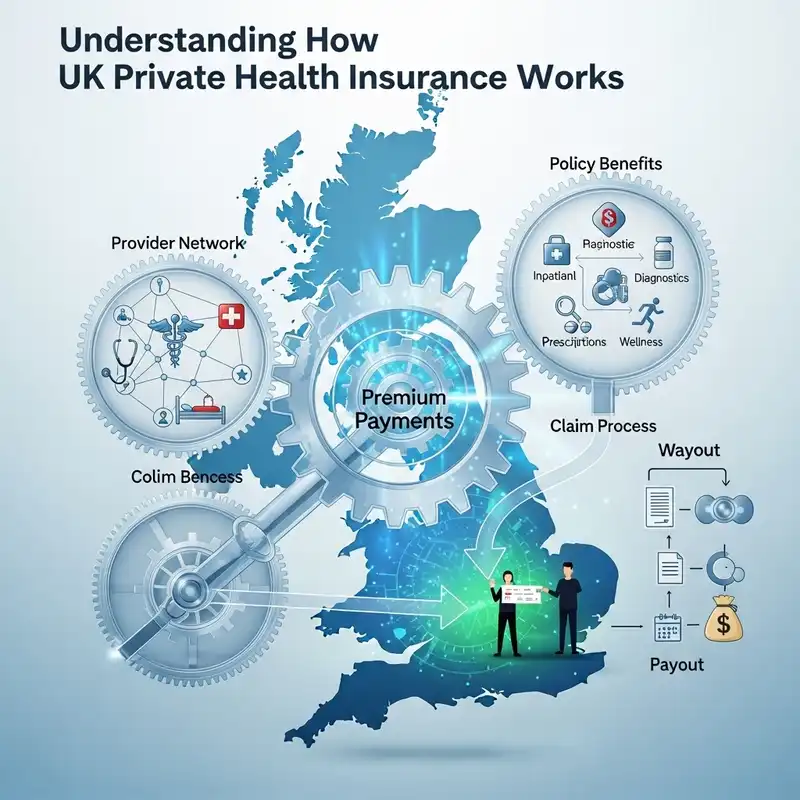
At its core, PHI is a contract between you and an insurer. In exchange for regular premium payments, the insurer agrees to cover eligible medical expenses if you fall ill or suffer an injury, allowing you to be treated privately rather than through the NHS. This typically means treatment in private hospitals or private wings of NHS hospitals, under the care of private consultants.
It's crucial to understand that PHI is generally designed to cover acute conditions. An acute condition is a disease, illness or injury that is likely to respond quickly to treatment and return you to the state of health you were in immediately before suffering the disease, illness or injury.
Core Components of a PHI Policy
Most PHI policies are structured around several key components:
-
Inpatient Cover: This is the foundational component of almost all policies and covers treatment that requires an overnight stay in a hospital. This includes accommodation, theatre fees, specialist fees, nursing care, and sometimes even intensive care. Inpatient cover is usually comprehensive.
-
Outpatient Cover: This covers treatments and consultations that don't require an overnight hospital stay. This is an optional extra on many policies and can be crucial for prompt diagnosis. It typically includes:
- Consultations with specialists (e.g., an orthopaedic surgeon, cardiologist).
- Diagnostic tests (e.g., MRI scans, X-rays, blood tests).
- Physiotherapy and other therapies (e.g., chiropody, osteopathy).
- Minor outpatient procedures.
-
Cancer Cover: A critical component for many. This typically covers:
- Diagnosis and treatment of new cancer (often including radiotherapy, chemotherapy, surgical procedures, and follow-up care).
- Advanced cancer drugs and treatments not yet routinely available on the NHS.
- Sometimes, even a cash benefit if receiving NHS cancer treatment.
-
Mental Health Cover: The extent of this varies significantly between policies. Some offer basic outpatient psychiatric consultations, while others include inpatient psychiatric care. It's an area where policy comparison is vital.
-
Therapies: Covers treatments like physiotherapy, osteopathy, chiropody, and sometimes complementary therapies (e.g., acupuncture) when referred by a consultant.
-
Excess/Deductible: This is a fixed amount you agree to pay towards the cost of your treatment before the insurer starts paying. Choosing a higher excess will reduce your annual premium, but means you'll pay more out-of-pocket if you need to make a claim.
-
Annual Limits (illustrative): Policies often have overall annual limits on claims, or specific limits for certain benefits (e.g., £1,000 for outpatient consultations, £5,000 for mental health).
What Private Health Insurance Typically Doesn't Cover
It's equally important to understand what PHI generally excludes:
- Pre-Existing Conditions: Conditions you had, or had symptoms of, before taking out the policy. This is a crucial point for expats (see dedicated section below).
- Chronic Conditions: Ongoing, long-term conditions that cannot be cured (e.g., diabetes, asthma, epilepsy, multiple sclerosis). PHI is for acute conditions.
- Emergency Services: For true emergencies (e.g., heart attack, severe injury), you should always go to an NHS A&E (Accident & Emergency) department. PHI is not for immediate life-threatening situations.
- Routine Maternity Care: Most policies exclude routine pregnancy and childbirth, though complications may be covered.
- Cosmetic Surgery: Procedures primarily for aesthetic purposes.
- Drug Addiction/Alcohol Abuse: Treatment for these is generally excluded.
- Dental and Optical Care: Usually not included in standard policies, but can often be added as an optional extra.
- Organ Transplants: Generally excluded, as these are typically NHS services.
Understanding these inclusions and exclusions is paramount to avoiding disappointment if you need to make a claim.
Types of Private Health Insurance Policies
When exploring your options, you'll encounter several types of policies, each tailored to different needs and circumstances.
Individual Plans
This is the most common type for single expats or new residents. It covers one individual only and is tailored to their specific age, medical history, and desired level of cover.
Family Plans
If you're moving to the UK with your spouse or children, a family plan can often be more cost-effective and convenient than multiple individual policies. These plans typically cover all named family members under a single policy, often with a discount compared to buying separate plans. Insurers often have rules about who can be included (e.g., children up to a certain age, whether they are in full-time education).
Company/Group Schemes
Some employers in the UK offer private health insurance as part of their employee benefits package. If your employer provides this, it's often an excellent option as the company typically bears the cost, and group schemes can sometimes offer more favourable terms (e.g., less stringent underwriting for pre-existing conditions) due to the larger pool of members. Always check the details of a company scheme carefully, as cover levels can vary.
International Health Insurance (IHI) vs. UK-Specific PHI
This is a critical distinction for expats.
-
UK-Specific PHI: Designed for individuals primarily residing in the UK. The coverage is focused on treatment within the UK, using the network of UK private hospitals and consultants. Premiums are generally lower than IHI as the geographic scope is limited. This is suitable if your primary residence and expected place of treatment will be the UK.
-
International Health Insurance (IHI): Provides coverage across multiple countries, or even globally. This is ideal if:
- You frequently travel internationally for work or leisure.
- You might need treatment in your home country or another country.
- You are unsure how long you will remain in the UK or plan to move to other countries in the future.
IHI policies are typically more expensive due to their broader geographic scope but offer unparalleled flexibility for truly global citizens. If you plan to settle long-term in the UK and your primary concern is accessing private care here, a UK-specific PHI policy will likely be more appropriate and cost-effective.
Benefit Levels and Tiers
Insurers usually offer different tiers of policies, often categorised as:
- Basic/Entry-Level: Primarily covers inpatient treatment, with very limited or no outpatient cover. Good for catastrophic illness but less useful for quick diagnosis of everyday ailments.
- Standard/Mid-Level: Includes inpatient cover, a reasonable level of outpatient cover (e.g., a set number of specialist consultations or a monetary limit for tests), and often cancer care.
- Comprehensive/Premium: Offers extensive inpatient and outpatient cover, often including mental health, advanced cancer care, physiotherapy, and sometimes wellness benefits. This provides the broadest range of benefits but comes at a higher cost.
When choosing, balance your budget with your expected needs. While a comprehensive plan offers more, a mid-level plan might strike the right balance for many.
Factors Affecting Your Premiums
The cost of private health insurance in the UK can vary significantly. Understanding the factors that influence your premium will help you make a more informed decision and find a policy that fits your budget.
1. Age
This is usually the most significant factor. As we age, the likelihood of developing health conditions increases, leading to higher premiums. Policies become progressively more expensive the older you get, especially once you hit your 50s and 60s.
2. Medical History (Underwriting Method)
Your past and present health are crucial. Insurers use "underwriting" to assess your risk. This determines how any existing or past conditions will be treated by your policy. There are typically three main methods:
-
Full Medical Underwriting (FMU):
- How it works: You provide a detailed medical history to the insurer at the application stage. This includes past conditions, diagnoses, and treatments.
- Outcome: The insurer reviews this information and explicitly excludes any pre-existing conditions from your policy from day one. You know exactly what's covered and what isn't upfront.
- Pros: Certainty regarding exclusions; often results in lower premiums as the insurer has a clear picture of your risk.
- Cons: Requires more upfront effort from you; takes longer to process.
- Best for: Most expats, especially if you have some known, stable pre-existing conditions you want clearly identified as exclusions.
-
Moratorium Underwriting:
- How it works: You don't need to provide a detailed medical history upfront. Instead, the insurer automatically excludes any condition you've had symptoms of, received treatment for, or sought advice on, in the five years before your policy start date.
- Outcome: These exclusions are temporary. If you go for a continuous period (usually two years) after your policy starts without symptoms, treatment, or advice for that condition, it may then become covered. If you have symptoms or treatment during this moratorium period, the clock resets.
- Pros: Simpler and quicker to set up.
- Cons: Uncertainty about what's covered until the moratorium period passes or a claim is made; potentially more hassle if you need to claim for a condition that might be pre-existing.
- Best for: Individuals with a relatively clean medical history, or those who prefer a simpler application process and are comfortable with the temporary exclusion period.
-
Continued Personal Medical Exclusions (CPME):
- How it works: This method is typically used when switching from an existing individual UK private medical insurance policy to a new one, particularly if you have pre-existing conditions that are already covered by your current policy. The new insurer agrees to carry over the underwriting terms and covered conditions from your previous policy.
- Pros: Ensures continuity of cover for conditions that were already covered by your previous policy, avoiding a new moratorium period or full medical underwriting for already accepted conditions.
- Cons: Only applicable if you're switching from an equivalent individual policy.
- Best for: Expats already in the UK with existing private health insurance who wish to switch providers without losing cover for previously accepted conditions.
3. Chosen Cover Level
As discussed, the more comprehensive the cover (e.g., extensive outpatient cover, mental health, cancer benefits, advanced therapies), the higher the premium. Choosing a basic inpatient-only plan will be significantly cheaper than a premium plan with all optional extras.
4. Excess/Deductible
Your excess is the amount you agree to pay towards the cost of any claim before your insurer steps in. Most insurers offer excesses ranging from £0 to £1,000 or more per year. Opting for a higher excess will reduce your annual premium because you're agreeing to bear more of the initial cost yourself. (illustrative estimate)
5. Geographic Location
Healthcare costs, particularly in London and the South East, tend to be higher due to property prices, staffing costs, and demand. If you live in a high-cost area, your premium will likely be higher than someone living in a more rural or lower-cost region of the UK. Some policies may have "hospital lists" that exclude certain high-cost London hospitals unless you pay a higher premium.
6. Lifestyle Factors
While not always a direct underwriting factor like age or medical history, certain lifestyle choices can influence your overall health and, by extension, your eligibility or premium. For instance, smoking might not directly result in a "smoker's premium" like in life insurance, but associated health issues could be flagged during underwriting. Similarly, significant obesity might lead to exclusions or higher rates if related health conditions are present.
7. Optional Extras
Adding benefits like routine dental, optical, travel insurance, or wellness programmes will increase your premium. Evaluate whether these add-ons offer sufficient value for their cost compared to purchasing them separately or relying on the NHS.
When comparing quotes, it's essential to compare like-for-like policies, taking all these factors into account. A cheaper premium might mean a higher excess, fewer benefits, or more exclusions.
Pre-Existing and Chronic Conditions: The Golden Rule
This is arguably the most crucial section for any expat or new resident considering private health insurance in the UK. The way insurers handle pre-existing and chronic conditions is a fundamental principle of private medical insurance globally, and the UK is no exception.
Defining Pre-Existing Conditions
A pre-existing condition is typically defined as:
- Any disease, illness or injury for which you have received medication, advice or treatment.
- Any symptoms of which you have experienced.
- Any condition which was diagnosed.
- Within a specified period (usually 5 years) prior to the start date of your private health insurance policy, whether or not you knew what the condition was.
Why are they excluded? Insurers operate on the principle of covering unexpected future risks, not conditions that already exist or are highly likely to occur. If pre-existing conditions were routinely covered without additional premium, it would make private health insurance unaffordable for everyone. It's akin to trying to insure your house for fire after it's already burnt down.
Defining Chronic Conditions
A chronic condition is generally defined as a disease, illness or injury which:
- Has no known cure.
- Is likely to require ongoing, long-term treatment.
- Will not respond to treatment to return you to the state of health you were in before the condition started.
Examples include diabetes, asthma, hypertension (high blood pressure), epilepsy, multiple sclerosis, and long-term mental health conditions.
Why are they generally excluded from new private health insurance policies? Because they are long-term, ongoing conditions that require continuous management, they fall outside the scope of "acute" care that private health insurance is designed to cover. Covering chronic conditions would involve open-ended financial commitment, which is unsustainable for the insurer's business model for a standard policy.
What This Means for You: Managing Expectations
- The NHS is Your Safety Net: For any pre-existing or chronic conditions you have when you take out a private health insurance policy, you will continue to rely on the NHS for their management and treatment. The NHS, funded by your Immigration Health Surcharge and taxes, will provide care for these conditions without question, as long as you are eligible.
- Private Health Insurance for New Acute Conditions: Your private health insurance policy will cover you for new acute conditions that develop after your policy's start date, provided they are not linked to a pre-existing condition and fall within your policy's terms.
- Full Disclosure is Paramount: When applying for private health insurance, especially under Full Medical Underwriting, you must disclose your full medical history truthfully. Failure to do so can lead to your policy being voided, and any claims denied, even for unrelated conditions. Insurers can and do investigate medical histories when a claim is made.
- Acute Exacerbations of Chronic Conditions: Some policies may offer limited cover for acute flare-ups of chronic conditions (e.g., an acute asthma attack requiring hospitalisation), but this is usually for the acute phase only, not the underlying chronic management. This varies by insurer and policy.
Example:
- Scenario 1 (Pre-existing/Chronic): You moved to the UK with diagnosed Type 2 diabetes. Your new private health insurance policy will not cover your diabetes medication, regular check-ups related to diabetes, or any complications arising from your diabetes (e.g., diabetic neuropathy). You will continue to use the NHS for this care.
- Scenario 2 (New Acute): Six months after your policy starts, you develop a sudden, severe knee pain from a sports injury that requires surgery. As this is a new acute condition not related to anything pre-existing, your private health insurance would likely cover the consultation, MRI, and surgery (subject to your policy limits and excess).
This distinction is fundamental. Private health insurance in the UK offers an excellent pathway for faster access to care for new unexpected health issues, complementing the NHS which remains your primary provider for ongoing, long-term conditions.
How to Choose the Right Policy: A Step-by-Step Guide
Navigating the multitude of private health insurance options can feel overwhelming. Here's a structured approach to help you find the policy that best suits your needs as an expat or new resident.
1. Assess Your Needs and Priorities
- Budget: How much can you realistically afford to spend on premiums each month or year? Remember that premiums typically increase with age.
- Family Status: Are you covering just yourself, or your partner and children too? Consider the cost-effectiveness of family plans.
- Medical History: Do you have any existing conditions? This will influence your underwriting options and what can be covered.
- Lifestyle: Are you an active person prone to sports injuries? Do you have a family history of certain illnesses?
- Location: Do you live in or near London, where costs are higher? Are you comfortable travelling for treatment, or do you need a local hospital?
- Priorities: Is speed of access your absolute top priority? Or is it choice of consultant? Or perhaps specific benefits like extensive mental health cover?
2. Understand Policy Features and Benefits
Don't just look at the price. Dive into what each policy actually covers:
- Inpatient vs. Outpatient: Is outpatient cover included, and if so, what are the limits? This is vital for quick diagnosis.
- Cancer Care: What level of cancer treatment is covered? Are newer therapies included?
- Mental Health: What are the limits for inpatient and outpatient mental health care?
- Therapies: Is physiotherapy, osteopathy, and other rehabilitative therapies included, and to what extent?
- Hospital List: Does the policy offer access to the hospitals you'd prefer? Some policies have restricted hospital lists to keep premiums lower.
- Annual Limits: Are there overall annual limits, or specific limits for different benefits?
- Excess: How much are you willing to pay out-of-pocket per year before the insurer pays? A higher excess reduces your premium.
3. Consider Your Underwriting Options
Based on your medical history and preference for clarity vs. simplicity, decide whether Full Medical Underwriting or Moratorium is more suitable for you. For most expats, especially if moving from a country with different medical record systems, FMU can provide greater clarity from the outset.
4. Compare Quotes from Multiple Insurers
This is where the real value lies. No single insurer is always the cheapest or the best for every individual. Premiums and benefits vary widely.
- Online Comparison Sites: While a starting point, they often don't provide the depth needed for a nuanced private health insurance comparison, particularly regarding underwriting and specific exclusions.
- Direct from Insurers: You can approach individual insurers (e.g., Bupa, AXA Health, Vitality, Aviva, WPA, National Friendly, Freedom Health, Saga) directly. However, this is time-consuming and you only get their specific offerings.
- Using an Independent Broker: This is highly recommended for expats. An independent broker like WeCovr works with all major UK health insurance providers. This allows us to:
- Compare the market: We can quickly compare policies from different insurers based on your specific needs.
- Explain the small print: We translate complex policy jargon into clear, understandable terms, highlighting what's included and what's not.
- Advise on underwriting: We can guide you through the best underwriting option for your situation.
- Save you time and effort: You only need to provide your details once.
- Offer impartial advice: We work for you, not the insurer, ensuring you get unbiased recommendations.
- Our service is completely free to you, as we are paid a commission by the insurer once a policy is taken out. This means you get expert advice at no extra cost, and often a better deal than going direct.
5. Read the Fine Print (Policy Documents)
Once you've narrowed down your choices, request and thoroughly review the policy documents. Pay close attention to:
- General Exclusions: What is never covered?
- Specific Exclusions: Are there any exclusions applied due to your personal medical history?
- Waiting Periods: Some policies have initial waiting periods before you can claim for certain conditions (e.g., 3 months for some outpatient benefits).
- Claim Process: How do you make a claim? What pre-authorisation is required?
6. Seek Expert Advice
Given the complexity and the significant financial implications, don't hesitate to seek professional advice. As an independent UK health insurance broker, we are dedicated to helping expats and new residents like you navigate this landscape. We understand the unique challenges of settling in a new country and needing reliable healthcare. We take the time to understand your individual needs, compare options from all major insurers, and present you with the most suitable, cost-effective solutions. Our aim is to ensure you have complete peace of mind, knowing your health is in good hands.
The Application Process and What Happens Next
Once you've chosen a policy, the application process is relatively straightforward, but requires careful attention to detail.
1. Gathering Information
You'll need to provide personal details for all applicants (name, date of birth, address). For underwriting, particularly under Full Medical Underwriting (FMU), you'll need to be ready to provide:
- Details of any past medical conditions, diagnoses, and treatments.
- Dates of onset, duration, and outcomes of conditions.
- Medications currently being taken.
- Details of any ongoing investigations or referrals.
2. Disclosure is Key
Honesty is paramount. When completing your application, it is absolutely vital to disclose all requested medical information truthfully and completely. If you withhold information, even if unintentionally, and the insurer later discovers it (e.g., when you make a claim), they have the right to:
- Decline your claim.
- Change your policy terms.
- Void your policy from the start, meaning you receive no coverage and premiums paid may not be refunded.
Insurers have access to medical records (with your consent) and can investigate your history when a claim is made. It's far better to be upfront, even if it means an exclusion, than to risk having your cover withdrawn when you most need it.
3. Policy Acceptance and Documentation
Once your application is submitted and underwritten, the insurer will either:
- Accept your application: Issue your policy documents, including your policy schedule, terms and conditions, and any specific exclusions applied to you.
- Accept with exclusions: They may accept but apply specific exclusions for certain pre-existing conditions.
- Request further information: They might ask for more details from you or your GP (with your permission).
- Decline your application: While rare, an insurer might decline if your medical history presents an unmanageable risk. In such cases, a broker can help explore other insurers or alternative solutions.
Carefully review your policy documents upon receipt to ensure everything is as expected and that you understand the terms, conditions, and any personal exclusions.
4. Making a Claim
The process for making a claim generally involves these steps:
- See Your GP (NHS): For any new symptoms, your first port of call should almost always be your NHS GP. They can provide initial assessment, advice, and, crucially, refer you to a specialist. While your private health insurance typically doesn't cover your GP visit, this referral is often a prerequisite for your insurer to authorise private specialist consultations. Many policies now also offer virtual GP services, which can be an excellent first step for quick advice and referrals.
- Contact Your Insurer for Pre-authorisation: Before seeing a private specialist or undergoing any significant tests or treatments, always contact your insurer for pre-authorisation. They will check if the condition is covered by your policy and provide you with an authorisation code. Skipping this step can lead to your claim being denied.
- Choose Your Consultant/Hospital: Once authorised, you can select your preferred consultant and hospital from your insurer's approved network.
- Receive Treatment: Attend your appointments, diagnostic tests, or undergo treatment. In most cases, the private hospital or consultant will bill your insurer directly. You will be responsible for paying any applicable excess.
- Follow-up: Continue to follow your policy's terms for any follow-up care.
Maintaining accurate records of your interactions with your insurer and healthcare providers is always a good practice.
Common Pitfalls and How to Avoid Them
Even with the best intentions, expats and new residents can fall into common traps when securing and using private health insurance. Being aware of these can save you money and stress.
1. Under-insuring
- Pitfall: Opting for the cheapest policy with minimal cover (e.g., inpatient only) to save money, only to find yourself exposed when you need outpatient consultations, diagnostic scans, or extensive cancer care. You might get fast access to a hospital bed, but getting the diagnosis that leads to it could still be slow or costly.
- Avoidance: Clearly assess your likely needs. If speedy diagnosis is important, ensure your policy has a sufficient outpatient limit. Balance your budget with a realistic assessment of potential medical needs. Remember, a cheap policy that doesn't cover what you need is effectively worthless.
2. Over-insuring
- Pitfall: Paying for benefits you don't need or won't use (e.g., extensive physiotherapy if you rarely exercise, or premium international travel cover if you never leave the UK).
- Avoidance: Review optional extras carefully. Is dental or optical cover better purchased separately or paid for out-of-pocket? Do you truly need every bell and whistle? A good broker can help you strip back unnecessary elements to optimise your premium.
3. Not Disclosing Medical History Honestly
- Pitfall: Intentionally or unintentionally omitting details about past conditions during application, especially under Full Medical Underwriting.
- Avoidance: Be completely transparent. As mentioned, insurers can and will investigate. It's better to have a condition excluded from the start than to have a claim denied and your policy voided when you're facing a serious health issue.
4. Ignoring Excesses and Limits
- Pitfall: Not understanding your policy's excess (deductible) or the annual limits for certain benefits, leading to unexpected out-of-pocket expenses.
- Avoidance: Know your excess amount and how it applies (per condition, per year, per person). Be aware of limits on outpatient consultations, therapies, or specific treatments. Always check these details in your policy schedule.
5. Assuming Everything is Covered
- Pitfall: Believing that once you have private health insurance, the NHS is no longer relevant, or that all your medical needs will be met privately.
- Avoidance: Remember the "golden rule" about pre-existing and chronic conditions – these are generally for the NHS. Always use NHS A&E for true emergencies. PHI complements, rather than replaces, the NHS.
6. Not Reviewing Your Policy Annually
- Pitfall: Allowing your policy to auto-renew without reviewing the terms or comparing options. Premiums often increase significantly each year, especially as you age, and your needs might change.
- Avoidance: Each year before renewal, ask your broker (or ourselves if you're a WeCovr client) to review your existing policy and compare it against other options in the market. Your current insurer may offer a better rate, or a competitor might be more competitive for your specific profile that year.
7. Not Seeking Pre-authorisation
- Pitfall: Going ahead with private treatment (consultations, scans, procedures) without first getting an authorisation code from your insurer.
- Avoidance: Always, always get pre-authorisation. This is a non-negotiable step for most claims. Your insurer needs to confirm the treatment is medically necessary and covered under your policy terms before you incur the costs.
By being mindful of these common pitfalls, you can ensure a smoother and more effective experience with your private health insurance in the UK.
Legal and Immigration Considerations for Expats
Understanding the interplay between your immigration status, the NHS, and private health insurance is crucial for expats.
Immigration Health Surcharge (IHS)
As previously mentioned, if you are applying for a UK visa for more than six months, you will almost certainly be required to pay the Immigration Health Surcharge (IHS). This payment is mandatory and grants you access to the NHS on the same basis as a permanent UK resident.
Key Points:
- Mandatory Payment: You cannot opt out of the IHS if it applies to your visa type.
- Grants NHS Access: Paying the IHS means you are entitled to use NHS services free at the point of use (except for standard charges like prescription fees or dental treatment, unless you are exempt).
- PHI is Separate: Paying the IHS and having access to the NHS does not negate the benefits or need for private health insurance. Your private policy acts as a parallel system for quicker, more comfortable access to acute care, complementing the NHS, which remains your primary safety net for everything else (especially pre-existing and chronic conditions).
Private Health Insurance and Visa Requirements
For most standard long-term UK visas (e.g., Skilled Worker, Family Visas), private health insurance is not a mandatory visa requirement. Your access to healthcare is secured by the IHS.
However, there can be exceptions:
- Short-Term Visas: Some very short-term visitor visas might require proof of adequate travel or health insurance.
- Specific Schemes: Certain bespoke or niche immigration routes might have specific health insurance requirements. Always check the precise requirements for your visa category on the official UK government website.
For the vast majority of expats and new residents on work or family visas, private health insurance is a personal choice based on desired service levels and peace of mind, not a legal prerequisite for your visa.
Beyond the Basics: Added Value and Considerations
Modern private health insurance policies often extend beyond just covering hospital stays and specialist consultations.
Virtual GP Services
A major benefit included in many policies. These allow you to consult with a UK-qualified GP via phone or video call, often 24/7. This can be incredibly convenient for:
- Quick medical advice.
- Getting private prescriptions (though you'll pay for the prescription itself).
- Obtaining private referrals to specialists, which can then be used to initiate a private health insurance claim.
- Reducing the need to register with a new NHS GP immediately upon arrival, or dealing with potentially long waiting times for routine NHS GP appointments.
Wellness Programmes and Incentives
Some insurers, like Vitality, offer comprehensive wellness programmes that incentivise healthy living. These can include:
- Discounts on gym memberships.
- Cashback for hitting activity targets.
- Free health checks.
- Discounts on healthy food.
These programmes can not only help you stay healthy but also significantly reduce the net cost of your policy through rewards.
Dental and Optical Cover
While not standard, many insurers offer optional add-ons for routine dental and optical care. These typically cover:
- Dental: Routine check-ups, hygienist appointments, fillings, and sometimes more complex treatments like root canals or crowns up to certain limits.
- Optical: Eye tests, contributions towards glasses or contact lenses.
Evaluate whether the cost of adding these benefits outweighs the potential savings, especially if you have good dental health or only require occasional eye care.
Travel Insurance
Some private health insurance policies include a basic level of worldwide travel insurance, particularly for emergency medical treatment abroad. However, this is usually limited. If you plan extensive international travel, a dedicated travel insurance policy will likely offer more comprehensive cover for travel-related risks (e.g., trip cancellation, lost luggage) in addition to medical emergencies.
WeCovr: Your Partner in UK Health Insurance
Navigating the UK healthcare system and the myriad of private health insurance options can feel like a daunting task, especially when you're new to the country. This is precisely where WeCovr comes in.
As an independent UK health insurance broker, we are dedicated to simplifying this process for expats and new residents. We work with all major UK health insurance providers, including Bupa, AXA Health, Vitality, Aviva, WPA, National Friendly, Freedom Health, Saga, and more. This means we can offer you a truly impartial comparison of the market.
Our service is completely free to you. We are remunerated by the insurers once a policy is put in place, ensuring you get expert, unbiased advice at no additional cost. In fact, due to our relationships and understanding of the market, we can often find you more competitive policies or better terms than if you approached insurers directly.
We understand that your health is paramount, and your peace of mind invaluable. We take the time to understand your unique circumstances, medical history, budget, and priorities. From explaining the nuances of underwriting methods (like Full Medical Underwriting vs. Moratorium) to clarifying policy exclusions and comparing benefit limits, we guide you through every step.
Whether you're looking for basic inpatient cover, comprehensive family protection, or clarity on how pre-existing conditions are handled, WeCovr is here to ensure you find the best coverage for your needs, seamlessly and efficiently. Let us do the hard work of comparing the market, so you can focus on enjoying your new life in the UK, confident that your health is covered.
Conclusion: Investing in Your Health and Peace of Mind
Moving to a new country like the UK is a significant life event, and ensuring your health and wellbeing are adequately protected is not just a practical step, but a crucial investment in your peace of mind. While the NHS provides an excellent foundation of care, private health insurance offers a valuable complement, providing faster access to treatment, greater choice, and enhanced comfort when you need it most.
For expats and new residents, understanding the distinction between NHS services and the scope of private cover – particularly concerning pre-existing and chronic conditions – is vital. By carefully assessing your needs, comparing options from across the market, and seeking expert guidance, you can secure a policy that aligns perfectly with your lifestyle and budget.
Don't leave your health to chance in your new home. By taking a proactive approach to understanding and securing your healthcare options, you can enjoy all that the UK has to offer, confident in the knowledge that you're well-prepared for whatever comes your way.
Sources
- Office for National Statistics (ONS): Mortality, earnings, and household statistics.
- Financial Conduct Authority (FCA): Insurance and consumer protection guidance.
- Association of British Insurers (ABI): Life insurance and protection market publications.
- HMRC: Tax treatment guidance for relevant protection and benefits products.