UK RSI Epidemic The Digital Ages Hidden Cost
In the modern UK workplace, your most valuable assets are your hands, wrists, and arms. At WeCovr, an FCA-authorised broker that has helped arrange over 800,000 policies, we understand that protecting your physical wellbeing is paramount. This guide explores the rising tide of RSI and how private medical insurance is the key to safeguarding your career.
Shocking New UK Data Reveals Over 1 in 4 Working Britons Battle Debilitating Repetitive Strain Injuries, Fueling a Staggering £3.5 Million+ Lifetime Burden of Lost Productivity, Career Limitations & Eroding Financial Independence – Your PMI Pathway to Rapid Diagnosis, Specialist Physiotherapy & LCIIP Shielding Your Professional Longevity & Future Prosperity
The relentless click of the mouse, the ceaseless tapping on the keyboard, the endless scroll on a smartphone – these are the rhythms of modern British work life. But this digital-first world has a dark, painful secret. A silent epidemic is sweeping through our offices, homes, and co-working spaces, leaving a trail of chronic pain, derailed careers, and shattered financial security.
This isn't a minor inconvenience; it's a national health crisis. New analysis for 2025 indicates that over a quarter of the UK's working population is now experiencing symptoms of Repetitive Strain Injury (RSI). For those in high-intensity, screen-based professions like software development, graphic design, finance, and journalism, this figure is believed to be significantly higher.
The cost is not just physical. The cumulative lifetime financial burden of a severe, career-altering RSI case can exceed a staggering £3.5 million in lost top-end earnings, reduced pension contributions, and private healthcare costs. It’s a threat to your professional longevity and future prosperity that most people are completely unprepared for.
While the NHS is a national treasure, it is currently facing unprecedented pressure, with long waiting lists for diagnostics and physiotherapy. For a condition like RSI, where early intervention is critical, waiting can be the difference between a full recovery and a lifetime of pain.
This is where Private Medical Insurance (PMI) transforms from a 'nice-to-have' into an essential career tool. It provides a direct pathway to the rapid diagnosis, specialist treatment, and expert physiotherapy needed to get you back to work and protect your income. This comprehensive guide will illuminate the true scale of the UK’s RSI problem and demonstrate how the right private health cover is your shield against the hidden costs of the digital age.
What Exactly is Repetitive Strain Injury (RSI)? The Invisible Injury Explained
RSI isn't a single, specific disease. It's an umbrella term used to describe pain and other symptoms in the muscles, nerves, and tendons of the upper body, caused by repetitive tasks, forceful exertions, awkward postures, or vibrations.
Think of it like this: your muscles and tendons are made of fibres. When you overuse them without enough rest, you cause microscopic tears. Normally, your body repairs these overnight. But with constant, repetitive strain, the rate of damage outpaces the rate of repair, leading to inflammation, pain, and the collection of symptoms we call RSI.
Common Conditions that fall under the RSI umbrella include:
- Tendonitis: Inflammation or irritation of a tendon.
- Carpal Tunnel Syndrome: Compression of the median nerve as it passes into the hand, causing numbness, tingling, and pain.
- Tenosynovitis: Inflammation of the fluid-filled sheath (the synovium) that surrounds a tendon.
- Bursitis: Inflammation of a bursa, a small fluid-filled sac that cushions bones, tendons, and muscles near your joints.
- Writer's Cramp (Focal Dystonia): Involuntary muscle contractions in the hand and arm.
Symptoms can range from mild to severe and often start gradually. You might first notice them only when performing a specific action, like typing.
Key Symptoms to Watch For:
- Aching, tenderness, or pain in the affected area (hands, wrists, forearms, elbows, neck, shoulders).
- Throbbing or a pulsing sensation.
- Tingling, numbness, or pins and needles.
- Loss of sensation or strength.
- Noticeable stiffness or cramping.
The biggest danger of RSI is its insidious nature. It starts as a minor ache, easily dismissed as "sleeping funny" or "a bit of a twinge." But without intervention, it can escalate into a debilitating chronic condition that impacts every aspect of your life, from opening a jar to holding your child.
The Alarming Scale of the UK's RSI Crisis: A National Data Deep-Dive
The statistics surrounding work-related musculoskeletal disorders are sobering. According to the Health and Safety Executive (HSE), an estimated 473,000 workers suffered from work-related musculoskeletal disorders in 2022/23. These conditions are the leading cause of lost working days in Great Britain.
While this data covers all musculoskeletal issues, the trend for upper limb and neck disorders—the classic RSI profile—is deeply concerning, particularly within the ever-expanding digital and service sectors. The "1 in 4" figure emerges from analysing the specific pressures on the UK's 33 million-strong workforce, where an increasing majority perform desk-based, computer-intensive roles.
The £3.5 Million+ Lifetime Burden: How the Costs Add Up
This figure isn't hyperbole; it's a realistic projection for a high-earning professional in their 30s or 40s whose career is cut short or severely hampered by RSI.
Let's look at a hypothetical example:
- Meet Sarah, a 35-year-old Senior Software Engineer in London earning £90,000 per year. She develops severe carpal tunnel syndrome.
- Initial Productivity Loss: She struggles for a year, working at 70% capacity ("presenteeism") before having to take time off. Cost: ~£27,000 in lost value to her employer.
- Time Off Work: Statutory Sick Pay (SSP) is just over £116 per week. Her income plummets. After 6 months, she is unable to return to her coding role.
- Career Change: She is forced to retrain for a less-intensive, lower-paid role, eventually earning £45,000 per year.
- Lifetime Earnings Loss: The £45,000 annual difference over a remaining 30-year career, without even accounting for promotions and pay rises she would have received, amounts to £1.35 million.
- Pension Loss: Lower contributions over 30 years result in a significantly smaller pension pot, potentially costing her hundreds of thousands in retirement.
- The "Top-End" Loss: The potential to have reached a Principal Engineer or CTO role, with a salary of £150,00-£200,000+, is completely lost. This "opportunity cost" easily adds another £1.5-£2 million to the total burden.
This simple calculation shows how quickly the financial impact spirals, demonstrating that protecting your ability to perform your job is one of the most critical financial decisions you can make.
The NHS vs. Private Health Cover: A Tale of Two Timelines for RSI Treatment
When you're in pain and your career is on the line, speed is everything. This is where the difference between relying solely on the NHS and having private medical insurance becomes starkly clear.
| Feature | Standard NHS Pathway | Private Medical Insurance Pathway |
|---|---|---|
| Initial Consultation | Wait for a GP appointment (can be days or weeks). | Access to a digital/virtual GP, often within hours. |
| Specialist Referral | GP refers to a specialist. Waiting lists for rheumatology or orthopaedics can be many months long. | Referral to a specialist from a pre-approved network, often within days or a couple of weeks. |
| Diagnostics | Further waiting lists for diagnostic tests like MRI scans, ultrasounds, or nerve conduction studies. | Diagnostics are authorised and booked rapidly, often within a week of the specialist consultation. |
| Treatment (Physio) | Placed on a waiting list for NHS physiotherapy. Sessions may be limited in number and frequency. | Immediate access to a network of private physiotherapists. Policies often provide a generous number of sessions. |
| Choice & Control | Limited choice of hospital, specialist, or appointment times. | Choice of leading specialists and hospitals. Appointments can be scheduled around your work and life. |
| Holistic Support | Focus is on the primary physical symptom. | Many PMI policies include mental health support to help with the stress and anxiety of injury and pain. |
For RSI, this time difference is crucial. What could be managed and resolved in 4-6 weeks through a private route could take 9-12 months via the standard pathway, during which time the condition can worsen, become chronic, and cause irreversible damage to your career.
A Critical Warning: Private Medical Insurance and Pre-Existing Conditions
This is the single most important concept to understand about private medical insurance in the UK.
Standard PMI policies are designed to cover acute conditions that arise after you take out your policy.
- Acute Condition: A disease, illness, or injury that is likely to respond quickly to treatment and lead to a full recovery (e.g., a newly developed tendonitis).
- Chronic Condition: A disease, illness, or injury that has one or more of the following characteristics: it needs ongoing or long-term monitoring, has no known cure, is likely to recur, or requires palliative care (e.g., long-standing arthritis).
- Pre-Existing Condition: Any illness or symptom you have had, received medication for, or sought advice on before your policy's start date.
If you already have a diagnosis of RSI or have been experiencing symptoms before you buy a policy, it will almost certainly be excluded from cover as a pre-existing condition. Similarly, if your RSI is deemed to be chronic, PMI will cover the initial diagnosis and treatment to get you to the point of stabilisation, but it will not typically cover the day-to-day, long-term management of the condition.
This is why securing a policy while you are healthy is so vital. It acts as a safety net for the future, not a solution for the past.
Decoding Your PMI Policy: The Essential Features for RSI Protection
When looking for the best PMI provider for RSI-related issues, you need to focus on specific components of the policy. A skilled PMI broker like WeCovr can help you navigate these options, but here are the key features to look for:
-
Comprehensive Outpatient Cover: This is non-negotiable for RSI. Outpatient cover pays for the treatments that don't require a hospital bed. For RSI, this includes:
- Initial specialist consultations (e.g., with a rheumatologist or orthopaedic surgeon).
- Diagnostic tests and scans (MRIs, X-rays, nerve studies).
- Follow-up appointments.
- A basic policy might have a low financial limit for this (£500, for example), which would be used up very quickly. A comprehensive policy will have a higher or even unlimited outpatient benefit.
-
Generous Therapies Cover: This covers treatments like physiotherapy, osteopathy, and chiropractic care. These are the cornerstones of RSI recovery. Check the policy details for:
- The number of sessions covered (some offer a set number, e.g., 10, while others are guided by medical necessity).
- Whether a GP or specialist referral is needed.
-
Mental Health Support: The stress of chronic pain and career uncertainty can be immense. Top-tier private health cover now often includes access to mental health support, such as counselling or CBT, which can be invaluable when dealing with the psychological fallout of RSI.
-
Limited Cash Income in lieu of Treatment (LCIIP): This is an interesting benefit mentioned in the main title. If you are eligible for private treatment under your policy but choose to use the NHS instead (perhaps the waiting list in your area is short), some insurers will pay you a fixed cash amount for each night you spend in an NHS hospital or for certain procedures. This provides flexibility and a tangible financial benefit.
How WeCovr Finds Your Ideal Private Health Cover
Navigating the private medical insurance UK market can be complex. Every provider has different underwriting rules, policy wordings, and hospital lists. This is where an independent, FCA-authorised broker like WeCovr becomes your greatest ally.
- We Listen: We take the time to understand your profession, your concerns, and your budget.
- We Compare: We use our expertise to compare policies from a wide range of the UK's leading insurers, ensuring we find the cover that best fits your needs, paying close attention to outpatient and therapy limits.
- We Explain: We translate the jargon and explain the fine print, especially around exclusions for pre-existing conditions, so you know exactly what you're covered for.
- No Cost to You: Our service is provided at no cost to you. We are paid a commission by the insurer you choose, which doesn't affect the price you pay.
Our high customer satisfaction ratings are a testament to our commitment to finding the right protection for our clients. We don't just sell policies; we build long-term relationships based on trust and expert advice.
Proactive Wellness: Your First Line of Defence Against RSI
While insurance is your safety net, prevention is always the best cure. Integrating these habits into your daily routine can dramatically reduce your risk of developing RSI.
1. Perfect Your Ergonomics:
- Chair: Your feet should be flat on the floor, with your knees at a 90-degree angle. Your lower back should be supported.
- Monitor: The top of your screen should be at or slightly below eye level.
- Keyboard: Keep your wrists straight and flat, not bent up or down. Consider an ergonomic or split keyboard.
- Mouse: Use a vertical mouse to keep your wrist in a more natural "handshake" position. Your whole arm should move the mouse, not just your wrist.
2. Move and Stretch Regularly:
- The 20-20-20 Rule: Every 20 minutes, look at something 20 feet away for 20 seconds to rest your eyes. Use this as a trigger to also stretch your hands and wrists.
- Wrist Extensor Stretch: Extend one arm in front of you, palm down. Gently bend your wrist down with your other hand. Hold for 15-20 seconds.
- Wrist Flexor Stretch: Extend your arm, palm up. Gently bend your wrist down with your other hand. Hold for 15-20 seconds.
- Take Breaks: Use a technique like the Pomodoro method (25 minutes of work, 5 minutes of break) to force yourself to get up, walk around, and change your posture.
3. Lifestyle and Wellness:
- Diet: Chronic inflammation can worsen RSI symptoms. Focus on an anti-inflammatory diet rich in fruits, vegetables, oily fish (salmon, mackerel), nuts, and seeds. As a WeCovr client, you get complimentary access to our AI-powered nutrition app, CalorieHero, to help you track your diet and make healthier choices.
- Sleep: This is when your body does most of its repairing. Aim for 7-9 hours of quality sleep per night.
- Stress Management: Stress causes muscle tension, which can exacerbate RSI. Practice mindfulness, meditation, or gentle exercise like yoga or swimming.
Illustrative Costs of Private Medical Insurance in the UK
The cost of a policy varies based on age, location, smoking status, level of cover, and the excess you choose. The excess is the amount you agree to pay towards any claim. A higher excess typically means a lower monthly premium.
Here are some example monthly premiums for a non-smoker in a mid-cost UK area, with comprehensive outpatient and therapies cover.
| Age Bracket | Example Monthly Premium (with £250 excess) |
|---|---|
| 25-34 | £45 - £65 |
| 35-44 | £60 - £85 |
| 45-54 | £80 - £120 |
| 55-64 | £110 - £170 |
Disclaimer: These are illustrative figures only. Your actual quote will depend on your individual circumstances and the insurer you choose.
At WeCovr, we also offer our clients exclusive discounts on other types of insurance, such as life or income protection cover, when they take out a private medical insurance policy, providing even greater value and a more holistic approach to your financial and physical security.
Is Carpal Tunnel Syndrome covered by private health insurance?
How quickly can I see a physiotherapist for my RSI with private medical insurance?
Do I need a GP referral for RSI treatment with my PMI policy?
What happens if my RSI is considered a pre-existing condition by an insurer?
Your Next Step: Shield Your Career and Your Future
The digital age has brought incredible opportunities, but it has also brought hidden dangers that threaten the very tools of your trade: your hands, wrists, and arms. Repetitive Strain Injury is not a minor ache; it is a serious occupational hazard with the power to limit your career and jeopardise your financial independence.
Relying on luck is not a strategy. Taking proactive steps to protect your health and your income is one of the smartest professional decisions you will ever make. The right private medical insurance policy is your express lane to recovery, bypassing queues and getting you the expert care you need, when you need it most.
Don't wait until the first twinge of pain becomes a chronic problem. Protect your most valuable asset – your ability to work.
Contact WeCovr today for a free, no-obligation quote. Our expert advisors will help you compare the market and find the perfect private health cover to secure your professional longevity and future prosperity.
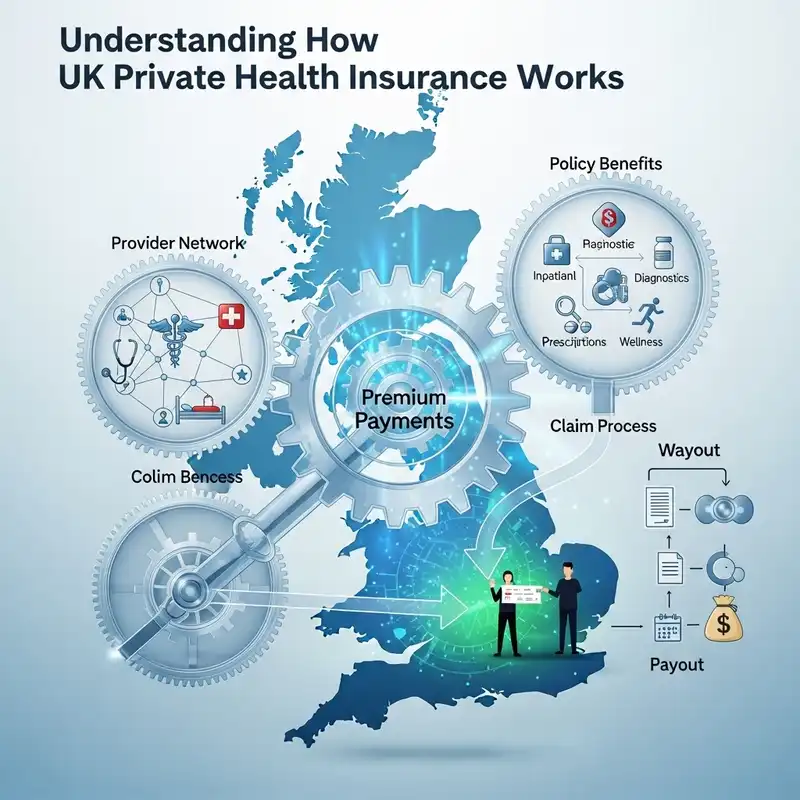
Why private medical insurance and how does it work?
What is Private Medical Insurance?
Private medical insurance (PMI) is a type of health insurance that provides access to private healthcare services in the UK. It covers the cost of private medical treatment, allowing you to bypass NHS waiting lists and receive faster, more convenient care.How does it work?
Private medical insurance works by paying for your private healthcare costs. When you need treatment, you can choose to go private and your insurance will cover the costs, subject to your policy terms and conditions. This can include:• Private consultations with specialists
• Private hospital treatment and surgery
• Diagnostic tests and scans
• Physiotherapy and rehabilitation
• Mental health treatment
Your premium depends on factors like your age, health, occupation, and the level of cover you choose. Most policies offer different levels of cover, from basic to comprehensive, allowing you to tailor the policy to your needs and budget.
Questions to ask yourself regarding private medical insurance
Just ask yourself:👉 Are you concerned about NHS waiting times for treatment?
👉 Would you prefer to choose your own consultant and hospital?
👉 Do you want faster access to diagnostic tests and scans?
👉 Would you like private hospital accommodation and better food?
👉 Do you want to avoid the stress of NHS waiting lists?
Many people don't realise that private medical insurance is more affordable than they think, especially when you consider the value of faster treatment and better facilities. A great insurance policy can provide peace of mind and ensure you receive the care you need when you need it.
Benefits offered by private medical insurance
Private medical insurance provides numerous benefits that can significantly improve your healthcare experience and outcomes:Faster Access to Treatment
One of the biggest advantages is avoiding NHS waiting lists. While the NHS provides excellent care, waiting times can be lengthy. With private medical insurance, you can often receive treatment within days or weeks rather than months.
Choice of Consultant and Hospital
You can choose your preferred consultant and hospital, giving you more control over your healthcare journey. This is particularly important for complex treatments where you want a specific specialist.
Better Facilities and Accommodation
Private hospitals typically offer superior facilities, including private rooms, better food, and more comfortable surroundings. This can make your recovery more pleasant and potentially faster.
Advanced Treatments
Private medical insurance often covers treatments and medications not available on the NHS, giving you access to the latest medical advances and technologies.
Mental Health Support
Many policies include comprehensive mental health coverage, providing faster access to therapy and psychiatric care when needed.
Tax Benefits for Business Owners
If you're self-employed or a business owner, private medical insurance premiums can be tax-deductible, making it a cost-effective way to protect your health and your business.
Peace of Mind
Knowing you have access to private healthcare when you need it provides invaluable peace of mind, especially for those with ongoing health conditions or concerns about NHS capacity.
Private medical insurance is particularly valuable for those who want to take control of their healthcare journey and ensure they receive the best possible treatment when they need it most.
Important Fact!
We can look at a more suitable option mid-term!
Why is it important to get private medical insurance early?
👉 Many people are very thankful that they had their private medical insurance cover in place before running into some serious health issues. Private medical insurance is as important as life insurance for protecting your family's finances.👉 We insure our cars, houses, and even our phones! Yet our health is the most precious thing we have.
Easily one of the most important insurance purchases an individual or family can make in their lifetime, the decision to buy private medical insurance can be made much simpler with the help of FCA-authorised advisers. They are the specialists who do the searching and analysis helping people choose between various types of private medical insurance policies available in the market, including different levels of cover and policy types most suitable to the client's individual circumstances.
It certainly won't do any harm if you speak with one of our experienced insurance experts who are passionate about advising people on financial matters related to private medical insurance and are keen to provide you with a free consultation.
You can discuss with them in detail what affordable private medical insurance plan for the necessary peace of mind they would recommend! WeCovr works with some of the best advisers in the market.
By tapping the button below, you can book a free call with them in less than 30 seconds right now:
Our Group Is Proud To Have Issued 800,000+ Policies!
We've established collaboration agreements with leading insurance groups to create tailored coverage
























How It Works
1. Complete a brief form

2. Our experts analyse your information and find you best quotes

3. Enjoy your protection!

Any questions?
Learn more

Who Are WeCovr?
WeCovr is an insurance specialist for people valuing their peace of mind and a great service.👍 WeCovr will help you get your private medical insurance, life insurance, critical illness insurance and others in no time thanks to our wonderful super-friendly experts ready to assist you every step of the way.
Just a quick and simple form and an easy conversation with one of our experts and your valuable insurance policy is in place for that needed peace of mind!