TL;DR
UK 2025 Shock New Data Reveals Over 1 in 3 Working Britons Face Prolonged NHS Waiting Lists, Fueling a Staggering £4.2 Million+ Lifetime Burden of Lost Income, Eroding Health & Career Stagnation – Is Your PMI Pathway Your Fast Track to Recovery & Financial Security With NHS waiting lists directly impacting UK workers' health and finances, exploring your options has never been more critical. As an FCA-authorised broker that has helped arrange over 900,000 policies, WeCovr explains how private medical insurance offers a vital safety net, unpacking the true cost of waiting for care. The NHS is a national treasure, but it is under unprecedented strain.
Key takeaways
- The Overall List: The total number of people waiting for consultant-led elective care in England remains stubbornly high, hovering around the 7.5 million mark, according to the latest NHS England data.
- The Longest Waits: While progress is being made on the longest waits, hundreds of thousands of patients still face delays of over a year for treatment. For some specialities, such as trauma and orthopaedics (which includes hip and knee replacements), the waits are particularly acute.
- The Impact on Workers: Crucially, a significant portion of this waiting list—estimated at over one in three working-age adults—is comprised of people whose ability to earn a living is directly compromised by their health condition.
- Direct Loss of Income: An individual earning the UK average salary (£35,000) who is unable to work for 12 months due to waiting for a hip replacement loses that entire year's income. If they are on Statutory Sick Pay (SSP), the loss is even more severe, as SSP covers only a fraction of a typical salary.
- Career Stagnation and Missed Promotions: Being out of the workforce or working at reduced capacity means missed opportunities. Promotions, pay rises, and skill development are put on hold. Over a 30-year career, this "stagnation cost" can easily run into tens or even hundreds of thousands of pounds.
UK 2025 Shock New Data Reveals Over 1 in 3 Working Britons Face Prolonged NHS Waiting Lists, Fueling a Staggering £4.2 Million+ Lifetime Burden of Lost Income, Eroding Health & Career Stagnation – Is Your PMI Pathway Your Fast Track to Recovery & Financial Security
With NHS waiting lists directly impacting UK workers' health and finances, exploring your options has never been more critical. As an FCA-authorised broker that has helped arrange over 900,000 policies, WeCovr explains how private medical insurance offers a vital safety net, unpacking the true cost of waiting for care.
The NHS is a national treasure, but it is under unprecedented strain. For millions of working Britons, a referral for treatment no longer means a swift path to recovery. Instead, it can signal the start of a long, anxious, and often painful wait that impacts every corner of life—from your physical and mental health to your career prospects and long-term financial security.
New analysis for 2025 paints a stark picture: the hidden costs of these delays are accumulating into a life-altering financial burden for individuals and the economy. But there is a proactive step you can take. Private medical insurance (PMI) is emerging as a crucial tool for those who want to bypass the queues, regain control, and protect their future.
The Staggering Scale of the UK's Waiting List Crisis in 2025
The numbers are more than just statistics; they represent real people—colleagues, friends, and family members—unable to work, play with their children, or live without pain. As of early 2025, the reality of the NHS waiting list is stark:
- The Overall List: The total number of people waiting for consultant-led elective care in England remains stubbornly high, hovering around the 7.5 million mark, according to the latest NHS England data.
- The Longest Waits: While progress is being made on the longest waits, hundreds of thousands of patients still face delays of over a year for treatment. For some specialities, such as trauma and orthopaedics (which includes hip and knee replacements), the waits are particularly acute.
- The Impact on Workers: Crucially, a significant portion of this waiting list—estimated at over one in three working-age adults—is comprised of people whose ability to earn a living is directly compromised by their health condition.
What does a "prolonged wait" actually feel like? It's not an abstract concept. It's the daily reality of living with a condition that could be resolved.
| Common Procedure | Typical NHS Waiting Time (Referral to Treatment) | Potential Impact on Daily Life |
|---|---|---|
| Knee Replacement | 45-60 weeks | Chronic pain, limited mobility, inability to perform manual work. |
| Cataract Surgery | 30-45 weeks | Impaired vision, loss of driving license, difficulty with daily tasks. |
| Hernia Repair | 35-50 weeks | Discomfort, pain, restrictions on lifting and physical activity. |
| Gynaecology (e.g., Endometriosis) | 40-65 weeks | Severe pain, fatigue, significant impact on work and personal life. |
Note: Waiting times are indicative based on latest available national averages and can vary significantly by NHS Trust and region.
The £4.2 Million Lifetime Burden: Unpacking the True Financial Cost of Waiting
The most shocking revelation from new 2025 data is the calculation of a potential £4.2 million+ lifetime financial burden spread across those forced out of work due to long waits for treatment. This isn't just about lost salary for a few months; it's a devastating domino effect.
How does this staggering figure break down?
- Direct Loss of Income: An individual earning the UK average salary (£35,000) who is unable to work for 12 months due to waiting for a hip replacement loses that entire year's income. If they are on Statutory Sick Pay (SSP), the loss is even more severe, as SSP covers only a fraction of a typical salary.
- Career Stagnation and Missed Promotions: Being out of the workforce or working at reduced capacity means missed opportunities. Promotions, pay rises, and skill development are put on hold. Over a 30-year career, this "stagnation cost" can easily run into tens or even hundreds of thousands of pounds.
- Pension Shortfall: A year out of work is a year with no, or significantly reduced, pension contributions. Compounded over decades, this can lead to a much less comfortable retirement.
- Mental Health Costs: The stress, anxiety, and depression associated with chronic pain and financial worry are immense. This can lead to further time off work and, in some cases, costs for private therapy not covered by the NHS.
- Forced Early Retirement: For those in physically demanding jobs or nearing retirement age, a long wait can be the final straw, forcing them to leave the workforce years earlier than planned, crystallising a lifetime of lower earnings.
Real-Life Example: The Story of Sarah, the Freelance Graphic Designer
Sarah, 42, developed severe carpal tunnel syndrome, making it agonising to use her computer mouse and tablet—the essential tools of her trade. Her GP referred her for minor surgery, a procedure that could resolve her symptoms completely.
- The NHS Wait: She was given an estimated waiting time of 48 weeks for the procedure.
- The Financial Impact: Unable to work effectively, her freelance income plummeted. She burned through her savings within six months just to cover her mortgage and bills. The stress caused sleepless nights and anxiety, further impacting her ability to take on even small projects.
- The PMI Alternative: Had Sarah held a private medical insurance policy, she could have seen a specialist within a week of her GP referral and had her surgery in a private hospital within a month. She would have been back to work full-time within 6-8 weeks, protecting her income, her business, and her mental health.
Your Fast Track to Recovery: What is Private Medical Insurance (PMI)?
Private medical insurance is not a replacement for the NHS. It's a complementary service designed to work alongside it. In simple terms, PMI is an insurance policy you pay for that covers the cost of private healthcare for new, treatable medical conditions.
Its primary benefit is speed of access. It allows you to bypass the NHS waiting lists for diagnosis and treatment.
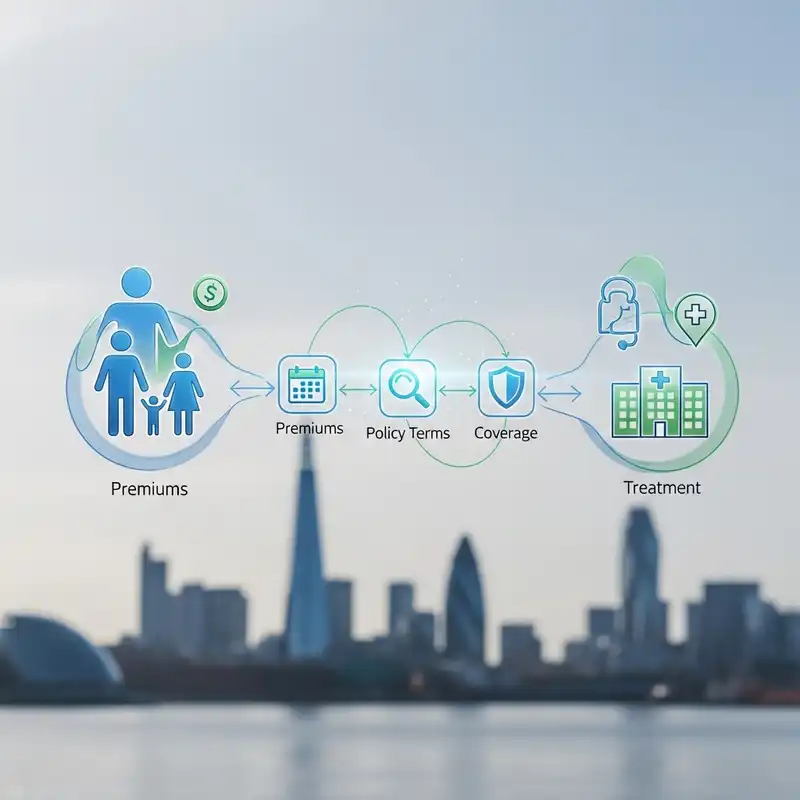
The Typical PMI Pathway:
- You feel unwell. You visit your NHS GP as normal.
- GP Referral. Your GP diagnoses a potential issue and recommends you see a specialist. They will provide an 'open referral' letter.
- Contact Your Insurer. You call your PMI provider, explain the situation, and provide the referral letter.
- Authorisation. The insurer checks that your condition is covered by your policy and authorises the claim. They will provide a list of approved specialists and hospitals.
- See a Specialist. You book an appointment with a private consultant, often within days.
- Diagnosis & Treatment Plan. The specialist confirms the diagnosis and, if treatment is needed, a plan is put in place.
- Private Treatment. Your surgery or treatment takes place in a private hospital at a time that suits you, often within a few weeks. The bills are settled directly by your insurer.
The Critical Rule of PMI: Understanding Acute vs. Chronic & Pre-existing Conditions
This is the most important concept to understand when considering private medical insurance UK. Getting this wrong is the biggest source of confusion and disappointment for policyholders.
-
What PMI COVERS: Acute Conditions An acute condition is a disease, illness, or injury that is likely to respond quickly to treatment and lead to a full recovery. Think of things like joint replacements, hernia repairs, cataract removal, and diagnosing and treating most cancers. PMI is designed specifically for these situations.
-
What PMI DOES NOT COVER: Chronic Conditions A chronic condition is a disease, illness, or injury that continues for a long time. It typically cannot be cured, only managed. Examples include diabetes, asthma, high blood pressure, and arthritis. The day-to-day management of these conditions will always sit with the NHS. While PMI may cover the initial diagnosis of a chronic condition, it will not cover its long-term monitoring or medication.
-
What PMI DOES NOT COVER: Pre-existing Conditions This refers to any medical condition you had symptoms of, received advice for, or were treated for before you took out the policy. Insurers handle these in two main ways:
- Moratorium Underwriting: This is the most common type. The insurer doesn't ask for your full medical history upfront. Instead, they apply a blanket exclusion for any condition you've had in the past five years. However, if you go two full years on the policy without any symptoms, treatment, or advice for that condition, it may become eligible for cover.
- Full Medical Underwriting (FMU): You provide your full medical history when you apply. The insurer assesses it and tells you upfront exactly what will be permanently excluded from your policy. It provides certainty but can be more complex.
An expert PMI broker, like WeCovr, can help you understand which type of underwriting is best for your personal circumstances, ensuring there are no nasty surprises down the line.
How to Choose the Best Private Health Cover for Your Needs
Navigating the private health cover market can feel daunting, with different providers, cover levels, and optional extras to consider. Here’s how to break it down:
- Set Your Budget: Policies can range from £30 a month to over £150, depending on your age, location, and level of cover. Decide what you can comfortably afford.
- Decide on Core Cover vs. Add-ons:
- Core Cover (Essential): Nearly all policies cover in-patient and day-patient treatment (when you need a hospital bed).
- Out-patient Cover (Highly Recommended): This is crucial. It covers the costs of specialist consultations and diagnostic tests before you are admitted to hospital. Without it, you would have to pay for these yourself, which can run into thousands. Policies offer different levels, from a set monetary limit (e.g., £1,000) to full cover.
- Optional Extras: You can add cover for mental health, dental and optical care, and therapies (physiotherapy, osteopathy). Only add what you truly need to keep costs down.
- Check the Hospital List: Insurers have different lists of approved hospitals. Check that the hospitals in your local area are included in the list offered by your chosen policy.
- Consider the Excess (illustrative): This is the amount you agree to pay towards any claim. A higher excess (£250, £500, or even £1,000) will significantly lower your monthly premium.
A Look at the UK's Leading PMI Providers
The UK market is served by several excellent, highly-rated insurers. While WeCovr is independent and compares them all, here are some of the key players and what makes them stand out.
| Provider | Key Strengths & Features | Best For... |
|---|---|---|
| Aviva | Strong core product, excellent cancer cover ("Cancer Care Promise"), large hospital network. | Comprehensive, dependable cover from a major UK brand. |
| AXA Health | Flexible policies, strong focus on mental health support, good value out-patient options. | Tailoring a policy to specific needs and budgets. |
| Bupa | The UK's best-known health insurer, direct access to some services without GP referral, extensive network. | Brand trust and those seeking a seamless healthcare journey. |
| Vitality | Unique wellness-based model that rewards healthy living with lower premiums and other perks. | Active individuals who want to be rewarded for staying healthy. |
This table is for illustrative purposes. Features and benefits change, and the "best PMI provider" is always the one that best suits your individual needs and budget.
Beyond Treatment: The Added Value of Modern Private Medical Insurance
Today's PMI policies offer much more than just paying for operations. They are evolving into holistic health and wellbeing packages.
- 24/7 Digital GP: Skip the 8 am scramble for an NHS GP appointment. Most insurers now offer an app-based service allowing you to have a video consultation with a GP, often within hours, and get prescriptions sent directly to your pharmacy.
- Mental Health Support: Recognising the growing mental health crisis, many policies now include access to telephone counselling or a set number of face-to-face therapy sessions as standard or as an affordable add-on.
- Wellness and Rewards: Insurers like Vitality lead the way in incentivising healthy habits. By tracking your activity, you can earn rewards like free coffee, cinema tickets, and, most importantly, discounts on your premium for the following year.
When you arrange your policy through WeCovr, you also get complimentary access to our exclusive AI-powered calorie and nutrition tracking app, CalorieHero, helping you take proactive control of your diet. Furthermore, clients who purchase PMI or Life Insurance through us are eligible for discounts on other types of cover, providing even greater value.
Proactive Steps for Your Health & Wellbeing
While insurance is a powerful safety net, the best strategy is always to invest in your own health. Small, consistent habits can dramatically reduce your risk of needing medical care in the first place.
- Nourish Your Body: Focus on a balanced diet rich in whole foods, fruits, vegetables, and lean protein. Minimise processed foods, sugar, and excessive alcohol.
- Move Every Day: Aim for at least 150 minutes of moderate-intensity exercise per week, like brisk walking, cycling, or swimming. Include strength training twice a week.
- Prioritise Sleep: Aim for 7-9 hours of quality sleep per night. It's crucial for physical repair, mental health, and immune function.
- Manage Stress: Find healthy coping mechanisms that work for you, whether it's mindfulness, yoga, spending time in nature, or a hobby you love.
Frequently Asked Questions (FAQs) about Private Medical Insurance UK
Is private medical insurance worth the cost in the UK?
Can I get private health cover if I already have a medical condition?
Do I still need the NHS if I have private medical insurance?
Take Control of Your Health and Finances Today
The reality of 2025 is that waiting for healthcare can have profound and lasting consequences on your life and livelihood. While the NHS provides incredible care, the system is facing challenges that you, as an individual, have no control over.
What you can control is your preparedness. A private medical insurance policy is a personal healthcare strategy. It’s a declaration that your health, your career, and your financial stability are too important to be left in a queue.
Don't wait until a diagnosis forces your hand. Explore your options today.
Get a free, no-obligation quote from WeCovr. Our expert, friendly advisers will compare leading UK insurers to find a policy that fits your needs and budget, giving you a clear pathway to fast treatment and financial security.
Sources
- Department for Transport (DfT): Road safety and transport statistics.
- DVLA / DVSA: UK vehicle and driving regulatory guidance.
- Association of British Insurers (ABI): Motor insurance market and claims publications.
- Financial Conduct Authority (FCA): Insurance conduct and consumer information guidance.