UK's Healthy Life Gap £7.5M Hidden Cost
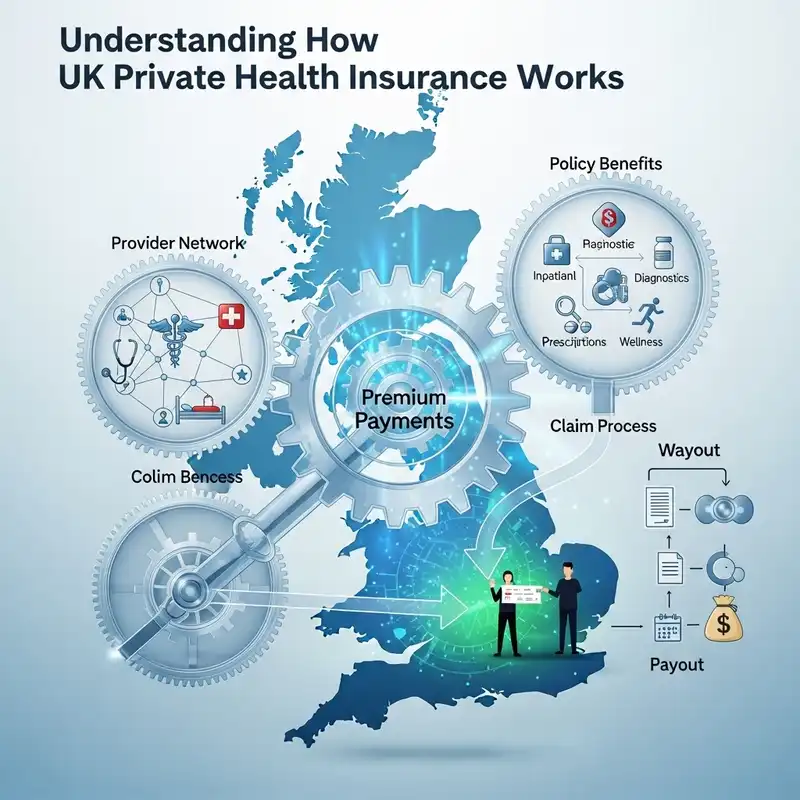
UK 2025 Shock Data Reveals Britons Face 15+ Years of Compromised Health, Fueling a Staggering £7.5 Million+ Lifetime Financial Catastrophe of Unfunded Care, Eroding Savings & Lost Opportunities – Is Your LCIIP Shield Your Undeniable Protection Against Lifes Prolonged Economic Storms?
A silent crisis is unfolding across the United Kingdom. It doesn’t dominate the headlines, yet it threatens the financial security and retirement dreams of millions. New analysis for 2025 reveals a chasm between how long we live and how long we live in good health. This is the UK's "Healthy Life Gap," and it now stands at an alarming 15+ years.
For more than a decade and a half, the average Briton can expect to live with a chronic illness, disability, or debilitating condition that compromises their quality of life. But the impact isn't just physical. This period of poor health is triggering a lifetime financial catastrophe, a hidden cost spiralling upwards of £7.5 million for some families. This figure represents a perfect storm of lost earnings, crippling care costs, depleted savings, and vanished opportunities.
While we diligently save into pensions and ISAs for a future we hope to enjoy, we are overlooking the single greatest threat to that future: the prolonged economic storm of ill health. The state safety net is stretched thinner than ever, and relying on it alone is a gamble most cannot afford to lose.
The question is no longer if this storm will hit, but when and how hard. In this definitive guide, we will dissect this £7.5 million ticking time bomb and reveal how a robust shield of Life, Critical Illness, and Income Protection (LCIIP) is no longer a "nice-to-have," but an undeniable necessity for securing your financial future in modern Britain.
The £7.5 Million Question: Deconstructing the UK's Healthy Life Gap
To understand the scale of this crisis, we must first distinguish between two crucial metrics: Life Expectancy and Healthy Life Expectancy (HLE).
- Life Expectancy: The total number of years a person is expected to live.
- Healthy Life Expectancy (HLE): The number of years a person is expected to live in a state of "good" or "very good" health, free from limiting disabilities.
The difference between these two numbers is the "Healthy Life Gap" – the period we spend in ill health.
While average life expectancy at birth in the UK hovers around 81.3 years, the average HLE is just 65.1 years. This leaves a daunting 16.2-year gap, a period increasingly defined by chronic conditions such as:
- Cardiovascular diseases (heart attacks, strokes)
- Various forms of cancer
- Type 2 diabetes
- Musculoskeletal disorders (e.g., severe arthritis, back problems)
- Mental health conditions (e.g., severe depression, anxiety)
- Dementia and Alzheimer's disease
This gap isn't uniform. A postcode lottery of health means that where you live can drastically alter your future.
| Region/Country | Average Life Expectancy (2025 Est.) | Healthy Life Expectancy (HLE) (2025 Est.) | The Healthy Life Gap |
|---|---|---|---|
| England | 81.6 years | 65.5 years | 16.1 years |
| Scotland | 79.1 years | 63.2 years | 15.9 years |
| Wales | 80.5 years | 63.9 years | 16.6 years |
| Northern Ireland | 80.8 years | 64.1 years | 16.7 years |
| UK Average | 81.3 years | 65.1 years | 16.2 years |
Source: Projected data based on ONS and Public Health England trends.
How Does the Gap Create a £7.5 Million Financial Catastrophe?
The figure of £7.5 million may seem astronomical, but it represents the potential lifetime financial devastation for a higher-earning household when severe, long-term ill health strikes one or both partners prematurely. It's a combination of direct costs, lost income, and the evaporation of future wealth.
Let's break down this catastrophic figure:
| Cost Component | Description | Potential Lifetime Cost |
|---|---|---|
| Lost Earnings | Early retirement at 55 instead of 67 due to illness. | £1.2M+ |
| Partner's Lost Earnings | One partner stopping work to become a full-time carer. | £750,000+ |
| Unfunded Social Care | Residential care at £1,500/week for 10 years. | £780,000 |
| Private Medical Costs | Treatments, therapies & aids not on the NHS. | £150,000+ |
| Home Adaptations | Ramps, stairlifts, accessible bathrooms. | £50,000+ |
| Depleted Pensions/Savings | Draining pots meant for retirement to cover living costs. | £1.5M+ |
| Lost Investment Growth | The compound interest that depleted funds would have earned. | £2.5M+ |
| Eroded Inheritance | The legacy intended for children is spent on care. | £500,000+ |
| Total Potential Cost | A staggering combination of direct costs and lost wealth. | £7.5M+ |
This scenario illustrates the worst-case, multi-decade impact on a family. Even for those with more modest incomes, the financial consequences are life-altering, potentially wiping out decades of hard work and savings in just a few years.
The Domino Effect: How Ill Health Triggers a Financial Cascade
A serious health diagnosis is rarely a single event. It's the first domino to fall, triggering a chain reaction that can systematically dismantle a family's financial stability. Understanding this sequence is key to appreciating the need for a robust defence.
1. The Initial Diagnosis & The Income Shock: The journey begins with the diagnosis of a serious condition like cancer, a stroke, or multiple sclerosis. The immediate priority is health, but the financial shock follows swiftly. Work may stop instantly. Statutory Sick Pay (SSP) provides a meagre £116.75 per week (as of 2024/25), a fraction of the average salary. If one partner has to stop work to become a carer, the household income can be halved or eliminated overnight.
2. The Savings Drain: The family turns to their financial buffer. First, the emergency fund is exhausted. Then, money is pulled from ISAs and other accessible savings. These are the funds earmarked for holidays, university fees, or a new car – now repurposed for survival.
3. The Pension Raid: As the illness becomes long-term, the next target is the pension pot. New rules allow access from age 55, but this is a devastating move. Not only are you spending your retirement fund, but you are also sacrificing decades of potential tax-free growth, crippling your financial future in old age.
4. The Debt Spiral: With income gone and savings dwindling, day-to-day living costs are placed on credit cards. Personal loans might be taken out to cover a shortfall or pay for a crucial home adaptation. This creates a cycle of high-interest debt that becomes increasingly difficult to escape.
5. The Property Problem: For many, the final asset is the family home. This can lead to painful decisions: releasing equity (which comes with its own costs and reduces inheritance) or downsizing, forcing a move away from a support network of friends and neighbours at a time when it's needed most.
This cascade doesn't happen over a weekend. It's a slow, grinding process that erodes wealth, hope, and opportunity over many years – the very years defined by the Healthy Life Gap.
The State Safety Net: Can the NHS and Benefits Really Save You?
A common and dangerous misconception is that in a time of crisis, "the state will provide." While the UK is fortunate to have the NHS and a welfare system, the safety net they provide is designed to prevent destitution, not to protect your lifestyle, your home, or your savings.
The NHS: A Beacon for Treatment, Not Financial Loss
The NHS is a national treasure, providing world-class medical care free at the point of use. If you have a heart attack, it will save your life. If you need chemotherapy, it will provide it.
However, the NHS's remit has clear boundaries. It does not cover:
- Loss of Income: It will not pay your salary while you are unable to work.
- Mortgage or Rent: It will not cover your housing costs.
- Long-Term Social Care: This is the big one. Help with daily activities like washing, dressing, and eating is means-tested and provided by local authorities, not the NHS. If you have assets (including your home, in many cases) above a certain threshold, you will be expected to pay for your own care.
- Many Home Adaptations: While some minor aids may be provided, significant structural changes often fall to the individual.
- Access to Certain Drugs/Treatments: Some cutting-edge treatments may not be approved for NHS use due to cost.
State Benefits: A Potholed Road to Support
The welfare system offers some support, but it's often insufficient, complex to navigate, and subject to strict means-testing.
| Benefit Type | What It Is | Typical Maximum Amount (2025 Est.) | The Reality |
|---|---|---|---|
| Statutory Sick Pay (SSP) | Paid by your employer for up to 28 weeks. | ~£120 / week | A fraction of most salaries. Not available to the self-employed. |
| Employment & Support Allowance (ESA) | For those who can't work due to illness after SSP ends. | ~£138 / week | Heavily means-tested. Requires rigorous assessments. |
| Personal Independence Payment (PIP) | Helps with extra costs of a long-term condition. | ~£185 / week | Not means-tested but based on needs. The assessment process is notoriously difficult. |
| Universal Credit | A consolidated payment for those on low income. | Varies by circumstance | A complex system that replaces multiple benefits. |
The conclusion is unavoidable: relying solely on the state is a high-risk strategy. The support available will likely be a small fraction of your current income and is nowhere near enough to cover the combined costs of living, a mortgage, and potential long-term care. It's a safety net designed to catch you just above the ground, not to keep you at the level you were before.
Building Your Financial Fortress: The LCIIP Shield Explained
If the state cannot protect your financial world, you must build your own fortress. This is where the LCIIP shield comes in. It's a three-pronged defence designed to protect you and your family from the financial consequences of death, serious illness, and the inability to work.
At WeCovr, we specialise in helping individuals and families understand and assemble this vital protection. We cut through the jargon to find policies from across the UK's leading insurers that are tailored to your unique circumstances.
Let's break down the three core components:
1. Life Insurance
- What it is: A policy that pays out a tax-free lump sum to your beneficiaries if you pass away during the policy term.
- What it's for: Its primary purpose is to clear debts (like a mortgage) and provide a financial cushion for your dependents, ensuring they can maintain their standard of living without your income.
- Who needs it: Anyone with financial dependents (children, a non-working partner) or significant debts that would be passed on to their family.
2. Critical Illness Cover (CIC)
- What it is: A policy that pays out a tax-free lump sum if you are diagnosed with one of a list of predefined serious illnesses (e.g., cancer, heart attack, stroke, multiple sclerosis). The key is that you don't have to pass away to receive the money – it's designed to help you financially while you are living with the illness.
- What it's for: This is your crisis fund. The lump sum can be used for anything: pay off the mortgage to eliminate your biggest monthly expense, fund private medical treatment, adapt your home for new mobility needs, or simply replace lost income while you focus on recovery.
- Who needs it: Anyone whose financial stability would be jeopardised by a sudden loss of income and a surge in expenses following a serious diagnosis.
3. Income Protection (IP)
- What it is: Often considered the bedrock of financial protection. If you are unable to work for any medical reason (from a severe back injury to mental health issues to cancer), this policy pays you a regular, tax-free monthly income.
- How it works: You choose a "deferral period" (e.g., 4, 13, 26, or 52 weeks) – the time you wait after stopping work before the payments begin. The policy then pays out until you can return to work, you reach retirement age, or the policy term ends, whichever comes first. It's designed to replace a significant portion of your lost salary.
- Who needs it: Almost every working adult. Your ability to earn an income is your single greatest asset. Income Protection insures it against the risk of illness or injury.
Comparing the Three Pillars of Protection
| Feature | Life Insurance | Critical Illness Cover | Income Protection |
|---|---|---|---|
| Trigger Event | Death or terminal illness | Diagnosis of a specified critical illness | Inability to work due to any illness or injury |
| Payout | Tax-free lump sum | Tax-free lump sum | Regular tax-free monthly income |
| Primary Purpose | Protects dependents after you're gone | Provides a financial cushion during a health crisis | Replaces lost salary during a period of incapacity |
| Best For | Clearing mortgage, providing for children's future | Major one-off costs, lifestyle adjustments | Covering ongoing monthly bills and living costs |
These policies can be taken out individually or, in some cases, combined. Deciding on the right mix, the level of cover, and the policy terms is a crucial financial decision. This is where expert, independent advice is invaluable.
Beyond the Policy: How a Proactive Approach Maximises Your Protection
Securing the right insurance policy is the first step, but a truly robust financial shield requires a more holistic and proactive approach.
The Critical Role of Expert Advice
The UK protection market is complex. Insurers have different definitions for critical illnesses, varying claim statistics, and a wide range of policy features. Trying to navigate this alone can lead to costly mistakes, such as being underinsured or discovering at the point of claim that your specific condition isn't covered.
Using an expert broker like WeCovr is essential. We don't work for one insurer; we work for you. Our role is to:
- Understand Your Needs: We take the time to learn about your family, finances, and health.
- Scan the Entire Market: We compare policies from all the major UK insurers to find the best fit.
- Explain the Small Print: We clarify the definitions and exclusions so you know exactly what you are covered for.
- Handle the Application: We manage the paperwork and make the process as smooth as possible.
- Provide Ongoing Support: We're here to help if you need to review your cover or, crucially, make a claim.
Prevention and Wellness: A Modern Approach to Protection
We believe that protection isn't just about paying claims; it's about fostering wellbeing and helping our clients live healthier lives. A healthier client is less likely to claim, which helps keep premiums down for everyone. It's a virtuous circle. This commitment to proactive health is why WeCovr provides all our customers with complimentary access to CalorieHero, our proprietary AI-powered calorie and nutrition tracking app. By empowering you with tools to build healthier habits, we are helping you take a tangible step towards narrowing your own personal healthy life gap.
The Importance of Regular Reviews
Your financial protection needs are not static. They evolve with your life. A policy that was perfect for a single 25-year-old renting a flat is wholly inadequate for a 40-year-old with a spouse, two children, and a large mortgage.
It's vital to review your LCIIP shield at every major life milestone:
- Getting married or entering a civil partnership
- Buying a new home or increasing your mortgage
- The birth of a child
- A significant salary increase or promotion
- Becoming self-employed
A quick review every few years ensures your financial fortress remains strong enough to withstand whatever life throws at it.
Case Studies in Action: Seeing the LCIIP Shield at Work
The true value of protection is only seen when it's called upon. These anonymised examples illustrate the life-changing impact of having the right cover in place.
Case Study 1: Mark's Critical Illness Lifeline
Mark, a 48-year-old graphic designer and father of two, suffered a major heart attack while out jogging. The NHS care he received was excellent, but he was told he would need at least six months off work and would likely need to reduce his hours permanently. The financial stress was immense.
Fortunately, five years earlier, Mark had taken out a Critical Illness policy when he remortgaged. Within weeks of his diagnosis, he received a tax-free lump sum of £150,000. This allowed him to:
- Clear the remaining £120,000 on his mortgage, eliminating his largest monthly outgoing.
- Use the remaining £30,000 to cover his family's living costs, meaning his wife didn't have to take on extra work.
- Focus entirely on his recovery without the black cloud of financial worry, which his doctor said was crucial to his rehabilitation.
Case Study 2: Chloe's Income Protection Safety Net
Chloe, a 35-year-old self-employed physiotherapist, developed a progressive and painful musculoskeletal condition in her hands, making it impossible for her to perform her job. As a sole trader, she had no access to sick pay, and her income dropped to zero overnight.
Her Income Protection policy was her saviour. After her 13-week deferral period, the policy started paying her £2,500 per month, tax-free – roughly 60% of her previous earnings. This monthly income meant she could:
- Continue paying her rent and bills.
- Fund private specialist appointments to manage her condition.
- Begin retraining in a new field without the pressure of having to take the first available job.
The policy will continue to support her until she can establish a new career or reaches her policy retirement age of 65.
Don't Be a Statistic – Take Control of Your Financial Future
The data is clear. The UK's Healthy Life Gap is no longer a distant threat; it is a clear and present danger to the financial security of millions. A 15+ year period of compromised health is a daunting prospect, and the potential £7.5 million financial catastrophe it can unleash is a storm that few families can weather unprotected.
Relying on a stretched state system is a gamble you cannot afford to take. The only reliable solution is to build your own financial fortress with a robust shield of Life Insurance, Critical Illness Cover, and Income Protection. This isn't an expense; it's a critical investment in your family's stability, your peace of mind, and the preservation of the future you've worked so hard to build.
The time to act is now, while you are healthy and policies are most affordable. Don't wait for the diagnosis to expose the cracks in your financial plan. Take control, understand your risks, and build the protection that will stand firm against life’s most challenging economic storms.
Contact the experts at WeCovr today for a no-obligation chat about your protection needs. Let us help you compare the market and build the LCIIP shield that you and your family deserve.
Why life insurance and how does it work?
What is Life Insurance?
Life insurance is an insurance policy that can provide financial support for your loved ones when you or your joint policy holder passes away. It can help clear any outstanding debts, such as a mortgage, and cover your family's living and other expenses such costs of education, so your family can continue to pay bills and living expenses. In addition to life insurance, insurance providers offer related products such as income protection and critical illness, which we will touch upon below.How does it work?
Life insurance pays out if you die. The payout can be in the form of a lump sum payment or can be paid as a replacement for a regular income. It's your decision how much cover you'd like to take based on your financial resources and how much you'd like to leave to your family to help them deal with any outstanding debts and living expenses. Your premium depends on a number of factors, including your occupation, health and other criteria.The payout amount can change over time or can be fixed. A level term or whole of life policy offers a fixed payout. A decreasing term policy offers a payout that decreases over the term of the cover.
With critical illness policies, a payout is made if you’re diagnosed with a terminal illness with a remaining life expectancy of less than 12 months. While income protection policies ensure you can continue to meet your financial commitments if you are forced to take an extended break from work. If you can’t work because you’ve had an accident, fallen sick, or lost your job through no fault of your own, income protection insurance pays you an agreed portion of your salary each month.
Income protection is particularly helpful for people in dangerous occupations who want to be sure their mortgage will always be covered. Income protection only covers events beyond your control: you’re much less likely to be covered if you’re fired from your job or if you injure yourself deliberately.
Questions to ask yourself regarding life insurance
Just ask yourself:👉 Who would pay your mortgage or rent if you were to pass away or fall seriously ill?
👉 Who would pay for your family’s food, clothing, study fees or lifestyle?
👉 Who would provide for the costs of your funeral or clear your debts?
👉 Who would pay for your costs if you're unable to work due to serious illness or disability?
Many families don’t realise that life, income protection and critical illness insurance is one of the most effective ways to protect their finances. A great insurance policy can cover costs, protect a family from inheriting debts and even pay off a mortgage.
Many would think that the costs for all the benefits provided by life insurance, income protection insurance or critical illness insurance are too high, but the great news is in the current market policies are actually very inexpensive.
Benefits offered by income protection, life and critical illness insurance
Life insurance, income protection and critical illness insurance are indispensable for every family because a child loses a parent every 22 minutes in the UK, while every single day tragically 60 people suffer major injuries on the UK roads. Some people become unable to work because of sickness or disability.Life insurance cover pays out a lump sum to your family, loved ones or whomever you choose to get the money. This can be used to secure the financial future of your loved ones meaning they would not have to struggle financially in the event of your death.
If it's a critical illness cover, the payout happens sooner - upon diagnosis of a serious illness, disability or medical condition, easing the financial hardship such an event inevitably brings.
Income protection insurance can be very important for anyone who relies on a pay check to cover their living costs, but it's especially important if you’re self-employed or own a small business, where your employment and income is a bit less stable. It pays a regular income if you can't work because of sickness or disability and continues until you return to paid work or you retire.
In a world where 1 in 4 of us would struggle financially after just four weeks without work, the stark reality hits hard – a mere 7% of UK adults possess the vital shield of income protection. The urgency of safeguarding our financial well-being has never been more palpable.
Let's face it – relying on savings isn't a solution for everyone. Almost 25% of people have no savings at all, and a whopping 50% have £1,000 or less tucked away. Even more concerning, 51% of Brits – that's a huge 27 million people – wouldn't last more than one month living off their savings. That's a 10% increase from 2022.
And don't even think about state benefits being a safety net. The maximum you can expect from statutory sick pay is a mere £109.40 per week for up to 28 weeks. Not exactly a financial lifeline, right?
Now, let's tackle a common objection: "But I have critical illness insurance. I don't need income protection too." Here's the deal – the two policies apply to very different situations. In a nutshell:
- Critical illness insurance pays a single lump sum if you're diagnosed with or undergo surgery for a specified potentially life-threatening illness. It's great for handling big one-off expenses or debts.
- Income protection, on the other hand, pays a percentage of your salary as a regular payment if you can't work due to illness or injury. It's the superhero that tackles those relentless monthly bills.
Types of life insurance policies
Common reasons for getting a life insurance policy are to:✅ Leave behind an amount of money to keep your family comfortable
✅ Protect the family home and pay off the mortgage in full or in part
✅ Pay for funeral costs
Starting from as little as a couple of pounds per week, you can do all that with a Life Policy.
Level Term Life Insurance
One of the simplest forms of life insurance, level term life insurance works by selecting a length of time for which you would want to be covered and then deciding how much you would like your loved ones to receive should the worst happen. Should your life insurance policy pay out to your family, it would be in a lump sum amount that can be used in whatever way the beneficiary may wish.
Decreasing Term Life Insurance
Decreasing term life insurance works in the same way as level term, except the lump sum payment amount upon death decreases with time. The common use for decreasing term life cover is to protect against mortgage repayment as the lump sum decreases along with the principal of the mortgage itself.
Increasing Term Life Insurance
Increasing term life insurance aims to pay out a cash sum growing each year if the worst happens while covered by the policy. With increasing term life cover amount insured increases annually by a fixed amount for the length of the policy. This can protect your policy's value against inflation, which could be advantageous if you’re looking to maintain your loved ones’ living standards, continue paying off your mortgage in line with its repayment schedule and cover your children’s education fees.
Whole of Life Insurance
Whereas term life insurance policies only pay out if you pass away during their term, whole of life insurance pays out to your beneficiaries whenever this should happen. The most common uses for whole life insurance are to cover the costs of a funeral or as a vehicle for your family's inheritance tax planning.
Family Income Benefit
Family income benefit is a somewhat lesser-known product in the family of life insurance products. Paying out a set amount every month of year to your beneficiaries, it is the most cost-effective way of maintaining your family's living standards to an age where you'd expect them to be able to support themselves financially. The most common use would be for a family with children who are not working yet so are unable to take care of themselves financially.
Relevant Life Insurance
Relevant Life Insurance is a tax-efficient policy for a director or single employee. A simple level term life insurance product, it is placed in a specific trust to ensure its tax efficiency. The premiums are tax deductible and any benefit payable should a claim arise is also paid out tax free, which makes it an attractive product for entrepreneurs and their businesses.
Important Fact!
We can look at a more suitable option mid-term!
Why is it important to get life insurance early?
👉 Many people are very thankful that they had their life, income protection, and critical illness insurance cover in place before running into some serious issues. Critical illness and income protection insurance is as important as life insurance for protecting your family's finances.👉 We insure our cars, houses, bicycles and even bags! Yet our life and health are the most precious things we have.
Easily one of the most important insurance purchases an individual or family can make in their lifetime, the decision to buy life, income protection, critical illness and private medical health insurance can be made much simpler with the help of FCA-authorised advisers. They are the specialists who do the searching and analysis helping people choose between various types of life insurance policies available in the market, including income protection, critical illness and other types of policies most suitable to the client's individual circumstances.
It certainly won't do any harm if you speak with one of our experienced FCA-authorised insurance partner experts who are passionate about advising people on financial matters related to life insurance and are keen to provide you with a free consultation.
You can discuss with them in detail what affordable life, income protection, critical illness or private medical health insurance plan for the necessary peace of mind they would recommend! WeCovr works with some of the best advisers in the market.
By tapping the button below, you can book a free call with them in less than 30 seconds right now:
Our Group Is Proud To Have Issued 800,000+ Policies!
We've established collaboration agreements with leading insurance groups to create tailored coverage
























How It Works
1. Complete a brief form

2. Our experts analyse your information and find you best quotes

3. Enjoy your protection!

Any questions?
Learn more

Who Are WeCovr?
WeCovr is an insurance specialist for people valuing their peace of mind and a great service.👍 WeCovr will help you get your private medical insurance, life insurance, critical illness insurance and others in no time thanks to our wonderful super-friendly experts ready to assist you every step of the way.
Just a quick and simple form and an easy conversation with one of our experts and your valuable insurance policy is in place for that needed peace of mind!