TL;DR
UK 2026 Over 2.8 Million Working Britons Economically Inactive Due to Long-Term Sickness, Fueling an Estimated £4 Million+ Lifetime Financial Catastrophe of Lost Income & Eroding Family Futures – Is Your Life, Critical Illness & Income Protection Shield Your Undeniable Protection Against Lifes Inevitable Storms, and How Private Health Insurance Can Bridge the NHS Gap The United Kingdom is facing a silent but devastating crisis. It isn't unfolding in the headlines of political drama or global conflict, but in the quiet homes of millions of ordinary families. As we move through 2025, a staggering and unprecedented 2.8 million people of working age are now economically inactive due to long-term sickness.
Key takeaways
- The Post-Pandemic Fallout: The long shadow of COVID-19 continues to affect the workforce. Conditions like Long COVID are debilitating, with symptoms ranging from chronic fatigue to brain fog, making sustained employment impossible for many.
- A Growing Mental Health Epidemic: The crisis in mental health is a major contributor. Record numbers of people are citing depression, stress, anxiety, and other mental health conditions as their primary reason for being unable to work.
- An Ageing Population: As the workforce ages, the prevalence of age-related and musculoskeletal conditions, such as arthritis and back pain, naturally increases. These conditions are a leading cause of long-term work absence.
- Strained NHS and Record Waiting Lists: With over 7.5 million treatment pathways on the NHS waiting list in England, people are waiting longer than ever for diagnoses, consultations, and essential surgery. A manageable condition can become a chronic, work-ending problem while waiting for care.
- David (40), an IT consultant earning £75,000 per year.
UK 2026 Over 2.8 Million Working Britons Economically Inactive Due to Long-Term Sickness, Fueling an Estimated £4 Million+ Lifetime Financial Catastrophe of Lost Income & Eroding Family Futures – Is Your Life, Critical Illness & Income Protection Shield Your Undeniable Protection Against Lifes Inevitable Storms, and How Private Health Insurance Can Bridge the NHS Gap
The United Kingdom is facing a silent but devastating crisis. It isn't unfolding in the headlines of political drama or global conflict, but in the quiet homes of millions of ordinary families. As we move through 2025, a staggering and unprecedented 2.8 million people of working age are now economically inactive due to long-term sickness. This isn't just a statistic; it's a national tragedy representing shattered careers, depleted savings, and immense emotional strain.
This workforce health crisis is creating a financial black hole for British families. For a professional couple, a dual diagnosis or a long-term illness striking both partners could trigger a lifetime financial catastrophe exceeding £4.5 million in lost income, completely derailing their future and their children's prospects.
The state safety net, once a source of national pride, is now stretched to its breaking point, offering a fraction of the support needed to maintain a family's standard of living. This begs a crucial question for every person earning a living in the UK today: Is your financial future built on a solid foundation, or is it a house of cards waiting for the inevitable storm of illness or injury?
This definitive guide will unpack the scale of the UK's health crisis, reveal the true financial devastation it leaves in its wake, and demonstrate how a robust shield of Life Insurance, Critical Illness Cover, and Income Protection is no longer a luxury, but an undeniable necessity. We will also explore how Private Health Insurance can provide a vital bridge over the widening gaps in NHS provision, getting you back on your feet, and back to your life, faster.
The Staggering Scale of the UK's 2026 Workforce Health Crisis
The numbers are stark and sobering. ons.gov.uk/employmentandlabourmarket/peopleinwork/employmentandemployeetypes/bulletins/uklabourmarket/latest) paints a grim picture. The cohort of individuals who are not working and not looking for work due to long-term health conditions has swelled to a record high of over 2.8 million. This represents a dramatic increase of hundreds of thousands of people since the pandemic began.
But what's driving this alarming trend? It’s a perfect storm of interconnected factors:
- The Post-Pandemic Fallout: The long shadow of COVID-19 continues to affect the workforce. Conditions like Long COVID are debilitating, with symptoms ranging from chronic fatigue to brain fog, making sustained employment impossible for many.
- A Growing Mental Health Epidemic: The crisis in mental health is a major contributor. Record numbers of people are citing depression, stress, anxiety, and other mental health conditions as their primary reason for being unable to work.
- An Ageing Population: As the workforce ages, the prevalence of age-related and musculoskeletal conditions, such as arthritis and back pain, naturally increases. These conditions are a leading cause of long-term work absence.
- Strained NHS and Record Waiting Lists: With over 7.5 million treatment pathways on the NHS waiting list in England, people are waiting longer than ever for diagnoses, consultations, and essential surgery. A manageable condition can become a chronic, work-ending problem while waiting for care.
This isn't a problem confined to one demographic; it cuts across all ages, professions, and regions. It's the 45-year-old project manager with debilitating back pain, the 32-year-old teacher suffering from burnout and severe anxiety, and the 55-year-old engineer recovering from a stroke.
UK Economic Inactivity Due to Long-Term Sickness (2019-2026 Projections)
| Year | Number of People | Key Contributing Factors |
|---|---|---|
| 2019 (Pre-Pandemic) | ~2.1 Million | Musculoskeletal, Mental Health |
| 2022 | ~2.5 Million | Post-COVID effects, Rising Mental Health |
| 2024 | ~2.8 Million | Record NHS waits, Long COVID, Mental Health |
| 2025 (Projected) | Over 2.8 Million | All factors intensifying, Ageing Workforce |
Source: Analysis based on ONS Labour Market Statistics data and current trends.
This is the reality of modern Britain. The assumption that you will be able to work uninterrupted until retirement is no longer a safe one.
The Financial Domino Effect: Unpacking the £4.5 Million Family Catastrophe
When your income stops, your bills do not. For most families, the monthly salary is the central pillar supporting everything else. When that pillar is removed by long-term illness, a devastating financial domino effect is triggered.
Let’s consider the £4.5 million lifetime financial catastrophe. This isn't a sensationalised figure; it's a realistic projection for a professional couple.
Example: The Martins
- David (40), an IT consultant earning £75,000 per year.
- Laura (38), a marketing manager earning £75,000 per year.
- They have 25+ years of their working lives ahead of them.
- Lifetime Earning Potential: (£75k + £75k) x 25 years = £3,750,000.
- This doesn't even account for promotions, pay rises, or pension contributions, which could easily push the total figure well over £4.5 million.
Now, imagine David suffers a severe stroke and Laura is diagnosed with an aggressive form of cancer within a similar timeframe. They are both forced to stop working permanently. Their £150,000 joint income vanishes overnight. The financial fallout is immediate and catastrophic.
The Financial Snowball of Long-Term Sickness
| Timescale | Financial Impact | Emotional Toll |
|---|---|---|
| Months 1-3 | Savings depleted. Statutory Sick Pay proves woefully inadequate. | Initial shock and anxiety. Focus is on health, but money worries begin. |
| Months 4-12 | Credit card debt mounts to cover daily living. Mortgage arrears notices arrive. | Constant stress. Relationship strain. Feelings of helplessness. |
| Year 2-5 | Risk of home repossession. Inability to pay for school trips, hobbies. Pension contributions cease. | Depression and despair. Loss of identity and purpose. Social isolation. |
| Long-Term | Retirement plans shattered. Children's futures (university, etc.) compromised. Trapped in a cycle of debt and state dependency. | Chronic mental health issues. A permanent state of financial insecurity. |
The loss isn't just about money. It's about the loss of dreams, security, and the future you meticulously planned for your family. It's the forced sale of a family home, the cancellation of a child's university fund, and the erosion of a comfortable retirement into one of poverty.
The State Safety Net: A Patchwork of Limited Support
"The government will look after me." This is a common and dangerous misconception. While there is a state safety net, it has been worn thin by years of austerity and overwhelming demand. Relying on it to maintain your lifestyle is a recipe for financial disaster.
Let's break down what is actually available:
-
Statutory Sick Pay (SSP): This is the first line of defence, but it's a weak one.
- How much is it? For 2024/25, the rate is £116.75 per week.
- How long is it paid? For a maximum of 28 weeks.
- The Reality: Can your family survive on less than £500 a month? For the vast majority, this doesn't even cover the mortgage payment or rent, let alone food, utilities, and other essentials.
-
Employment and Support Allowance (ESA) / Universal Credit (UC): Once SSP runs out, you may be able to claim these benefits.
- The Process: You must undergo a "Work Capability Assessment" to prove you are not fit for work. This can be a lengthy, stressful, and often adversarial process.
- How much is it? If you are found to have "Limited Capability for Work and Work-Related Activity," you might receive an additional element on top of the standard UC allowance. The total amount is still a fraction of a typical salary, often equating to just over £1,000 per month for a single person, depending on circumstances.
- The Reality: Many genuine claimants are initially denied and must go through a difficult appeals process. The payments are designed for basic subsistence, not for maintaining a home, lifestyle, or funding a family's future.
State Support vs. Average UK Salary
| Income Source | Approximate Monthly Amount (2025) | % of Average UK Salary* |
|---|---|---|
| Average UK Salary (Full-Time) | £2,900 (take-home) | 100% |
| Statutory Sick Pay (SSP) | £506 | ~17% |
| Universal Credit (Max for sickness) | ~£1,000 - £1,200 (varies) | ~34% - 41% |
*Based on an average gross salary of £35,000 per year.
The conclusion is inescapable: state benefits will prevent destitution, but they will not protect your home, your lifestyle, or your family's future. You are left with a staggering income gap that only you can fill.
Your Personal Fortress: The Three Pillars of Protection Insurance
If the state cannot protect you, you must protect yourself. A robust financial plan requires a personal fortress built upon three pillars of protection insurance. These policies work together to create a comprehensive shield against life's biggest storms.
Income Protection: Your Monthly Salary Lifeline
Often described by financial experts as the one policy every working adult should have, Income Protection is your financial first responder.
What it is: Income Protection Insurance (IP) pays you a regular, tax-free monthly income if you are unable to work due to any illness or injury that your policy covers. It’s designed to replace a significant portion of your lost earnings.
How it works:
- Benefit Amount: You can typically cover 50-70% of your gross annual salary. This is paid tax-free, making it equivalent to a much higher percentage of your net (take-home) pay.
- Deferred Period: This is the waiting period between when you stop working and when the payments start. You can choose a period that suits you, from 4 weeks to 52 weeks. The longer the deferred period, the lower your monthly premium. You can align it with your employer's sick pay scheme or your savings.
- Payment Term: You can choose a short-term plan (e.g., 1, 2, or 5 years per claim) or a long-term plan. A long-term plan is the gold standard, as it will continue to pay out every month right up until your chosen retirement age (e.g., 67) if you can never return to work.
Example: Sarah, the Graphic Designer
- Sarah earns £40,000 a year. She develops a severe repetitive strain injury (RSI) in her hands and can no longer use a computer for extended periods.
- Her Income Protection policy, which cost her around £35 a month, kicks in after her 3-month deferred period.
- It pays her £2,000 a month (60% of her gross salary), tax-free.
- These payments continue while she is unable to work, allowing her to pay her mortgage, cover her bills, and focus on physiotherapy without the crippling stress of financial ruin.
Critical Illness Cover: The Lump Sum Financial Shield
While Income Protection replaces your monthly salary, Critical Illness Cover provides a powerful one-off, tax-free lump sum to give you financial breathing space and options after a devastating diagnosis.
What it is: This policy pays out a pre-agreed cash sum if you are diagnosed with one of a list of specific serious medical conditions defined in the policy. The "big three" covered by all policies are cancer, heart attack, and stroke, but modern comprehensive plans can cover 50, 100, or even more conditions.
What the lump sum can be used for: The money is yours to use however you see fit. People commonly use it to:
- Clear their mortgage or other significant debts.
- Pay for specialist private medical treatment or therapies not available on the NHS.
- Make disability-friendly adaptations to their home.
- Replace a partner's income so they can take time off to care for you.
- Simply cover living costs to allow for a stress-free recovery period.
An important note: The definitions of illnesses are key. A mild heart attack or an early-stage cancer may not meet the criteria for a full payout on some policies. This is why getting expert advice is crucial. At WeCovr, we help you understand these definitions and find policies with the most comprehensive and fairest terms.
Life Insurance: Securing Your Family's Future
Life Insurance is the foundational pillar that ensures the people who depend on you are financially secure if the worst should happen.
What it is: A policy that pays out a cash lump sum to your loved ones upon your death. It’s one of the most straightforward and affordable types of insurance.
How it works:
- Term Life Insurance: You choose an amount of cover and a policy term (e.g., 25 years to match your mortgage). If you die within that term, the policy pays out.
- Level Term: The payout amount remains the same throughout the term. Ideal for covering family living costs and interest-only mortgages.
- Decreasing Term: The payout amount reduces over time, broadly in line with a repayment mortgage. This is a cheaper option designed specifically to clear a mortgage.
- Whole of Life Insurance: This policy guarantees a payout whenever you die, as long as you keep paying the premiums. It's often used for inheritance tax planning or to cover funeral costs.
Putting your life insurance policy into a Trust is a simple legal step that ensures the money is paid directly to your chosen beneficiaries, bypassing your estate. This means the payout is quicker and usually exempt from Inheritance Tax. This is a crucial step that a good broker will always help you with.
The Three Pillars: A Summary
| Feature | Income Protection | Critical Illness Cover | Life Insurance |
|---|---|---|---|
| Payout Type | Regular Monthly Income | Tax-Free Lump Sum | Tax-Free Lump Sum |
| Trigger | Can't work (any illness/injury) | Diagnosis of a specific serious illness | Death or Terminal Illness |
| Primary Purpose | Replace lost salary | Provide financial options during illness | Protect family from financial hardship after death |
| Best For | Protecting your lifestyle & paying bills | Clearing debts & funding recovery | Clearing mortgage & providing for dependents |
Bridging the Gap: How Private Medical Insurance Complements Your Shield
The UK's workforce health crisis is inextricably linked to the immense pressure on our beloved NHS. With waiting lists for routine procedures like hip replacements and cataract surgery stretching for many months, and even years in some cases, people are left in pain and unable to work.
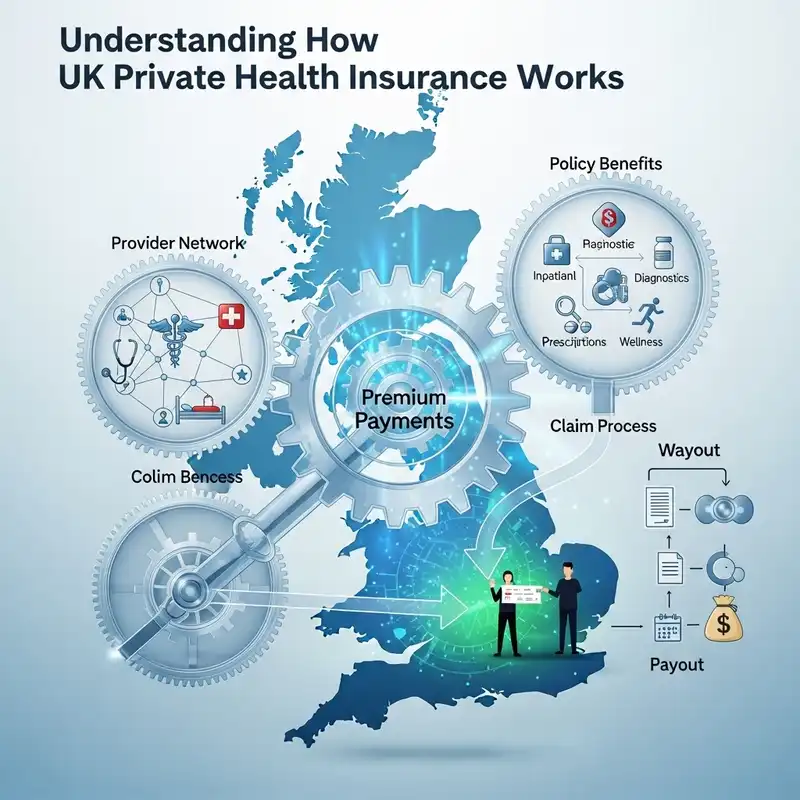
This is where Private Medical Insurance (PMI), also known as private health insurance, plays a vital role in your overall protection strategy.
What is PMI? It is an insurance policy that covers the costs of private healthcare, from diagnosis through to treatment, for acute conditions that arise after your policy has begun.
The Key Benefits of PMI:
- Speed of Access: This is the number one benefit. You can bypass long NHS queues and see a specialist in days or weeks, rather than months or years. Faster diagnosis and treatment often lead to better health outcomes and a quicker return to work.
- Choice and Control: You have a choice of leading consultants and a nationwide network of high-quality private hospitals.
- Comfort and Privacy: Treatment is often in a private room with amenities like an en-suite bathroom and more flexible visiting hours.
- Access to Specialist Treatments: PMI can provide access to new drugs, treatments, or therapies that may not yet be approved for use on the NHS due to cost or other factors.
How PMI and Protection Insurance Work Together: Imagine you develop a serious joint problem.
- Your PMI gets you a swift diagnosis with an MRI scan and surgery with a top surgeon within a few weeks.
- Your company's sick pay covers you for the first month.
- Your Income Protection policy kicks in after its deferred period, paying your salary while you undergo surgery and the subsequent 3-4 months of rehabilitation.
Without this combination, you could be waiting 18+ months for the surgery on the NHS, all while being in too much pain to work, with your SSP long gone and your savings wiped out. PMI gets you treated fast, and Income Protection keeps your finances stable while it happens.
The WeCovr Advantage: Expert Guidance in a Complex Market
Navigating the world of protection insurance can feel overwhelming. The jargon is confusing, the policy documents are long, and the consequences of getting it wrong are significant. This isn't a simple online purchase; it's a decision that affects your family's entire future.
This is where using a specialist independent broker like WeCovr is not just helpful, it's essential.
- We Are Your Advocate: We work for you, not the insurance companies. Our job is to find you the best possible cover for your needs and budget.
- Whole-of-Market Access: We compare policies, prices, and claim statistics from all the major UK insurers, including Aviva, Legal & General, Zurich, Vitality, and more. This saves you the time and hassle of getting individual quotes and gives you a clear view of the best options.
- Expert Advice: We demystify the small print. We'll explain the difference between 'own occupation' and 'any occupation' definitions on an income protection policy. We'll highlight which critical illness policy offers the most comprehensive cancer cover. This is the expert knowledge that makes all the difference at the point of a claim.
- Tailored Solutions: There is no one-size-fits-all solution. We take the time to understand your personal circumstances – your job, your health, your mortgage, your family's needs – to build a protection package that is perfectly tailored to you.
Beyond securing your financial future, we also invest in your present wellbeing. That's why WeCovr customers receive complimentary access to our innovative AI-powered calorie tracking app, CalorieHero, helping you build healthy habits day by day. We believe that proactive health management and robust financial protection go hand in hand.
Debunking the Myths: Common Objections to Protection Insurance
Many people delay putting this vital protection in place because of common myths and misconceptions. Let's tackle them head-on.
Myth 1: "It's too expensive." Reality: The cost of not having cover is infinitely higher. Losing your £35,000 salary is expensive. Paying a monthly premium of £30-£50 for an income protection policy that can replace it is a smart investment. For a healthy 35-year-old, comprehensive cover is often more affordable than a daily cup of coffee from a high-street chain.
Myth 2: "Insurers never pay out." Reality: This is demonstrably false. The industry has worked hard to improve transparency and fairness. abi.org.uk/news/news-articles/2023/5/a-record-97-of-individual-protection-claims-were-paid-out-in-2022/), insurers pay out on the vast majority of claims.
- 97.5% of all protection claims were paid.
- 98% of life insurance claims were paid.
- 91.6% of critical illness claims were paid.
- 92.9% of income protection claims were paid.
The main reason for a claim being declined is "non-disclosure" – the customer not being truthful about their health or lifestyle on the application form. This is another reason why using a broker is so important, as we guide you through the application to ensure it's completed accurately.
Myth 3: "I'm young and healthy, I don't need it." Reality: Illness and injury can strike at any age. In fact, the average age for an income protection claim is just 42, and for a critical illness claim, it's often in the mid-40s. Cancer Research UK statistics show that 1 in 2 people will get cancer in their lifetime. You are insuring against this possibility while you are young and healthy, which is precisely when premiums are at their lowest.
Myth 4: "I've got cover through my employer." Reality: While a valuable perk, employer-provided cover is often limited and is not portable.
- Death in Service: This typically pays out 2-4 times your salary. Is that enough to clear your mortgage and provide for your family for the next 20+ years? For most, the answer is no.
- Group Income Protection: Cover is often less generous than a personal policy and may only pay out for a limited period (e.g., 2-5 years).
- The biggest issue: If you leave your job, you lose the cover. Your personal policies belong to you and stay with you regardless of your employment status.
Your Action Plan: How to Build Your Financial Shield Today
Taking control of your financial security is one of the most empowering things you can do for yourself and your family. Don't let indecision leave you exposed. Follow these simple steps.
-
Step 1: Conduct a Financial Health Check.
- List all your essential monthly outgoings: mortgage/rent, council tax, utilities, food, transport, childcare, debt repayments.
- Calculate the total. This is the minimum income you need to survive.
- Review your assets: how much do you have in savings? How long would it last?
-
Step 2: Identify Your Gaps and Risks.
- What is your employer's sick pay policy? How long would they pay you for?
- Compare your essential outgoings to Statutory Sick Pay (£116.75 a week). The shortfall is your immediate risk.
- Think about your dependents. What would happen to them if your income disappeared tomorrow, or if you were no longer around?
-
Step 3: Define Your Protection Needs.
- To protect your income: You need Income Protection.
- To clear your mortgage and debts on diagnosis of a serious illness: You need Critical Illness Cover.
- To ensure your family is financially secure if you die: You need Life Insurance.
-
Step 4: Speak to an Expert.
- This is the most crucial step. Don't try to navigate this alone. A conversation with an independent expert will provide clarity and peace of mind.
- This is where we at WeCovr can help you assess your needs, search the entire market for the best solutions, and guide you through the application process from start to finish, ensuring your financial fortress is built on solid ground.
-
Step 5: Review Regularly.
- Your protection needs are not static. Life events like getting married, having children, moving house, or getting a pay rise are all triggers to review your cover to ensure it's still fit for purpose. A good broker will stay in touch to prompt these reviews.
A Call to Action: Don't Be a Statistic
The health of the UK's workforce is fragile, and the economic consequences for individuals are brutal. The 2.8 million people currently unable to work due to long-term sickness are not just a headline; they are a warning. Each one is a story of a life, a career, and a family future thrown into turmoil.
Relying on luck or an overstretched state system is a gamble you cannot afford to take. The good news is that you don't have to.
The tools to build an impenetrable financial shield are available, affordable, and accessible. A strategic combination of Income Protection, Critical Illness Cover, and Life Insurance, potentially supplemented by Private Medical Insurance, is the definitive answer to life's inevitable storms. It is the difference between weathering a health crisis with dignity and security, and being swept away by a financial catastrophe.
Don't wait for the storm to hit. Take control. Protect your income, protect your home, and protect the future you are working so hard to build.