TL;DR
Whether you already own an electric vehicle, or are planning to get one, the landscape of British motoring has shifted dramatically. As of early 2026, there are approximately 2.3 million Battery Electric Vehicles (BEVs) on UK roads, accompanied by over 1.6 million Plug-In Hybrids (PHEVs). Suffice to say, Electric Vehicles are getting faster, with ranges now regularly exceeding 300 miles, and are being sold in numbers greater than ever before.
Key takeaways
- However, with the government's Zero Emission Vehicle (ZEV) mandate in full swing and new tax rules introduced this year, the landscape is more complex than it was five years ago.
- Here are the top 10 best selling Electric Cars this year.
- It is no surprise that Tesla holds the top spot for electric vehicle sales in the UK, but the market has been flooded by affordable competitors, particularly from Chinese manufacturers like BYD and MG.
- Its access to the Supercharger network and vast cargo space makes it the default choice for many, despite a starting price hovering around 45,000.
- _Tesla Model Y_ The Model Y remains the UK's best-selling electric car.
Electric Cars 2026 (The Complete UK Guide)
Whether you already own an electric vehicle, or are planning to get one, the landscape of British motoring has shifted dramatically. As of early 2026, there are approximately 2.3 million Battery Electric Vehicles (BEVs) on UK roads, accompanied by over 1.6 million Plug-In Hybrids (PHEVs).
Suffice to say, Electric Vehicles are getting faster, with ranges now regularly exceeding 300 miles, and are being sold in numbers greater than ever before. However, with the government's Zero Emission Vehicle (ZEV) mandate in full swing and new tax rules introduced this year, the landscape is more complex than it was five years ago.
What Electric Cars Are Available in the UK in 2026?
It is no surprise that Tesla holds the top spot for electric vehicle sales in the UK, but the market has been flooded by affordable competitors, particularly from Chinese manufacturers like BYD and MG. These brands have reshaped the entry-level market, making EVs accessible to a wider demographic.
Top 10 Best Selling Electric Cars (2026)
Here are the top 10 best selling Electric Cars this year. The dominance of Tesla remains, but legacy manufacturers and new challengers are closing the gap.
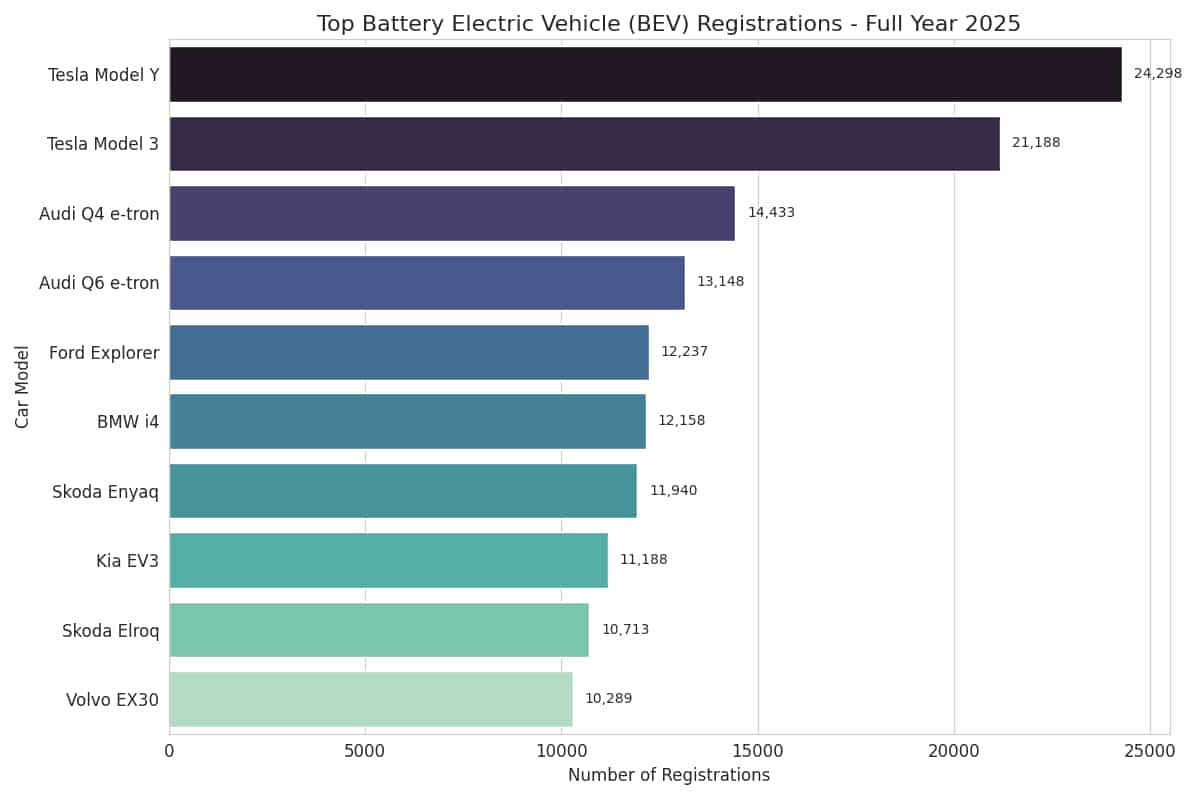
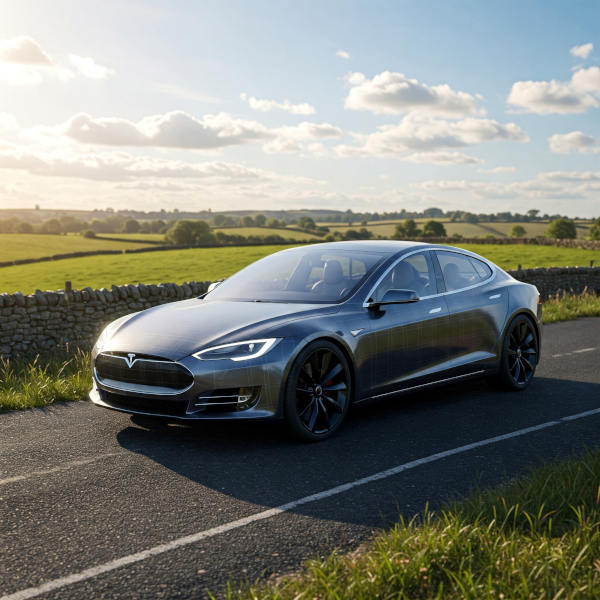
1. Tesla Model Y The Model Y remains the UK’s best-selling electric car. Following the "Juniper" update in 2025, which refreshed the suspension and interior materials, it remains the benchmark for family transport. Its access to the Supercharger network and vast cargo space makes it the default choice for many, despite a starting price hovering around £45,000. (illustrative estimate)
2. MG4 EV With sales skyrocketing, the MG4 has democratised electric driving. Starting under £27,000, it offers a range and driving dynamic that rivals cars twice its price. It is currently the most popular choice for value-conscious British families and fleet drivers.
3. Tesla Model 3 The "Highland" update solidified the Model 3's position. Unbeatable efficiency (4.5 miles per kWh) and technology keep it in the top three. It remains the favourite for company car drivers due to its range-to-price ratio.
4. Kia Niro EV Practical, reliable, and backed by a 7-year warranty, the Niro EV is the sensible choice. It doesn't scream for attention, but with over 285 miles of real-world range, it handles the school run and motorway commutes effortlessly.
5. BYD Atto 3 Build Your Dreams (BYD) has surged in the UK market. The Atto 3 offers a quirky interior and proprietary "Blade Battery" technology, which is widely considered one of the safest battery architectures in the world.
6. Volkswagen ID.3 After shaky software starts in the early 2020s, the updated ID.3 is now a polished product. It is the electric equivalent of the Golf—ubiquitous, comfortable, and reliable, with a range topping 340 miles in the Pro S trim.
7. Volvo EX30 This compact SUV has been a massive hit since its launch. It is fast (0-60 in 3.6 seconds for the performance model), stylish, and brings premium Scandinavian design to a smaller, more affordable package starting at £34,000. (illustrative estimate)
8. Nissan Ariya Taking the baton from the ageing Leaf, the Ariya is a futuristic crossover with a lounge-like interior. It represents Nissan's return to form in the EV sector, offering a more premium feel than the Qashqai.
9. Audi Q4 e-tron For those wanting a premium badge, the Q4 e-tron offers the quintessential Audi experience: quiet, comfortable, and high-tech. It is particularly popular in the corporate leasing market.
10. Vauxhall Corsa Electric Still a favourite for new drivers and city dwellers. The updated Long Range version now manages nearly 250 miles, making it a viable "only car" for many households.
Who is Buying EVs in 2026? (Demographics & Equity)
As EV adoption moves from "early adopters" to the "early majority," the demographic profile of owners is shifting, though disparities remain based on housing type and income.
- Income & Housing: According to recent Department for Transport data, EV ownership remains highest among the top 20% of income earners. This is largely correlated with home ownership; 78% of current EV owners have access to off-street parking (driveways/garages), allowing for cheap overnight charging. Those in terraced housing or flats rely on public charging, which attracts 20% VAT compared to 5% VAT for home electricity.
- Adoption by Ethnicity: Data indicates a complex picture regarding ethnicity and adoption.
- White British households currently hold the highest raw volume of EV ownership, largely due to higher rates of rural and suburban home ownership with driveways.
- Asian/Asian British households show a disproportionately high rate of adoption in urban centres (particularly London and Birmingham). This is driven partly by the prevalence of private hire drivers (Uber/Bolt) transitioning to EVs to avoid congestion and ULEZ charges, and partly by multi-generational households pooling resources for newer vehicles.
- Black/Black British households show the lowest current uptake rates (approximately 35% lower than the national average). Socio-economic factors and a higher statistical likelihood of living in urban rental accommodation without charging infrastructure are cited as the primary barriers.
- Age: The average age of a private new EV buyer is 54, slightly older than the petrol car equivalent, reflecting the higher upfront purchase price.
What Electric Cars have the Longest Range in 2026?
Range anxiety is largely a thing of the past for premium buyers, with 400+ miles becoming the new benchmark for high-end models. However, standard affordable EVs now comfortably sit in the 250-300 mile bracket.
| Rank | Make | WLTP Range (miles) | Price (£) |
|---|---|---|---|
| 1 | Lucid Air Grand Touring | 516 | £110,000 |
| 2 | Mercedes EQS 450+ | 464 | £105,000 |
| 3 | Tesla Model S Plaid/LR | 405+ | £90,000 |
| 4 | Fisker Ocean Extreme | 440 | £58,000 |
| 5 | Polestar 2 (Long Range) | 406 | £48,000 |
| 6 | Tesla Model 3 Long Range | 390 | £50,000 |
| 7 | BMW iX xDrive50 | 380 | £100,000 |
| 8 | Ford Mustang Mach-E (ER) | 372 | £59,000 |
| 9 | VW ID.7 | 384 | £55,000 |
| 10 | Hyundai Ioniq 6 | 338 | £47,000 |
Where can I charge my electric vehicle UK?
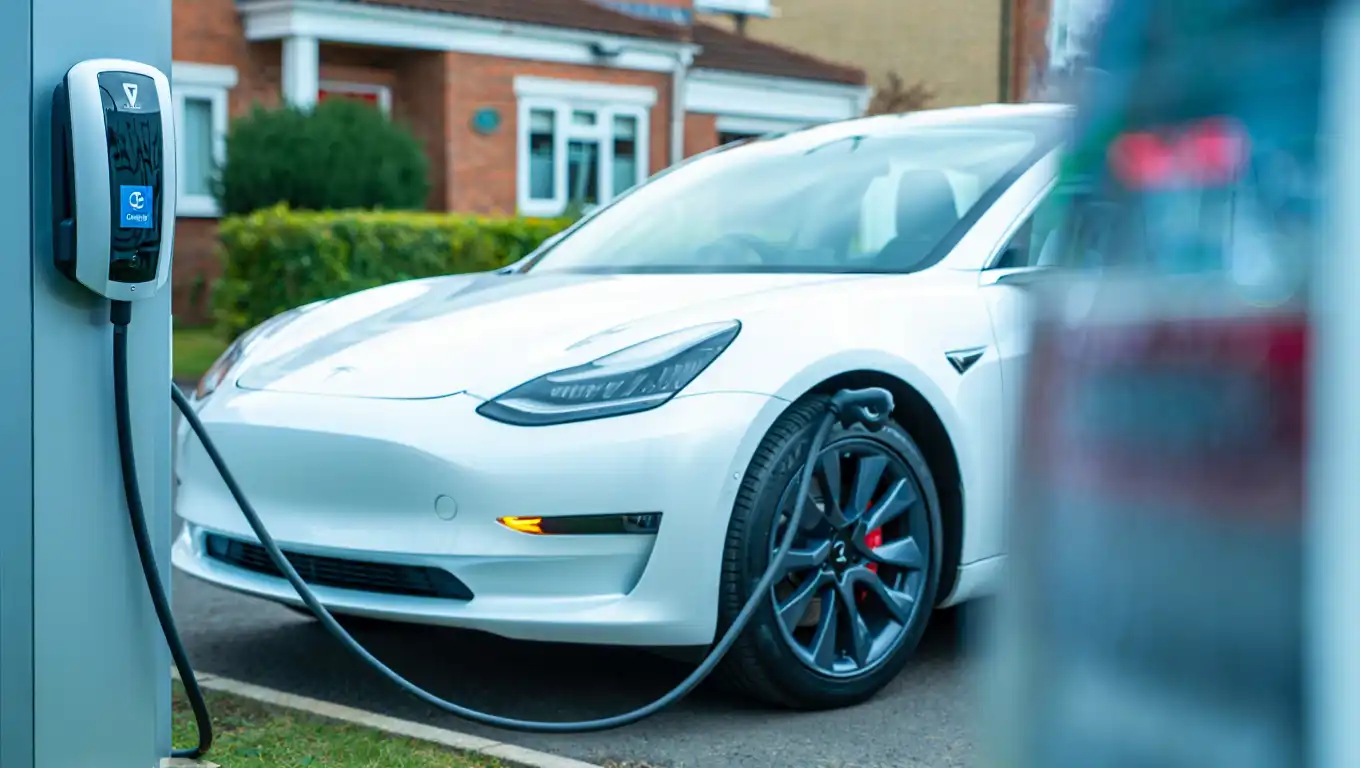
The infrastructure has matured significantly. There are now over 75,000 public charge points in the UK.
- Ultra-Rapid Hubs: Gridserve and Ionity have revolutionized motorway services. It is now standard to find 350kW chargers that can add 200 miles of range in 15 minutes.
- The App Solution: You no longer need 50 different RFID cards. Contactless payment is mandated on all new rapid chargers, though apps like Zapmap remain essential for finding working chargers and checking availability.
The New 2026 Tax Rules: What Changed?
This is the most critical update for 2026. The "free ride" regarding taxation has effectively ended.
- Vehicle Excise Duty (Road Tax): As of April 1, 2025, Electric Vehicles are no longer exempt from VED.
- Illustrative estimate: New EVs pay the lowest first-year rate (£10).
- Illustrative estimate: From the second year, they move to the standard rate (currently £190/year).
- Expensive Car Supplement (illustrative): New EVs costing over £40,000 now pay the "expensive car supplement" (an extra £410/year) from year two to year six. This significantly increases the running cost of premium EVs.
- Congestion Charge: As of December 25, 2025, the Cleaner Vehicle Discount ended. EVs must now pay the London Congestion Charge unless they are registered for a specific disability exemption. They remain exempt from ULEZ.
Are electric cars cheaper to insure?
Unfortunately not. Throughout 2024 and 2025, insurance premiums for EVs spiked. Electric cars typically cost 25-30% more to insure than their petrol equivalents.
- Why? Repair times are longer, specialist labor is required, and if the battery is damaged in even a minor collision, the entire car is often written off as a precaution.
- The Trend: Insurers are beginning to gather more data, and premiums are stabilising, but do not expect them to be cheaper than a Ford Focus to insure anytime soon.
Interesting Facts about Electric Cars (2026)
- The "Frunk" Phenomenon: Because EVs don't have a bulky engine block, many (like Teslas and the Ford Mustang Mach-E) have a "Front Trunk" or "Frunk." The Ford Mach-E frunk even has a drainage hole so you can fill it with ice and use it as a cooler for picnics.
- Silence is... Dangerous? Because EVs are so quiet, UK law mandates they emit a synthetic sound (AVAS) when travelling below 12mph to warn pedestrians. Each brand has a unique sound; the Fiat 500e plays a melody from Italian cinema!
- Regenerative Braking: You rarely need to use the brake pedal. When you lift off the accelerator, the motor runs in reverse to generate electricity, slowing the car down and putting energy back into the battery.
- Fewer Moving Parts: A traditional internal combustion engine drivetrain has around 2,000 moving parts. An electric vehicle drivetrain has around 20. This is why servicing costs are generally 40% lower.
Are Electric Cars Green? (The Lithium Question)
The environmental debate has shifted toward battery chemistry.
- Cobalt Reduction: In 2026, many standard-range vehicles (like the Tesla Model 3 RWD and MG4) use LFP (Lithium Iron Phosphate) batteries. These contain no cobalt and no nickel, drastically reducing the ethical and environmental impact of mining associated with earlier EVs.
- Carbon Payback: The "break-even" point where an EV becomes greener than a petrol car has dropped. With the UK grid utilising more wind power than ever, a new EV in the UK offsets its manufacturing carbon debt within roughly 14,000 miles of driving.
Can electric cars tow a caravan?
Yes. While it was once rare, a growing number of electric cars can now legally tow a caravan. Models from various manufacturers are type-approved for towing. For example, the BMW iX can tow up to 2,500kg, and the Tesla Model X can tow 2,250kg.
However, towing destroys efficiency. Towing a large caravan can reduce an EV's range by 50%, meaning a 300-mile car becomes a 150-mile car. This requires careful planning for charging stops on long holidays.
When were electric cars invented?
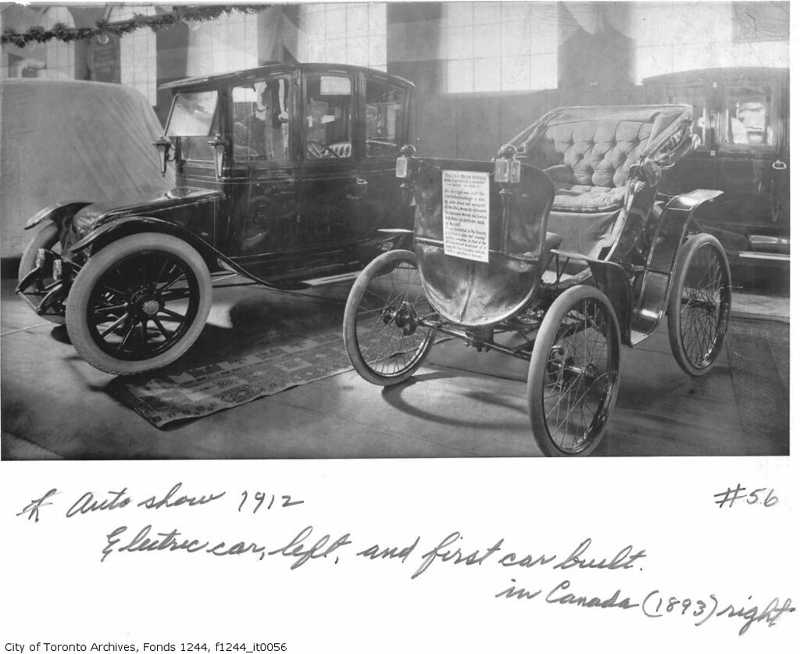
In 1832, the first electric car was made by Robert Anderson, predating the first gasoline powered car. In 1884, Thomas Parker invented the first electric car available in the UK.
In 1887, a chemist named William Morrison created the first practical self-powered four-wheeled electric carriage. Towards the end of the 19th century, approximately one third of all cars were electric. They were preferred by women and doctors because they didn't require a hand-crank to start and didn't smell of exhaust fumes. Eventually, cheap oil and the electric starter motor made petrol cars dominant, and it took over 100 years for the EV to return to the throne.
Sources
- Department for Transport (DfT): Road safety and transport statistics.
- DVLA / DVSA: UK vehicle and driving regulatory guidance.
- Association of British Insurers (ABI): Motor insurance market and claims publications.
- Financial Conduct Authority (FCA): Insurance conduct and consumer information guidance.
Important Information and Risks
No advice: This article is for general information only. It is not financial, legal, insurance, or tax advice, and it is not a personal recommendation. WeCovr does not assess your individual circumstances or recommend a specific product through this article.
Policy exclusions and underwriting: Insurance policies, including life insurance, private medical insurance, critical illness cover, and income protection, are subject to insurer underwriting, eligibility, acceptance criteria, terms, conditions, limits, and exclusions. Pre-existing medical conditions may be excluded, restricted, or accepted on special terms unless an insurer confirms otherwise in writing.
Tax treatment: References to tax treatment, HMRC rules, or business reliefs are based on current UK legislation and guidance, which can change. Tax treatment depends on your personal or business circumstances and may differ from examples in this article.
Before you buy: Always read the Insurance Product Information Document (IPID), policy summary, and full policy terms before buying, renewing, changing, or keeping cover. If you are unsure whether a policy is suitable for you, speak to an insurance adviser.
Check how protected you really are before you shop for cover
Use the Protection Score to see where your biggest protection gaps may be before deciding what kind of cover or help you need.
Free starting point
Shows where your biggest risk gaps are
Helps you decide what to look at next
Get your score
Your next best move
Get your score in minutes, then decide what kind of protection help would be most useful.
Answer a few quick questions
We look at your household resilience, not just one product in isolation.
See your protection gaps
Find out where income, health or family cover is weakest.
Get the right kind of help
If the gap matters, continue to the most relevant page for quotes or expert support.
What you get
A quick view of your current protection position
A clearer idea of where the biggest gaps may be
A direct route to tailored help if you want it