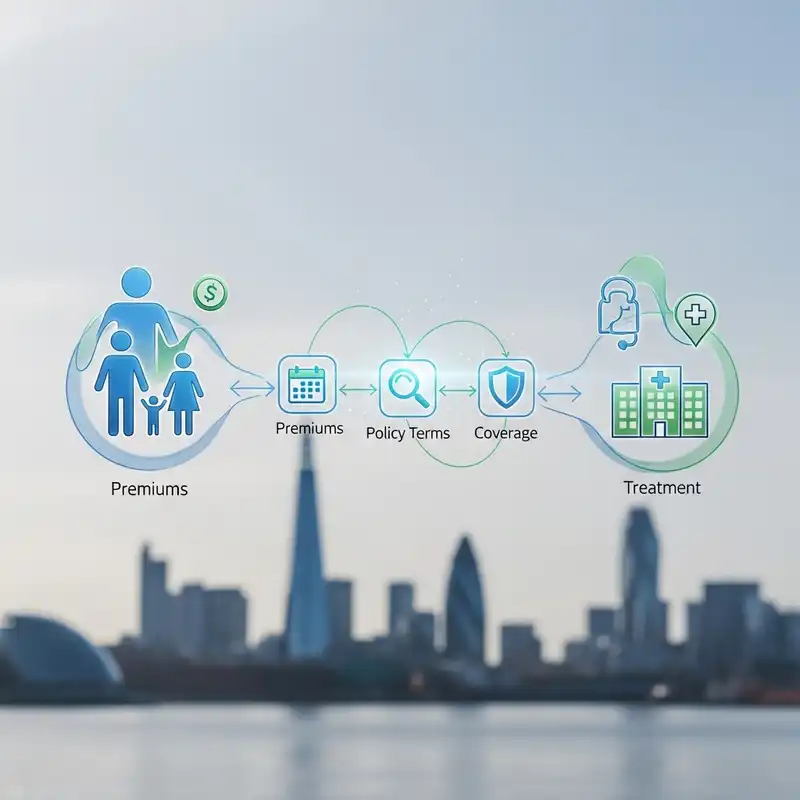
TL;DR
In our relentless pursuit of personal and professional growth, we meticulously plan our careers, build our investment portfolios, and schedule our self-development workshops. We chase promotions, launch businesses, and strive for peak physical fitness. Yet, in this forward-charging momentum, we often overlook the very foundation upon which all this progress is built: our health and our ability to earn an income.
Key takeaways
- Assess Your Foundations: Take a clear-eyed look at your financial life. What is your income? What are your major outgoings (mortgage, rent, bills)? Who depends on you financially? What savings do you have, and how long would they last?
- Identify Your Vulnerabilities: Ask the tough questions. What would happen if your income stopped tomorrow for six months? Or six years? How would you and your family cope with the financial shock of a serious illness diagnosis? Answering these questions honestly will reveal where you need protection most.
- Explore Your Shielding Options: Review the types of protection we've discussed. Which ones resonate most with your vulnerabilities?
- To protect your income: Income Protection.
- To get a lump sum for recovery: Critical Illness Cover.
Beyond Growth the Unseen Shield
In our relentless pursuit of personal and professional growth, we meticulously plan our careers, build our investment portfolios, and schedule our self-development workshops. We chase promotions, launch businesses, and strive for peak physical fitness. Yet, in this forward-charging momentum, we often overlook the very foundation upon which all this progress is built: our health and our ability to earn an income.
Imagine your life as a magnificent structure you are carefully building, brick by brick. Your career, your family, your passions—each one a vital part. Now, imagine building this structure on ground that could give way at any moment. A sudden illness, an unexpected accident—these are the seismic shocks that can bring even the most ambitious projects to a grinding halt.
This is where the radical secret to uninterrupted personal growth lies. It’s not in another productivity hack or a new investment strategy. It’s in building an "unseen shield" of financial protection. This shield—comprising everything from income protection and private health cover to life insurance—doesn't just protect your finances. It protects your future. It safeguards your peace of mind, allowing you to pursue your purpose with confidence, knowing you are insulated from life's most challenging uncertainties.
As we navigate the complex health landscape of 2025, marked by persistent NHS pressures and a greater awareness of our own vulnerability, this shield is no longer a luxury. It is the ultimate investment in a life of uninterrupted purpose.
The Fragile Pursuit of Progress: Understanding 2025's Health Realities
We live in an age of unprecedented opportunity, but also one of significant challenge. The relentless focus on growth can blind us to the fragility of our well-being. The health and economic realities of 2025 have brought this into sharp focus.
The Strain on Our National Health Service
The NHS, a cornerstone of British society, is facing immense pressure. While it provides incredible care, the statistics paint a stark picture of the challenges:
- Waiting Lists: According to the latest NHS England data, the referral-to-treatment (RTT) waiting list remains stubbornly high, with millions of people waiting for consultant-led elective care. A significant portion of these individuals have been waiting for over 18 weeks, with thousands waiting over a year. This isn't just a statistic; it's a prolonged period of pain, anxiety, and potential deterioration for those affected.
- Diagnostic Delays: Getting a diagnosis is the first crucial step to recovery. Delays in vital diagnostic tests like MRI scans, CT scans, and endoscopies can postpone treatment and worsen outcomes.
- Mental Health Services: The demand for mental health support has surged. Data from organisations like Mind and the NHS itself show that while awareness is increasing, access to services like talking therapies can involve long waits, leaving many to cope alone during their most vulnerable times.
The Financial Shock of Ill Health
The personal cost of sickness extends far beyond the physical. The Office for National Statistics (ONS) reports a concerning rise in the number of people who are economically inactive due to long-term sickness. This trend highlights a critical vulnerability in many households' financial plans.
Consider this: Statutory Sick Pay (SSP) in the UK stands at just £116.75 per week for up to 28 weeks. Can your household run on that?
| Weekly Essential Cost | Estimated Average (UK) |
|---|---|
| Mortgage/Rent | £250 - £400+ |
| Council Tax | £40 - £60+ |
| Utilities (Gas, Elec, Water) | £50 - £80+ |
| Groceries (Family of 4) | £120 - £160+ |
| Total Essentials | £460 - £700+ |
| Weekly SSP | £116.75 |
As the table clearly shows, relying solely on state support creates a devastating financial shortfall. This financial stress compounds the emotional and physical burden of being unwell, hindering recovery and derailing life plans. This is the reality that financial protection is designed to solve.
The Bedrock of Security: Why Income Protection is Your First Priority
If you protect just one thing, protect your income. Your income is the engine that powers your entire life—it pays your mortgage, feeds your family, funds your dreams, and builds your future. Without it, everything stops.
Income Protection (IP) is arguably the most crucial financial safety net you can own. It’s a policy designed to pay you a regular, tax-free monthly income if you're unable to work due to any illness or injury, after a pre-agreed waiting period. This income continues until you can return to work, your policy ends, or you retire.
It’s not for a broken leg that keeps you off for six weeks; it's for the cancer diagnosis, the severe back injury, or the mental health breakdown that could see you unable to work for months, or even years. The Association of British Insurers (ABI) consistently reports that millions of pounds are paid out every single day by insurers on protection claims, demonstrating this is a very real risk.
Tailored Protection for Every Career:
- For the Employed: Your employer’s sick pay policy might seem generous, but it's rarely indefinite. Many schemes offer full pay for a few months, followed by half-pay, before dropping to nil. Income Protection seamlessly kicks in when your employer's support runs out, ensuring your financial stability is maintained.
- For the Self-Employed and Freelancers: You are your business's greatest asset. For you, the 'no work, no pay' reality is immediate and unforgiving. Income Protection is not a 'nice-to-have'; it's a fundamental business continuity tool. It provides the funds to keep your personal life afloat while you recover, preventing you from having to dip into business cashflow or, worse, close down entirely.
- For Company Directors: Executive Income Protection is a highly tax-efficient solution. The company pays the premiums, which are typically treated as an allowable business expense. If the director needs to claim, the benefit is paid to the company, which then distributes it to the individual via PAYE. It’s an exceptional way to protect your most valuable leaders and offer a premium benefit.
At WeCovr, we help you navigate these options, comparing policies from across the market to find the precise level of cover that matches your profession, income, and budget.
The Breathing Space You Need: Critical Illness Cover Explained
While Income Protection shields your monthly earnings, Critical Illness Cover (CIC) provides a different kind of support. It pays out a tax-free lump sum on the diagnosis of a specified serious, but not necessarily fatal, condition.
Think of it as 'financial breathing space'. This money is yours to use however you see fit, at a time when you need it most.
Real-World Impact of a CIC Payout:
- Clear Your Mortgage: Imagine being diagnosed with cancer and having the ability to pay off your largest monthly expense overnight. This removes an immense financial and psychological burden.
- Fund Private Treatment: While the NHS is wonderful, a CIC payout could give you the option to access private treatments, specialist drugs not available on the NHS, or quicker consultations, putting you back in control of your health journey.
- Adapt Your Home: If you suffer a stroke, you might need to make modifications to your home, such as installing a stairlift or creating a downstairs bathroom.
- Replace Lost Income: The lump sum can allow your partner to take time off work to care for you, or enable you to reduce your own hours permanently upon your return to work.
- Fund a Recuperation Period: Use the money to take a stress-free break with your family once your treatment is complete, aiding your mental and emotional recovery.
Most insurers cover a wide range of conditions, with the "big three"—cancer, heart attack, and stroke—accounting for the majority of claims according to data from the ABI. However, modern policies often cover 50+ conditions, including multiple sclerosis, motor neurone disease, and major organ transplant.
Common Critical Illnesses Covered
| Condition Category | Examples |
|---|---|
| Cancer | Invasive Cancers, Carcinoma in situ |
| Heart & Circulatory | Heart Attack, Stroke, Coronary Artery Bypass |
| Neurological | Multiple Sclerosis, Parkinson's Disease |
| Organ-related | Kidney Failure, Major Organ Transplant |
| Other | Blindness, Deafness, Traumatic Head Injury |
Many people choose to combine Life and Critical Illness Cover into a single policy, providing a comprehensive safety net for their family against multiple eventualities.
Taking Control of Your Health Journey: The Power of Private Medical Insurance
The "2025 Health Realities" have made Private Medical Insurance (PMI) more relevant than ever. Faced with the prospect of long waits for diagnosis and treatment on the NHS, more and more people are viewing PMI not as a luxury, but as an essential tool for managing their health proactively.
PMI is an investment in time, choice, and peace of mind.
- Speed of Access: This is the primary benefit. PMI allows you to bypass NHS waiting lists for eligible conditions, getting you a prompt appointment with a specialist.
- Choice and Control: You can often choose your consultant, the hospital where you are treated (from a list provided by the insurer), and a time that is convenient for you.
- Comfort and Privacy: Treatment is typically in a private hospital, often with an en-suite room, offering a more comfortable and restful environment for recovery.
- Access to Advanced Treatments: Some PMI policies provide access to the latest licensed cancer drugs and treatments that may not yet be routinely available on the NHS due to funding decisions.
PMI isn't designed to replace the NHS, which remains unparalleled for emergency services (A&E) and managing chronic conditions. Instead, it works alongside it, providing a route to faster elective care for acute conditions that arise. For anyone whose livelihood, business, or family life would be severely disrupted by a year-long wait for a hip replacement or knee surgery, PMI is a powerful solution.
Navigating the world of PMI can be complex, with different levels of cover (e.g., diagnostics only, full treatment, cancer care) and options like a no-claims discount or a policy excess. This is where expert advice is invaluable. At WeCovr, we demystify the process, helping you compare plans from leading UK insurers to find a policy that delivers the right protection for your budget.
An Act of Love: Securing Your Legacy with Life Insurance and Beyond
The ultimate expression of personal growth is looking beyond yourself to care for others. Life Insurance is fundamentally an act of love—a promise to your family that they will be protected financially, even if you are no longer there.
It provides a tax-free lump sum on death, which can be used to:
- Pay off the mortgage, ensuring your family has a secure home.
- Replace your lost income for a number of years.
- Cover childcare and education costs.
- Settle any outstanding debts or funeral expenses.
But standard life insurance is just one piece of the legacy puzzle.
Family Income Benefit: A Smarter Approach
For many families, receiving a huge lump sum can be daunting. Family Income Benefit is an alternative that, instead of paying a single amount, provides a regular, tax-free monthly or annual income from the point of claim until the end of the policy term. This mirrors a lost salary, making budgeting far simpler and ensuring the money lasts as long as it's needed. It's often more affordable than an equivalent lump sum policy.
For Business Owners: Protecting Your Enterprise
Your personal legacy is intertwined with your professional one. Key Person Insurance is a vital tool for business continuity. It's a life insurance or critical illness policy taken out by the company on a crucial employee—a top salesperson, a technical genius, or a founding director. If that person dies or becomes critically ill, the policy pays out to the business, providing funds to cover lost profits, recruit a replacement, or reassure lenders and investors.
Inheritance Tax Planning: Gift Inter Vivos
If you are planning to pass on wealth to your children or grandchildren, you may be aware of the "seven-year rule" for gifts. If you give away an asset (cash or property) and die within seven years, that gift may still be subject to Inheritance Tax (IHT).
Gift Inter Vivos Insurance is a specialist life insurance policy designed specifically to cover this potential tax bill. It's a decreasing term policy, where the sum assured reduces over the seven years in line with the tapering IHT liability. It’s a smart, cost-effective way to ensure your gift reaches your loved ones in full, just as you intended.
The Holistic Shield: Weaving Protection into a Wellness-Focused Life
True security isn’t just about having an insurance policy in a drawer. It's about creating a holistic ecosystem of well-being where proactive health management and financial safety nets work in harmony. The modern insurance industry understands this, and many providers now include valuable wellness benefits with their policies.
These "value-adds" can include:
- Virtual GP Services: 24/7 access to a GP via phone or video call, perfect for getting quick advice and prescriptions without waiting for a local appointment.
- Mental Health Support: Access to a set number of counselling or therapy sessions.
- Second Medical Opinions: The ability to have your diagnosis and treatment plan reviewed by a world-leading expert.
- Fitness and Nutrition Support: Discounts on gym memberships, fitness trackers, and access to health coaching.
This is a philosophy we wholeheartedly embrace. At WeCovr, we believe in supporting our customers' overall well-being. That's why, in addition to finding you the best protection policies, we provide our customers with complimentary access to CalorieHero, our AI-powered calorie and nutrition tracking app. It's a practical tool to help you build the healthy habits that reduce your long-term health risks, demonstrating our commitment to your well-being beyond just the policy.
Simple Steps to Fortify Your Health:
- Nourish Your Body: A balanced diet rich in fruits, vegetables, and whole grains is a powerful defence against many critical illnesses. Use tools like CalorieHero to understand your intake and make positive changes.
- Prioritise Sleep: Aim for 7-9 hours of quality sleep per night. It's essential for cognitive function, immune response, and mental health.
- Move Every Day: The NHS recommends at least 150 minutes of moderate-intensity activity a week. This could be brisk walking, cycling, or swimming. Find an activity you enjoy and make it a non-negotiable part of your routine.
- Manage Stress: Chronic stress is toxic. Incorporate mindfulness, meditation, or simply time in nature to calm your nervous system and build resilience.
By combining these proactive health steps with a robust financial protection plan, you create a powerful, multi-layered shield that protects you from all angles.
Your Action Plan for Uninterrupted Peace and Purpose
Building your unseen shield doesn't have to be complicated. It’s a logical process of understanding your needs and taking decisive action. Here’s how you can start today.
- Assess Your Foundations: Take a clear-eyed look at your financial life. What is your income? What are your major outgoings (mortgage, rent, bills)? Who depends on you financially? What savings do you have, and how long would they last?
- Identify Your Vulnerabilities: Ask the tough questions. What would happen if your income stopped tomorrow for six months? Or six years? How would you and your family cope with the financial shock of a serious illness diagnosis? Answering these questions honestly will reveal where you need protection most.
- Explore Your Shielding Options: Review the types of protection we've discussed. Which ones resonate most with your vulnerabilities?
- To protect your income: Income Protection.
- To get a lump sum for recovery: Critical Illness Cover.
- To ensure your family is secure if you pass away: Life Insurance or Family Income Benefit.
- To bypass health service queues: Private Medical Insurance.
- Seek Expert Guidance: You don't have to figure this out alone. The world of insurance is complex, and the cheapest policy is rarely the best. A specialist broker can be your most valuable ally. They will take the time to understand your unique situation and use their expertise to search the entire market for the policies that offer the most comprehensive cover for your budget.
Personal growth is a journey, not a destination. But it's a journey that is far more joyful, fulfilling, and purposeful when you know you are protected from the storms that can blow you off course. Investing in your financial protection is the ultimate act of self-care and responsibility. It is the unseen shield that grants you the freedom to build, to grow, and to live a life of uninterrupted peace.
What's the difference between Income Protection and Critical Illness Cover?
Is financial protection insurance expensive?
Do I need a medical exam to get insurance?
As a self-employed person, which cover is most important?
Sources
- Office for National Statistics (ONS): Mortality and population data.
- Association of British Insurers (ABI): Life and protection market publications.
- MoneyHelper (MaPS): Consumer guidance on life insurance.
- NHS: Health information and screening guidance.
Disclaimer: This is general guidance only and does not constitute formal tax or financial advice. Tax treatment depends on individual circumstances, policy terms, and HMRC interpretation, which cannot be guaranteed in advance. Whenever applicable, businesses and individuals should always consult a qualified accountant or tax adviser before arranging such policies.
Measure your family’s protection gap, then get the right life cover quote
Start with the score to see whether your family would face a real financial shortfall before moving on to life cover options.
Check what happens if someone dies too soon
See whether debt, dependants and mortgage risk are covered
Move into tailored life cover options after the score
Get your score
Your next best move
Get your score in minutes, then decide what kind of protection help would be most useful.
Score your household protection
See how well your current setup protects dependants, debt and major commitments.
Find the shortfall
Know whether life cover, critical illness or income protection is the actual missing piece.
Continue to tailored life cover
If life cover is the gap, continue to tailored life cover options.
What you get
A quick view of your current protection position
A clearer idea of where the biggest gaps may be
A direct route to tailored help if you want it