TL;DR
We track our steps, optimise our sleep, and fill our fridges with organic produce. The pursuit of "wellness" has become a multi-billion-pound industry, a testament to our collective desire to live longer, healthier, more fulfilling lives. Yet, amidst the gym memberships and mindfulness apps, a crucial element is often missing from the blueprint of a well-designed life: true, robust resilience.
Key takeaways
- What it Covers: The main three conditions covered by all policies are cancer, heart attack, and stroke, which account for the vast majority of claims. Comprehensive policies may cover 50-100+ conditions, including multiple sclerosis, motor neurone disease, and major organ transplant.
- Clear your mortgage or other debts.
- Fund private medical treatment or specialist drugs.
- Adapt your home.
Beyond Wellness the Protective Growth Mindset
We live in an age of self-improvement. We track our steps, optimise our sleep, and fill our fridges with organic produce. The pursuit of "wellness" has become a multi-billion-pound industry, a testament to our collective desire to live longer, healthier, more fulfilling lives. Yet, amidst the gym memberships and mindfulness apps, a crucial element is often missing from the blueprint of a well-designed life: true, robust resilience.
The hard truth is that all the green smoothies in the world cannot stop a sudden illness, a serious accident, or an unexpected diagnosis. The fear of these "what ifs," whether conscious or subconscious, can act as an invisible barrier, subtly influencing our decisions. It can stop us from starting a business, changing careers, or even fully enjoying the present moment because of a nagging anxiety about the future.
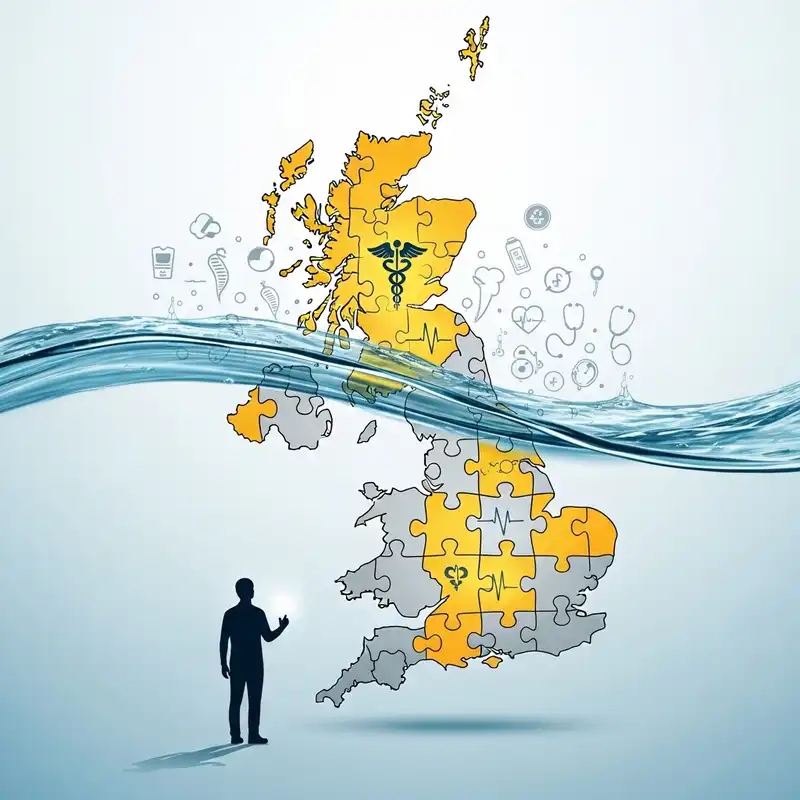
This is where a "Protective Growth Mindset" comes in. It's a shift in perspective: viewing financial protection not as a begrudged expense, but as a foundational investment in your own potential. It’s the framework that allows you to build your dream life on solid ground, knowing that if the unexpected happens, you and your loved ones won't fall. With sobering statistics from Cancer Research UK indicating that one in two of us will face cancer, this isn't pessimism; it's proactive realism. It’s about empowering your growth by protecting your foundation.
The Great British Wellness Paradox
There's a curious paradox at play in modern Britain. On one hand, we've never been more focused on our personal health and well-being. We invest time and money in activities and products designed to enhance our physical and mental state. Yet, on the other hand, a significant portion of the population is living on a financial precipice.
Consider these figures:
- The Savings Gap: A 2023 report from the Money and Pensions Service revealed that a staggering 11.5 million UK adults have less than £100 in savings. That's nearly one in five people who are, financially speaking, one broken boiler or one missed paycheque away from a crisis.
- The Sickness Reality: The Office for National Statistics (ONS) reported in early 2024 that a record 2.8 million people were out of work due to long-term sickness. This highlights that being unable to work for an extended period is not a remote possibility but a widespread reality.
This gap between our wellness aspirations and our financial preparedness is the "Great British Wellness Paradox." We are building healthier bodies and minds but leaving the financial infrastructure that supports them dangerously exposed.
A Protective Growth Mindset closes this gap. It acknowledges that true wellness isn't just about feeling good today; it's about having the security and peace of mind to feel confident about tomorrow, whatever it may bring. It’s the understanding that a robust Income Protection policy can do more for your long-term mental health than a week-long yoga retreat, because it removes a fundamental source of anxiety.
This mindset is about giving yourself permission to thrive, to take calculated risks, and to pursue your ambitions, secure in the knowledge that your financial bedrock is protected.
Deconstructing the "What Ifs": The Real-World Impact of Illness and Injury
It’s easy to dismiss the need for protection with a simple "it won't happen to me." But what if it does? The financial fallout from a serious illness or injury extends far beyond the immediate loss of salary. It creates a domino effect that can destabilise a family's entire world.
Let's break down the tangible costs:
1. The Income Void
This is the most immediate and obvious blow. Statutory Sick Pay (SSP) in the UK stands at just £116.75 per week (2024/25 rate) and is only payable for up to 28 weeks. For most households, this represents a catastrophic drop in income.
- For the Employed Nurse: An NHS nurse on a Band 5 salary might have a generous sick pay scheme, but it's not indefinite. After a certain period (e.g., six months of full pay and six of half pay), their income could drop to zero, while their mortgage and bills remain the same.
- For the Self-Employed Tradesperson: For an electrician, plumber, or builder, the rule is simple: if you don't work, you don't get paid. There is no SSP. An injury preventing them from working means their income stops instantly.
- For the Freelance Consultant: A freelance marketing consultant who suffers a stroke may face months of rehabilitation. Without the ability to service clients, their income disappears overnight, but their business overheads may continue.
2. The Onslaught of New Costs
While income disappears, new and unexpected expenses start to mount, creating a perfect financial storm.
- Travel: Frequent trips to hospitals for treatment, consultations, and therapy can incur significant fuel, parking, and public transport costs.
- Home Modifications: A wheelchair ramp, a stairlift, or an accessible bathroom can cost thousands of pounds.
- Increased Household Bills: Spending more time at home often means higher heating and electricity bills.
- Specialist Care: While the NHS is incredible, some may choose to pay for private consultations to speed up diagnosis, or for therapies like specialist physiotherapy or counselling not readily available on the NHS.
- Childcare: If a stay-at-home parent becomes ill, the working partner may need to arrange and pay for childcare to continue working or to attend hospital appointments.
The Potential Financial Shortfall: A Six-Month Snapshot
Let's imagine a family where one earner, bringing in £3,000 net per month, is unable to work for six months due to a serious illness. (illustrative estimate)
| Item | Monthly Cost/Loss | 6-Month Total |
|---|---|---|
| Lost Net Income | -£3,000 | -£18,000 |
| Statutory Sick Pay (SSP) | +£505 (approx.) | +£3,030 |
| New Travel/Parking Costs | +£150 | +£900 |
| Increased Utility Bills | +£75 | +£450 |
| Prescription/Misc Costs | +£50 | +£300 |
| Net Financial Deficit | -£2,220 | -£13,320 |
This simplified table shows a potential shortfall of over £13,000 in just six months. For the 11.5 million people with less than £100 in savings, this is an impossible gap to bridge. It's a situation that leads to debt, stress, and the derailment of long-term financial goals.
Your Personal Armoury: A Guide to Financial Protection Insurance
Understanding the risks is the first step. The second is knowing what tools are available to mitigate them. The world of insurance can seem complex, but at its heart are a few core products designed to protect you against life's biggest challenges. Think of them as your personal armoury.
Here’s a clear guide to the key types of protection.
Life Insurance
This is the foundational layer of protection, designed to provide a financial claim payment upon your death. It's not for you; it's for the people you leave behind.
- Term Life Insurance (illustrative): The most common and affordable type. You choose a lump sum amount and a term (e.g., £250,000 over 25 years to match your mortgage). If you pass away within that term, your beneficiaries receive the potentially tax-efficient claim payment. It’s ideal for covering mortgages and providing for your children's upbringing.
- Family Income Benefit: A thoughtful alternative to a single lump sum. Instead of one large payment, it may pay out a regular, potentially tax-efficient monthly or annual income for the remainder of the policy term. This can be easier for a grieving family to manage and replaces the lost monthly salary of the deceased. It's often a more affordable option for young families.
- Gift Inter Vivos Insurance: A specialist plan for those concerned with Inheritance Tax (IHT). If you gift a large sum of money or an asset, it may still be considered part of your estate for IHT purposes if you die within seven years. This policy provides a lump sum to cover the potential tax bill, ensuring your beneficiaries receive the full value of your gift.
Critical Illness Cover (CIC)
While life insurance covers death, Critical Illness Cover is designed for life-changing diagnoses. It may pay out a potentially tax-efficient lump sum if you are diagnosed with one of a list of specific, serious conditions defined in the policy.
- What it Covers: The main three conditions covered by all policies are cancer, heart attack, and stroke, which account for the vast majority of claims. Comprehensive policies may cover 50-100+ conditions, including multiple sclerosis, motor neurone disease, and major organ transplant.
- How it Helps: A CIC claim payment gives you financial freedom at a time of immense stress. You could use the money to:
- Clear your mortgage or other debts.
- Fund private medical treatment or specialist drugs.
- Adapt your home.
- Allow your partner to take time off work to care for you.
- Simply replace lost income while you focus 100% on your recovery.
Income Protection (IP)
Often described by financial experts as the most important protection policy of all, Income Protection is your personal safety net against losing your earnings.
- How it Works: It pays a regular, potentially tax-efficient monthly income (typically 50-65% of your gross salary) if you're unable to work due to any illness or injury. The payments continue until you can return to work, the policy term ends (often at your planned retirement age), or you pass away.
- Key Features:
- Deferment Period: This is the waiting period from when you stop working to when the policy starts paying out. It can be anything from one day to 12 months. Aligning this with your employer's sick pay scheme or your savings is key to making the policy affordable. A longer deferment period means a lower premium.
- 'Own Occupation' Definition: This is the gold standard. It means the policy may pay out if you are unable to do your specific job. Other definitions like 'suited occupation' or 'any occupation' are less comprehensive and should be carefully considered.
- Personal Sick Pay: This term is often used for shorter-term Income Protection policies. Instead of paying out until retirement, they might have a payment period of 1, 2, or 5 years. These can be a very cost-effective solution for those in riskier jobs like tradespeople, providing a vital buffer to get back on their feet without the cost of a full-term policy.
Comparing the Core Protection Products
| Feature | Life Insurance | Critical Illness Cover | Income Protection |
|---|---|---|---|
| Claim payment Trigger | Death | Diagnosis of a specified illness | Inability to work (illness/injury) |
| Claim payment Type | Lump Sum / Income | Lump Sum | Regular Monthly Income |
| Main Purpose | Support loved ones after you're gone | Financial freedom during recovery | Replace lost earnings while off work |
| Ideal For | Anyone with dependents/mortgage | Everyone, as a living benefit | Every working adult, especially self-employed |
Navigating these options can be daunting. A specialist at WeCovr or one of our broker partners can help cut through the complexity. Our experts take the time to understand your personal and financial situation, then search the whole of the UK market to find the policy that offers the right protection at a competitive price.
The Business Owner's Shield: Protecting Your Livelihood and Your Legacy
For company directors, business owners, and the self-employed, the line between personal and professional well-being is often blurred. If you get sick, it’s not just your family's income that’s at risk; it’s the business you’ve poured your life into. Thankfully, a suite of specialist protection products exists to shield your business from the unexpected. These are not just expenses; they are strategic investments in continuity and stability.
Executive Income Protection
This is Income Protection for company directors, but with significant tax advantages.
- How it Works: The policy is owned and paid for by your limited company. If you, as a director or employee, are unable to work due to illness or injury, the policy pays a monthly benefit to the company. The company then pays this to you as a salary via PAYE.
- The Tax Advantage: Because the premiums are paid by the business, they are typically classed as an allowable business expense. This means they can be offset against the company's corporation tax bill, making it a highly tax-efficient way to secure your personal income.
Key Person Insurance
Who is indispensable to your business? Is it you? Your top salesperson? Your lead developer? Key Person Insurance is designed to protect the business from the financial consequences of losing such a vital individual.
- How it Works: The business takes out a life insurance and/or critical illness policy on a "key" employee. If that person passes away or is diagnosed with a critical illness, the policy pays a lump sum directly to the business.
- What it Covers: The funds can be used to:
- Recruit and train a replacement.
- Clear business loans or debts.
- Replace lost profits during the disruption.
- Reassure lenders, investors, and clients that the business is stable.
Imagine a small architectural practice where one of two founding partners is diagnosed with a serious illness and can no longer work. A Key Person claim payment would give the remaining partner the capital needed to hire a senior architect to take over projects, ensuring the firm's survival.
Relevant Life Cover
For small businesses that don't have a large group death-in-service scheme, Relevant Life Cover is a game-changer. It's a way for a company to provide a valuable life insurance benefit to an employee (including a director) in a very tax-efficient manner.
- How it Works: It’s a single life insurance policy, paid for by the company. If the employee dies, the claim payment goes into a discretionary trust for their family.
- The Tax Triple-Whammy:
- Premiums are usually an allowable business expense.
- It’s not considered a P11D benefit-in-kind, so there’s no extra income tax for the employee.
- The claim payment from the trust is typically free from Inheritance Tax.
Business Protection at a Glance
| Product | Who Pays? | Who Receives the Claim payment? | Main Benefit |
|---|---|---|---|
| Executive Income Protection | The Company | The Company (then paid to you) | Tax-efficiently protects a director's income |
| Key Person Insurance | The Company | The Company | Protects business from financial loss |
| Relevant Life Cover | The Company | The Employee's Family (via a trust) | Tax-efficient death-in-service benefit |
These solutions are essential for building a resilient business. a WeCovr specialist or trusted broker partner has extensive experience in helping directors and entrepreneurs identify their key risks and structure the most tax-efficient and effective protection strategy for their unique circumstances.
Beyond the Policy: The Added Value That Fosters True Well-being
Modern insurance policies are evolving. They are no longer just a promise of a future claim payment; they are becoming holistic well-being partners, offering a suite of services designed to help you and your family stay healthy and get the most appropriate care when you need it. These "added value" benefits are often included at no extra cost and can be worth hundreds, if not thousands, of pounds a year.
They are a tangible expression of the Protective Growth Mindset – tools that empower you to live better, right now.
Common benefits include:
- 24/7 Virtual GP: Skip the long waits for a GP appointment. Access a UK-based doctor via video call or phone, often within hours. You can get medical advice, prescriptions, and referrals from the comfort of your home.
- Second Medical Opinion Services: If you receive a worrying diagnosis, this service allows you to have your case reviewed by a world-leading expert, giving you clarity and confidence in your treatment plan.
- Mental Health Support: Many policies now include access to a set number of counselling or therapy sessions, providing crucial support for issues like stress, anxiety, and depression.
- Physiotherapy and Rehabilitation: Get help with musculoskeletal issues or support on your road to recovery after an injury, often with a tailored programme of digital or in-person physio sessions.
- Health and Fitness Programmes: Access to discounted gym memberships, nutrition advice, and wellness apps to support your proactive health goals.
WeCovr believes so strongly in this proactive approach to health that we go a step further. We provide all our protection clients with complimentary access to CalorieHero, our own AI-powered calorie and nutrition tracking app. It’s our way of investing in your day-to-day well-being, helping you build healthy habits that form the bedrock of a long and fulfilling life. It’s a tangible part of our commitment to your holistic protection, going beyond the insurance contract itself.
Navigating the Market: How to Find the Right Protection for You
With so many products, providers, and features, the protection market can feel like a maze. How do you ensure you're getting the right cover without paying for things you don't need?
The key is to recognise that financial protection is not a one-size-fits-all product. The right solution for a 25-year-old self-employed plumber is vastly different from that of a 45-year-old company director with three children.
This is where seeking expert, regulated advice is crucial. While comparison websites can be useful for a basic price check, they cannot:
- Understand your unique circumstances: They don't know about your niche job, your family's specific needs, or your long-term goals.
- Explain the fine print: They can't advise you on the critical difference between an 'own occupation' and an 'any occupation' income protection policy, a difference that could determine whether you receive a claim payment or not.
- Help with the application: A good adviser helps you complete the application forms accurately, ensuring full and proper disclosure to prevent any issues at the point of a claim.
- Advocate for you: If you have a pre-existing medical condition, an adviser can approach specialist insurers on your behalf to find the most suitable terms.
A regulated broker works for you, not the insurance company. Their job is to search the available market of leading UK insurers to find the policy that best matches your needs and your budget. They provide the expertise and guidance that turns a confusing purchase into a confident investment in your future.
Case Studies: The Protective Growth Mindset in Action
Theory is one thing, but seeing how protection works in the real world truly brings its value to life.
Case Study 1: Chloe, the Freelance Graphic Designer
- Situation: Chloe, 32, is a successful freelance designer. Her income is good but fluctuates. She has some savings but worries that a long-term illness would force her to close her business.
- The Mindset Shift: Instead of seeing it as a cost, she views Income Protection as a business expense, essential for her continuity.
- The Solution (illustrative): She works with a broker to secure an 'own occupation' income protection policy for £2,500 a month, with a 3-month deferment period to keep premiums low.
- The Outcome (illustrative): A year later, Chloe develops severe repetitive strain injury (RSI) in her hand and wrist, and is told by her doctor she cannot use a computer for at least six months. After her 3-month deferment, her policy kicks in. The £2,500 monthly claim payment covers her bills and rent, removing all financial pressure. She focuses on physiotherapy and recovery, and six months later, she is able to gradually return to work, her business intact.
Case Study 2: The Patel Family
- Situation (illustrative): Mark and Priya, both 40, have a £300,000 mortgage and two children aged 8 and 10. They worry what would happen if one of them could no longer work or, worse, passed away.
- The Mindset Shift: They decide to prioritise their family's security over short-term wants, building a "fortress" around their finances.
- The Solution (illustrative): They take out a joint Life and Critical Illness policy for £300,000. For a modest monthly premium, they know their mortgage will be cleared if either of them dies or is diagnosed with a serious illness.
- The Outcome (illustrative): Tragically, Mark suffers a major heart attack at 45. The policy may pay out the £300,000 lump sum. They use it to clear their mortgage instantly. The single biggest financial burden in their lives is gone. Mark can focus entirely on his recovery, and Priya doesn't have the stress of worrying about the mortgage on top of caring for her husband and children.
Case Study 3: The Tech Start-Up
- Situation: Ben is the 38-year-old founder and CEO of a promising software company. He is the visionary, and his co-founder, Sarah, is the lead developer – the technical genius. The company has a small business loan and is seeking its next round of investment.
- The Mindset Shift: Ben realises that he and Sarah are the company's most valuable assets. Protecting them is protecting the entire business.
- The Solution (illustrative): The company takes out Key Person Insurance on both Ben and Sarah for £500,000. Ben also sets up Executive Income Protection for himself and Relevant Life Cover for all his employees as a benefit.
- The Outcome (illustrative): Sarah is involved in a serious car accident and is unable to work for a year. The Key Person policy pays the business £500,000. They use this to hire two highly-skilled contract developers to keep their product roadmap on track and reassure their investors. The business survives the crisis, demonstrating resilience and foresight.
The Cost of Inaction vs. The Investment in Peace of Mind
The most common objection to financial protection is cost. But it's vital to frame this correctly. It's not a cost; it's an investment. And the cost of not having it can be infinitely higher.
What is the price of peace of mind? How much is it worth to know that your family won't lose their home if you're gone? Or that you won't face financial ruin if you get sick?
When you break down the monthly premiums, they are often surprisingly affordable, frequently costing less than everyday luxuries we don't think twice about.
Indicative Monthly Premiums for a Healthy 35-Year-Old Non-Smoker
| Type of Cover | Cover Amount | Indicative Monthly Cost | Equivalent To... |
|---|---|---|---|
| Term Life Insurance | £250,000 over 25 years | £10 - £15 | A few coffees |
| Critical Illness Cover | £50,000 over 25 years | £15 - £25 | One family takeaway |
| Income Protection | £2,000/month until age 67 | £30 - £50 | A monthly TV/film subscription package |
Disclaimer: These are purely illustrative figures. The actual cost will depend on your individual age, health, lifestyle, occupation, and the specific cover chosen.
The question is not "Can I afford protection?" but "Can I afford not to have it?". The answer, for anyone building a life they want to protect, is a resounding no.
Adopting a Protective Growth Mindset is one of the most powerful things you can do for your future. It's the silent engine that allows you to live more freely, dream bigger, and build your best life on a foundation of unshakeable resilience. It's the ultimate act of self-care and responsibility, for yourself and for those you love.
Is the money from a life insurance policy claim payment taxed?
What is the difference between an 'own occupation' and 'any occupation' income protection policy?
Do I need a medical exam to get cover?
What if I have a pre-existing medical condition?
How much cover do I actually need?
Why use a WeCovr specialist or one of our broker partners instead of a comparison site?
Sources
- Office for National Statistics (ONS): Mortality and population data.
- Association of British Insurers (ABI): Life and protection market publications.
- MoneyHelper (MaPS): Consumer guidance on life insurance.
- NHS: Health information and screening guidance.
Important Information and Risks
No advice: This article is for general information only. It is not financial, legal, insurance, or tax advice, and it is not a personal recommendation. WeCovr does not assess your individual circumstances or recommend a specific product through this article.
Policy exclusions and underwriting: Insurance policies, including life insurance, private medical insurance, critical illness cover, and income protection, are subject to insurer underwriting, eligibility, acceptance criteria, terms, conditions, limits, and exclusions. Pre-existing medical conditions may be excluded, restricted, or accepted on special terms unless an insurer confirms otherwise in writing.
Tax treatment: References to tax treatment, HMRC rules, or business reliefs are based on current UK legislation and guidance, which can change. Tax treatment depends on your personal or business circumstances and may differ from examples in this article.
Before you buy: Always read the Insurance Product Information Document (IPID), policy summary, and full policy terms before buying, renewing, changing, or keeping cover. If you are unsure whether a policy is suitable for you, speak to an insurance adviser.
Measure your family’s protection gap, then get the right life cover quote
Start with the score to see whether your family would face a real financial shortfall before moving on to life cover options.
Check what happens if someone dies too soon
See whether debt, dependants and mortgage risk are covered
Move into tailored life cover options after the score
Get your score
Your next best move
Get your score in minutes, then decide what kind of protection help would be most useful.
Score your household protection
See how well your current setup protects dependants, debt and major commitments.
Find the shortfall
Know whether life cover, critical illness or income protection is the actual missing piece.
Continue to tailored life cover
If life cover is the gap, continue to tailored life cover options.
What you get
A quick view of your current protection position
A clearer idea of where the biggest gaps may be
A direct route to tailored help if you want it