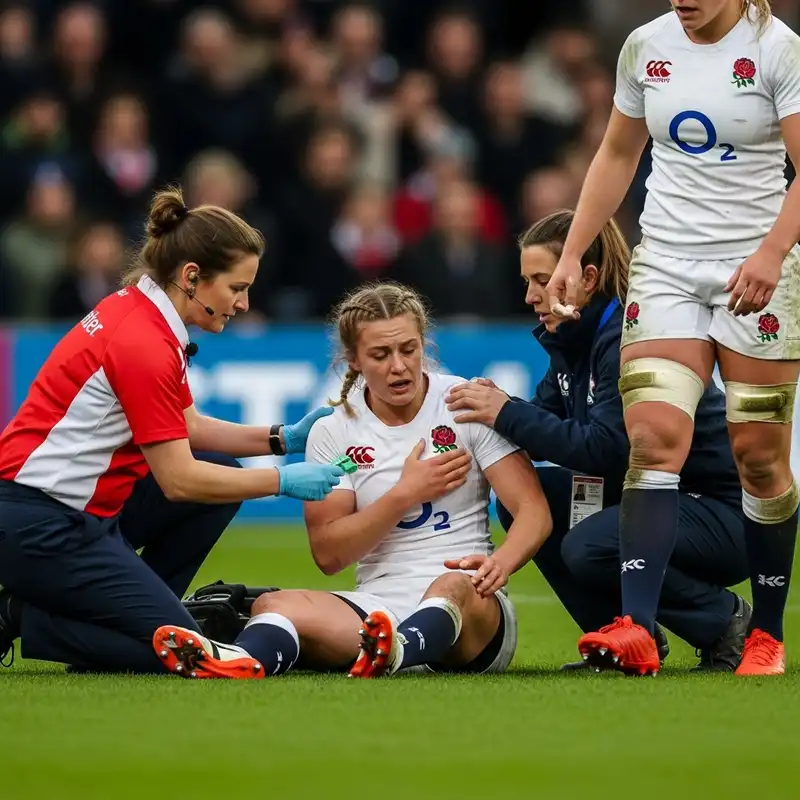
TL;DR
The rapid professionalisation of women's rugby in the UK has brought incredible opportunities, but also significant financial risks. As a leading, FCA-authorised broker of private medical insurance in the UK, WeCovr has helped arrange over 900,000 policies, and we see a growing need for specialised protection for elite female athletes.
Key takeaways
- An MRI scan within days, not weeks.
- An appointment with a top orthopaedic surgeon without a long NHS wait.
- Access to elite private physiotherapy and rehabilitation facilities.
- The Injury: A player suffers a complex knee injury during a match.
- The Diagnosis (PMI): She uses her private health cover to see a specialist the next day and gets an MRI scan within 48 hours, confirming an ACL and meniscus tear.
The rapid professionalisation of women's rugby in the UK has brought incredible opportunities, but also significant financial risks. As a leading, FCA-authorised broker of private medical insurance in the UK, WeCovr has helped arrange over 900,000 policies, and we see a growing need for specialised protection for elite female athletes.
Loss-of-earnings cover and lump sum protection now seen as essential as womens rugby rapidly professionalises
The landscape of women's rugby is transforming. What was once a passion pursued alongside a primary career is now, for a growing number of elite players, a full-time profession with a significant salary. With the Allianz Premiership Women's Rugby (PWR) going from strength to strength and England's Red Roses dominating on the world stage, the financial stakes have never been higher.
This professional era, however, brings a stark reality into focus: the risk of a career-ending injury. A single mistimed tackle or an awkward fall can mean not just the end of a sporting dream, but the sudden loss of a primary income. This is why financial protection, specifically loss-of-earnings cover and lump-sum payments for career-ending injuries, is no longer a 'nice-to-have'—it's an essential part of a professional player's financial toolkit.
The New Professional Era: Understanding the Financial Stakes
The growth of women's rugby in the UK is nothing short of phenomenal. The transition to professionalism has been swift, creating genuine career paths for the nation's most talented players.
Key Growth Indicators in UK Women's Rugby (2024/2025):
- Professional Contracts (illustrative): The Rugby Football Union (RFU) announced contracts for 36 Red Roses players for the 2024/25 season, with salaries reported to be in the region of £45,000 for top players, placing them among the best-paid female athletes in the UK.
- League Investment: The Allianz PWR, the top tier of women's club rugby, is attracting more investment and broadcast coverage than ever before. Clubs are now able to offer competitive salaries, drawing international talent and raising the standard of play.
- Rising Viewership: Broadcast figures for women's rugby matches have seen exponential growth. The 2025 Women's Rugby World Cup, hosted in England, is projected to be the most-watched women's sporting event in history, further cementing the sport's commercial viability.
This professional status means a player's salary isn't just for pocket money; it pays for mortgages, supports families, and builds a foundation for the future. Losing that income due to injury can be financially devastating without the right safety net.
What is Career-Ending Injury Protection?
When we talk about financial protection for athletes, it's crucial to understand it's not a single product. It's typically a combination of two key types of insurance designed to protect you in different scenarios.
-
Loss-of-Earnings Cover (Income Protection): This is your financial lifeline if you're temporarily unable to play due to injury or illness. It pays out a regular, tax-free monthly income (usually 50-70% of your gross salary) after a pre-agreed waiting period. This money ensures you can continue to pay your bills, mortgage, and living expenses while you focus on recovery.
-
Career-Ending Injury Cover (Personal Accident - Lump Sum): This is designed for the worst-case scenario. If you suffer an injury so severe that you can never play professional rugby again, this policy pays out a significant, tax-free lump sum. This capital can be used to clear debts, retrain for a new career, or provide a financial cushion as you transition to life after rugby.
Income Protection vs. Lump Sum Cover: A Simple Comparison
| Feature | Loss-of-Earnings (Income Protection) | Career-Ending Injury (Lump Sum) |
|---|---|---|
| Purpose | Replaces monthly income during temporary inability to play. | Provides a one-off payment for a permanent, career-ending injury. |
| Payout | Regular monthly payments. | A single, large, tax-free lump sum. |
| Trigger | Injury or illness preventing you from playing for a set period. | Medically confirmed permanent disability preventing you from ever playing professionally again. |
| Example Scenario | You rupture your ACL and are out for 12 months. The policy pays your monthly benefit for the duration of your recovery. | A severe spinal injury means you have to retire from the sport immediately. The policy pays your chosen lump sum. |
An expert PMI broker like WeCovr can help you determine the right balance of both types of cover, ensuring you are protected against both short-term and permanent career disruption.
Why Standard Private Medical Insurance Isn't Enough
Many players assume that their club's insurance or a standard private medical insurance UK policy is all they need. While incredibly valuable, PMI serves a different, albeit complementary, purpose.
Critical Point: Standard UK private health insurance is designed to cover the cost of diagnosing and treating acute conditions that arise after your policy begins. It does not cover pre-existing conditions (ailments you had before taking out the policy) or chronic conditions (long-term, manageable illnesses).
PMI is your key to fast-tracking treatment. If you suspect a serious injury, a good PMI policy can get you:
- An MRI scan within days, not weeks.
- An appointment with a top orthopaedic surgeon without a long NHS wait.
- Access to elite private physiotherapy and rehabilitation facilities.
This expedited treatment can be crucial in getting you back on the pitch faster.
However, PMI does not pay your salary while you are recovering. It pays the hospital, the surgeon, and the physio. It does not pay your mortgage, your car finance, or your food bills. This is the crucial gap that Income Protection and Career-Ending Injury cover are designed to fill.
A Player's Journey with Comprehensive Cover:
- The Injury: A player suffers a complex knee injury during a match.
- The Diagnosis (PMI): She uses her private health cover to see a specialist the next day and gets an MRI scan within 48 hours, confirming an ACL and meniscus tear.
- The Treatment (PMI): Surgery is scheduled in a private hospital for the following week, performed by a leading knee surgeon. An intensive rehab programme begins immediately after.
- The Financial Support (Income Protection) (illustrative): After her 4-week deferred period, her Income Protection policy kicks in, paying her £2,500 a month—60% of her salary. This continues for the 12 months she is unable to play, allowing her to focus entirely on her recovery without financial stress.
- The Return: Thanks to fast treatment and stress-free recovery, she returns to play the following season.
Without the Income Protection element, she would have faced a year with little to no income, adding immense pressure and potentially compromising her rehabilitation.
The Unique Injury Risks Facing Female Rugby Players
Rugby is a high-impact sport, and the risk of injury is an accepted part of the game. However, research highlights specific patterns and risks, some of which are more prevalent in female athletes.
A 2023 study published in the British Journal of Sports Medicine on injury trends in professional women's rugby noted that while the overall injury rate is comparable to the men's game, the types of injuries can differ.
Common Injuries in Elite Women's Rugby & Their Impact:
| Injury | Common Cause | Typical Recovery Time | Potential Financial Impact Without Cover |
|---|---|---|---|
| Anterior Cruciate Ligament (ACL) Rupture | Twisting, sudden change of direction, contact. | 9-12 months | Severe. A full season's lost earnings. |
| Concussion | Head impact from tackles or ground contact. | Varies (days to months). | Can be significant if symptoms persist, leading to prolonged time out of the game. |
| Shoulder Dislocation / AC Joint Sprain | Tackling or falling on the shoulder. | 6 weeks to 6 months (if surgery is needed). | Moderate to severe. Potential loss of several months' income. |
| Ankle Ligament Sprains / Fractures | Rolling the ankle in contact or on uneven ground. | 4-12 weeks | Minor to moderate. Could result in missing crucial games and bonuses. |
| Spinal or Neck Injury | Scrum collapses, high tackles, awkward falls. | Varies (can be career-ending). | Catastrophic. The most serious risk, potentially leading to permanent retirement. |
Studies have also indicated that female athletes may have a higher predisposition to certain injuries like ACL tears, potentially due to biomechanical and hormonal differences. This makes having a robust financial plan even more critical.
How to Build Your Financial Fortress: A Step-by-Step Guide
Securing your financial future as a professional athlete requires a proactive, structured approach. Don't wait for an injury to happen.
Step 1: Understand Your Baseline Cover
Your first port of call is to find out exactly what insurance your club and the RFU provide. Request the policy documents and review them carefully. Ask specific questions:
- What is the weekly benefit if I'm injured? For how long does it pay out?
- Is there a lump sum payment for permanent disability? How much is it?
- Does the cover apply to injuries sustained outside of club training and matches?
- What are the key exclusions?
Often, this group cover is basic and may not be sufficient to cover all your financial commitments. It's a great starting point, but it's rarely a complete solution.
Step 2: Calculate Your Personal Needs
This is a simple budgeting exercise. Be honest and thorough.
- Monthly Outgoings: List everything—mortgage/rent, council tax, utilities, food, car payments, phone bill, subscriptions, etc. This is the minimum monthly income you need to replace.
- Lump Sum Goal: If you had to stop playing tomorrow, what would you need? Consider paying off your mortgage, funding a 3-year university degree to retrain, and having a buffer for 6-12 months of living expenses. This will help you determine the level of Career-Ending Injury cover you need.
Step 3: Explore a Tailored Insurance Portfolio
A professional athlete's protection isn't just one policy. It's a combination designed to cover different risks. Working with a specialist broker like WeCovr can help you build the right package.
| Type of Cover | What It Does | Who It's For |
|---|---|---|
| Private Medical Insurance (PMI) | Pays for private diagnosis and treatment. | Everyone. Essential for fast-tracking your return to play. |
| Income Protection | Replaces your monthly income if you can't play due to injury/illness. | Every professional. Protects your lifestyle during recovery. |
| Career-Ending Injury Cover | Pays a lump sum if you are permanently disabled from playing. | Every professional. Your financial reset button if your career ends. |
| Critical Illness Cover | Pays a lump sum on diagnosis of a specific serious illness (e.g., cancer, stroke). | Recommended. Provides protection against major health events unrelated to injury. |
WeCovr offers discounts on other policies, such as life insurance, when you purchase PMI or income protection, making it more affordable to build a comprehensive portfolio.
Choosing a strong fit for your needs: The Devil is in the Detail
When comparing policies, especially Income Protection, the policy wording is everything. A cheap policy with poor terms is a false economy.
Key Features to Scrutinise:
- Definition of Incapacity: This is the most important clause. You must have an 'Own Occupation' definition. This means the policy will pay out if you are unable to perform your specific job—i.e., playing professional rugby. A lesser 'Any Occupation' definition would only pay if you were unable to do any job, which is useless for an athlete.
- Deferred Period: This is the waiting period before payments begin (e.g., 4, 8, 13, 26 weeks). A longer deferred period means a lower premium, but you need to be sure you have enough savings to cover that gap.
- Benefit Period: How long will the policy pay out for? This can be a fixed term (e.g., 2 or 5 years) or until a set age (e.g., 40, which might be a typical retirement age for a rugby player).
- Guaranteed vs. Reviewable Premiums: Guaranteed premiums are fixed for the life of the policy, providing certainty. Reviewable premiums may start cheaper but can increase significantly over time.
- Indexation: Choose a policy that is 'index-linked' or 'inflation-proofed'. This ensures your level of cover automatically increases each year to keep pace with the cost of living.
Navigating these options can be complex. An independent broker's expertise is invaluable in finding the best PMI provider and Income Protection policy for your unique circumstances.
A Holistic Approach: Proactive Wellness & Injury Prevention
Insurance is your safety net, but the best strategy is always to minimise the risk of needing it. A professional mindset extends beyond the pitch and into every aspect of your life.
- Nutrition: Fuelling for performance and recovery is non-negotiable. A diet rich in protein supports muscle repair, while anti-inflammatory foods like oily fish, berries, and leafy greens can help manage the systemic stress of intensive training. Using a tool like WeCovr's complimentary CalorieHero AI calorie tracking app can help you precisely manage your nutritional intake to meet your performance goals.
- Sleep: This is the most powerful recovery tool available. Aim for 8-10 hours of quality sleep per night. It's during sleep that your body produces growth hormone, essential for repairing damaged tissues.
- Strength & Conditioning: Work closely with your S&C coach to develop a programme that not only enhances performance but also targets your specific weak spots to build resilience against injury. Pre-hab is just as important as rehab.
- Mental Health: The fear of injury, the pressure of performance, and the reality of a potential career-ending event can take a mental toll. Organisations like the Rugby Players Association (RPA) offer confidential mental health support. Acknowledging and addressing these pressures is a sign of strength.
How WeCovr Supports UK's Female Rugby Professionals
At WeCovr, we understand that the needs of a professional athlete are unique. We aren't just a generic comparison site; we are FCA-authorised brokers who provide expert, tailored advice.
- Specialist Knowledge: We know the importance of 'Own Occupation' cover and work with insurers who provide it.
- Market Access: We compare policies from a wide panel of leading UK insurers to find the right combination of private medical insurance, income protection, and lump sum cover for you.
- No Cost to You: Our brokerage service is provided at no extra cost. Our commission is paid by the insurer you choose.
- High Customer Satisfaction: Our focus on clear, honest advice and finding the right solution for our clients is reflected in our consistently high customer satisfaction ratings.
- Added Value: We go beyond just insurance, offering complimentary access to our CalorieHero app and discounts on other essential policies to provide a holistic approach to your financial and physical wellbeing.
The era of professional women's rugby is here. With it comes the responsibility to protect the career you have worked so hard to build. Don't leave your financial future to chance.
What is the difference between Income Protection and Critical Illness Cover for a rugby player?
Do I need to declare that I play professional rugby when applying for insurance?
My club provides insurance. Why do I need my own private policy?
Does private medical insurance (PMI) cover injuries sustained while playing rugby?
Ready to secure your career? Chat with a WeCovr expert today for a free, no-obligation review of your protection needs and get tailored quotes that give you peace of mind.
Sources
- NHS England: Waiting times and referral-to-treatment statistics.
- Office for National Statistics (ONS): Health, mortality, and workforce data.
- NICE: Clinical guidance and technology appraisals.
- Care Quality Commission (CQC): Provider quality and inspection reports.
- UK Health Security Agency (UKHSA): Public health surveillance reports.
- Association of British Insurers (ABI): Health and protection market publications.
Disclaimer: This is general guidance only and does not constitute formal tax or financial advice. Tax treatment depends on individual circumstances, policy terms, and HMRC interpretation, which cannot be guaranteed in advance. Whenever applicable, businesses and individuals should always consult a qualified accountant or tax adviser before arranging such policies.
Start with your Protection Score, then decide whether private health cover is the right fit
Check where health access sits in your overall protection picture before deciding whether to compare private health cover.
Spot whether NHS access risk is the real issue
See if PMI is the gap to fix first
Get health insurance help only if it makes sense for you
Get your score
Start with your protection score
Check your current position first, then get health insurance help if you need it.
Check your current resilience
Score your income, health access and family protection position in a few minutes.
See where private cover helps
Understand whether faster diagnosis and treatment is a priority gap.
Continue to tailored PMI help
If health access is the issue, continue to tailored PMI help.
What you get
A quick view of your current protection position
A clearer idea of where the biggest gaps may be
A direct route to tailored help if you want it