TL;DR
Welcome to WeCovr's essential 2026 guide for UK businesses. As an FCA-authorised broker that has helped arrange over 900,000 policies, we understand that implementing private medical insurance is a powerful tool for employee retention. This guide will walk you through everything you need to know about corporate health cover.
Key takeaways
- Record NHS Waiting Lists: NHS England data from late 2024 shows millions of people are waiting for routine hospital treatment. These long waits can turn a manageable health issue into a long-term absence, impacting both the employee's quality of life and your business's productivity.
- Rising Sickness Absence: The Office for National Statistics (ONS) reported that in 2023, an estimated 185.6 million working days were lost because of sickness or injury, the highest it has been in over a decade. A significant portion of this is due to long-term sickness.
- The War for Talent: Surveys consistently show that a comprehensive benefits package is a key differentiator for job seekers. A 2024 survey by the UK public and industry sources of Personnel and Development (CIPD) highlighted that health and well-being benefits are among the most valued by employees, second only to financial benefits.
- GP Visit: Sarah visits her NHS GP, who recommends seeing an orthopaedic specialist. The NHS waiting list for this is several months long.
- GP Referral: With PMI, Sarah's GP can provide an 'open referral' to a private specialist.
Welcome to WeCovr's essential 2026 guide for UK businesses. As an FCA-authorised broker that has helped arrange over 900,000 policies, we understand that implementing private medical insurance is a powerful tool for employee retention. This guide will walk you through everything you need to know about corporate health cover.
WeCovr's HR-focused guide to implementing PMI for employee retention
In today's competitive job market, attracting and keeping the best talent is more than just about salary. Employees are increasingly looking for a supportive work environment and a benefits package that genuinely cares for their well-being. This is where corporate Private Medical Insurance (PMI) becomes not just a perk, but a strategic business tool.
This comprehensive guide is designed for HR managers, business owners, and decision-makers. We'll break down everything you need to consider when setting up a company health insurance scheme, from understanding the benefits to navigating the implementation process, ensuring you can make the best decision for your team and your business.
The Shifting UK Workforce Landscape: Why Retention is Your 2026 Priority
The world of work has changed. The "Great Resignation" of recent years has settled into a new norm where employees have higher expectations. They are more willing to switch jobs for better benefits, a healthier work-life balance, and an employer who invests in their health.
Consider these key factors shaping the 2026 business environment:
- Record NHS Waiting Lists: NHS England data from late 2024 shows millions of people are waiting for routine hospital treatment. These long waits can turn a manageable health issue into a long-term absence, impacting both the employee's quality of life and your business's productivity.
- Rising Sickness Absence: The Office for National Statistics (ONS) reported that in 2023, an estimated 185.6 million working days were lost because of sickness or injury, the highest it has been in over a decade. A significant portion of this is due to long-term sickness.
- The War for Talent: Surveys consistently show that a comprehensive benefits package is a key differentiator for job seekers. A 2024 survey by the UK public and industry sources of Personnel and Development (CIPD) highlighted that health and well-being benefits are among the most valued by employees, second only to financial benefits.
For a small or medium-sized enterprise (SME), the loss of even one key employee to a competitor or long-term sickness can be disruptive and costly. Corporate PMI directly addresses these challenges.
What Exactly is Corporate Private Medical Insurance (PMI)?
In simple terms, private medical insurance is a policy that covers the costs of private healthcare for your employees. It's designed to work alongside the NHS, giving your team members faster access to specialists, diagnostic tests, and treatment for specific conditions.
The core purpose of PMI is to help diagnose and treat acute conditions quickly, getting your employee back on their feet and back to work sooner.
Acute vs. Chronic Conditions: The Golden Rule of PMI
This is the most important concept to understand about private health cover in the UK.
- Acute Condition: A disease, illness, or injury that is likely to respond quickly to treatment and lead to a full recovery. Examples include joint pain requiring a hip replacement, cataracts, hernias, or most infections. PMI is designed to cover these.
- Chronic Condition: A disease, illness, or injury that has one or more of the following characteristics: it needs long-term monitoring, is incurable, has no known cure, or is likely to recur. Examples include diabetes, asthma, high blood pressure, and arthritis.
Crucially, standard UK private medical insurance does not cover the routine management of chronic conditions. It is also not designed to cover any pre-existing conditions an employee had before joining the policy, unless you opt for a specific type of underwriting (which we'll cover later).
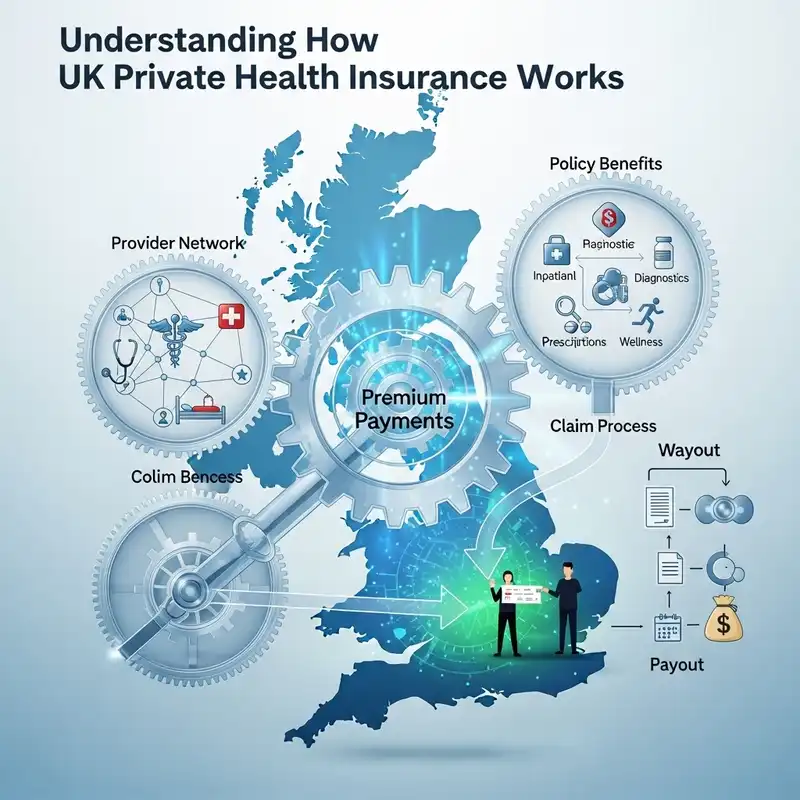
How a Typical PMI Journey Works for an Employee
Imagine one of your team members, Sarah, develops persistent knee pain. Here’s how a PMI policy would help:
- GP Visit: Sarah visits her NHS GP, who recommends seeing an orthopaedic specialist. The NHS waiting list for this is several months long.
- GP Referral: With PMI, Sarah's GP can provide an 'open referral' to a private specialist.
- Contact the Insurer: Sarah calls her PMI provider, provides the referral details, and gets authorisation for a consultation.
- See a Specialist: The insurer provides a list of approved specialists. Sarah can often book an appointment within days or weeks, not months.
- Diagnosis & Treatment: The specialist diagnoses a torn meniscus and recommends keyhole surgery. The insurer authorises the procedure.
- Private Treatment: Sarah has the surgery in a comfortable private hospital, choosing a time that suits her.
- Recovery: After the procedure and any included post-operative physiotherapy, Sarah makes a full recovery and returns to work, having avoided a long and anxious wait.
The Tangible Business Benefits of a Company Health Insurance Scheme
Investing in PMI offers a clear return through a healthier, more stable, and more engaged workforce.
Slashing Sickness Absence
The primary financial benefit of corporate PMI is reducing the length of staff absences. As the ONS data shows, millions of working days are lost each year. Much of this is due to staff waiting for diagnostics or treatment on the NHS.
By providing access to prompt private medical care, you can significantly shorten this waiting period. An employee who might have been off for six months waiting for a hip replacement could be back at their desk in six to eight weeks.
Example: A small marketing agency with 15 staff members implements a PMI scheme. A senior designer needs gallbladder surgery. The NHS wait is 9 months. Privately, they have the surgery within 4 weeks. The business avoids a long period of reduced capacity, project delays, and the cost of hiring a temporary contractor.
Boosting Productivity and Morale
It's not just about absence. An employee worried about a health issue or suffering from pain while waiting for treatment is unlikely to be fully productive. This 'presenteeism'—being at work but not fully functioning—can be as costly as absenteeism.
Providing health insurance sends a powerful message: you care. This fosters loyalty, improves morale, and creates a positive company culture where employees feel valued and supported.
Winning the War for Talent
In a competitive recruitment market, a strong benefits package can be the deciding factor. When a candidate has two similar salary offers, the company offering private health cover often has the edge. It positions your organisation as a premium employer that invests in its people. This is especially true for senior roles, where candidates expect comprehensive benefits.
A Practical Guide for HR: Implementing Your PMI Scheme Step-by-Step
Setting up a corporate health insurance plan can seem daunting, but it can be broken down into manageable steps.
Step 1: Define Your "Why" and "Who"
Before you look at policies, clarify your goals.
- Objectives: Is your main goal to reduce sickness absence, boost retention, or enhance your recruitment appeal? Your answer will shape the type of cover you choose.
- Budget: How much can you afford to invest per employee, per month? Prices can range from £30 per month for basic cover for a young employee, to over £100 for comprehensive cover for an older employee.
- Who to Cover: Will you cover all employees? Only senior management? Will you give employees the option to add their families at their own expense? Most insurers require a minimum number of employees to start a group scheme (often as few as two).
Step 2: Understand the Core Components of a PMI Policy
PMI policies are built in layers. You start with core cover and can add optional extras to suit your budget and needs.
| Benefit Type | Description | Is it Core or Optional? |
|---|---|---|
| In-Patient Cover | Covers costs when an employee is admitted to hospital and requires a bed overnight. This includes surgery, hospital fees, and specialist consultations. | Core |
| Day-Patient Cover | Covers procedures where a hospital bed is needed, but the patient is admitted and discharged on the same day (e.g., endoscopy). | Core |
| Out-Patient Cover | Covers costs for consultations, diagnostic tests, and scans that don't require hospital admission. This is vital for speedy diagnosis. | Often Optional or with a financial limit |
| Cancer Cover | Comprehensive cover for the diagnosis and treatment of cancer, including chemotherapy, radiotherapy, and surgery. | Core (but levels vary) |
| Mental Health Cover | Provides access to psychiatrists, psychologists, and therapists. A highly valued benefit in today's world. | Optional |
| Therapies Cover | Covers treatments like physiotherapy, osteopathy, and chiropractic care, which are key for musculoskeletal issues. | Optional |
| Dental & Optical | Provides money back towards routine check-ups, glasses, and dental treatments. | Optional |
A basic, budget-friendly policy might only cover in-patient and day-patient care, while a comprehensive scheme would include full out-patient cover, mental health, and therapies.
Step 3: Choosing the Right Underwriting Method
Underwriting is how an insurer assesses risk and decides what they will and won't cover. For group schemes, there are three main options.
| Underwriting Method | How it Works | Best For |
|---|---|---|
| Moratorium (Mori) | The simplest option. No medical questionnaire is needed upfront. The policy automatically excludes any condition the employee has had symptoms of, or received treatment for, in the 5 years before joining. If the employee then goes 2 continuous years on the policy without any issues relating to that condition, it may become eligible for cover. | Small groups (2-20 employees) looking for a quick and easy setup. |
| Full Medical Underwriting (FMU) | Each employee completes a detailed health questionnaire. The insurer reviews their medical history and lists specific conditions that will be permanently excluded from the policy. It's more admin upfront but provides absolute clarity on what is and isn't covered from day one. | Small groups who want certainty and transparency about exclusions from the start. |
| Medical History Disregarded (MHD) | The premium option. The insurer agrees to cover all eligible acute conditions, including pre-existing ones. This is a powerful benefit but is only available to larger groups (typically 20+ employees) and comes at a higher premium. | Larger companies looking to offer the most comprehensive and attractive benefit possible. |
Step 4: Comparing the Market (The Smart Way)
You could go directly to insurers, but this is time-consuming and you'll only see one view of the market. The most effective way to find the best private medical insurance UK policy is to use an independent broker like WeCovr.
An expert broker:
- Saves You Time: We do the legwork, gathering quotes from all the leading providers.
- Provides Impartial Advice: We are not tied to any single insurer. Our goal is to find the policy that best fits your company's specific needs and budget.
- Understands the Fine Print: We can explain the subtle but important differences between policies that you might otherwise miss.
- Has Market Clout: Brokers can often negotiate better terms or highlight special offers you wouldn't find by going direct.
- Costs You Nothing: Our service is free. We are paid a commission by the insurer you choose, which is already built into the policy price.
Step 5: Launching and Communicating Your New Benefit
Once you've chosen a policy, the final step is to roll it out to your team. Clear communication is key to ensuring employees understand and value their new benefit.
- Create a Simple Guide: Don't just hand out the insurer's dense policy document. Create a one-page summary that explains what's covered and how to make a claim.
- Hold a Launch Meeting: Invite a representative from the insurer or your broker to present the scheme and answer questions.
- Provide Digital Resources: Make information easily accessible on your company intranet.
- Remind Staff Regularly: Mention the benefit in newsletters and during onboarding for new hires.
A Look at the UK's Leading PMI Providers
The UK private health cover market is dominated by a few key players, each with their own strengths. An independent broker can help you navigate the differences.
| Provider | Known For | Typical Features |
|---|---|---|
| Bupa | One of the oldest and most recognised names in UK health insurance. | Extensive hospital network, strong cancer cover, focus on clinical excellence. |
| Aviva | A major UK insurer offering a wide range of products. Known for their "Expert Select" hospital list to manage costs. | Flexible policies, strong digital tools, and a large, vetted network of specialists. |
| AXA Health | A global insurance giant with a strong UK presence. | Comprehensive mental health pathways, access to a 24/7 virtual GP service (Doctor@Hand), flexible hospital options. |
| Vitality | Unique in its focus on prevention and wellness. Rewards employees for healthy living. | Points-based system rewarding activity. Discounts on gym memberships, fitness trackers, and healthy food. |
This table is for illustrative purposes. The specific features and benefits will depend on the exact policy you choose.
Beyond Treatment: Integrating Wellness into Your Corporate Culture
Modern health insurance is evolving beyond just paying for treatment. The best PMI providers now offer a suite of tools to help employees stay healthy in the first place. This proactive approach benefits everyone.
These often include:
- Virtual GP Services: 24/7 access to a GP via phone or video call, reducing time off work for minor appointments.
- Employee Assistance Programmes (EAPs): Confidential support lines for issues like stress, debt, or legal worries.
- Mental Health Support: Access to self-help apps, online CBT courses, and pathways to therapy.
- Wellness Apps & Discounts: Many insurers, particularly Vitality, offer apps to track activity and reward healthy behaviour.
WeCovr's Added Value for Your Team
At WeCovr, we believe in a holistic approach to well-being. That's why, when your company arranges a PMI or Life Insurance policy through us, your employees receive additional benefits at no extra cost:
- Complimentary Access to CalorieHero: Our proprietary AI-powered calorie and nutrition tracking app to help your team make healthier food choices.
- Discounts on Other Cover: Employees can also get discounts on other personal insurance policies, like life insurance or income protection, helping their salary go further.
Understanding the Costs and Tax Implications of PMI
The premium for a corporate PMI scheme is calculated based on several factors:
- Average Age of Employees: Older employees generally mean higher premiums.
- Location: Premiums can be higher in central London and other major cities where private hospital costs are greater.
- Level of Cover: A comprehensive policy with full out-patient and therapies cover will cost more than a basic in-patient only plan.
- Underwriting: A Medical History Disregarded (MHD) policy will be more expensive than a Moratorium or FMU policy.
- Excess (illustrative): You can reduce premiums by adding a policy excess (e.g., the employee pays the first £100 of any claim).
Is Company Health Insurance a Taxable Benefit?
Yes. If the business pays the premium for an employee's private medical insurance, it is considered a 'Benefit in Kind' (BIK) by HMRC.
- This means the business must report the value of the benefit (the cost of the premium) on a P11D form for each employee covered.
- The employee will then pay income tax on the value of that premium.
- The business will also have to pay Class 1A National Insurance Contributions on the value of the benefit.
While it is a taxable benefit, the value to the employee in terms of peace of mind and fast access to healthcare almost always outweighs the modest tax cost.
Is corporate health insurance a taxable benefit in the UK?
What is the difference between an acute and a chronic condition for PMI?
Can we cover employees' families on our company health insurance scheme?
How small can a business be to get a corporate health insurance policy?
Your Next Step to a Healthier, Happier Workforce
Implementing a private medical insurance scheme is one of the most meaningful investments you can make in your people. It protects their health, provides peace of mind, and demonstrates that you are an employer who truly cares. In the competitive landscape of 2026, it's a benefit that delivers a powerful return on investment through improved retention, productivity, and morale.
Navigating the market to find the right balance of cover and cost can be complex. Let us make it simple for you.
Ready to explore the best private medical insurance options for your team? Contact WeCovr today for a free, no-obligation market comparison and expert advice tailored to your business.
Sources
- NHS England: Waiting times and referral-to-treatment statistics.
- Office for National Statistics (ONS): Health, mortality, and workforce data.
- NICE: Clinical guidance and technology appraisals.
- Care Quality Commission (CQC): Provider quality and inspection reports.
- UK Health Security Agency (UKHSA): Public health surveillance reports.
- Association of British Insurers (ABI): Health and protection market publications.