TL;DR
As an FCA-authorised expert broker that has helped arrange over 900,000 policies, WeCovr offers clear guidance on private medical insurance in the UK. This article explores how you can leverage your PMI for fast, convenient access to digital GP services, transforming how you manage your day-to-day health concerns.
Key takeaways
- Speed: Access a GP within hours, not days or weeks. Same-day appointments are the standard.
- Convenience: No need to travel to a clinic, take time off work, or arrange childcare. Consultations can happen from your home, office, or even while you're away in the UK.
- Accessibility: Services are typically available 24/7, 365 days a year, providing peace of mind for you and your family.
- Discretion: Discuss sensitive health issues in a private, secure environment.
- Check Your Policy: First, confirm that your PMI policy includes a digital GP service. Most do, but it's always wise to check your policy documents or member handbook. This benefit is often listed under "Value-Added Services" or "Digital Health."
As an FCA-authorised expert broker that has helped arrange over 900,000 policies, WeCovr offers clear guidance on private medical insurance in the UK. This article explores how you can leverage your PMI for fast, convenient access to digital GP services, transforming how you manage your day-to-day health concerns.
Digital Gp Services Virtual Consultations Through Your Health
Gone are the days of waiting weeks for a GP appointment. The landscape of UK healthcare is rapidly evolving, and one of the most significant advancements for those with private medical insurance (PMI) is the rise of digital GP services. These virtual consultations offer a fast, convenient, and effective way to get medical advice, prescriptions, and referrals, often from the comfort of your own home.
This comprehensive guide will walk you through everything you need to know about using video GP appointments through your health insurance policy.
The Digital Health Revolution: Why Virtual GP Services are More Important Than Ever
Getting a timely GP appointment on the NHS can be challenging. Recent NHS data highlights that while many patients have a positive experience, millions face long waits. The NHS GP Patient Survey often reveals that a significant portion of patients who want a same-day or next-day appointment are unable to get one.
This is where private medical insurance steps in, not just for specialist treatment, but for initial primary care access too. Digital GP services, included as a value-added benefit with most modern PMI policies, bridge this gap.
Key benefits driving the shift to virtual care:
- Speed: Access a GP within hours, not days or weeks. Same-day appointments are the standard.
- Convenience: No need to travel to a clinic, take time off work, or arrange childcare. Consultations can happen from your home, office, or even while you're away in the UK.
- Accessibility: Services are typically available 24/7, 365 days a year, providing peace of mind for you and your family.
- Discretion: Discuss sensitive health issues in a private, secure environment.
What Exactly is a Digital GP Service?
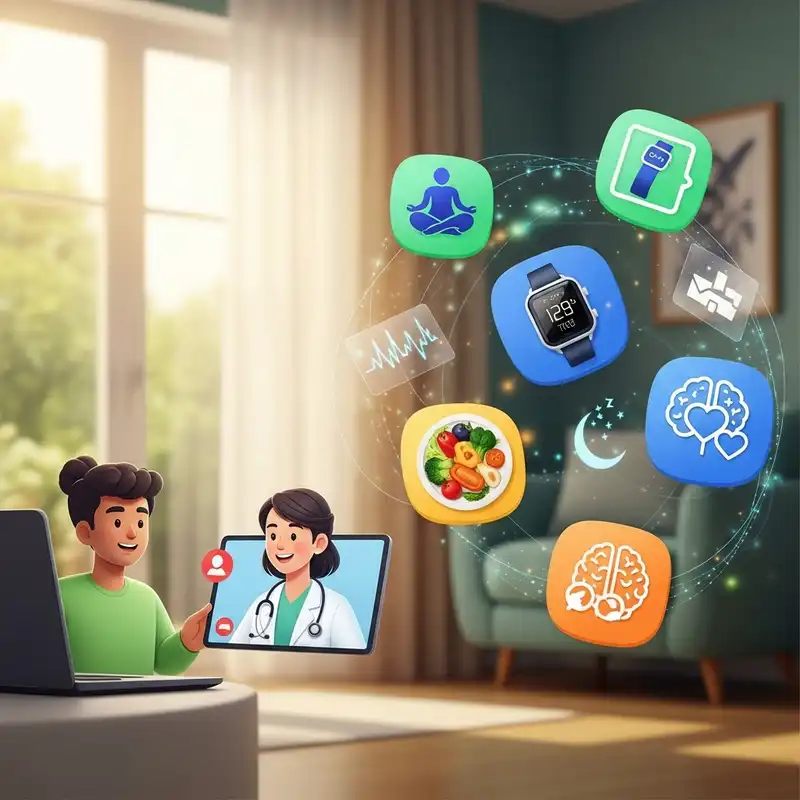
A digital GP service, also known as a virtual GP or telehealth service, provides remote consultations with a qualified, UK-based General Practitioner via a digital device. Think of it as a modern-day house call, delivered through your smartphone, tablet, or computer.
These services typically offer:
- Video Consultations: A face-to-face discussion with a GP to discuss symptoms, show visible issues (like a rash or swelling), and receive a diagnosis.
- Phone Consultations: A simple telephone call for when a video link isn't necessary or possible.
- Online Messaging: Some platforms allow for secure text-based conversations with a clinician for simple queries.
What Can a Virtual GP Help With?
Virtual GPs are equipped to handle a wide range of common, acute health conditions—that is, illnesses that are short-term and curable.
Common issues treated by digital GPs include:
- Coughs, colds, and flu-like symptoms
- Skin conditions, rashes, and acne
- Allergies and hay fever
- Stomach problems, such as diarrhoea or constipation
- Headaches and migraines
- Urinary tract infections (UTIs)
- Back pain and other musculoskeletal issues
- Minor infections
- Mental health concerns like stress, anxiety, and low mood
What are the Limitations?
It's crucial to understand that digital GP services are not a replacement for emergency care.
You should NOT use a virtual GP for:
- Life-threatening emergencies: Chest pain, severe bleeding, suspected stroke, or difficulty breathing. In these cases, call 999 or go to A&E immediately.
- Conditions requiring a physical examination: Issues that need a hands-on check, like a complex lump or certain gynaecological exams.
- Routine procedures: Vaccinations, blood tests, or smear tests. These are typically handled by your NHS GP or a private clinic.
Crucial Note on Health Insurance Coverage: Standard UK private medical insurance, including any integrated digital GP services, is designed for acute conditions that arise after your policy begins. It does not cover pre-existing conditions (illnesses you had before taking out the policy) or chronic conditions (long-term illnesses that require ongoing management, like diabetes, asthma, or high blood pressure).
How to Access a Video GP Through Your Health Insurance: A Step-by-Step Guide
Accessing your virtual GP benefit is usually straightforward. While the exact process varies slightly between insurers, the core steps are consistent.
-
Check Your Policy: First, confirm that your PMI policy includes a digital GP service. Most do, but it's always wise to check your policy documents or member handbook. This benefit is often listed under "Value-Added Services" or "Digital Health."
-
Download the App: The vast majority of insurers provide access via a dedicated smartphone app. Search for your insurer's app (e.g., Bupa Blua, Aviva DigiCare+, Vitality GP) on the Apple App Store or Google Play Store.
-
Register Your Account: You'll need to create an account using your policy number and some personal details. This is a one-time setup process.
-
Book Your Appointment: Once registered, you can book a consultation. You will typically be asked for:
- The reason for your appointment.
- Your preferred consultation type (video or phone).
- Your availability. Most services will show you available slots, often within the next few hours.
-
Attend the Consultation: At the scheduled time, you'll receive a notification to join the video call through the app. Ensure you have a stable internet connection and are in a quiet, private location.
-
Receive Your Outcome: After the consultation, the GP will summarise the discussion and outline the next steps. This could be:
- Medical advice and reassurance.
- A private prescription.
- A referral for specialist treatment.
The Power of Same-Day Availability
The single greatest advantage of private digital GP services is the speed of access. While the NHS strives to provide excellent care, waiting times for non-urgent appointments can stretch. According to the NHS GP Patient Survey, it's not uncommon for patients to wait over a week for a routine appointment.
With a PMI-linked digital GP, "waiting" is almost a thing of the past. Most providers guarantee appointments on the same day, often within a two-to-four-hour window. This immediacy is invaluable when you or a family member feels unwell and needs quick reassurance or treatment.
Real-Life Example: Sarah, a freelance graphic designer, wakes up with a painful, swollen eye. She has a critical project deadline and can't afford to spend half the day at a walk-in centre. Instead, she opens her health insurer's app, books a video GP appointment for 9:30 am, and by 9:45 am has a diagnosis of conjunctivitis and a private prescription sent to her local pharmacy. She picks it up an hour later and is back to work, treatment in hand.
Private Prescriptions: How They Work and What You Pay
If the virtual GP determines you need medication, they will issue a private prescription. This is different from an NHS prescription.
- How it's Issued: The GP electronically generates the prescription. You'll usually receive a code or link in the app or via email.
- Collection & Delivery: You have two main options:
- Pharmacy Collection: Take the prescription code to a local pharmacy of your choice to have it fulfilled.
- Home Delivery: Many services offer a delivery option, where the medication is posted directly to your address, often arriving the next day.
- Cost: This is a key point. The cost of a private prescription is not typically covered by your private medical insurance policy. You will need to pay for the full cost of the medication yourself at the pharmacy, which can be more or less than the standard NHS prescription charge depending on the drug. The consultation with the GP, however, is covered by your plan.
Mental Health Support: Virtual Consultations for Your Mind
Leading private health insurers recognise that mental wellbeing is just as important as physical health. As a result, many digital health platforms now integrate direct access to mental health support.
This often includes:
- Video Consultations with Therapists: Access to qualified counsellors, psychologists, or cognitive behavioural therapists via video call.
- Targeted Support: Help for common issues like anxiety, depression, stress, bereavement, and relationship problems.
- Discreet & Fast Access: It provides a low-barrier way to seek professional help without a long wait for a referral.
This virtual support can be a vital first step for someone struggling with their mental health, offering early intervention that can prevent issues from escalating.
Which UK Insurers Offer the Best Digital GP Access?
The quality and features of digital GP services can be a deciding factor when choosing a private medical insurance provider. While most offer a solid service, there are differences in availability, technology, and integration with other wellness benefits.
Here’s a comparison of the digital GP offerings from major UK insurers in 2025:
| Insurer | Digital Service Name | Availability | Key Features & Notes |
|---|---|---|---|
| Bupa | Bupa Blua Health | 24/7, 365 days a year | Powered by Teladoc Health. Offers GP appointments, prescription services, and open referrals. Also provides access to the "Anytime HealthLine" for general medical advice from nurses. |
| AXA Health | Doctor at Hand | 24/7, 365 days a year | Also powered by Teladoc Health, offering a very similar, robust service to Bupa. Fast access to GPs via video. Provides private prescriptions and specialist referrals. |
| Aviva | Aviva DigiCare+ (GP24) | 24/7, 365 days a year | A comprehensive wellness app. GP24 provides unlimited virtual GP consultations. Also includes mental health support, nutritional advice, and an annual health check. |
| Vitality | Vitality GP | Bookable via app | Appointments are usually available same-day. A key part of their "shared value" model, integrated with their wellness programme that rewards healthy living. Referrals are seamlessly integrated into the Vitality care pathway. |
| The Exeter | HealthWise | On-demand GP service | Provided via an easy-to-use app. HealthWise offers remote GP appointments, second medical opinions, and access to physiotherapy and mental health support, often included as standard. |
When deciding, it's not just about 24/7 access but also how the service fits into the broader policy. A knowledgeable PMI broker like WeCovr can help you compare these subtle differences to find the best private health cover for your specific needs, at no extra cost to you.
Beyond the GP: The Wider Digital Wellness Ecosystem
The best PMI providers are now offering more than just a virtual GP. They provide a complete digital health ecosystem designed to keep you well, not just treat you when you're sick.
These benefits can include:
- Symptom Checkers: AI-powered tools to help you understand your symptoms before you even speak to a doctor.
- Mental Health Apps: Access to mindfulness apps like Headspace or guided therapy programmes.
- Physiotherapy Support: Initial assessments with a physiotherapist via video to help diagnose musculoskeletal problems.
- Nutritional Advice: Consultations with registered nutritionists or dietitians.
- Fitness Programmes: Discounts on gym memberships and wearable tech, often integrated with the insurer's app to reward activity.
At WeCovr, we enhance this further. When you purchase a policy through us, we provide complimentary access to CalorieHero, our AI-powered calorie and nutrition tracking app, to support your health goals. We also offer discounts on other types of insurance, like life or income protection, when you take out a PMI policy with us.
How a Broker Helps You Choose
The private medical insurance UK market is crowded with options. Choosing a policy based on its digital GP service alone can be tricky. This is where an independent broker adds significant value.
An expert broker like WeCovr will:
- Understand Your Needs: We take the time to learn what's important to you—be it 24/7 GP access, mental health support, or family cover.
- Compare the Market: We analyse policies from a wide range of top insurers to find the one that best matches your requirements and budget.
- Explain the Details: We cut through the jargon and explain the key differences in coverage, from digital services to cancer care and outpatient limits.
- Provide Ongoing Support: Our service doesn't stop once you buy. We're here to help with claims and renewals, ensuring your policy continues to serve you well.
Do I have to pay for prescriptions from a digital GP?
Can I use a virtual GP service for my children?
Will using the digital GP service affect my No Claims Discount (NCD)?
What happens if the digital GP says I need to see a specialist?
Ready to explore how private medical insurance can give you fast, digital access to healthcare?
Get Your Free, No-Obligation Quote from WeCovr Today!
Sources
- NHS England: Waiting times and referral-to-treatment statistics.
- Office for National Statistics (ONS): Health, mortality, and workforce data.
- NICE: Clinical guidance and technology appraisals.
- Care Quality Commission (CQC): Provider quality and inspection reports.
- UK Health Security Agency (UKHSA): Public health surveillance reports.
- Association of British Insurers (ABI): Health and protection market publications.