TL;DR
We build careers, businesses, and knowledge. We pour our energy into personal growth, nurturing our families, and creating a legacy we can be proud of. This is our life's masterpiece, a complex and beautiful structure built brick by brick with ambition, love, and hard work.
Key takeaways
- Bypass Waiting Lists: Get seen by a specialist and receive treatment far quicker than might be possible on the NHS.
- Choice and Control: You often have more choice over the specialist who treats you and the hospital you are treated in.
- Access to Specialist Drugs and Treatments: Some policies provide access to new, innovative drugs or treatments that may not yet be available on the NHS due to cost or other factors.
- Comfort and Privacy: Recover in a private room with en-suite facilities, more flexible visiting hours, and better food menus.
- Assess Your Needs: Think about your circumstances. What are your monthly outgoings? Do you have a mortgage? Do you have children or other dependants? What would happen if your income stopped tomorrow?
Future Proof Your Growth the Unseen Foundation
We spend our lives building. We build careers, businesses, and knowledge. We pour our energy into personal growth, nurturing our families, and creating a legacy we can be proud of. This is our life's masterpiece, a complex and beautiful structure built brick by brick with ambition, love, and hard work.
But what if the ground beneath this masterpiece is unstable?
The relentless pursuit of growth often causes us to overlook the foundational security that makes it all possible. We plan for success, but we rarely plan for a sudden, life-altering health event. The statistics, however, are impossible to ignore. Cancer Research UK projects that 1 in 2 people in the UK born after 1960 will be diagnosed with some form of cancer in their lifetime. This isn't a scare tactic; it's a profound reality check. (illustrative estimate)
When illness or injury strikes, it doesn't just attack our health; it attacks the very foundation of our lives. The income stops, but the bills don't. Dreams are put on hold, businesses falter, and the financial and emotional strain can threaten to bring everything we've built tumbling down.
This is the unseen threat. But it doesn't have to be this way. By understanding and implementing strategic financial safeguards, you can transform that unstable ground into solid bedrock. This guide will explore the essential tools—from Income Protection and Critical Illness Cover to Life Protection and Private Medical Insurance—that empower you to continue building your masterpiece with confidence, ensuring your future, and your family's legacy, are unbreakable.
The Fragile Blueprint: When Health Derails Your Life's Plan
Imagine you're a self-employed electrician, a dedicated nurse on a busy ward, or a skilled tradesperson running your own business. Your ability to earn is directly linked to your physical ability to work. Now, picture a diagnosis or an accident that forces you to take six months, a year, or even longer off work.
What happens next?
For many, the financial consequences are immediate and severe. Statutory Sick Pay (SSP) in the UK offers a minimal safety net, but at just £116.75 per week (2024/25 rate), it's rarely enough to cover a mortgage, rent, utility bills, and food, let alone any additional medical-related costs.
A 2023 report from the Financial Conduct Authority (FCA) highlighted a worrying trend: 40% of UK adults would not be able to cover an unexpected, necessary expense of £850. A prolonged period without your main income could quickly exhaust savings and lead to devastating choices.
The domino effect of a health crisis includes:
- Income Shock: The primary salary or business revenue disappears.
- Depleting Savings: Hard-earned savings are rapidly used up for daily living expenses.
- Accumulating Debt: Credit cards and loans may be used to bridge the gap, creating long-term financial burdens.
- Increased Expenses: Life with a serious illness often brings new costs, such as travel to specialist hospitals, home modifications, or private treatments not available on the NHS.
- Career Setbacks: A long absence can impact career progression, client relationships, or even the viability of a business.
- Emotional Strain: Financial stress compounds the emotional toll of illness, affecting not just the individual but their entire family.
This is the reality for thousands of families across the UK each year. The masterpiece is put on hold, not because the ambition faded, but because the foundation crumbled.
Building Your Financial Fortress: A Guide to Protection Insurance
Protecting your financial well-being is not about being pessimistic; it's about being a pragmatist. It’s about creating a fortress of financial resilience so that if a crisis hits, you and your loved ones are shielded from the worst of the impact. Let's explore the key components of this fortress.
1. Protecting Your Paycheque: Income Protection and Personal Sick Pay
Your ability to earn an income is your single most valuable asset. If it were a machine, you'd insure it without a second thought. Income Protection does exactly that for your salary.
Income Protection (IP) is a long-term insurance policy designed to replace a significant portion of your income if you're unable to work due to any illness or injury.
- How it works: You pay a monthly premium. If you become incapacitated, the policy pays out a tax-free monthly income after a pre-agreed waiting period (the 'deferred period').
- How long it pays out: This is the key benefit. IP can pay out until you are able to return to work, or until the end of the policy term (often your planned retirement age).
- Who it's for: It's essential for almost everyone who works, but particularly crucial for the self-employed, freelancers, and company directors who don't have the safety net of generous employer sick pay schemes.
Personal Sick Pay insurance is a related product, often seen as a short-term form of income protection. It's especially popular with tradespeople, nurses, and electricians in physically demanding roles where the risk of injury can be higher.
| Feature | Income Protection (IP) | Personal Sick Pay |
|---|---|---|
| Payout Duration | Long-term (often to retirement age) | Short-term (typically 1, 2, or 5 years) |
| Typical Use | Covers long-term or permanent incapacity | Covers shorter-term illness or injury |
| Definition of 'Incapacity' | Often linked to your specific 'own occupation' | Can be broader, sometimes 'any occupation' |
| Best Suited For | Comprehensive protection against career-ending illness | Budget-friendly cover for acute illness/injury |
The "definition of incapacity" is a critical detail. The best policies use an 'Own Occupation' definition. This means the policy will pay out if you are unable to do your specific job. Other, less robust definitions like 'Suited Occupation' or 'Any Occupation' might not pay out if the insurer believes you could do some other work, even if it's unrelated and lower-paid.
At WeCovr, we help our clients navigate these crucial details, comparing policies from leading UK insurers to find cover that truly protects them in their specific role, whether they are a surgeon, a scaffolder, or a software developer.
2. The Critical Illness Lifeline: A Lump Sum When You Need It Most
While Income Protection replaces your monthly salary, Critical Illness Cover (CIC) works differently. It pays out a one-off, tax-free lump sum if you are diagnosed with one of a list of predefined serious illnesses.
The 'big three' conditions covered by almost all CIC policies are:
- Cancer (specific types and severities)
- Heart Attack
- Stroke
However, comprehensive policies today cover 50, 70, or even over 100 specified conditions, including conditions like multiple sclerosis, motor neurone disease, and Parkinson's disease. The Association of British Insurers (ABI) reported that in 2022, insurance providers paid out over £1.2 billion in critical illness claims, with the average payout being over £67,000.
How can a CIC lump sum be used?
The power of a CIC payment is its flexibility. You can use it for whatever you need to reduce financial pressure and focus on recovery:
- Clear a mortgage or other significant debts.
- Pay for specialist medical treatment or consultations.
- Adapt your home to new mobility needs.
- Fund a period of recuperation for you and your family.
- Replace a partner's income if they need to take time off to care for you.
For many, a CIC payout provides the breathing space needed to make life-changing decisions without the looming pressure of financial hardship.
3. Securing Your Legacy: Life Protection for Your Loved Ones
Life insurance, or Life Protection, is the cornerstone of family financial planning. It’s not for you; it’s for the people you leave behind. It provides a financial cushion to help your family cope after you’re gone.
The main types of personal life cover:
- Level Term Insurance (illustrative): You choose a lump sum amount and a term (e.g., £250,000 over 25 years). If you pass away within that term, the policy pays out the full, fixed amount. This is ideal for covering an interest-only mortgage or providing a general family legacy.
- Decreasing Term Insurance: The potential payout decreases over the term of the policy, usually in line with the outstanding balance of a repayment mortgage. Because the liability reduces over time, these policies are typically cheaper than Level Term.
- Family Income Benefit (FIB): This is an often-overlooked but brilliant and affordable alternative. Instead of a single lump sum, an FIB policy pays out a regular, tax-free income to your family from the time of your death until the end of the policy term. This can be easier for a grieving family to manage than a large lump sum and can feel like a direct replacement for your lost salary.
Example: Family Income Benefit in Action
Sarah, aged 35, takes out an FIB policy with a 25-year term to provide £2,000 per month. Tragically, she passes away five years later. The policy would pay her family £2,000 every month for the remaining 20 years of the term, providing a stable, predictable income to cover bills and maintain their lifestyle during a difficult time. (illustrative estimate)
4. Accelerating Your Recovery: Private Medical Insurance (PMI)
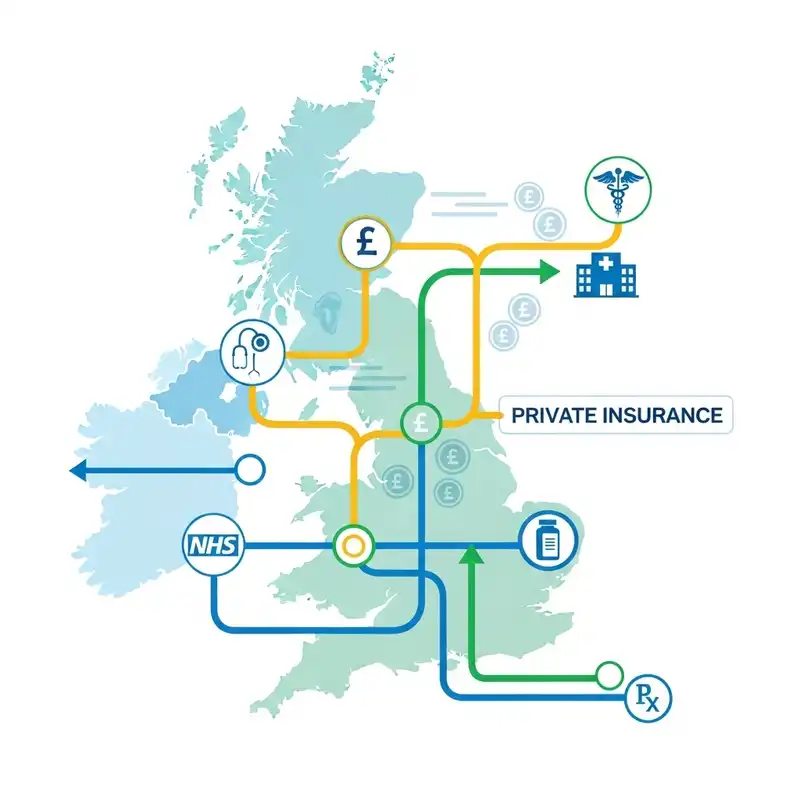
The NHS is a national treasure, but it is under immense pressure. As of early 2025, waiting lists for routine treatments in England remain stubbornly high, with millions of people waiting for care. This is where Private Medical Insurance (PMI) comes in.
PMI, also known as private health cover, pays for the cost of private medical treatment for acute conditions. It’s designed to complement the NHS, not replace it (emergencies and chronic conditions are typically handled by the NHS).
Key benefits of PMI:
- Bypass Waiting Lists: Get seen by a specialist and receive treatment far quicker than might be possible on the NHS.
- Choice and Control: You often have more choice over the specialist who treats you and the hospital you are treated in.
- Access to Specialist Drugs and Treatments: Some policies provide access to new, innovative drugs or treatments that may not yet be available on the NHS due to cost or other factors.
- Comfort and Privacy: Recover in a private room with en-suite facilities, more flexible visiting hours, and better food menus.
For a business owner or a key employee, a faster recovery means a faster return to work, minimising disruption and financial loss. For anyone, it means less time waiting in worry and more time focused on getting better.
5. Protecting Your Inheritance: Gift Inter Vivos
For those in the fortunate position of being able to pass on significant wealth, Inheritance Tax (IHT) can be a major concern. One common estate planning strategy is to gift assets during your lifetime. However, if you pass away within seven years of making a large gift, it may still be subject to IHT on a sliding scale.
This is where Gift Inter Vivos insurance comes in. It is a specialised life insurance policy designed to cover the potential IHT liability on a gift.
- How it works: You make a gift (e.g., £100,000 to your child). You then take out a Gift Inter Vivos policy for a seven-year term, with the sum assured matching the potential IHT bill.
- The benefit: If you pass away within the seven years, the policy pays out to cover the tax bill, ensuring your beneficiary receives the full value of the gift as intended. It’s a simple, effective way to ensure your generosity isn’t diluted by tax.
The Business Owner's Fortress: Safeguarding Your Enterprise
If you run your own business, your personal and professional financial worlds are deeply intertwined. A health crisis doesn't just affect your family; it can jeopardise the entire enterprise you've worked so hard to build. Business protection insurance is designed to protect the company itself.
Key Person Insurance
Who is the most important person in your business? It might be the founder with the vision, the top salesperson who brings in 50% of the revenue, or the technical expert with irreplaceable knowledge.
Key Person Insurance is a life insurance or critical illness policy taken out by the business on such an individual.
- Who owns it: The business owns the policy, pays the premiums, and is the beneficiary.
- What it does: If the key person passes away or suffers a specified critical illness, the policy pays a lump sum to the business.
- How the money is used: The funds can be used to recruit a replacement, cover lost profits during the disruption, reassure lenders, or simply provide the capital needed to weather the storm. It buys the business time to recover.
Executive Income Protection
This is a valuable and tax-efficient way for a limited company to provide income protection for its directors and employees.
- How it works: The business pays the premiums for an individual income protection policy for an employee (including a director).
- The Tax Advantage: The premiums paid by the business are typically treated as an allowable business expense, making it a highly tax-efficient benefit.
- The Benefit: If the employee is unable to work due to illness or injury, the policy pays a monthly income to the business, which then pays it to the employee via PAYE. This ensures the employee's financial security while protecting the company's cash flow.
Relevant Life and Shareholder Protection
- Relevant Life Cover: A tax-efficient death-in-service benefit for individual employees, including directors, paid for by the company. It's particularly useful for small businesses that don't have enough employees to set up a full group scheme.
- Shareholder Protection: An agreement between shareholders, funded by life and/or critical illness policies. It ensures that if one shareholder dies or becomes critically ill, the remaining shareholders have the funds to buy their shares, ensuring a smooth transition of ownership and preventing the shares from passing to a family member who may not want to be involved in the business.
Beyond Insurance: Building Holistic Resilience for a Thriving Life
While insurance provides a crucial financial safety net, the ultimate goal is to live a long, healthy, and fulfilling life. Building true resilience means taking a holistic approach to your well-being. This is a philosophy we champion at WeCovr, which is why we go a step further for our clients.
Alongside providing expert advice on protection policies, we give our clients complimentary access to CalorieHero, our AI-powered calorie and nutrition tracking app. We believe that empowering you with tools to manage your health proactively is just as important as protecting you financially.
Here are some pillars of a resilient and healthy lifestyle:
1. The Power of a Balanced Diet: Your diet is the fuel for your body and mind. Focus on whole foods: a colourful variety of fruits and vegetables, lean proteins, whole grains, and healthy fats. A balanced diet can reduce the risk of many chronic conditions, including heart disease, type 2 diabetes, and certain cancers.
2. The Magic of Movement: The NHS recommends at least 150 minutes of moderate-intensity activity a week. This doesn't have to mean gruelling gym sessions. It could be brisk walking, cycling, swimming, or even vigorous gardening. Regular exercise boosts your immune system, strengthens your heart, improves mental health, and helps maintain a healthy weight.
3. The Unsung Hero: Sleep: Never underestimate the power of a good night's sleep. Adults need 7-9 hours of quality sleep per night. During sleep, your body repairs cells, consolidates memories, and regulates hormones. Chronic sleep deprivation is linked to a host of health problems and can impair cognitive function and mood.
4. Master Your Mind: Stress Management: Chronic stress can wreak havoc on your physical and mental health. Find healthy ways to manage stress, such as mindfulness, meditation, yoga, spending time in nature, or engaging in hobbies you love. Building strong social connections with friends and family is also a powerful buffer against stress.
By integrating these healthy habits, you not only improve your quality of life but may also positively impact your insurance premiums. A healthier lifestyle can lead to more favourable terms when you apply for cover.
Taking the First Step: How to Secure Your Foundation
Navigating the world of protection insurance can feel complex, but it doesn't have to be. The most important step is to start.
- Assess Your Needs: Think about your circumstances. What are your monthly outgoings? Do you have a mortgage? Do you have children or other dependants? What would happen if your income stopped tomorrow?
- Understand Your Options: Use this guide to understand the different types of cover available and which ones might be most relevant to you.
- Seek Expert Advice: This is where a specialist broker is invaluable. The market is vast, and policies can vary significantly in their terms, conditions, and definitions. An expert can help you understand the nuances.
- Be Honest: When you apply for insurance, you will be asked detailed questions about your health, lifestyle, and occupation. It is vital that you answer everything truthfully and completely. Failing to disclose relevant information could invalidate your policy, meaning it might not pay out when you need it most.
Your life's masterpiece deserves to be built on solid ground. The drive for personal and professional growth is what propels us forward, but a resilient financial foundation is what ensures we can withstand the inevitable storms. By taking proactive steps today to put these safeguards in place, you are not buying a product; you are investing in peace of mind, security for your loved ones, and the unbreakable future you are working so hard to create.
What's the difference between Critical Illness Cover and Income Protection?
Do I really need protection insurance if I have savings?
Can I get cover if I have a pre-existing medical condition?
How much cover do I actually need?
Is this type of insurance expensive?
Why should I use a broker like WeCovr instead of going to an insurer directly?
Sources
- Office for National Statistics (ONS): Mortality and population data.
- Association of British Insurers (ABI): Life and protection market publications.
- MoneyHelper (MaPS): Consumer guidance on life insurance.
- NHS: Health information and screening guidance.
Disclaimer: This is general guidance only and does not constitute formal tax or financial advice. Tax treatment depends on individual circumstances, policy terms, and HMRC interpretation, which cannot be guaranteed in advance. Whenever applicable, businesses and individuals should always consult a qualified accountant or tax adviser before arranging such policies.
Measure your family’s protection gap, then get the right life cover quote
Start with the score to see whether your family would face a real financial shortfall before moving on to life cover options.
Check what happens if someone dies too soon
See whether debt, dependants and mortgage risk are covered
Move into tailored life cover options after the score
Get your score
Your next best move
Get your score in minutes, then decide what kind of protection help would be most useful.
Score your household protection
See how well your current setup protects dependants, debt and major commitments.
Find the shortfall
Know whether life cover, critical illness or income protection is the actual missing piece.
Continue to tailored life cover
If life cover is the gap, continue to tailored life cover options.
What you get
A quick view of your current protection position
A clearer idea of where the biggest gaps may be
A direct route to tailored help if you want it