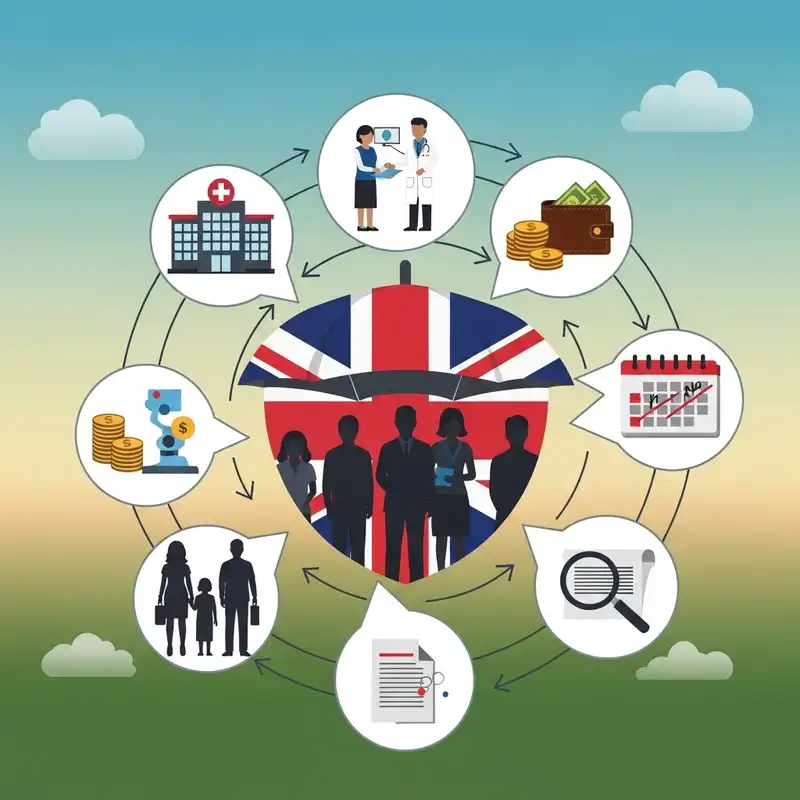
TL;DR
For too long, insurance has been viewed through a lens of fear. Its been sold as a parachute, a necessary purchase for the worst-case scenario. But this perspective is fundamentally limiting.
Key takeaways
- Swift Diagnosis: Bypass long waits for scans (MRI, CT) and specialist consultations. Getting a clear diagnosis quickly is the first step to an effective recovery plan.
- Choice and Control: You can often choose the specialist, the hospital, and the timing of your treatment, fitting it around your life and work commitments as much as possible.
- Access to Advanced Treatments: Some policies provide access to drugs or treatments not yet available on the NHS due to funding decisions.
- Comfort and Privacy: A private room can make a significant difference to your mental wellbeing and ability to rest and recover effectively.
- Clear the Mortgage: Removing the single biggest monthly outgoing provides immense relief.
Future Proof Your Life Growth Through Protection
Shifting Your Mindset: From 'What If?' to 'What's Next?'
For too long, insurance has been viewed through a lens of fear. It’s been sold as a parachute, a necessary purchase for the worst-case scenario. But this perspective is fundamentally limiting. It frames life as a tightrope walk where the best you can hope for is to avoid falling.
We propose a paradigm shift. True financial protection isn't a parachute; it's a launchpad.
Think about the mental energy consumed by financial anxiety. Worries about the mortgage, the children's future, or what would happen if your income suddenly stopped can be a constant, low-level drain on your cognitive resources. This is energy that could be channelled into creativity, strategic thinking, and bold decision-making.
When you have a robust protection plan in place, you’re not just buying a policy; you are buying peace of mind. This isn't a passive state of relief. It's an active, dynamic state of confidence that liberates you to ask more empowering questions:
- Instead of: "What if I get sick and can't pay the bills?"
- You can ask: "What's the next step in my career, knowing my income is secure?"
- Instead of: "What if I start a business and it fails, leaving my family with nothing?"
- You can ask: "How can I scale my business, knowing my family's core lifestyle is protected?"
- Instead of: "What if something happens to me?"
- You can ask: "What enduring legacy do I want to build for my loved ones?"
This mental freedom is the secret ingredient to accelerated personal and professional growth. It’s the self-employed graphic designer who can confidently pitch for a six-month contract, knowing their Income Protection policy has their back. It's the entrepreneur who can reinvest profits back into their company instead of hoarding cash "just in case," because their Key Person insurance protects the business's most valuable asset.
Strategic protection removes the biggest financial uncertainties from the table, allowing you to focus your full attention on the opportunities in front of you.
The Foundation of Growth: Your Health and Wellbeing
You cannot build an empire from a hospital bed. Your health is the fundamental asset that underpins every ambition, every late night spent coding your app, every early morning planning your next business move. Yet, in the UK, our collective health is facing unprecedented challenges.
The NHS, our national treasure, is under immense pressure. According to the latest NHS England data, the waiting list for consultant-led elective care stands at a staggering figure, with hundreds of thousands waiting over a year for treatment. This isn't just a statistic; it's a roadblock to recovery, productivity, and growth.
Furthermore, sobering statistics from Cancer Research UK project that 1 in 2 people in the UK will be diagnosed with some form of cancer in their lifetime. While survival rates are improving, a diagnosis often means a long and arduous journey of tests, consultations, and treatments.
This is where Private Medical Insurance (PMI) transitions from a "nice-to-have" to an essential component of your growth toolkit.
How Private Medical Insurance Fuels Your Progress
PMI is not about replacing the NHS; it's about complementing it strategically. It gives you control over your healthcare journey, ensuring a health issue becomes a temporary detour, not a permanent dead end for your ambitions.
Key benefits include:
- Swift Diagnosis: Bypass long waits for scans (MRI, CT) and specialist consultations. Getting a clear diagnosis quickly is the first step to an effective recovery plan.
- Choice and Control: You can often choose the specialist, the hospital, and the timing of your treatment, fitting it around your life and work commitments as much as possible.
- Access to Advanced Treatments: Some policies provide access to drugs or treatments not yet available on the NHS due to funding decisions.
- Comfort and Privacy: A private room can make a significant difference to your mental wellbeing and ability to rest and recover effectively.
The table below illustrates the potential difference in timeline for a common issue like persistent knee pain.
| Healthcare Stage | Typical NHS Pathway | Typical Private Pathway | Impact on Growth |
|---|---|---|---|
| GP Referral | 1-2 weeks | 1-2 weeks | No significant difference |
| Specialist Consultation | 18-24 weeks | 1-3 weeks | Months of lost mobility and productivity on NHS path. |
| Diagnostic Scan (MRI) | 6-8 weeks | 3-7 days | Quicker diagnosis allows for immediate action plan. |
| Surgical Procedure | 20-52 weeks | 2-4 weeks | Rapid return to full physical capability. |
| Post-Op Physio | Group sessions, potential waits | Immediate, one-to-one sessions | Faster, more complete recovery. |
By drastically shortening the timeline from symptom to recovery, PMI directly protects your earning potential and keeps your personal and professional projects on track.
At WeCovr, we understand that your health is your wealth. That's why, in addition to helping you find the perfect insurance policy, we provide our customers with complimentary access to our AI-powered calorie tracking app, CalorieHero. It’s a small way we can support your proactive journey towards better health, reinforcing the very foundation of your future growth.
Protecting Your Greatest Asset: Your Ability to Earn
What is your single most valuable financial asset? It's not your house, your car, or your investments. It is your ability to get up every day and earn an income. Over a lifetime, this can amount to millions of pounds. Yet, it is often the most overlooked and under-protected asset.
Statutory Sick Pay (SSP) in the UK provides a minimal safety net, but at just over £116 per week (2024/25 rate), it is rarely enough to cover even the most basic living costs. Employer sick pay schemes vary wildly and are often limited to a few months at best.
Consider the statistics from the Office for National Statistics (ONS). In recent years, a record number of people are classified as long-term sick, unable to work. This isn't just an issue for older workers; illness and injury can strike at any age.
This is where Income Protection (IP) becomes arguably the most crucial policy for any working adult.
The Unshakeable Stability of Income Protection
Income Protection insurance is designed to do one thing brilliantly: it pays you a regular, tax-free monthly income if you are unable to work due to any illness or injury. It continues to pay out until you can return to work, your chosen retirement age, or the end of the policy term, whichever comes first.
It's the ultimate financial backstop, ensuring that a health crisis doesn't also become a financial catastrophe.
| Feature | Statutory Sick Pay (SSP) | Income Protection (IP) |
|---|---|---|
| Payment Amount | £116.75 per week (2024/25) | Up to 50-70% of your gross salary |
| Payment Duration | Maximum of 28 weeks | Until you recover or the policy ends |
| Who Pays? | Your employer (mandated) | Your chosen insurance provider |
| Coverage Scope | Basic legal minimum | Bespoke to your income and needs |
Crucially, when choosing an IP policy, the definition of incapacity is paramount. For skilled professionals like a nurse, a tradesperson like an electrician, or a surgeon, an 'Own Occupation' policy is vital. This means the policy will pay out if you are unable to perform your specific job, even if you could theoretically work in a different, lower-paid role. It protects the specialist skills you have spent years, and a fortune, acquiring.
Personal Sick Pay policies are often a variant of this, typically offering shorter-term cover (1-2 years per claim) and are popular with those in manual trades or riskier professions who want straightforward, affordable cover against being unable to work.
Critical Illness Cover: The Financial Breathing Space to Recover
While Income Protection replaces your monthly paycheque, Critical Illness Cover (CIC) serves a different, but equally vital, purpose. It pays out a single, tax-free lump sum upon diagnosis of a specific, pre-defined serious condition.
Medical advancements mean that more people than ever are surviving conditions that were once a death sentence. The British Heart Foundation notes that survival rates after a heart attack have dramatically improved. However, surviving is one thing; recovering is another.
Recovery takes time, and it often comes with unexpected costs. This is where the CIC lump sum provides critical financial breathing space.
How a CIC Payout Empowers Recovery
Imagine being diagnosed with cancer. Your focus should be 100% on your treatment, your rest, and your mental wellbeing. The last thing you need is the stress of financial worries. A CIC payout can be used for anything, giving you complete flexibility:
- Clear the Mortgage: Removing the single biggest monthly outgoing provides immense relief.
- Cover Private Treatment: Use the funds for therapies or specialist care not covered by PMI or the NHS.
- Adapt Your Home: Install a walk-in shower or a stairlift if your mobility is affected.
- Replace a Partner's Income: Allow your partner to take time off work to care for you without financial penalty.
- Fund a Recuperative Holiday: Taking time to heal properly after treatment can be essential for a full recovery.
A typical policy will cover dozens of conditions, with the most common claims being for cancer, heart attack, and stroke. It’s a powerful tool that ensures a health crisis doesn't derail your entire family's financial future.
For the Visionaries: Protecting Your Business and Your Team
For entrepreneurs, freelancers, and company directors, the line between personal and professional finance is often blurred. Your ambition drives your business, but the business's success underpins your personal financial security. Protecting one means protecting the other.
Standard personal policies are essential, but for those at the helm of a business, specialised corporate protection is a non-negotiable part of a robust growth strategy.
Key Person Insurance
Who is the most indispensable person in your business? Is it the founder with the vision, the sales director with the contacts, or the technical lead with the unique expertise? The sudden loss of this 'key person' due to death or critical illness could have a devastating impact on revenue, stability, and creditor confidence.
Key Person Insurance is a policy taken out by the business on the life of that crucial individual. If the worst happens, the policy pays a lump sum directly to the business. This money can be used to:
- Recruit a replacement.
- Cover lost profits during the transition.
- Reassure lenders and investors.
- Clear business debts.
It turns a potential catastrophe into a manageable challenge.
Executive Income Protection
Attracting and retaining top talent is a cornerstone of business growth. An Executive Income Protection policy is a highly-valued employee benefit that a company can offer to its directors and key staff.
Paid for by the business, it provides a replacement income to the employee if they are unable to work long-term. Unlike a standard group scheme, it can offer more generous terms (e.g., higher percentage of salary) and is tailored to the individual. For the business, the premiums are typically classed as an allowable business expense, making it a tax-efficient way to care for your most important people.
Shareholder and Partnership Protection
If you run a business with one or more co-owners, have you asked the difficult question: what happens if one of us dies or becomes critically ill? Without a plan, the deceased's shares could pass to their family, who may have no interest or ability to run the business. They might want to sell the shares, but where would you find the funds to buy them out?
Shareholder or Partnership Protection provides the solution. It's an agreement, backed by life and critical illness policies, that ensures the surviving owners have the immediate funds to purchase the departing owner's shares at a pre-agreed price. This guarantees business continuity and ensures the departing owner's family receives fair value for their stake.
Navigating the complexities of business protection requires specialist advice. At WeCovr, we work with company directors and business owners every day to structure these vital policies, ensuring their personal ambitions and business legacies are secure.
Building a Legacy: Ensuring Your Growth Endures
The ultimate expression of care is to ensure that the people you love are secure, even when you're no longer there to provide for them. Life insurance is the bedrock of this legacy, providing a financial foundation for your family's future.
Life Protection: Lump Sum vs. Income
The most common form of life insurance, Term Assurance, pays out a fixed, tax-free lump sum if you pass away within a set term. This is often used to clear a mortgage and other large debts, instantly securing the family home.
However, an alternative that is often better suited to families with ongoing costs is Family Income Benefit (FIB). Instead of a single large payout, FIB provides a regular, tax-free monthly or annual income, from the point of claim until the end of the policy term.
| Feature | Lump Sum Term Assurance | Family Income Benefit |
|---|---|---|
| Payout Style | One large, tax-free payment | Regular, tax-free income stream |
| Primary Use | Clearing large debts (e.g., mortgage) | Replacing lost monthly salary for living costs |
| Budgeting | Recipient must manage a large sum | Easier for families to budget with |
| Cost | Generally more expensive | Often significantly more affordable |
| Best For | Financial security through debt elimination | Financial stability through income replacement |
For many, a combination of the two provides a suitable option for your circumstances: a smaller lump sum policy to clear debts, and a Family Income Benefit policy to cover the day-to-day costs of raising a family.
Gift Inter Vivos: The Smart Way to Pass on Wealth
As you build wealth, you may want to start passing it on to your children or grandchildren during your lifetime. However, under UK Inheritance Tax (IHT) rules, if you die within seven years of making a substantial gift, it may still be considered part of your estate and subject to a 40% tax bill.
A Gift Inter Vivos insurance policy is a specialised form of life insurance designed to solve this exact problem. It's a policy that runs for seven years, with the payout decreasing over time in line with the "taper relief" offered by HMRC. If you pass away within the seven-year window, the policy pays out to cover the unexpected IHT liability, ensuring your loved ones receive the full value of your gift. It's an astute piece of financial planning that protects the legacy you've worked so hard to build.
Putting It All Together: Your Personalised Protection Portfolio
Financial protection is not a one-size-fits-all product. The right strategy for you will depend on your unique circumstances, including your age, profession, family situation, and aspirations. The key is to layer different types of cover to create a comprehensive fortress around your finances.
Example 1: The Freelance Electrician (Age 32, young family, mortgage)
- Core Need: Protect income and family.
- Portfolio:
- Income Protection: 'Own Occupation' cover to replace 60% of his income until age 67.
- Life & Critical Illness Cover: A decreasing term policy to clear the remaining mortgage balance.
- Family Income Benefit (illustrative): A policy to pay £2,000 a month until his youngest child turns 21, covering childcare and living costs.
Example 2: The Marketing Director (Age 45, business owner, high earner)
- Core Need: Protect business, personal income, and plan for estate.
- Portfolio:
- Key Person Insurance (illustrative): A £500,000 policy paid for by her business to protect against her loss.
- Executive Income Protection: A high-level IP policy, paid for by the business as a benefit.
- Whole of Life Insurance: A substantial policy written 'in trust' to provide a lump sum outside of her estate, designated to pay future IHT bills.
- Private Medical Insurance: A comprehensive policy to ensure swift access to healthcare and minimise business disruption.
Building this portfolio can seem daunting. This is why working with an expert independent broker is so valuable. We can assess your entire situation, explain your options in plain English, and search the whole of the UK market to find the most suitable and cost-effective policies for your specific growth journey.
Conclusion: Protection is the Launchpad, Not the Parachute
Building a robust financial fortress is one of the most empowering actions you can take. It’s a declaration that your journey of growth will not be derailed by the unexpected twists and turns of life. It’s the quiet confidence that allows you to take calculated risks, to pursue your passions, and to build a business and a legacy that will endure.
Financial protection isn't about fear; it's about freedom. It’s not an expense; it’s an investment in your potential. It's the solid ground from which you can leap towards your boldest goals, knowing that you and your loved ones are secure, no matter what.
It’s time to stop thinking about "what if" and start planning for "what's next".
What's the difference between Income Protection and Critical Illness Cover?
Do I need life insurance if I'm single with no dependents?
Is Private Health Insurance worth it if we have the NHS?
How much cover do I actually need?
As a freelancer, what are the most important policies for me?
Sources
- Office for National Statistics (ONS): Mortality and population data.
- Association of British Insurers (ABI): Life and protection market publications.
- MoneyHelper (MaPS): Consumer guidance on life insurance.
- NHS: Health information and screening guidance.
Disclaimer: This is general guidance only and does not constitute formal tax or financial advice. Tax treatment depends on individual circumstances, policy terms, and HMRC interpretation, which cannot be guaranteed in advance. Whenever applicable, businesses and individuals should always consult a qualified accountant or tax adviser before arranging such policies.
Measure your family’s protection gap, then get the right life cover quote
Start with the score to see whether your family would face a real financial shortfall before moving on to life cover options.
Check what happens if someone dies too soon
See whether debt, dependants and mortgage risk are covered
Move into tailored life cover options after the score
Get your score
Your next best move
Get your score in minutes, then decide what kind of protection help would be most useful.
Score your household protection
See how well your current setup protects dependants, debt and major commitments.
Find the shortfall
Know whether life cover, critical illness or income protection is the actual missing piece.
Continue to tailored life cover
If life cover is the gap, continue to tailored life cover options.
What you get
A quick view of your current protection position
A clearer idea of where the biggest gaps may be
A direct route to tailored help if you want it