TL;DR
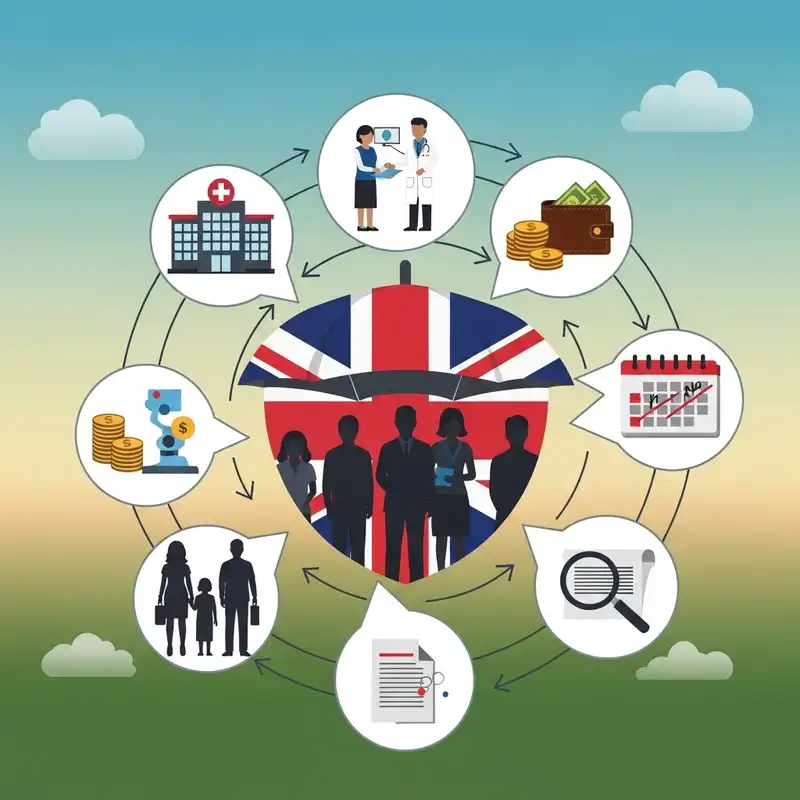
Whether its launching a business from a spark of an idea, climbing the career ladder, buying a home where family memories can be made, or simply having the freedom to pursue our passions, these goals are the fuel for our personal growth. We meticulously plan, we save, we work tirelessly. Yet, we often overlook the very foundation upon which these aspirations are built: our continued health and our ability to earn an income.
Key takeaways
- Clearing or reducing your mortgage.
- Funding private medical treatment or specialist care.
- Making necessary adaptations to your home.
- Allowing a partner to take time off work to support you.
- Replacing lost income during a period of recovery.
Future Proofing Potential the Resilience Dividend
We all have ambitions. Whether it’s launching a business from a spark of an idea, climbing the career ladder, buying a home where family memories can be made, or simply having the freedom to pursue our passions, these goals are the fuel for our personal growth. We meticulously plan, we save, we work tirelessly. Yet, we often overlook the very foundation upon which these aspirations are built: our continued health and our ability to earn an income.
Life, in its beautiful unpredictability, can throw formidable challenges our way. A sudden illness, a serious injury, an unexpected redundancy—these events are more than just temporary setbacks. They can be financial earthquakes, capable of shattering the bedrock of our plans and sending shockwaves through our family's stability.
This is where the concept of the Resilience Dividend comes into play. It’s the profound, often unseen, benefit of having a robust financial safety net. It’s not about dwelling on what could go wrong; it’s about creating the unshakeable confidence to pursue what can go right. Strategic financial protection—through instruments like life insurance, critical illness cover, and income protection—is the silent partner in your success, the invisible architecture that supports your ambitions and allows you to build higher, dream bigger, and live more fully.
This guide will explore how fortifying your financial foundations doesn't just protect you from the worst-case scenarios; it actively empowers your best-case ones, securing not just your survival, but your family's ability to thrive, no matter what lies ahead.
The Fragility of Our Foundations: Understanding Modern-Day Risks
In the 21st century, our sense of security can be a fragile thing. While we may feel in control of our daily lives, the reality is that we are all exposed to a range of health and financial risks that can derail our plans in an instant. Understanding these risks is the first step towards mitigating them.
The Health Landscape in the UK
Our health is our greatest asset, but it is not guaranteed. The statistics paint a sobering picture of the health challenges facing the UK population.
- The Pervasive Threat of Cancer: According to Cancer Research UK, a sobering 1 in 2 people in the UK will be diagnosed with some form of cancer during their lifetime. While survival rates are improving dramatically, a diagnosis often means significant time off work for treatment and recovery.
- Cardiovascular Disease: The British Heart Foundation reports that there are around 7.6 million people living with heart and circulatory diseases in the UK. Every five minutes, someone is admitted to a UK hospital due to a heart attack. A stroke strikes someone in the UK approximately every five minutes. The recovery from these events can be long and arduous.
- The Rise of Long-Term Sickness: The Office for National Statistics (ONS) has reported a significant rise in the number of people out of work due to long-term sickness, reaching record highs in recent years. This trend highlights a growing vulnerability in the workforce, with conditions like musculoskeletal problems and mental health issues being major contributors.
- Mental Health Challenges: Mental health is finally being recognised as a critical component of our overall well-being. Yet, conditions like depression and anxiety are a leading cause of work absence. The support needed to recover fully often requires time and financial stability, which can be difficult to secure without a safety net.
These are not just statistics; they represent real people and real families whose lives have been turned upside down. The financial impact of a serious illness can be a double blow, compounding the emotional and physical stress with worries about bills, mortgages, and daily living costs.
The Shifting Sands of Financial Security
Alongside health risks, the economic landscape has become increasingly unpredictable for many households.
- Low Savings Buffer: ONS data on household finances often reveals that a significant portion of the population has little to no savings. For many families, an unexpected loss of income for even a single month could trigger a serious financial crisis, leading to debt and the potential loss of their home.
- The Gig Economy and Self-Employment: The rise of flexible working, freelancing, and self-employment has brought freedom and opportunity to millions. However, it has also dismantled the traditional safety net of employer-provided benefits. Freelancers and contractors typically have no access to statutory sick pay, death-in-service benefits, or employer-sponsored health plans, leaving them acutely exposed.
- Job Insecurity: The concept of a 'job for life' is a relic of the past. Career disruptions, whether through redundancy, company restructuring, or technological change, are a modern reality. Re-skilling and finding new employment takes time—a luxury many cannot afford without a financial cushion.
The confluence of these health and financial risks creates a precarious environment. Your ability to earn an income is the engine that powers your entire financial life. When that engine stalls, everything else is at risk.
Building Your Financial Fortress: A Guide to Protection Insurance
Just as you wouldn't build a house without solid foundations, you shouldn't build your life's ambitions without a financial fortress to protect them. Protection insurance policies are the essential building blocks of this fortress, each designed to defend against a specific type of financial shock.
Income Protection: Your Financial First Responder
If there is one cornerstone of personal financial protection, it is Income Protection (IP).
What is it? Income Protection is an insurance policy that pays you a regular, tax-free monthly income if you are unable to work due to any illness or injury. It's designed to replace a significant portion of your lost earnings, allowing you to cover your essential outgoings like mortgage or rent, bills, and food.
Why is it crucial? It protects your most valuable asset: your ability to earn. Unlike Statutory Sick Pay, which is minimal and short-lived, an IP policy can potentially pay out for years, even until you reach retirement age, ensuring that a long-term illness does not become a long-term financial disaster.
Key features to understand:
| Feature | Description | Why It Matters |
|---|---|---|
| Deferment Period | The waiting period before the policy starts paying out (e.g., 4, 13, 26, 52 weeks). | A longer period means lower premiums. Align it with any employer sick pay or savings you have. |
| Benefit Period | How long the policy will pay out for (e.g., 1, 2, 5 years, or until retirement age). | 'Full term' cover offers the most comprehensive protection but costs more than short-term plans. |
| Definition of Incapacity | The criteria used to decide if you can claim. 'Own Occupation' is the gold standard. | 'Own Occupation' means you can claim if you're unable to do your specific job, even if you could do a different one. |
Critical Illness Cover: The Lump Sum Defender
While Income Protection provides a steady stream of income, Critical Illness Cover (CIC) provides a different kind of support.
What is it? CIC pays out a one-off, tax-free lump sum if you are diagnosed with one of a specific list of serious illnesses defined in the policy. The 'big three'—cancer, heart attack, and stroke—are typically covered, along with dozens of other conditions.
How can it be used? The power of CIC lies in its flexibility. The lump sum can be used for anything you need to ease the financial burden of your illness, such as:
- Clearing or reducing your mortgage.
- Funding private medical treatment or specialist care.
- Making necessary adaptations to your home.
- Allowing a partner to take time off work to support you.
- Replacing lost income during a period of recovery.
Life Insurance: The Ultimate Family Safeguard
Life insurance is perhaps the most well-known form of protection. It is a selfless purchase, made to protect the people you love after you're gone.
What is it? A policy that pays out a lump sum or regular income to your beneficiaries upon your death. This provides them with the financial resources to maintain their standard of living, pay off debts, and face the future without a crippling financial burden.
There are several types to suit different needs:
| Type of Life Insurance | How It Works | Best For |
|---|---|---|
| Level Term Assurance | The payout amount remains the same throughout the policy term. | Covering an interest-only mortgage or providing a lump sum for family living costs. |
| Decreasing Term Assurance | The payout amount reduces over time, typically in line with a repayment mortgage. | The most cost-effective way to ensure your mortgage is paid off if you die. |
| Family Income Benefit | Pays a regular, tax-free monthly or annual income to your family for the remainder of the policy term. | Replacing your lost salary to cover ongoing family expenses in a manageable way. |
| Gift Inter Vivos | A specialised policy designed to cover a potential Inheritance Tax (IHT) liability on a gift you have made if you die within seven years. | Individuals undertaking estate planning who want to protect their beneficiaries from an unexpected tax bill. |
Building this fortress may seem complex, but understanding these core products is the first step. The goal is to layer them in a way that provides comprehensive cover for your specific circumstances.
The Resilience Dividend in Action: Real-Life Scenarios
Theory is one thing, but the true value of financial protection shines through in real-life situations. Let’s look at how a well-structured protection plan can provide the "Resilience Dividend" when it's needed most.
Scenario 1: The Freelance Web Developer
Meet Chloe, 38. She’s a successful freelance web developer with a modest mortgage and a passion for her work. She has no employer benefits. Concerned about this exposure, she took out an Income Protection policy and a Critical Illness Cover plan.
- The Crisis: Chloe is diagnosed with breast cancer. The treatment involves surgery and months of chemotherapy, leaving her unable to work.
- The Protection Response:
- Her Critical Illness Cover pays out a £75,000 lump sum. Chloe uses this to clear the last £40,000 of her mortgage, instantly removing her biggest monthly expense. She puts the rest aside for emergencies and to fund some complementary therapies not available on the NHS.
- After her 13-week deferment period, her Income Protection policy kicks in, paying her £2,000 a month. This covers all her bills and living costs.
- The Resilience Dividend: Freed from financial worry, Chloe can focus 100% on her recovery. She doesn't have to rush back to work or take on stressful projects before she is ready. The financial security allows her to recover fully, both physically and mentally. A year later, she returns to her business, revitalised and debt-free.
Scenario 2: The Young Family
Meet Ben and Laura, both 34. They have two young children and a £250,000 mortgage. Ben is the primary earner, working as an electrician. They have a joint Decreasing Term life insurance policy to cover the mortgage and Ben has a personal Income Protection plan. (illustrative estimate)
- The Crisis: Ben falls from a ladder at work, suffering a severe back injury that requires surgery and extensive physiotherapy. Doctors say he will be unable to work in his physically demanding job for at least 18 months.
- The Protection Response:
- Illustrative estimate: Their life insurance isn't needed, but their foresight in getting Income Protection proves invaluable. After a three-month deferment, the policy starts paying Ben £2,500 a month.
- The Resilience Dividend: This income stream means the family doesn't miss a single mortgage payment. They can afford the weekly physiotherapy sessions that are crucial for Ben's recovery. Laura can continue working part-time without the immense pressure of becoming the sole breadwinner overnight. The family's stability is maintained, and the children's lives are disrupted as little as possible. The protection plan prevents a health crisis from becoming a housing crisis.
Scenario 3: The Small Business Owner
Meet Raj, 52. He is the founder and managing director of a successful engineering firm with 15 employees. He is the lead engineer and key to the company’s client relationships. The company took out Key Person Insurance on Raj, as well as an Executive Income Protection policy for him.
- The Crisis: Raj has a major heart attack and needs a triple bypass. He is told to take at least six months off work for his recovery.
- The Protection Response:
- His Executive Income Protection policy, paid for by the business as a legitimate expense, continues to pay his full salary directly to him. This means his personal finances are unaffected.
- Illustrative estimate: The Key Person Insurance (a critical illness policy owned by the business) pays a £150,000 lump sum directly to the company.
- The Resilience Dividend (illustrative): The business uses the £150,000 payout to hire a highly skilled contract engineer to cover Raj’s technical duties and manage key projects. This prevents project delays, reassures clients, and protects the company's revenue stream. The employees' jobs are secure, and the business remains stable. Raj can recover with complete peace of mind, knowing that both his family and the business he built are protected.
Tailoring Protection for Your Unique Path: Self-Employed, Freelancers, and Directors
The traditional 'one-size-fits-all' approach to financial planning is obsolete. Your profession and employment status fundamentally change your risks and the solutions you need.
Essential Cover for the Self-Employed and Freelancers
If you are your own boss, you are also your own HR department and your own safety net. The state provides very little support, making personal protection non-negotiable.
- Income Protection is Paramount: This is the single most important policy for any self-employed individual. With no sick pay to fall back on, an IP policy is the only way to guarantee an income if you can't work. Look for 'Own Occupation' cover to ensure you're protected if you can't do your specific job.
- Critical Illness Cover for Capital: A lump sum from a CIC policy can be a business-saver. It can provide the capital to keep your business afloat, hire a temporary replacement, or simply give you the breathing room to recover without financial pressure.
- Personal Sick Pay Policies: For those in riskier trades (e.g., builders, plumbers, electricians) or who need shorter-term cover, Personal Sick Pay plans can be a great option. They are a form of IP, often with shorter deferment periods (even one day) and shorter payment terms (typically 1-2 years), making them an affordable way to cover immediate risks.
Strategic Protection for Company Directors and Business Owners
For company directors, protection planning operates on two levels: protecting your personal finances and protecting the health of your business. Often, the most tax-efficient solutions are those paid for by the company itself.
- Executive Income Protection: This is an IP policy owned and paid for by your limited company for your benefit. The premiums are typically an allowable business expense, making it highly tax-efficient. The benefit is paid to the company, which then pays it to you via PAYE, maintaining your salary and pension contributions.
- Key Person Insurance: This protects the business from the financial consequences of losing a crucial individual (like a founder, top salesperson, or technical expert) to death or critical illness. The payout provides working capital to manage the disruption, recruit a replacement, or repay business loans.
- Shareholder or Partnership Protection: This is a crucial arrangement for businesses with multiple owners. It uses life insurance policies to provide the funds for the surviving owners to buy the deceased owner's shares from their estate. This ensures the business can continue smoothly, and the deceased's family receives fair value for their shares.
The table below contrasts personal and business protection policies:
| Feature | Personal Protection | Business Protection |
|---|---|---|
| Who Pays? | The individual, from post-tax income. | The limited company, from pre-tax income. |
| Tax on Premiums | No tax relief. | Typically an allowable business expense. |
| Example Policy | Personal Income Protection | Executive Income Protection |
| Beneficiary | The individual or their family. | The business (for Key Person) or the individual via the business (for Exec IP). |
| Primary Goal | Protect personal/family finances. | Protect business continuity and profitability. |
Navigating these options can be complex. Consulting a specialist broker like WeCovr can help you and your accountant determine the most effective and tax-efficient structure for your business.
Beyond the Policy: The Holistic Approach to Resilience
True resilience isn't just about having a financial backup plan; it's about building a lifestyle that proactively supports your health and well-being. The insurance industry has evolved, and many providers now offer services that help you stay healthy, not just support you when you're ill.
The Power of Prevention and Proactive Health
A healthy lifestyle is your first line of defence. Small, consistent efforts can have a significant impact on reducing your risk of developing serious health conditions.
- Balanced Diet: A diet rich in fruits, vegetables, lean proteins, and whole grains can lower your risk of heart disease, stroke, and some cancers.
- Regular Activity: The NHS recommends at least 150 minutes of moderate-intensity activity a week. This strengthens your cardiovascular system, helps maintain a healthy weight, and is a powerful tool for boosting mental health.
- Prioritising Sleep: Consistent, quality sleep is essential for physical repair, cognitive function, and emotional regulation. Aim for 7-9 hours per night.
- Stress Management: Chronic stress can have a detrimental effect on your physical health. Incorporating mindfulness, hobbies, and clear work-life boundaries is vital.
At WeCovr, we believe in supporting our clients' holistic well-being. It's why, in addition to finding you the best protection policies, we provide our customers with complimentary access to our AI-powered calorie and nutrition tracking app, CalorieHero. We see it as our commitment to being a partner in your health journey, helping you build resilience from the inside out.
Insurer "Added Value" Benefits
Modern insurance policies are more than just a promise to pay. Many now come bundled with a suite of valuable "added value" services, often available to you and your family from day one, at no extra cost. These can include:
- Virtual GP Services: 24/7 access to a UK-based GP via phone or video call, helping you get medical advice quickly and conveniently.
- Second Medical Opinion Services: If you receive a serious diagnosis, this service allows you to have your case reviewed by a world-leading expert, providing peace of mind or alternative treatment options.
- Mental Health Support: Access to confidential counselling and therapy sessions to help you cope with stress, anxiety, or depression.
- Rehabilitation and Back-to-Work Support: For income protection claims, insurers often provide physiotherapy, occupational therapy, and other services to help you make a successful and sustainable return to work.
These benefits transform an insurance policy from a simple financial product into a comprehensive support system for your health and well-being.
Navigating the Market: How to Secure the Right Protection
The protection market is vast, with dozens of providers and policy variations. Following a structured approach can help you cut through the noise and find the cover that's right for you.
Step 1: Assess Your Needs. Before you look at any products, look at your life. What and who do you need to protect?
- Debts: Mortgage, car loans, credit cards.
- Dependents: Your partner, children. How much would they need to live on if your income disappeared?
- Living Costs: Rent, bills, food, travel.
- Future Plans: Children's education, your own retirement.
- Business: Your company's stability, your employees' security.
Step 2: Demystify the Jargon. Understanding a few key terms will empower you to have more effective conversations about your cover.
- Premium: The monthly or annual fee you pay for the policy.
- Sum Assured: The amount of money the policy will pay out.
- Underwriting: The insurer's process of assessing your risk (based on your age, health, lifestyle, and occupation) to decide if they can offer you cover and at what price.
- Trusts: A legal arrangement that allows you to specify who receives the payout from your life insurance policy. Placing a policy in trust can help avoid probate delays and potential Inheritance Tax.
Step 3: The Critical Importance of Full Disclosure. When you apply for insurance, you will be asked detailed questions about your medical history, lifestyle (e.g., smoking, alcohol consumption), and occupation. It is absolutely vital that you answer these questions completely and honestly. Withholding information, even if it seems minor, is known as 'non-disclosure' and could give the insurer grounds to void your policy and refuse to pay a claim, leaving your family with nothing.
Step 4: The Invaluable Role of an Expert Broker. While you can go directly to an insurer, using an independent specialist broker like WeCovr offers significant advantages. The protection market is not a place for guesswork.
- Whole-of-Market Access: We are not tied to any single insurer. We compare policies and prices from across the entire UK market to find the most suitable and competitive options for your unique needs.
- Expert Guidance: We understand the nuances of different policies—from the critical illness definitions to the incapacity definitions—and can explain them in plain English.
- Tailored Solutions: We take the time to understand your personal, family, and business circumstances to recommend a blend of cover that provides a comprehensive safety net without over-insuring you.
- Application Support: We handle the paperwork and liaise with the insurer on your behalf, making the process smoother and less stressful. We can also help you with the crucial step of placing your policy in trust.
Choosing the right protection is one of the most important financial decisions you will ever make. Partnering with an expert ensures you get it right.
From Financial Safety Net to Springboard for Growth
Thinking about illness, injury, and death can be uncomfortable. But arranging financial protection is not a negative act. It is, in fact, one of the most positive and empowering steps you can take.
It is the act of transforming "what if?" into "even if."
- Even if I get sick, my family will be able to stay in our home.
- Even if I'm injured and can't work, we can still pay the bills.
- Even if the worst happens, my children's future will be secure.
This is the Resilience Dividend. It’s the peace of mind that quiets financial anxiety and frees up your mental and emotional energy to focus on what truly matters: living your life, pursuing your ambitions, and cherishing your loved ones. It is the confidence to take a calculated risk, to change careers, to start that business. It is the unseen, unshakeable foundation that allows you and your family not just to survive life's storms, but to thrive in spite of them.
Don't leave your future and your potential to chance. Build your financial fortress today, and unlock the freedom to create the life you've always envisioned.
How much cover do I really need?
Is protection insurance really expensive?
Can I get cover if I have a pre-existing medical condition?
What's the real difference between Income Protection and Critical Illness Cover?
Should I put my life insurance policy in trust?
Sources
- Office for National Statistics (ONS): Mortality and population data.
- Association of British Insurers (ABI): Life and protection market publications.
- MoneyHelper (MaPS): Consumer guidance on life insurance.
- NHS: Health information and screening guidance.
Disclaimer: This is general guidance only and does not constitute formal tax or financial advice. Tax treatment depends on individual circumstances, policy terms, and HMRC interpretation, which cannot be guaranteed in advance. Whenever applicable, businesses and individuals should always consult a qualified accountant or tax adviser before arranging such policies.
Measure your family’s protection gap, then get the right life cover quote
Start with the score to see whether your family would face a real financial shortfall before moving on to life cover options.
Check what happens if someone dies too soon
See whether debt, dependants and mortgage risk are covered
Move into tailored life cover options after the score
Get your score
Your next best move
Get your score in minutes, then decide what kind of protection help would be most useful.
Score your household protection
See how well your current setup protects dependants, debt and major commitments.
Find the shortfall
Know whether life cover, critical illness or income protection is the actual missing piece.
Continue to tailored life cover
If life cover is the gap, continue to tailored life cover options.
What you get
A quick view of your current protection position
A clearer idea of where the biggest gaps may be
A direct route to tailored help if you want it