TL;DR
We often think of freedom as the ability to travel, to change careers, to pursue our passions. What is the invisible architecture that allows us to take those leaps of faith? Not just emotional grit, but tangible, financial resilience.
Key takeaways
- This isn't about simply having a savings account.
- It's about consciously building a multi-layered defence system against life's inevitable shocks.
- It's the quiet confidence that comes from knowing that if your income stops, if you face a serious health diagnosis, or if the worst should happen, you and your loved ones are protected.
- In today's world, this foundation is more critical than ever.
- But this isn't a conversation about fear.
Future Proofing You the Resilience Advantage
We often think of freedom as the ability to travel, to change careers, to pursue our passions. But what underpins all of this? What is the invisible architecture that allows us to take those leaps of faith? The answer is resilience. Not just emotional grit, but tangible, financial resilience.
This isn't about simply having a savings account. It's about consciously building a multi-layered defence system against life's inevitable shocks. It's the quiet confidence that comes from knowing that if your income stops, if you face a serious health diagnosis, or if the worst should happen, you and your loved ones are protected.
In today's world, this foundation is more critical than ever. We're facing stark realities: a cost-of-living crisis that squeezes every pound, NHS waiting lists at historic highs, and a sobering statistic from Cancer Research UK that 1 in 2 of us born after 1960 will be diagnosed with cancer in our lifetime.
But this isn't a conversation about fear. It's a conversation about empowerment. Building financial resilience isn't just a defensive move; it's the ultimate offensive strategy. It frees you from the 'what if' anxieties, allowing you to focus your energy on growth, on nurturing your relationships, and on building the life you truly want. It is the unseen foundation of your unstoppable future.
What is True Financial Resilience?
Think of your life and ambitions as a magnificent house you're building. Your career, your family, your dreams—they are the walls, the windows, the beautiful interiors. Financial resilience is the foundation. You don't see it day-to-day, but during an earthquake (a job loss, a serious illness), it's the only thing that prevents the entire structure from collapsing.
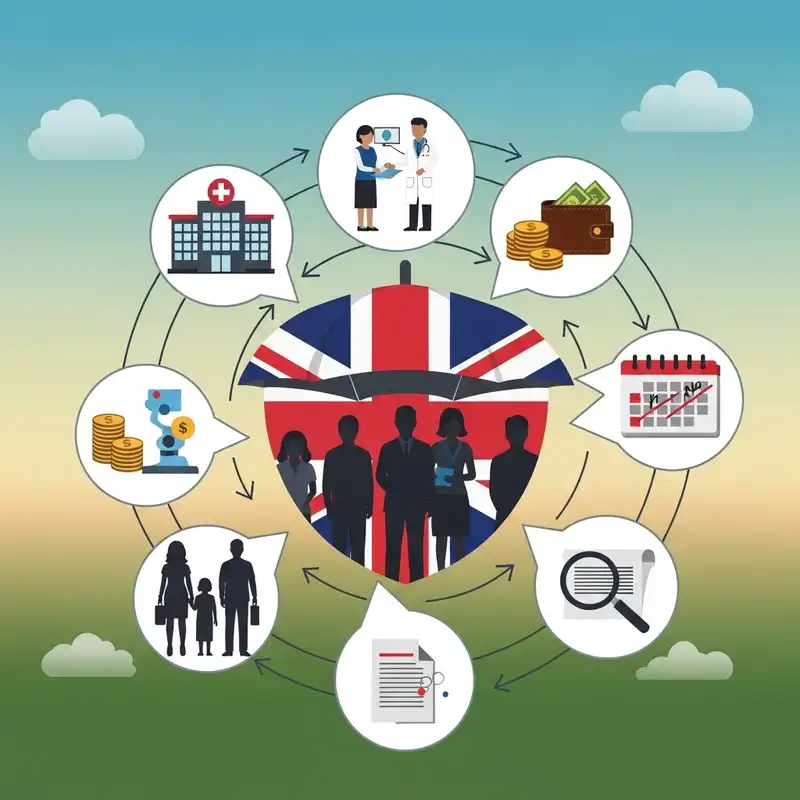
True resilience is a dynamic shield composed of several key elements:
- Income Security: A plan to replace your earnings if you're unable to work.
- Shock Absorption: A lump sum of cash to handle major life events like a critical illness, helping you navigate recovery without financial ruin.
- Legacy Protection: Ensuring your family's financial stability and your assets are passed on as you intend.
- Health Access: The ability to get the best medical care quickly, getting you back to health and life faster.
The psychological benefits are profound. When you know you have this shield, you operate from a place of security, not scarcity. You're more likely to ask for that promotion, start that business, or simply sleep better at night. Financial anxiety is a leading cause of stress; building resilience is the antidote.
The Bedrock of Your Blueprint: Protecting Your Income
Your ability to earn an income is your single most valuable asset. It pays the mortgage, puts food on the table, and fuels your future plans. If it stops, everything is at risk. Yet, it's the asset we are least likely to insure.
The number of people out of work due to long-term sickness in the UK has reached a record high, with ONS figures from early 2024 showing around 2.8 million people in this position. Many assume that state benefits will be enough to support them. The reality is starkly different.
Income Protection Insurance is the cornerstone of this bedrock. It's a policy that pays you a regular, tax-free monthly income if you can't work due to any illness or injury. This isn't just for accidents; a significant portion of claims are for mental health conditions, musculoskeletal issues, and cancer.
Consider the difference:
| Support System | Typical Monthly Payout (based on £35,000 salary) | Duration |
|---|---|---|
| Statutory Sick Pay (SSP) | Approx. £506 | Up to 28 weeks |
| Universal Credit | Approx. £393 (standard allowance) | Ongoing, but means-tested |
| Income Protection | Approx. £1,750 (60% of gross salary) | Until you return to work or retire |
As the table shows, relying on the state provides a fraction of a typical salary, plunging a household immediately into financial crisis. Income Protection bridges that gap, allowing you to focus on one thing: your recovery.
A Note for the Hands-On Professionals: Personal Sick Pay
If you're a tradesperson, nurse, electrician, or freelancer, your income often stops the moment you do. You may not have the luxury of generous employer sick pay. This is where Personal Sick Pay insurance comes in.
These plans are specifically designed for riskier occupations or the self-employed. They often offer shorter deferral periods (the time you wait before the payments start), sometimes from 'day one' of being unable to work. For a self-employed plumber who breaks a wrist, this is not a luxury; it's a lifeline that keeps their business afloat and their family secure.
For the Visionaries: Protecting Your Business and Your Role In It
If you're a company director, business owner, or freelancer, your financial world is intrinsically linked to your business. Protecting yourself means protecting the entity you've worked so hard to build.
Executive Income Protection
This is Income Protection, but with a crucial, tax-efficient twist. The policy is owned and paid for by your limited company.
- Tax-Efficient: The premiums are typically treated as an allowable business expense, reducing your corporation tax bill.
- Benefit for You: If you need to claim, the benefit is paid to the company, which then pays it to you via PAYE.
- Attracts Talent: Offering this as a benefit makes your company far more attractive to high-calibre employees.
Key Person Insurance
Who is indispensable to your business? Is it the director with all the client relationships? The technical genius with the product knowledge? The star salesperson who brings in 40% of the revenue?
Key Person Insurance protects the business itself from the financial fallout of losing that person to critical illness or death. It pays a lump sum to the business to:
- Cover the cost of recruiting a replacement.
- Repay business loans or reassure lenders.
- Compensate for a projected loss in profits during the disruption.
- Instil confidence in investors and the remaining team.
Think of it as business-interruption insurance for your most valuable asset: your people.
Shareholder & Partnership Protection
If you co-own a business, what happens if one of you passes away? The deceased's shares would typically pass to their family. Do they want to be involved in the business? Do you have the funds to buy them out at a fair price? This scenario can lead to conflict and even the forced sale of the company.
Shareholder or Partnership Protection provides the remaining owners with the capital needed to purchase the deceased's share of the business, ensuring a smooth transition and continuity for everyone involved.
Bracing for Life’s Biggest Shocks: Critical Illness and Life Cover
While income protection secures your monthly cash flow, some events create an immediate need for a large injection of capital. This is where lump-sum protection plans are vital.
The Sobering Reality: The 1-in-2 Cancer Diagnosis
It’s a statistic that stops you in your tracks. According to Cancer Research UK, an estimated 1 in 2 people in the UK will be diagnosed with cancer in their lifetime. The good news is that survival rates are continuously improving. More people are living with and beyond cancer.
However, survival comes with its own challenges. The financial impact—the "cost of cancer"—can be devastating. It's not just about lost income. It's the cost of travel to specialist hospitals, home modifications, private consultations to get a second opinion, or even non-NHS funded treatments. This is where Critical Illness Cover (CIC) becomes a financial first-responder.
CIC pays out a tax-free lump sum on the diagnosis of a specified serious condition. While policies cover dozens of illnesses, the vast majority of claims are for three main conditions: cancer, heart attack, and stroke.
A CIC payout gives you choices and control at a time when you feel you have none.
| How a Critical Illness Payout Can Be Used |
|---|
| Clear or pay down your mortgage |
| Cover household bills while you recover |
| Pay for private medical treatment or therapy |
| Adapt your home or vehicle |
| Allow a partner to take time off work to care for you |
| Simply provide a financial cushion to reduce stress |
The Ultimate Safety Net: Life Insurance
Life Insurance (or Life Protection) is perhaps the most selfless purchase you can make. It's a promise to your loved ones that your absence won't mean financial hardship for them. It provides a tax-free payout upon your death, ensuring they can:
- Pay off the mortgage and remain in the family home.
- Cover funeral costs.
- Replace your lost income to manage daily living expenses.
- Fund future goals, like university education for your children.
While a large lump sum is the traditional approach, a fantastic and often more affordable alternative is Family Income Benefit (FIB). Instead of one large payout, FIB provides your family with a regular, tax-free monthly or annual income for the remainder of the policy term. This can be much easier for a grieving family to manage, replacing your salary in a way that feels familiar and prevents the pressure of managing a large investment.
The Private Health Advantage: Get Back to Life, Faster
We are all incredibly fortunate to have the NHS. Its dedication to providing care for everyone, free at the point of use, is a cornerstone of our society. However, the system is under unprecedented strain. In mid-2024, the number of treatment pathways on NHS waiting lists in England hovered around 7.5 million.
For many conditions, especially those affecting your quality of life and ability to work (like joint pain requiring a hip replacement, or cataracts affecting vision), the wait can be long and debilitating.
This is where Private Medical Insurance (PMI) offers a powerful advantage. It works alongside the NHS, giving you fast-track access to:
- Specialist Consultations: See an expert in days, not months.
- Diagnostic Scans: Get that crucial MRI, CT, or ultrasound quickly to understand the problem.
- Treatment: Be admitted to a private hospital for surgery or treatment at a time that suits you.
- Choice: Select your surgeon and hospital.
- Comfort: Recover in a private room.
Crucially, modern PMI policies often include incredible value-added services like virtual GP appointments 24/7, mental health support lines, and physiotherapy sessions, helping you manage your health proactively. It's not about jumping the queue; it's about taking control of your health journey to get back on your feet, back to your family, and back to your life as quickly as possible. Navigating the PMI market can be complex, which is why working with an expert broker like WeCovr is so valuable. We can compare policies from all the UK's leading insurers to find a plan that matches your needs and budget.
Building Your Legacy: Smart Gifting & Inheritance Tax Planning
Financial resilience isn't just about protecting against the bad things; it's also about enabling the good things. As you build wealth, you'll naturally want to help your children or grandchildren, perhaps with a deposit for a house or to start a business.
However, giving away large sums of money comes with a sting in the tail: Inheritance Tax (IHT). Under the "7-year rule," if you make a significant gift (known as a Potentially Exempt Transfer) and pass away within seven years, that gift could be pulled back into your estate and be subject to IHT at a rate of up to 40%.
This can create a sudden, unexpected tax bill for your loved ones. This is where a specialist policy called Gift Inter Vivos Insurance comes in.
- What it is: A specific type of life insurance policy designed to pay out a lump sum if you die within the 7-year period of making a gift.
- How it works: The payout is designed to match the potential IHT liability, which reduces on a sliding scale from year 3 to year 7.
- The result: Your beneficiary receives the full, intended value of your gift, with the tax bill taken care of by the insurance policy. It’s a simple, cost-effective way to ensure your generosity has the full impact you desire.
The Resilience Lifestyle: A Proactive Approach to Your Wellbeing
The cheapest and most effective insurance policy is a healthy lifestyle. Building financial resilience goes hand-in-hand with investing in your physical and mental health. Insurers recognise this, and healthier applicants often benefit from lower premiums. More importantly, you benefit from a higher quality of life and a reduced risk of needing to claim in the first place.
- Nourish Your Body: A balanced diet rich in fruits, vegetables, and whole grains is proven to reduce the risk of many chronic diseases. Small changes can have a huge impact.
- Move Every Day: The NHS recommends at least 150 minutes of moderate-intensity activity a week. This could be a brisk walk, a cycle ride, or a dance class. It’s a powerful tool for both physical and mental health.
- Prioritise Sleep: Aim for 7-9 hours of quality sleep per night. It's essential for cognitive function, immune response, and emotional regulation.
- Manage Stress: Chronic stress takes a toll on your body. Incorporate mindfulness, meditation, or simply time in nature into your routine to decompress.
At WeCovr, we believe in supporting our clients' holistic wellbeing. That's why, in addition to finding you the right protection, we provide our customers with complimentary access to our CalorieHero app. This AI-powered calorie and nutrition tracker is a simple, effective tool to help you make healthier choices every day, showing our commitment to your long-term health, not just your financial security.
Putting It All Together: Your Personal Resilience Blueprint
Building your financial resilience isn't about buying one product. It's about strategically layering different types of protection to create a comprehensive safety net that is tailored to you.
Your personal blueprint will depend on your unique circumstances:
- Your Age & Health: Affects product choice and cost.
- Your Family: Do you have a partner? Children?
- Your Work: Are you employed, self-employed, a company director?
- Your Finances: What are your major liabilities, like your mortgage?
- Your Goals: What future do you want to protect?
Navigating these choices can feel overwhelming. The UK protection market is vast, with dozens of providers all offering slightly different products. This is where impartial, expert advice is invaluable.
As specialist brokers, we at WeCovr have one job: to understand you and your needs. We then search the entire market—from major names like Aviva, Legal & General, and Zurich to specialist providers—to find the right combination of policies at the most competitive price. We do the hard work, translating the jargon and comparing the small print, so you can make an informed and confident decision.
Financial resilience is the ultimate act of self-care and responsibility. It’s the foundation that gives you the freedom to dare, the space to grow, and the peace of mind to truly live.
Isn't this type of insurance really expensive?
Do I need to have a medical examination to get cover?
What if I have a pre-existing medical condition? Can I still get cover?
Why should I use a broker like WeCovr instead of going directly to an insurer?
Can I change my level of cover in the future?
Sources
- Office for National Statistics (ONS): Mortality and population data.
- Association of British Insurers (ABI): Life and protection market publications.
- MoneyHelper (MaPS): Consumer guidance on life insurance.
- NHS: Health information and screening guidance.
Disclaimer: This is general guidance only and does not constitute formal tax or financial advice. Tax treatment depends on individual circumstances, policy terms, and HMRC interpretation, which cannot be guaranteed in advance. Whenever applicable, businesses and individuals should always consult a qualified accountant or tax adviser before arranging such policies.