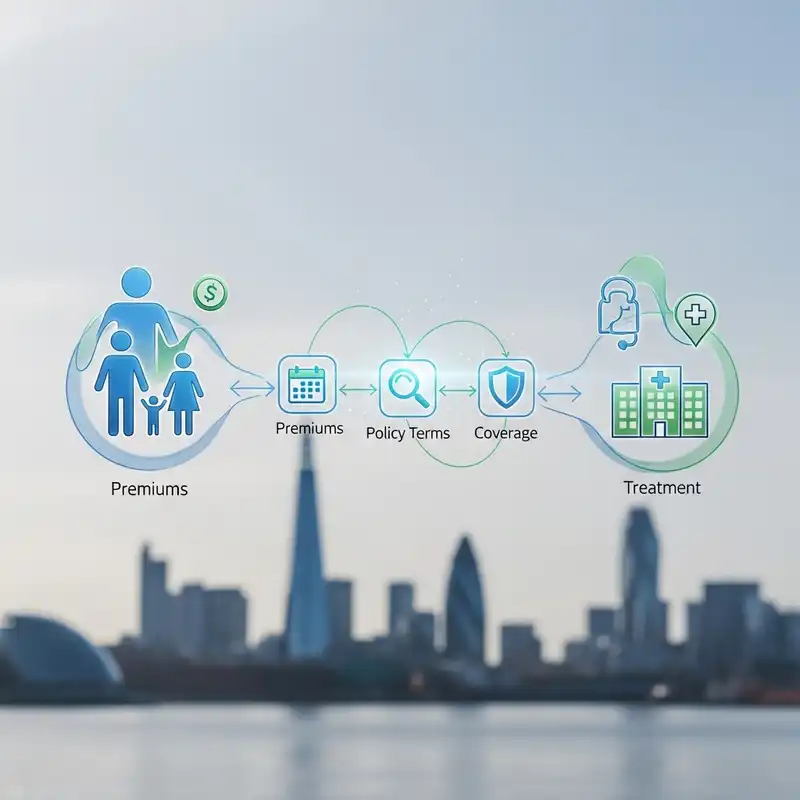
TL;DR
Learn how comprehensive Life Protection and even purposeful Gift Inter Vivos can transform worry into peace, allowing you to truly thrive, all amplified by the proactive power of private health insurance. Life is a remarkable journey of growth, ambition, and connection. We meticulously plan our careers, save for our children's education, and dream of a comfortable retirement.
Key takeaways
- What is it? This cover pays out a tax-free lump sum if you are diagnosed with one of a list of specific, serious illnesses defined in the policy (e.g., specific types of cancer, heart attack, stroke, multiple sclerosis).
- Who is it for? Almost any working adult. Unlike life insurance, this is designed to protect you while you are alive. The payout can be used to cover your mortgage and bills while you recover, pay for private treatment, or make necessary adaptations to your home. It buys you breathing space to focus on getting better.
- Real-Life Example: Mark, a 45-year-old marketing manager, suffers a major heart attack. His critical illness policy pays out 100,000. He uses this money to pay his mortgage for a year, allowing him to take extended time off work for a full and stress-free recovery, without draining his family's savings.
- Speed of Payout: A trust is not part of your will and does not need to go through the lengthy legal process of probate. This means the money can be paid to your family in a matter of weeks, rather than many months or even years.
- Bypasses Inheritance Tax (IHT): Because the policy is outside your legal estate, the payout is not typically subject to the 40% Inheritance Tax. On a 300,000 policy, this could save your family 120,000.
Future Proofing Your Lifes Potential
As 2025 projections indicate 1 in 2 people will face a cancer diagnosis in their lifetime, discover how safeguarding your future with Family Income Benefit, Income Protection, Life and Critical Illness Cover, and specialized Personal Sick Pay for riskier jobs, empowers you. Learn how comprehensive Life Protection and even purposeful Gift Inter Vivos can transform worry into peace, allowing you to truly thrive, all amplified by the proactive power of private health insurance. (illustrative estimate)
Life is a remarkable journey of growth, ambition, and connection. We meticulously plan our careers, save for our children's education, and dream of a comfortable retirement. Yet, amidst these carefully laid plans, we often overlook the very foundation upon which they are built: our health and our ability to earn an income.
The idea of preparing for illness or an unexpected life event can feel daunting, even negative. But what if we reframed it? What if, instead of being an act of bracing for the worst, it was an act of profound optimism? This is the unseen freedom. It’s the quiet confidence that comes from knowing you have a robust safety net, a financial shield that protects not just your finances, but your family’s stability and your own peace of mind.
When you remove the nagging "what if?" from your mental equation, something incredible happens. You unlock the capacity to take calculated risks, to pursue passions, to be fully present with your loved ones, and to invest in your personal growth without the shadow of financial ruin looming. This isn't about dwelling on morbidity; it's about intelligently engineering a future where you and your family can flourish, no matter what turns the road takes.
The Shifting Landscape of UK Health and Work
The world we live in is not the same as it was for our parents. The stability of a "job for life" has been replaced by a dynamic, often uncertain, employment landscape. Simultaneously, while we are living longer, we are also facing significant health challenges.
The stark projection from Cancer Research UK that one in two people in the UK born after 1960 will be diagnosed with some form of cancer during their lifetime is a sobering reality check. This isn't a scaremongering tactic; it's a vital piece of data that underscores the importance of preparation. Beyond cancer, other conditions are widespread:
- Cardiovascular Disease: The British Heart Foundation reports there are around 7.6 million people living with heart and circulatory diseases in the UK. Every five minutes, someone is admitted to a UK hospital due to a heart attack.
- Strokes: There are more than 100,000 strokes in the UK each year, which translates to one stroke every five minutes. It is a leading cause of adult disability.
- Mental Health: According to the NHS, 1 in 4 adults experience at least one diagnosable mental health problem in any given year. This can have a profound impact on one's ability to work.
The Financial Shockwave of Illness
When a serious illness strikes, the immediate focus is on health. But a secondary, and often devastating, shockwave quickly follows: the financial impact. For many, the support system is far less robust than they imagine.
Consider Statutory Sick Pay (SSP). As of the 2024/25 tax year, the government-mandated payment is just £116.75 per week, payable for up to 28 weeks. Ask yourself a simple question: could your household survive on less than £500 a month? For most, after the mortgage or rent, council tax, and utility bills are paid, there would be nothing left for food, transport, or any other essentials.
The situation is even more precarious for the UK's growing army of self-employed workers. The Office for National Statistics (ONS) estimates there are over 4.2 million self-employed people in the UK. These entrepreneurs, freelancers, and contractors have zero entitlement to Statutory Sick Pay. One week of illness means one week of no income. A month-long recovery could wipe out savings entirely. This is the stark reality that makes personal financial protection not a luxury, but an absolute necessity.
Decoding Your Protection Toolkit: A Plain English Guide
Navigating the world of insurance can feel like learning a new language. But at its core, it's about matching the right tool to the right problem. Let's break down the key types of protection that form the bedrock of a secure financial plan.
1. Life Insurance (Life Protection)
- What is it? This is the most fundamental form of protection. A life insurance policy pays out a tax-free lump sum to your beneficiaries if you pass away during the policy term.
- Who is it for? Anyone with dependents. This includes people with a partner who relies on their income, young children, or even ageing parents you support. It's designed to pay off a mortgage, clear debts, and provide for your family's future living costs.
- Real-Life Example: Sarah, a 35-year-old mother of two, has a life insurance policy. If she were to pass away unexpectedly, her husband would receive a £300,000 lump sum. This would be enough to clear their remaining mortgage and provide a substantial fund to help raise their children without financial struggle.
2. Critical Illness Cover
- What is it? This cover pays out a tax-free lump sum if you are diagnosed with one of a list of specific, serious illnesses defined in the policy (e.g., specific types of cancer, heart attack, stroke, multiple sclerosis).
- Who is it for? Almost any working adult. Unlike life insurance, this is designed to protect you while you are alive. The payout can be used to cover your mortgage and bills while you recover, pay for private treatment, or make necessary adaptations to your home. It buys you breathing space to focus on getting better.
- Real-Life Example: Mark, a 45-year-old marketing manager, suffers a major heart attack. His critical illness policy pays out £100,000. He uses this money to pay his mortgage for a year, allowing him to take extended time off work for a full and stress-free recovery, without draining his family's savings.
3. Income Protection Insurance
- What is it? Often considered the most crucial cover for anyone who works. Income Protection pays you a regular, tax-free monthly income (typically 50-70% of your gross salary) if you are unable to work due to any illness or injury. The payments continue until you can return to work, the policy term ends, or you retire, whichever comes first.
- Who is it for? Every single person whose lifestyle depends on their monthly salary. It is your personal safety net, replacing your income when you need it most.
- Real-Life Example: Chloe, a 28-year-old graphic designer, develops a severe back problem and is signed off work by her doctor for 18 months. After a pre-agreed waiting period (e.g., 3 months), her income protection policy starts paying her £1,800 every month, allowing her to keep paying her rent and bills while she undergoes physiotherapy.
4. Family Income Benefit
- What is it? This is a clever and often more affordable alternative to a standard lump-sum life insurance policy. Instead of one large payout, it provides your family with a regular, tax-free monthly or annual income from the point of claim until the end of the policy term.
- Who is it for? It's particularly good for young families who are more concerned with replacing a lost monthly salary for day-to-day living costs rather than dealing with a large, intimidating lump sum.
- Real-Life Example: David and Lucy take out a 20-year Family Income Benefit policy to provide £2,000 a month. If David were to pass away 5 years into the policy, Lucy would receive £2,000 every month for the remaining 15 years, making budgeting and managing household finances much simpler during a difficult time.
Here is a simple table to help you see the differences at a glance:
| Feature | Life Insurance | Critical Illness Cover | Income Protection | Family Income Benefit |
|---|---|---|---|---|
| Trigger | Death | Diagnosis of a specific serious illness | Inability to work due to any illness/injury | Death |
| Payout | One tax-free lump sum | One tax-free lump sum | Regular tax-free income | Regular tax-free income |
| Main Purpose | Protect dependents after you're gone | Protect you and your family financially during a major health crisis | Replace your salary during a period of illness/injury | Replace your monthly income for your family after you're gone |
Specialised Protection for Unique Careers and Circumstances
While the core products cover most people, some careers and life situations require more tailored solutions. This is where specialist advice, such as that provided by WeCovr, becomes invaluable in finding the perfect fit.
For Tradespeople, Nurses, and High-Risk Jobs: Personal Sick Pay
Many people in physically demanding jobs—electricians, plumbers, builders, warehouse operatives, and even nurses who are on their feet all day—face a higher risk of injury that could stop them from working. For them, a long waiting period on a traditional income protection policy isn't practical.
Personal Sick Pay (also known as short-term income protection) is the answer. These policies are designed with much shorter waiting periods, often from day one or day eight of being unable to work. They typically pay out for a set period, such as 12 or 24 months, providing an immediate financial lifeline to cover bills while you recover from an injury or short-term illness.
For the Self-Employed and Freelancers
As we've seen, if you're self-employed, you are your own safety net. Income Protection is not just advisable; it's essential business planning.
- Flexibility is Key: Policies can be structured to match fluctuating incomes.
- Tax Efficiency: For sole traders, the premiums are not tax-deductible, but the payout is tax-free, which is a significant benefit.
- Peace of Mind: Knowing your personal bills are covered allows you to focus on your recovery without the stress of your business faltering.
For Company Directors and Business Owners
Running a business comes with a unique set of responsibilities, not just to your family but also to your employees and fellow directors. Specialist business protection is designed to protect the company itself.
- Executive Income Protection: This is an income protection policy that is owned and paid for by your limited company, for you as an employee. The key advantage is that the premiums are usually classed as an allowable business expense, making it highly tax-efficient. The benefit is paid to the company, which then distributes it to you via PAYE.
- Key Person Insurance: Who in your business is indispensable? A star salesperson? A technical genius? Key Person Insurance is a policy taken out by the business on the life or health of a crucial employee. If that person were to pass away or suffer a critical illness, the policy pays a lump sum to the business to cover loss of profits, recruit a replacement, or clear debts. It protects the business's future.
- Shareholder or Partnership Protection: If a business owner were to die, their shares would typically pass to their family. Do the remaining owners have the funds to buy these shares back? Do the family members want to be involved in the business? This can cause huge problems. Shareholder Protection provides the remaining owners with the funds to purchase the deceased's shares, ensuring a smooth transition and business continuity.
Here's how personal and executive income protection compare:
| Feature | Personal Income Protection | Executive Income Protection |
|---|---|---|
| Who pays? | The individual | The limited company |
| Premiums | Paid from your post-tax income | Paid by the company, usually a tax-deductible business expense |
| Benefit Payout | Paid directly to you, tax-free | Paid to the company, then paid to you via PAYE (subject to tax/NI) |
| Ideal For | Sole traders, employees | Company directors, key employees in a limited company |
Beyond the Basics: Legacy, Tax, and Proactive Health
A truly comprehensive plan goes beyond just covering your mortgage and salary. It considers your long-term legacy and integrates proactive health measures to create a virtuous circle of wellbeing.
The Power of a Trust
This is one of the most important yet often overlooked aspects of life insurance. When you place your life insurance policy "in trust," you are legally ring-fencing the payout from your estate.
In simple terms, a trust is a legal arrangement where you (the settlor) give your policy to a group of people you choose (the trustees) to look after for the benefit of others (the beneficiaries).
Why is this so powerful?
- Speed of Payout: A trust is not part of your will and does not need to go through the lengthy legal process of probate. This means the money can be paid to your family in a matter of weeks, rather than many months or even years.
- Bypasses Inheritance Tax (IHT): Because the policy is outside your legal estate, the payout is not typically subject to the 40% Inheritance Tax. On a £300,000 policy, this could save your family £120,000.
- Control: You specify who the beneficiaries are, ensuring the money goes to exactly who you intend it to.
Setting up a trust is usually free with the insurer when you take out the policy and is a crucial step in ensuring your protection plan works as efficiently as possible.
Purposeful Planning: Gift Inter Vivos Insurance
For those with larger estates, planning for Inheritance Tax is a key concern. One common strategy is to gift assets (cash, property) to your children or others during your lifetime. Under the "Potentially Exempt Transfer" rules, if you live for seven years after making the gift, it falls outside of your estate for IHT purposes.
But what if you don't? If you pass away within that seven-year window, the gift becomes part of your estate, and your beneficiaries could face a hefty tax bill on the "gift" they received.
Gift Inter Vivos insurance is designed specifically to solve this problem. It's a life insurance policy that pays out a lump sum to cover the potential IHT liability on the gift. The amount of cover required reduces over the seven years, mirroring the "taper relief" on the tax due. It's a clever tool for effective estate planning.
The Proactive Amplifier: Private Health Insurance (PMI)
Protection policies are your financial defence. Private Health Insurance (PMI) is your proactive health offence. The two work in perfect harmony.
PMI is designed to get you diagnosed and treated quickly, bypassing long NHS waiting lists. The benefits include:
- Speed: Prompt access to specialist consultations and diagnostic scans (like MRI and CT).
- Choice: You can often choose the hospital and specialist who treats you.
- Access: You may get access to new drugs or treatments not yet available on the NHS.
How does this amplify your other cover? Imagine you develop a condition that stops you from working. With PMI, you get seen and diagnosed faster. You start treatment sooner. This could dramatically shorten your recovery time, meaning you need to claim on your income protection for a shorter period and can get back to your life and work much quicker. It completes the circle of protection, addressing both the health and financial consequences of illness.
WeCovr: Your Partner in Building a Resilient Future
The UK protection market is vast, with dozens of providers and hundreds of policy variations. Trying to navigate this alone can be overwhelming. Do you need a policy that pays out on your "own occupation" or "any occupation"? Which insurer has the most comprehensive cancer definition? How do you write a policy in trust?
This is where working with an expert, independent broker is so vital. At WeCovr, our role is to act as your trusted guide. We take the time to understand your unique circumstances—your family, your career, your budget, and your goals. We then use our expertise to search the entire market, comparing policies from all the UK's leading insurers to find the one that provides the best level of cover for you, at the most competitive price.
We believe that true protection is about more than just a policy document. It’s about empowering our clients to live healthier, more secure lives. This holistic approach is why we go the extra mile. For instance, we believe in the power of proactive wellness, which is why all our protection clients receive complimentary access to CalorieHero, our exclusive AI-powered calorie and nutrition tracking app. It’s a small way we can support your health journey, helping you build the resilience that is the ultimate foundation for a flourishing life.
Cultivating Resilience: Small Steps for a Healthier, More Secure Life
Financial protection is the essential safety net, but our daily habits are what weave the fabric of our long-term health. By integrating small, positive changes, you not only improve your wellbeing but can also positively impact your insurance, potentially leading to lower premiums.
- Nourish Your Body: You don't need a punishing diet. Focus on a balanced plate rich in fruit, vegetables, lean proteins, and whole grains. Reducing processed foods, sugar, and excessive alcohol can have a huge impact on your energy levels and reduce your risk of chronic diseases.
- Prioritise Sleep: Sleep is not a luxury; it is a biological necessity. Aim for 7-9 hours of quality sleep per night. It's crucial for mental clarity, immune function, and stress regulation.
- Move Every Day: The NHS recommends 150 minutes of moderate-intensity activity a week. This doesn't have to mean the gym. A brisk walk at lunchtime, cycling to the shops, or even vigorous gardening all count. Find an activity you enjoy, and make it a non-negotiable part of your routine.
- Manage Your Mind: Chronic stress is detrimental to health. Practice mindfulness, spend time in nature, connect with friends, and don't be afraid to seek help if you're struggling. Protecting your mental health is just as important as protecting your physical health.
Conclusion: From Worry to Flourishing
Strategically preparing for life's unpredictable turns is not an exercise in fear. It is the ultimate act of self-care and family love. It is the key that unlocks the unseen freedom to live more boldly, dream bigger, and build a life of genuine growth and connection.
By putting a robust plan in place—combining the right mix of Life and Critical Illness Cover, Income Protection, and perhaps specialist policies like Personal Sick Pay or Key Person Insurance—you transform worry into peace of mind. You create a powerful foundation that allows you and your loved ones to weather any storm.
This isn't just about financial planning; it's about life planning. It's about giving yourself the permission and the security to reach your full potential, knowing that you have built a fortress of protection around the people and the future you cherish most.
Frequently Asked Questions (FAQs)
Is this type of insurance expensive?
The cost of protection insurance varies widely based on your age, health, lifestyle (e.g., whether you smoke), the type of cover, the amount of cover, and the policy term. However, it is often far more affordable than people think. For example, a healthy 30-year-old could get significant life insurance cover for the price of a few cups of coffee a week. The key is that the cost of not having cover when you need it is infinitely higher.
What is the main difference between Income Protection and Critical Illness Cover?
They solve different problems. Critical Illness Cover pays a one-off, tax-free lump sum if you're diagnosed with a specific serious illness listed on the policy. It's great for clearing debts or making large lifestyle adjustments. Income Protection pays a regular, tax-free monthly income if you're unable to work due to *any* illness or injury (not just a specific list). It's designed to replace your salary and cover ongoing bills. Many financial advisers see Income Protection as the more essential cover for a working person.
Do I need a medical exam to get cover?
Not always. For many people, cover can be put in place based on the answers you provide on the application form. However, if you are older, are applying for a very large amount of cover, or have disclosed pre-existing medical conditions, the insurer may request a GP report or a mini-screening with a nurse. This is a normal part of the process and is paid for by the insurer.
Can I get cover if I have a pre-existing medical condition?
Yes, it is often still possible. You must declare all pre-existing conditions fully and honestly on your application. The insurer will then make a decision. They may offer cover at standard terms, increase the premium, or place an "exclusion" on the policy relating to your specific condition. In some cases, they may decline cover, but it is always worth applying. A specialist broker can help you approach the insurers most likely to offer favourable terms for your condition.
Why should I use a broker like WeCovr instead of going direct to an insurer?
Going direct means you only see one company's products and definitions, which may not be the best fit or price for you. An independent broker like WeCovr works for you, not the insurer. We conduct a "fair and personal analysis" of the entire market to find the most suitable policy for your personal circumstances. We provide expert advice, help you with the application, and can assist with complex issues like placing policies in trust, ensuring you get the right protection in place.
What does 'writing a policy in trust' mean and why is it important?
Placing your life insurance policy in a trust is a legal arrangement that separates the policy from your estate. It's crucially important for two main reasons. Firstly, it allows the payout to be made directly to your chosen beneficiaries much faster, avoiding the long delays of probate. Secondly, as the money is not legally part of your estate, it is typically not subject to 40% Inheritance Tax. It's a simple, free process that ensures the money gets to your loved ones quickly and efficiently when they need it most.
Sources
- Office for National Statistics (ONS): Mortality and population data.
- Association of British Insurers (ABI): Life and protection market publications.
- MoneyHelper (MaPS): Consumer guidance on life insurance.
- NHS: Health information and screening guidance.
Disclaimer: This is general guidance only and does not constitute formal tax or financial advice. Tax treatment depends on individual circumstances, policy terms, and HMRC interpretation, which cannot be guaranteed in advance. Whenever applicable, businesses and individuals should always consult a qualified accountant or tax adviser before arranging such policies.
Measure your family’s protection gap, then get the right life cover quote
Start with the score to see whether your family would face a real financial shortfall before moving on to life cover options.
Check what happens if someone dies too soon
See whether debt, dependants and mortgage risk are covered
Move into tailored life cover options after the score
Get your score
Your next best move
Get your score in minutes, then decide what kind of protection help would be most useful.
Score your household protection
See how well your current setup protects dependants, debt and major commitments.
Find the shortfall
Know whether life cover, critical illness or income protection is the actual missing piece.
Continue to tailored life cover
If life cover is the gap, continue to tailored life cover options.
What you get
A quick view of your current protection position
A clearer idea of where the biggest gaps may be
A direct route to tailored help if you want it