TL;DR
As an FCA-authorised broker that has arranged over 900,000 policies, WeCovr understands that moving here involves many questions, especially about healthcare. This guide explains private medical insurance (PMI) for non-UK residents, helping you secure peace of mind for your health and wellbeing. Navigating a new country's healthcare system can be daunting.
Key takeaways
- Referral to Treatment (RTT): In January 2025, the waiting list for elective care stood at approximately 7.5 million treatment pathways. The target is for 92% of patients to wait no more than 18 weeks, but this target has not been met consistently for several years.
- Diagnostic Tests: Waiting for key diagnostic tests like MRI or CT scans can also involve significant delays, which can be worrying when you need a swift diagnosis.
- Cancer Treatment: While urgent cancer referrals are prioritised, the target of starting treatment within 62 days of an urgent GP referral is also under strain.
- Speed: Quickly see a specialist and receive treatment for acute conditions.
- Choice: Choose your specialist, consultant, and hospital from an approved list.
WeCovr's guide to PMI options for those without permanent UK residency
Welcome to the UK! As an FCA-authorised broker that has arranged over 900,000 policies, WeCovr understands that moving here involves many questions, especially about healthcare. This guide explains private medical insurance (PMI) for non-UK residents, helping you secure peace of mind for your health and wellbeing.
Navigating a new country's healthcare system can be daunting. You might be a skilled worker on a visa, an international student, or an entrepreneur setting up a new venture. Whatever your reason for being here, understanding your healthcare options is crucial. This guide will walk you through how the NHS works for non-residents, what private medical insurance covers, and how to choose a strong fit for your needs for your circumstances.
Why Non-UK Residents Should Consider Private Health Insurance
While the UK's National Health Service (NHS) is a world-renowned institution, it faces significant pressures. For those new to the UK, relying solely on the NHS might not always provide the speed, convenience, or choice you are used to.
The Reality of NHS Waiting Times
The NHS is committed to providing excellent care, but demand often outstrips capacity. According to the latest NHS England data from early 2025, the median waiting time for non-urgent consultant-led treatment can be several months.
- Referral to Treatment (RTT): In January 2025, the waiting list for elective care stood at approximately 7.5 million treatment pathways. The target is for 92% of patients to wait no more than 18 weeks, but this target has not been met consistently for several years.
- Diagnostic Tests: Waiting for key diagnostic tests like MRI or CT scans can also involve significant delays, which can be worrying when you need a swift diagnosis.
- Cancer Treatment: While urgent cancer referrals are prioritised, the target of starting treatment within 62 days of an urgent GP referral is also under strain.
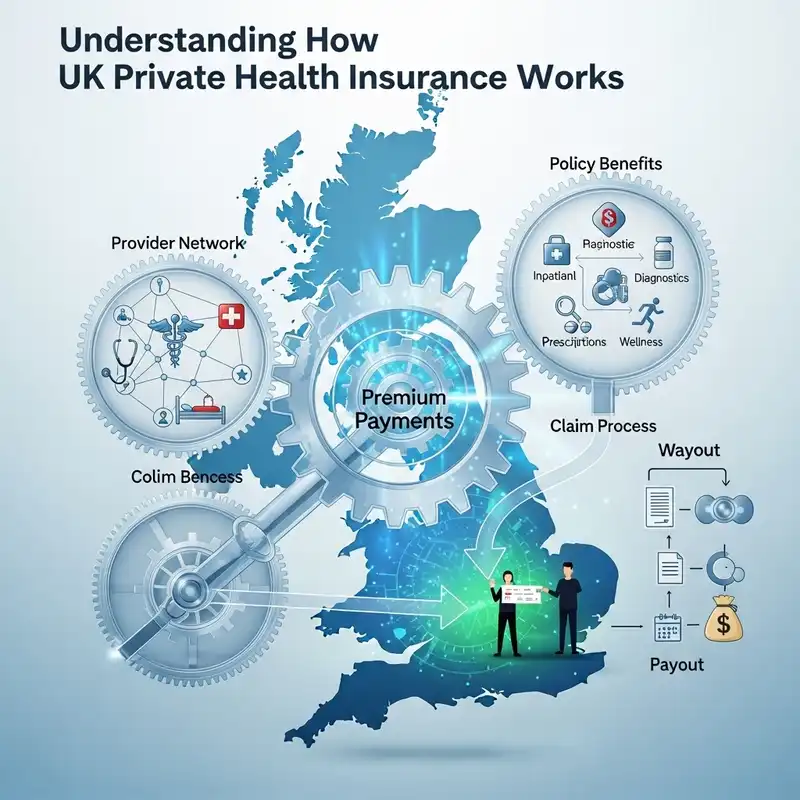
Private medical insurance is designed to bypass these queues. It offers prompt access to specialists, diagnostic tests, and private hospital treatment, often within days or weeks rather than months. For a non-resident, this can mean a faster return to work, studies, and daily life.
Key Benefits of PMI for Non-Residents:
- Speed: Quickly see a specialist and receive treatment for acute conditions.
- Choice: Choose your specialist, consultant, and hospital from an approved list.
- Comfort: Access to private rooms in comfortable, modern hospitals.
- Convenience: Schedule appointments at times that suit you, minimising disruption to your work or studies.
- Access to Advanced Treatments: Some policies offer cover for new drugs or treatments not yet available on the NHS.
Understanding Your UK Healthcare Rights as a Non-Resident
Before diving into PMI, it’s essential to understand your entitlement to NHS care. Your eligibility depends on your immigration status.
The Immigration Health Surcharge (IHS)
Most non-European Economic Area (EEA) nationals applying for a UK visa for more than six months are required to pay the Immigration Health Surcharge (IHS) as part of their visa application.
- What it is: The IHS is an upfront fee that gives you access to NHS care on broadly the same basis as a permanent UK resident.
- What it covers: It allows you to register with a GP, visit A&E, and receive NHS hospital treatment.
- What it doesn't cover: It does not cover prescriptions (in England), dental care, or optical services, which are chargeable for most people.
So, if I've paid the IHS, why do I need PMI?
Paying the IHS grants you access to the NHS; it does not grant you priority. You will join the same waiting lists as everyone else. PMI acts as a complementary service, giving you an alternative route to faster treatment in the private sector.
| Feature | NHS (with IHS) | Private Medical Insurance (PMI) |
|---|---|---|
| Cost | Included in visa via IHS | Monthly or annual premium |
| Access to GP | Yes, free at point of use | Not usually covered (but helps with fast referrals) |
| Waiting Times | Subject to NHS waiting lists | Fast access to specialists & treatment |
| Choice of Hospital | Limited to local NHS trust | Wide choice from an approved hospital list |
| Choice of Consultant | Assigned by the hospital | You can often choose your specialist |
| Accommodation | Shared ward | Private, en-suite room is common |
| Emergency Care (A&E) | Yes, for everyone | Not covered; use the NHS for emergencies |
Who is not eligible for free NHS hospital treatment?
Visitors on short-term visas (e.g., standard tourist visa for under 6 months) are generally not entitled to free NHS hospital treatment, except for emergencies. They are strongly advised to take out comprehensive travel or private medical insurance for the duration of their stay. If they use NHS services, they will be billed for the cost of their treatment, which can be very expensive.
What Does Private Medical Insurance Cover (and What Does it Not)?
This is the most critical section to understand. UK private medical insurance is designed for a specific purpose: to cover the cost of treating acute conditions that arise after you take out your policy.
What is an Acute Condition? An acute condition is a disease, illness, or injury that is likely to respond quickly to treatment and lead to a full recovery. Examples include:
- Joint pain requiring a hip or knee replacement.
- Cataracts needing surgical removal.
- Hernias that can be surgically repaired.
- Most forms of cancer that are treatable.
- Heart conditions requiring bypass surgery.
The Golden Rule: No Cover for Pre-existing or Chronic Conditions
This cannot be overstated. Standard UK PMI policies do not cover:
- Pre-existing Conditions: Any illness, injury, or symptom you had before your policy started. This includes conditions you've seen a doctor for, taken medication for, or even just experienced symptoms of.
- Chronic Conditions: Illnesses that cannot be cured and require long-term management rather than a short-term fix. Examples include diabetes, asthma, high blood pressure, and arthritis. The NHS provides ongoing management for these conditions.
How do insurers handle pre-existing conditions?
They use a process called underwriting. The two main types are:
- Moratorium Underwriting: This is the most common and simplest option. You don't declare your full medical history upfront. Instead, the insurer automatically excludes any condition you've had symptoms of, or received advice or treatment for, in the 5 years before your policy began. However, if you go 2 continuous years without any symptoms, advice, or treatment for that condition after your policy starts, it may become eligible for cover.
- Full Medical Underwriting (FMU): You complete a detailed health questionnaire when you apply. The insurer reviews your medical history and tells you upfront exactly what is excluded from your policy. This provides certainty but can be a more complex process.
What's Typically Covered vs. Not Covered by a PMI Policy
| Included ✅ | Excluded ❌ |
|---|---|
| In-patient & Day-patient Treatment: Surgery, hospital stays, nursing care. | Pre-existing Conditions: Any medical issue you had before cover started. |
| Out-patient Cover: Specialist consultations, diagnostic tests, scans (often up to a set limit). | Chronic Conditions: Long-term illnesses like diabetes, asthma, or hypertension. |
| Cancer Cover: Comprehensive cover for chemotherapy, radiotherapy, and surgery is standard on most policies. | Emergency Care: A&E visits are handled by the NHS. |
| Mental Health Support: Cover for therapy and psychiatric treatment (level varies by policy). | Normal Pregnancy & Childbirth: Complications may be covered, but routine care is not. |
| Therapies: Physiotherapy, osteopathy, chiropractic care after a referral. | Cosmetic Surgery: Procedures that are not medically necessary. |
| Alternative Therapies: Some policies offer limited cover for acupuncture or homoeopathy. | Self-inflicted Injuries & Substance Abuse: Treatment for addiction or injuries from dangerous hobbies may be excluded. |
A specialist broker like WeCovr can help you understand the nuances of each policy, ensuring you know exactly what is and isn't included before you buy.
How to Choose the Best PMI Provider for Your Needs
The UK PMI market is competitive, with several excellent providers. The "best" one depends entirely on your personal needs, budget, and priorities.
Key Factors to Consider When Comparing Policies:
- Level of Cover:
- Basic: Covers in-patient and day-patient treatment only. Ideal for those on a tight budget who want cover for major medical events.
- Mid-Range: Adds a level of out-patient cover (e.g., up to £1,000) for consultations and diagnostics. This is the most popular choice.
- Comprehensive: Offers extensive out-patient cover, plus extra benefits like mental health, dental, and optical cover.
- Hospital List: Insurers offer different tiers of hospitals. A national list is standard, but adding central London hospitals will increase the premium. Check that the list includes convenient, high-quality hospitals near you.
- Excess (illustrative): This is the amount you agree to pay towards a claim. A higher excess (e.g., £500) will lower your monthly premium.
- Underwriting Type: Decide if Moratorium or Full Medical Underwriting is better for your situation.
- No-Claims Discount (NCD): Most policies include an NCD. Your premium may reduce each year you don't claim, but it will increase after you make a claim.
- Added Benefits: Look for valuable extras. For instance, all WeCovr customers gain complimentary access to CalorieHero, our AI-powered calorie and nutrition tracking app, to help you stay on top of your health goals.
Leading UK Private Health Insurance Providers:
While we work with a wide panel of top insurers, some of the most recognised names in the UK market include:
- Bupa: One of the oldest and most well-known providers with a large network of hospitals and clinics.
- AXA Health: A global insurance giant offering a wide range of flexible policies and excellent digital health tools.
- Aviva: A major UK insurer known for its comprehensive cover options and strong customer service.
- Vitality: Unique for its focus on wellness, rewarding members with discounts for staying active.
Comparing these providers alone can be overwhelming. A PMI broker like WeCovr does the hard work for you, comparing policies from across the market to find the best fit at a competitive price, at no extra cost to you.
The Cost of Private Health Insurance for Non-Residents
The cost of a PMI policy is highly individual. Insurers calculate your premium based on several risk factors.
Main Factors Influencing Your PMI Premium:
- Age: Premiums increase with age, as the likelihood of needing medical treatment rises.
- Location: Living in major cities, especially London, means higher treatment costs, which is reflected in your premium.
- Level of Cover: A comprehensive policy with full out-patient cover will cost more than a basic in-patient-only plan.
- Excess Level: Choosing a higher excess will directly reduce your monthly payments.
- Smoker Status: Smokers pay significantly more due to the associated health risks.
- Hospital List: A policy that includes expensive central London hospitals will be pricier.
Example Monthly Premiums (Illustrative - 2025)
Here are some estimated monthly costs to give you an idea. These are based on a mid-range policy with a £250 excess for a non-smoker.
| Profile | Location | Estimated Monthly Premium |
|---|---|---|
| 25-year-old Student | Manchester | £35 - £50 |
| 35-year-old Professional | Bristol | £50 - £70 |
| 45-year-old Manager | London (with London hospitals) | £90 - £130 |
| Couple (both 40) | Edinburgh | £120 - £160 |
Disclaimer: These are illustrative quotes. Your actual premium will depend on your specific circumstances and the insurer you choose.
At WeCovr, we provide personalised quotes that reflect your exact needs. We can also help you find potential savings, such as discounts for purchasing PMI alongside other cover like life insurance. Our high customer satisfaction ratings reflect our commitment to finding the right cover at the right price for our clients.
Comparing UK PMI with International Health Insurance (iPMI)
For non-UK residents, it's crucial to understand the difference between a domestic UK PMI policy and an International Private Medical Insurance (iPMI) policy. They serve different needs.
| Feature | UK Private Medical Insurance (PMI) | International Private Medical Insurance (iPMI) |
|---|---|---|
| Geographical Cover | Treatment within the UK only. | Global or regional cover (e.g., Europe-wide, or worldwide excluding USA). |
| Target Audience | UK residents or those living in the UK long-term. | Expats, global nomads, frequent business travellers. |
| Portability | Policy is tied to the UK and usually ends if you move abroad. | Policy moves with you from country to country. |
| Benefits | Focused on acute treatment in UK private hospitals. | Often includes broader benefits like medical evacuation, repatriation, and routine wellness checks. |
| Cost | Generally more affordable than iPMI. | Typically more expensive due to wider cover and higher risks. |
Who needs UK PMI? You're living, working, or studying in the UK for an extended period (e.g., 1+ years) and want faster access to medical care within the UK. You plan to use the UK as your healthcare base.
Who needs iPMI? You travel frequently for work, split your time between the UK and your home country, or plan to move to another country after your time in the UK. You need seamless medical cover across borders.
Beyond Insurance: Wellness and Staying Healthy in the UK
Having the right insurance is a safety net, but the best strategy is to stay healthy in the first place. Adjusting to a new environment can be stressful, so prioritising your wellbeing is key.
1. Register with a GP As soon as you have a stable UK address, register with a local General Practitioner (GP). This is your first point of contact for non-emergency medical advice. It's free to register and see a GP if you've paid the IHS or are ordinarily resident.
2. Eat a Balanced Diet The UK has fantastic fresh produce available in supermarkets and local markets.
- Aim for 5 a day: Eat at least five portions of a variety of fruit and vegetables every day.
- Monitor your intake: Use an app like CalorieHero, which WeCovr provides to its customers, to track your diet and ensure you're getting a good balance of macronutrients.
- Stay Hydrated: Drink plenty of water throughout the day.
3. Stay Active The UK has beautiful parks, countryside, and numerous gyms and sports clubs.
- Walking and Cycling: Many cities are becoming more pedestrian and cycle-friendly. It's a great way to explore your new home and stay fit.
- Join a Gym or Class: From high-intensity interval training (HIIT) to yoga and pilates, there's something for everyone.
- Outdoor Activities: Explore the UK's National Parks. Hiking, or "rambling" as it's often called here, is a hugely popular weekend activity.
4. Prioritise Sleep Moving country can disrupt your sleep patterns.
- Create a Routine: Try to go to bed and wake up at the same time each day.
- Avoid Screens Before Bed: The blue light from phones and laptops can interfere with melatonin production, the hormone that makes you sleepy.
- Make Your Bedroom a Sanctuary: Ensure it's dark, quiet, and at a comfortable temperature.
5. Manage Your Mental Health Moving is one of life's most stressful events. It's normal to feel overwhelmed.
- Connect with Others: Join local community groups, clubs, or expat forums to meet new people.
- Talk About It: Don't be afraid to talk to friends, family, or a professional if you're struggling. Many PMI policies now include excellent mental health support, from access to therapy sessions to 24/7 helplines.
Frequently Asked Questions (FAQ)
Do I need private medical insurance if I have already paid the Immigration Health Surcharge (IHS)?
Can I cover my family on my PMI policy if they are in the UK with me?
What happens if a new condition I claim for becomes chronic?
Take the Next Step with WeCovr
Choosing the right private medical insurance is a significant decision, especially when you are new to the UK. You don't have to navigate this complex market alone.
The team of experts at WeCovr is here to provide clear, impartial advice. We will:
- Listen to your needs and budget.
- Compare policies from the UK's leading insurers on your behalf.
- Explain all the jargon and small print in plain English.
- Find you the most suitable cover at the best possible price, with no fee for our service.
Secure your health and peace of mind today.
Get Your Free, No-Obligation PMI Quote Now ->
Sources
- NHS England: Waiting times and referral-to-treatment statistics.
- Office for National Statistics (ONS): Health, mortality, and workforce data.
- NICE: Clinical guidance and technology appraisals.
- Care Quality Commission (CQC): Provider quality and inspection reports.
- UK Health Security Agency (UKHSA): Public health surveillance reports.
- Association of British Insurers (ABI): Health and protection market publications.
Disclaimer: This is general guidance only and does not constitute formal tax or financial advice. Tax treatment depends on individual circumstances, policy terms, and HMRC interpretation, which cannot be guaranteed in advance. Whenever applicable, businesses and individuals should always consult a qualified accountant or tax adviser before arranging such policies.
Start with your Protection Score, then decide whether private health cover is the right fit
Check where health access sits in your overall protection picture before deciding whether to compare private health cover.
Spot whether NHS access risk is the real issue
See if PMI is the gap to fix first
Get health insurance help only if it makes sense for you
Get your score
Start with your protection score
Check your current position first, then get health insurance help if you need it.
Check your current resilience
Score your income, health access and family protection position in a few minutes.
See where private cover helps
Understand whether faster diagnosis and treatment is a priority gap.
Continue to tailored PMI help
If health access is the issue, continue to tailored PMI help.
What you get
A quick view of your current protection position
A clearer idea of where the biggest gaps may be
A direct route to tailored help if you want it