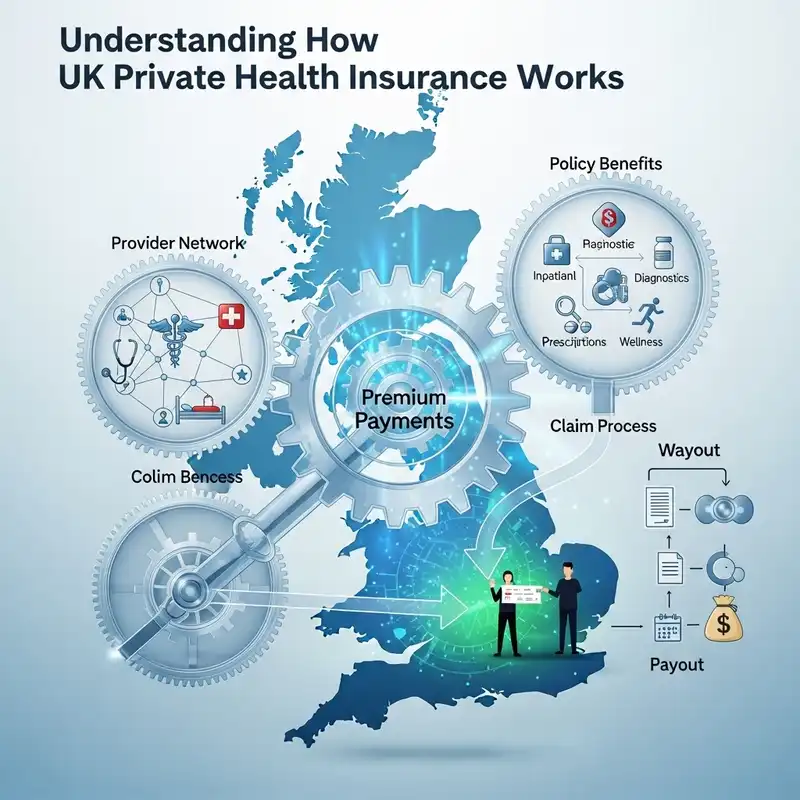
TL;DR
As an FCA-authorised expert with over 900,000 policies arranged, WeCovr specialises in helping individuals find the right private medical insurance in the UK. If you're moving to the UK without permanent residency, understanding your healthcare options is vital for your peace of mind and well-being.
Key takeaways
- Speedy Access to Treatment: This is the number one reason people buy PMI. It allows you to bypass long NHS queues for consultations, diagnostic scans (like MRI and CT), and elective surgery. Getting a diagnosis and starting treatment quickly can lead to better health outcomes and less time off work.
- Choice and Control: PMI gives you more control over your healthcare journey. You can often choose the specialist or consultant who treats you and select a hospital from an approved list. You can also schedule appointments and procedures at a time that suits you.
- Comfort and Privacy: Treatment in a private hospital typically means a private, en-suite room with amenities like a TV and more flexible visiting hours. This can make a hospital stay a much more comfortable and less stressful experience.
- Access to Specialist Drugs and Therapies: Some advanced cancer drugs or treatments may not be routinely available on the NHS due to cost or other restrictions. A comprehensive PMI policy can provide access to these breakthrough therapies.
- Peace of Mind: Knowing you have a plan B for your health is incredibly reassuring, especially when you are far from your home country's support network. It means a health issue won't derail your work, studies, or life in the UK.
As an FCA-authorised expert with over 900,000 policies arranged, WeCovr specialises in helping individuals find the right private medical insurance in the UK. If you're moving to the UK without permanent residency, understanding your healthcare options is vital for your peace of mind and well-being. This guide clarifies it all.
WeCovr's guide to PMI options for those without permanent UK residency
Welcome to the UK! Moving to a new country is an exciting chapter, but it comes with a long to-do list. Right at the top should be understanding how healthcare works. For those without permanent UK residency—such as students, professionals on work visas, or family members joining relatives—navigating the system can seem daunting.
This comprehensive guide for 2026 breaks down your options, from the state-funded National Health Service (NHS) to the world of Private Medical Insurance (PMI), ensuring you can make an informed choice for your health.
Understanding UK Healthcare: The NHS and Your Eligibility
The UK is rightly proud of its National Health Service (NHS), which provides free healthcare at the point of use for most UK residents. But what does this mean for you as a non-resident?
The Immigration Health Surcharge (IHS)
For most people applying for a UK visa to work, study, or join family for more than six months, paying the Immigration Health Surcharge (IHS) is a mandatory part of the application.
- What is it? The IHS is an upfront fee that grants you access to the NHS on the same basis as a permanent resident.
- What does it cover? It allows you to see a General Practitioner (GP), receive hospital treatment, and access other NHS services.
- What doesn't it cover? It doesn't cover prescriptions (in England), dental treatment, or optical services, which you will need to pay for.
Paying the IHS is not optional; if it applies to your visa type, you must pay it. Having private medical insurance does not exempt you from this fee.
Who is Entitled to NHS Treatment?
Your eligibility for NHS care depends largely on your immigration status.
| Visa / Residency Status | Entitlement to NHS Care | Notes |
|---|---|---|
| Visitors / Tourists (under 6 months) | Only for emergency or immediately necessary treatment in A&E. | You will be charged for any subsequent hospital admission or treatment. Travel insurance is essential. |
| Students (on a Student visa) | Full access after paying the IHS. | The IHS is a required part of the visa application. |
| Workers (e.g., Skilled Worker visa) | Full access after paying the IHS. | This applies to the main applicant and their dependants. |
| Short-term EU/EEA/Swiss Visitors | Can use a European Health Insurance Card (EHIC) or Global Health Insurance Card (GHIC) for necessary care. | This is not a substitute for travel insurance and doesn't cover private treatment. |
| Indefinite Leave to Remain (ILR) | Full access, treated as an ordinary resident. | You no longer need to pay the IHS. |
Even with IHS-funded access, many non-residents choose to take out private health cover. Let's explore why.
The Case for Private Medical Insurance (PMI) Even with NHS Access
While the NHS provides excellent care, it is currently facing significant pressure. This has led to long waiting times for diagnosis and non-urgent treatment. For those new to the UK, this uncertainty can be a major source of anxiety.
According to the latest NHS England statistics, the elective care waiting list remains substantial, with millions of people waiting for routine procedures. In 2025, data shows that the median wait for treatment was several weeks, with a significant number of patients waiting over 18 weeks, and some even longer than a year for certain specialities like orthopaedics.
This is where private medical insurance UK becomes an invaluable asset.
Key Benefits of UK Private Health Cover
- Speedy Access to Treatment: This is the number one reason people buy PMI. It allows you to bypass long NHS queues for consultations, diagnostic scans (like MRI and CT), and elective surgery. Getting a diagnosis and starting treatment quickly can lead to better health outcomes and less time off work.
- Choice and Control: PMI gives you more control over your healthcare journey. You can often choose the specialist or consultant who treats you and select a hospital from an approved list. You can also schedule appointments and procedures at a time that suits you.
- Comfort and Privacy: Treatment in a private hospital typically means a private, en-suite room with amenities like a TV and more flexible visiting hours. This can make a hospital stay a much more comfortable and less stressful experience.
- Access to Specialist Drugs and Therapies: Some advanced cancer drugs or treatments may not be routinely available on the NHS due to cost or other restrictions. A comprehensive PMI policy can provide access to these breakthrough therapies.
- Peace of Mind: Knowing you have a plan B for your health is incredibly reassuring, especially when you are far from your home country's support network. It means a health issue won't derail your work, studies, or life in the UK.
What UK Private Health Insurance Covers (and What It Doesn't)
This is the most critical section to understand. UK PMI is not a 'cover-all' solution. It is designed for a specific purpose: to treat new, curable medical conditions that arise after your policy begins.
The Golden Rule: Acute vs. Chronic Conditions
All standard UK private health insurance policies are built around this distinction.
- Acute Condition: A disease, illness, or injury that is likely to respond quickly to treatment and lead to a full recovery. Examples include joint replacements, cataract surgery, hernia repair, or treating infections. This is what PMI covers.
- Chronic Condition: A disease, illness, or injury that has one or more of the following characteristics: it needs long-term monitoring, is incurable, requires ongoing management, or is likely to recur. Examples include diabetes, asthma, high blood pressure, and arthritis. This is what PMI does NOT cover.
Management of chronic conditions is always handled by your NHS GP and specialists.
The Deal-Breaker: Pre-existing Conditions
UK private medical insurance does not cover pre-existing conditions. A pre-existing condition is any ailment for which you have experienced symptoms, sought advice, or received treatment before the start date of your policy.
For example, if you had physiotherapy for a bad back a year before buying your policy, any future back-related issues will be excluded from your private cover.
This is why it's so important to be clear about your medical history. Insurers use a process called underwriting to assess your application and apply these exclusions.
Understanding Underwriting for Non-Residents
There are two main ways an insurer will assess your application:
-
Moratorium Underwriting (Most Common):
- How it works: You don't declare your full medical history upfront. Instead, the policy automatically excludes any condition you've had symptoms, advice, or treatment for in the five years before your policy start date.
- The '2-Year Rule': This exclusion can be lifted if you then complete two full, continuous years on the policy without having any symptoms, treatment, or advice for that specific condition.
- Pros: Quick and simple application process.
- Cons: Less certainty. You might not know if a condition is covered until you make a claim, which can be stressful.
-
Full Medical Underwriting (FMU):
- How it works: You complete a detailed health questionnaire, declaring your full medical history. The insurer's underwriting team reviews it and tells you exactly what is and isn't covered from day one.
- Pros: Complete clarity. You know precisely where you stand before you even pay your first premium.
- Cons: The application process is longer and more intrusive.
For non-UK residents, Full Medical Underwriting can often be the better choice as it provides total transparency, which is invaluable when you're in a new country. An expert PMI broker like WeCovr can help you decide which underwriting method is right for your situation.
Typical Inclusions and Exclusions at a Glance
| What's Usually Covered (Inclusions) ✅ | What's Usually Not Covered (Exclusions) ❌ |
|---|---|
| In-patient and day-patient hospital fees | Pre-existing conditions |
| Specialist and consultant fees | Chronic conditions (e.g., diabetes, asthma) |
| Diagnostic tests (MRI, CT, PET scans) | A&E / Emergency services (always use the NHS) |
| Surgery and operating theatre costs | Normal pregnancy and childbirth |
| Cancer treatment (chemotherapy, radiotherapy) | Cosmetic surgery (unless medically necessary) |
| Out-patient consultations & tests (up to a limit) | Treatment for addiction (alcohol, drugs) |
| Mental health support (often with limits) | Self-inflicted injuries |
| Physiotherapy and complementary therapies | Experimental or unproven treatments |
Choosing a strong fit for your needs: UK PMI vs. International Health Insurance
As a non-UK resident, you have two main types of private insurance to consider. Getting this choice right is crucial.
1. Domestic UK Private Medical Insurance (UK PMI)
This is the standard type of health insurance designed for people residing in the UK.
- Coverage Area: Treatment is provided only within the UK.
- Best for: Individuals and families who are relocating to the UK for a set period (e.g., a 3-year work visa) and plan to receive any necessary medical treatment within the UK.
- Cost: Generally more affordable than international plans.
- Example: An architect from Canada moves to Manchester on a Skilled Worker visa. They plan to live and work exclusively in the UK for the next five years. A domestic UK PMI policy is perfect for their needs.
2. International Private Medical Insurance (IPMI)
This is a more comprehensive and flexible type of cover designed for expatriates and global citizens.
- Coverage Area: Can be worldwide or worldwide excluding certain high-cost countries (like the USA). It allows you to receive treatment in the UK, your home country, or other countries within your chosen region of cover.
- Best for: Those who travel frequently for work, split their time between countries, or want the option to return to their home country for significant medical treatment.
- Cost: Significantly more expensive than domestic UK PMI due to its global nature and broader benefits.
- Example: A management consultant from Singapore is based in London but spends 40% of her time working with clients in Europe and the Middle East. She wants the flexibility to get treatment in London, Singapore, or Dubai. An IPMI plan is a suitable option for your circumstances for her.
Comparison: UK PMI vs. International PMI
| Feature | Domestic UK PMI | International PMI (IPMI) |
|---|---|---|
| Geographic Cover | UK only | Regional or Worldwide |
| Ideal User | Residing long-term in the UK | Frequent travellers, global citizens |
| Cost | ££ | ££££ |
| Flexibility | Lower (UK-centric) | High (can get treatment globally) |
| Underwriting | Moratorium or Full Medical | Full Medical is very common |
| Portability | Policy may need to be cancelled if you leave the UK | Policy moves with you to a new country |
The team at WeCovr has deep expertise in both UK and international plans and can provide a tailored comparison based on your unique travel and residency patterns.
The Step-by-Step Process to Getting Covered in the UK
Feeling ready to explore your options? Here’s a simple, five-step plan to securing the right cover.
- Assess Your Baseline: First, confirm your NHS eligibility. Understand that PMI is a supplement to the NHS, not a replacement. You will still use your NHS GP for initial consultations and rely on the NHS for emergencies.
- Define Your Needs and Budget: What's most important to you? Is it comprehensive cancer care? Mental health support? Or simply fast access to diagnostics? Decide on a monthly budget you're comfortable with. Remember, a basic policy is better than no policy.
- Choose Your Core Options: Decide on key variables that will shape your policy:
- Level of out-patient cover: Do you want consultations and tests covered before a hospital stay?
- Hospital list: Are you happy with a local list of hospitals, or do you want access to premium hospitals in Central London?
- Excess: How much are you willing to pay towards a claim to reduce your monthly premium? A typical excess is between £100 and £1,000.
- Compare Leading UK Providers: The UK PMI market is dominated by a few major players, including Bupa, AXA Health, Aviva, and Vitality. Each has different strengths, hospital networks, and approaches to benefits. Comparing them on a like-for-like basis can be complex and time-consuming.
- Speak to an Independent Broker: This is the smartest move you can make. An FCA-authorised broker like WeCovr works for you, not the insurance company. We can:
- Quickly compare the entire market to find the most suitable policy.
- Explain the complex jargon and policy details in plain English.
- Advise on whether UK PMI or an international plan is a better fit.
- Ensure the policy is suitable for a non-resident.
- Do all of this at no cost to you. Our commission is paid by the insurer you choose.
What Determines the Cost of Your Private Health Cover?
Premiums are highly personal and vary based on a number of factors. Understanding them helps you see where you can make savings.
- Age: This is the single biggest factor. The older you are, the higher the statistical likelihood of claiming, so the premium increases.
- Location: Living in or near major cities, especially London, can increase your premium due to the higher cost of private treatment there.
- Level of Cover: A comprehensive plan with full out-patient, dental, and therapy cover will cost more than a basic plan covering only in-patient treatment.
- Excess: Opting for a higher voluntary excess (the amount you pay per claim) will significantly reduce your monthly premium.
- Hospital List: Choosing a policy with a more restricted list of local hospitals is cheaper than one that gives you access to every private hospital in the UK.
- No-Claims Discount: If you don't make a claim, you will build up a discount over time, which reduces your renewal premium.
Illustrative Monthly Premiums for a Non-Smoker
These are guide prices only. Your actual quote will depend on the factors above.
| Age | Basic Policy (In-patient only, £500 excess) | Comprehensive Policy (Full out-patient, no excess) |
|---|---|---|
| 30 | £45 - £60 | £80 - £110 |
| 40 | £60 - £80 | £100 - £140 |
| 50 | £85 - £115 | £150 - £220 |
More Than Just Insurance: The WeCovr Advantage
Choosing WeCovr as your broker gives you more than just a policy. We believe in providing holistic value to our clients to support their health and financial well-being.
- Complimentary Access to CalorieHero: All our health and life insurance clients receive free access to our AI-powered calorie and nutrition tracking app, CalorieHero. Proactively managing your diet and fitness is the best way to stay healthy, and we want to empower you to do just that.
- Multi-Policy Discounts: We value your loyalty. When you take out a private medical insurance policy with us, you can unlock exclusive discounts on other types of cover you might need, such as life insurance, income protection, or home insurance.
- Exceptional Service: Our UK-based team is dedicated to providing clear, impartial, and friendly advice. We consistently receive high satisfaction ratings on major customer review websites for our commitment to helping clients navigate the complex world of insurance.
Staying Healthy in the UK: Tips for New Arrivals
Your health is your most important asset. Beyond insurance, embracing a healthy lifestyle will make your time in the UK more enjoyable.
- Explore the Outdoors: The UK has 15 stunning National Parks, from the Scottish Highlands to the Cornish coast. Walking, hiking, and cycling are national pastimes. Look up 'Public Rights of Way' to discover a huge network of footpaths.
- Join a Parkrun: Every Saturday morning, thousands of people take part in free, timed 5k runs in parks across the country. It's a fantastic, friendly way to get fit and meet people in your local community.
- Eat Seasonally: Take advantage of fresh, seasonal British produce. Visit local farmers' markets for everything from summer strawberries and autumn apples to winter root vegetables.
- Prioritise Mental Health: Moving country is a big adjustment. Don't hesitate to seek support. Most PMI policies include a mental health support line, and the NHS offers free 'Talking Therapies' services that you can often self-refer to online.
- Register with a GP: As soon as you have a permanent address, register with a local NHS General Practitioner. This is your first port of call for any health concerns and is a crucial step in accessing both NHS and private healthcare.
Can I get private health insurance in the UK if I'm on a temporary visa?
Does private medical insurance cover pre-existing conditions for non-residents?
Do I still need to pay the Immigration Health Surcharge (IHS) if I have private insurance?
Is International Health Insurance better than UK PMI for a non-resident?
Ready to secure your health and peace of mind in the UK?
Navigating the insurance market as a non-resident can be complex, but you don't have to do it alone. The expert, friendly team at WeCovr is here to provide clear, independent advice tailored to your needs. We'll compare leading insurers to find you the right cover at the right price, with no obligation.
Sources
- NHS England: Waiting times and referral-to-treatment statistics.
- Office for National Statistics (ONS): Health, mortality, and workforce data.
- NICE: Clinical guidance and technology appraisals.
- Care Quality Commission (CQC): Provider quality and inspection reports.
- UK Health Security Agency (UKHSA): Public health surveillance reports.
- Association of British Insurers (ABI): Health and protection market publications.
Disclaimer: This is general guidance only and does not constitute formal tax or financial advice. Tax treatment depends on individual circumstances, policy terms, and HMRC interpretation, which cannot be guaranteed in advance. Whenever applicable, businesses and individuals should always consult a qualified accountant or tax adviser before arranging such policies.
Start with your Protection Score, then decide whether private health cover is the right fit
Check where health access sits in your overall protection picture before deciding whether to compare private health cover.
Spot whether NHS access risk is the real issue
See if PMI is the gap to fix first
Get health insurance help only if it makes sense for you
Get your score
Start with your protection score
Check your current position first, then get health insurance help if you need it.
Check your current resilience
Score your income, health access and family protection position in a few minutes.
See where private cover helps
Understand whether faster diagnosis and treatment is a priority gap.
Continue to tailored PMI help
If health access is the issue, continue to tailored PMI help.
What you get
A quick view of your current protection position
A clearer idea of where the biggest gaps may be
A direct route to tailored help if you want it