TL;DR
At WeCovr, we understand that a potential cancer diagnosis is a deeply worrying time. As an FCA-authorised broker that has helped arrange over 900,000 policies of various kinds, our goal is to provide clear, helpful guidance on navigating the UK’s private healthcare system and the role of private medical insurance.
Key takeaways
- The key facts about lung cancer in the UK.
- Recognising the early symptoms.
- The difference between NHS and private diagnostic timelines.
- The advanced diagnostic tools used in private hospitals.
- How private medical insurance (PMI) works for cancer care.
At WeCovr, we understand that a potential cancer diagnosis is a deeply worrying time. As an FCA-authorised broker that has helped arrange over 900,000 policies of various kinds, our goal is to provide clear, helpful guidance on navigating the UK’s private healthcare system and the role of private medical insurance.
A guide to lung cancer symptoms, diagnostic tools, and private healthcare pathways
Receiving a potential diagnosis of lung cancer can feel overwhelming. You are likely filled with questions about what comes next, from understanding your symptoms to exploring treatment options. While the NHS provides excellent cancer care, many people in the UK are increasingly turning to private healthcare for faster access to specialists, diagnostic tests, and innovative treatments.
This comprehensive guide is designed to walk you through every stage of the private lung cancer pathway. We will cover:
- The key facts about lung cancer in the UK.
- Recognising the early symptoms.
- The difference between NHS and private diagnostic timelines.
- The advanced diagnostic tools used in private hospitals.
- How private medical insurance (PMI) works for cancer care.
- The cutting-edge treatments available privately.
- Lifestyle tips for better lung health.
Our aim is to empower you with the knowledge to make informed decisions about your health, with clarity and confidence.
Understanding Lung Cancer in the UK
Lung cancer is one of the most common and serious types of cancer in the United Kingdom. To understand its impact, it's helpful to look at the latest data.
According to Cancer Research UK, there are around 48,500 new lung cancer cases in the UK every year—that's roughly 130 every day (based on 2017-2019 data). It is the third most common cancer in the UK, but it is unfortunately the most common cause of cancer death.
Key UK Lung Cancer Statistics:
| Statistic | Figure/Fact | Source |
|---|---|---|
| New Cases Annually | ~48,500 | Cancer Research UK |
| Gender Split | Affects both men and women almost equally. | NHS |
| Main Cause | Smoking is the cause of more than 7 out of 10 lung cancers. | NHS |
| Age Group | Most common in people aged 75 and over. | NHS |
| Survival Rate | Around 41% of people survive for one year or more after diagnosis. | ONS England & Wales, 2020 |
While these figures can be sobering, it's important to remember that medical advancements are constantly improving outcomes. Early diagnosis is the single most important factor in improving survival rates, which is where private healthcare can offer a significant advantage.
Recognising the Symptoms of Lung Cancer
Many people with early-stage lung cancer don't have any symptoms. When they do appear, they can often be mistaken for less serious conditions, like a chest infection. This is why it's vital to be aware of the signs and to contact your GP if you experience any of them, especially if they persist.
Common Symptoms of Lung Cancer:
- A persistent cough: A cough that doesn't go away after 2 or 3 weeks.
- A long-standing cough that changes: It might sound different or become painful.
- Chest infections: Getting chest infections that keep coming back.
- Coughing up blood: Even a small amount should be checked.
- Aches or pain: Pain when breathing or coughing.
- Persistent breathlessness: Feeling out of breath without a clear reason.
- Tiredness: A lack of energy that isn't explained by other factors.
- Loss of appetite or unexplained weight loss: Losing weight without trying.
Less Common Symptoms:
- Changes in the appearance of your fingers, such as becoming more curved or their ends becoming larger (known as finger clubbing).
- Difficulty swallowing (dysphagia) or pain when swallowing.
- Wheezing.
- A hoarse voice.
- Swelling of your face or neck.
- Persistent chest or shoulder pain.
If you notice any of these symptoms, the most important first step is to see your GP. Don't delay. Your GP is the gateway to both the NHS and private healthcare pathways.
The Diagnostic Pathway: NHS vs. Private Healthcare
Once you've seen your GP with concerning symptoms, you will be referred for further investigation. This is where the paths of the NHS and private healthcare can diverge, primarily in terms of speed.
The NHS has a target that anyone with suspected cancer should see a specialist within two weeks of an urgent GP referral. While the NHS works incredibly hard to meet this, demand can sometimes lead to delays. The target for starting treatment is within 62 days of the initial urgent referral.
A private healthcare pathway, accessed via private medical insurance or self-funding, can significantly shorten these waiting times.
Comparing NHS and Private Diagnostic Timelines (Typical Targets)
| Stage | NHS Target | Private Healthcare (Typical Experience) |
|---|---|---|
| GP to Specialist | Within 2 weeks | 2-5 days |
| Specialist to Diagnostics | Varies, can be 1-4 weeks | A few days (often within the same week) |
| Receiving Results | 1-2 weeks | 24-72 hours |
| Diagnosis to Treatment | Within 31 days of decision to treat | Often within a week |
The Private Pathway Step-by-Step:
- Open GP Referral: You visit your GP who, suspecting a serious condition, provides you with an 'open referral'. This letter doesn't name a specific NHS specialist but recommends you see one, allowing you to use your private medical insurance.
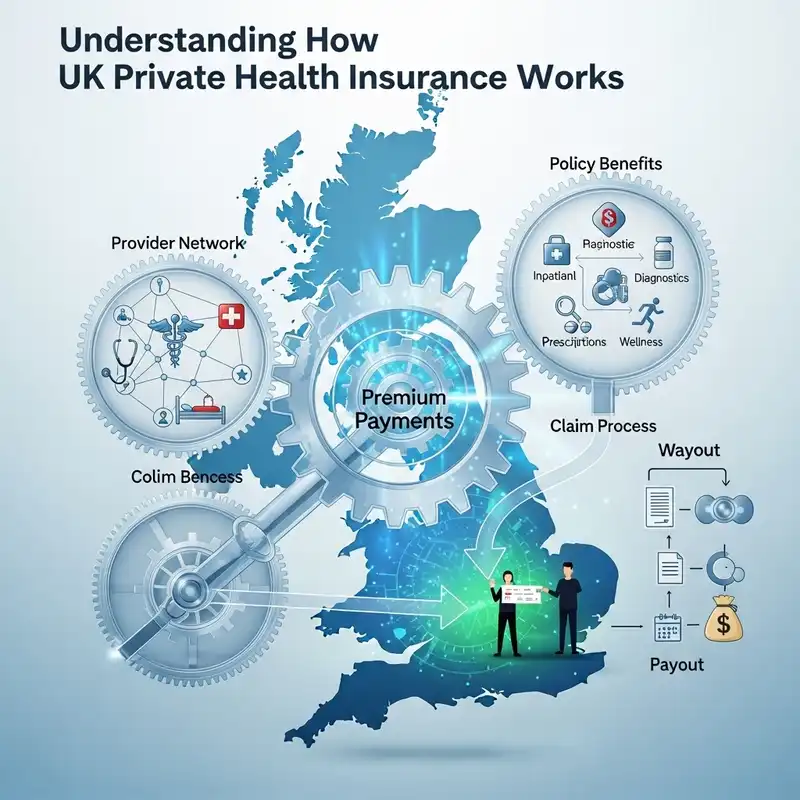
- Contact Your Insurer: You call your PMI provider and give them your policy details and referral information. They will approve the next steps and provide a list of approved specialists.
- Book Your Consultation: You choose a consultant oncologist or respiratory specialist from the list and book an appointment, often for within a few days.
- Rapid Diagnostics: The specialist will likely refer you for immediate tests, such as a CT scan, which can often be done at the same private hospital, sometimes even on the same day.
- Fast Results and Diagnosis: You receive your test results much faster, allowing the specialist to confirm a diagnosis and formulate a treatment plan promptly.
This speed is not just about peace of mind; for a condition like lung cancer, it can mean starting treatment at an earlier, more manageable stage.
Key Diagnostic Tests for Lung Cancer Explained
To confirm a lung cancer diagnosis, specialists use a range of advanced imaging and testing tools. In the private sector, you gain access to the very latest technology without the long waits.
Here’s a breakdown of the key diagnostic tests:
| Test | What It Is | Why It's Used |
|---|---|---|
| Chest X-ray | A quick and simple imaging test using radiation to create a picture of your lungs. | Often the very first step. It can show abnormal areas or masses in the lungs that need further investigation. |
| CT Scan (Computed Tomography) | A more detailed scan that uses X-rays and a computer to create cross-sectional images of your lungs. | Provides a much clearer picture of the size, shape, and position of any tumour. It can also show if the cancer has spread to lymph nodes. |
| PET-CT Scan (Positron Emission Tomography) | A highly advanced scan where a radioactive sugar is injected into your body. Cancer cells are more active and absorb more sugar, causing them to 'light up' on the scan. | Excellent for determining the cancer's stage—showing if and where it has spread in the body (metastasis). Crucial for planning treatment. |
| Biopsy | A procedure where a small sample of tissue is removed from the suspicious area in the lung. | This is the only way to be 100% certain of a cancer diagnosis. The sample is sent to a lab for analysis (histology). |
| Bronchoscopy | A thin, flexible tube with a camera (a bronchoscope) is passed down your throat and into your lungs. | Allows the doctor to see inside your airways directly. They can also take a biopsy during this procedure. |
Understanding these tests can help demystify the diagnostic process. Your private consultant will explain which tests are needed and what the results mean in clear, simple language.
A Critical Note on Private Medical Insurance Coverage
This is arguably the most important section for anyone considering private medical insurance UK. UK policies are designed to cover acute conditions that arise after your policy begins. They do not cover pre-existing or chronic conditions.
Let's break this down in the context of lung cancer:
- Pre-existing Condition: If you had symptoms of lung cancer (like a persistent cough or unexplained weight loss) and had seen a doctor about them before you took out your PMI policy, the subsequent diagnosis and treatment would likely be excluded. Insurers will look at your medical history, usually for the five years prior to your policy start date.
- Acute Condition: If you develop symptoms and are diagnosed with lung cancer after your policy is in place, it is considered a new, acute condition. Your policy's cancer cover would then activate to pay for your private diagnosis and treatment, up to the limits of your plan.
- Chronic Condition: Once cancer is diagnosed, insurers view it as a long-term or 'chronic' condition. Your PMI policy is designed to get you diagnosed and through the primary treatment phase (surgery, chemotherapy, radiotherapy). It is not designed for ongoing management year after year. Most policies have a limit on how long or how much they will pay for cancer treatment once it's deemed chronic.
Why is this important? Understanding this distinction is vital. PMI is an invaluable tool for getting a rapid diagnosis and initial course of treatment for cancer that appears unexpectedly. It is not a solution for managing conditions you already have. An expert PMI broker, such as WeCovr, can help you understand the underwriting options (e.g., 'moratorium' vs. 'full medical underwriting') and how they relate to pre-existing conditions.
Private Lung Cancer Treatment Options in the UK
If you are diagnosed with lung cancer, your treatment plan will be tailored to you. It depends on the type of lung cancer, its size and position, how far it has spread (the stage), and your general health. Private healthcare provides access to leading oncologists and the latest treatment options.
Here are the main treatments available:
1. Surgery
Surgery to remove the cancerous tumour offers the best chance of a cure, but it's usually only suitable for early-stage non-small cell lung cancer.
- Lobectomy: Removal of a whole section (lobe) of the lung.
- Pneumonectomy: Removal of the entire lung.
- Wedge Resection: Removal of a small, wedge-shaped piece of the lung. Private hospitals often specialise in minimally invasive techniques like VATS (Video-Assisted Thoracoscopic Surgery), which involves smaller cuts, less pain, and a faster recovery time compared to traditional open surgery.
2. Radiotherapy
Radiotherapy uses high-energy rays to destroy cancer cells. In the private sector, you can often access more advanced forms:
- SABR (Stereotactic Ablative Radiotherapy): Delivers very high doses of radiation with pinpoint accuracy to the tumour, requiring fewer treatment sessions and minimising damage to surrounding healthy tissue. This is particularly effective for early-stage lung cancers when surgery isn't an option.
- IMRT (Intensity-Modulated Radiotherapy): A sophisticated technique that shapes the radiation beams to closely fit the shape of the tumour.
3. Chemotherapy
Chemotherapy uses anti-cancer (cytotoxic) drugs to kill cancer cells. It can be used before surgery to shrink a tumour, after surgery to kill any remaining cells, or as the main treatment if the cancer has spread. Private treatment often means a more comfortable environment, with private rooms and dedicated nursing care during infusions.
4. Targeted Therapies and Immunotherapy
These are the most exciting areas of modern cancer care, and private medical insurance UK often provides better access to them.
- Targeted Therapies: These are drugs that target specific genetic mutations within the cancer cells that help them grow and divide. Your tumour will be tested to see if you have one of these mutations. They are often taken as tablets and can have fewer side effects than chemotherapy.
- Immunotherapy: This groundbreaking treatment doesn't attack the cancer directly. Instead, it boosts your own immune system, helping it to recognise and destroy cancer cells. It has transformed the outlook for some patients with advanced lung cancer.
Many PMI policies have specific limits on these expensive drugs, so it's crucial to choose a policy with comprehensive cancer cover.
How Private Medical Insurance (PMI) Covers Lung Cancer
A good PMI policy can be a lifeline when facing a cancer diagnosis. While policies vary, a comprehensive plan will typically cover the entire private patient journey.
What a good PMI policy covers for cancer:
| Feature | Description |
|---|---|
| Full Cancer Cover | This is the gold standard. It means the insurer will pay for your diagnosis and treatment in full, with no financial or time limits. |
| Access to Specialists | Your choice of leading oncologists and surgeons from the insurer's network of approved consultants. |
| Advanced Diagnostics | Includes cover for CT, MRI, and PET scans without delay. |
| Treatment | Covers surgery, radiotherapy, and chemotherapy. |
| Advanced Therapies | Includes cover for targeted therapies and immunotherapies, often including drugs not yet available on the NHS. |
| Home Nursing | Allows for some treatments, like chemotherapy, to be administered in the comfort of your own home. |
| Palliative Care | Covers care designed to manage symptoms and improve quality of life if the cancer cannot be cured. |
When comparing policies, it's vital to check the level of cancer cover. Some cheaper policies may only cover diagnosis and offer a cash benefit towards NHS treatment, while more comprehensive plans provide full private care. This is where an independent PMI broker can be invaluable, helping you compare the offerings from the best PMI providers like Bupa, Aviva, AXA Health, and Vitality.
Lifestyle and Prevention: Protecting Your Lung Health
While you can't change your genetics, there are powerful steps you can take to reduce your risk of lung cancer and improve your overall health.
- Don't Smoke: This is the single most effective action you can take. If you smoke, stopping is the best thing you can do for your lung health. The NHS offers excellent free stop-smoking services.
- Eat a Healthy, Balanced Diet: A diet rich in fruits, vegetables, and whole grains provides essential vitamins and antioxidants that protect your body. Monitoring your nutrition can be a powerful tool for wellness. As a WeCovr client, you get complimentary access to CalorieHero, our AI-powered calorie and nutrition tracking app, to help you stay on track.
- Stay Active: Regular, moderate exercise—like a brisk 30-minute walk five times a week—strengthens your lungs and heart, improves your immune system, and helps you maintain a healthy weight.
- Be Aware of Workplace Risks: If you work with materials like asbestos, silica, or diesel exhaust, ensure you follow all safety guidelines provided by your employer to minimise exposure.
- Test for Radon: Radon is a natural radioactive gas that can build up in homes. It's the second-biggest cause of lung cancer after smoking. You can order a cheap and easy test kit online from UK Health Security Agency-approved providers.
Making these positive lifestyle changes can have a huge impact on your long-term health and wellbeing. Furthermore, clients who purchase private medical or life insurance through WeCovr can often benefit from discounts on other types of cover, making it easier to build a comprehensive protection portfolio.
Does private medical insurance cover lung cancer if I used to smoke?
What if the NHS says my lung cancer is inoperable? Can I get a second opinion privately?
Are expensive new cancer drugs covered by private health insurance?
Can I buy private health insurance if I've already had cancer?
Facing a health concern like lung cancer is challenging, but you don't have to navigate it alone. Understanding your options is the first step towards taking control. With rapid access to leading specialists and advanced treatments, private healthcare can offer peace of mind and world-class care when you need it most.
WeCovr's team of expert advisors are here to help you compare policies from across the market, ensuring you find the right level of cover for your needs and budget, all at no cost to you. We enjoy high customer satisfaction ratings for our clear, friendly, and professional advice.
Take the next step. Get your free, no-obligation quote from WeCovr today and secure your peace of mind.
Sources
- NHS England: Waiting times and referral-to-treatment statistics.
- Office for National Statistics (ONS): Health, mortality, and workforce data.
- NICE: Clinical guidance and technology appraisals.
- Care Quality Commission (CQC): Provider quality and inspection reports.
- UK Health Security Agency (UKHSA): Public health surveillance reports.
- Association of British Insurers (ABI): Health and protection market publications.