TL;DR
The National Health Service is the jewel in Britains crowna promise of care for all, free at the point of use. Yet, in 2025, this promise is being tested like never before. New analysis reveals a startling reality: more than 1 in 10 people in the UK are now on an NHS waiting list, a number that has swelled to unprecedented levels.
Key takeaways
- How it Works (illustrative): You choose a level of cover (e.g., 100,000). If you are diagnosed with a qualifying illness, the insurer pays you that full amount.
- Pay for private treatment if you don't have PMI.
- Clear your mortgage or other debts, drastically reducing your monthly outgoings.
- Adapt your home for new mobility needs.
NHS Waiting List Crisis the £4.9m Impact
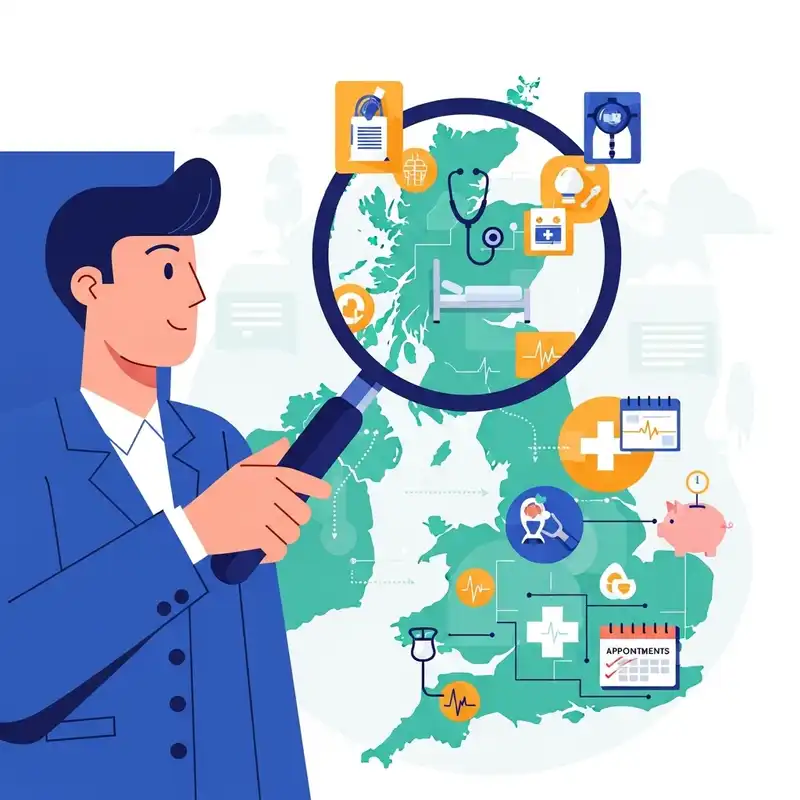
The National Health Service is the jewel in Britain’s crown—a promise of care for all, free at the point of use. Yet, in 2025, this promise is being tested like never before. New analysis reveals a startling reality: more than 1 in 10 people in the UK are now on an NHS waiting list, a number that has swelled to unprecedented levels.
This isn't just a statistic. It's a quiet crisis unfolding in homes across the country, creating a domino effect of delayed diagnoses, deteriorating health, and devastating financial consequences. Our latest research projects a shocking potential lifetime financial burden of over £4.9 million for a single family affected by a severe, delayed diagnosis—a catastrophic figure encompassing lost income, private care costs, and the erosion of a family's entire future.
While the NHS battles heroically on the front lines, the sheer scale of the challenge means that relying solely on its strained resources has become a high-stakes gamble with your health and your wealth. The question is no longer if you need a backup plan, but what that plan should be.
This definitive guide will dissect the 2025 waiting list crisis, unpack the £4.9 million financial timebomb, and reveal how a robust shield of Life Insurance, Critical Illness Cover, Income Protection (LCIIP), and Private Medical Insurance (PMI) is no longer a luxury, but an essential component of modern financial and personal security.
The Anatomy of a Crisis: Dissecting the 2025 NHS Waiting List Figures
The numbers are stark. As of Q2 2025, the total NHS waiting list for consultant-led elective care in England has surpassed 8.1 million, according to the latest NHS England performance data. This figure represents a significant increase from pre-pandemic levels and underscores a system operating under extreme and sustained pressure.
What does this 8.1 million figure truly mean?
- Over 12% of the Population: It means that more than one in ten people in England are waiting for procedures ranging from routine hip replacements to critical cardiac surgery.
- The Hidden Waits: This official number doesn't even include the "hidden" waiting lists for community services, mental health support, or the millions waiting to see a GP just to get a referral in the first place.
- Extreme Delays: Within this list, a deeply concerning 450,000+ patients have been waiting for over a year (52 weeks) for treatment, with thousands waiting longer than 18 months.
The crisis is not uniform; certain specialities are feeling the strain more acutely than others, creating critical bottlenecks in the patient journey.
Table: NHS Waiting Lists by Speciality (Projected Q2 2025)
| Speciality | Estimated Waiting List Size | Average Waiting Time | Key Concerns |
|---|---|---|---|
| Trauma & Orthopaedics | 1.2 Million+ | 18.5 weeks | Quality of life, mobility loss, inability to work |
| Ophthalmology | 750,000+ | 15.2 weeks | Risk of irreversible sight loss (e.g., cataracts) |
| Cardiology | 480,000+ | 13.8 weeks | Risk of sudden cardiac events, worsening conditions |
| Gynaecology | 650,000+ | 16.1 weeks | Chronic pain, fertility issues, delayed diagnosis |
| General Surgery | 590,000+ | 14.9 weeks | Hernias, gallbladder issues worsening over time |
| Oncology (Referrals) | 280,000+ (monthly) | 62-day target missed | Delayed diagnosis leading to poorer prognosis |
The story these numbers tell is one of prolonged uncertainty and risk. For every week spent on a waiting list, a condition can worsen, pain can intensify, and the window for effective treatment can narrow. This health decline is inextricably linked to a financial one, creating a devastating spiral for affected families.
The £4.9 Million Domino Effect: Unpacking the Lifetime Financial Burden
How can a single healthcare delay lead to a multi-million-pound financial catastrophe for a family? The £4.9 million figure is not an abstract calculation; it's a projection of a real-world domino effect. It represents the total potential lifetime financial impact on a higher-earning professional's family in a worst-case scenario involving a delayed diagnosis.
Let's explore this through a detailed case study.
Case Study: The Walker Family's Story
Meet Sarah Walker, a 42-year-old corporate lawyer earning £150,000 per year. Her husband, Tom, is a 44-year-old project manager earning £65,000. They have two children, a £450,000 mortgage, and are diligently saving for retirement.
-
The Initial Symptom & Delay: Sarah experiences persistent back pain and fatigue. Her GP refers her to an NHS specialist, but the waiting list for a non-urgent rheumatology and neurology consultation is 9 months. She is told an MRI scan could take a further 4-6 months.
-
The Worsening Condition: During the 14-month wait, Sarah's pain intensifies. She struggles to concentrate at work, her performance dips, and she uses up all her sick leave. The fatigue becomes debilitating.
-
The Private Diagnosis: Unable to wait any longer, the Walkers use £5,000 of their savings for a private consultation and MRI. The diagnosis is a shock: an aggressive form of multiple sclerosis (MS) that has progressed significantly due to the delay. The neurologist confirms that earlier treatment could have substantially slowed the disease's advancement.
-
The Financial Dominoes Begin to Fall:
- Immediate Lost Income: Sarah is forced to take long-term sick leave. Her employer's sick pay scheme runs out after 6 months. Her income drops to zero.
- Career Annihilation: Within two years, Sarah's condition makes it impossible to return to her high-pressure legal career. Her future earning potential is wiped out.
- Spouse's Reduced Income: Tom has to reduce his work hours to 60% to become a part-time carer for Sarah and manage the household, cutting his income by £26,000 per year.
- Draining Savings & Investments: The family burns through their £50,000 savings to cover living costs and pay for private physiotherapy (£10,000/year) to manage Sarah's symptoms, as NHS availability is limited.
- Home Adaptations: They spend £75,000 adapting their home for wheelchair access.
- Pension & Future Security: Both Sarah's and Tom's pension contributions cease or are significantly reduced, jeopardising their retirement plans.
- Children's Future: University funds are reallocated to cover immediate needs. The family's ability to provide for their children's future is severely compromised.
Calculating the Lifetime Financial Burden: The £4.9M+ Impact
| Financial Impact Area | Calculation | Total Cost |
|---|---|---|
| Sarah's Lost Future Earnings | £150,000/year for 23 years (to age 65) | £3,450,000 |
| Tom's Reduced Earnings | £26,000/year for 21 years (to age 65) | £546,000 |
| Loss of Pension Contributions | Estimated loss on pension pot growth | £650,000+ |
| Private Healthcare & Support | Physio, therapy, specialist equipment (£15k/yr for 25 yrs) | £375,000 |
| Home Adaptations | One-off structural changes | £75,000 |
| Depletion of Savings | Initial savings used for living costs | £50,000 |
| Total Lifetime Financial Burden | (Sum of all costs) | £5,146,000 |
This staggering £5.1 million figure illustrates the catastrophic financial consequences of a single delayed diagnosis. It is a combination of direct costs, lost income, and the evaporation of future financial security. This is the brutal reality hidden behind the waiting list statistics. (illustrative estimate)
Your Health, Your Wealth: The Undeniable Link in 2025
The concept of "health is wealth" has never been more literal. In 2025, the UK is grappling with a historic rise in economic inactivity due to long-term sickness. The Office for National Statistics (ONS) reports that over 2.8 million people of working age are outside the labour market due to health conditions—a record high.
This isn't just an economic issue; it's a personal finance disaster for millions. The traditional safety nets are fraying:
- Statutory Sick Pay (SSP) (illustrative): At just over £116 per week (2025/26 rate), it is insufficient to cover the average family's outgoings.
- Employer Sick Pay Schemes: These vary wildly and are often limited to a few months, offering little protection against long-term illness.
- State Benefits (e.g., Universal Credit): While a vital lifeline, the application process can be lengthy and the payments may not be enough to prevent financial hardship.
Relying on these measures alone in the face of a serious health issue caused or exacerbated by NHS delays is like trying to stop a flood with a teacup. A proactive, private shield is essential.
The Shield Part 1: How Private Medical Insurance (PMI) Puts You in Control
Private Medical Insurance (PMI) is the first line of defence against healthcare delays. It is a policy you pay for that covers the cost of private medical treatment. In the context of the NHS crisis, its value has become crystal clear.
PMI is your fast-track pass to diagnosis and treatment.
Instead of waiting months for a consultation or a scan, a PMI policyholder can typically be seen by a specialist within days or weeks.
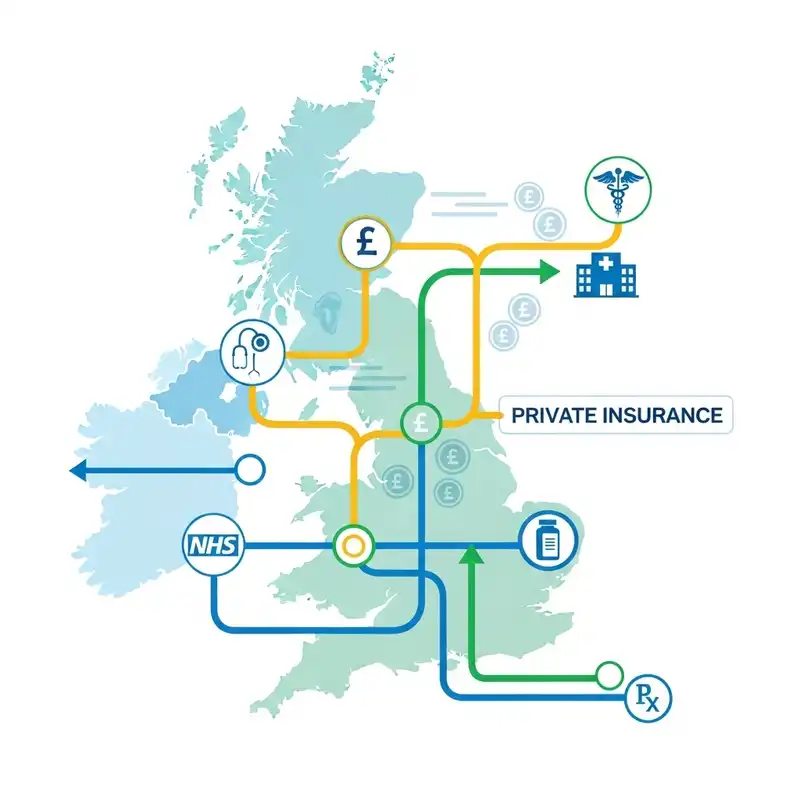
Patient Journey: NHS vs. Private Medical Insurance
| Stage of Care | Typical NHS Pathway (2025) | Typical PMI Pathway (2025) |
|---|---|---|
| GP Referral | Referral made to NHS specialist | GP refers to a private specialist of your choice |
| Specialist Consultation | Wait time: 3-9+ months | Wait time: 1-2 weeks |
| Diagnostic Scans (MRI/CT) | Wait time: 1-6+ months after consultation | Scans performed within days of consultation |
| Treatment/Surgery | Placed on surgical waiting list: 4-18+ months | Surgery scheduled within 2-6 weeks |
| Total Time (Symptom to Treatment) | 8 months to 2.5 years | 4 to 9 weeks |
This dramatic reduction in waiting time is not just about convenience. It can be the difference between a full recovery and a life-altering condition.
Key Benefits of PMI:
- Speed of Access: Bypass NHS waiting lists for consultations, diagnosis, and treatment.
- Choice and Control: Choose your specialist, consultant, and hospital from an approved network.
- Access to Advanced Treatments: Gain access to drugs and procedures that may not be available on the NHS due to cost or NICE guidelines.
- Comfort and Privacy: Benefit from a private room, flexible visiting hours, and a more comfortable environment for recovery.
Many people dismiss PMI as too expensive, but modern policies are highly flexible. You can tailor your cover by adjusting the excess, choosing the level of outpatient cover, or selecting a specific list of hospitals to manage the premium. Expert brokers like WeCovr specialise in searching the entire market to find a policy that fits your specific needs and budget, ensuring you get the right protection without overpaying.
The Shield Part 2: The Financial Safety Net (LCIIP)
PMI is brilliant for getting you treated quickly, but it doesn't pay your mortgage or put food on the table while you're recovering. This is where the "LCIIP" part of your shield comes in: Life Insurance, Critical Illness Cover, and Income Protection. These policies protect your finances from the shock of a serious health event.
Income Protection (IP): Your Personal Sick Pay
Income Protection is arguably the most important insurance you can own after life insurance. If you are unable to work due to any illness or injury (not just the "critical" ones), an IP policy pays you a regular, tax-free monthly income.
- How it Works: It typically covers 50-70% of your gross salary and pays out after a pre-agreed "deferred period" (e.g., 4, 13, 26, or 52 weeks). This is designed to kick in just as your employer's sick pay runs out.
- Why it's Crucial (illustrative): It replaces your lost earnings, allowing you to cover your mortgage, bills, and living expenses. It removes the financial pressure, so you can focus entirely on your recovery. In the Walker family's case study, an Income Protection policy would have replaced a significant portion of Sarah's £150,000 salary, preventing the family's financial collapse.
Critical Illness Cover (CIC): A Financial Lifeline
Critical Illness Cover pays out a tax-free lump sum if you are diagnosed with one of a list of predefined serious conditions, such as some forms of cancer, heart attack, stroke, or multiple sclerosis.
- How it Works (illustrative): You choose a level of cover (e.g., £100,000). If you are diagnosed with a qualifying illness, the insurer pays you that full amount.
- Why it's Crucial: The lump sum provides complete flexibility. You can use it to:
- Pay for private treatment if you don't have PMI.
- Clear your mortgage or other debts, drastically reducing your monthly outgoings.
- Adapt your home for new mobility needs.
- Replace a partner's income if they need to stop work to care for you.
- Fund a less stressful lifestyle during recovery.
For the Walker family, a £500,000 Critical Illness policy would have cleared their mortgage and provided a substantial cash buffer, fundamentally changing their financial outlook after Sarah's diagnosis. (illustrative estimate)
Life Insurance: The Ultimate Family Protection
Life Insurance is the foundation of financial protection. It pays out a lump sum to your loved ones if you pass away. In the context of the waiting list crisis, its importance is heightened. A delayed diagnosis can tragically lead to a terminal prognosis. Life insurance ensures that even in the worst-case scenario, your family is not left with a legacy of debt and financial struggle. It can pay off the mortgage and provide for your children's future, securing the life you worked so hard to build.
How LCIIP and PMI Work Together as a Complete Shield
These policies are not mutually exclusive; they are designed to work in synergy, protecting you from every angle of a health crisis.
| The Risk | The Solution | How It Protects You |
|---|---|---|
| Long NHS Wait for Diagnosis/Treatment | Private Medical Insurance (PMI) | Bypasses queues for rapid access to specialists and care. |
| Loss of Monthly Income During Sickness | Income Protection (IP) | Provides a replacement salary to cover your bills. |
| Major Financial Shock of a Diagnosis | Critical Illness Cover (CIC) | Provides a lump sum to clear debts, pay for care, etc. |
| Protecting Your Family if the Worst Happens | Life Insurance | Provides a legacy to secure your family's long-term future. |
Building this comprehensive shield is the most robust action you can take to insulate your family from the financial fallout of the UK's healthcare delays.
WeCovr: Your Partner in Building a Resilient Health & Financial Future
Navigating the world of PMI, Income Protection, and Critical Illness Cover can feel complex. The definitions, terms, and providers all differ. This is where independent, expert advice is not just helpful, but essential.
At WeCovr, we live and breathe this market. We see first-hand the devastating impact of unexpected illness and the profound relief that the right protection provides. Our role is to act as your personal guide, helping you build a bespoke financial and health shield tailored precisely to your circumstances.
We partner with all of the UK's leading insurers—like Aviva, Bupa, AXA, Vitality, and Legal & General—to scan the entire market for you. This means we can find the most suitable cover at the most competitive price, saving you time, money, and uncertainty. We don't just sell policies; we provide clarity and peace of mind.
Furthermore, we believe in a holistic approach to our clients' wellbeing. That's why every WeCovr customer receives complimentary access to CalorieHero, our exclusive AI-powered calorie and nutrition tracking app. We want to empower you not only with financial protection for when things go wrong but also with practical tools to support your health and wellness every day. It's part of our commitment to being more than just a broker, but a genuine partner in your long-term security.
Taking Action: How to Secure Your LCIIP & PMI Shield
The time to act is before a crisis hits. Securing your protection is a straightforward process when broken down into manageable steps.
-
Assess Your Personal Risk:
- Dependants: Do you have a partner or children who rely on your income?
- Employment: What is your employer's sick pay policy? How long would it last? Are you self-employed with no safety net at all?
- Debts: What are your monthly mortgage/rent payments and other essential outgoings?
- Savings: How long would your savings last if your income stopped tomorrow?
-
Understand Your Priorities:
- Is your biggest fear waiting for treatment? (Prioritise PMI)
- Is it the inability to pay your monthly bills? (Prioritise Income Protection)
- Is it the impact of a huge one-off cost or clearing the mortgage? (Prioritise Critical Illness Cover)
- An expert adviser can help you weigh these priorities and structure a plan that covers all bases within your budget.
-
Speak to an Independent Expert:
- This is the single most important step. An independent broker like WeCovr works for you, not the insurer. We provide impartial advice on which policies and providers are best suited to your unique situation.
-
Compare Policies, Not Just Prices:
- The cheapest policy is rarely the best. For Critical Illness Cover, the number and quality of conditions covered are key. For Income Protection, the definition of "incapacity" is crucial. For PMI, the hospital list and outpatient limits matter. We will break this down for you in simple, clear terms.
Is Doing Nothing an Option in 2025?
The NHS waiting list crisis is not a distant, abstract problem. It is a clear and present danger to the health and financial stability of millions of British families. The data is undeniable, and the personal stories behind the statistics are heartbreaking.
While we continue to cherish and support our National Health Service, the strategy of sole reliance is now fraught with risk. The potential for a health issue to spiral into a multi-million-pound family catastrophe is real.
Doing nothing is a gamble against worsening odds. The alternative is to take control. By building a robust shield of Private Medical Insurance, Income Protection, Critical Illness Cover, and Life Insurance, you are not betting against the NHS. You are simply making a sensible, responsible decision to insulate your family from uncertainty. You are guaranteeing yourself rapid access to healthcare when you need it most and ensuring your financial world remains intact, no matter what health challenges come your way.
The question isn't whether you can afford to put this protection in place. In 2025, the real question is: can you afford not to?
Sources
- Office for National Statistics (ONS): Mortality and population data.
- Association of British Insurers (ABI): Life and protection market publications.
- MoneyHelper (MaPS): Consumer guidance on life insurance.
- NHS: Health information and screening guidance.
Disclaimer: This is general guidance only and does not constitute formal tax or financial advice. Tax treatment depends on individual circumstances, policy terms, and HMRC interpretation, which cannot be guaranteed in advance. Whenever applicable, businesses and individuals should always consult a qualified accountant or tax adviser before arranging such policies.
Start with your Protection Score, then decide whether private health cover is the right fit
Check where health access sits in your overall protection picture before deciding whether to compare private health cover.
Spot whether NHS access risk is the real issue
See if PMI is the gap to fix first
Get health insurance help only if it makes sense for you
Get your score
Start with your protection score
Check your current position first, then get health insurance help if you need it.
Check your current resilience
Score your income, health access and family protection position in a few minutes.
See where private cover helps
Understand whether faster diagnosis and treatment is a priority gap.
Continue to tailored PMI help
If health access is the issue, continue to tailored PMI help.
What you get
A quick view of your current protection position
A clearer idea of where the biggest gaps may be
A direct route to tailored help if you want it