TL;DR
As an FCA-authorised expert broker that has helped arrange over 900,000 policies, WeCovr understands the unique pressures facing UK entrepreneurs. This guide explores why private medical insurance is a critical investment in your most valuable assetyour healthand how to find the right protection for your needs.
Key takeaways
- You feel unwell: You visit your NHS GP as you normally would. The NHS remains your first port of call.
- You get a referral: If your GP believes you need to see a specialist, they will write you an 'open referral' letter.
- You contact your insurer: You call your PMI provider, explain the situation, and provide the referral details.
- Your claim is approved: The insurer checks that your condition is covered by your policy and authorises the claim. They can often help you find a suitable specialist from their approved network.
- You receive private treatment: You book your appointment with the private specialist at a time that suits you, receive your diagnosis and treatment in a private facility, and the insurer settles the bills directly.
As an FCA-authorised expert broker that has helped arrange over 900,000 policies, WeCovr understands the unique pressures facing UK entrepreneurs. This guide explores why private medical insurance is a critical investment in your most valuable asset—your health—and how to find the right protection for your needs.
Why startup founders and innovators can't afford to neglect their health
Being an entrepreneur is not just a job; it’s a way of life. It’s characterised by passion, vision, and an unrelenting drive to build something from nothing. But this path is also paved with immense pressure, long hours, and chronic stress. For a startup founder, the line between business success and personal well-being is incredibly fine. You are the business.
Your intellectual capital, your energy, and your physical presence are the engine driving your venture forward. What happens when that engine sputters? A period of ill health isn't just a personal setback; it's a direct threat to your company's survival. Deadlines get missed, investor meetings are cancelled, and momentum is lost.
UK data paints a stark picture. The Health and Safety Executive's 2023 report revealed that stress, depression, or anxiety accounted for a staggering 17.1 million working days lost. While this covers all professions, the unique 'always-on' culture of startups often magnifies these risks. Founders frequently sacrifice sleep, nutrition, and exercise, believing they are making a necessary trade-off for business growth. In reality, they are accumulating a health debt that will inevitably come due.
Neglecting your health is a high-risk gamble you can't afford to take. Protecting it isn't a luxury; it's a fundamental business continuity strategy.
The NHS vs. Private Healthcare: Understanding the Landscape for Busy Entrepreneurs
The National Health Service (NHS) is a cornerstone of British society, providing exceptional care to millions, free at the point of use. We are incredibly fortunate to have it. However, the system is under unprecedented strain, which has led to significant challenges, particularly with waiting times for non-urgent procedures.
As of mid-2025, NHS England figures show that millions of people are on waiting lists for routine treatments. The target is for 92% of patients to wait no more than 18 weeks from their GP referral to treatment. In reality, this target has been consistently missed, with many patients waiting much longer for diagnostics and surgery.
For an entrepreneur, waiting six months for a knee operation or four months for a diagnostic scan isn't just an inconvenience. It's six months of reduced productivity, chronic pain, and an inability to function at 100%. It’s time you simply don’t have.
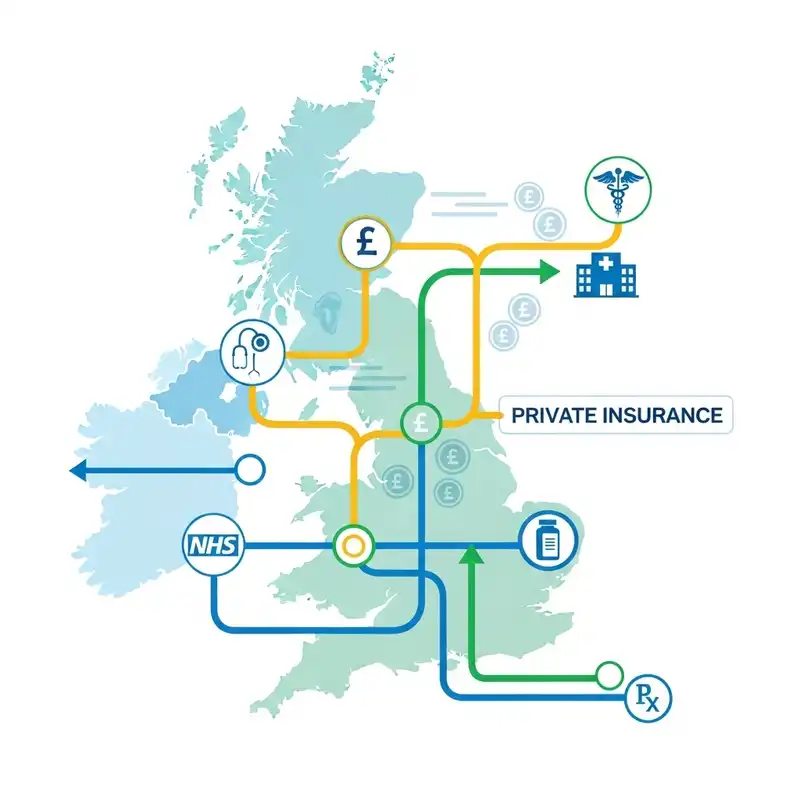
This is where private medical insurance UK comes in. It's not a replacement for the NHS—you'll still use the NHS for accidents, emergencies, and GP visits. Instead, PMI is a complementary tool designed to work alongside it, giving you a way to bypass lengthy queues for eligible conditions and get back on your feet—and back to your business—as quickly as possible.
What Exactly is Private Medical Insurance (PMI) and How Does It Work?
Private Medical Insurance, often called PMI or private health cover, is an insurance policy that pays for the costs of private medical treatment for specific types of health conditions.
Think of it as a health safety net. If you develop a new medical problem, instead of joining an NHS waiting list, you can use your PMI policy to be diagnosed and treated quickly in a private hospital or clinic.
The process is straightforward:
- You feel unwell: You visit your NHS GP as you normally would. The NHS remains your first port of call.
- You get a referral: If your GP believes you need to see a specialist, they will write you an 'open referral' letter.
- You contact your insurer: You call your PMI provider, explain the situation, and provide the referral details.
- Your claim is approved: The insurer checks that your condition is covered by your policy and authorises the claim. They can often help you find a suitable specialist from their approved network.
- You receive private treatment: You book your appointment with the private specialist at a time that suits you, receive your diagnosis and treatment in a private facility, and the insurer settles the bills directly.
The Critical Distinction: Acute vs. Chronic Conditions
This is the most important concept to understand about UK private medical insurance. PMI is designed to cover acute conditions, which are diseases, illnesses, or injuries that are likely to respond quickly to treatment and return you to your previous state of health.
Examples of acute conditions include:
- Joint pain requiring a hip or knee replacement
- Cataracts
- Hernias
- Most types of cancer
- Gallstones
Conversely, PMI does not cover chronic conditions. A chronic condition is one that continues for a long time, has no known cure, and needs ongoing management.
Examples of chronic conditions include:
- Diabetes
- Asthma
- High blood pressure
- Crohn's disease
- Arthritis
Crucially, standard UK PMI policies also exclude pre-existing conditions—any illness or injury you had symptoms of, or received advice or treatment for, in the years before your policy began. This is to ensure insurance remains affordable by covering new, unforeseen problems.
Key Benefits of PMI for Startup Founders and Self-Employed Innovators
For a busy entrepreneur, the advantages of having private health cover extend far beyond just medical treatment. They translate directly into business benefits.
- Speed of Access: This is the number one benefit. Bypassing NHS waiting lists for consultations, scans (like MRI and CT), and surgery means you can get a diagnosis and treatment in days or weeks, not months or years. This minimises downtime and uncertainty.
- Choice and Control: PMI gives you more control over your healthcare journey. You can often choose the specialist who treats you and the hospital you are treated in. Crucially, you can schedule appointments and procedures around your demanding work schedule, not the other way around.
- Comfort and Privacy: Private hospitals typically offer a more comfortable environment, including a private room with an en-suite bathroom, better food, and more flexible visiting hours. This can make a stressful experience more manageable and allow you to rest and recover properly—you might even be able to get some work done if you feel up to it.
- Access to Specialist Drugs and Treatments: Some of the latest drugs, therapies, and surgical techniques may not yet be approved for use on the NHS due to cost or other factors. A comprehensive PMI policy can provide access to these cutting-edge treatments.
- Comprehensive Mental Health Support: The mental toll of running a business is immense. Most leading PMI providers now offer excellent mental health support, from access to counselling and therapy sessions to dedicated psychiatric cover, often without needing a GP referral first. This proactive support can be a lifeline for founders facing burnout.
- Wellness and Prevention Services: Modern PMI is about more than just treatment. Many policies include valuable wellness benefits:
- Digital GP: 24/7 access to a GP via phone or video call.
- Health Checks: Regular assessments to catch potential issues early.
- Wellness Apps and Discounts: Access to gym memberships, fitness trackers, and nutritional advice. For example, clients who arrange PMI through WeCovr get complimentary access to our AI-powered diet and calorie tracking app, CalorieHero, to help them stay on top of their nutrition.
How to Tailor a PMI Policy to an Entrepreneur's Budget and Needs
One of the biggest myths about private medical insurance is that it's prohibitively expensive. In reality, policies are highly customisable, allowing you to build a plan that balances comprehensive protection with a manageable budget. An expert PMI broker can be invaluable here.
Here are the key levers you can pull to adjust your cover and cost:
| Policy Feature | How It Affects Your Premium | Advice for Entrepreneurs |
|---|---|---|
| Excess | A higher excess (the amount you pay towards a claim) significantly lowers your monthly premium. Excesses typically range from £0 to £1,000+. | A modest excess of £250 or £500 is a smart way to keep costs down. You only pay it if you make a claim. |
| Hospital List | Insurers have tiered hospital lists. A 'National' list is standard. Adding prime central London hospitals increases the cost. A regional or local list reduces it. | Unless you live or work near central London and insist on being treated there, a standard national list is usually sufficient and more cost-effective. |
| Outpatient Cover | This covers diagnostic tests and consultations that don't require a hospital bed. You can choose full cover, a limited annual amount (e.g., £1,000), or no cover. | Limiting outpatient cover is a major cost-saver. You could choose to self-fund initial consultations and use the PMI for major inpatient treatment if needed. |
| The 6-Week Option | This is a popular feature. If the NHS can provide the inpatient treatment you need within six weeks of when it's required, you use the NHS. If the wait is longer, you go private. | This is an excellent option for entrepreneurs. It dramatically reduces your premium while still protecting you against the long delays that cause the most disruption. |
| Underwriting | This is how the insurer assesses your medical history. The two main types are 'Moratorium' and 'Full Medical Underwriting'. | 'Moratorium' is quicker as you don't declare your full history upfront. 'Full Medical Underwriting' takes longer but provides more certainty on what's covered from day one. A broker can advise which is best for you. |
By working with an independent broker like WeCovr, you can explore these options across multiple insurers to find the perfect blend of cover and cost for your specific circumstances, completely free of charge.
Comparing Top UK PMI Providers for Entrepreneurs
The UK private medical insurance market is dominated by a few key players, each with its own strengths and focus. There is no single 'best PMI provider'—the right choice depends entirely on your priorities.
Here’s a brief overview to help you understand the landscape:
| Provider | Key Strengths for Entrepreneurs | Unique Features |
|---|---|---|
| AXA Health | Strong focus on clinical excellence, extensive hospital network, and clear policy language. Excellent mental health pathways. | Offers a 'Guided' option where they help you choose from a smaller list of specialists, which can reduce premiums. |
| Aviva | Known for its 'Expert Select' option, high-quality customer service, and strong digital tools, including the Aviva DigiCare+ app. | The 'BacktoBetter' programme provides fast access to physiotherapy and musculoskeletal treatment without a GP referral. |
| Bupa | The UK's largest and most well-known provider. Offers direct access to its own clinics and has a strong focus on cancer care and mental health. | 'Bupa Direct Access' service allows you to bypass your GP for certain conditions like cancer and mental health concerns, speeding up diagnosis. |
| Vitality | Unique 'shared value' model that rewards healthy living. Excellent for proactive entrepreneurs who enjoy fitness and wellness. | The Vitality Programme offers significant discounts and rewards (e.g., Apple Watch, gym memberships, coffee) for staying active and healthy. |
Navigating the subtle differences in policy wording, hospital lists, and benefit limits between these providers can be complex. This is where using a whole-of-market PMI broker proves its worth, ensuring you get impartial advice tailored to your needs.
Is PMI a Tax-Deductible Business Expense for Entrepreneurs?
This is a common and important question. The answer depends on your business structure.
-
For Sole Traders and Partnerships: Unfortunately, a personal private medical insurance policy is not an allowable business expense. You pay for it out of your post-tax income.
-
For Limited Companies: If you are the director of your own limited company, the company can pay for your PMI premiums. The cost is considered an allowable business expense, meaning it can be offset against the company's corporation tax bill.
However, there's a catch. HMRC views this as a 'benefit-in-kind'. This means the value of the insurance premium is treated as additional income for you personally. You will need to declare it on a P11D form and pay income tax on the amount. Your company will also have to pay Class 1A National Insurance contributions on the value of the premium.
Despite the tax implications, many company directors still find it a worthwhile expense. The ability to deduct the cost from company profits is a significant advantage, and the protection it affords is invaluable.
Disclaimer: Tax rules are complex and can change. You should always seek advice from a qualified accountant regarding your specific business and personal tax situation.
Beyond the Policy: Proactive Health Management for Peak Performance
Your PMI policy is your safety net, but the best way to protect your business is to avoid needing to use it in the first place. For an entrepreneur, peak physical and mental health is a competitive advantage. Focus on these four pillars:
-
Strategic Nutrition: You wouldn't put cheap fuel in a performance car. Your brain and body need premium fuel.
- Avoid Sugar Spikes: Swap sugary snacks and refined carbs for slow-release energy sources like oats, nuts, and whole grains.
- Hydrate Relentlessly: Dehydration kills focus. Keep a 1-litre water bottle on your desk and aim for two-three per day.
- Prioritise Protein and Healthy Fats: Foods like fish, eggs, avocado, and nuts support cognitive function and sustained energy.
-
Uncompromising Sleep: Sleep is not a luxury; it's a critical biological function for memory consolidation, problem-solving, and emotional regulation.
- Create a Wind-Down Routine: An hour before bed, turn off screens. Read a book, listen to a podcast, or meditate.
- Keep a Consistent Schedule: Aim to go to bed and wake up at the same time every day, even on weekends.
- Optimise Your Environment: Make your bedroom dark, cool, and quiet.
-
Efficient Exercise: You don't need to spend two hours in the gym. High-intensity interval training (HIIT) or even a brisk 30-minute walk can have huge benefits.
- Schedule It In: Block out time in your calendar for exercise as if it were a crucial investor meeting.
- Find Something You Enjoy: Whether it's running, cycling, climbing, or yoga, you're more likely to stick with it if it doesn't feel like a chore.
- Embrace 'Snack' Workouts: Can't find a 30-minute block? Do 10 minutes of push-ups and squats in the morning, a 10-minute walk at lunch, and 10 minutes of stretching in the evening.
-
Active Stress Management: Stress is inevitable, but chronic, unmanaged stress is corrosive.
- Practice Mindfulness: Even 5-10 minutes of daily meditation using an app like Headspace or Calm can retrain your response to stress.
- Set Boundaries: Learn to say no. Block out 'no meeting' deep work time in your calendar. Protect your weekends.
- Maintain Perspective: Remember why you started. Connect with mentors and peers who understand the journey. Don't be afraid to access the mental health support in your PMI policy if you feel overwhelmed.
Why Use a PMI Broker like WeCovr?
In a world where you can buy anything online, you might wonder why you need a broker for private medical insurance. For a product this important and complex, expert guidance is crucial.
- Market Expertise: A good broker lives and breathes the insurance market. They understand the intricate details of policies from every major provider and can quickly identify the best options for your unique needs as an entrepreneur.
- Impartial Advice: Unlike going directly to an insurer who can only sell their own products, an independent broker works for you. Their goal is to find you the best possible cover at the best price, regardless of the provider.
- Saves You Time and Money: Researching the market yourself is incredibly time-consuming. A broker does all the heavy lifting, comparing quotes and features for you. They also have access to deals and prices that may not be available to the public.
- It Costs You Nothing: Brokers are paid a commission by the insurance provider you choose. This means you get their expert advice and support completely free of charge. Your premium is the same as if you went direct.
- Support at Claim Time: If you need to make a claim, having a broker on your side can be a huge help. They can offer guidance and assistance, ensuring the process is as smooth as possible.
- Added Value: At WeCovr, we also provide discounts on other types of essential cover, such as life insurance or income protection, when you arrange your PMI through us.
Does UK private medical insurance cover pre-existing conditions?
How much does PMI cost for a self-employed entrepreneur?
Can I add my family to my personal PMI policy?
Is mental health treatment covered by private health cover?
Your health is the most critical asset in your business. Protecting it with the right private medical insurance isn't an expense; it's one of the wisest investments you'll ever make.
Ready to find the right protection? Get your free, no-obligation quote from WeCovr today and let our experts find a strong fit for your needs for you.
Sources
- NHS England: Waiting times and referral-to-treatment statistics.
- Office for National Statistics (ONS): Health, mortality, and workforce data.
- NICE: Clinical guidance and technology appraisals.
- Care Quality Commission (CQC): Provider quality and inspection reports.
- UK Health Security Agency (UKHSA): Public health surveillance reports.
- Association of British Insurers (ABI): Health and protection market publications.
Disclaimer: This is general guidance only and does not constitute formal tax or financial advice. Tax treatment depends on individual circumstances, policy terms, and HMRC interpretation, which cannot be guaranteed in advance. Whenever applicable, businesses and individuals should always consult a qualified accountant or tax adviser before arranging such policies.
Start with your Protection Score, then decide whether private health cover is the right fit
Check where health access sits in your overall protection picture before deciding whether to compare private health cover.
Spot whether NHS access risk is the real issue
See if PMI is the gap to fix first
Get health insurance help only if it makes sense for you
Get your score
Start with your protection score
Check your current position first, then get health insurance help if you need it.
Check your current resilience
Score your income, health access and family protection position in a few minutes.
See where private cover helps
Understand whether faster diagnosis and treatment is a priority gap.
Continue to tailored PMI help
If health access is the issue, continue to tailored PMI help.
What you get
A quick view of your current protection position
A clearer idea of where the biggest gaps may be
A direct route to tailored help if you want it