TL;DR
As an FCA-authorised expert with a hand in over 900,000 policies, WeCovr provides this guide to private medical insurance (PMI) in the UK. This article explores your options for securing the best private health cover in Greater Manchester, ensuring you can make an informed decision for your wellbeing.
Key takeaways
- Faster Access to Specialists: Get a referral from your GP and see a consultant within days, not weeks or months. This allows for quicker diagnosis and the start of any necessary treatment.
- Choice and Control: You can often choose the specialist who treats you and the hospital where you receive your care, including leading private facilities across Manchester.
- Comfort and Privacy: Treatment is typically provided in a private en-suite room, offering a more comfortable and restful environment for recovery.
- Access to Specialist Drugs and Treatments: Some advanced drugs, therapies, or surgical techniques may not be routinely available on the NHS due to cost or other guidelines. PMI can provide access to these cutting-edge options.
- Peace of Mind: Knowing you have a plan in place to swiftly deal with health concerns provides invaluable reassurance for you and your family.
As an FCA-authorised expert with a hand in over 900,000 policies, WeCovr provides this guide to private medical insurance (PMI) in the UK. This article explores your options for securing the best private health cover in Greater Manchester, ensuring you can make an informed decision for your wellbeing.
Finding the best local private health insurance in Greater Manchester
Navigating the world of private health insurance can feel daunting, especially when you're trying to find the best fit for your life in a bustling hub like Greater Manchester. From understanding what a policy covers to choosing a provider with a strong local hospital network, there's a lot to consider.
This comprehensive guide is designed to be your trusted resource. We'll break down everything you need to know about Private Medical Insurance (PMI) in Manchester, helping you bypass the jargon and focus on what truly matters: your health. We'll explore why so many Mancunians are turning to private cover, what it costs, and how to find a policy that gives you both excellent care and peace of mind.
Why Consider Private Medical Insurance in Manchester?
While the NHS remains a cherished national institution, providing essential care to millions, it is facing unprecedented pressure. For many residents in Greater Manchester, the appeal of PMI lies in its ability to offer a complementary route to healthcare, providing speed, choice, and comfort when it's needed most.
NHS Waiting Times in Greater Manchester
It's no secret that waiting lists for NHS treatment have grown. According to the latest data from NHS England, the median waiting time for consultant-led elective care can stretch into many weeks or months, depending on the speciality and trust. In the North West region, hundreds of thousands of people are on waiting lists for treatment.
For someone suffering from a painful joint, a worrying internal symptom, or a condition affecting their ability to work, these waits can have a significant impact on their quality of life. PMI offers a direct solution to this uncertainty.
The Core Benefits of Private Health Cover
Opting for private medical insurance in the UK provides several key advantages:
- Faster Access to Specialists: Get a referral from your GP and see a consultant within days, not weeks or months. This allows for quicker diagnosis and the start of any necessary treatment.
- Choice and Control: You can often choose the specialist who treats you and the hospital where you receive your care, including leading private facilities across Manchester.
- Comfort and Privacy: Treatment is typically provided in a private en-suite room, offering a more comfortable and restful environment for recovery.
- Access to Specialist Drugs and Treatments: Some advanced drugs, therapies, or surgical techniques may not be routinely available on the NHS due to cost or other guidelines. PMI can provide access to these cutting-edge options.
- Peace of Mind: Knowing you have a plan in place to swiftly deal with health concerns provides invaluable reassurance for you and your family.
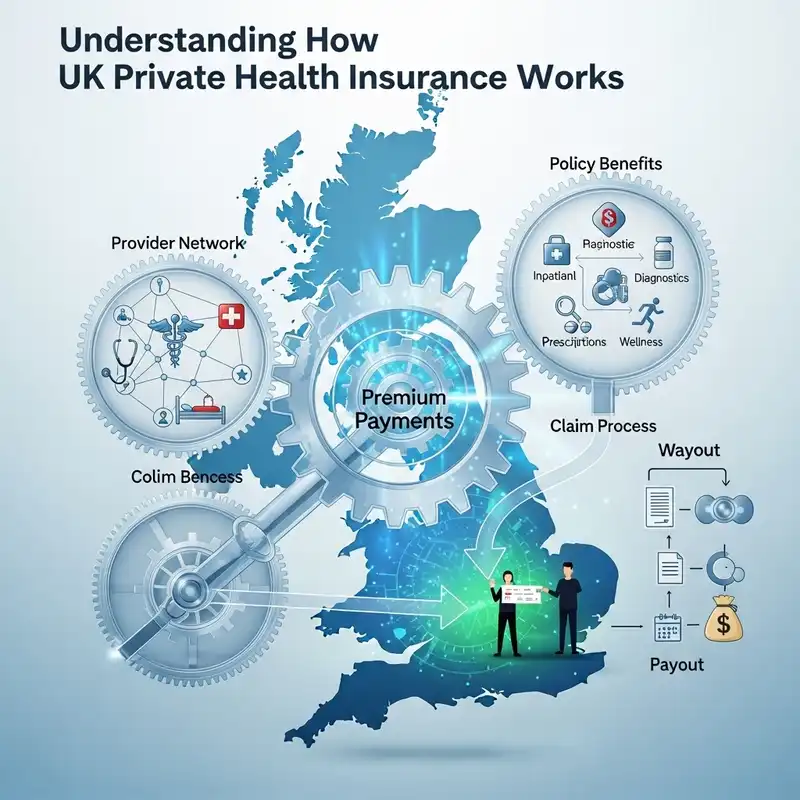
Understanding How Private Medical Insurance Works
Before diving into providers and costs, it's crucial to understand the fundamental principles of PMI. It is designed to work alongside the NHS, not replace it.
The Critical Distinction: Acute vs. Chronic Conditions
This is the single most important concept to grasp about UK private health insurance.
- Acute Conditions: PMI is designed to cover acute conditions. An acute condition is a disease, illness, or injury that is likely to respond quickly to treatment and lead to a full recovery. Examples include joint replacements, cataract surgery, hernia repair, and treatment for many types of cancer.
- Chronic Conditions: Standard PMI policies do not cover chronic conditions. A chronic condition is an illness that cannot be cured but can be managed through medication and monitoring. Examples include diabetes, asthma, high blood pressure, and Crohn's disease. The ongoing, long-term management of these conditions remains with your NHS GP.
- Pre-existing Conditions: Policies also exclude pre-existing conditions. These are any health issues you had before you took out the policy. The way these are handled depends on your underwriting choice.
The Typical Patient Journey with PMI
- Visit Your GP: Your journey almost always starts with your NHS GP. If you have a symptom, you see them for an initial assessment.
- Get a Referral: If your GP believes you need to see a specialist, they will write you a referral letter.
- Contact Your Insurer: You call your PMI provider's claims line, explain the situation, and provide your referral details.
- Authorisation and Choice: The insurer authorises the claim and provides you with a list of approved specialists and hospitals in your area (e.g., in Manchester).
- Receive Private Treatment: You book your appointment, see the specialist, and undergo any necessary tests or treatment.
- Direct Settlement: The hospital and consultant send their bills directly to your insurance provider. Apart from any excess you've agreed to pay, you won't have to handle invoices yourself.
Key PMI Providers and Their Hospital Networks in Manchester
Greater Manchester is home to some of the UK's leading private hospitals. The best PMI provider for you will be one that includes your preferred local facilities in its network. Here’s a look at the major players and their presence in the region.
Prominent Private Hospitals in Greater Manchester:
- The Alexandra Hospital (Cheadle): Part of the Circle Health Group, it's one of the largest private hospitals outside London, offering a vast range of complex procedures.
- Spire Manchester Hospital (Didsbury): A state-of-the-art facility known for its orthopaedic, cardiac, and cancer care services.
- Nuffield Health Manchester Hospital (Chorlton-on-Medlock): Offers a wide range of treatments and has a strong focus on integrated health, linking with its fitness and wellbeing centres.
- The Highfield Hospital (Rochdale): A Ramsay Health Care UK hospital providing a broad spectrum of services to the northern Greater Manchester area.
- Oaklands Hospital (Salford): Another Ramsay facility serving Salford and the western side of the city.
Comparing the Main UK Health Insurers
While dozens of insurers exist, four brands dominate the UK market. A specialist PMI broker like WeCovr can compare policies from all of them to find your ideal match.
| Provider | Key Manchester Hospitals in Network | Standout Features |
|---|---|---|
| Bupa | The Alexandra Hospital, Spire Manchester, Oaklands Hospital | A household name with a huge network. Offers 'Direct Access' for some conditions (e.g., cancer, mental health) without a GP referral. Strong focus on mental health cover. |
| AXA Health | Nuffield Health Manchester, The Highfield Hospital, Spire Manchester | Excellent digital GP service (Doctor@Hand). Proactive health support and a strong emphasis on member wellbeing programmes. Highly rated customer service. |
| Aviva | The Alexandra Hospital, Nuffield Health Manchester, Spire Manchester | Often offers very competitive pricing. Its 'Expert Select' hospital list guides members to quality-assessed consultants, which can help manage costs. |
| Vitality | Spire Manchester, Nuffield Health Manchester, The Alexandra Hospital | Famous for its innovative wellness programme. Members earn points for being active, which unlocks rewards like cinema tickets, coffee, and discounts on their premium. |
How to Customise Your Manchester PMI Policy to Control Costs
One of the best things about modern PMI is its flexibility. You are not buying a one-size-fits-all product. You can adjust several elements of your policy to balance the level of cover with your monthly budget.
1. Choose Your Hospital List
Insurers group UK hospitals into tiers. A policy that includes every hospital in the country, including expensive ones in Central London, will cost more. You can save a significant amount by choosing a list that covers your local Manchester hospitals but excludes the premium London facilities.
2. Set Your Excess
An excess is a fixed amount you agree to pay towards the cost of a claim each policy year. For example, if you have a £250 excess and your treatment costs £3,000, you pay the first £250 and your insurer pays the remaining £2,750.
- Higher Excess = Lower Premium (illustrative): Opting for a higher excess (£500 or £1,000) can dramatically reduce your monthly payments. It's a way of sharing a small part of the risk with the insurer.
3. Decide on Outpatient Cover
This is a major factor in the overall cost.
- In-patient/Day-patient: This is the core of any policy, covering treatment that requires a hospital bed (even for just a day).
- Out-patient Cover: This pays for consultations and diagnostic tests that don't require a hospital bed. You can choose:
- Full Cover: No limit on outpatient costs. The most expensive option.
- Limited Cover (illustrative): A fixed annual limit, such as £500, £1,000, or £1,500. This is a very popular and cost-effective middle ground.
- No Outpatient Cover: The cheapest option. You would pay for initial consultations and diagnostics yourself but would be fully covered if you needed to be admitted for surgery.
4. Consider the "6-Week Wait" Option
This is a clever way to reduce your premium. With this option, if the treatment you need is available on the NHS within six weeks, you will use the NHS. If the NHS waiting list is longer than six weeks, your private cover kicks in immediately. As many urgent procedures are done quickly on the NHS, this can be a very sensible cost-saving measure.
5. Select Your Underwriting Method
This determines how the insurer treats your past medical history.
- Moratorium (Mori): This is the most popular choice. You don't declare your full medical history at the start. Instead, the insurer automatically excludes any condition you've had symptoms, treatment, or advice for in the 5 years before your policy began. These exclusions are usually reviewed after you've held the policy for 2 continuous years.
- Full Medical Underwriting (FMU): You complete a detailed health questionnaire when you apply. The insurer assesses your history and tells you upfront exactly what is and isn't covered. This process takes longer, but it provides complete clarity from day one.
What Does PMI Typically Cover (and Not Cover)?
Understanding the scope of cover is vital to avoid surprises later. While policies vary, here is a general overview.
What's Usually Covered by a Standard Policy?
- In-patient and Day-patient Treatment: Hospital accommodation, operating theatre costs, surgeons' and anaesthetists' fees.
- Specialist Consultations: Appointments with consultants following a GP referral.
- Diagnostic Tests: MRI scans, CT scans, PET scans, X-rays, and blood tests needed to diagnose a condition.
- Cancer Care: Most policies offer comprehensive cancer cover as a core benefit or a key add-on, covering surgery, chemotherapy, and radiotherapy.
- Mental Health Support: Cover for therapy and psychiatric treatment is increasingly common, though the level of cover varies.
- Therapies: Post-operative physiotherapy is often included to aid recovery.
What's Usually Excluded from PMI?
- Chronic Conditions: As mentioned, long-term management of conditions like diabetes or asthma is not covered.
- Pre-existing Conditions: Any health issue you had before your policy started.
- Emergencies: A&E visits, ambulance services, and immediate emergency response remain the domain of the NHS.
- Elective Cosmetic Surgery: Procedures chosen for aesthetic reasons are not covered.
- Normal Pregnancy and Childbirth: Uncomplicated maternity care is not covered, though complications can sometimes be included.
- Self-inflicted Injuries: This includes treatment related to substance abuse.
The Cost of Private Health Insurance in Manchester
The price of a PMI policy is highly personal. It is influenced by your age, your postcode in Manchester, your smoking status, and the cover options you select (excess, hospital list, etc.).
To give you a rough idea, here are some illustrative monthly premiums for a non-smoker living in Manchester.
| Age Profile | Basic Policy (e.g., £500 excess, reduced hospital list) | Comprehensive Policy (e.g., £100 excess, full outpatient cover) |
|---|---|---|
| 30-year-old | £45 - £60 | £80 - £110 |
| 45-year-old | £65 - £85 | £120 - £160 |
| 60-year-old | £110 - £150 | £220 - £300+ |
Disclaimer: These figures are for illustrative purposes only (October 2025). The only way to get an accurate price is to request a personalised quote based on your specific circumstances.
The Role of a Specialist PMI Broker like WeCovr
With so many variables, trying to compare the market yourself can be overwhelming. This is where an independent, FCA-authorised broker like WeCovr becomes an invaluable partner.
Instead of going direct to one insurer, a broker provides a whole-of-market view. The benefits are clear:
- It's a Free Service: Brokers are paid a commission by the insurer you choose, so their expert advice and support costs you nothing extra.
- Market Expertise: We understand the fine print of every policy from every major provider. We know which insurers have the best cancer cover, the most flexible mental health options, or the most competitive prices for your age group.
- Personalised Recommendations: We take the time to understand your needs, budget, and which Manchester hospitals are important to you. We then find the policy that is genuinely the best fit, not just the cheapest.
- Hassle-Free Process: We handle the application process for you and are on hand to help with any questions or claims in the future.
- Exclusive Benefits: At WeCovr, our PMI and life insurance clients receive complimentary access to our AI-powered calorie and nutrition tracking app, CalorieHero, to support their health goals. You may also be eligible for discounts on other insurance products when you take out a policy with us.
- Trusted Service: Our high customer satisfaction ratings reflect our commitment to providing clear, helpful, and impartial advice.
Health and Wellness in Manchester: Making the Most of Your City
Having health insurance is about planning for when things go wrong, but it's equally important to focus on staying well. Manchester offers fantastic opportunities to lead a healthy and active lifestyle.
- Get Outdoors: Greater Manchester is blessed with incredible green spaces. Take a long walk or run through Heaton Park, explore the beautiful botanical gardens at Fletcher Moss in Didsbury, or cycle along the Bridgewater Canal towpaths.
- Embrace Healthy Food: The city's food scene is booming. Explore the independent food stalls at Altrincham Market for fresh, local produce, or visit one of the many health-conscious cafes in the Northern Quarter or Chorlton for nutritious meals.
- Focus on Your Mind: Mental wellbeing is just as important as physical health. Find a local yoga or pilates studio, practice mindfulness in the tranquil Whitworth Park, or simply take time to disconnect from the hustle and bustle in one of the city's many libraries or art galleries. Making proactive choices to manage stress is a key part of long-term health.
By integrating these healthy habits into your life, you not only improve your wellbeing but also get more value from wellness-focused PMI plans like those offered by Vitality.
Is private health insurance worth it in Manchester?
Can I get private health insurance if I have a pre-existing medical condition?
Do I still need to pay National Insurance if I have private medical insurance?
Take the Next Step with WeCovr
Ready to explore your options for private medical insurance in Manchester? The expert team at WeCovr is here to help. We provide free, impartial, and personalised advice to help you navigate the market and find an appropriate level of cover.
Sources
- NHS England: Waiting times and referral-to-treatment statistics.
- Office for National Statistics (ONS): Health, mortality, and workforce data.
- NICE: Clinical guidance and technology appraisals.
- Care Quality Commission (CQC): Provider quality and inspection reports.
- UK Health Security Agency (UKHSA): Public health surveillance reports.
- Association of British Insurers (ABI): Health and protection market publications.
Disclaimer: This is general guidance only and does not constitute formal tax or financial advice. Tax treatment depends on individual circumstances, policy terms, and HMRC interpretation, which cannot be guaranteed in advance. Whenever applicable, businesses and individuals should always consult a qualified accountant or tax adviser before arranging such policies.
Start with your Protection Score, then decide whether private health cover is the right fit
Check where health access sits in your overall protection picture before deciding whether to compare private health cover.
Spot whether NHS access risk is the real issue
See if PMI is the gap to fix first
Get health insurance help only if it makes sense for you
Get your score
Start with your protection score
Check your current position first, then get health insurance help if you need it.
Check your current resilience
Score your income, health access and family protection position in a few minutes.
See where private cover helps
Understand whether faster diagnosis and treatment is a priority gap.
Continue to tailored PMI help
If health access is the issue, continue to tailored PMI help.
What you get
A quick view of your current protection position
A clearer idea of where the biggest gaps may be
A direct route to tailored help if you want it