TL;DR
A seismic shift is underway in the United Kingdom's collective approach to health. We've moved beyond merely avoiding illness; we are now a nation actively pursuing optimal wellbeing. The era of bio-hacking, personalised nutrition, mental fitness, and longevity science is no longer the preserve of Silicon Valley billionaires; it's a mainstream ambition.
Key takeaways
- Pre-existing Conditions: Any illness, injury, or symptom for which you have experienced symptoms, received medication, or sought advice from a medical professional in the years before your policy starts (typically the last 5 years).
- Chronic Conditions: A condition that is long-term, requires ongoing management, and has no known cure. Examples include diabetes, asthma, Crohn's disease, arthritis, and high blood pressure.
- Is your primary goal to bypass waiting lists for diagnosis and surgery?
- Is comprehensive mental health support non-negotiable?
- Are you attracted by the wellness perks and gym discounts?
PMI UK Bridging the Health Support Gap
PMI UK Bridging the Health Support Gap
A seismic shift is underway in the United Kingdom's collective approach to health. We've moved beyond merely avoiding illness; we are now a nation actively pursuing optimal wellbeing. The era of bio-hacking, personalised nutrition, mental fitness, and longevity science is no longer the preserve of Silicon Valley billionaires; it's a mainstream ambition.
Yet, a profound disconnect is emerging. A landmark 2025 study from the Health & Wellbeing Alliance (HWA) reveals a startling statistic: 52% of UK adults actively pursuing health goals feel the current healthcare system doesn't adequately support their proactive or preventative aspirations.
While our beloved National Health Service (NHS) remains a cornerstone of British life—a world-class institution for acute and emergency care—it was designed and is structured to treat sickness, not necessarily to cultivate peak wellness. The immense pressures of record-high waiting lists and overstretched primary care mean that for the growing number of 'Wellness Seekers', the system can feel reactive and inaccessible for their forward-thinking needs.
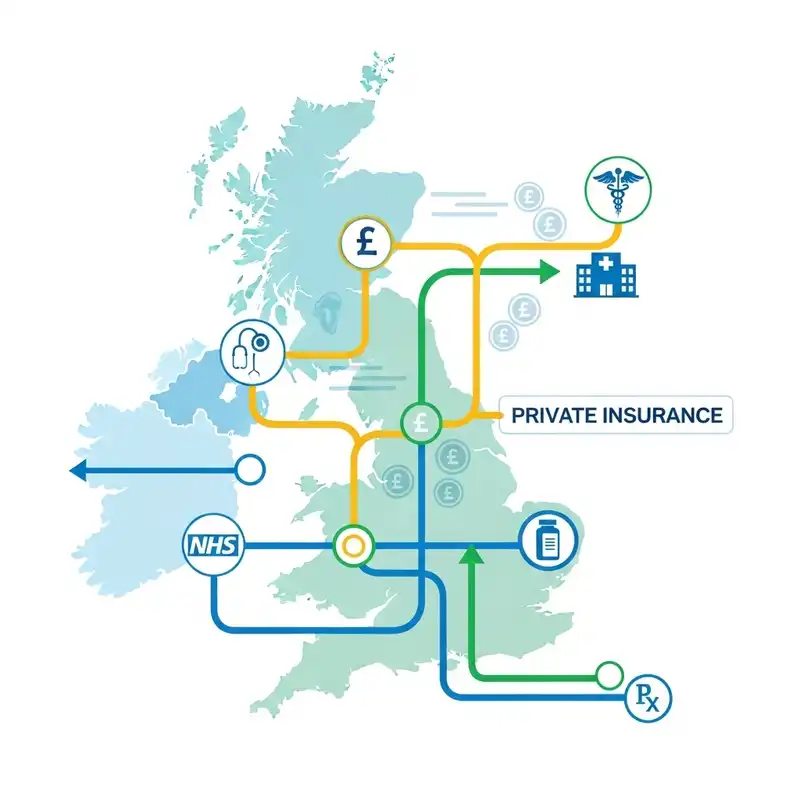
This is where the landscape of Private Medical Insurance (PMI) has radically evolved. Once viewed simply as a 'queue-jumping' tool for non-urgent surgery, PMI in 2025 has transformed into a sophisticated and personalised wellness partner. It offers a tangible solution to this modern healthcare dilemma, providing a direct pathway to the proactive, personalised, and preventative care that so many now crave.
This definitive guide will illuminate how modern PMI works, what it offers, and how it can serve as your personalised roadmap to not just better health, but to achieving peak wellbeing and enhancing your longevity.
The Great Health Divide: Why Proactive Britons Feel Left Behind
The feeling of being 'unsupported' isn't a criticism of the hardworking individuals within the NHS. It's an observation of a system straining under unprecedented demand, struggling to meet the new, proactive expectations of the populace.
The 2025 NHS Reality: A System Under Pressure
The statistics paint a stark picture of the challenges facing mainstream healthcare:
8 million treatment pathways yet to be started. For many, this translates into months, or even years, of waiting in pain or discomfort.
- The GP Scramble: The phrase '8 am scramble' is now a familiar part of the British lexicon. Securing a timely GP appointment has become a daily challenge. A late 2024 report from the British Medical Association (BMA) highlighted that the average wait for a routine GP appointment has now surpassed two weeks in many parts of the country.
- A Reactive Model: By necessity, the NHS is a reactive service. A 10-minute GP slot is focused on diagnosing and treating the immediate presenting problem. ### The Rise of the 'Wellness Seeker'
Juxtaposed against this reality is the emergence of a highly engaged and informed type of health consumer. The 'Wellness Seeker' is not passively waiting for illness to strike. They are:
- Data-Driven: A 2025 YouGov poll indicates that a staggering 65% of UK adults aged 25-45 now use at least one health or fitness tracking app daily. They monitor their sleep, heart rate variability, activity levels, and nutrition.
- Proactively Inquisitive: They want to understand their bodies on a deeper level. They have questions about optimising vitamin levels, the benefits of a preventative MRI, or accessing advanced blood panels to understand their unique cardiovascular risk.
- Holistically Focused: They recognise that health is an interplay of physical fitness, mental resilience, nutritional science, and preventative care.
This creates the 'Great Health Divide': a population armed with personal health data and a desire for proactive guidance, and a healthcare system primarily equipped to deal with manifest illness. PMI is the bridge across this divide.
What is Private Medical Insurance (PMI) in 2025? It's More Than You Think.
To understand the value of PMI today, we must first discard outdated perceptions. It's no longer just a hospital plan; it's a comprehensive health management system.
A Critical Clarification: What PMI Does and Does Not Cover
Before we explore the powerful benefits of modern PMI, it is essential to be unequivocally clear on its fundamental purpose. This is the single most important concept to grasp:
Standard UK Private Medical Insurance is designed to cover the diagnosis and treatment of acute conditions that arise after your policy begins. An acute condition is a disease, illness, or injury that is likely to respond quickly to treatment and lead to a full recovery.
Crucially, this means standard PMI policies do not cover pre-existing conditions or chronic conditions.
- Pre-existing Conditions: Any illness, injury, or symptom for which you have experienced symptoms, received medication, or sought advice from a medical professional in the years before your policy starts (typically the last 5 years).
- Chronic Conditions: A condition that is long-term, requires ongoing management, and has no known cure. Examples include diabetes, asthma, Crohn's disease, arthritis, and high blood pressure.
The NHS remains your essential partner for managing these long-term conditions. PMI works alongside the NHS, filling the gaps in acute, preventative, and wellbeing care, not replacing it.
The Evolution: From Treatment to Total Wellbeing
The transformation of the PMI market is profound. Insurers no longer compete solely on which hospitals are on their list; they compete on who can be the most effective partner in your overall health journey.
| Feature | The 'Old' PMI (Pre-2015) | The 'New' 2025 PMI |
|---|---|---|
| Primary Focus | Reactive Treatment | Proactive Wellbeing & Treatment |
| Key Selling Point | Skipping NHS Queues | Personalised Health Journey |
| Core Services | Consultations, Surgery | Digital GP, Mental Health Support |
| Wellness Benefits | Very limited or non-existent | Integral (Gyms, Apps, Rewards) |
| Tech Integration | Paper-based, phone calls | App-centric, 24/7 access |
Key Components of a Modern PMI Policy
At its heart, a comprehensive policy is built on several key pillars:
- In-patient and Day-patient Cover: This is the foundation. It covers the costs of surgery and treatment when you need to be admitted to a hospital bed, either overnight (in-patient) or for the day (day-patient).
- Out-patient Cover: This is arguably one of the most valuable components for proactive health management. It covers the costs of specialist consultations and diagnostic tests that don't require a hospital admission. This is your key to getting fast answers. Policies offer different levels of cover, from a set amount (e.g., £1,000 per year) to fully comprehensive cover.
- Cancer Cover: A cornerstone of every credible PMI policy. It provides access to a comprehensive range of treatments, including specialist drugs and therapies that may not be available on the NHS or may have a long waiting list.
- Therapies Cover: Covers treatments like physiotherapy, osteopathy, and chiropractic care to help you recover from injury and manage musculoskeletal health.
Your Personalised Pathway: How PMI Delivers on the Promise of Optimal Health
This is where theory meets reality. Let's explore the tangible ways a modern PMI policy empowers you to take control of your health, using real-world scenarios.
1. Immediate Access to Expertise and Diagnosis
This is about removing the friction and delay between feeling unwell and getting expert advice.
- The 24/7 Digital GP: Forget the 8 am phone scramble. Virtually all modern PMI policies come with a Digital GP service, accessible via a smartphone app. You can book a video or phone consultation, often within a couple of hours, 24/7, 365 days a year. This service can be used for advice, obtaining private prescriptions, or getting an instant referral to a specialist.
- The Fast-Track to Specialists: This is the classic PMI benefit, supercharged. Once you have a GP referral, you can be seeing a private specialist consultant—be it a dermatologist, a cardiologist, or a gastroenterologist—in a matter of days, not months.
Scenario: David's Worry
David, a 48-year-old accountant, notices a new, changing mole on his back. Worried, he uses his PMI's Digital GP app. Within an hour, he has a video call with a GP who shares his concern and provides an immediate open referral to a dermatologist. David calls his insurer, who approves the consultation. He is seen by a leading dermatologist three days later. Thankfully, the mole is benign, but the peace of mind he gained in under a week was priceless. The equivalent NHS pathway could have taken several months.
2. Proactive & Preventative Diagnostics
This is a game-changer for the 'Wellness Seeker'. Instead of waiting for symptoms to appear, you can get ahead of potential issues.
- Health Screenings & 'MOTs': Many mid-tier and top-tier policies now include some form of health screening as a benefit. These can range from simple online health assessments to comprehensive in-person 'health MOTs' every one or two years.
- What's Included? These screenings often go beyond a standard NHS health check, potentially including:
- Advanced blood tests (liver function, kidney function, full cholesterol profile, blood sugar).
- Body composition analysis (BMI, body fat percentage).
- Blood pressure and heart rate analysis.
- Lifestyle consultation with a health professional.
This provides you with a valuable baseline of your health, allowing you to track progress and make informed lifestyle changes.
3. Unrivalled Mental Health Support
In a nation where mental health services are under immense strain, PMI provides a critical and rapid support system. The Mental Health Foundation's 2025 report highlights that waiting times for NHS talking therapies can still exceed 18 weeks in some areas—a chasm of time for someone in distress.
PMI closes this gap almost entirely, typically offering:
- Fast access to counsellors, psychotherapists, and psychiatrists.
- Cover for a set number of therapy sessions (e.g., 8-10 sessions of CBT) as standard.
- Digital mental health platforms and apps, such as Headspace, Calm, or specific CBT-focused programs.
- Cover for in-patient psychiatric treatment on more comprehensive plans.
4. The 'Wellness Ecosystem': Beyond Treatment
This is the most visible evolution in private health insurance. Insurers now incentivise and reward healthy living, creating a virtuous circle.
| Benefit Category | Examples of What Insurers May Offer |
|---|---|
| Fitness & Activity | Heavily discounted gym memberships (e.g., Virgin Active, Nuffield Health, PureGym). Discounts on fitness trackers (Garmin, Apple Watch). Rewards for hitting activity goals. |
| Nutrition & Diet | Discounts on healthy food services (e.g., Mindful Chef). Access to consultations with registered nutritionists. |
| Mental Wellbeing | Complimentary subscriptions to mindfulness and meditation apps (e.g., Headspace, Calm). Access to online stress-reduction programmes. |
| Everyday Rewards | Incentives for engagement, such as free cinema tickets, weekly coffee, or retail vouchers for achieving health goals (a model pioneered by Vitality). |
At WeCovr, we are passionate about this holistic approach. Beyond the excellent benefits provided by the insurers themselves, we add our own layer of support. All WeCovr clients receive complimentary access to CalorieHero, our proprietary AI-powered nutrition and calorie tracking app. This tool helps you seamlessly integrate dietary goals into your new, empowered health journey, showing our commitment to your wellbeing goes beyond the policy document.
Deconstructing the Cost: What Really Influences Your PMI Premium?
Understanding the cost of PMI is crucial. It's not a one-size-fits-all product. Your premium is a personalised calculation based on your risk profile and the level of cover you choose.
The Core Factors (Largely Non-Negotiable)
- Age: This is the single biggest determinant. The older you are, the higher the statistical likelihood of needing treatment, so the higher the premium.
- Location: Where you live matters. Premiums in Central London and other major cities are higher due to the increased cost of private hospital care in those areas.
- Smoker Status: Smokers pay significantly more than non-smokers due to the well-documented health risks associated with smoking.
The Policy Choices (Where You Have Control)
This is how you can tailor a policy to fit your budget.
| Control Lever | How It Affects Your Premium | Good to Know |
|---|---|---|
| Level of Cover | Choosing a basic plan (in-patient only) is cheaper than a comprehensive one with full out-patient cover. | The out-patient limit is a key area. A £1,000 limit is cheaper than an unlimited one. |
| Excess | This is the amount you agree to pay towards the first claim each year. A higher excess (£500) will significantly reduce your premium compared to a zero excess. | Most people opt for an excess of between £100 and £500 to keep costs manageable. |
| Hospital List | Choosing a plan with a "local" or "national" list that excludes the most expensive London hospitals can reduce your premium. | If you live outside the M25, you can often make significant savings here without impacting your access to excellent local private hospitals. |
| Underwriting | This is a crucial choice. We explain the two main types below. | This choice affects how your pre-existing conditions are treated. |
Understanding Underwriting: Moratorium vs. Full Medical
This sounds complex, but it's a straightforward choice.
-
Moratorium (Mori) Underwriting: This is the most common type. You don't complete a full medical questionnaire. Instead, the insurer automatically excludes any condition for which you've had symptoms, medication, or advice in the 5 years prior to the policy start date. However, if you then remain completely trouble-free from that condition for a continuous 2-year period after your policy starts, the insurer may reinstate cover for it. It's the "wait and see" approach.
-
Full Medical Underwriting (FMU): You complete a detailed health questionnaire, declaring your entire medical history. The insurer assesses this information and gives you a definitive list of what is and isn't covered from day one. There are no grey areas. This can be better for individuals who want absolute certainty from the outset.
Illustrative Monthly Premiums (2025)
To give you a clearer idea, here are some illustrative examples.
| Profile | Assumed Excess | Assumed Cover | Estimated Monthly Premium |
|---|---|---|---|
| 30-year-old, non-smoker in Manchester | £250 | Mid-range with £1k out-patient | £45 - £60 |
| 45-year-old, non-smoker in Bristol | £250 | Mid-range with £1k out-patient | £70 - £95 |
| 45-year-old, non-smoker in London | £250 | Mid-range with £1k out-patient | £90 - £120 |
| 60-year-old, non-smoker in Manchester | £500 | Comprehensive Cover | £150 - £200+ |
Disclaimer: These figures are for illustrative purposes only. Your premium will depend on your exact circumstances, chosen insurer, and level of cover. They are not a formal quote.
The Elephant in the Room: Pre-existing and Chronic Conditions
We have mentioned this before, but it bears repeating with absolute clarity to prevent any misunderstanding. The value and affordability of the UK PMI market rest on this single, fundamental principle.
A Crucial Clarification: What PMI Does NOT Cover
It is vital to understand that standard UK private medical insurance policies are not designed to cover pre-existing or chronic conditions.
Think of it like car insurance: you cannot buy a policy to cover the cost of repairing damage that has already happened to your car. Similarly, health insurance is designed to protect you against unforeseen, acute medical events that occur after you have taken out the cover.
Insuring pre-existing and chronic conditions, which require known, ongoing, and often expensive management, would make premiums unaffordable for everyone.
This is precisely where the NHS demonstrates its indispensable value. It provides excellent, comprehensive care for chronic conditions, free at the point of use. Your PMI policy is designed to work in partnership with the NHS, giving you control over your acute care pathway while the NHS manages any ongoing chronic needs. This dual approach gives you the best of both worlds.
Navigating the Market: How to Choose the Right PMI Plan for You
The market is rich with choice, which is great for consumers but can also be overwhelming. Following a structured approach can help you find a suitable option for your circumstances.
Step 1: Define Your 'Why'. Before looking at any brochures, ask yourself what your priorities are.
- Is your primary goal to bypass waiting lists for diagnosis and surgery?
- Is comprehensive mental health support non-negotiable?
- Are you attracted by the wellness perks and gym discounts?
- Is having the most comprehensive cancer cover available your main peace-of-mind driver? Your answers will dictate which insurer and which plan is the best fit.
Step 2: Understand the Key Players. The UK market is dominated by a handful of excellent insurers, each with a slightly different focus:
- Bupa: The household name, known for its vast network of hospitals and facilities.
- AXA Health: A global giant offering a wide range of clinically-led plans and strong mental health support.
- Aviva: A major UK insurer providing solid, all-round cover often praised for its customer service and clear policies.
- Vitality: The innovator in the wellness space, famous for its activity-based rewards programme that encourages healthy living.
- The Exeter & WPA: Specialist and member-focused insurers known for their flexible underwriting and excellent service.
Step 3: The Power of an Independent Broker. You can go direct to an insurer, but you will only hear about their products. Navigating this complex landscape alone can be a minefield of jargon and confusing options. This is where an expert, independent broker like WeCovr becomes your most valuable asset.
- We Work for You: We don't work for any single insurer; our duty is to you, the client.
- Whole-of-Market Access: We compare plans, prices, and features from all the major UK insurers to find the optimal solution for your needs and budget.
- Expert Guidance: We translate the jargon and explain the critical differences between policies, ensuring you make an informed decision with no hidden surprises.
- Ongoing Support: Our service doesn't stop once the policy is live. We are here to help you at the point of claim, ensuring the process is as smooth as possible.
The Future of Health is Personalised: Longevity and the Next Frontier
The evolution of PMI is far from over. We are on the cusp of an even more personalised era of healthcare, and insurers are at the forefront of this innovation.
- Genetic Insights: While still in its infancy, high-end plans are beginning to explore incorporating genetic testing to provide insights into predispositions and inform personalised preventative health strategies.
- AI-Driven Health Coaching: The simple tracking app is evolving. The future is an AI-driven coach that analyses your data, understands your goals, and provides real-time, personalised nudges and advice to keep you on track.
- Focus on 'Healthspan': The conversation is shifting from 'lifespan' (how long you live) to 'healthspan' (how many of those years are spent in good health). PMI will increasingly become a tool to actively manage and extend your healthspan through advanced diagnostics and proactive interventions.
Conclusion: Take Control of Your Health Journey Today
The British health landscape in 2025 is one of stark contrasts. We have a treasured NHS, the bedrock of our nation's health, running alongside a population that is more health-conscious and proactively engaged than ever before. This has created a gap—a need for a more personalised, responsive, and preventative healthcare partner.
Modern Private Medical Insurance has stepped decisively into this gap. It has transformed from a simple insurance product into a comprehensive wellbeing ecosystem. It offers a tangible pathway to fast diagnostics, world-class treatment, robust mental health support, and a wealth of tools to help you proactively manage and improve your health.
Investing in your health is the single most important investment you will ever make. It pays dividends in every aspect of your life. By understanding the new, dynamic potential of PMI, you can build a personalised strategy to not just treat illness when it arises, but to actively cultivate a life of peak wellbeing and longevity.
If you are one of the one in two UK adults seeking a more supportive partner on your health journey, your personalised pathway is here.
Ready to explore your options? The expert team at WeCovr is here to provide no-obligation, impartial advice. Let us help you compare the market and design the health plan that will empower you to take control of your future health, today.
Sources
- NHS England: Waiting times and referral-to-treatment statistics.
- Office for National Statistics (ONS): Health, mortality, and workforce data.
- NICE: Clinical guidance and technology appraisals.
- Care Quality Commission (CQC): Provider quality and inspection reports.
- UK Health Security Agency (UKHSA): Public health surveillance reports.
- Association of British Insurers (ABI): Health and protection market publications.
Disclaimer: This is general guidance only and does not constitute formal tax or financial advice. Tax treatment depends on individual circumstances, policy terms, and HMRC interpretation, which cannot be guaranteed in advance. Whenever applicable, businesses and individuals should always consult a qualified accountant or tax adviser before arranging such policies.
Start with your Protection Score, then decide whether private health cover is the right fit
Check where health access sits in your overall protection picture before deciding whether to compare private health cover.
Spot whether NHS access risk is the real issue
See if PMI is the gap to fix first
Get health insurance help only if it makes sense for you
Get your score
Start with your protection score
Check your current position first, then get health insurance help if you need it.
Check your current resilience
Score your income, health access and family protection position in a few minutes.
See where private cover helps
Understand whether faster diagnosis and treatment is a priority gap.
Continue to tailored PMI help
If health access is the issue, continue to tailored PMI help.
What you get
A quick view of your current protection position
A clearer idea of where the biggest gaps may be
A direct route to tailored help if you want it