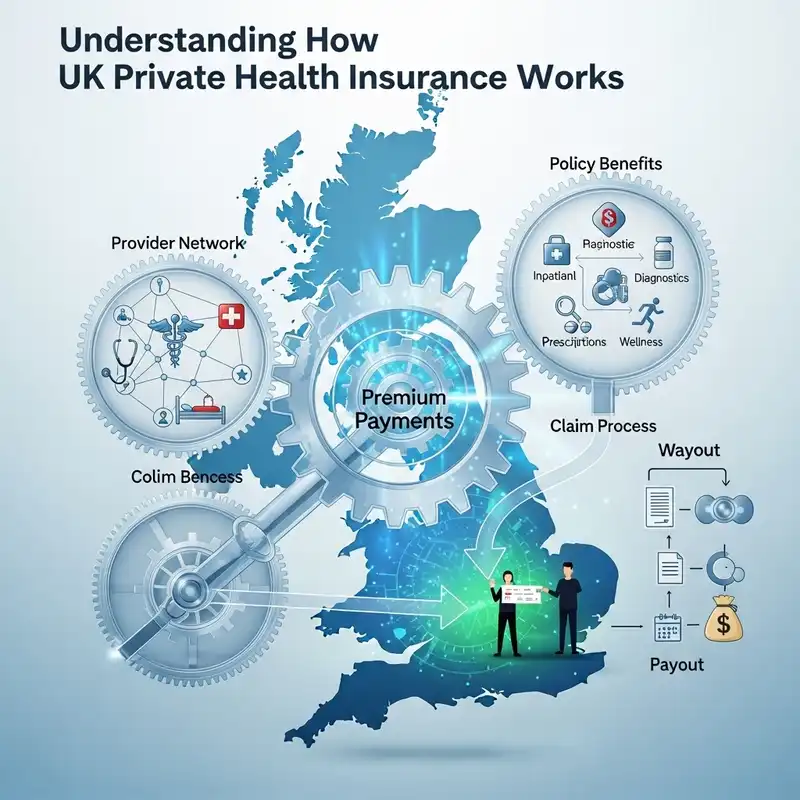
TL;DR
As an experienced UK broker that has helped arrange over 900,000 policies, WeCovr understands the vital role a healthy workforce plays in business success. This guide explores corporate private medical insurance (PMI), a powerful tool for UK businesses to support their employees and protect their bottom line.
Key takeaways
- Faster Access to Treatment: This is the primary benefit. Employees can bypass long NHS waiting lists for consultations, diagnostic tests (like CT and MRI scans), and non-emergency surgical procedures.
- Choice and Control: Patients often have more choice over the specialist who treats them and the hospital where they receive care. They can also schedule appointments and procedures at times that are more convenient for them.
- Comfort and Privacy: Private hospitals typically offer private en-suite rooms, more flexible visiting hours, and a quieter, more comfortable environment for recovery.
- Access to Specialist Drugs & Treatments: Some policies provide cover for cancer drugs or treatments that may not be available on the NHS due to cost or NICE (National Institute for Health and Care Excellence) guidelines.
- Peace of Mind: Knowing that you and your family can access high-quality care without delay provides invaluable reassurance, reducing stress during an already difficult time.
As an experienced UK broker that has helped arrange over 900,000 policies, WeCovr understands the vital role a healthy workforce plays in business success. This guide explores corporate private medical insurance (PMI), a powerful tool for UK businesses to support their employees and protect their bottom line.
An in-depth look at private healthcare for business, including employee cover and employer benefits
In today's competitive job market, attracting and retaining top talent requires more than just a competitive salary. A comprehensive benefits package is crucial, and at the forefront of desirable perks is private healthcare.
Corporate Private Medical Insurance (PMI) is an employee benefit that provides your team with access to private medical diagnosis and treatment. For employers, it's a strategic investment in workforce health, productivity, and morale. For employees, it's the peace of mind that comes with knowing they can get expert medical care quickly when they need it most.
This guide will walk you through every aspect of business health insurance, from the core benefits and policy features to the tax implications and setup process.
What is Corporate Private Medical Insurance (PMI)?
Corporate Private Medical Insurance, often called Business Health Insurance or Group PMI, is a policy taken out by an employer to provide healthcare cover for its employees.
Instead of relying solely on the NHS, employees on a company scheme can access private hospitals, specialists, and treatments for eligible acute conditions. This typically means faster diagnosis, shorter waiting times for surgery, and more choice over where and when they are treated.
A key point to understand from the outset: UK private medical insurance is designed to treat acute conditions. An acute condition is a disease, illness, or injury that is likely to respond quickly to treatment and lead to a full recovery. It does not cover chronic conditions, which are long-term and require ongoing management.
There are two main types of corporate schemes:
- Small Business PMI: Typically for companies with 2-249 employees. Policies are often based on the specific needs and budget of the business.
- Large Corporate PMI: For businesses with 250+ employees. These schemes are often highly customisable and may include unique benefits, wellness programmes, and dedicated claims management.
Why Should Businesses Offer Private Healthcare? The Employer's Perspective
Investing in corporate PMI is a significant financial decision. However, the return on investment can be substantial, extending far beyond simply being a "nice-to-have" perk.
| Benefit for the Employer | How it Works in Practice |
|---|---|
| Reduced Sickness Absence | With NHS waiting lists for some procedures stretching over many months, PMI can reduce an employee's time off work from months to weeks. Faster access to diagnostics (like MRI scans) and surgery gets your staff back to health and back to work sooner. |
| Enhanced Recruitment & Retention | In a tight labour market, a strong benefits package can be the deciding factor for a top candidate. PMI is consistently ranked as one of the most valued employee benefits, demonstrating that you are an employer who cares. |
| Improved Employee Morale & Loyalty | Providing health cover shows your team that you are invested in their well-being. This fosters a positive company culture and can lead to increased loyalty, engagement, and productivity. |
| Duty of Care | Offering PMI helps fulfil an employer's duty of care, particularly for staff in stressful roles or those who travel frequently. It ensures they have a support system in place for their health. |
| Tax Efficiency | The premiums paid by the business for a corporate PMI scheme are generally considered an allowable business expense, meaning they are deductible against Corporation Tax. |
Real-Life Scenario: Imagine a key project manager is diagnosed with a hernia. The NHS waiting time for surgery in their area is 45 weeks. This means nearly a year of discomfort, potential sick days, and reduced productivity. With a company PMI policy, they could be seen by a specialist within a week and have the operation in a private hospital within a month, ensuring a swift return to full capacity.
How Does Corporate PMI Benefit Employees?
While the business case is compelling, the direct benefits to your team members are what make PMI so powerful.
- Faster Access to Treatment: This is the primary benefit. Employees can bypass long NHS waiting lists for consultations, diagnostic tests (like CT and MRI scans), and non-emergency surgical procedures.
- Choice and Control: Patients often have more choice over the specialist who treats them and the hospital where they receive care. They can also schedule appointments and procedures at times that are more convenient for them.
- Comfort and Privacy: Private hospitals typically offer private en-suite rooms, more flexible visiting hours, and a quieter, more comfortable environment for recovery.
- Access to Specialist Drugs & Treatments: Some policies provide cover for cancer drugs or treatments that may not be available on the NHS due to cost or NICE (National Institute for Health and Care Excellence) guidelines.
- Peace of Mind: Knowing that you and your family can access high-quality care without delay provides invaluable reassurance, reducing stress during an already difficult time.
- Valuable Digital Health Services: Most modern PMI policies now include a suite of added-value services, such as:
- Digital GP: 24/7 access to a GP via phone or video call.
- Mental Health Support: Access to counselling sessions and support lines.
- Wellness Programmes: Discounts on gym memberships, health screenings, and wellness apps.
As a WeCovr client, your employees also gain complimentary access to our AI-powered nutrition app, CalorieHero, further supporting their overall health and well-being.
Core Components of a Corporate Health Insurance Policy
Not all PMI policies are created equal. They are built from a combination of core cover and optional extras. Understanding these components is key to designing a scheme that fits your budget and your team's needs.
Core Cover (Usually included as standard)
- In-patient and Day-patient Treatment: This covers costs when an employee is admitted to hospital for treatment and requires a bed, either overnight (in-patient) or just for the day (day-patient). This includes surgery, hospital accommodation, nursing care, specialist fees, and diagnostics.
- Cancer Cover: This is a fundamental part of modern PMI. It typically covers the diagnosis and treatment of cancer, including surgery, radiotherapy, and chemotherapy. Most policies offer extensive cancer support, though the level of cover can vary.
Common Optional Add-ons
- Out-patient Cover: This is one of the most important optional extras. It covers diagnostic tests and consultations with a specialist that do not require a hospital bed. Without this, an employee would need an NHS diagnosis before they could use their PMI for private treatment. Most businesses include a good level of out-patient cover.
- Therapies Cover: This provides cover for treatments like physiotherapy, osteopathy, and chiropractic care, often up to a set number of sessions per year. This is invaluable for musculoskeletal issues, a leading cause of sickness absence.
- Mental Health Cover: While basic support is often included, this add-on provides more extensive cover for psychiatric treatment, therapy sessions with psychologists, and in-patient care for mental health conditions.
- Dental and Optical Cover: This can be added to help employees with the costs of routine check-ups, glasses, and dental treatment.
- Travel Cover: Extends medical cover for employees when they are travelling abroad.
An expert broker like WeCovr can help you balance these options to create a cost-effective plan that delivers real value. We can model different scenarios to show you how adding or removing certain benefits impacts the overall premium.
Customising Your Business Health Insurance Plan
Beyond the core components, several key choices will define how your policy works and how much it costs.
- Level of Cover: Do you want a comprehensive plan covering almost everything, or a more budget-focused plan that covers major procedures but requires employees to use the NHS for initial diagnostics?
- Hospital List: Insurers group hospitals into tiers. A plan with a limited list of local or partner hospitals will be cheaper than one that provides access to premium central London hospitals.
- Excess: This is the amount an employee must pay towards a claim. A higher excess (e.g., £250) will lower the overall premium. You can choose to have the excess payable per claim or per policy year.
- 6-Week Option: This is a popular cost-saving measure. The policy will only pay for private treatment if the NHS waiting list for that treatment is longer than six weeks. If the NHS can treat the employee within six weeks, they would use the NHS.
Understanding Underwriting: The Heart of Your Policy
Underwriting is how an insurer assesses risk and decides what it will and will not cover. For corporate schemes, there are several common methods.
| Underwriting Type | How it Works | Best For |
|---|---|---|
| Moratorium (Mori) | Pre-existing conditions from the past 5 years are automatically excluded. However, if an employee goes 2 continuous years without symptoms, treatment, or advice for that condition after joining, it may become eligible for cover. | Small businesses (2-20 employees) who want a quick and non-intrusive setup. No medical questionnaires are needed. |
| Full Medical Underwriting (FMU) | Each employee completes a detailed health questionnaire. The insurer then assesses this and explicitly lists any conditions that will be permanently excluded from cover. | Small businesses where employees are young and healthy, or for individuals who want certainty about what is covered from day one. |
| Medical History Disregarded (MHD) | Pre-existing conditions are covered, provided they fall within the policy's general terms. This is the most comprehensive (and expensive) type of underwriting. | Larger companies (typically 20+ employees) looking to offer a premium, hassle-free benefit. It removes all ambiguity about past conditions. |
| Continued Personal Medical Exclusions (CPME) | For groups switching from another insurer. This method carries over the underwriting and personal exclusions from the previous policy, ensuring continuity of cover. | Any business looking to switch their PMI provider without losing cover for conditions that were previously covered. |
Insider Tip: For a growing business, starting with Moratorium underwriting is common. However, once you reach around 20 employees, insurers are often willing to offer Medical History Disregarded (MHD) terms. An experienced broker can help you negotiate this switch, which is a massive upgrade in the quality of your cover.
The Cost of Corporate PMI: What Influences Premiums?
There is no "one-size-fits-all" price for business health insurance. The premium is calculated based on a range of risk factors:
- Average Age of Employees: Older employees are statistically more likely to claim, so a higher average age leads to higher premiums.
- Company Location: Premiums are often higher in and around London and other major cities where the cost of private treatment is more expensive.
- Industry/Occupation: Some professions (e.g., manual labour) carry a higher risk of injury, which can influence the price.
- Level of Cover: The more comprehensive the plan (e.g., full out-patient, mental health, no excess), the higher the cost.
- Underwriting Method: A Medical History Disregarded scheme will cost more than a Moratorium or FMU scheme.
- Claims History: For existing schemes, the previous year's claims will have a significant impact on the renewal premium.
As a rough guide, a basic corporate PMI plan for a small business could start from £30-£40 per employee per month. A comprehensive plan for a professional services firm in London could be £80-£120+ per employee per month.
Tax Implications of Business Health Insurance
Understanding the tax treatment of PMI is essential for both the employer and the employee.
For the Employer
- Corporation Tax: The cost of the premiums paid by the company is considered an allowable business expense. This means you can deduct the full cost from your profits before calculating your Corporation Tax bill, making the scheme more affordable.
For the Employee
- Benefit in Kind (P11D): Private medical insurance is treated as a 'benefit in kind'. This means the value of the premium is considered part of the employee's income, and they will have to pay income tax on it.
- How it Works: The employer must calculate the value of the benefit for each employee and report it to HMRC on a P11D form at the end of the tax year. The cost is added to the employee's earnings, and they pay tax at their marginal rate (e.g., 20%, 40%, or 45%).
- Insurance Premium Tax (IPT): All health insurance premiums are subject to IPT, which is currently 12%. This is included in the price you are quoted.
Example: If an employee's PMI premium costs the company £800 for the year, and they are a basic rate (20%) taxpayer, they will pay an extra £160 in tax for that year (£800 x 20%). This is usually handled by adjusting their tax code.
Choosing the Right Corporate PMI Provider in the UK
The UK has a mature and competitive private medical insurance market. The main providers for business schemes include:
- Bupa: One of the oldest and most recognised names in UK health insurance.
- AXA Health: A major global insurer with a strong UK presence and a wide range of corporate options.
- Aviva: The UK's largest general insurer, offering highly flexible PMI plans.
- Vitality: Known for its innovative wellness programme, which rewards healthy living with premium discounts and other perks.
- WPA: A not-for-profit insurer with a strong reputation for customer service, particularly popular with SMEs.
Comparing these providers and their countless policy variations can be overwhelming. This is where an independent, unbiased broker like WeCovr provides immense value. We survey the entire market on your behalf, analyse the fine print, and present you with clear, like-for-like comparisons. Our service comes at no extra cost to you, as we are paid a commission by the insurer you choose.
How to Set Up a Corporate Health Insurance Scheme
Setting up a policy is a straightforward process when guided by an expert.
- Define Your Objectives: Why are you introducing PMI? Is it to cut absence, boost recruitment, or reward staff? What is your budget?
- Gather Employee Data: You'll need an anonymised list of employees, including their dates of birth and postcodes, to get an accurate quote.
- Speak to a Broker: Contact an independent broker like WeCovr. We will discuss your objectives and gather the necessary information.
- Review Your Options: We will return with a detailed market report, comparing quotes from leading insurers. We'll explain the pros and cons of each option in plain English.
- Choose Your Policy: Once you've selected a suitable option for your circumstancesr business, we will help you complete the application forms and set up the scheme.
- Launch and Communicate: We can provide materials to help you announce the new benefit to your employees, explaining how it works and how they can make a claim.
Making a Claim: The Employee Journey
The claims process is designed to be as smooth as possible.
- See a GP: The journey always starts with a GP. The employee discusses their symptoms with their NHS GP or a Digital GP provided by the insurer.
- Get a Referral: If the GP believes specialist assessment is needed, they will provide an 'open referral' letter.
- Contact the Insurer: The employee calls their insurer's claims line with their policy number and referral details.
- Authorisation: The insurer checks that the condition and proposed treatment are covered by the policy and provides an authorisation number. They will also help the employee find a suitable specialist from their approved network.
- Book Treatment: The employee books their consultation or treatment with the authorised private specialist/hospital.
- Bills are Settled: The private hospital and specialist will bill the insurer directly. The employee only needs to pay their excess, if one applies.
The Critical PMI Rule: Pre-existing and Chronic Conditions
This is the single most important concept to understand about private medical insurance in the UK.
Standard UK PMI policies are designed to cover acute conditions that arise after you take out the policy.
- Pre-existing Conditions: These are any illnesses, diseases, or injuries you have had symptoms of, received advice for, or had treatment for before the policy start date. These are typically excluded, at least initially (see Moratorium underwriting).
- Chronic Conditions: These are conditions that are long-term and cannot be cured, only managed. Examples include diabetes, asthma, high blood pressure, and most forms of arthritis. The day-to-day management of chronic conditions is not covered by PMI and remains the responsibility of the NHS.
While PMI won't cover the long-term management of a chronic condition, it may cover acute flare-ups if the policy terms allow. For example, it wouldn't cover insulin for a diabetic, but it might cover surgery for a new, acute complication arising from the diabetes.
Understanding this distinction is vital to prevent disappointment at the point of claim.
Is business health insurance a taxable benefit in the UK?
Can I cover my family on my company health insurance?
How many employees do I need for a group health insurance plan?
Does corporate PMI cover pre-existing conditions?
Get Your Tailored Corporate PMI Quote Today
Investing in the health of your employees is one of the smartest investments a business can make. A well-structured corporate health insurance plan can reduce absence, boost productivity, and make your company a more attractive place to work.
Navigating the market can be complex, but you don't have to do it alone. The expert advisers at WeCovr are here to help. We provide independent, no-obligation advice to help you find the perfect health insurance solution for your business and your budget. As a bonus, our clients enjoy discounts on other business and personal insurance products.
Contact us today to receive a free, tailored comparison of the UK's leading corporate PMI providers.
Disclaimer: This is general guidance only and does not constitute formal tax or financial advice. Tax treatment depends on individual circumstances, policy terms, and HMRC interpretation, which cannot be guaranteed in advance. Whenever applicable, businesses and individuals should always consult a qualified accountant or tax adviser before arranging such policies.
Start with your Protection Score, then decide whether private health cover is the right fit
Check where health access sits in your overall protection picture before deciding whether to compare private health cover.
Spot whether NHS access risk is the real issue
See if PMI is the gap to fix first
Get health insurance help only if it makes sense for you
Get your score
Start with your protection score
Check your current position first, then get health insurance help if you need it.
Check your current resilience
Score your income, health access and family protection position in a few minutes.
See where private cover helps
Understand whether faster diagnosis and treatment is a priority gap.
Continue to tailored PMI help
If health access is the issue, continue to tailored PMI help.
What you get
A quick view of your current protection position
A clearer idea of where the biggest gaps may be
A direct route to tailored help if you want it