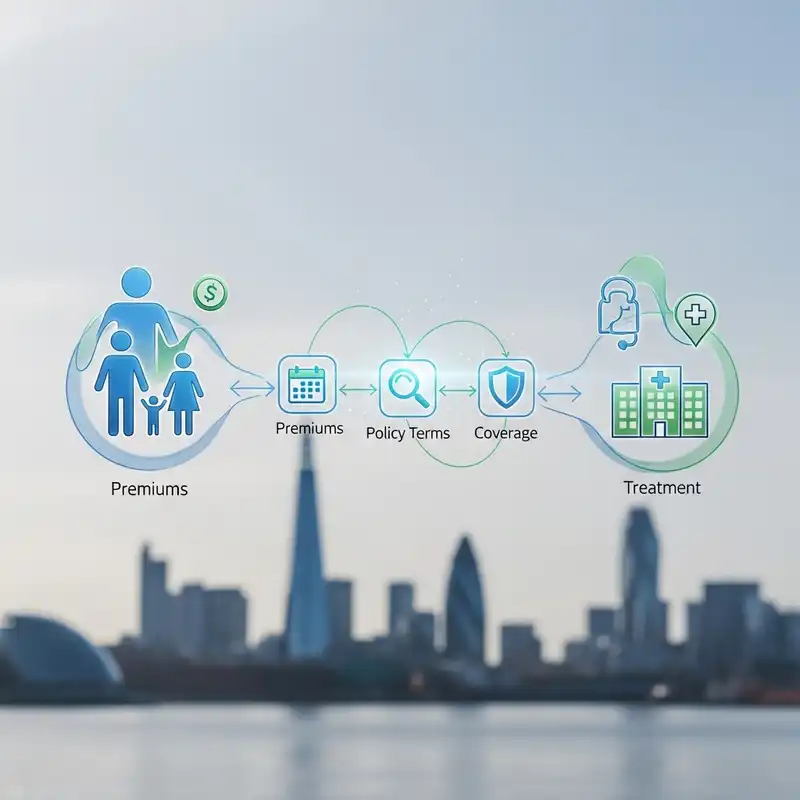
TL;DR
The UK's private healthcare sector continues to operate at a near-record pace in 2025, though the landscape is evolving. The latest data reveals a subtle cooling in the post-pandemic 'self-pay' boom, while demand for private medical insurance (PMI) remains robust. This article breaks down the new statistics, explores the shifting market forces, and explains what this means for anyone considering their healthcare options.
The UK's private healthcare sector continues to operate at a near-record pace in 2025, though the landscape is evolving. The latest data reveals a subtle cooling in the post-pandemic 'self-pay' boom, while demand for private medical insurance (PMI) remains robust. This article breaks down the new statistics, explores the shifting market forces, and explains what this means for anyone considering their healthcare options.
As an FCA-authorised broker that has helped arrange over 900,000 policies, WeCovr provides expert analysis of these trends to help you make informed decisions.
The 2026 Private Healthcare Landscape: Key Statistics
New figures from the Private Healthcare Information Network (PHIN) for the first quarter (Q1) of 2025 paint a picture of a mature and busy market. While total admissions saw a marginal 1% dip compared to the all-time high of Q1 2024, the 240,730 admissions mark the second-highest quarterly total ever recorded.
This indicates that demand for private healthcare is not a temporary spike but a sustained feature of the UK health system. The most significant story, however, lies in how patients are funding their treatment.
| Metric (Q1 2025 vs Q1 2024) | Q1 2025 Figure | Change vs Q1 2024 | Key Insight |
|---|---|---|---|
| Total Private Admissions | 240,730 | -1% | Demand remains historically strong, just shy of 2024's record peak. |
| Insured Admissions | ~151,000 | +0.3% | The PMI market shows resilience and stable growth, forming the bedrock of the sector. |
| Self-Pay Admissions | ~69,700 | -4% | A notable cooling in the self-pay market, suggesting a potential shift in patient behaviour. |
Source: Private Healthcare Information Network (PHIN), Market Update September 2025.
Key Takeaways from the Latest Data:
- Self-Pay Market Normalises: The 4% drop in people paying for treatment out-of-pocket is the first significant decrease in years. This coincides with NHS England admissions reaching their highest level since 2019, suggesting that as NHS capacity improves, fewer people feel the need to self-fund.
- Insurance is the Stable Core: The slight growth in PMI-funded admissions highlights its increasing importance for both individuals and employers seeking reliable and prompt access to healthcare.
- National Variations: The market isn't uniform. Admissions grew in Scotland (+5%) and Northern Ireland (+1.6%), while slightly declining in England (-1.3%) and Wales (-0.5%).
What's Driving the Market Dynamics in 2026?
The forces shaping private healthcare are more nuanced than before. While NHS waiting lists remain a factor, other trends are now influencing patient choices.
1. The Enduring Impact of NHS Waiting Lists
While the NHS is increasing its activity, the sheer size of the elective care waiting list remains a powerful motivator. Millions are still waiting for treatment, and for many, the certainty and speed offered by the private sector—particularly through insurance—remains a compelling proposition. The wait isn't just a number; it's months or years of living with pain or a reduced quality of life, which many find unacceptable.
2. A Shift in the 'Self-Pay' Phenomenon
The dramatic post-pandemic rise in patients funding their own one-off procedures (like hip replacements or cataract surgery) is beginning to level off. This shift is likely due to a combination of factors:
- Improved NHS Capacity: More patients are being treated by the NHS, reducing the immediate pressure to go private.
- Cost of Living Pressures: With household budgets tight, the five-figure cost of major surgery is a significant barrier for many.
- A Move to Insurance: Some who might have self-paid in the past may now see the value in a predictable monthly PMI premium as a more sustainable long-term strategy.
3. The Growing Role of Employer-Funded Health Insurance
In a competitive job market, PMI has become a cornerstone of employee benefits. The stability of the insured market is heavily supported by businesses that use health cover to:
- Attract and Retain Top Talent: A strong benefits package is a key differentiator.
- Minimise Sickness Absence: Fast access to diagnostics and treatment gets employees healthy and back to work sooner, boosting productivity.
- Demonstrate a Duty of Care: Investing in staff wellbeing improves morale and company loyalty.
4. A Post-Pandemic Focus on Health
The pandemic permanently increased public health awareness. People are more proactive about their wellbeing and less willing to wait when a health issue arises. This mindset continues to fuel interest in private healthcare options that offer control, choice, and peace of mind.
A Deeper Dive: Treatment and Patient Trends
The Q1 2025 data reveals fascinating trends in the types of treatments sought and the demographics of private patients.
- Top Procedures: Of the ten most common procedures, only chemotherapy saw a rise in admissions (+5.9%). Procedures like cataract surgery and traditional hip/knee replacements saw slight declines.
- Emerging Growth Areas: Demand has surged for less common treatments, including varicose vein procedures (+629%) and allergy testing (+514%).
- Cosmetic Surgery Cools: In line with economic pressures, demand for cosmetic procedures like breast enlargements (-13%) and rhinoplasty (-29%) has fallen.
- Patient Demographics: The largest growth in admissions was seen among patients aged 40-59.
A Crucial Note: What UK Private Medical Insurance Does Not Cover
It's vital to understand that PMI is a complement to the NHS, not a replacement. It is specifically designed to cover acute conditions that arise after you take out your policy.
- An Acute Condition is a disease or injury that is likely to respond quickly to treatment and lead to recovery (e.g., joint replacement, hernia repair, cataract surgery).
- A Chronic Condition is a long-term illness that cannot be cured but can be managed (e.g., diabetes, asthma, arthritis).
Standard UK private health cover will NOT cover:
- Pre-existing Conditions: Any medical issue you had symptoms or treatment for before your policy started.
- Chronic Conditions: The ongoing, long-term management of these remains with the NHS.
- Emergencies: A&E visits and life-threatening situations are handled by the NHS.
- Routine Pregnancy & Childbirth.
- Purely Cosmetic Surgery.
Understanding these boundaries is key to having the right expectations for your cover.
Is Private Health Cover Right for You? Key Considerations
If you're weighing your options, here are the key factors to consider.
Your Budget
Premiums are influenced by your age, location, chosen level of cover, and the excess you agree to pay towards any claim. A higher excess will lower your monthly premium.
Your Health Priorities
What is most important to you?
- Bypassing NHS queues for diagnosis and surgery?
- Access to a private room during a hospital stay?
- Choice over your specialist and hospital?
- Access to drugs or treatments not yet available on the NHS?
- Comprehensive mental health support?
Understanding Levels of Cover
Policies are generally tiered to suit different needs and budgets.
| Level of Cover | What It Typically Includes | Best For |
|---|---|---|
| Basic | In-patient and day-patient treatment only. | Peace of mind against the high costs of surgery and hospital stays. |
| Mid-Range | Everything in Basic, plus a limit for outpatient consultations and diagnostic tests. | A good balance of cost and cover for getting a swift diagnosis and treatment plan. |
| Comprehensive | Full cover for in-patient, day-patient, and outpatient care, often including therapies and mental health. | Those wanting the most complete cover and maximum peace of mind. |
A specialist broker like WeCovr can analyse these options across the market to find a plan that perfectly matches your needs and budget.
Beyond Treatment: The Rise of Wellness and Preventative Care
Modern PMI has evolved. It's no longer just about claims; it's about keeping you healthy. Insurers know that prevention is better than cure.
Many leading policies now include valuable benefits at no extra cost:
- 24/7 Digital GP: Video consultations with a GP, often available the same day.
- Mental Health Support: Access to counselling or therapy sessions without a GP referral.
- Wellness and Rewards Programmes: Insurers like Vitality incentivise healthy living with rewards like discounted gym memberships, cinema tickets, and lower premiums.
- Health and Wellbeing Apps: Tools for mindfulness, fitness, and nutrition.
As part of our commitment to our clients, WeCovr provides complimentary access to our partner AI nutrition tracking app, CalorieHero, and exclusive discounts on other insurance products for our PMI and life insurance clients.
Navigating the Market with an Expert PMI Broker
The UK's PMI market is complex. Comparing policies from numerous providers like Bupa, Aviva, AXA Health, and Vitality can be overwhelming. An independent broker works for you, not the insurance companies.
Our role at WeCovr is to:
- Understand Your Needs: We listen to your priorities, family circumstances, and budget.
- Scan the Market: We use our expertise to compare policies from leading UK insurers.
- Explain the Details: We translate the jargon and clarify the differences in cover, hospital lists, and exclusions.
- Provide an Impartial Recommendation: We present the most suitable options so you can make a confident choice.
- Save You Time and Money: Our service is free to you, and we manage the entire application process.
Our high customer satisfaction ratings reflect our commitment to finding the right cover for our clients without the stress.
Frequently Asked Questions
What is the difference between an acute and a chronic condition for insurance?
An acute condition is a short-term medical issue expected to respond fully to treatment, like a broken bone or a cataract. PMI is designed to cover these. A chronic condition is a long-term illness requiring ongoing management, like diabetes or asthma. The day-to-day management of chronic conditions remains the responsibility of the NHS.
Does private medical insurance get more expensive as I get older?
Yes, premiums generally increase at renewal. This is due to two factors: your age-related risk increases, and medical inflation (the rising cost of healthcare) pushes up the base cost of insurance for everyone.
Can I add my family to my private health cover?
Absolutely. Most insurers offer family plans that cover you, your partner, and your dependent children. This is often more convenient and can be more cost-effective than separate policies.
Why should I use a broker like WeCovr instead of going direct to an insurer?
An independent broker offers an impartial, whole-of-market comparison to find the policy that truly fits your needs, whereas an insurer can only sell its own products. We explain the complexities, handle the paperwork, and provide expert advice at no extra cost to you. We work for you, not the insurance company.
The record-breaking use of private healthcare is a clear sign that people are taking more control over their health. With market dynamics shifting, understanding your options has never been more important.
Ready to explore your options? Get a free, no-obligation quote from our experts at WeCovr today and find the right cover for your peace of mind.
Sources
- NHS England: Waiting times and referral-to-treatment statistics.
- Office for National Statistics (ONS): Health, mortality, and workforce data.
- NICE: Clinical guidance and technology appraisals.
- Care Quality Commission (CQC): Provider quality and inspection reports.
- UK Health Security Agency (UKHSA): Public health surveillance reports.
- Association of British Insurers (ABI): Health and protection market publications.
Disclaimer: This is general guidance only and does not constitute formal tax or financial advice. Tax treatment depends on individual circumstances, policy terms, and HMRC interpretation, which cannot be guaranteed in advance. Whenever applicable, businesses and individuals should always consult a qualified accountant or tax adviser before arranging such policies.
Start with your Protection Score, then decide whether private health cover is the right fit
Check where health access sits in your overall protection picture before deciding whether to compare private health cover.
Spot whether NHS access risk is the real issue
See if PMI is the gap to fix first
Get health insurance help only if it makes sense for you
Get your score
Start with your protection score
Check your current position first, then get health insurance help if you need it.
Check your current resilience
Score your income, health access and family protection position in a few minutes.
See where private cover helps
Understand whether faster diagnosis and treatment is a priority gap.
Continue to tailored PMI help
If health access is the issue, continue to tailored PMI help.
What you get
A quick view of your current protection position
A clearer idea of where the biggest gaps may be
A direct route to tailored help if you want it