TL;DR
As an insurance intermediary with over 1,000,000 policies arranged, WeCovr provides this definitive guide to UK small business private medical insurance. Well explore the costs, the significant benefits for your company and your team, and help you navigate the market to find an appropriate level of cover for your needs.
Key takeaways
- An employee feels unwell and visits their NHS GP.
- The GP diagnoses the issue and refers them to a specialist for further tests or treatment.
- Instead of joining the NHS waiting list, the employee contacts their PMI provider to open a claim.
- The insurer authorises the claim and the employee can book appointments with a private specialist at a time and place that suits them.
- Acute Condition: A disease, illness, or injury that is likely to respond quickly to treatment and result in a recovery. Examples include joint replacements, cataract surgery, or hernia repairs.
As an insurance intermediary with over 1,000,000 policies arranged, WeCovr provides this definitive guide to UK small business private medical insurance. We’ll explore the costs, the significant benefits for your company and your team, and help you navigate the market to find an appropriate level of cover for your needs.
WeCovr reviews costs, benefits, and the best SME health cover providers
In today's competitive landscape, attracting and retaining top talent is a major challenge for small and medium-sized enterprises (SMEs). Beyond salaries, a strong benefits package is crucial, and at the top of the list for many employees is private health insurance.
This comprehensive guide will walk you through everything you may need to know about small business health insurance in the UK. We'll break down the jargon, explore the tangible returns on your investment, and compare the well-known providers to help you make an informed decision.
What is Small Business Health Insurance and How Does It Work?
Small business health insurance, also known as group private medical insurance (PMI), is a policy taken out by a company to provide its employees with access to private healthcare.
In essence, it acts as a complement to the NHS. When an employee on the scheme falls ill with a new, treatable condition, they can use their policy to use a private pathway, subject to policy terms and availability and receive diagnosis and treatment in a private hospital or clinic.
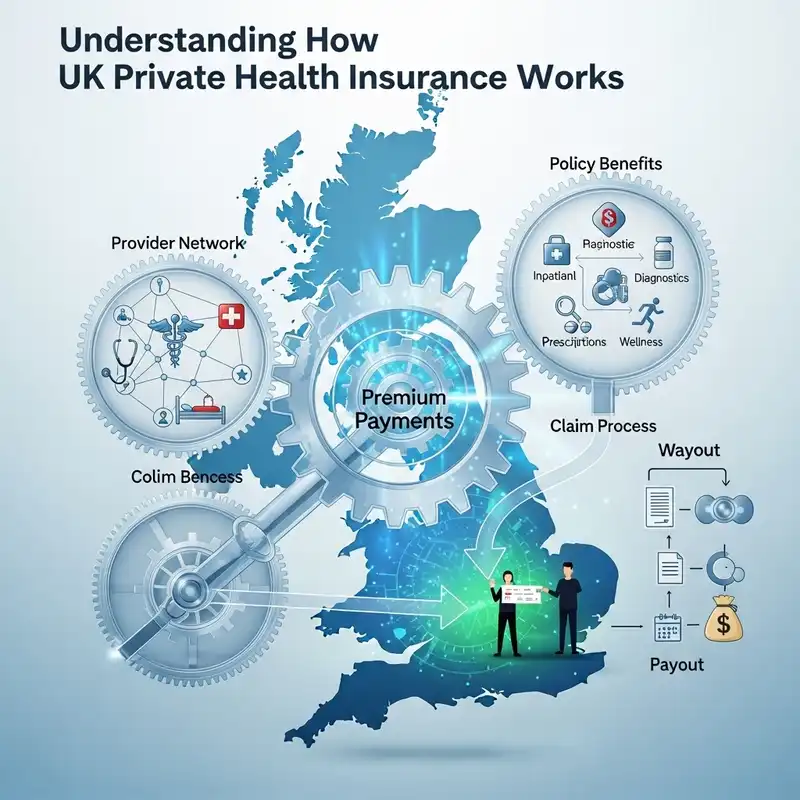
The process is straightforward:
- An employee feels unwell and visits their NHS GP.
- The GP diagnoses the issue and refers them to a specialist for further tests or treatment.
- Instead of joining the NHS waiting list, the employee contacts their PMI provider to open a claim.
- The insurer authorises the claim and the employee can book appointments with a private specialist at a time and place that suits them.
A Critical Point: What PMI Does and Doesn't Cover
It is vital to understand that UK private medical insurance is designed for acute conditions that arise after you take out the policy.
- Acute Condition: A disease, illness, or injury that is likely to respond quickly to treatment and result in a recovery. Examples include joint replacements, cataract surgery, or hernia repairs.
- Chronic Condition: A long-term condition that cannot be cured, only managed. PMI does not cover the ongoing management of chronic illnesses like diabetes, asthma, Crohn's disease, or high blood pressure.
- Pre-existing Conditions: Any medical condition for which an employee has experienced symptoms, received medication, or sought advice or treatment before the policy start date. These are typically excluded from cover, at least initially.
Why Should Your Small Business Invest in Private Health Cover?
Investing in your team's health isn't just a perk; it's a strategic business decision with a clear return on investment. The benefits are felt by both the company and its employees.
The Business Case for SME Health Insurance
| Benefit | Impact on Your Business | Supporting Statistic (2022/23) |
|---|---|---|
| Reduced Absenteeism | Faster access to diagnosis and treatment gets employees back to work sooner, minimising disruption and lost productivity. | The ONS reported 185.6 million working days were lost due to sickness or injury in the UK in 2022. |
| Attract & Retain Talent | In a tight labour market, PMI is a high-value benefit that makes your company more attractive to top candidates and encourages loyalty. | Minor illnesses and musculoskeletal problems are the leading causes of absence, both of which are effectively managed via PMI. |
| Boosted Productivity | A healthy workforce is a productive one. Employees who feel valued and have peace of mind about their health are more engaged and focused. | NHS referral-to-treatment waiting lists stood at 7.6 million in April 2024, with many waiting over 18 weeks. |
| Duty of Care | Providing health cover demonstrates a genuine commitment to employee wellbeing, fostering a positive and supportive company culture. | Mental health and wellbeing support are increasingly central features of modern PMI policies. |
The Advantages for Your Employees
- Speed of Access: The single biggest benefit. Employees can skip long NHS waiting lists for consultations, scans, and surgery.
- Choice and Control: They gain more control over their healthcare, choosing the specialist, hospital, and appointment times that fit around their work and life.
- Comfort and Privacy: Treatment is often in a private hospital with the comfort of a private en-suite room.
- Access to Specialist Care: Policies can provide access to drugs, treatments, or specialist cancer therapies that may not be available on the NHS due to cost.
- Peace of Mind: Knowing they have a safety net for their health reduces stress and anxiety for them and their families.
Understanding Your Cover: What's Included (and What's Not)
PMI policies are modular, meaning you start with a core foundation and can add optional extras to tailor the cover to your budget and your team's needs.
Core Cover vs. Optional Extras
| Category | What It Means | Typically Included in Core Cover? |
|---|---|---|
| In-Patient & Day-Patient Treatment | Covers costs when admitted to a hospital bed, including surgery, accommodation, and nursing care. | Yes (Standard) |
| Comprehensive Cancer Cover | Covers the cost of diagnosis, surgery, chemotherapy, radiotherapy, and specialist therapies for cancer. | Yes (Often the most valued part) |
| Out-Patient Cover | Covers specialist consultations and diagnostic tests that don't require a hospital bed (e.g., seeing a cardiologist, MRI/CT scans). | No (Popular Optional Extra) |
| Therapies | Covers treatments like physiotherapy, osteopathy, and chiropractic care. | No (Optional Extra) |
| Mental Health Cover | Provides access to psychiatrists, psychologists, and talking therapies. | No (Increasingly popular Optional Extra) |
| Dental & Optical Cover | Contributes towards routine check-ups, treatments, and the cost of glasses or contact lenses. | No (Optional Extra) |
Common Policy Exclusions
It's just as important to know what isn't covered. Besides pre-existing and chronic conditions, standard exclusions include:
- A&E / Emergency services
- Cosmetic surgery (unless for reconstruction after an accident or eligible surgery)
- Normal pregnancy and childbirth
- Self-inflicted injuries
- Substance abuse treatment
- Unproven or experimental treatments
The Cost of Small Business Health Insurance in the UK
There is no one-size-fits-all price. The premium for your business will be calculated based on a unique set of risk factors. As expert PMI brokers, A WeCovr specialist or trusted broker partner can help you find the good value by balancing these factors against your budget.
Key Factors Influencing Your Premium:
- Average Age of Employees: Older staff generally have a higher risk of claiming, so the premium will be higher.
- Number of Employees: Group schemes start from just two employees. The larger the group, the more the risk is spread, which can sometimes lower the per-person cost.
- Level of Cover: A basic core policy will be cheaper than a comprehensive one with multiple add-ons like out-patient and mental health cover.
- Policy Excess: This is the amount an employee pays towards the cost of their claim (e.g., the first £250). A higher excess lowers the overall premium.
- Hospital List: Insurers offer different tiers of hospital lists. A plan with access to premium central London hospitals will cost more than one with a national network of private hospitals.
- Underwriting Type: The method used to assess pre-existing conditions (more on this below).
- Industry: Some manual or high-risk professions may attract higher premiums.
Illustrative Monthly Costs for SME Health Insurance
To give you an idea, here are some estimated monthly costs per employee. These are for illustrative purposes only.
| Number of Employees | Average Age | Level of Cover | Estimated Monthly Cost per Employee |
|---|---|---|---|
| 3 | 32 | Core In-Patient Only | £30 - £45 |
| 3 | 32 | Comprehensive Cover | £55 - £80 |
| 10 | 40 | Core In-Patient Only | £45 - £60 |
| 10 | 40 | Comprehensive Cover | £75 - £110 |
Disclaimer: These are industry-average estimates. For a precise figure tailored to your business, you may need a personalised quote.
Choosing the Right Underwriting for Your Team
'Underwriting' is simply the process an insurer uses to assess medical risk and decide how to handle pre-existing conditions. For SMEs, there are two main options.
| Underwriting Type | How It Works | Pros | Cons |
|---|---|---|---|
| Moratorium (Mori) | No medical forms upfront. Any condition an employee had in the 5 years before joining is automatically excluded. This exclusion can be lifted if they go 2 continuous years on the policy without any symptoms, treatment, or advice for that condition. | Quick and easy to set up. Less intrusive for employees. | Lack of initial clarity. A claim might be rejected if it relates to a recent pre-existing condition. |
| Full Medical Underwriting (FMU) | Each employee completes a health questionnaire. The insurer reviews their medical history and states from the outset exactly what will and won't be covered, with specific exclusions applied to the policy. | Complete clarity from day one. You know precisely where you stand. | Slower to set up. Requires employees to disclose personal medical information. |
For most small businesses, Moratorium underwriting is the simplest and most popular choice.
Reviewing the Best SME Health Cover Providers for 2025
The UK has a mature and competitive private health insurance market. While many providers offer excellent products, four consistently lead the pack for SMEs. The "best" one for you will depend on your priorities, be it budget, wellness features, or specific types of cover.
| Provider | Key Strengths / USP | Typical SME Benefits | WeCovr's Expert Opinion |
|---|---|---|---|
| Bupa | Highly trusted brand, huge network of hospitals and specialists, excellent cancer care. | Direct access to services (no GP referral needed for some conditions), extensive mental health support. | A premium, rock-solid choice. You are paying for brand reputation and excellent, comprehensive service. |
| Aviva | One of the UK's largest insurers, known for offering great value and competitive pricing. | Guided hospital options ('Expert Select') to manage costs, strong digital GP service, good core product. | An outstanding all-rounder. Aviva often provides one of the most cost-effective comprehensive policies on the market. |
| AXA Health | Global healthcare giant with a strong focus on proactive health and wellbeing. | 'Doctor at Hand' 24/7 virtual GP, excellent muscle, bone, and joint support pathways. | A top contender, especially for businesses that want to empower employees with accessible digital health tools. |
| Vitality | Unique model that rewards healthy behaviour with discounts and perks. | Discounts on gym memberships, fitness trackers (like Apple Watch), and healthy food. Encourages active engagement. | An innovative and modern choice. Ideal for younger, active teams and creating a vibrant wellness culture. |
Working with a WeCovr specialist or one of our broker partners allows you to compare these well-known providers on a like-for-like basis, ensuring you find the suitable fit without the hassle of approaching each one individually.
More Than Just Insurance: Added-Value Wellness Benefits
Modern PMI is evolving. It's no longer just about being there when you're ill; it's about helping you stay well in the first place. Almost all policies now come with a suite of added-value benefits subject to terms where applicable, including:
- 24/7 Digital GP: Speak to a GP by phone or video call, often within hours, and get prescriptions delivered to your door.
- Employee Assistance Programmes (EAP): A confidential 24/7 helpline for support with stress, anxiety, debt, legal issues, or other life challenges.
- Mental Health Support Lines: Direct access to trained counsellors for immediate support.
- Health and Wellness Apps: Tools for tracking fitness, nutrition, and mental wellbeing.
WeCovr enhances this value further. All clients who take out a private medical or life insurance policy with us receive complimentary access to CalorieHero, our exclusive AI-powered diet and calorie tracking app. We also offer discounts on other insurance products, helping you build a comprehensive and affordable benefits package.
A Step-by-Step Guide to Setting Up Your Policy
Getting your small business health insurance policy up and running is a simple process, especially with an expert guiding you.
- Define Your Budget and Goals: Decide what you want to achieve with the policy (e.g., reduce absence, attract talent) and establish a realistic monthly budget per employee.
- Gather Key Information: To get an accurate quote, you will need the number of employees you wish to cover and their dates of birth.
- Speak to a regulated Broker: This is the most crucial step. A specialist at WeCovr or one of our broker partners works for you, not the insurer. We search the available market, explain the complex details in plain English, and handle the paperwork. Our service has no separate broker fee.
- Compare Tailored Quotes: We will present you with a clear comparison of policies and quotes from the UK insurer panel, highlighting the pros and cons of each.
- Select Your Policy: With our guidance, you can choose the provider, level of cover, excess, and underwriting method that suits your business.
- Implement and Communicate: Once the policy is active, it's important to communicate the benefits clearly to your staff so they understand how to use their valuable new perk.
Understanding the Tax Implications of Business Health Insurance
The tax rules for business health insurance are straightforward but important to understand.
- For the Business: The premiums you pay for your employees' health insurance are considered an allowable business expense. This means you can deduct the cost from your pre-tax profits, reducing your Corporation Tax bill.
- For the Employee: Private medical insurance is treated by HMRC as a 'benefit-in-kind'. The value of the premium is considered part of the employee's income, and they will need to pay income tax on it. The business is also liable for Class 1A National Insurance contributions on the premium amount.
We typically recommend discussing the specifics with your accountant to help support full compliance.
Frequently Asked Questions (FAQs)
Is small business health insurance cheaper than a personal policy?
Do I have to declare pre-existing conditions for my employees?
What happens to an employee's cover if they leave the company?
Can I cover just myself as a limited company director?
Ready to Protect Your Team and Boost Your Business?
Investing in private medical insurance is a powerful statement. It tells your employees you value their health and wellbeing, while providing your business with a crucial tool to manage absence and maintain productivity.
Navigating the market can seem daunting, but it doesn't have to be. At WeCovr, our friendly, expert advisors are here to demystify the options and find you the most suitable and cost-effective cover from across the UK insurer panel. Our advice is completely free and comes with no obligation.
Sources
- NHS England: Waiting times and referral-to-treatment statistics.
- Office for National Statistics (ONS): Health, mortality, and workforce data.
- NICE: Clinical guidance and technology appraisals.
- Care Quality Commission (CQC): Provider quality and inspection reports.
- UK Health Security Agency (UKHSA): Public health surveillance reports.
- Association of British Insurers (ABI): Health and protection market publications.
Important Information and Risks
No advice: This article is for general information only. It is not financial, legal, insurance, or tax advice, and it is not a personal recommendation. WeCovr does not assess your individual circumstances or recommend a specific product through this article.
Policy exclusions and underwriting: Insurance policies, including life insurance, private medical insurance, critical illness cover, and income protection, are subject to insurer underwriting, eligibility, acceptance criteria, terms, conditions, limits, and exclusions. Pre-existing medical conditions may be excluded, restricted, or accepted on special terms unless an insurer confirms otherwise in writing.
Tax treatment: References to tax treatment, HMRC rules, or business reliefs are based on current UK legislation and guidance, which can change. Tax treatment depends on your personal or business circumstances and may differ from examples in this article.
Before you buy: Always read the Insurance Product Information Document (IPID), policy summary, and full policy terms before buying, renewing, changing, or keeping cover. If you are unsure whether a policy is suitable for you, speak to an insurance adviser.
Start with your Protection Score, then decide whether private health cover is the right fit
Check where health access sits in your overall protection picture before deciding whether to compare private health cover.
Spot whether NHS access risk is the real issue
See if PMI is the gap to fix first
Get health insurance help only if it makes sense for you
Get your score
Start with your protection score
Check your current position first, then get health insurance help if you need it.
Check your current resilience
Score your income, health access and family protection position in a few minutes.
See where private cover helps
Understand whether faster diagnosis and treatment is a priority gap.
Continue to tailored PMI help
If health access is the issue, continue to tailored PMI help.
What you get
A quick view of your current protection position
A clearer idea of where the biggest gaps may be
A direct route to tailored help if you want it