
TL;DR
New data reveals that your postcode dictates your healthcare. For routine surgeries like hip replacements, patients in Essex are waiting over a year longer than patients in Cornwall for the exact same treatment. Check your local hospital's delay using our free tool.
Key takeaways
- The 'national average' NHS wait time is hiding severe local bottlenecks.
- Patients in Mid & South Essex face a 67.2-week wait for Orthopaedic surgery.
- Patients in Cornwall receive the exact same surgery in just 12 weeks.
- A 55-week difference in treatment times is driven purely by where you live.
- Private medical insurance is becoming the primary way patients bypass these extreme regional delays.
When politicians talk about the NHS waiting list, they usually talk about the "national average." But for millions of patients waiting in pain across the UK, the national average is a myth.
At WeCovr, we just ran a comprehensive data analysis of the official January 2026 NHS Referral to Treatment (RTT) figures across all 150 English hospital trusts. The data reveals that the UK no longer has a single national health service; it has a severe, deeply entrenched "Postcode Lottery."
The Diverging Lines: Cornwall vs. Essex
To understand how extreme this geographical divide has become, we tracked the waiting times for a single, routine procedure—Trauma and Orthopaedics (which includes vital mobility surgeries like hip and knee replacements)—over the last 18 months.
We compared one of the best-performing trusts in the country with the worst. The gap is staggering.
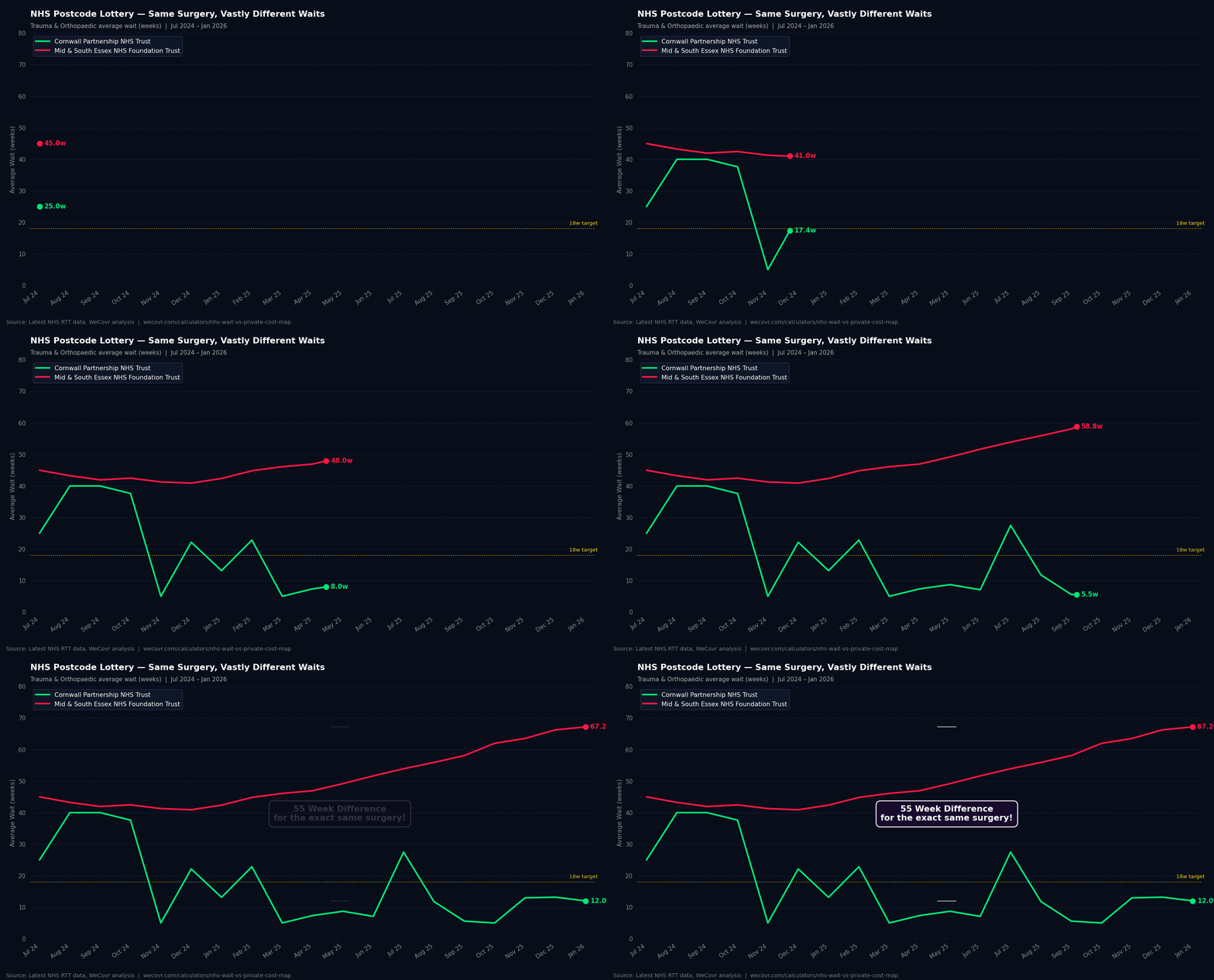
A 55-Week Difference for the Exact Same Surgery
The animation above illustrates the reality of the 2026 postcode lottery:
- The Green Line (Cornwall Partnership NHS Trust): If you live in Cornwall, the local trust is operating with incredible efficiency. The 92nd-percentile wait for orthopaedic surgery has dropped to just 12 weeks.
- The Red Line (Mid & South Essex NHS Foundation Trust): If you live in the Essex commuter belt, the system has effectively stalled. The wait for the exact same hip or knee replacement is now a staggering 67.2 weeks.
That is a 55-week difference based purely on your address.
The Human Cost of Geography
Waiting 67 weeks for a joint replacement is not just an inconvenience. It means over a year of chronic pain, restricted mobility, and often, an inability to work. Muscle wastage occurs, making the eventual surgery harder to recover from.
For residents in these "red zones," the NHS constitution's pledge of an 18-week wait is practically non-existent.
What Can You Do?
If you live in a severely backlogged postcode, waiting is no longer your only option.
- Check Your Local Trust: Don't rely on national headlines. You need to know exactly how your local hospital is performing for your specific condition.
- Understand Your Alternatives: The private sector currently has capacity, with wait times for procedures like joint replacements often measured in weeks, not months.
At WeCovr, we have built a free, interactive tool that maps the exact waiting times for all 23 specialties across every NHS trust in England, alongside the indicative costs of bypassing that wait via the private sector.
👉 Check the exact wait times in your postcode on our free NHS vs Private Cost Map
If you are trapped in a local bottleneck, private medical insurance can provide a structured, affordable way to bypass the queue and get your health back on track. Contact our expert team to compare the market today.
Sources
- WeCovr Analysis of NHS England Referral to Treatment (RTT) Data (Jan 2026 release).
Disclaimer: This is general guidance only and does not constitute formal tax or financial advice. Tax treatment depends on individual circumstances, policy terms, and HMRC interpretation, which cannot be guaranteed in advance. Whenever applicable, businesses and individuals should always consult a qualified accountant or tax adviser before arranging such policies.