TL;DR
This is not a statistic designed to inspire fear. It is a reality check that calls for a profound shift in how we view the future. For too long, conversations around insurance have been anchored in a language of fear and loss.
Key takeaways
- What it is: CIC pays out a tax-free lump sum on the diagnosis of a specific, serious illness listed in the policy. The "big three" (cancer, heart attack, stroke) are always covered, but modern policies can cover over 50 different conditions.
- Who it's for: Anyone who would face significant financial disruption from a serious diagnosis. Homeowners, parents, and single-income households find it particularly valuable.
- Clear a mortgage or other debts: Instantly removing your biggest financial burden.
- Fund private treatment: Accessing treatments or specialists not available on the NHS to speed up recovery.
the Future of You Unlocking Growth Through Proactive Protection
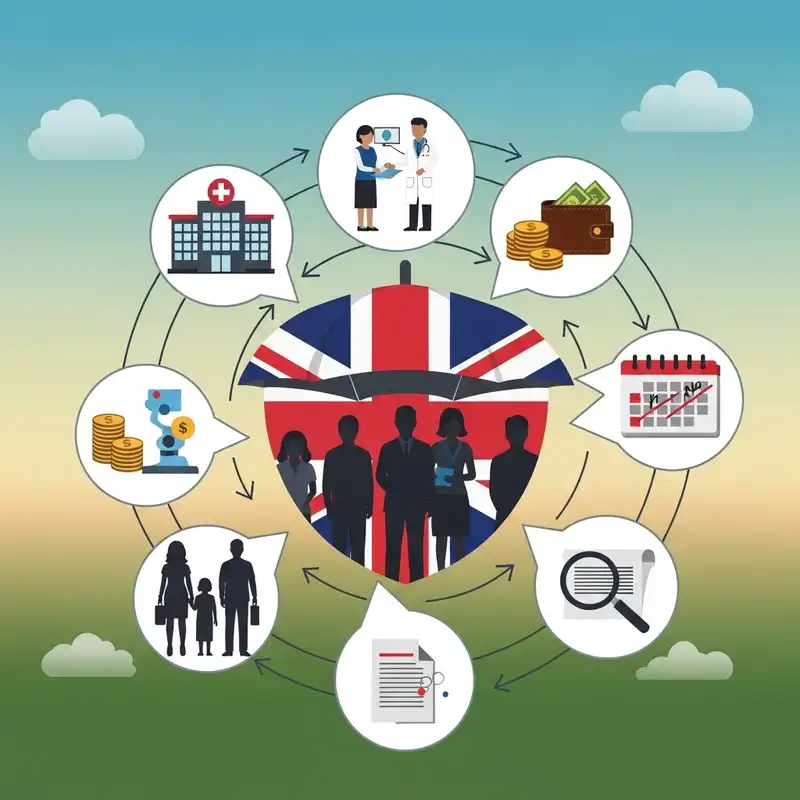
This is not a statistic designed to inspire fear. It is a reality check that calls for a profound shift in how we view the future. For too long, conversations around insurance have been anchored in a language of fear and loss. But what if we reframed it? What if we saw financial protection not as a parachute for a potential fall, but as the solid ground from which we can confidently leap?
This is the essence of proactive protection. It's about consciously building a financial foundation so robust that it empowers you to embrace a growth mindset. It allows you to move from a defensive crouch of 'what if?' to an ambitious stride of 'what's next?'. When the financial shock of a health crisis is absorbed by a well-laid plan, you are free to focus on what truly matters: your recovery, your family, your passions, and your continued personal growth.
This guide will explore how strategic financial planning is intrinsically linked to your personal evolution. We will demystify the key protection products available in the UK and show how they form a vital toolkit for everyone—from self-employed tradespeople and dedicated nurses to ambitious company directors—to build a more secure, and therefore more courageous, future.
The Mindset Shift: From 'What If?' to 'What's Next?'
Our mindset dictates our reality. Psychologist Carol Dweck's groundbreaking research identifies two core mindsets:
- Fixed Mindset: The belief that our intelligence, talents, and character are static traits. This leads to a desire to look smart, avoid challenges, and view effort as fruitless.
- Growth Mindset: The belief that our abilities can be developed through dedication and hard work. This creates a love of learning, a resilience that is essential for great accomplishment, and a view of failure not as a sign of unintelligence but as a springboard for growth.
Financial anxiety is a powerful inhibitor of a growth mindset. When you're constantly worried about how you'd pay the mortgage if you fell ill, or how your family would cope if you were no longer around, your mental bandwidth is consumed by defence. There's little room left for ambition, creativity, or risk-taking.
Proactive protection dismantles this anxiety. By putting a safety net in place, you liberate your mind.
- The freedom to change careers: You can take that pay cut to retrain for your dream job, knowing your income is protected if you get sick.
- The confidence to start a business: You can invest your energy into your venture, secure in the knowledge that your family's home is safe.
- The courage to pursue passions: You can book that round-the-world trip or take up a new challenging hobby without the nagging fear of a financial catastrophe.
Securing your finances against the unexpected isn't about planning for disaster; it's about underwriting your ambitions. It is the ultimate act of self-investment, creating the psychological and financial space for you to evolve into the person you want to become.
Understanding the Modern Risks: A 2025 UK Health & Financial Snapshot
To plan effectively, we must understand the landscape. The UK's health and financial environment presents a complex picture. While medical science advances, lifestyle factors and an ageing population bring new challenges to the forefront.
The Major Health Challenges
According to the latest data from sources like the NHS and leading health charities, the most significant threats to our long-term ability to work and live fully are:
- Cancer: As highlighted, projections from Cancer Research UK suggest that 1 in 2 people in the UK born after 1960 will be diagnosed with some form of cancer during their lifetime. While survival rates are improving dramatically, treatment can be long and debilitating, often requiring significant time off work.
- Cardiovascular Diseases: Heart attacks and strokes remain one of the UK's biggest killers and a leading cause of disability. The British Heart Foundation reports over 100,000 hospital admissions each year in the UK due to heart attacks. Recovery can be a long road, impacting every aspect of life.
- Mental Health Conditions: The scale of mental ill-health is vast. The Office for National Statistics (ONS) reports that stress, depression, or anxiety account for a huge proportion of all work-related ill health cases. These conditions are often "invisible" but can be just as debilitating as a physical illness, making it impossible to work for months or even years.
- Musculoskeletal (MSK) Disorders: Conditions affecting the back, neck, and limbs are the primary reason for long-term work absence in the UK. For tradespeople like electricians, plumbers, and builders, as well as healthcare professionals like nurses who are constantly on their feet, the risk is particularly acute.
The Financial Fallout: More Than Just Lost Income
When a serious illness strikes, the loss of salary is only the tip of the iceberg. The financial impact can be a tsunami, swamping a family's resources.
| Hidden Cost of Illness | Description | Estimated Potential Cost |
|---|---|---|
| Increased Bills | Being at home more means higher heating, electricity, and water usage. | £30 - £100+ per month |
| Travel & Parking | Frequent trips to hospitals for treatment, scans, and consultations. | £20 - £150+ per month |
| Prescription Costs | While some conditions provide exemptions, many don't. (England only) | £9.65 per item |
| Home Modifications | Ramps, stairlifts, or accessible bathrooms may become necessary. | £1,000 - £30,000+ |
| Specialist Diets | Specific nutritional requirements can be more expensive. | £20 - £50+ per week |
| Private Care/Therapy | To supplement NHS services or speed up recovery. | £50 - £200+ per session |
| Childcare | Extra help needed if a parent is unable to manage their usual duties. | £8 - £15+ per hour |
This is where the true power of a protection plan becomes clear. It's designed to cover not just your salary but these devastating secondary costs, preventing a health crisis from becoming a financial one.
Your Personal Protection Toolkit: A Guide to the Key Policies
Think of financial protection not as a single product, but as a customisable toolkit. The right combination of policies depends entirely on your personal circumstances, your dependents, your career, and your goals.
Income Protection (IP): The Bedrock of Your Finances
This is arguably the most important insurance policy you can own during your working life.
- What it is: Income Protection pays you a regular, tax-free monthly income if you are unable to work due to any illness or injury. It continues to pay out until you either return to work, the policy term ends (usually at your chosen retirement age), or you pass away.
- Who it's for: Absolutely everyone who relies on an income. It is especially vital for the self-employed and those in physically demanding jobs.
- How it supports growth: IP is the ultimate enabler. It ensures your core living costs—mortgage/rent, bills, food—are always covered. This stability gives you the confidence to make bold career moves, knowing that your financial world won't collapse if you have a health setback.
A common misconception is that employer sick pay or state benefits are enough. Let's look at the reality.
| Income Source | Typical Amount | Duration |
|---|---|---|
| Statutory Sick Pay (SSP) | £116.75 per week (2024/25 rate) | Maximum of 28 weeks |
| Company Sick Pay | Varies hugely. Often 1-3 months full pay, then reduces. | Limited. Check your contract. |
| Income Protection | 50-70% of your gross salary. | Can pay until retirement age. |
For many, SSP is simply not enough to live on. That's where a tailored plan becomes essential.
Tailored Protection: For Tradespeople, Nurses, and Electricians
For those in physically demanding or high-stress roles, standard "any occupation" policies might not be suitable. It's crucial to get expert advice.
- Own Occupation Cover: This is the gold standard. It pays out if you are unable to do your specific job. A surgeon with a hand tremor or an electrician with a back injury might be able to work in a different role, but "own occupation" cover would still pay out because they cannot perform their primary profession.
- Personal Sick Pay: This is a type of short-term Income Protection, often with a waiting period of just one or two weeks. It's an excellent option for tradespeople and freelancers who have no employer sick pay to fall back on and need cover to kick in quickly.
Critical Illness Cover (CIC): A Lump Sum for Life's Biggest Hurdles
- What it is: CIC pays out a tax-free lump sum on the diagnosis of a specific, serious illness listed in the policy. The "big three" (cancer, heart attack, stroke) are always covered, but modern policies can cover over 50 different conditions.
- Who it's for: Anyone who would face significant financial disruption from a serious diagnosis. Homeowners, parents, and single-income households find it particularly valuable.
- How it supports growth: A CIC payout gives you choices. It can be used to:
- Clear a mortgage or other debts: Instantly removing your biggest financial burden.
- Fund private treatment: Accessing treatments or specialists not available on the NHS to speed up recovery.
- Adapt your home: Making your living space comfortable for your new reality.
- Replace a partner's income: Allowing your partner to take time off work to care for you.
- Fund a lifestyle change: Giving you the capital to change careers to something less stressful after you recover.
It is vital to get advice when choosing a CIC policy. The definitions of illnesses can vary between insurers, and an expert at a brokerage like WeCovr can help you understand the nuances and find the most comprehensive cover for your budget.
Life Insurance: The Ultimate Legacy Protection
Life insurance is about what you leave behind. It’s a final act of care for the people who depend on you.
- Term Life Insurance: This is the simplest and most common form. You choose a lump sum amount and a term (e.g., £250,000 over 25 years to match your mortgage). If you pass away within that term, the policy pays out to your beneficiaries. It's designed to clear debts and provide a financial cushion.
- Family Income Benefit (FIB): A powerful and often more affordable alternative. Instead of a single lump sum, FIB pays out a regular, tax-free monthly or annual income to your family, from the point of claim until the end of the policy term.
Example: Lump Sum vs. Family Income Benefit
Imagine you have two young children and a 25-year mortgage.
- Option A (Term Life) (illustrative): A £300,000 policy. If you pass away in year 5, your partner receives £300,000. They must then manage and invest this large sum to make it last for the next 20+ years, which can be a stressful responsibility during a time of grief.
- Option B (FIB) (illustrative): A policy to pay £1,500 a month for 25 years. If you pass away in year 5, your family receives £1,500 every month for the remaining 20 years. This replaces your lost income in a manageable way, making budgeting far simpler.
FIB aligns perfectly with family life, providing a steady, reliable income stream that mirrors a monthly salary.
Private Medical Insurance (PMI): Access to Choice and Speed
- What it is: PMI is a policy that covers the costs of private medical care, from diagnosis to treatment. It works alongside the NHS, offering speed, choice, and convenience.
- Who it's for: Individuals and families who want to bypass NHS waiting lists for non-emergency procedures, have a choice of specialist or hospital, and access a private room for recovery.
- How it supports growth: For a freelancer, business owner, or key employee, time is money. A knee operation with a 12-month NHS waiting list could be devastating. With PMI, that same operation could happen within weeks. Getting back to full health and back to work faster means your personal and professional goals are delayed, not derailed.
The Business Owner's Blueprint: Protecting Your Enterprise and Yourself
For company directors, the self-employed, and freelancers, the line between personal and professional finance is often blurred. Protecting yourself is protecting your business, and vice versa.
For the Self-Employed & Freelancers
The lack of an employer safety net makes Income Protection a non-negotiable part of your business plan. It is your sick pay, your disability benefit, and your peace of mind all rolled into one. Without it, a period of ill health could wipe out your business and your personal savings.
For Company Directors
As a director, you have access to uniquely tax-efficient ways to arrange protection, benefiting both you and your company.
- Executive Income Protection: This is an Income Protection policy owned and paid for by your limited company. The premiums are typically treated as an allowable business expense, making it highly tax-efficient. The benefit, if paid, goes to the company, which then pays it to you via PAYE.
- Relevant Life Cover: This is a death-in-service policy for an individual employee or director, paid for by the company. Unlike a personal life insurance policy, the premiums are not treated as a P11D benefit-in-kind, and they are usually an allowable business expense. It's a fantastic way to provide valuable life cover for yourself and key staff outside of a larger group scheme.
- Key Person Insurance: This protects the business, not the individual. It's a life insurance and/or critical illness policy taken out on a crucial member of the team—a founder, a top salesperson, a technical genius—whose loss would have a severe financial impact on the company. The payout provides the business with the capital to recruit a replacement, cover lost profits, or reassure lenders during a difficult period.
Inheritance Tax & Legacy Planning
For successful business owners and individuals with significant assets, legacy planning becomes paramount.
- Gift Inter Vivos Insurance: If you gift a large sum of money or an asset (like a property) to a loved one, that gift could be liable for Inheritance Tax (IHT) if you pass away within seven years. This type of insurance is a decreasing term life policy designed to pay out the potential IHT bill, ensuring your beneficiaries receive the full value of your gift. It's a smart tool for efficient estate planning.
Beyond the Policy: Wellness, Prevention, and Added Value
The future of protection is holistic. It’s not just about a payout when things go wrong; it's about helping you stay healthy in the first place. Modern insurers recognise this, and many policies now come with a suite of value-added benefits at no extra cost, such as:
- 24/7 Virtual GP services
- Mental health support and counselling sessions
- Second medical opinion services
- Physiotherapy and rehabilitation support
- Discounts on gym memberships and fitness trackers
This is a philosophy we at WeCovr wholeheartedly embrace. We believe in supporting our clients' total wellbeing, which is why, in addition to finding you the most suitable insurance policy, we provide all our customers with complimentary access to our proprietary AI-powered calorie tracking app, CalorieHero. By empowering you with tools to manage your diet and health proactively, we aim to be a partner in your long-term wellness journey, not just your insurer.
How to Build Your Proactive Protection Plan
Creating a robust financial resilience plan may seem daunting, but it can be broken down into simple, manageable steps.
- Assess Your Reality: Get a clear picture of your finances. What are your monthly outgoings? What debts do you have (mortgage, loans, credit cards)? Who depends on your income? Use a simple budget planner to see it all in black and white.
- Define Your Future: What are you protecting? Is it ensuring your children can go to university? Giving yourself the freedom to launch a start-up in two years? Securing a comfortable retirement? Your goals will define the 'why' behind your plan.
- Understand the Tools: Use the information in this guide to understand the roles of Income Protection, Critical Illness Cover, and Life Insurance. Think about which risks you are most exposed to and which solutions best mitigate them.
- Speak to an Expert: This is the most crucial step. An independent expert broker does more than just sell policies. A specialist firm like WeCovr acts as your professional guide. We take the time to understand your unique situation and goals. We then search the entire market—from major providers like Aviva and Legal & General to specialist insurers—to find the policies that offer the best definitions and the most competitive premiums. This advice doesn't cost you extra; it simply ensures you get the right cover, at the right price, without the stress of navigating the complex market alone.
- Review and Adapt: Your protection plan is a living document. It should evolve with you. Get in the habit of reviewing your cover every few years, or after any major life event like getting married, having a child, buying a new home, or starting a business.
Conclusion: Your Future is Not Fixed, It's Forged
The stark health statistics facing us are not a sentence, but a catalyst. They are a call to action—to stop passively hoping for the best and start actively planning for a brilliant future, whatever it may hold.
Aligning a growth mindset with proactive financial protection is the key to unlocking your true potential. It is the act of treating your future self with the same care and investment you would give to your most important project. By removing the paralysing fear of financial disaster, you give yourself the greatest gift of all: the freedom to focus on your growth, your relationships, and your legacy.
This isn't just insurance. This is an investment in the future of you. A future that is not fixed by fate, but forged by foresight.
What is the difference between Income Protection and Critical Illness Cover?
Is protection insurance expensive?
Do I need a medical exam to get cover?
Can I get insurance if I have a pre-existing medical condition?
Why should I use a broker instead of going direct to an insurer?
What is 'own occupation' income protection and why is it important?
Sources
- Office for National Statistics (ONS): Mortality and population data.
- Association of British Insurers (ABI): Life and protection market publications.
- MoneyHelper (MaPS): Consumer guidance on life insurance.
- NHS: Health information and screening guidance.
Disclaimer: This is general guidance only and does not constitute formal tax or financial advice. Tax treatment depends on individual circumstances, policy terms, and HMRC interpretation, which cannot be guaranteed in advance. Whenever applicable, businesses and individuals should always consult a qualified accountant or tax adviser before arranging such policies.
Measure your family’s protection gap, then get the right life cover quote
Start with the score to see whether your family would face a real financial shortfall before moving on to life cover options.
Check what happens if someone dies too soon
See whether debt, dependants and mortgage risk are covered
Move into tailored life cover options after the score
Get your score
Your next best move
Get your score in minutes, then decide what kind of protection help would be most useful.
Score your household protection
See how well your current setup protects dependants, debt and major commitments.
Find the shortfall
Know whether life cover, critical illness or income protection is the actual missing piece.
Continue to tailored life cover
If life cover is the gap, continue to tailored life cover options.
What you get
A quick view of your current protection position
A clearer idea of where the biggest gaps may be
A direct route to tailored help if you want it