TL;DR
In today's fast-paced world, the concept of personal growth has expanded far beyond the traditional career ladder. We strive for holistic development: mastering new skills, nurturing our mental and physical health, building meaningful relationships, and pursuing our passions. Yet, in this relentless pursuit of a better self, we often overlook the very foundation upon which all growth is built: our ability to earn an income and maintain our health.
Key takeaways
- Rising Sickness Absence: According to the Office for National Statistics (ONS), an estimated 185.6 million working days were lost because of sickness or injury in the UK in 2022, the highest level since 2004.
- Long-Term Health Conditions: The ONS also reported in late 2023 that a record 2.8 million people are out of work due to long-term sickness, a significant increase in recent years.
- Clearing a mortgage or other major debts.
- Funding private medical treatments not available on the NHS.
- Making disability-friendly adaptations to your home.
the Growth Centric Shield
In today's fast-paced world, the concept of personal growth has expanded far beyond the traditional career ladder. We strive for holistic development: mastering new skills, nurturing our mental and physical health, building meaningful relationships, and pursuing our passions. Yet, in this relentless pursuit of a better self, we often overlook the very foundation upon which all growth is built: our ability to earn an income and maintain our health.
Imagine investing years in education, honing your professional skills, and meticulously building a life for yourself and your family, only to have it derailed by an unexpected illness or injury. The momentum stops. The plans are paused. The financial pressure mounts. This is where a crucial mindset shift is needed. We must start viewing financial protection not as a reluctant expense, but as the ultimate, non-negotiable investment in our future.
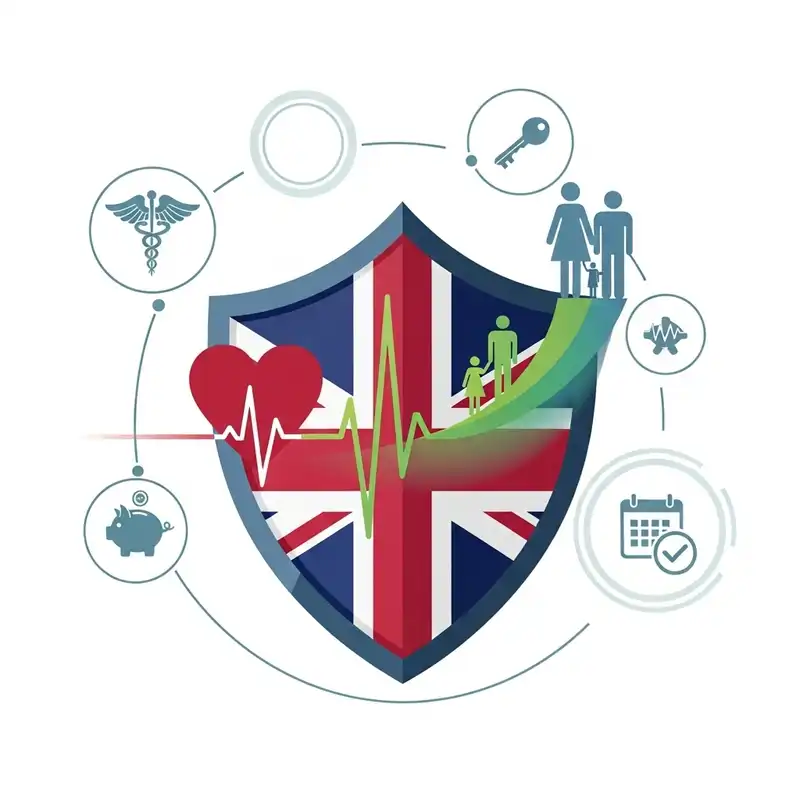
This is the principle of the "Growth-Centric Shield"—a strategic framework of personal and business protection designed not just to mitigate disaster, but to actively empower your growth journey. It’s the safety net that allows you to take calculated risks, the peace of mind that fuels your ambition, and the secure foundation that ensures your legacy endures.
This guide will deconstruct the modern definition of personal growth and reveal how strategic protection—from income protection and critical illness cover to private medical insurance—is the most profound investment you can make in your future self and your family's security.
The Unseen Threat to Ambition: Why Your Health and Income Are Your Greatest Assets
We insure our cars, our homes, and even our mobile phones without a second thought. Yet, the assets that generate the very funds to pay for everything else—our health and our income-earning potential—are often left dangerously exposed.
Consider this: your ability to earn an income over your lifetime is likely your single most valuable financial asset. A 30-year-old earning £50,000 a year has a potential future earning capacity of over £1.8 million by the time they reach state pension age, without even factoring in pay rises. This earning power is the engine that drives every single one of your life goals.
The reality of ill health in the UK is a sobering one.
- Rising Sickness Absence: According to the Office for National Statistics (ONS), an estimated 185.6 million working days were lost because of sickness or injury in the UK in 2022, the highest level since 2004.
- Long-Term Health Conditions: The ONS also reported in late 2023 that a record 2.8 million people are out of work due to long-term sickness, a significant increase in recent years.
When illness or injury strikes, the consequences ripple outwards. Statutory Sick Pay (SSP) provides a minimal safety net of just £116.75 per week (2024/25 rate) for up to 28 weeks. For most families, this is a fraction of what is needed to cover essential outgoings like mortgage or rent, bills, and food. Savings are depleted, retirement plans are raided, and the dream of personal growth is replaced by the nightmare of financial survival.
This is why building a protective shield isn't about planning for failure; it's about planning for continued success. It's an acknowledgement that while you can't predict the future, you can prepare for its uncertainties, ensuring that a health setback doesn't become a life-destroying financial catastrophe.
Building Your Shield: The Essential Components of Strategic Protection
A robust Growth-Centric Shield is not a single product, but a tailored combination of policies designed to protect you from different angles. Let's explore the core components.
Income Protection Insurance: The Cornerstone of Financial Security
If you could only choose one policy, this would arguably be it. Income Protection is designed to do one thing brilliantly: replace a significant portion of your monthly income if you are unable to work due to any illness or injury.
It pays a regular, tax-free monthly benefit until you can return to work, or until the end of the policy term (often your retirement age), whichever comes first. This ensures your financial life can continue as normal, allowing you to focus completely on your recovery rather than worrying about bills.
Who is it for? Frankly, anyone whose lifestyle depends on their earned income. This is especially critical for:
- The Self-Employed and Freelancers: You have no employer sick pay to fall back on. Your income stops the moment you do.
- Business Directors: While your business might support you for a while, its resources aren't infinite.
- Employees with Limited Sick Pay: Many employer schemes are not as generous as people assume, often reverting to SSP after a few weeks or months.
Key Features to Understand:
| Feature | Description | Impact on Your Policy |
|---|---|---|
| Deferred Period | The waiting period before the policy starts paying out (e.g., 4, 13, 26, or 52 weeks). | A longer deferred period significantly lowers your premium. Align it with your sick pay or savings. |
| Level of Cover | The percentage of your gross income you can cover, typically 50-65%. | Ensures you have enough to live on without creating a disincentive to return to work. |
| Definition of Incapacity | How the insurer defines your inability to work. 'Own Occupation' is the gold standard. | 'Own Occupation' means you can claim if you can't do your specific job, even if you could do a less skilled one. |
A related product, Personal Sick Pay, is often favoured by those in riskier manual trades. These policies typically offer shorter-term cover (1-2 years per claim) but can be more accessible and affordable for occupations like electricians, plumbers, or construction workers.
Critical Illness Cover: A Financial Lifeline During a Health Crisis
While Income Protection provides a monthly income, Critical Illness Cover provides a one-off, tax-free lump sum on the diagnosis of a specified serious, but not necessarily fatal, condition.
The "big three" conditions covered by almost all policies are cancer, heart attack, and stroke, but modern policies can cover over 50 conditions, including multiple sclerosis, major organ transplant, and Parkinson's disease.
How is the lump sum used? The money is yours to use as you see fit, providing financial breathing space at a traumatic time. Common uses include:
- Clearing a mortgage or other major debts.
- Funding private medical treatments not available on the NHS.
- Making disability-friendly adaptations to your home.
- Replacing a partner's income so they can take time off to care for you.
- Simply covering daily living costs while you take an extended period off work to recover fully.
According to Cancer Research UK, there are around 1,100 new cancer cases in the UK every day. The British Heart Foundation estimates that around 1.5 million people in the UK have survived a heart attack. These are not remote possibilities; they are realities for thousands of families every year. A Critical Illness payout can be the difference between a managed recovery and a financial crisis.
| Common Conditions Covered by Critical Illness Policies |
|---|
| Cancer (of specified severity) |
| Heart Attack |
| Stroke |
| Multiple Sclerosis |
| Kidney Failure |
| Major Organ Transplant |
| Paralysis of a Limb |
| Coronary Artery Bypass Surgery |
Life Insurance: Securing Your Family's Legacy
Life Insurance is the ultimate act of forward-planning, ensuring that the people who depend on you are financially secure if the worst should happen. The payout provides a vital safety net to cover debts, funeral costs, and future living expenses.
There are several types, each suited to different needs:
| Type of Life Insurance | How It Works | Best For |
|---|---|---|
| Level Term Assurance | The payout amount remains fixed throughout the policy term. | Covering an interest-only mortgage or providing a set lump sum for your family's future. |
| Decreasing Term Assurance | The payout amount reduces over time, typically in line with a repayment mortgage. | The most cost-effective way to ensure your mortgage is paid off if you die. |
| Family Income Benefit | Instead of a lump sum, it pays out a regular, tax-free monthly or annual income for the remainder of the policy term. | Replacing your lost salary to cover ongoing family living costs in a more manageable way. |
An Essential Step: Writing Your Policy in Trust Placing your life insurance policy "in trust" is a simple process that is almost always recommended. It means the payout goes directly to your chosen beneficiaries, bypassing your estate. This has two huge benefits:
- Speed: The money is paid out quickly, without waiting for the lengthy legal process of probate.
- Tax Efficiency: The payout does not form part of your estate and is therefore not subject to Inheritance Tax (IHT).
For those specifically concerned with IHT planning, a Gift Inter Vivos policy is a specialist tool. If you make a large gift to someone (e.g., a deposit for a house), it could be liable for IHT if you die within seven years. This policy provides a lump sum to cover that potential tax bill, ensuring your gift is received in full.
Private Medical Insurance (PMI): Investing in Swift Access to Healthcare
In the context of personal growth, time is your most precious commodity. Long waits for diagnosis and treatment not only cause anxiety but can also mean extended time off work, hindering your career and personal projects.
While the NHS provides outstanding care, it is under undeniable pressure. As of early 2024, NHS England reported over 7.5 million treatments on waiting lists. Private Medical Insurance (PMI) is designed to work alongside the NHS, giving you fast-track access to private healthcare.
The Key Benefits for Your Growth Journey:
- Speed: Quickly see a specialist and receive diagnostic tests like MRI or CT scans.
- Choice: Choose the consultant and hospital for your treatment.
- Comfort: Benefit from a private room, enhancing your rest and recovery.
- Access: Gain access to certain drugs and treatments that may not be available on the NHS due to cost.
For someone focused on growth, the value is clear. A knee injury that might mean a year-long wait for NHS surgery could be diagnosed and treated privately within weeks, getting you back on your feet, back to work, and back to pursuing your goals with minimal disruption.
The Entrepreneur's Shield: Specialised Protection for Business Owners & Directors
If you run your own business, your personal and professional finances are intrinsically linked. A personal health crisis can threaten the survival of your entire company. Fortunately, there is a suite of business-specific protection products designed to shield your enterprise. These are often highly tax-efficient.
Key Person Insurance
Who is the one person your business could not function without? It might be you, a co-founder with unique technical skills, or your top salesperson who brings in 60% of the revenue. Key Person Insurance is taken out by the business to protect itself against the financial impact of losing such an individual to death or critical illness.
The payout is made to the business and can be used to:
- Recruit and train a replacement.
- Cover lost profits during the disruption.
- Reassure lenders and investors.
- Repay a business loan that the key person had guaranteed.
Executive Income Protection
This is Income Protection for company directors, but with a significant tax advantage. The company pays the premiums, which are typically treated as an allowable business expense. This means the cost is deducted from the company's pre-tax profits, reducing its Corporation Tax bill.
The benefit is paid to the company, which then pays it to the director via PAYE. This ensures the director continues to receive an income, and the business can demonstrate it has a robust plan for dealing with long-term absence.
Relevant Life Cover
For small businesses that don't have a large group death-in-service scheme, Relevant Life Cover is a fantastic, tax-efficient alternative. It's a company-paid life insurance policy for an individual employee or director.
The benefits are compelling:
- Premiums are paid by the company and are usually a tax-deductible expense.
- It is not treated as a P11D benefit-in-kind, so there is no extra income tax for the employee.
- The payout is made via a trust, so it is free from Inheritance Tax.
| Feature | Personal Life Policy | Relevant Life Cover |
|---|---|---|
| Who Pays? | The individual (from post-tax income) | The company (from pre-tax profit) |
| Tax Deductible? | No | Yes, for the company |
| Benefit-in-Kind? | N/A | No |
| IHT on Payout? | Yes (unless in trust) | No (paid via trust) |
Shareholder & Partnership Protection
What happens if a co-owner of your business dies? Their shares will likely pass to their family as part of their estate. This can create a difficult situation: the family may have no interest or skill in running the business and may want to sell the shares, while the surviving owners may not have the liquid funds to buy them.
Shareholder or Partnership Protection solves this. It involves two parts:
- A legal agreement (a cross-option agreement): This sets out that the surviving owners will buy the shares and the deceased's estate will sell them at a fair, pre-agreed valuation method.
- Life insurance policies: Each owner takes out a policy on the life of the others, written in trust. If one owner dies, the policy payout provides the surviving owners with the exact funds needed to buy the shares from the deceased's estate.
This ensures a smooth transition, protects the business from outside interference, and provides a fair value for the deceased owner's family.
Beyond Insurance: A Holistic Approach to Wellness and Growth
While insurance forms the core of your financial shield, a truly growth-centric approach is proactive, not just reactive. It involves building daily habits that protect and enhance your greatest assets: your mind and body.
Modern insurers recognise this, with many policies now including valuable wellness benefits at no extra cost, such as:
- 24/7 virtual GP services.
- Mental health support and counselling sessions.
- Nutrition and diet advice.
- Discounts on gym memberships and fitness trackers.
This aligns perfectly with a proactive wellness strategy. Small, consistent efforts in diet, exercise, and mental wellbeing are the first line of defence against ill health.
At WeCovr, we believe protection goes beyond the policy document. It’s about empowering you to live a healthier, more secure life. That’s why we also provide our clients with complimentary access to our AI-powered calorie tracking app, CalorieHero, helping you build healthy habits that form the first line of your personal defence. Simple actions like understanding your nutrition with CalorieHero, ensuring you get 7-8 hours of quality sleep, and incorporating a 30-minute walk into your day can have a profound long-term impact on your health resilience.
Finding the Right Fit: How to Navigate the Protection Market
The UK protection market is vast and complex. Policies, definitions, and prices vary significantly between insurers. Attempting to navigate this alone can be overwhelming and may lead to you purchasing inadequate or overpriced cover.
This is where the value of independent, expert advice becomes clear. A specialist broker works for you, not the insurer. Their role is to understand your unique situation—your career, family, finances, and growth ambitions—and then search the entire market to find the optimal solution.
Navigating the complexities of the UK protection market can be daunting. This is where an expert broker like WeCovr becomes invaluable. We help you compare policies from all the leading UK insurers, ensuring you get the right cover tailored to your unique circumstances and growth ambitions, without paying for features you don't need.
The application process will involve questions about your health, lifestyle, occupation, and family medical history. It is vitally important to be completely honest and accurate in your answers. Non-disclosure of a material fact could give the insurer grounds to reject a future claim, rendering your entire investment useless at the very moment you need it most.
Your Future Self Is Counting on You
Personal growth is a marathon, not a sprint. It requires dedication, resilience, and the freedom to pursue opportunities with confidence. Building your Growth-Centric Shield is the single most powerful step you can take to guarantee that freedom.
It transforms insurance from a grudging expense into an empowering investment. It’s the bedrock that allows you to build higher, the financial peace of mind that fuels creativity, and the safety net that lets you leap for your biggest goals.
By protecting your income, securing your health, and planning for your family's legacy, you are not planning for the worst. You are actively planning for the best possible future—one where your growth is uninterrupted, your ambitions are achievable, and your future self will thank you for the foresight you showed today.
Is income protection the same as sick pay from my employer?
Do I need critical illness cover if I have private medical insurance?
How much life insurance do I actually need?
I'm young and healthy, why do I need protection now?
As a freelancer, what are the most important policies for me?
Can I get cover if I have a pre-existing medical condition?
Sources
- Office for National Statistics (ONS): Mortality and population data.
- Association of British Insurers (ABI): Life and protection market publications.
- MoneyHelper (MaPS): Consumer guidance on life insurance.
- NHS: Health information and screening guidance.