TL;DR
We read books, listen to podcasts, set ambitious career goals, and work on our relationships. We invest time and energy into becoming better versions of ourselves. Yet, we often overlook the single most important foundation upon which all this growth is built: genuine financial security.
Key takeaways
- Decision Fatigue: Constant worry about money depletes our mental energy, making it harder to make sound, long-term decisionsironically, including those about our finances.
- Inhibited Creativity: The part of our brain responsible for planning, creativity, and problem-solving (the prefrontal cortex) is less active when we're under threat. Financial anxiety literally makes us less innovative and less able to see opportunities.
- Relationship Strain: Financial disagreements remain one of the leading causes of conflict in relationships. The stress doesn't just affect you; it ripples outwards, impacting your partner, children, and friends.
- Cancer
- Heart Attack
the Invisible Wealth Factor Future Proofing Your Personal Growth
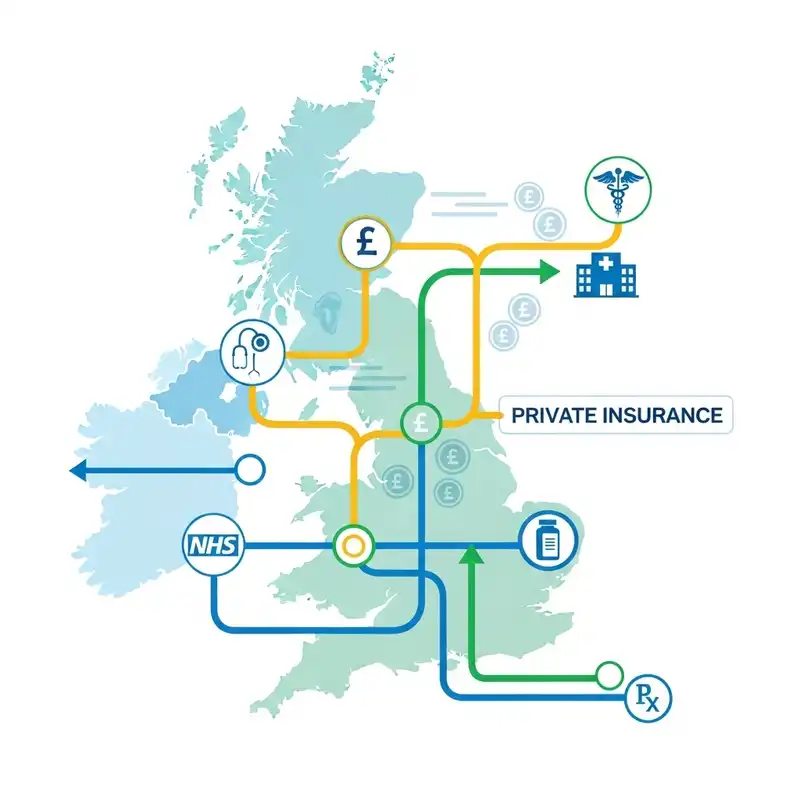
With alarming health projections – including the likelihood that 1 in 2 people in the UK will face a cancer diagnosis in their lifetime (Macmillan Cancer Support, 2025 data) – and life's unpredictable challenges impacting everyone from electricians to nurses, we unveil how a strategic blend of protection products like Family Income Benefit, Income Protection, Life and Critical Illness Cover, Personal Sick Pay, and the foresight of Gift Inter Vivos (offering a lump sum payment on death) isn't just a safety net. This isn't merely about financial survival; it's the foundational 'invisible wealth' that empowers you to pursue your dreams without fear, secure your loved ones' future, and access vital support through private health insurance – ensuring immediate, quality care that allows you to truly live, grow, and flourish. (illustrative estimate)
We all strive for personal growth. We read books, listen to podcasts, set ambitious career goals, and work on our relationships. We invest time and energy into becoming better versions of ourselves. Yet, we often overlook the single most important foundation upon which all this growth is built: genuine financial security.
This isn't about being rich. It's about being resilient. It's the quiet confidence that comes from knowing that if life throws its inevitable curveballs—a sudden illness, an unexpected injury, or worse—you and your loved ones are protected. This is the ‘invisible wealth’ factor. It’s the freedom from the gnawing, underlying fear of ‘what if?’, a fear that silently sabotages our ability to take risks, to be creative, and to be truly present in our lives.
Without this foundational security, our dreams remain fragile, our ambitions are tethered by anxiety, and our personal growth is built on shaky ground. In this guide, we will explore how building a robust financial defence through protection insurance is the ultimate act of self-investment, enabling you to future-proof not just your finances, but your entire journey of personal development.
Why 'Getting By' Isn't Enough: The Psychological Cost of Financial Instability
Living from one paycheque to the next, or with minimal savings, creates a constant, low-level hum of anxiety. The Money and Pensions Service revealed in 2024 that over 11.5 million UK adults have less than £100 in savings, leaving them acutely vulnerable to any financial shock. This state of precarity is more than just a logistical problem; it's a profound psychological burden. (illustrative estimate)
The Science of Stress and Decision-Making
When we are financially stressed, our bodies are in a perpetual state of 'fight or flight'. This releases cortisol, the stress hormone, which over time can impair cognitive function, suppress the immune system, and lead to chronic health issues.
- Decision Fatigue: Constant worry about money depletes our mental energy, making it harder to make sound, long-term decisions—ironically, including those about our finances.
- Inhibited Creativity: The part of our brain responsible for planning, creativity, and problem-solving (the prefrontal cortex) is less active when we're under threat. Financial anxiety literally makes us less innovative and less able to see opportunities.
- Relationship Strain: Financial disagreements remain one of the leading causes of conflict in relationships. The stress doesn't just affect you; it ripples outwards, impacting your partner, children, and friends.
Maslow's Hierarchy and the Path to Self-Actualisation
The psychologist Abraham Maslow's famous hierarchy of needs places 'Safety Needs'—which include financial security—as a foundational layer, just above basic physiological needs like food and water. You cannot meaningfully pursue 'Esteem' (achievement, confidence) or 'Self-Actualisation' (creativity, reaching your full potential) if your safety is in question.
| Maslow's Level | Core Need | How Financial Insecurity Sabotages It |
|---|---|---|
| Self-Actualisation | Achieving one's full potential, creativity | Can't take risks (start a business, change careers) due to fear of financial failure. |
| Esteem Needs | Confidence, achievement, respect | Financial struggles can lead to feelings of shame, inadequacy, and failure. |
| Love & Belonging | Friendships, family, intimacy | Financial stress is a major cause of arguments and relationship breakdowns. |
| Safety Needs | Financial security, health, property | Lack of a safety net creates constant anxiety and fear of the unknown. |
| Physiological Needs | Food, water, shelter, sleep | In extreme cases, financial hardship directly threatens these basic needs. |
Building a financial safety net is not about greed; it's about satisfying a fundamental human need. It’s what clears your mind and gives you the psychological space to focus on the higher-level pursuits that define a flourishing life.
Building Your Foundation: A Deep Dive into Personal Protection Insurance
Your financial foundation is built with specific tools designed to manage different risks. Thinking about these products isn't morbid; it's a practical and empowering act of responsibility. Let's break down the core components.
1. Life Insurance: The Cornerstone of Family Protection
Life insurance pays out a sum of money upon your death, providing a crucial financial lifeline for your dependents. It's not for you; it's for them. It ensures the mortgage is paid, daily living costs are covered, and your children’s future education is secure.
- Term Life Insurance: This is the most common and affordable type. It covers you for a fixed period (the 'term'), such as the length of your mortgage or until your children are financially independent. If you pass away during the term, it pays out.
- Whole of Life Insurance: This policy covers you for your entire life and is guaranteed to pay out whenever you die. It's often used for covering funeral costs or for inheritance tax planning.
A particularly effective form of term insurance is Family Income Benefit.
Spotlight: Family Income Benefit (FIB)
Instead of a single, large lump sum that can be daunting to manage, Family Income Benefit pays out a regular, tax-free monthly or annual income to your family. This income is paid from the time of the claim until the end of the policy term.
Why is this so powerful? It replaces your lost salary in a manageable way, making budgeting simpler for your loved ones during a difficult time.
Example: Lump Sum vs. Family Income Benefit
Imagine a 35-year-old with a £400,000 mortgage and two young children. They want cover until their youngest child is 21. (illustrative estimate)
| Feature | Standard Level Term Assurance | Family Income Benefit |
|---|---|---|
| Cover Amount | £400,000 lump sum | £2,000 per month (£24,000/year) |
| Policy Term | 20 years | 20 years |
| How it Works | If they die anytime in the 20 years, it pays out a £400,000 lump sum. | If they die 5 years into the policy, it pays £2,000/month for the remaining 15 years. |
| Best For | Clearing large debts like a mortgage instantly. | Replacing a lost salary for ongoing family costs in a structured way. |
2. Critical Illness Cover: Protection for the Living
What if you don't pass away, but suffer a serious illness that prevents you from working? With survival rates for many conditions improving, this is an increasingly common scenario. The average UK household would run out of money in just 19 days if they lost their income (Legal & General, 2023).
Critical Illness Cover (CIC) pays out a tax-free lump sum if you are diagnosed with one of a list of specified serious conditions. The 'big three' covered by nearly all policies are:
- Cancer
- Heart Attack
- Stroke
Most comprehensive policies cover 40-50+ conditions, including multiple sclerosis, major organ transplant, and permanent paralysis. This money can be used for anything:
- Clear or reduce your mortgage.
- Pay for private medical treatment or specialist care.
- Adapt your home (e.g., install a wheelchair ramp).
- Simply cover bills while you focus on recovery, without financial stress.
Real-World Scenario: Sarah, a 42-year-old self-employed graphic designer, is diagnosed with breast cancer. While the NHS provides excellent treatment, she is unable to work for 9 months. Her Critical Illness Cover pays out £75,000. This allows her to pay her mortgage, cover her bills, and hire a part-time childminder, removing all financial pressure so she can focus 100% on her recovery and well-being.
3. Income Protection: The Bedrock of Your Financial Plan
If Life Insurance is for if you die, and Critical Illness Cover is for if you get a specific serious illness, Income Protection (IP) is for everything else. It is arguably the most fundamental protection product for any working adult.
IP is designed to pay you a regular monthly income—typically 50-70% of your gross salary—if you are unable to work due to any illness or injury.
- It covers what other policies don't: Unlike CIC, it's not tied to a specific list of conditions. It could cover you for a bad back, stress, depression, or a long recovery from an accident—anything a doctor signs you off work for.
- It pays for as long as you need it: A long-term policy will continue to pay out every month until you can return to work, die, or the policy term ends (usually at your chosen retirement age).
The Deferment Period This is the waiting period from when you stop working to when the policy starts paying out. You can choose a deferment period to match your employer's sick pay scheme (e.g., 1, 3, 6, or 12 months). The longer the deferment period, the lower the premium.
| Your Situation | Recommended Deferment Period |
|---|---|
| Statutory Sick Pay (SSP) only | 4 weeks |
| 3 months full sick pay from employer | 13 weeks |
| 6 months full sick pay from employer | 26 weeks |
| Self-employed with 3 months of savings | 13 weeks |
4. Personal Sick Pay: Short-Term Cover for Hands-On Professionals
For those in riskier jobs like tradespeople (electricians, plumbers, builders), nurses, or delivery drivers, and for freelancers with fluctuating incomes, long-term income protection can sometimes seem out of reach.
Personal Sick Pay policies are a great alternative. They are essentially short-term income protection plans.
- Shorter Payment Periods: Instead of paying out until retirement, they typically pay out for a maximum of 1, 2, or 5 years per claim.
- Faster Payouts: They often have very short deferment periods, sometimes as little as one week ('day one' or 'week one' cover).
- Focus on Affordability: They provide a crucial safety net for common, shorter-term absences from work at a more accessible price point.
This makes them ideal for bridging the gap until you can get back on your feet after an accident or illness, preventing you from having to dip into business cash flow or personal savings.
The Freelancer's & Business Owner's Shield: Protecting Your Livelihood
When you are the business, protecting yourself is protecting your business. The risks are higher for the self-employed and company directors, but the tools available are also more powerful and tax-efficient.
The number of self-employed workers in the UK stands at over 4.2 million (ONS, 2024), a significant portion of the workforce operating without the safety net of employer benefits.
For Sole Traders and Freelancers
Your personal safety net is your business safety net. Income Protection is non-negotiable. Without it, an inability to work means your income stops instantly. A policy ensures your personal bills are paid, so you don't have to drain your business accounts or go into debt to survive.
For Company Directors and Business Owners
As a director of your own limited company, you can leverage the business to provide protection in a highly tax-efficient manner.
1. Executive Income Protection
This works just like a personal income protection policy, but it's paid for by your company. The company pays the premium, and it's typically treated as an allowable business expense. When a claim is made, the benefit is paid to the company, which then distributes it to you via PAYE. This is an efficient way to secure your income while making use of pre-tax company profits.
2. Key Person Insurance
Who is indispensable to your business? Is it the founder with the vision, the technical expert who built the product, or the salesperson who brings in 50% of the revenue?
Key Person Insurance is a policy taken out by the business on the life or health of a crucial employee. If that key person dies or suffers a critical illness, the policy pays a lump sum to the business. This money is designed to:
- Cover the costs of recruiting and training a replacement.
- Compensate for lost profits or a downturn in business during the transition.
- Reassure investors, lenders, and clients that the business can survive.
- Clear business debts or loans that the key person may have guaranteed.
3. Relevant Life Cover
This is a tax-efficient death-in-service benefit for individual employees, including company directors. It's paid for by the business but, unlike a traditional group scheme, it's a standalone policy. The premiums are generally not a P-11D benefit, and the payout is made into a discretionary trust, so it typically doesn't form part of the deceased's estate for Inheritance Tax purposes. It’s a valuable perk for attracting and retaining top talent in a small business.
Protection Options for Your Business Structure
| Protection Type | Sole Trader / Freelancer | Limited Company Director |
|---|---|---|
| Income Protection | Essential. A personal policy is your lifeline. | Personal policy, or the more tax-efficient Executive Income Protection. |
| Life Insurance | Essential. A personal policy to protect your family. | Personal policy, or the tax-efficient Relevant Life Cover. |
| Critical Illness Cover | Highly Recommended. Personal policy to provide a lump sum. | Can be added to personal policies or sometimes as a business cover. |
| Key Person Cover | Not applicable. | Crucial for protecting the business from the loss of a vital director/employee. |
Beyond Today: Securing Your Legacy with Gift Inter Vivos
True personal growth often involves a desire to provide for the next generation. As you build wealth, you may want to gift money or assets to your children or grandchildren to help them with a house deposit, university fees, or starting a business. However, these generous gifts can come with a hidden tax sting: Inheritance Tax (IHT).
Understanding the 7-Year Rule
In the UK, if you give away a gift (of money or assets) and die within 7 years, that gift may be subject to IHT. This is known as a Potentially Exempt Transfer (PET). If you survive for 7 years after making the gift, it becomes fully exempt from IHT.
If you die between 3 and 7 years after making the gift, the IHT due is tapered:
| Years Between Gift and Death | Tax Paid |
|---|---|
| Less than 3 years | 40% |
| 3 to 4 years | 32% |
| 4 to 5 years | 24% |
| 5 to 6 years | 16% |
| 6 to 7 years | 8% |
| 7 or more years | 0% |
The tax is payable by the person who received the gift, which can create a significant and unexpected financial burden for them.
The Solution: Gift Inter Vivos Insurance
A Gift Inter Vivos policy is a specialised type of life insurance designed to solve this exact problem. It's a life policy where the sum assured decreases over the 7-year period, mirroring the tapering IHT liability.
Example: David, aged 68, gifts his daughter £100,000 to help her buy a house. This is above his annual exemption. To protect her from a potential IHT bill, he takes out a Gift Inter Vivos policy.
- Illustrative estimate: If David dies in year 2, the IHT liability would be £40,000 (40% of £100,000). The policy pays out £40,000 to cover the bill.
- Illustrative estimate: If David dies in year 5, the IHT liability would be £24,000 (24% of £100,000). The policy has decreased its cover and pays out £24,000.
- If David survives for 7 years, the policy ends, and the gift is now IHT-free.
This simple, cost-effective policy ensures your gift is a true gift, not a future liability. It provides peace of mind for both you and your loved ones.
The WeCovr Advantage: Holistic Protection for a Flourishing Life
Navigating the world of protection insurance can feel complex. Each insurer has different definitions, strengths, and pricing. This is where using an expert, independent broker becomes invaluable. At WeCovr, we don't work for an insurance company; we work for you. Our role is to understand your unique personal, family, and business circumstances and then search the entire market to find the policies that provide the best possible cover at the most competitive price.
We believe that true well-being is holistic. It’s the powerful combination of financial resilience and physical health. This is why we go a step further for our clients. In addition to securing your financial future, we provide complimentary access to our proprietary AI-powered calorie and nutrition tracking app, CalorieHero.
This exclusive tool empowers you to take proactive control of your health, making it easier to manage your diet, understand your nutritional needs, and build healthy habits. It’s our way of showing that we are invested in your total well-being, helping you protect yourself from both financial and health-related risks. By partnering with us, you gain not just a policy, but a comprehensive support system for a flourishing life.
The Proactive Path to Growth: Integrating Wellness and Financial Planning
Your insurance policies are your ultimate defence, your financial backstop. But your first line of defence is your own health and well-being. By actively investing in your health, you reduce the likelihood of needing to claim, and you enhance your capacity for personal growth every single day.
There is a powerful synergy between financial planning and proactive wellness. When you know you are financially secure against the worst-case scenarios, you have the mental freedom to build the best-case scenarios through healthy living.
Simple, High-Impact Wellness Strategies
- Nourish to Flourish: You don't need a complex diet. Focus on whole foods. A Mediterranean-style diet—rich in vegetables, fruits, nuts, beans, and healthy fats like olive oil—is consistently linked to better heart health and cognitive function. Reducing ultra-processed foods can have a significant impact on your energy and mood.
- Prioritise Sleep: The Bank of England has even studied the economic impact of sleep deprivation. Aim for 7-9 hours of quality sleep per night. It is critical for memory consolidation, emotional regulation, and immune function. Poor sleep is directly linked to poor decision-making and increased stress.
- Embrace Movement: You don't need to run marathons. A brisk 30-minute walk each day is proven to reduce the risk of heart disease, stroke, type 2 diabetes, and certain types of cancer. It's a powerful antidepressant and a potent cognitive enhancer. Find an activity you enjoy, and make it a non-negotiable part of your routine.
- Master Your Mind: Financial security reduces a major source of external stress, but we also need tools to manage internal stress. Simple mindfulness practices, like a 5-minute daily meditation or deep breathing exercises, can lower cortisol levels and improve focus.
By weaving these practices into your life, you are not just improving your health; you are building a more resilient, energetic, and capable version of yourself—the very person best equipped to pursue personal growth.
The Ripple Effect: How Your Security Empowers Others
The ultimate expression of personal growth isn't just self-improvement; it's the positive impact you have on those around you. Building your 'invisible wealth' through a robust protection plan is one of the most profound gifts you can give to your family.
When you are secure, you are a better partner, a more patient parent, and a more reliable friend.
- You become a shock absorber, not a conductor of stress. When unexpected challenges arise, your financial plan absorbs the impact, preventing panic and allowing for calm, rational decisions.
- You empower your loved ones. Your security gives them freedom. It might mean your partner can take a career risk, or you can support your children's ambitions without it feeling like a gamble.
- You model responsibility and foresight. You teach your children the importance of planning and protecting what matters most, a lesson far more valuable than any inheritance.
At WeCovr, we often work with entire families to build a web of protection that covers every member and every eventuality. We see firsthand how creating this collective security transforms family dynamics, replacing anxiety with a shared sense of confidence and optimism about the future. Your personal growth journey is never just about you; it’s about creating a stable, loving environment where everyone you care about can flourish.
Conclusion: Your Blueprint for a Future Without Fear
Personal growth is a journey of becoming. It’s about building skills, nurturing relationships, and daring to pursue the life you truly want to live. But this entire journey rests upon a foundation. If that foundation is brittle—plagued by financial anxiety and the unspoken fear of 'what if'—your growth will always be limited.
Viewing protection insurance not as an expense, but as a deliberate investment in your 'invisible wealth', changes everything. It is the act of building a foundation so strong that it can withstand any storm.
- Life Insurance and Family Income Benefit protect your loved ones' future.
- Critical Illness Cover protects your assets and well-being during recovery.
- Income Protection protects your lifestyle and your ability to pay the bills.
- Business Protection safeguards your livelihood and your legacy.
- Gift Inter Vivos ensures your generosity is a blessing, not a burden.
This isn't just financial planning. This is life planning. It's the ultimate enabler of personal growth. By removing the fear of financial ruin, you give yourself the most precious gift of all: the freedom to focus on living. The freedom to take calculated risks, to be creative, to be present, and to build a future without fear. It’s your blueprint to not just survive, but to truly live, grow, and flourish.
Frequently Asked Questions (FAQs)
Is protection insurance really expensive?
Do I need Income Protection if I have sick pay from my employer?
Can I get cover if I have a pre-existing medical condition?
What is the main difference between Life Insurance and Critical Illness Cover?
Why should I use a broker like WeCovr instead of going directly to an insurer?
How much cover do I actually need?
Sources
- Office for National Statistics (ONS): Mortality and population data.
- Association of British Insurers (ABI): Life and protection market publications.
- MoneyHelper (MaPS): Consumer guidance on life insurance.
- NHS: Health information and screening guidance.
Disclaimer: This is general guidance only and does not constitute formal tax or financial advice. Tax treatment depends on individual circumstances, policy terms, and HMRC interpretation, which cannot be guaranteed in advance. Whenever applicable, businesses and individuals should always consult a qualified accountant or tax adviser before arranging such policies.
Measure your family’s protection gap, then get the right life cover quote
Start with the score to see whether your family would face a real financial shortfall before moving on to life cover options.
Check what happens if someone dies too soon
See whether debt, dependants and mortgage risk are covered
Move into tailored life cover options after the score
Get your score
Your next best move
Get your score in minutes, then decide what kind of protection help would be most useful.
Score your household protection
See how well your current setup protects dependants, debt and major commitments.
Find the shortfall
Know whether life cover, critical illness or income protection is the actual missing piece.
Continue to tailored life cover
If life cover is the gap, continue to tailored life cover options.
What you get
A quick view of your current protection position
A clearer idea of where the biggest gaps may be
A direct route to tailored help if you want it