TL;DR
A perfect storm is brewing over the United Kingdom's healthcare landscape. Decades of unwavering faith in a system that promises care from cradle to grave are being eroded by a harsh new reality. The foundational principle of the NHSuniversal access, free at the point of useis being tested like never before.
Key takeaways
- The Initial Injury: A 50-year-old office worker, Mark, develops severe knee pain from osteoarthritis. His GP confirms he needs a knee replacement. He is referred to an orthopaedic specialist and joins the NHS waiting list. The estimated wait is 14 months.
- The Decline Begins (Months 1-6): The pain forces Mark to stop his hobbies of walking and cycling. He becomes more sedentary. To manage the pain, he relies on increasingly strong painkillers, which have side effects. His sleep is disrupted.
- The Cascade Effect (Months 7-12): Lack of mobility leads to significant weight gain, putting more strain on his other joints and his cardiovascular system. The muscles around his damaged knee begin to waste away (atrophy), which will make post-operative recovery much harder. The constant pain and loss of independence trigger anxiety and low-grade depression.
- The Point of No Return (Month 13+): By the time Mark finally gets his surgery, he is a different person. He is heavier, less fit, and mentally drained. His recovery is slower and more complicated than it would have been a year earlier. He may never regain his previous level of mobility or fitness. The secondary problemsthe weight gain, the mental health strainhave become chronic issues in their own right.
- Speed of Access: This is the headline benefit. If your GP refers you to a specialist for an eligible condition, you can typically be seen within days or weeks, not months or years. Diagnostics like MRI and CT scans happen just as quickly, leading to a much faster diagnosis and treatment plan.
the UK''s Emerging Healthcare Class Divide
A perfect storm is brewing over the United Kingdom's healthcare landscape. Decades of unwavering faith in a system that promises care from cradle to grave are being eroded by a harsh new reality. The foundational principle of the NHS—universal access, free at the point of use—is being tested like never before. For millions of working Britons, this isn't a distant political debate; it's a rapidly approaching personal crisis.
New analysis, based on current trends in NHS waiting lists and economic data, paints a deeply troubling picture. By 2025, more than one in five people of working age will find themselves on a waiting list for NHS treatment. Faced with debilitating delays, they will confront a devastating choice: pay thousands out-of-pocket for private care or wait, risking not just their health but their entire financial future.
This isn't mere inconvenience. It's the catalyst for a potential lifetime financial catastrophe estimated at over £4.7 million for a higher-rate taxpayer forced into early retirement due to a treatable condition. This staggering figure encompasses lost earnings, squandered pension contributions, and the evaporation of family wealth. It represents cancelled dreams, compromised futures for children, and a retirement spent in financial hardship instead of security.
We are witnessing the emergence of a two-tier nation, starkly divided not just by wealth, but by access to timely medical care. In this new reality, is Private Medical Insurance (PMI) no longer a luxury, but an essential shield for you and your family? This guide will explore the data, demystify the options, and provide the insights you need to navigate this critical decision.
The Ticking Time Bomb: Deconstructing the £4.7 Million Financial Catastrophe
The figure of £4.7 million may seem hyperbolic, but it is a calculated projection of a worst-case, yet increasingly plausible, scenario. It represents the total financial loss for a 40-year-old higher-rate taxpayer in London earning £100,000 per year, who is forced to stop working due to a condition that could have been resolved with timely surgery.
Let's break down how this financial disaster unfolds:
- Lost Gross Income (illustrative): Over a 27-year period until state pension age (67), the direct loss of salary amounts to a staggering £2.7 million.
- Lost Pension Contributions: Factoring in a typical 5% employee and 3% employer contribution, the loss to their pension pot is substantial. With compound growth over nearly three decades, this lost retirement saving could easily exceed £1.5 million.
- Loss of State Pension Entitlement: A shortened working life can impact National Insurance contributions, potentially reducing the amount of state pension received.
- Career Stagnation and "Presenteeism": Even for those who don't stop working entirely, the impact is severe. An individual struggling with chronic pain or mobility issues while waiting for treatment is unlikely to secure promotions or pay rises. This "presenteeism"—being at work but unable to function effectively—carries a huge productivity cost, estimated by Vitality Health to cost the UK economy over £100 billion annually.
- The Ripple Effect on Families: The financial shockwave extends far beyond the individual. It means family savings are depleted, university funds for children may vanish, and a partner may have to reduce their own working hours to become a carer. The dream of a comfortable retirement is replaced by a reality of making ends meet.
The table below illustrates the immediate income loss at different salary levels for someone unable to work while on a waiting list.
| Annual Salary | Monthly Gross Income | 3-Month Income Loss | 6-Month Income Loss | 12-Month Income Loss |
|---|---|---|---|---|
| £35,000 | £2,917 | £8,751 | £17,500 | £35,000 |
| £50,000 | £4,167 | £12,501 | £25,000 | £50,000 |
| £75,000 | £6,250 | £18,750 | £37,500 | £75,000 |
| £100,000 | £8,333 | £24,999 | £50,000 | £100,000 |
This isn't just about money. It's about the unnecessary suffering and anxiety that comes with knowing your condition is worsening while you wait, powerless to act.
The Sobering Reality of NHS Waiting Lists in 2025
The core driver of this crisis is the unprecedented pressure on the National Health Service. The official figures are stark, and the human stories behind them are even more compelling.
As of early 2025, the situation has reached a critical point:
- The Overall Waiting List: The number of people waiting for routine hospital treatment in England remains stubbornly high, with the latest figures from NHS England showing over 7.5 million treatment pathways on the waiting list. This means millions of individuals are living in limbo.
- The "Hidden" Waits: Official figures often understate the reality. They typically measure from the point of specialist referral to treatment. They don't include the initial wait to see a GP, the wait for diagnostic tests, or the delays between different stages of care. The true "end-to-end" wait can be significantly longer.
- Extreme Delays: According to the British Medical Association (BMA), hundreds of thousands of patients have been waiting for over a year for treatment. These aren't just statistics; they are teachers unable to stand in a classroom, builders unable to lift tools, and parents unable to play with their children.
- A Postcode Lottery: Your chances of timely treatment are heavily dependent on where you live. Data from The King's Fund consistently highlights vast regional disparities in waiting times for identical procedures.
The table below shows the median waiting times for some common elective procedures, highlighting the long journey patients face.
| Procedure | Typical NHS Waiting Time (Referral to Treatment) |
|---|---|
| Hip Replacement | 40 - 55 weeks |
| Knee Replacement | 45 - 60 weeks |
| Cataract Surgery | 25 - 40 weeks |
| Hernia Repair | 30 - 50 weeks |
| MRI Scan (non-urgent) | 8 - 14 weeks |
Note: These are median times and can vary significantly by NHS Trust. Many patients wait much longer.
Why is this happening? It's a combination of factors: the lingering backlog from the COVID-19 pandemic, chronic underfunding, persistent staff shortages and burnout, and the growing healthcare needs of an ageing population. For the individual caught in this system, the cause is academic; the consequence is a life on hold.
The "Hidden" Costs of Waiting: When a Delay Becomes a Decline
The most dangerous misconception about waiting for treatment is that it's a passive, harmless period of inconvenience. In reality, it is often a period of active, and sometimes irreversible, physical and mental decline.
A condition that is initially straightforward and "acute" can morph into a complex, "chronic" problem the longer it is left untreated. This is the concept of permanent health decline.
Consider this common, real-world scenario:
- The Initial Injury: A 50-year-old office worker, Mark, develops severe knee pain from osteoarthritis. His GP confirms he needs a knee replacement. He is referred to an orthopaedic specialist and joins the NHS waiting list. The estimated wait is 14 months.
- The Decline Begins (Months 1-6): The pain forces Mark to stop his hobbies of walking and cycling. He becomes more sedentary. To manage the pain, he relies on increasingly strong painkillers, which have side effects. His sleep is disrupted.
- The Cascade Effect (Months 7-12): Lack of mobility leads to significant weight gain, putting more strain on his other joints and his cardiovascular system. The muscles around his damaged knee begin to waste away (atrophy), which will make post-operative recovery much harder. The constant pain and loss of independence trigger anxiety and low-grade depression.
- The Point of No Return (Month 13+): By the time Mark finally gets his surgery, he is a different person. He is heavier, less fit, and mentally drained. His recovery is slower and more complicated than it would have been a year earlier. He may never regain his previous level of mobility or fitness. The secondary problems—the weight gain, the mental health strain—have become chronic issues in their own right.
Mark's acute, fixable problem was allowed to fester, creating a web of new, long-term health issues. The delay didn't just postpone the solution; it fundamentally worsened the outcome. This is the devastating health cost of waiting.
Self-Funding: A Viable Option or a Financial Minefield?
Faced with the prospect of a year or more on a waiting list, it's natural to consider the alternative: paying for the treatment yourself. The UK's private healthcare sector is world-class, offering immediate access to leading specialists and state-of-the-art facilities.
However, this speed and quality come at a significant price. Self-funding is not a decision to be taken lightly and can be a major financial shock.
Here's a look at the typical "menu" of costs for common private procedures in the UK. These are often "package prices" but can increase if complications arise.
| Private Treatment | Average Cost Range (UK) |
|---|---|
| Initial Private Consultation | £200 - £400 |
| Private MRI Scan | £400 - £900 |
| Private CT Scan | £550 - £1,200 |
| Private Cataract Surgery (per eye) | £2,500 - £4,500 |
| Private Hip Replacement | £12,000 - £18,000 |
| Private Knee Replacement | £13,000 - £19,000 |
| Private Hernia Repair | £3,000 - £5,500 |
For many families, finding £15,000 for a knee replacement means wiping out years of savings, cashing in ISAs intended for retirement, or even taking on significant debt. It's a high-stakes gamble. What if there are complications during the surgery? The package price may not cover additional days in hospital, further procedures, or intensive rehabilitation, leading to costs spiralling into the tens of thousands. (illustrative estimate)
While self-funding provides an immediate solution to the health problem, it can create a long-term financial one, forcing people to sacrifice their future security for their present wellbeing.
Private Medical Insurance (PMI): Your Shield in a Two-Tier Nation?
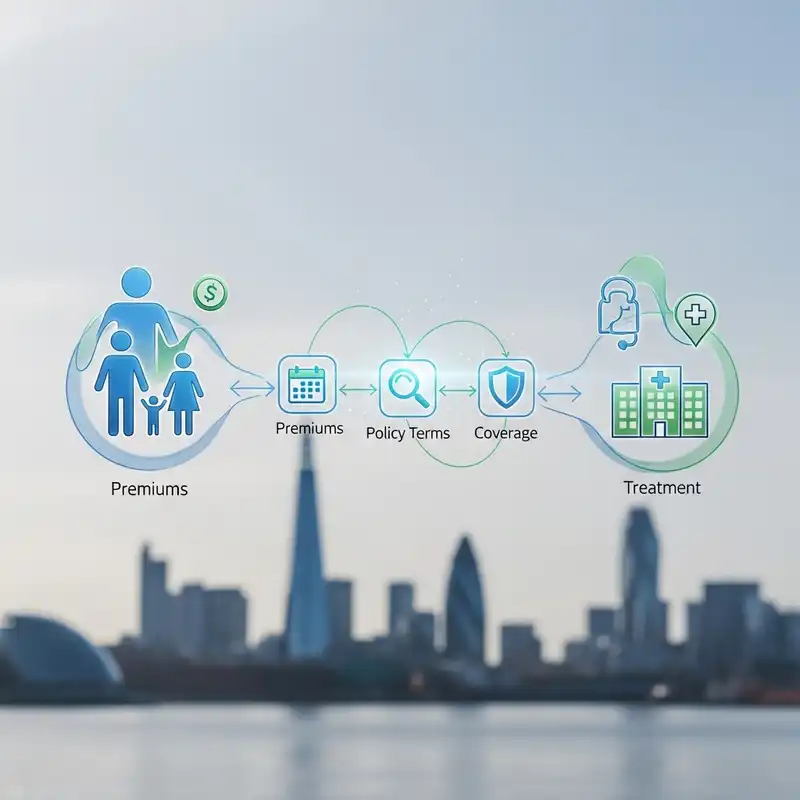
This is where Private Medical Insurance (PMI) enters the conversation. Rather than facing a sudden, crippling bill, PMI works like any other insurance: you pay a manageable monthly premium to protect yourself against the risk of future, unforeseen medical costs.
In essence, a PMI policy is a contract that gives you access to private healthcare when you need it for specific types of conditions. It allows you to bypass the NHS queues for eligible treatment, giving you speed, choice, and peace of mind.
However, it is absolutely crucial to understand what PMI is for—and what it is not for. This is the single most important concept to grasp.
The Golden Rule of PMI: Acute vs. Chronic & Pre-existing Conditions
Standard UK private medical insurance policies are designed with a very specific purpose. Failure to understand this can lead to disappointment and frustration.
-
PMI IS FOR: Acute Conditions. An acute condition is a disease, illness, or injury that is likely to respond quickly to treatment and lead to a full recovery. Think of things like joint replacements, hernia repairs, removing gallstones, or diagnosing and treating new symptoms like chest pain or a suspicious lump. The key is that the condition arises after you have taken out the policy.
-
PMI IS NOT FOR: Pre-existing Conditions. A pre-existing condition is any ailment or symptom you knew about, had received advice on, or been treated for in the years before your policy began (typically the last 5 years). Insurers will not cover you for something you already have. Trying to buy car insurance for a car that has already crashed is a good analogy.
-
PMI IS NOT FOR: Chronic Conditions. A chronic condition is an illness that cannot be cured but can be managed. Examples include diabetes, asthma, hypertension (high blood pressure), and most forms of arthritis. These require long-term, ongoing management, which falls outside the scope of standard PMI and remains the responsibility of your GP and the NHS.
This distinction is fundamental. PMI is your safety net for the new and unexpected. It is not a replacement for the NHS, which remains the primary provider for emergency care (A&E), GP services, and the management of long-term chronic illnesses.
To manage pre-existing conditions, insurers use a process called underwriting. The two main types are:
- Moratorium Underwriting: This is the most common. The insurer will automatically exclude any condition you've had in the last 5 years. However, if you go for a set period (usually 2 years) without any symptoms, treatment, or advice for that condition after your policy starts, the insurer may then agree to cover it in the future.
- Full Medical Underwriting: You disclose your entire medical history on an application form. The insurer then tells you upfront exactly what is and isn't covered. It's more complex initially but provides greater clarity from day one.
Unpacking the Benefits: What Does a Good PMI Policy Actually Give You?
The primary benefit of PMI is avoiding long waits, but the value extends far beyond that. Holding a comprehensive policy unlocks a level of service and choice that can transform your healthcare experience.
Here’s what you get:
- Speed of Access: This is the headline benefit. If your GP refers you to a specialist for an eligible condition, you can typically be seen within days or weeks, not months or years. Diagnostics like MRI and CT scans happen just as quickly, leading to a much faster diagnosis and treatment plan.
- Choice and Control: You are in the driver's seat. You can choose the specialist or consultant you want to see (often from an approved list) and select the hospital that is most convenient for you. You can schedule appointments and surgery at times that fit around your work and family life.
- Comfort and Privacy: Treatment is delivered in a private hospital or the private wing of an NHS hospital. This typically means a private, en-suite room, better food, and more flexible visiting hours—an environment more conducive to rest and recovery.
- Access to Advanced Treatments: Some policies provide access to the very latest licensed cancer drugs and therapies, even those not yet approved for widespread use on the NHS by the National Institute for Health and Care Excellence (NICE).
- Comprehensive Mental Health Support: Recognising the growing mental health crisis, many leading PMI providers now offer extensive support, from counselling sessions to in-patient psychiatric care, often accessible without a GP referral.
- Digital GP Services: Most policies include 24/7 access to a virtual GP via phone or video call. This is incredibly convenient for getting quick advice, prescriptions, or a referral without having to wait for a face-to-face appointment at your local surgery.
These benefits combine to reduce stress, minimise disruption to your life, and ensure you get the best possible care exactly when you need it, helping you get back on your feet and back to work faster.
How Much Does Peace of Mind Cost? A Look at PMI Premiums
The cost of a PMI policy is not one-size-fits-all. It varies significantly based on a range of personal and policy-related factors. Think of it like car insurance: a young driver with a sports car pays more than a middle-aged person with a family hatchback.
The main factors influencing your premium are:
- Age: Premiums increase as you get older, as the statistical likelihood of needing to claim rises.
- Location: Treatment costs are higher in some areas, particularly Central London, so premiums are often higher for those living in and around the capital.
- Level of Cover: Policies are tiered. A basic plan might cover in-patient treatment only. A mid-range plan will add out-patient consultations and diagnostics. A comprehensive plan will include everything, plus therapies, mental health, and dental/optical options.
- The Excess (illustrative): This is the amount you agree to pay towards any claim. A policy with a £500 excess will have a lower monthly premium than one with a £0 excess. Choosing a higher excess is a key way to manage cost.
- Hospital List: Insurers have different lists of approved hospitals. A policy with a nationwide list including premium London hospitals will cost more than one with a more restricted regional list.
- Lifestyle: Smokers will always pay more than non-smokers.
To give you a real-world idea, here are some sample monthly premiums.
| Profile | Basic Cover (e.g., £500 excess) | Comprehensive Cover (e.g., £250 excess) |
|---|---|---|
| Single, 30-year-old, non-smoker | £35 - £50 | £60 - £85 |
| Couple, 45-years-old, non-smokers | £90 - £130 | £160 - £220 |
| Family of 4 (Parents 40, Children 10 & 12) | £120 - £180 | £220 - £300+ |
These are illustrative estimates. Actual quotes will vary by insurer and individual circumstances.
When you compare these monthly costs to a potential £15,000 bill for a single operation—or a £4.7 million lifetime financial loss—the value proposition of PMI becomes crystal clear. It's about protecting a huge future risk with a predictable present cost.
Navigating the Market: How to Choose the Right PMI Plan
The UK's PMI market is vibrant and competitive, with major players like Bupa, AXA Health, Aviva, and Vitality all offering a wide array of products. This choice is great for consumers, but it can also be overwhelming. Policies are complex, with different definitions, limits, and exclusions.
How do you compare a plan with a £1,000 out-patient limit to one with a "guided consultant" option? How do you know which hospital list is right for you? This is where using an independent, expert broker becomes invaluable. (illustrative estimate)
At WeCovr, our entire purpose is to help you navigate this complexity. We are not tied to any single insurer. Our role is to act as your expert guide, understanding your specific needs, budget, and health concerns. We use our market knowledge to compare plans from all the UK's leading insurers, highlighting the crucial differences and finding the policy that offers the best possible value for you. We do the hard work of reading the small print so you don't have to.
We also believe in supporting our customers' holistic wellbeing beyond just the insurance policy. That's why every WeCovr customer receives complimentary access to our proprietary AI-powered calorie tracking app, CalorieHero. We want to empower you with tools to manage your health proactively, reinforcing our commitment to being your long-term health partner.
The Bigger Picture: Is a Two-Tier System Inevitable?
The rise of a two-tier healthcare system is a deeply uncomfortable reality for a country that created the NHS. Politically, the debate will rage on about funding, reform, and the future of public services.
However, for individuals and families today, waiting for a systemic solution is not a practical strategy. The immediate challenge is a personal one: how do you protect your health, your income, and your family's future in the here and now?
The evidence suggests that the pressures on the NHS are systemic and long-term. While the service will continue to provide outstanding emergency and chronic care, the era of waiting months or years for "routine" procedures is likely the new normal.
In this environment, taking personal responsibility for your health security is a rational, pragmatic response. It's not about abandoning the NHS, but about supplementing it with a private alternative for the specific, acute conditions that can derail your life. Interestingly, a healthy private sector can even alleviate some pressure on the NHS, as every person who uses PMI for a hip replacement frees up a space on the waiting list for someone else.
Your Health, Your Future: Making an Informed Choice
We stand at a crossroads. The UK's healthcare landscape is changing, and the divide between those who can access timely treatment and those who cannot is widening. The risks of inaction are no longer abstract; they are quantifiable, running into millions of pounds in lost lifetime earnings and unquantifiable amounts of unnecessary pain and suffering.
Let's recap the stark choices:
- Rely solely on the NHS: Accept the risk of long waits, which can lead to a deterioration in your health, a potential inability to work, and significant financial consequences.
- Self-Fund: Be prepared to find tens of thousands of pounds at short notice, potentially wiping out your savings and jeopardising your financial future.
- Invest in Private Medical Insurance: Pay a manageable monthly premium to create a shield against the health and financial shocks of new, acute medical conditions.
It is essential to remember that PMI is a specific tool for a specific job. It is not a cure-all. It does not cover pre-existing or chronic conditions. But for securing fast access to diagnosis and treatment for new health problems, it is an incredibly powerful and effective shield.
The decision of whether to invest in PMI is a personal one. But it must be an informed one. In this new two-tier nation, burying your head in the sand is the biggest risk of all. Be proactive. Understand the risks you face. Research your options.
If you are considering how to best protect yourself and your family, the expert team at WeCovr is here to help. We can provide clear, no-obligation advice tailored to your circumstances, helping you compare the market and find the right cover for your needs and budget. Your health is your greatest asset; protecting it is the most important investment you will ever make.
Sources
- NHS England: Waiting times and referral-to-treatment statistics.
- Office for National Statistics (ONS): Health, mortality, and workforce data.
- NICE: Clinical guidance and technology appraisals.
- Care Quality Commission (CQC): Provider quality and inspection reports.
- UK Health Security Agency (UKHSA): Public health surveillance reports.
- Association of British Insurers (ABI): Health and protection market publications.
Disclaimer: This is general guidance only and does not constitute formal tax or financial advice. Tax treatment depends on individual circumstances, policy terms, and HMRC interpretation, which cannot be guaranteed in advance. Whenever applicable, businesses and individuals should always consult a qualified accountant or tax adviser before arranging such policies.