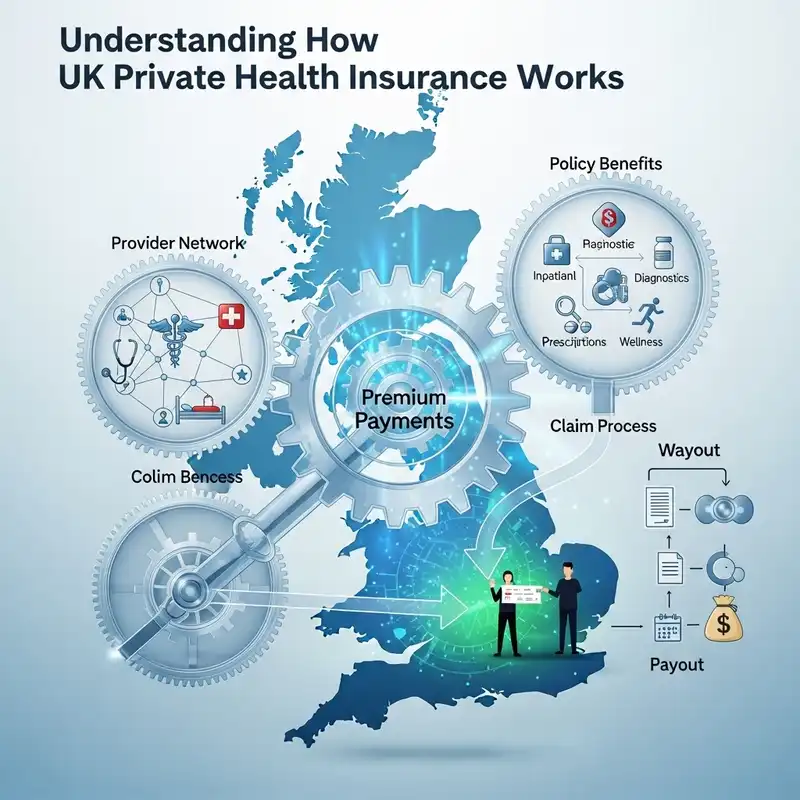
TL;DR
The National Health Service is the jewel in Britains crown, a source of immense national pride. For generations, weve relied on its promise: to be there for us in our hour of greatest need, regardless of our ability to pay. But that promise is being tested like never before.
Key takeaways
- Record Waiting Lists: As of early 2025, the number of people in England waiting for routine hospital treatment remains stubbornly high, with millions on the list. Shockingly, hundreds of thousands of these patients have been waiting for over a year for procedures that could dramatically improve their quality of life, such as hip or knee replacements.
- The Cancer "Time Bomb": For conditions like cancer, every week counts. The NHS has a target that 85% of patients should start treatment within 62 days of an urgent GP referral. This target has been consistently missed for years. Delays in diagnosis and treatment can allow cancers to grow, spread, and become harder to treat, directly impacting survival rates.
- Deteriorating Conditions: For someone waiting for a joint replacement, a nine-month delay isn't just nine months of pain. It's nine months of reduced mobility, potential muscle wastage, increased reliance on painkillers, and often an inability to work or live independently. The patient who eventually gets their surgery is in a worse state than when they were first referred.
- The Mental Toll: The psychological burden of waiting is immense. Living with undiagnosed symptoms or a confirmed condition without a treatment plan creates a constant state of anxiety and stress, which can lead to or exacerbate mental health issues like depression and anxiety disorders.
- Lost Income: This is the most immediate and significant blow. Statutory Sick Pay (SSP) is just 116.75 a week (2024/25 rate) - a sum impossible for most families to live on. Even generous employer sick pay schemes rarely last more than six months. A long-term absence due to illness or recovery means a catastrophic drop in income. The Office for National Statistics (ONS) reported a record number of people out of the workforce due to long-term sickness in 2024, a trend that continues to grow.
the UK''s Hidden Health Catastrophe
The National Health Service is the jewel in Britain’s crown, a source of immense national pride. For generations, we’ve relied on its promise: to be there for us in our hour of greatest need, regardless of our ability to pay.
But that promise is being tested like never before.
The stark reality is that the NHS is facing an unprecedented and sustained period of strain. Post-pandemic backlogs, staff shortages, and increasing demand have converged to create a perfect storm. The result? Record-breaking waiting lists, critical delays for diagnosis and treatment, and a growing chasm between the care the NHS wants to provide and the care it can deliver.
This isn't just an inconvenience. For millions, these delays are a silent catastrophe unfolding in slow motion. A recent analysis projects a deeply concerning future: by 2025, more than one in three working-age Britons will either personally experience, or see a close family member's, health condition deteriorate due to delays in receiving NHS care.
The consequences are not just physical; they are profoundly financial. When a health crisis strikes, the shockwaves can shatter a family's financial foundations. The combined impact of lost income, the unforeseen cost of private care, paying for treatments not available on the NHS, and the ripple effect on a partner's career can create a devastating financial burden. For a high-earning family, this lifetime financial impact could, in the most severe circumstances, spiral into the millions.
This article is not designed to scare you. It is designed to prepare you. It is a definitive guide to understanding the very real risks we now face and, more importantly, the powerful, accessible solutions that can form an impenetrable shield around your family’s future. We will explore the four essential pillars of protection—Life Insurance, Critical Illness Cover, Income Protection, and Private Medical Insurance—and show you how they form an essential defence against the UK's escalating healthcare strain.
The Unseen Cost of Waiting: How NHS Delays Impact Your Health and Wealth
To truly grasp the need for a personal protection strategy, we must first confront the scale of the challenge. The headlines we skim about waiting lists represent real people whose lives and livelihoods are being put on hold, and often, at risk.
The Health Cost: A Ticking Clock
The core principle of modern medicine is early diagnosis and swift treatment. Delays directly undermine this principle, with potentially severe consequences.
- Record Waiting Lists: As of early 2025, the number of people in England waiting for routine hospital treatment remains stubbornly high, with millions on the list. Shockingly, hundreds of thousands of these patients have been waiting for over a year for procedures that could dramatically improve their quality of life, such as hip or knee replacements.
- The Cancer "Time Bomb": For conditions like cancer, every week counts. The NHS has a target that 85% of patients should start treatment within 62 days of an urgent GP referral. This target has been consistently missed for years. Delays in diagnosis and treatment can allow cancers to grow, spread, and become harder to treat, directly impacting survival rates.
- Deteriorating Conditions: For someone waiting for a joint replacement, a nine-month delay isn't just nine months of pain. It's nine months of reduced mobility, potential muscle wastage, increased reliance on painkillers, and often an inability to work or live independently. The patient who eventually gets their surgery is in a worse state than when they were first referred.
- The Mental Toll: The psychological burden of waiting is immense. Living with undiagnosed symptoms or a confirmed condition without a treatment plan creates a constant state of anxiety and stress, which can lead to or exacerbate mental health issues like depression and anxiety disorders.
| Procedure/Target | NHS Target | Typical 2024/2025 Performance | Impact of Delay |
|---|---|---|---|
| Urgent Cancer Treatment | Start within 62 days | Often below 65% on target | Poorer prognosis, more complex treatment |
| Referral to Treatment (RTT) | 92% seen within 18 weeks | Consistently below 70% | Condition worsens, prolonged pain |
| Diagnostic Tests | 99% receive within 6 weeks | Frequently below 80% | Delayed diagnosis, stress, uncertainty |
| A&E Waiting Times | 95% seen within 4 hours | Often below 75% | Overcrowding, delayed urgent care |
Sources: NHS England, The King's Fund analysis (2024-2025 data)
The Financial Cost: The Domino Effect
A serious health issue triggers a financial domino effect that can topple even the most carefully planned household budget. The assumption that the NHS will catch you is no longer a complete safety net.
-
Lost Income: This is the most immediate and significant blow. Statutory Sick Pay (SSP) is just £116.75 a week (2024/25 rate) - a sum impossible for most families to live on. Even generous employer sick pay schemes rarely last more than six months. A long-term absence due to illness or recovery means a catastrophic drop in income. The Office for National Statistics (ONS) reported a record number of people out of the workforce due to long-term sickness in 2024, a trend that continues to grow.
-
The "Carer" Sacrifice: When a person becomes seriously ill, their partner or a close family member often becomes their primary carer. This can mean reducing their own working hours or leaving their job entirely, effectively halving the household income at the worst possible moment.
-
The Price of "Going Private": Faced with a year-long wait for a painful or debilitating condition, many feel they have no choice but to pay for private treatment. This is a huge, unplanned expense. A single private MRI scan can cost £400-£800, a consultation with a specialist £250, and a procedure like a hip replacement can easily exceed £15,000.
-
Unfunded Treatments & Adaptations: The NHS, due to budget constraints, cannot fund every available drug or therapy. This is particularly true for some advanced cancer treatments. A critical illness diagnosis can leave families facing the heartbreaking choice of either forgoing a potentially life-extending treatment or finding tens of thousands of pounds to fund it themselves. Add to this the cost of adapting a home for a wheelchair or installing a stairlift, and the costs quickly mount.
When you combine these factors—a year of lost salary, a partner's reduced income, the £15,000 cost of a private operation, and ongoing medical expenses—you can see how the financial burden can rapidly reach six figures, eroding savings and jeopardising a family's future.
Your Financial First Aid Kit: The Four Pillars of Protection
Believing "it won't happen to me" is a gamble with the highest possible stakes. A far better strategy is to build a robust financial shield. This shield is constructed from four key types of insurance, each designed to protect you from a different angle. They work best not in isolation, but as a complementary portfolio of protection.
Here are the four pillars:
- Critical Illness Cover: Provides a tax-free lump sum if you are diagnosed with a specific, serious illness.
- Income Protection: Pays a regular, monthly income if you are unable to work due to any illness or injury.
- Private Medical Insurance (PMI): Covers the cost of private medical treatment, allowing you to bypass NHS waiting lists.
- Life Insurance: Pays a lump sum to your loved ones if you pass away.
Let's look at how they work together in a simple table.
| If you... | Life Insurance | Critical Illness Cover | Income Protection | Private Medical Insurance |
|---|---|---|---|---|
| Pass away | ✅ Pays Out | ❌ No | ❌ No | ❌ No |
| Get a serious illness (e.g., Cancer) | ❌ No | ✅ Pays Lump Sum | ✅ Pays Monthly | ✅ Pays Treatment Costs |
| Can't work (e.g., Back Pain) | ❌ No | ❌ No | ✅ Pays Monthly | ✅ Pays Treatment Costs |
| Need surgery (e.g., Hip Op) | ❌ No | ❌ No | ✅ Pays Monthly | ✅ Pays Treatment Costs |
As you can see, no single policy covers every eventuality. A truly comprehensive plan uses a combination to ensure there are no gaps in your defence.
Deep Dive: Critical Illness Cover - Your Lump Sum Lifeline
Imagine receiving a diagnosis of cancer, a heart attack, or a stroke. Amid the emotional turmoil, the last thing you want is the added stress of financial worry. This is where Critical Illness Cover steps in.
It is a policy that pays out a one-off, tax-free lump sum upon the diagnosis of one of a list of pre-defined serious conditions. The Association of British Insurers (ABI) sets minimum standards for conditions, but most policies cover 40-50 conditions as standard, with some comprehensive plans covering over 100.
The core conditions always include the "big three":
- Cancer
- Heart Attack
- Stroke
They also typically include major conditions such as:
- Multiple sclerosis
- Parkinson's disease
- Major organ transplant
- Kidney failure
- Permanent loss of sight or hearing
How can the lump sum be used?
The power of a Critical Illness payout is its flexibility. The money is yours to use as you see fit, providing vital breathing space to focus on your recovery. People use the funds to:
- Clear a mortgage or other major debts, removing the biggest financial pressure from the household.
- Replace lost income, not just for yourself but for a partner who may need to take time off to care for you.
- Pay for private treatment or specialist drugs not available on the NHS.
- Make essential home modifications, like installing a ramp or a walk-in shower.
- Simply reduce stress, allowing you to take a year off work to recuperate fully without financial anxiety.
Case Study: The Architect's Blueprint for Recovery David, a 50-year-old architect and father of two, was diagnosed with a specific type of cancer. Whilst the NHS care was excellent, his oncologist mentioned a new form of targeted therapy available privately that could improve his prognosis but was not yet NHS-funded. His £150,000 Critical Illness policy paid out within weeks of his diagnosis. He used £40,000 to fund the private treatment and put the rest towards clearing his mortgage. This removed the single biggest source of stress from his family, allowing him and his wife to focus entirely on his health and recovery.
Deep Dive: Income Protection - The Bedrock of Your Finances
Whilst Critical Illness Cover is for life-changing events, Income Protection (IP) is the workhorse of personal insurance. Many experts, including us at WeCovr, consider it the most essential form of protection for any working adult.
Why? Because your ability to earn an income is your single biggest asset. Statistically, you are far more likely to be unable to work for a prolonged period due to illness or injury than you are to die or be diagnosed with a critical illness before retirement.
Income Protection is designed to replace a portion of your lost earnings if you can't work. It pays a regular monthly, tax-free income until you are able to return to work, reach retirement age, or the policy term ends—whichever comes first.
Understanding the Key Terms
Getting the right IP policy is about understanding the details:
- The Deferment Period: This is the time you have to wait from the day you stop working until the policy starts paying out. It can be anything from 1 day to 12 months. The longer the deferment period you choose, the lower your premium. The smart move is to align it with your employer's sick pay scheme and your emergency savings.
- The Definition of Incapacity: This is crucial. The best policies use an 'Own Occupation' definition. This means the policy will pay out if you are unable to do your specific job. Other, less robust definitions like 'Suited Occupation' (any job you're qualified for) or 'Any Occupation' (any job at all) are harder to claim on and should generally be avoided.
- Payment Period: Policies can be short-term (paying out for 1, 2, or 5 years per claim) or long-term (paying out right up until retirement age if necessary). Long-term cover provides the most comprehensive security.
The Financial Cliff Edge
Many people overestimate how long their employer would support them. The reality is a sharp financial cliff edge.
| Time Off Work | Typical Income Source | % of Normal Income |
|---|---|---|
| Weeks 1-4 | Full Company Sick Pay | 100% |
| Weeks 5-28 | Half Company Sick Pay | 50% |
| Week 29 onwards | Statutory Sick Pay (SSP) | ~15-20% (approx. £116/week) |
| After 28 weeks of SSP | Government Benefits | Dependent on circumstances |
An Income Protection policy is designed to bridge this chasm, kicking in just as your employer's support and SSP run out, and replacing it with a stable, reliable income stream. At WeCovr, we help clients navigate these options, explaining the crucial difference between an 'own occupation' and a 'suited occupation' definition to ensure your policy pays out when you truly need it.
Deep Dive: Private Medical Insurance (PMI) - Your Pathway to Swift Treatment
If Income Protection shields your finances, Private Medical Insurance (PMI) protects your time and your health. It is the most direct solution to the problem of NHS waiting lists.
PMI, also known as private health insurance, is a policy that covers the cost of private healthcare, from diagnosis through to treatment. It gives you choice, control, and speed when you need it most.
How PMI Puts You in Control
- Bypass Waiting Lists: This is the primary benefit. A PMI policyholder can often see a specialist within days and be scheduled for surgery or treatment within weeks, not months or years.
- Choice of Specialist and Hospital: You can choose the consultant you want to see and the hospital you want to be treated in from a list provided by your insurer.
- Access to the Latest Technology: Private hospitals are often among the first to invest in the latest diagnostic scanners and surgical techniques.
- Comfort and Privacy: Treatment is usually in a private room with an en-suite bathroom, more flexible visiting hours, and better food choices, creating a more comfortable and restful recovery environment.
- Valuable Added Benefits: Modern PMI policies come with a host of extras, such as 24/7 virtual GP services, mental health support lines, and physiotherapy access, all of which help you manage your health proactively.
What PMI Does and Doesn't Cover
It's important to understand that PMI is designed for acute (curable) conditions that arise after you take out the policy. It does not typically cover:
- Pre-existing conditions (though some underwriting options can accommodate this after a set period).
- Chronic conditions like diabetes or asthma that require ongoing management rather than a cure.
- Emergency services (A&E).
- Normal pregnancy and childbirth.
PMI works in partnership with the NHS. You still use your NHS GP for referrals and the NHS A&E for emergencies. But for everything in between—the scans, the consultations, the operations—PMI provides a swift and efficient private pathway.
Navigating the complexities of PMI, from hospital lists to outpatient limits, can be daunting. Our team at WeCovr compares policies from leading UK providers like Bupa, Aviva, and Vitality to find a plan that matches your needs and budget. Plus, as a WeCovr customer, you'll get complimentary access to our CalorieHero app, an AI-powered calorie tracker, because we believe in proactive health as well as reactive protection.
Don't Forget Life Insurance: The Ultimate Safety Net
In a discussion about surviving illness, it can feel strange to talk about Life Insurance. But it remains a fundamental part of any complete protection plan. It provides a financial backstop for your loved ones in the event of the worst-case scenario.
A critical illness can sometimes become a terminal one. Life Insurance ensures that even if you are no longer around, your family's financial future is secure. The payout can be used to:
- Pay off the mortgage, ensuring your family always has a home.
- Provide an income for your surviving partner and children for years to come.
- Cover funeral costs.
- Fund future expenses like university fees.
Crucially, it is highly recommended to have your life insurance policy written 'in trust'. This is a simple legal arrangement that ensures the payout goes directly to your chosen beneficiaries, bypassing your estate. This means the money is paid out much faster and is usually exempt from Inheritance Tax.
How Much Cover Do I Need? A Practical Guide
This is the most common question, and the answer is always personal. However, we can use some robust rules of thumb to create a starting point.
For Critical Illness Cover:
Your goal is to create a 1-2 year financial "breathing space."
- Calculation: (1 to 2 x Your Annual Net Salary) + (Outstanding Mortgage Balance) + (Other Debts) = Your CI Cover Amount.
- Example: You earn £35k after tax, have a £200k mortgage and £5k on a car loan. A good level of cover would be £35,000 + £200,000 + £5,000 = £240,000.
For Income Protection:
Your goal is to cover your essential monthly outgoings.
- Calculation: Insurers will typically let you cover 50-70% of your gross (pre-tax) salary. This is because the payout is tax-free. Add up your mortgage/rent, bills, food, and other essential spending to find your target monthly benefit.
- Example: You earn £50,000 gross per year (£4,167/month). You could insure up to around £2,400 per month.
For Life Insurance:
Your goal is to clear debts and provide for your family's future.
- Calculation: (Outstanding Mortgage & Debts) + (10 x Your Annual Salary to provide an income for your family) = Your Life Cover Amount.
- Example: You have a £200k mortgage and earn £35k a year. A solid level of cover would be £200,000 + (£35,000 x 10) = £550,000.
Use this table as a simple needs-analysis worksheet:
| Your Financial Needs | Estimated Amount | Life Insurance | Critical Illness | Income Protection |
|---|---|---|---|---|
| Mortgage/Rent Balance | £___________ | ✅ | ✅ | |
| Other Loans/Debts | £___________ | ✅ | ✅ | |
| Annual Salary Replacement | £___________ | ✅ (x10) | ✅ (x1-2) | |
| Monthly Bills & Essentials | £___________ | ✅ (covers this) | ||
| Future Costs (e.g., Uni Fees) | £___________ | ✅ | ||
| Your Target Cover -> | £___________ | £___________ | £___________ |
The Real Cost of Inaction: Can You Afford to Wait?
It's easy to put off thinking about insurance. It's an expense today for a problem that might happen tomorrow. But this mindset is a false economy. The reality is that the cost of being unprepared is infinitely higher than the cost of preparation.
A healthy, 35-year-old non-smoker could secure comprehensive Income Protection for their entire career for the price of a weekly takeaway. They could get a significant Critical Illness and Life Insurance policy for a similar amount.
The cost of these policies is based on your age and health at the time of application. The younger and healthier you are, the cheaper it is to lock in cover for the future. Waiting until you have a health scare is often too late—premiums will be higher, or you may be unable to get cover at all.
The choice is stark: pay a small, manageable amount now to guarantee your financial security, or risk facing a six-figure financial catastrophe with no safety net.
Take Control of Your Financial Future Today
The healthcare landscape in the UK is changing. Whilst the NHS will always be there for emergencies, relying on it solely for every aspect of your health and financial wellbeing is no longer a viable strategy. The strain on the system is creating unacceptable delays that threaten not just our health, but our financial stability.
This isn't a cause for despair, but a call for empowerment. You have the tools at your disposal to build a fortress around your family's future. A carefully constructed portfolio of Life Insurance, Critical Illness Cover, Income Protection, and Private Medical Insurance is your personal defence against the unforeseen. It is the definitive way to ensure that a health crisis does not become a financial catastrophe.
Don't leave your family's future to chance and the mercy of a waiting list. The time to build your financial shield is now, whilst you are healthy and premiums are at their lowest.
Speak to an expert adviser at WeCovr today for a no-obligation review of your circumstances. We'll help you understand your risks and compare policies from across the market to build a personalised protection plan that gives you and your family the peace of mind you deserve.
Sources
- Office for National Statistics (ONS): Mortality and population data.
- Association of British Insurers (ABI): Life and protection market publications.
- MoneyHelper (MaPS): Consumer guidance on life insurance.
- NHS: Health information and screening guidance.
Disclaimer: This is general guidance only and does not constitute formal tax or financial advice. Tax treatment depends on individual circumstances, policy terms, and HMRC interpretation, which cannot be guaranteed in advance. Whenever applicable, businesses and individuals should always consult a qualified accountant or tax adviser before arranging such policies.
Measure your family’s protection gap, then get the right life cover quote
Start with the score to see whether your family would face a real financial shortfall before moving on to life cover options.
Check what happens if someone dies too soon
See whether debt, dependants and mortgage risk are covered
Move into tailored life cover options after the score
Get your score
Your next best move
Get your score in minutes, then decide what kind of protection help would be most useful.
Score your household protection
See how well your current setup protects dependants, debt and major commitments.
Find the shortfall
Know whether life cover, critical illness or income protection is the actual missing piece.
Continue to tailored life cover
If life cover is the gap, continue to tailored life cover options.
What you get
A quick view of your current protection position
A clearer idea of where the biggest gaps may be
A direct route to tailored help if you want it