TL;DR
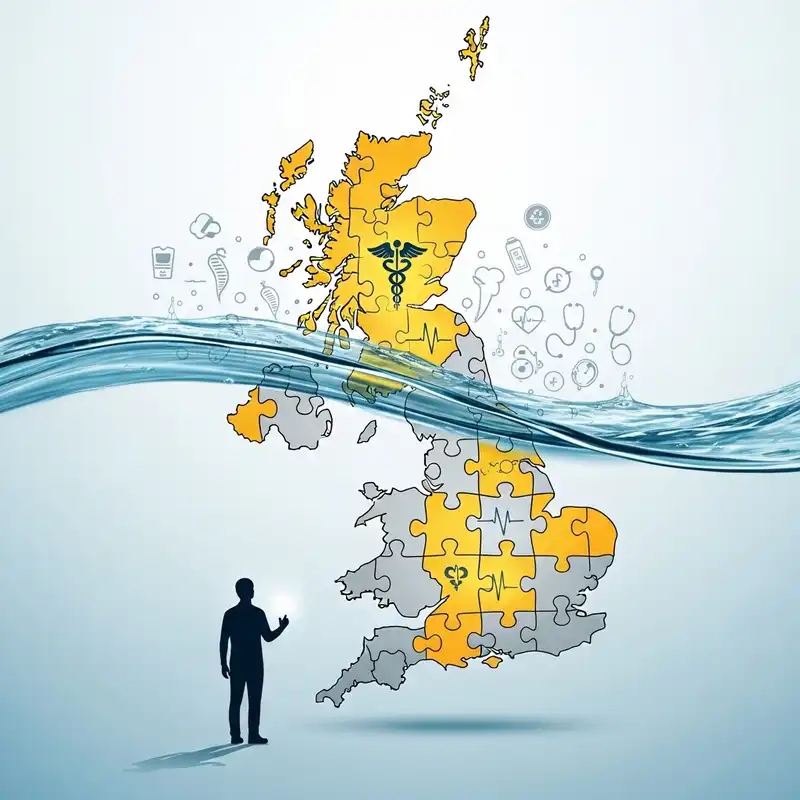
A silent financial crisis is unfolding across British households. It doesn't dominate the headlines, but its impact is devastating. More than one in four UK workers currently in their 30s and 40s are projected to be forced out of work for at least a decade due to an unforeseen health crisis, long-term illness, or disability before they reach retirement age.
Key takeaways
- An Overburdened NHS: While our NHS is a source of national pride, it is under unprecedented strain. As of mid-2025, NHS England waiting lists remain stubbornly high, with millions waiting for routine treatment. Delays in diagnosis and treatment can turn a manageable condition into a chronic, work-limiting illness.
- The Rise of "Modern" Ailments: The primary drivers of long-term work absence have shifted. While cancer and heart conditions remain major factors, ONS data consistently shows that mental health conditions (like stress, depression, and anxiety) and musculoskeletal issues (like back and neck pain) are now the leading causes. These are often chronic, debilitating conditions that can make office or manual work impossible.
- The Shadow of Long Covid: The pandemic has left a lasting legacy. The ONS estimates that around 1.9 million people in the UK are living with self-reported Long Covid, with a significant portion stating it severely limits their day-to-day activities and ability to work.
- An Ageing Workforce: People are working longer than ever before. While this has economic benefits, it also means a greater proportion of the workforce is at an age where the risk of developing a serious health condition naturally increases.
- Immediate Income Shock: Her employers sick pay runs out after six months. They are now reliant on her partner's single income.
The UK's Lost Decade of Earning
A silent financial crisis is unfolding across British households. It doesn't dominate the headlines, but its impact is devastating. More than one in four UK workers currently in their 30s and 40s are projected to be forced out of work for at least a decade due to an unforeseen health crisis, long-term illness, or disability before they reach retirement age.
This isn't just a temporary setback. For many, it's a permanent derailment of their financial lives, creating a lifetime financial black hole exceeding a staggering £4.8 million when accounting for lost earnings, pension contributions, promotions, and the spiralling costs of care.
This "Lost Decade of Earning" is a modern-day threat, supercharged by an overstretched NHS, rising levels of chronic illness, and a state safety net that has become dangerously inadequate. The question is no longer if a health crisis could impact your ability to earn, but how you will protect yourself and your family when it does.
The answer lies in a powerful, often misunderstood, financial toolkit: Life Insurance, Critical Illness Cover, and Income Protection (LCIIP). This is your unseen financial guardian, a shield that stands between your family's stability and financial ruin. This guide will unpack the data, reveal the true cost of inaction, and show you how to build a robust defence against life's most challenging uncertainties.
The Gathering Storm: Unpacking the UK's Health & Financial Crisis
The idea of losing a decade of income might seem abstract, even hyperbolic. But the data reveals a clear and concerning trend. The foundations of the UK's workforce are being shaken by a seismic shift in public health, creating a perfect storm for a financial catastrophe in millions of homes.
- The "1 in 4" Reality: Projections that over 25% of the working-age population will lose a decade or more of income is based on modelling current health trends, NHS waiting list data, and economic inactivity figures.
- Record High Long-Term Sickness: The ONS reported in early 2025 that a record 2.8 million people are now economically inactive due to long-term sickness. This figure has surged by over 700,000 since the start of the pandemic, a clear indicator of a worsening national health landscape.
- The £4.8 Million Black Hole: This figure isn't just lost salary. It's a calculation of the total lifetime financial devastation caused by a decade-long career break in your prime earning years.
Let's break down how a health crisis can create such a colossal financial gap for a typical 40-year-old professional earning the UK average salary.
Table 1: Anatomy of the £4.8 Million+ Financial Black Hole (illustrative estimate)
| Financial Impact Component | Estimated Cost Over Lifetime | Explanation |
|---|---|---|
| Lost Gross Earnings (10 Years) | £450,000 - £750,000+ | Based on an average salary, assuming no pay rises over the decade. |
| Lost Pension Contributions | £250,000 - £500,000+ | The loss of a decade of contributions and, crucially, the compound growth on that money until retirement. |
| Lost Promotions & Career Path | £1,000,000 - £2,000,000+ | The "sliding doors" effect. Loss of senior roles and the associated higher salaries and bonuses. |
| Increased Cost of Living | £100,000 - £250,000+ | Higher energy bills, specialist dietary needs, travel to appointments. |
| Direct Costs of Care & Adaptations | £50,000 - £300,000+ | Home modifications (ramps, stairlifts), private therapies, specialist equipment not covered by the NHS. |
| Spouse/Partner's Lost Income | £200,000 - £1,000,000+ | A partner may need to reduce hours or stop working entirely to become a carer. |
| Total Estimated Lifetime Impact | £2,050,000 - £4,900,000+ | The cumulative, long-term financial devastation from a single health crisis. |
Why Now? The Forces Driving This Trend
This isn't happening in a vacuum. Several powerful forces are converging to make long-term illness a greater threat to our financial stability than ever before.
- An Overburdened NHS: While our NHS is a source of national pride, it is under unprecedented strain. As of mid-2025, NHS England waiting lists remain stubbornly high, with millions waiting for routine treatment. Delays in diagnosis and treatment can turn a manageable condition into a chronic, work-limiting illness.
- The Rise of "Modern" Ailments: The primary drivers of long-term work absence have shifted. While cancer and heart conditions remain major factors, ONS data consistently shows that mental health conditions (like stress, depression, and anxiety) and musculoskeletal issues (like back and neck pain) are now the leading causes. These are often chronic, debilitating conditions that can make office or manual work impossible.
- The Shadow of Long Covid: The pandemic has left a lasting legacy. The ONS estimates that around 1.9 million people in the UK are living with self-reported Long Covid, with a significant portion stating it severely limits their day-to-day activities and ability to work.
- An Ageing Workforce: People are working longer than ever before. While this has economic benefits, it also means a greater proportion of the workforce is at an age where the risk of developing a serious health condition naturally increases.
The Domino Effect: How a Health Crisis Becomes a Financial Catastrophe
The immediate loss of your monthly salary is just the first domino to fall. The financial consequences of a long-term illness ripple outwards, touching every aspect of your family's life and dismantling years of careful financial planning.
Beyond the Paycheck: The Hidden Costs of Long-Term Illness
Imagine Sarah, a 42-year-old marketing manager living in Manchester with her partner and two children. She's diagnosed with a severe form of Multiple Sclerosis (MS). Her regular income of £55,000 per year stops abruptly. (illustrative estimate)
Here’s how the financial dominoes begin to fall for her family:
- Immediate Income Shock: Her employer’s sick pay runs out after six months. They are now reliant on her partner's single income.
- The State "Safety Net": She applies for state benefits but discovers the support is a fraction of her former salary (more on this below).
- Hidden Household Costs: Their heating bills rise as Sarah is now home all day. The cost of their weekly food shop increases due to specialist dietary needs.
- Medical & Adaptation Expenses: While the NHS provides her medication, they need to pay for a private neurological physio to maintain her mobility (£80/session). They spend £7,000 on a stairlift and £12,000 adapting their bathroom.
- Pension Catastrophe: Her £450 monthly pension contribution (including her employer's match) stops. The long-term impact on her retirement pot is catastrophic.
- Partner's Career Hit: Her partner has to turn down a promotion that required more travel and frequently takes unpaid leave to drive her to hospital appointments. His career progression, and future earning potential, is stalled.
Within two years, Sarah's family has burned through their savings, taken on credit card debt, and are considering downsizing their home. Their carefully planned future has been completely rewritten by a single diagnosis.
The State Safety Net: Can You Rely on Government Support?
Many people assume the welfare state will catch them if they fall. The reality is that the state safety net is more of a threadbare blanket, providing only the most basic subsistence-level support.
Let's examine what's actually available:
-
Statutory Sick Pay (SSP): This is the first line of defence. Your employer must pay you this if you're too ill to work.
- Amount (illustrative): £116.75 per week (2024/25 rate).
- Duration: Paid for a maximum of 28 weeks.
- The Catch (illustrative): It's not available to the self-employed, and £116.75 a week is unlikely to cover even the mortgage on a family home, let alone other bills.
-
Employment and Support Allowance (ESA): Once SSP ends, you may be able to claim ESA.
- Amount (illustrative): During the 13-week assessment phase, it's typically around £90.50 per week. If you are deemed eligible for long-term support, this can rise to a maximum of £138.20 per week.
- The Catch: The assessment process is notoriously difficult and stressful. Many people with genuine illnesses are initially denied support.
The gap between a typical UK salary and state support is not a gap; it's a chasm.
Table 2: The UK Income Chasm – Average Salary vs. State Benefits
| Income Source | Monthly Amount (Approx.) | Annual Amount (Approx.) | % of Average UK Salary* |
|---|---|---|---|
| Average UK Full-Time Salary | £3,080 | £37,000 | 100% |
| Statutory Sick Pay (SSP) | £506 | £6,071 | 16% |
| Employment Support Allowance (ESA) | £599 | £7,186 | 19% |
*Based on ONS median gross annual earnings for full-time employees, 2024/25 benefit rates.
Looking at this table, the conclusion is inescapable: relying on the state to maintain your lifestyle and financial commitments during a period of long-term illness is not a viable strategy. It is a direct path to financial hardship.
Your Financial Guardian: Demystifying the LCIIP Shield
If the state cannot protect you, you must protect yourself. This is where the "LCIIP Shield" – Life Insurance, Critical Illness Cover, and Income Protection – becomes your most vital financial asset. These three types of insurance work together to create a comprehensive safety net, shielding your finances from the devastating impact of death, serious illness, and an inability to earn.
They are distinct products designed to protect you against different risks.
Income Protection (IP): Your Monthly Salary Lifeline
Often described by financial experts as the most important insurance you can own, Income Protection is the direct solution to the "Lost Decade of Earning."
- What it is: An insurance policy that pays you a regular, tax-free monthly income if you are unable to work due to any illness or injury.
- How it works: You select a percentage of your income to cover (usually 50-70% of your gross salary). You also choose a "deferment period" – the length of time you wait before the payments start (e.g., 4, 8, 13, 26, or 52 weeks). The longer the deferment period, the cheaper the premium. The policy then pays out every month until you can return to work, the policy term ends, or you retire.
- Who it's for: Absolutely anyone whose lifestyle depends on their income. It is especially critical for the self-employed, who have no access to SSP or employer sick pay.
- The Gold Standard: Look for policies with an 'Own Occupation' definition of incapacity. This means the policy will pay out if you are unable to do your specific job. Less comprehensive policies ('Suited Occupation' or 'Any Occupation') may only pay out if you are unable to do any job, making it much harder to claim.
Critical Illness Cover (CIC): The Lump Sum Saviour
While Income Protection replaces your monthly paycheque, Critical Illness Cover provides a large, tax-free cash injection at a time of immense stress.
- What it is: A policy that pays out a one-off, tax-free lump sum if you are diagnosed with one of a list of specified serious medical conditions.
- How it's used: The money is yours to use as you see fit. Common uses include:
- Paying off your mortgage or other major debts.
- Funding private medical treatment to bypass NHS waiting lists.
- Paying for specialist equipment or home adaptations.
- Replacing a partner's income so they can take time off to care for you.
- Simply providing a financial cushion to allow you to recover without financial stress.
- Key Conditions: The "big three" conditions covered by virtually all policies are cancer, heart attack, and stroke. However, comprehensive policies today cover 50, 100, or even more conditions, including MS, motor neurone disease, major organ transplant, and permanent loss of sight or hearing. Always check the policy's key features document to understand exactly what is covered.
Life Insurance: Protecting Your Loved Ones
Life insurance is the foundational layer of financial protection, ensuring that the people who depend on you are cared for if the worst should happen.
- What it is: A policy that pays out a lump sum (or a regular income) to your beneficiaries upon your death.
- How it works: You choose an amount of cover and a policy term. If you die during the term, the policy pays out. It's that simple.
- Main Types:
- Level Term Assurance: The payout amount remains the same throughout the policy term. Ideal for covering an interest-only mortgage or providing a lump sum for family living costs.
- Decreasing Term Assurance: The payout amount reduces over time, broadly in line with a repayment mortgage. It's a cheaper way to ensure your biggest debt is cleared.
- Whole of Life Assurance: This policy guarantees a payout whenever you die, as long as you keep paying the premiums. It's often used for inheritance tax planning or to cover funeral costs.
Table 3: LCIIP Shield at a Glance – Which Cover for Which Crisis?
| Type of Insurance | What Triggers a Payout? | What Does It Pay Out? | Primary Purpose |
|---|---|---|---|
| Income Protection | Inability to work due to any illness/injury. | A regular, tax-free monthly income. | Replaces your lost salary to cover day-to-day living costs. |
| Critical Illness Cover | Diagnosis of a specific serious illness. | A one-off, tax-free lump sum. | Clears major debts, pays for medical costs, and provides a financial buffer. |
| Life Insurance | Your death (or diagnosis of terminal illness). | A one-off, tax-free lump sum. | Provides for your dependents and clears debts after you're gone. |
These policies are not mutually exclusive. A robust financial plan will often incorporate elements of all three, creating multiple layers of defence.
Building Your Shield: A Practical Guide to Getting Covered
Understanding the need for protection is the first step. The next is taking practical action. This can feel daunting, but it can be broken down into a logical process.
How Much Cover Do You Really Need?
There's no single right answer, but here are some widely used guidelines to get you started:
- Income Protection:
- Target: Aim to cover 50-70% of your gross (pre-tax) monthly income. This is usually the maximum an insurer will offer, as it provides an incentive to return to work.
- Calculation: (Your Monthly Gross Salary x 0.65) - (Any Existing Sick Pay or Other Income) = Your Target Monthly Benefit.
- Critical Illness Cover:
- Method: A common approach is to cover your major debts plus a buffer for income and costs.
- Calculation: (Outstanding Mortgage + Other Major Loans) + (2 x Your Annual Gross Salary) = Your Target Cover Amount. This clears your biggest liabilities and gives you a two-year income cushion.
- Life Insurance:
- The D.I.M.E.S. Method: This is a simple acronym to ensure you cover the key areas.
- Debt: All outstanding debts, including your mortgage, car loans, and credit cards.
- Income: How many years of your annual salary do your dependents need to replace? (e.g., 10 years until the children are independent).
- Mortgage: Ensure the mortgage is fully cleared.
- Education: The estimated future cost of university or school fees for your children.
- Spouse: Consider what financial support your spouse may need in the long term.
- The D.I.M.E.S. Method: This is a simple acronym to ensure you cover the key areas.
The Cost of Protection: Is It Affordable?
The cost of protection is almost always far lower than people expect, especially when compared to the potential financial loss. The price you pay is based on several key factors:
- Age and Health: The younger and healthier you are, the cheaper it will be.
- Smoker Status: Smokers can expect to pay significantly more than non-smokers.
- Occupation: A desk-based job will be cheaper to insure than a manual labour role.
- Amount and Length of Cover: The more cover you want and the longer you want it for, the higher the premium.
- Deferment Period (for IP): A longer deferment period dramatically reduces the cost. Aligning it with your employer's sick pay period is a smart way to save money.
Table 4: Illustrative Monthly Premiums for a 35-Year-Old Non-Smoker
| Policy Type | Cover Details | Estimated Monthly Premium | The Cost of a Few Coffees |
|---|---|---|---|
| Income Protection | £2,000/month benefit, 13-week deferment, pays until age 67. | £35 - £50 | Protects a £30,000+ salary for less than £2 a day. |
| Critical Illness Cover | £100,000 level cover over a 25-year term. | £18 - £28 | Secures your home for the price of a weekly takeaway. |
| Life Insurance | £250,000 level term cover over a 25-year term. | £12 - £18 | Protects your family's future for less than a Netflix sub. |
Premiums are for illustrative purposes only and will vary based on individual circumstances and insurer.
When you consider that these small monthly amounts are protecting an income stream potentially worth millions over a lifetime, the value proposition becomes incredibly clear.
Why Expert Guidance is Non-Negotiable
While it's tempting to use a comparison website and simply pick the cheapest option, this is one of the riskiest financial decisions you can make. The devil is in the detail of the policy wording, and a cheap policy that doesn't pay out when you need it is worthless.
Navigating the Maze with an Independent Broker
This is where a specialist independent insurance broker becomes invaluable.
- Whole-of-Market Access: A broker isn't tied to one insurer. They can search the entire market, including providers like Aviva, Legal & General, Zurich, Royal London, and The Exeter, to find a strong fit for your specific needs.
- Expertise in the Fine Print: Do you know the difference between an 'own occupation' and a 'suited occupation' definition for Income Protection? Or which insurer has the most comprehensive cancer definition? A good broker lives and breathes this stuff.
- Help with the Application: The application process can be complex. A broker will help you complete it accurately, ensuring full disclosure of your medical history to prevent any issues at the point of a claim.
- Putting Policies in Trust: A broker can help you place your life insurance policy "in trust." This is a simple legal step that ensures the payout goes directly to your beneficiaries, avoiding probate and potential inheritance tax. It's a vital service that is often overlooked.
How WeCovr Can Help
At WeCovr, we are specialist protection brokers. Our mission is to demystify the world of LCIIP and empower our clients to build the right financial shield for their families. We cut through the jargon and focus on what truly matters: getting you the most comprehensive cover from a reputable insurer at the most competitive price.
Our expert advisors take the time to understand your unique circumstances – your family, your job, your financial situation, and your health. We then use our in-depth knowledge of the market to compare plans from all the UK's leading insurers, presenting you with clear, easy-to-understand recommendations. We handle the paperwork and guide you every step of the way, from application to your policy going live.
We also believe that protecting our clients goes beyond just the policy. That's why every WeCovr customer receives complimentary access to CalorieHero, our proprietary AI-powered calorie and nutrition tracking app. We believe in fostering proactive health as well as providing reactive financial protection. It’s part of our commitment to your long-term well-being.
The Final Word: Don't Gamble With Your Greatest Asset
The data is clear. The threat of a "Lost Decade of Earning" is real, and the financial consequences are catastrophic. The state will not save you, and your savings are unlikely to be enough.
Your ability to earn an income is your single greatest financial asset, worth millions of pounds over your lifetime. Yet for most people, it is completely uninsured. You wouldn't leave a £500,000 house uninsured, so why leave your multi-million-pound earning potential exposed to the most likely risks of all – illness and injury?
Building your LCIIP shield is not a cost; it is an investment in certainty. It's the peace of mind that comes from knowing that if life throws its worst at you, your family's home is safe, the bills will be paid, and their future is secure.
Don't wait for a crisis to reveal the cracks in your financial foundations. Take a moment today to consider the figures in this article. Look at your own finances. And then take the single most important step you can: speak to an expert. A short conversation today could be the decision that saves your family's financial future.
Sources
- Office for National Statistics (ONS): Mortality and population data.
- Association of British Insurers (ABI): Life and protection market publications.
- MoneyHelper (MaPS): Consumer guidance on life insurance.
- NHS: Health information and screening guidance.
Disclaimer: This is general guidance only and does not constitute formal tax or financial advice. Tax treatment depends on individual circumstances, policy terms, and HMRC interpretation, which cannot be guaranteed in advance. Whenever applicable, businesses and individuals should always consult a qualified accountant or tax adviser before arranging such policies.
Measure your family’s protection gap, then get the right life cover quote
Start with the score to see whether your family would face a real financial shortfall before moving on to life cover options.
Check what happens if someone dies too soon
See whether debt, dependants and mortgage risk are covered
Move into tailored life cover options after the score
Get your score
Your next best move
Get your score in minutes, then decide what kind of protection help would be most useful.
Score your household protection
See how well your current setup protects dependants, debt and major commitments.
Find the shortfall
Know whether life cover, critical illness or income protection is the actual missing piece.
Continue to tailored life cover
If life cover is the gap, continue to tailored life cover options.
What you get
A quick view of your current protection position
A clearer idea of where the biggest gaps may be
A direct route to tailored help if you want it