The Unseen Foundation: Growth & Guardrails
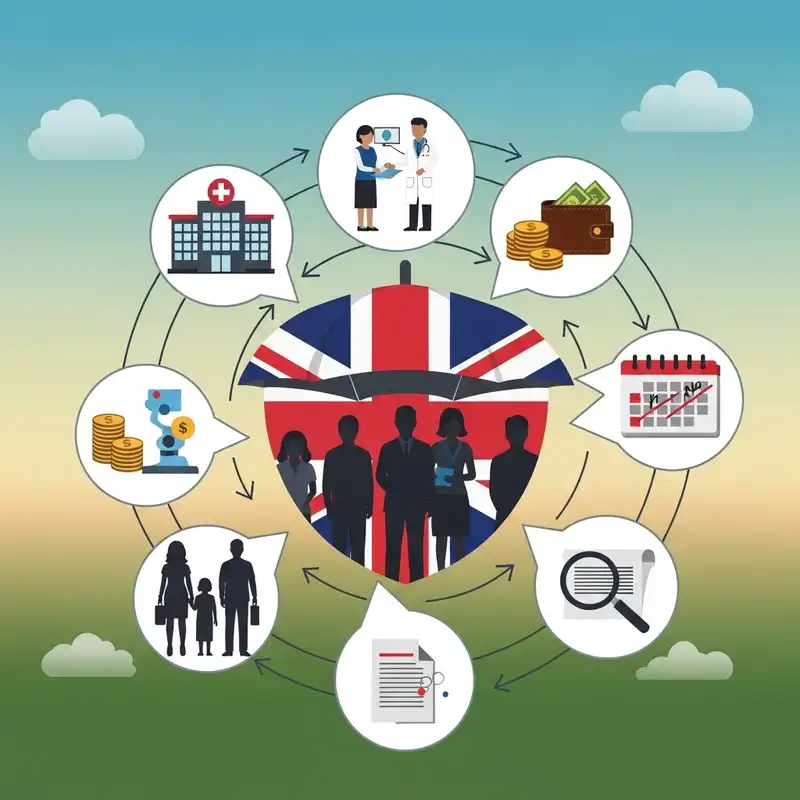
The Unspoken Truth About Your 2025 Growth Journey: Why True Personal Evolution Demands More Than Mindset. Discover How Strategic Financial Bedrock for Your Income, Health, and Family Legacy Is the Underrated Catalyst for Uninterrupted Success – An Essential Insight for Every Ambitious Individual, Especially Our Tradespeople, Nurses, and Electricians Facing Life's Unpredictable Realities.
The calendar turns, and with it, a surge of ambition. We map out our goals for 2025: career progression, business growth, personal development. The prevailing narrative, echoed by motivational speakers and business gurus, is that success is a matter of mindset. "Hustle harder," they say. "Visualise your success." And while a powerful mindset is undeniably a crucial component of any growth journey, it is not, by itself, enough.
This is the unspoken truth: your ambition, your drive, and your meticulously planned goals are balanced on a knife-edge. They are vulnerable. A single unexpected event—a sudden illness, a serious injury, a family tragedy—can shatter years of hard work in an instant. True, uninterrupted success isn't just built on aspirations; it's built on a bedrock of security.
This guide is for the ambitious. It's for the entrepreneur scaling their business, the freelancer chasing their passion, and especially for those on the front line of our economy and care systems: our tradespeople, nurses, and electricians. Your work is physically demanding and essential, but it also exposes you to a higher degree of risk. We will explore why creating strategic financial guardrails for your income, your health, and your family's future is the most underrated, yet most powerful, catalyst for achieving your goals without interruption.
This isn't about planning for failure. It's about engineering the conditions for your success to flourish, protected from the unpredictable realities of life.
The Mindset Myth: Why Ambition Alone Isn't Enough
Let's be clear: a positive, growth-oriented mindset is a formidable tool. It fuels resilience, fosters creativity, and drives you to overcome obstacles. We celebrate the power of goal-setting, discipline, and unwavering focus. But relying solely on mindset to carry you through life is like building a magnificent skyscraper on a foundation of sand. It might look impressive on a calm day, but it’s dangerously exposed when the storms of life inevitably arrive.
The reality is that life is unpredictable. A recent report from the Office for National Statistics (ONS) highlighted that in 2024, an estimated 2.8 million people were out of the workforce due to long-term sickness, a significant increase over the past few years. These aren't just statistics; they are individuals whose plans, careers, and ambitions have been put on hold.
Consider the ripple effect of a sudden, serious illness:
- Immediate Income Loss: If you're self-employed, the work stops, and so does the money. Even for the employed, Statutory Sick Pay (SSP) is a mere £116.75 per week (2024/25 rate) – a figure that scarcely covers the average weekly food shop, let alone a mortgage or rent.
- Derailed Career Momentum: Months out of work can mean missed opportunities for promotion, lost contracts, or a decline in professional skills. The climb back can be steep.
- Intense Mental and Emotional Strain: Worrying about bills while trying to recover is a heavy burden. This financial stress can impede physical recovery and take a toll on your mental health and family relationships.
Your ambition deserves a stronger foundation. It needs a structure that can withstand the tremors of life, allowing you to focus your energy on growth, not just survival. That structure is a well-thought-out financial protection plan.
Building Your Bedrock: The Three Pillars of Financial Security
A truly resilient financial plan rests on three core pillars. Each one protects a critical aspect of your life, working together to create a comprehensive safety net that empowers you to pursue your ambitions with confidence.
Pillar 1: Guarding Your Greatest Asset – Your Income
Your ability to earn an income is the engine that powers everything else: your lifestyle, your home, your savings, and your future plans. If that engine fails, everything grinds to a halt. Income Protection insurance is designed to keep it running.
What is Income Protection?
Often confused with other products, Income Protection is a policy that pays you a regular, tax-free monthly income if you're unable to work due to any illness or injury. It's not tied to specific conditions; it's tied to your ability to do your job. It typically pays out after a pre-agreed waiting period (the 'deferred period') and can continue to pay out until you recover, retire, or the policy term ends.
This is fundamentally different from employer sick pay or SSP.
| Feature | Statutory Sick Pay (SSP) | Typical Income Protection |
|---|---|---|
| Amount | £116.75 per week (2024/25) | 50-70% of your gross salary |
| Duration | Up to 28 weeks | Long-term, often until retirement |
| Eligibility | Employed, earning over £123/week | Available to employed & self-employed |
| Coverage | Basic, often insufficient | Covers mortgage, bills, and lifestyle |
| Tax Status | Taxable | Payouts are tax-free |
For the UK's 4.3 million self-employed individuals, there is no SSP. An illness means an immediate and total loss of income. For tradespeople, nurses, and others in physically demanding roles, an injury that prevents you from working can be financially catastrophic without this protection.
Types of Income Protection:
- Long-Term Income Protection: The gold standard, providing an income stream right up to retirement age if you can never work again.
- Short-Term Income Protection (or Personal Sick Pay): More budget-friendly, these policies have a limited payment period, typically 1, 2, or 5 years per claim. This can be an excellent starting point or a vital stopgap for those in high-risk jobs.
- Executive Income Protection: A valuable tool for company directors. The business pays the premium, which is usually an allowable business expense, and the policy pays the director's income if they're unable to work.
Pillar 2: Shielding Against Life's Health Shocks – Critical Illness Cover
While Income Protection replaces your monthly salary, Critical Illness Cover is designed to provide a single, tax-free lump sum if you are diagnosed with a specific, serious medical condition defined in the policy.
The "big three" – cancer, heart attack, and stroke – account for the majority of claims, but modern policies can cover over 50 different conditions. According to Cancer Research UK, someone in the UK is diagnosed with cancer every two minutes. The British Heart Foundation estimates there are more than 100,000 hospital admissions each year in the UK due to heart attacks. These are not remote possibilities; they are common life events.
How can the lump sum be used?
The power of Critical Illness Cover lies in its flexibility. The money is yours to use as you see fit, providing crucial breathing room at a time of immense stress. Common uses include:
- Clearing a mortgage or other debts: Removing the single biggest financial burden.
- Funding private medical treatment: Accessing specialist care or treatments not available on the NHS.
- Adapting your home: Installing a ramp, a stairlift, or other necessary modifications.
- Replacing lost income: For a partner who may need to take time off work to care for you.
- Paying for recuperation: Funding a stress-free holiday or other wellness activities to aid recovery.
Imagine the mental relief of being able to focus purely on getting better, without the looming shadow of financial ruin. That peace of mind is invaluable and is, in itself, a catalyst for recovery.
Pillar 3: Securing Your Legacy – Life Insurance
The final pillar is not for you, but for those you would leave behind. Life Insurance (also known as Life Cover or Life Protection) pays out a lump sum upon your death, providing financial stability for your loved ones at the most difficult of times.
If you have a partner, children, a mortgage, or anyone else who depends on your income, Life Insurance is an act of responsibility and love.
Key Types of Life Insurance:
- Level Term Insurance: Pays out a fixed lump sum if you die within a set term (e.g., 25 years). Ideal for covering an interest-only mortgage or providing a legacy for your family.
- Decreasing Term Insurance: The potential payout decreases over time, broadly in line with a repayment mortgage. This makes it a very cost-effective way to ensure your home is paid off.
- Family Income Benefit: A different approach. Instead of a single lump sum, it pays out a regular, tax-free income to your family from the time of your death until the policy's end date. This can be easier to manage than a large sum and is often more affordable.
- Gift Inter Vivos: A specialist policy for estate planning. If you gift a large sum of money or an asset (like a property) and die within seven years, it could be subject to Inheritance Tax. This policy provides a lump sum to cover that potential tax bill, ensuring your beneficiaries receive the full value of your gift.
Navigating these options can feel daunting. At WeCovr, we specialise in helping individuals and families understand their needs. We compare plans from across the UK market to find the right combination of cover that fits your life and your budget, ensuring your legacy is protected.
A Closer Look: Protection Tailored for Life's Frontline
While everyone can benefit from a financial safety net, the need is particularly acute for those whose livelihoods depend directly on their physical well-being.
For Tradespeople & Electricians: Your Body is Your Business
If you're a plumber, builder, plasterer, or electrician, your ability to work is directly linked to your physical health. A slipped disc, a broken wrist, or a more serious injury doesn't just mean a few days off; it can mean months without income.
The Health and Safety Executive (HSE) reports that the construction sector consistently has one of the highest rates of work-related ill health and injury. In 2022/23, an estimated 53,000 construction workers suffered from work-related musculoskeletal disorders.
For you, Income Protection isn't a luxury; it's an essential piece of your toolkit. When looking at policies, the definition of incapacity is crucial. The best policies use an 'Own Occupation' definition. This means the policy will pay out if you are unable to perform your specific job (e.g., an electrician who can no longer handle fine wires due to a hand injury), even if you could theoretically do another job, like office work.
For Nurses & Healthcare Professionals: The Carers Need Care Too
You spend your working lives caring for others, often under immense physical and emotional pressure. Long shifts, the physical demands of patient handling, and high-stress environments can take their toll. Furthermore, your intimate knowledge of illness and disease means you are acutely aware of what can go wrong.
While the NHS sick pay scheme is more generous than SSP, it is not limitless. After a certain period of service, you might receive six months of full pay and six months of half pay. But what happens after that year is up if you are still unable to return?
For nurses, a combination of long-term Income Protection (to kick in after NHS sick pay ends) and Critical Illness Cover (to provide a lump sum for serious conditions) creates a robust shield. It provides the security to know that if you are faced with a serious health challenge, your own financial health won't be another casualty.
For the Self-Employed & Freelancers: The Ultimate Safety Net
When you work for yourself, you are the CEO, the finance department, and the entire workforce. There is no sick pay, no employer pension contribution, and no one to cover your work if you're unwell. This freedom comes with immense responsibility.
A robust protection plan is the bedrock of a sustainable freelance or self-employed career. It provides the stability to ride out the inevitable quiet periods and the confidence to take calculated risks to grow your business, knowing that your personal finances are insulated from a health-related disaster.
The Director's Dilemma: Protecting Your Business and Your Family
For company directors, the lines between personal and business finances are often blurred. A personal health crisis can quickly become a business crisis. Fortunately, there are highly tax-efficient ways to use your business to fund essential protection.
| Protection Type | What it Does | Who it's For | Key Benefit |
|---|---|---|---|
| Key Person Insurance | Provides the business with a lump sum if a key employee or director dies or suffers a critical illness. | Businesses reliant on specific individuals for profit, skills, or contacts. | Helps the business survive: clear debt, recruit a replacement, reassure investors. |
| Executive Income Protection | Pays a monthly income to a director/employee if they're unable to work. | Company directors and key employees. | Premiums are typically a tax-deductible business expense. Protects key staff. |
| Relevant Life Cover | A company-paid life insurance policy for an employee or director. | Directors of small businesses who want life cover without it being a P11D benefit. | A highly tax-efficient alternative to a personal life insurance plan. |
By implementing these strategies, you are not only protecting yourself and your family but also safeguarding the future of the business you have worked so hard to build.
Beyond Insurance: The Holistic Approach to a Resilient 2025
Financial protection is the foundation, but a truly resilient life is also built on daily habits that promote well-being. When you're not stressed about financial what-ifs, you have more mental and emotional bandwidth to invest in your health.
Fuel Your Engine: The Power of Nutrition
Your diet has a direct impact on your energy levels, cognitive function, and long-term health. For those in physically demanding jobs, proper nutrition is essential for muscle repair and sustained energy. For office-based workers, it's crucial for maintaining focus and avoiding the afternoon slump.
- Prioritise whole foods: Focus on fruits, vegetables, lean proteins, and complex carbohydrates.
- Stay hydrated: Dehydration can lead to fatigue, headaches, and reduced concentration.
- Plan your meals: Meal prepping can save you from making poor food choices when you're busy or tired.
At WeCovr, we believe in a holistic approach to our clients' well-being. That's why, in addition to expert insurance advice, we provide our customers with complimentary access to our AI-powered calorie and nutrition tracking app, CalorieHero. It’s a simple, effective tool to help you understand and improve your diet, showing our commitment extends beyond just policies to your overall health journey.
The Power of Rest: Your Non-Negotiable Recharge
In our "always-on" culture, sleep is often the first thing to be sacrificed. Yet, according to the NHS, one in three people in the UK suffer from poor sleep. Chronic sleep deprivation is linked to a host of health problems, including obesity, heart disease, and diabetes, not to mention its devastating impact on mood and productivity.
- Create a routine: Go to bed and wake up at the same time every day, even on weekends.
- Optimise your environment: A dark, quiet, and cool bedroom is ideal.
- Switch off screens: The blue light from phones and tablets can interfere with melatonin production, the hormone that controls sleep. Aim for a screen-free hour before bed.
Stay in Motion: Active Body, Resilient Mind
Regular physical activity is a potent antidote to stress and a powerful tool for preventing injury and illness. Even if you have an active job, it's important to incorporate different types of movement.
- Focus on preventative strength: Activities like yoga, Pilates, or simple core exercises can strengthen the supporting muscles around your joints, reducing the risk of strains and sprains common in manual jobs.
- Don't neglect cardio: A brisk walk, a cycle, or a swim is fantastic for your cardiovascular health and a great way to clear your head.
- Listen to your body: Know the difference between pushing yourself and pushing your luck. Rest and recovery are just as important as the activity itself.
Taking Action: Your Step-by-Step Guide to Building Your Financial Guardrails
Understanding the 'why' is the first step. Taking action is the next. Here is a simple framework to get you started on building your own foundation of security.
Step 1: The Honest Audit Sit down and get a clear picture of your current situation.
- Income & Outgoings: What is your monthly income? What are your essential outgoings (mortgage/rent, bills, food)?
- Dependents: Who relies on you financially? Your partner, children, or perhaps ageing parents?
- Existing Cover: Do you have any protection through your employer? Check the details – how much does it pay and for how long? Do you have any personal policies?
- Debts: What is your outstanding mortgage? Do you have car loans or credit card debt?
Step 2: Define Your 'Why' What are you actually trying to protect? Being specific makes the process more tangible. Are you protecting:
- Your family's ability to stay in their home?
- Your children's future education?
- Your business's survival?
- Your own standard of living during a long-term illness?
Step 3: Understand the Options Review the three pillars we've discussed:
- Income Protection: To replace your salary.
- Critical Illness Cover: For a lump sum on diagnosis of a serious condition.
- Life Insurance: To provide for your loved ones after you're gone.
Step 4: Seek Expert Guidance The UK protection market is vast and complex. Policies, definitions, and prices vary significantly between insurers. Trying to navigate this alone can be overwhelming and lead to costly mistakes.
This is where an independent broker is invaluable. As experts in the field, we at WeCovr do the hard work for you. We take the time to understand your personal circumstances from Step 1 and your goals from Step 2. Then, we search the entire market to compare policies from all the leading UK insurers, explaining the pros and cons of each. Our goal is to find you the most suitable cover at the most competitive price, ensuring there are no gaps in your financial armour.
Step 5: Review and Adapt Your protection needs are not static. They will change as your life evolves. It's crucial to review your cover every few years, or after any major life event:
- Getting married
- Buying a new home or remortgaging
- Having children
- Changing jobs or getting a significant pay rise
- Starting a business
A quick chat with your adviser can ensure your cover remains perfectly aligned with your life.
The True Cost of Inaction
It's easy to put off thinking about insurance. We tell ourselves, "It won't happen to me," or "I can't afford it right now." But the true cost of these products isn't the monthly premium. The true cost is the price of inaction.
It's the stress of watching your savings evaporate while you're too ill to work. It's the heartache of a family losing their home after a bereavement. It's the crushing weight of a business owner seeing their dream crumble because of a health crisis.
The investment you make in a robust protection plan is one of the most profound investments you can make in your 2025 growth journey. It's the unseen foundation that makes your ambitions weatherproof. It liberates you from the background anxiety of 'what if,' freeing you up to focus your full, undiluted energy on building the future you envision.
Don't let your success be a matter of luck. Take control. Build your guardrails, protect your foundations, and make your personal evolution for 2025 and beyond not just ambitious, but unbreakable.
Isn't protection insurance really expensive?
I'm young and healthy, do I really need it now?
What's the main difference between Income Protection and Critical Illness Cover?
Will my pre-existing medical conditions stop me from getting cover?
How much cover do I actually need?
Why life insurance and how does it work?
What is Life Insurance?
Life insurance is an insurance policy that can provide financial support for your loved ones when you or your joint policy holder passes away. It can help clear any outstanding debts, such as a mortgage, and cover your family's living and other expenses such costs of education, so your family can continue to pay bills and living expenses. In addition to life insurance, insurance providers offer related products such as income protection and critical illness, which we will touch upon below.How does it work?
Life insurance pays out if you die. The payout can be in the form of a lump sum payment or can be paid as a replacement for a regular income. It's your decision how much cover you'd like to take based on your financial resources and how much you'd like to leave to your family to help them deal with any outstanding debts and living expenses. Your premium depends on a number of factors, including your occupation, health and other criteria.The payout amount can change over time or can be fixed. A level term or whole of life policy offers a fixed payout. A decreasing term policy offers a payout that decreases over the term of the cover.
With critical illness policies, a payout is made if you’re diagnosed with a terminal illness with a remaining life expectancy of less than 12 months. While income protection policies ensure you can continue to meet your financial commitments if you are forced to take an extended break from work. If you can’t work because you’ve had an accident, fallen sick, or lost your job through no fault of your own, income protection insurance pays you an agreed portion of your salary each month.
Income protection is particularly helpful for people in dangerous occupations who want to be sure their mortgage will always be covered. Income protection only covers events beyond your control: you’re much less likely to be covered if you’re fired from your job or if you injure yourself deliberately.
Questions to ask yourself regarding life insurance
Just ask yourself:👉 Who would pay your mortgage or rent if you were to pass away or fall seriously ill?
👉 Who would pay for your family’s food, clothing, study fees or lifestyle?
👉 Who would provide for the costs of your funeral or clear your debts?
👉 Who would pay for your costs if you're unable to work due to serious illness or disability?
Many families don’t realise that life, income protection and critical illness insurance is one of the most effective ways to protect their finances. A great insurance policy can cover costs, protect a family from inheriting debts and even pay off a mortgage.
Many would think that the costs for all the benefits provided by life insurance, income protection insurance or critical illness insurance are too high, but the great news is in the current market policies are actually very inexpensive.
Benefits offered by income protection, life and critical illness insurance
Life insurance, income protection and critical illness insurance are indispensable for every family because a child loses a parent every 22 minutes in the UK, while every single day tragically 60 people suffer major injuries on the UK roads. Some people become unable to work because of sickness or disability.Life insurance cover pays out a lump sum to your family, loved ones or whomever you choose to get the money. This can be used to secure the financial future of your loved ones meaning they would not have to struggle financially in the event of your death.
If it's a critical illness cover, the payout happens sooner - upon diagnosis of a serious illness, disability or medical condition, easing the financial hardship such an event inevitably brings.
Income protection insurance can be very important for anyone who relies on a pay check to cover their living costs, but it's especially important if you’re self-employed or own a small business, where your employment and income is a bit less stable. It pays a regular income if you can't work because of sickness or disability and continues until you return to paid work or you retire.
In a world where 1 in 4 of us would struggle financially after just four weeks without work, the stark reality hits hard – a mere 7% of UK adults possess the vital shield of income protection. The urgency of safeguarding our financial well-being has never been more palpable.
Let's face it – relying on savings isn't a solution for everyone. Almost 25% of people have no savings at all, and a whopping 50% have £1,000 or less tucked away. Even more concerning, 51% of Brits – that's a huge 27 million people – wouldn't last more than one month living off their savings. That's a 10% increase from 2022.
And don't even think about state benefits being a safety net. The maximum you can expect from statutory sick pay is a mere £109.40 per week for up to 28 weeks. Not exactly a financial lifeline, right?
Now, let's tackle a common objection: "But I have critical illness insurance. I don't need income protection too." Here's the deal – the two policies apply to very different situations. In a nutshell:
- Critical illness insurance pays a single lump sum if you're diagnosed with or undergo surgery for a specified potentially life-threatening illness. It's great for handling big one-off expenses or debts.
- Income protection, on the other hand, pays a percentage of your salary as a regular payment if you can't work due to illness or injury. It's the superhero that tackles those relentless monthly bills.
Types of life insurance policies
Common reasons for getting a life insurance policy are to:✅ Leave behind an amount of money to keep your family comfortable
✅ Protect the family home and pay off the mortgage in full or in part
✅ Pay for funeral costs
Starting from as little as a couple of pounds per week, you can do all that with a Life Policy.
Level Term Life Insurance
One of the simplest forms of life insurance, level term life insurance works by selecting a length of time for which you would want to be covered and then deciding how much you would like your loved ones to receive should the worst happen. Should your life insurance policy pay out to your family, it would be in a lump sum amount that can be used in whatever way the beneficiary may wish.
Decreasing Term Life Insurance
Decreasing term life insurance works in the same way as level term, except the lump sum payment amount upon death decreases with time. The common use for decreasing term life cover is to protect against mortgage repayment as the lump sum decreases along with the principal of the mortgage itself.
Increasing Term Life Insurance
Increasing term life insurance aims to pay out a cash sum growing each year if the worst happens while covered by the policy. With increasing term life cover amount insured increases annually by a fixed amount for the length of the policy. This can protect your policy's value against inflation, which could be advantageous if you’re looking to maintain your loved ones’ living standards, continue paying off your mortgage in line with its repayment schedule and cover your children’s education fees.
Whole of Life Insurance
Whereas term life insurance policies only pay out if you pass away during their term, whole of life insurance pays out to your beneficiaries whenever this should happen. The most common uses for whole life insurance are to cover the costs of a funeral or as a vehicle for your family's inheritance tax planning.
Family Income Benefit
Family income benefit is a somewhat lesser-known product in the family of life insurance products. Paying out a set amount every month of year to your beneficiaries, it is the most cost-effective way of maintaining your family's living standards to an age where you'd expect them to be able to support themselves financially. The most common use would be for a family with children who are not working yet so are unable to take care of themselves financially.
Relevant Life Insurance
Relevant Life Insurance is a tax-efficient policy for a director or single employee. A simple level term life insurance product, it is placed in a specific trust to ensure its tax efficiency. The premiums are tax deductible and any benefit payable should a claim arise is also paid out tax free, which makes it an attractive product for entrepreneurs and their businesses.
Important Fact!
We can look at a more suitable option mid-term!
Why is it important to get life insurance early?
👉 Many people are very thankful that they had their life, income protection, and critical illness insurance cover in place before running into some serious issues. Critical illness and income protection insurance is as important as life insurance for protecting your family's finances.👉 We insure our cars, houses, bicycles and even bags! Yet our life and health are the most precious things we have.
Easily one of the most important insurance purchases an individual or family can make in their lifetime, the decision to buy life, income protection, critical illness and private medical health insurance can be made much simpler with the help of FCA-authorised advisers. They are the specialists who do the searching and analysis helping people choose between various types of life insurance policies available in the market, including income protection, critical illness and other types of policies most suitable to the client's individual circumstances.
It certainly won't do any harm if you speak with one of our experienced FCA-authorised insurance partner experts who are passionate about advising people on financial matters related to life insurance and are keen to provide you with a free consultation.
You can discuss with them in detail what affordable life, income protection, critical illness or private medical health insurance plan for the necessary peace of mind they would recommend! WeCovr works with some of the best advisers in the market.
By tapping the button below, you can book a free call with them in less than 30 seconds right now:
Our Group Is Proud To Have Issued 800,000+ Policies!
We've established collaboration agreements with leading insurance groups to create tailored coverage
























How It Works
1. Complete a brief form

2. Our experts analyse your information and find you best quotes

3. Enjoy your protection!

Any questions?
Learn more

Who Are WeCovr?
WeCovr is an insurance specialist for people valuing their peace of mind and a great service.👍 WeCovr will help you get your private medical insurance, life insurance, critical illness insurance and others in no time thanks to our wonderful super-friendly experts ready to assist you every step of the way.
Just a quick and simple form and an easy conversation with one of our experts and your valuable insurance policy is in place for that needed peace of mind!