TL;DR
The United Kingdom is facing a healthcare crossroads. While the National Health Service (NHS) remains a cherished institution, a rising tide of demand, staff shortages, and legacy backlogs has created a crisis of access. It represents millions of individuals waiting in pain for joint replacements, anxiously anticipating a diagnostic scan, or seeing their quality of life diminish while they wait for routine but life-changing surgery.
Key takeaways
- Post-Pandemic Backlog: The "elective care recovery" has been slower than anticipated, with the system still processing millions of patients whose care was delayed during the pandemic.
- Workforce Shortages: Persistent vacancies for doctors, nurses, and specialists across the NHS mean there simply aren't enough staff to meet the demand.
- Ageing Population: A growing, older population with more complex health needs naturally places a greater demand on healthcare services.
- Economic Pressures: Industrial action and budgetary constraints have further limited the NHS's capacity to clear the waiting lists at the required pace.
- GP Visit: Your journey often still starts with your GP. You discuss your symptoms, and if they feel you need to see a specialist, they will provide you with an open referral.
UK 2025 1 in 3 Britons Trapped By NHS Delays
The United Kingdom is facing a healthcare crossroads. While the National Health Service (NHS) remains a cherished institution, a rising tide of demand, staff shortages, and legacy backlogs has created a crisis of access. New analysis, based on current trends and projections from leading health think tanks, paints a stark picture for 2025: more than one in three Britons are projected to be directly impacted by NHS waiting lists, either by being on one themselves or having their care delayed due to system pressures.
This isn't just a headline figure. It represents millions of individuals waiting in pain for joint replacements, anxiously anticipating a diagnostic scan, or seeing their quality of life diminish while they wait for routine but life-changing surgery. For many, these delays are not mere inconveniences; they are direct threats to their physical recovery, mental wellbeing, and financial stability. The inability to work, the strain on families, and the constant anxiety take a profound human toll.
In this definitive guide, we will dissect the reality of the UK's waiting list challenge in 2025. We will go beyond the numbers to explore the real-life consequences of delayed care. Most importantly, we will illuminate a proven and accessible pathway to reclaiming control over your health journey: Private Medical Insurance (PMI). This is your comprehensive resource for understanding the problem and navigating the solution, empowering you to choose timely, expert care when you need it most.
The Anatomy of a Crisis: Unpacking the 2026 NHS Waiting List Projections
To grasp the scale of the challenge, we must look at the data. The figures for 2025 are not just statistics; they are a forecast of the lived experience for a significant portion of the UK population.
- The Headline Figure: The total number of people on the NHS waiting list for routine consultant-led treatment in England is on course to exceed 9.5 million by mid-2025. When accounting for Scotland, Wales, and Northern Ireland, this UK-wide figure approaches a staggering 11 million.
- The "1 in 3" Impact: The projection that over one in three Britons will be affected is derived from the total number of referrals and the system's capacity to treat them. It means that over the course of the year, the likelihood of an individual requiring a referral and then facing a significant, quality-of-life-impacting delay will affect more than 33% of the adult population.
- The Longest Waits: The number of patients waiting over a year for treatment, which the NHS Constitution states should be a "zero tolerance" event, is projected to sit stubbornly above 400,000 throughout 2025. These are the individuals most at risk of irreversible health deterioration and financial hardship.
Which Treatments Have the Longest Delays?
While the entire system is under strain, certain specialities are bearing the heaviest burden. These are often treatments that address pain and mobility, directly impacting a person's ability to live a normal, productive life.
| Medical Speciality | Average NHS Wait Time (Referral to Treatment) 2025 Projection | Typical Private Sector Wait Time |
|---|---|---|
| Trauma & Orthopaedics (e.g., hip/knee replacement) | 48 weeks | 4-6 weeks |
| Ophthalmology (e.g., cataract surgery) | 35 weeks | 3-5 weeks |
| Gynaecology (e.g., endometriosis investigation) | 40 weeks | 2-4 weeks |
| General Surgery (e.g., hernia repair) | 38 weeks | 3-6 weeks |
| Cardiology (e.g., non-urgent diagnostic tests) | 26 weeks | 1-2 weeks |
| Dermatology | 24 weeks | 1-2 weeks |
Source: Projections based on NHS England data and analysis from The King's Fund, 2025.
These figures reveal a two-tier reality. A 48-week wait for a hip replacement isn't just a year of waiting; it's a year of chronic pain, reduced mobility, potential muscle wastage making recovery harder, and for many, an inability to work or care for family. A 4-week wait in the private sector means the problem is identified and solved, and life gets back to normal.
Why Is This Happening?
The causes are a complex mix of long-term trends and recent shocks:
- Post-Pandemic Backlog: The "elective care recovery" has been slower than anticipated, with the system still processing millions of patients whose care was delayed during the pandemic.
- Workforce Shortages: Persistent vacancies for doctors, nurses, and specialists across the NHS mean there simply aren't enough staff to meet the demand.
- Ageing Population: A growing, older population with more complex health needs naturally places a greater demand on healthcare services.
- Economic Pressures: Industrial action and budgetary constraints have further limited the NHS's capacity to clear the waiting lists at the required pace.
Beyond the Statistics: The Real-Life Impact of Protracted NHS Waits
A 48-week wait on a spreadsheet is an abstract concept. In reality, it's a devastating period of decline for many. The consequences ripple out, affecting every aspect of a person's life.
The Physical Toll
Delaying treatment is rarely a static process. Conditions often worsen over time.
- Example: Knee Pain. A patient requiring a knee replacement at month one might be mobile with painkillers. By month twelve, they could be housebound, suffering from muscle atrophy in their leg, and developing compensatory back problems. The eventual surgery becomes more complex, and the recovery period is significantly longer and less certain.
- Diagnostic Delays: Waiting months for an MRI or CT scan for unexplained symptoms means living in a state of uncertainty. For some conditions, this delay can mean the difference between a straightforward treatment and a much more invasive, less successful intervention later on.
The Mental Health Crisis
The psychological burden of waiting is immense and often overlooked. A 2024 study published in The Lancet Psychiatry found a direct correlation between longer healthcare waiting times and increased prevalence of anxiety, depression, and stress.
Patients report feeling:
- Forgotten and invisible within a vast, impersonal system.
- Anxious about their condition worsening.
- Depressed due to chronic pain and loss of independence.
- Guilty about the impact their condition has on family members and carers.
The Threat to Livelihoods
For the self-employed, small business owners, and those in manual labour, the ability to work is directly linked to their physical health. A long wait is not just a health issue; it's a financial catastrophe.
Consider the case of Mark, a 52-year-old self-employed electrician:
Mark developed a painful inguinal hernia. His GP referred him for surgery, but the NHS waiting list in his area was approximately 55 weeks.
| Stage | NHS Timeline | Impact on Mark |
|---|---|---|
| GP Referral | Week 1 | Discomfort, but able to work carefully. |
| Waiting for Surgery | Weeks 2-40 | Pain increases. He can no longer lift heavy equipment, forcing him to turn down jobs. His income halves. |
| Pre-Op Assessment | Week 50 | Severe pain. He is now unable to work at all, relying on savings. He develops anxiety about his financial future. |
| Surgery | Week 55 | Finally receives treatment. |
| Recovery | Weeks 56-62 | Standard 6-week recovery, but he has lost over a year of full earning potential and depleted his savings. |
Mark's story is one of thousands. The wait itself becomes a primary cause of financial hardship, turning a treatable medical condition into a long-term life crisis.
Taking Control: An Introduction to UK Private Medical Insurance (PMI)
Faced with this daunting reality, a growing number of people are refusing to be passive victims of a system under strain. They are actively seeking an alternative route to the care they need. That route is Private Medical Insurance (PMI).
What Exactly is Private Medical Insurance?
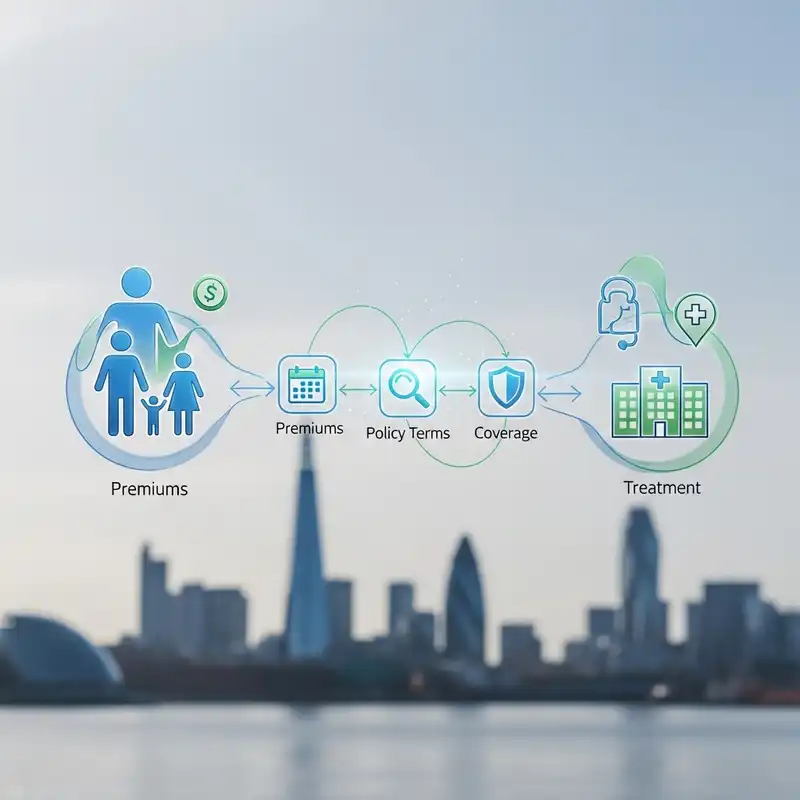
At its core, PMI is a type of insurance policy designed to cover the costs of private healthcare for acute conditions that arise after your policy begins. It works alongside the NHS, not as a complete replacement. You still rely on the NHS for accidents and emergencies, GP services, and the management of chronic illnesses.
The primary, transformative benefit of PMI is speed of access. It empowers you to bypass the lengthy NHS queues and receive diagnosis and treatment from a specialist in a matter of days or weeks, not months or years.
How Does It Work in Practice?
The journey from symptom to treatment with PMI is typically swift and straightforward:
- GP Visit: Your journey often still starts with your GP. You discuss your symptoms, and if they feel you need to see a specialist, they will provide you with an open referral.
- Contact Your Insurer: You call your PMI provider's claims line, explain the situation, and provide your referral details.
- Claim Authorisation: The insurer confirms your condition is covered under your policy and authorises the claim, often providing a choice of pre-approved specialists and private hospitals.
- Receive Treatment: You book your consultation and any subsequent tests or treatment at a time and place convenient for you.
- Direct Settlement: The private hospital and specialist bill your insurer directly. Apart from any excess you may have on your policy, you have nothing to pay.
The Critical Rule: PMI is for Acute Conditions, Not Chronic or Pre-existing Ones
This is the most important principle to understand about standard UK private health insurance. It must be stated with absolute clarity:
PMI is designed to cover new, short-term, curable medical conditions (known as acute conditions) that occur after you have taken out the policy.
- Acute Conditions (Covered): These are illnesses or injuries that are likely to respond quickly to treatment and lead to a full recovery. Examples include joint replacements, cataract removal, hernia repair, gallstone removal, and diagnosing and treating most cancers.
- Chronic Conditions (Not Covered): These are long-term conditions that cannot be cured, only managed. Examples include diabetes, asthma, high blood pressure, arthritis, and Crohn's disease. The day-to-day management and treatment of these conditions will remain with the NHS.
- Pre-existing Conditions (Not Covered): A pre-existing condition is any disease, illness, or injury for which you have experienced symptoms, received medication, advice, or treatment in the years immediately before your policy start date (typically the last 5 years). These will be excluded from your cover, at least initially.
PMI is your key to resolving new health problems quickly, preventing them from becoming chronic issues that derail your life. It is not a replacement for the essential chronic care provided by the NHS.
What Does Private Health Insurance Actually Cover? A Detailed Look
PMI policies are not one-size-fits-all. They are built around a core offering, with a range of optional extras that allow you to tailor the cover to your specific needs and budget.
Core Coverage (Included as Standard)
Nearly all credible PMI policies will include cover for treatment received when you are admitted to hospital as an in-patient (requiring an overnight stay) or a day-patient (admitted for a procedure but not staying overnight).
This typically includes:
- Hospital accommodation and nursing care
- Surgeon and anaesthetist fees
- Specialist consultations while you are in hospital
- Diagnostic tests like MRI scans, CT scans, and X-rays while you are an in-patient
- Extensive cancer cover, including surgery, chemotherapy, and radiotherapy
Popular Optional Extras
To create a more comprehensive policy, you can choose to add benefits that cover you before you are admitted to hospital.
| Optional Add-On | What It Covers | Why You Might Want It |
|---|---|---|
| Out-patient Cover | Specialist consultations and diagnostic tests that do not require a hospital bed. | This is the most popular add-on. It speeds up the entire diagnostic process, getting you from GP to a confirmed diagnosis and treatment plan in the fastest possible time. |
| Mental Health Cover | Access to private psychiatric treatment, therapy, and counselling sessions. | Provides rapid access to mental health support, bypassing long NHS waits for services like Cognitive Behavioural Therapy (CBT). |
| Therapies Cover | Physiotherapy, osteopathy, chiropractic treatment, and sometimes acupuncture. | Essential for recovery from surgery, sports injuries, or musculoskeletal problems. |
| Dental & Optical Cover | A contribution towards routine check-ups, emergency dental work, and the cost of glasses or contact lenses. | A useful everyday benefit that helps manage routine healthcare costs. |
Navigating these options and the different levels of cover (from basic to fully comprehensive) can be complex. At WeCovr, our expert advisors specialise in demystifying these choices. We help you dissect policies from all major UK insurers, ensuring you get a plan that perfectly balances comprehensive protection with your budget.
The Financial Equation: Is Private Health Insurance Affordable?
A common misconception is that PMI is a luxury reserved for the very wealthy. In reality, a wide range of plans exists, and with the right guidance, you can find affordable cover that provides invaluable peace of mind.
Several key factors determine the cost of your monthly premium:
- Age: This is the most significant factor. Premiums are lower for younger individuals and increase with age.
- Location: The cost of private treatment varies regionally, so policies are often more expensive for those living in London and the South East.
- Level of Cover: A basic, in-patient-only policy will be significantly cheaper than a fully comprehensive plan with all the optional extras.
- Policy Excess (illustrative): This is a fixed amount you agree to pay towards the cost of any claim. Choosing a higher excess (e.g., £250, £500, or £1,000) will lower your monthly premium.
- Hospital List: Insurers offer different tiers of hospital networks. Choosing a more limited list of high-quality local hospitals, rather than a nationwide list including premium London clinics, can reduce the cost.
Illustrative Monthly Premiums (2026)
The table below provides an indication of what you might expect to pay. These are for illustrative purposes only.
| Profile | Level of Cover | Excess | Indicative Monthly Premium |
|---|---|---|---|
| 30-year-old | Core In-patient & Day-patient | £500 | £35 - £50 |
| 45-year-old | Comprehensive (incl. Out-patient) | £250 | £70 - £95 |
| 60-year-old | Mid-Range (incl. limited Out-patient) | £500 | £110 - £150 |
| Family of 4 (Parents 40, Children 10 & 12) | Comprehensive | £250 | £180 - £250 |
Note: Premiums are for non-smokers and can vary significantly between insurers.
Smart Ways to Reduce Your Premiums
- Increase Your Excess: The single most effective way to lower your premium.
- The 6-Week Wait Option: This is a clever compromise. Your policy will only pay for in-patient treatment if the NHS wait for that specific procedure is longer than six weeks. As most urgent procedures on the NHS are done within this timeframe, it protects you against the long, debilitating waits while significantly cutting your premium.
- Review Your Hospital List: Do you really need access to every private hospital in the UK? Often, a quality-assured regional network is more than sufficient.
- Guided Consultant Lists: Some insurers offer a "guided" option where they will provide you with a shortlist of 3-5 approved specialists for your condition, rather than giving you free rein. This cost-saving measure still ensures you see a top consultant quickly.
How to Choose a strong fit for your needs: A Step-by-Step Guide
Selecting a health insurance policy is a significant decision. Following a structured process ensures you get the right protection for your needs.
Step 1: Assess Your Priorities
Start by asking yourself what you are most concerned about.
- Is your top priority bypassing queues for surgery like a hip or knee replacement? A core policy might suffice.
- Are you worried about getting a fast diagnosis for any potential symptom? Comprehensive out-patient cover is essential.
- Is prompt access to mental health support a key concern?
- Do you have a family history of cancer and want the most extensive cancer cover available?
Step 2: Understand Underwriting
This is how an insurer assesses your medical history to decide what they will and won't cover. There are two main types:
- Moratorium Underwriting: This is the most common and simplest method. You don't have to disclose your full medical history upfront. Instead, the policy automatically excludes any condition you've had treatment, symptoms, or advice for in the 5 years before your policy started. However, if you then go for 2 continuous years on the policy without needing any treatment, advice, or having symptoms for that condition, the insurer may agree to cover it in the future.
- Full Medical Underwriting (FMU): This involves completing a detailed health questionnaire when you apply. The insurer assesses your medical history and tells you from day one exactly what is and isn't covered. It's a longer process, but it provides complete clarity from the outset.
Step 3: Compare the Market (The Smart Way)
You could spend days researching individual insurers like Bupa, AXA Health, Aviva, Vitality, and WPA, trying to compare their complex policies and terminology. But the landscape is vast, and a direct comparison is often difficult.
Step 4: Use an Independent, Expert Broker
This is where a specialist broker like WeCovr becomes your most powerful asset. We provide an independent, whole-of-market service that saves you time, money, and stress.
Why use a broker?
- Expertise: We live and breathe health insurance. We understand the nuances of every policy from every major insurer.
- Personalisation: We don't sell policies; we provide tailored advice. We listen to your needs and budget and recommend the plan that is genuinely right for you.
- Simplicity: We translate the jargon and present your options in a clear, easy-to-understand way.
- Market Power: We have strong relationships with insurers and can often find deals or terms that aren't available to the public.
- Support for Life: Our service doesn't end when you buy a policy. We are here to help you at the point of a claim and to review your cover each year to ensure it still meets your needs.
Furthermore, as part of our commitment to our clients' long-term wellbeing, we provide complimentary access to our proprietary AI-powered calorie tracking app, CalorieHero. It's just one of the ways we go above and beyond, supporting your health journey even outside of your insurance policy.
Frequently Asked Questions (FAQs) about PMI and NHS Delays
Q: Can I still use the NHS if I have private insurance? A: Absolutely. The two systems work in parallel. You will still use the NHS for A&E, GP services, and the management of any chronic conditions. PMI gives you a choice to go private for eligible acute conditions, especially when faced with a long wait.
Q: Is cancer treatment covered? A: Yes. Comprehensive cancer cover is a cornerstone of modern PMI policies. It often includes access to specialist drugs and treatments that may not be available on the NHS, alongside extensive support for surgery, radiotherapy, and chemotherapy.
Q: What happens if I have an emergency? A: You should always go to your local NHS Accident & Emergency department for emergencies, such as a suspected heart attack, stroke, or serious injury. PMI does not cover emergency treatment.
Q: Will my premium go up every year? A: Typically, yes. Premiums increase for two main reasons: firstly, as you get older, your risk of claiming increases. Secondly, medical inflation (the rising cost of new drugs, technology, and treatments) means the cost of healthcare generally rises each year. A good broker will help you review your policy annually to ensure it remains competitive.
Q: I have diabetes. Can I get a policy? A: Yes, you can get a policy. However, as diabetes is a chronic condition, the policy will not cover the management of your diabetes or any related complications. It will, however, cover you for new, unrelated acute conditions that might arise, such as the need for a hernia repair or a cataract operation.
Your Health, Your Choice: The Path Forward in 2026
The projections for 2025 are a clear warning. The NHS, despite the heroic efforts of its staff, will struggle to provide timely care for millions of people needing routine treatment. To wait passively is to risk your health, your livelihood, and your quality of life.
But you have a choice. Private Medical Insurance offers a clear, accessible, and affordable pathway to taking back control. It is an investment in your own wellbeing, providing the peace of mind that should a new health concern arise, you will be seen by a specialist and treated within weeks, not years.
It's about ensuring a knee problem is fixed before it stops you from working. It's about getting a diagnosis quickly to end months of worry. It's about safeguarding your future and that of your family.
The first step is knowledge. By understanding your options, you can make an informed decision. Don't let your health become another statistic on a waiting list. Explore your pathway to rapid, timely care today. Speak to an expert at WeCovr for a free, no-obligation review of your options and receive a personalised quote that puts your health first.
Sources
- NHS England: Waiting times and referral-to-treatment statistics.
- Office for National Statistics (ONS): Health, mortality, and workforce data.
- NICE: Clinical guidance and technology appraisals.
- Care Quality Commission (CQC): Provider quality and inspection reports.
- UK Health Security Agency (UKHSA): Public health surveillance reports.
- Association of British Insurers (ABI): Health and protection market publications.
Disclaimer: This is general guidance only and does not constitute formal tax or financial advice. Tax treatment depends on individual circumstances, policy terms, and HMRC interpretation, which cannot be guaranteed in advance. Whenever applicable, businesses and individuals should always consult a qualified accountant or tax adviser before arranging such policies.
Start with your Protection Score, then decide whether private health cover is the right fit
Check where health access sits in your overall protection picture before deciding whether to compare private health cover.
Spot whether NHS access risk is the real issue
See if PMI is the gap to fix first
Get health insurance help only if it makes sense for you
Get your score
Start with your protection score
Check your current position first, then get health insurance help if you need it.
Check your current resilience
Score your income, health access and family protection position in a few minutes.
See where private cover helps
Understand whether faster diagnosis and treatment is a priority gap.
Continue to tailored PMI help
If health access is the issue, continue to tailored PMI help.
What you get
A quick view of your current protection position
A clearer idea of where the biggest gaps may be
A direct route to tailored help if you want it