TL;DR
The United Kingdom stands on the precipice of a healthcare crisis unprecedented in modern times. The very foundation of our health and wellbeing—timely access to medical care—is fracturing under immense pressure. A delay of weeks for a scan can mean the difference between a treatable cancer and a terminal diagnosis.
Key takeaways
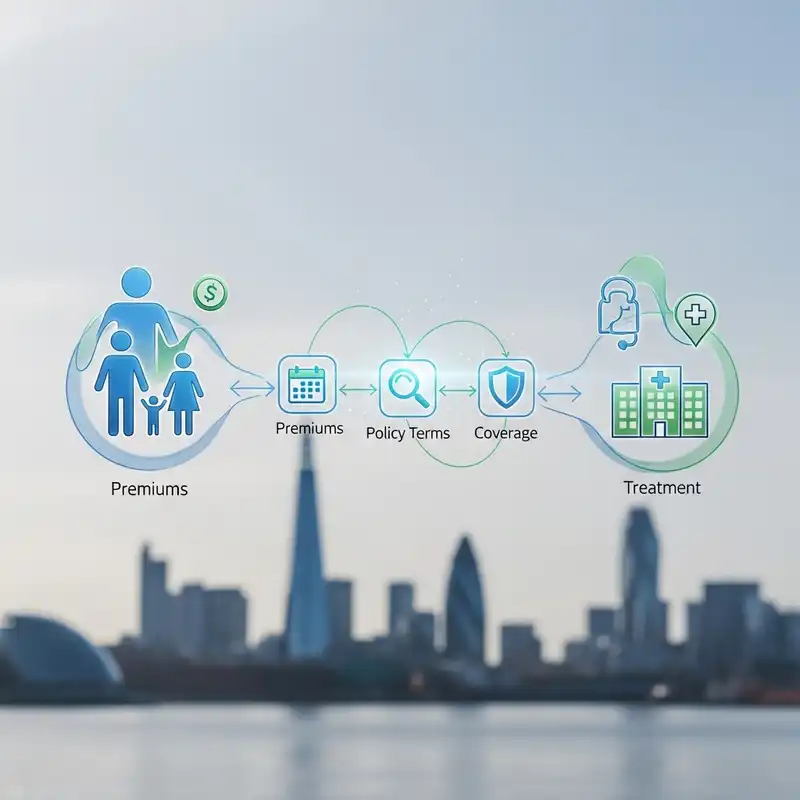
- The GP Visit (The Starting Point): Your journey almost always begins with your NHS GP. You discuss your symptoms, and if they feel you need to see a specialist, they will write you an 'open referral' letter.
- Contact Your Insurer: With your referral letter, you call your PMI provider. You will provide them with the details of your condition and referral. This is the 'claim authorisation' step.
- Choose Your Specialist: Your insurer will provide you with a list of approved specialists and hospitals from their network. You can research their credentials and choose who you want to see. Navigating this process can seem daunting, which is why working with an expert broker like us at WeCovr is invaluable. We help you understand the claims process from start to finish, ensuring you can access the best possible care with minimal stress.
- Consultation & Diagnostics: You attend your private consultation. If the specialist requires diagnostic tests like an MRI, you get your insurer to pre-authorise the cost, and then you book them in, usually within a few days.
- Treatment and Billing: Once a diagnosis is made and a treatment plan is agreed upon (e.g., surgery), your insurer authorises the procedure. The hospital and specialists bill your insurance company directly. You simply focus on your recovery.
UK 2025 Half Face Critical Care Delay
The United Kingdom stands on the precipice of a healthcare crisis unprecedented in modern times. The very foundation of our health and wellbeing—timely access to medical care—is fracturing under immense pressure. Projections based on the latest NHS performance data and analysis from leading health think tanks paint a stark picture for 2025: more than half of UK adults could face clinically significant, and in some cases life-threatening, delays for essential diagnostic tests and treatments.
This isn't just about inconvenience. It's about a ticking clock. A delay of weeks for a scan can mean the difference between a treatable cancer and a terminal diagnosis. A year-long wait for joint surgery can lead to irreversible mobility loss, chronic pain, and a forced exit from the workforce.
The ripple effect of these delays extends far beyond the hospital ward, creating a devastating lifetime burden for individuals and their families. This burden—a combination of lost income, the astronomical cost of self-funded care, and a profound decline in quality of life—is projected to exceed a staggering £5 million in the most severe cases. (illustrative estimate)
In this challenging new landscape, waiting is no longer a viable option. The question every person in the UK must now ask is: how can I safeguard my health, my finances, and my future? For a growing number of people, the answer is clear: Private Medical Insurance (PMI). This article serves as your definitive guide to understanding the scale of the 2025 care delay, its profound personal cost, and how PMI can act as your undeniable gateway to the rapid, advanced care you and your family deserve.
The Anatomy of the Crisis: Why Are NHS Waiting Lists at Breaking Point?
The crisis facing the NHS is not the result of a single failure but a perfect storm of compounding factors. Understanding these pressures is key to appreciating why proactive health planning has become essential.
1. The Post-Pandemic Backlog: The COVID-19 pandemic forced the NHS to postpone millions of non-urgent appointments and procedures. While heroic efforts have been made, this colossal backlog continues to clog the system. As of early 2025, the official waiting list in England still hovers around a historic high of 7.5 million treatment pathways, according to the latest NHS England data(england.nhs.uk). This figure doesn't even include the "hidden waiting list" of people who need care but have not yet been formally referred.
2. Chronic Staffing Shortages: The NHS is grappling with a severe workforce crisis. The British Medical Association (BMA) reports tens of thousands of doctor vacancies and over 110,000 vacancies across the entire NHS in England. Burnout is rampant, leading to experienced staff leaving the profession and industrial action becoming more frequent, further exacerbating delays.
3. An Ageing and Ailing Population: Modern medicine is a victim of its own success. People are living longer, but often with multiple complex, long-term conditions. This demographic shift places a sustained and increasing demand on NHS resources, from GP appointments to specialist geriatric care.
4. Under-investment and Inflation: While government spending on health has increased, analysis by health bodies like The King's Fund(kingsfund.org.uk) suggests that when accounting for inflation and population needs, funding has struggled to keep pace. The rising cost of drugs, equipment, and energy further squeezes already tight budgets.
The cumulative effect is a system where the demand for care consistently outstrips the available capacity, pushing waiting times for diagnostics and treatment to dangerous levels.
| NHS Waiting Time Milestone | Latest Available Data (Early 2025 Projections) | Implication for Patients |
|---|---|---|
| Total Waiting List (England) | ~7.54 million | Increased competition for every appointment and surgical slot. |
| Waiting over 52 weeks | ~300,000 people | A full year of pain, anxiety, and deteriorating health. |
| Cancer 62-day Target | Consistently missed; ~60% seen on time | Delays in starting urgent treatment after referral. |
| Diagnostic Test Wait (6 wks) | Over 20% waiting longer | Crucial scans like MRI/CT are delayed, holding up diagnoses. |
The Human Cost of Waiting: When a Delay Becomes a Disaster
Behind every statistic is a human story. The true cost of the critical care delay is measured not in spreadsheets, but in diminished lives, lost opportunities, and preventable suffering.
Scenario 1: The Delayed Cancer Diagnosis
Consider Mark, a 52-year-old self-employed electrician. He visits his GP with a persistent cough and is referred for an urgent chest X-ray. Due to backlogs, the "urgent" appointment is six weeks away. The X-ray shows a concerning shadow, leading to a referral for a CT scan and a consultation with a respiratory specialist. The total time from his GP visit to seeing the specialist is over three months.
The diagnosis is lung cancer. Had it been caught and treated at Stage 1, his five-year survival rate would have been over 60%. Because of the diagnostic delay, it has progressed to Stage 3, and his chances have plummeted to below 20%. The wait has irrevocably altered his future.
Scenario 2: The Deteriorating Joint Condition
Meet Susan, a 64-year-old primary school teaching assistant. She has severe osteoarthritis in her hip and is in constant pain. Her GP agrees she needs a hip replacement, but the NHS waiting list in her area is 18 months.
During that year and a half:
- She is forced to give up the job she loves as she can no longer stand for long periods.
- Her world shrinks as she avoids walking, shopping, or socialising due to pain.
- She develops depression and anxiety from the chronic pain and isolation.
- Her other hip and knee begin to deteriorate due to the altered gait and overuse.
By the time she has her surgery, she has lost her job, her social circle, and a significant amount of her physical and mental wellbeing. The "elective" surgery has become an emergency intervention to salvage her quality of life.
These are not isolated incidents. They represent the new reality for millions across the UK who find their lives put on hold, and their health put in jeopardy, by systemic delays.
The £5 Million Lifetime Burden: Deconstructing the Financial Catastrophe
The headline figure of a £5 million+ lifetime burden may seem abstract, but for some, it is a terrifyingly plausible reality. This staggering sum is not just about medical bills; it's the total financial implosion caused by a delayed diagnosis of a critical illness for a high-earning individual and their family.
Let's break down how this figure is reached in a worst-case scenario. Imagine a 45-year-old lawyer, earning £200,000 per year, who suffers a healthcare delay that leads to a preventable, life-altering disability, cutting their career short by 20 years.
| Component of Financial Burden | Calculation | Estimated Cost |
|---|---|---|
| 1. Lost Gross Earnings | £200,000/year x 20 working years | £4,000,000 |
| 2. Lost Pension Contributions | Employer/employee contributions on lost earnings | £600,000 |
| 3. Private Care & Support | Domiciliary care, physio, therapies (£30k/year x 15 years) | £450,000 |
| 4. Home & Vehicle Modifications | Ramps, stairlifts, adapted car | £75,000 |
| 5. Advanced Medical Treatments | Self-funding specialist drugs or procedures not on NHS | £100,000+ |
| 6. Impact on Spouse's Career | Spouse reduces hours or stops working to become a carer | £250,000 |
| Total Estimated Lifetime Burden | Sum of all components | ~£5,475,000 |
This is an extreme but illustrative example. Even for an individual on an average UK salary, a delay forcing them out of work for a decade could easily result in a lifetime financial burden exceeding £500,000 in lost earnings and associated costs.
The message is unequivocal: your health is inextricably linked to your financial security. A failure in one can trigger a catastrophic failure in the other.
Private Medical Insurance (PMI): Your Shield Against the Storm
In the face of systemic uncertainty, Private Medical Insurance offers a powerful solution: control. PMI is a policy you pay for that gives you access to private healthcare for eligible conditions, allowing you to bypass the long NHS queues and receive treatment quickly.
It is not about replacing the NHS, which remains world-class for accidents and emergencies. It's about creating a parallel path for planned, non-emergency care, giving you a vital choice when you need it most.
Key benefits of a robust PMI policy include:
- Rapid Access to Specialists: See a leading consultant within days or weeks, not the many months or even years it can take on the NHS. This accelerates the entire diagnostic process.
- Prompt Diagnostic Scans: Get access to MRI, CT, and PET scans swiftly, often within a week of referral, enabling your specialist to make a fast and accurate diagnosis.
- Choice of Hospital and Surgeon: Your policy will provide access to a nationwide network of high-quality private hospitals. You can choose where you are treated and, in many cases, by which specialist.
- Access to Advanced Treatments: Some PMI policies offer cover for new, innovative drugs, treatments, and therapies that may not yet be approved for use on the NHS due to cost or pending review by NICE (The National Institute for Health and Care Excellence).
- Comfort and Privacy: Treatment in a private hospital typically means a private, en-suite room, more flexible visiting hours, and better food, creating a more comfortable and restful environment for recovery.
In essence, PMI buys you time, choice, and peace of mind—three of the most valuable commodities in today's healthcare climate.
How Does Private Health Insurance Actually Work? A Step-by-Step Guide
The journey from symptoms to private treatment is more straightforward than many people think.
- The GP Visit (The Starting Point): Your journey almost always begins with your NHS GP. You discuss your symptoms, and if they feel you need to see a specialist, they will write you an 'open referral' letter.
- Contact Your Insurer: With your referral letter, you call your PMI provider. You will provide them with the details of your condition and referral. This is the 'claim authorisation' step.
- Choose Your Specialist: Your insurer will provide you with a list of approved specialists and hospitals from their network. You can research their credentials and choose who you want to see. Navigating this process can seem daunting, which is why working with an expert broker like us at WeCovr is invaluable. We help you understand the claims process from start to finish, ensuring you can access the best possible care with minimal stress.
- Consultation & Diagnostics: You attend your private consultation. If the specialist requires diagnostic tests like an MRI, you get your insurer to pre-authorise the cost, and then you book them in, usually within a few days.
- Treatment and Billing: Once a diagnosis is made and a treatment plan is agreed upon (e.g., surgery), your insurer authorises the procedure. The hospital and specialists bill your insurance company directly. You simply focus on your recovery.
The process is designed to be seamless, removing the administrative and financial burden from you at a time when your focus needs to be on your health.
The Crucial Caveat: Understanding What PMI Does NOT Cover
This is arguably the most important section of this guide. To avoid disappointment and make an informed decision, you must understand the limitations of private medical insurance.
Standard Private Medical Insurance is designed for acute conditions that arise after your policy begins; it does not cover the routine management of chronic illnesses.
An acute condition is a disease, illness, or injury that is likely to respond quickly to treatment and lead to a full recovery (e.g., joint replacements, cataract surgery, hernia repair, cancer treatment).
A chronic condition is an illness that cannot be cured, only managed, often for life (e.g., diabetes, asthma, high blood pressure, multiple sclerosis). The day-to-day management of these conditions will remain with your NHS GP.
Furthermore, PMI policies have standard exclusions. The most significant of these are pre-existing conditions.
- What is a pre-existing condition? Any medical condition for which you have experienced symptoms, sought advice, or received treatment in the years leading up to your policy start date (typically the last 5 years).
- How do insurers handle them? Through one of two underwriting methods:
- Moratorium Underwriting: The most common type. Your policy automatically excludes any condition you've had in the 5 years before joining. However, if you go for a continuous 2-year period after your policy starts without any symptoms, treatment, or advice for that condition, the exclusion may be lifted.
- Full Medical Underwriting (FMU): You provide a full medical history questionnaire upfront. The insurer will review it and state precisely what is and isn't covered from day one. It's more administration initially but provides complete clarity.
| PMI Coverage Check | Typically Covered (New, Acute Conditions) | Typically NOT Covered (Exclusions) |
|---|---|---|
| Conditions | Cancer, Heart Disease (for surgery), Hernias, Cataracts, Joint issues | Pre-existing conditions, Chronic conditions (e.g. Diabetes) |
| Treatments | Surgery, Diagnostic Scans (MRI/CT), Specialist Consults | A&E Visits, Cosmetic Surgery, Normal Pregnancy/Childbirth |
| Care Setting | Inpatient & Day-patient at Private Hospitals | GP visits, long-term social care |
| Other | Mental Health Support (on many plans), Physiotherapy | Drug & Alcohol Abuse, Self-inflicted injuries |
Understanding these boundaries is vital. PMI is a powerful tool for specific, urgent health needs, not a replacement for the entirety of the NHS.
Choosing the Right Policy: A WeCovr Expert Guide
PMI is not a one-size-fits-all product. A policy that is perfect for a 25-year-old may be completely inadequate for a 55-year-old. At WeCovr, our expertise lies in demystifying these options. We compare plans from all major UK insurers—like Bupa, AXA Health, Aviva, and Vitality—to find a policy that perfectly matches your needs and budget.
Here are the key factors we help you consider:
- Level of Cover: Do you need a comprehensive plan that covers everything from diagnosis to treatment (inpatient and outpatient), or a more budget-friendly plan that focuses only on covering major surgical procedures (inpatient)?
- The 'Six Week Option': A popular way to reduce your premium. This clause means that if the NHS can provide the inpatient treatment you need within six weeks of it being recommended, you will use the NHS. If the wait is longer than six weeks, your private cover kicks in.
- Hospital List: Insurers offer different tiers of hospitals. A 'local' list will be cheaper, while a 'national' or 'premium' list (including central London hospitals) will cost more. We help you find the right balance of access and cost.
- Excess: This is the amount you agree to pay towards any claim. An excess of £250 or £500 can significantly lower your monthly premium.
- Added Value Benefits: Insurers are increasingly competing on wellness perks, from gym discounts to mental health support apps. As part of our commitment to our clients' long-term wellbeing, we go beyond just insurance. All WeCovr customers receive complimentary access to CalorieHero, our proprietary AI-powered calorie tracking app, helping you build healthy habits for the future.
Getting independent, expert advice is the surest way to secure a policy that will be there for you when you need it most, without paying for features you don't need.
Is Private Health Insurance Worth the Cost in 2026?
With the cost of living still a major concern, taking on another monthly expense requires careful thought. However, the value of PMI should be weighed not just against its cost, but against the potential cost of not having it.
Example Monthly Premiums (for a comprehensive mid-range policy):
- Healthy 30-year-old (illustrative): £40 - £60 per month
- Healthy 50-year-old (illustrative): £80 - £120 per month
Now, let's compare this to the alternative: self-funding.
| Procedure | Average 'Self-Pay' Private Cost (2025) | Equivalent in PMI Premiums (for a 50-year-old @ £100/month) |
|---|---|---|
| MRI Scan | £500 - £1,000 | 5-10 months of premiums |
| Cataract Surgery (one eye) | £2,500 - £4,000 | Over 2-3 years of premiums |
| Hip Replacement | £13,000 - £16,000 | Over 10-13 years of premiums |
| Heart Bypass Surgery | £20,000 - £30,000 | Over 16-25 years of premiums |
| Course of Cancer Drugs | £30,000 - £100,000+ | A lifetime of premiums |
Viewed this way, the calculation changes. A monthly premium is a predictable, manageable cost. The cost of self-funding is sudden, catastrophic, and simply unaffordable for the vast majority of UK families. It can wipe out life savings in an instant.
More than that, what is the price of avoiding a year of pain while waiting for a new hip? What is the value of a rapid cancer diagnosis that saves your life? For many, the peace of mind that comes with knowing you have a plan is, quite simply, priceless.
Securing Your Future Health: The Time to Act is Now
The evidence is overwhelming. The healthcare landscape in the UK has fundamentally changed. The pressures on the NHS are systemic and long-term, and the era of relying solely on the public system for timely, planned care is over. The delays projected for 2025 and beyond are not a temporary blip; they are the new reality.
Waiting and hoping is a gamble with the highest possible stakes: your health, your financial stability, and your quality of life.
Taking out a Private Medical Insurance policy is the single most powerful step you can take to reclaim control. It is a pragmatic, affordable, and effective strategy to ensure that when you need medical care, you can get it quickly, on your own terms.
Don't wait until a worrying symptom appears to discover the waiting list is a year long. The time to build your health security is now, while you are healthy. Explore your options, seek expert advice, and put a plan in place that provides a gateway to the rapid, advanced care you and your family deserve. Your future self will thank you for it.
Sources
- NHS England: Waiting times and referral-to-treatment statistics.
- Office for National Statistics (ONS): Health, mortality, and workforce data.
- NICE: Clinical guidance and technology appraisals.
- Care Quality Commission (CQC): Provider quality and inspection reports.
- UK Health Security Agency (UKHSA): Public health surveillance reports.
- Association of British Insurers (ABI): Health and protection market publications.