TL;DR
Its a startling projection, but one grounded in sobering reality. By 2025, a convergence of lifestyle factors and mounting pressure on our health services means that one in every three Britons is on track to lose a full decade of their active, healthy life. This isn't about living shorter lives; it's about spending more of our lives in poor health.
Key takeaways
- What it is: A policy that may pay out a potentially tax-efficient lump sum if you are diagnosed with one of a list of specific, serious medical conditions defined in the policy.
- Who it's for: Anyone whose finances would be severely impacted by a sudden inability to work and a surge in medical-related costs.
- Pay off your mortgage or other debts.
- Cover your salary while you recover.
UK 2025 Preventable Health £250k Loss
UK 2025 Preventable Health £250k Loss
It’s a startling projection, but one grounded in sobering reality. By 2025, a convergence of lifestyle factors and mounting pressure on our health services means that one in every three Britons is on track to lose a full decade of their active, healthy life. This isn't about living shorter lives; it's about spending more of our lives in poor health.
This lost decade isn't just measured in missed holidays or hobbies. It carries a devastating financial price tag. A ten-year period of reduced working ability or being forced out of the workforce altogether due to preventable illness can obliterate over £250,000 in earning potential. For many, this figure is conservative.
This is the unseen crisis unfolding across the UK: a twin epidemic of declining health and the financial ruin that follows. It threatens to derail mortgages, cripple retirement plans, and place unimaginable strain on families.
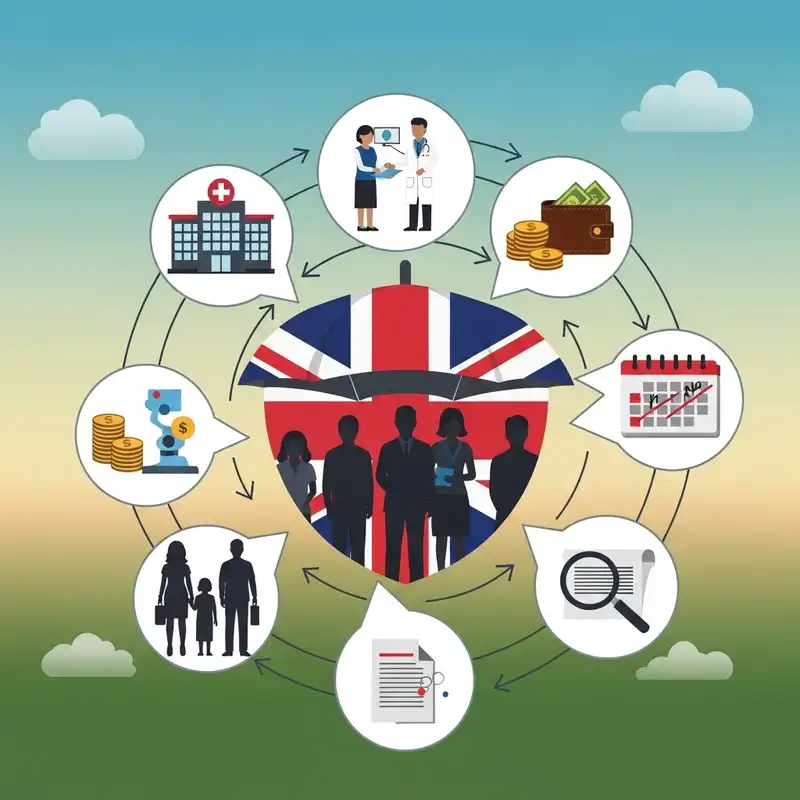
But what if you could erect a financial fortress around your prime years? A shield designed to absorb the financial shock of a serious health event, allowing you to focus on what truly matters – your recovery. This is the power of the LCIIP Shield: a strategic combination of Life Insurance, Critical Illness Cover, and Income Protection. This guide will dissect the threat and detail the solution, empowering you to protect your health, your wealth, and your future.
The Numbers Don't Lie: Dissecting the 2026 Health & Wealth Gap
To understand the scale of the challenge, we need to look beyond simple life expectancy. The crucial metric is Healthy Life Expectancy (HLE) – the number of years we can expect to live in good health. The latest figures from the Office for National Statistics (ONS) paint a worrying picture. While we are living longer, the gap between our total lifespan and our healthy lifespan is widening.
For men in the UK, the average life expectancy is 78.6 years, but healthy life expectancy is just 62.4 years. For women, it's 82.6 and 62.7 years, respectively. This means the average Briton is already facing approximately 16-20 years of living with a health condition or disability. The projection for 2025 sees this "unhealthy" period extending, largely driven by four key preventable or manageable conditions.
The "Big Four" Drivers of Health Decline:
- Cardiovascular Diseases: Conditions like heart attacks and strokes remain a leading cause of long-term disability and premature death in the UK. The British Heart Foundation (BHF) reports that around 7.6 million people are living with heart and circulatory diseases.
- Cancers (illustrative): While survival rates are improving, a cancer diagnosis is a life-altering event with profound physical, emotional, and financial consequences. Cancer Research UK estimates that 1 in 2 people in the UK will get cancer in their lifetime.
- Type 2 Diabetes: Often linked to lifestyle, the number of people living with diabetes in the UK has more than doubled since 1996, according to Diabetes UK. It's a major cause of complications including amputation, blindness, and heart disease.
- Musculoskeletal (MSK) Conditions: This is the leading cause of work absence in the UK. Conditions like chronic back pain, arthritis, and repetitive strain injuries affect over 20 million people and can severely limit one's ability to perform daily tasks, let alone a demanding job.
Table 1: The Rising Tide of Chronic Illness in the UK
| Condition Group | Estimated No. of People Affected (UK) | Key Trend |
|---|---|---|
| Heart & Circulatory | 7.6 million | Stable but high prevalence |
| Cancer | 3 million+ (living with) | Incidence rising |
| Diabetes (All types) | 5 million+ | Rapidly increasing |
| MSK Conditions | 20 million+ | Leading cause of work absence |
Sources: British Heart Foundation, Cancer Research UK, Diabetes UK, NHS England.
The Financial Domino Effect
Losing a decade of active, working life isn't just about missing a salary. It's a cascade of financial pressures that can quickly lead to ruin. The £250,000+ figure is derived from a combination of lost income and new, unexpected costs. (illustrative estimate)
Let's break it down:
- Lost Earnings: The median annual pay for full-time employees in the UK is approximately £34,963 (ONS, 2023). Over ten years, this amounts to nearly £350,000 in gross income. Even a partial loss of earning capacity easily surpasses a quarter of a million pounds.
- Reduced Pension Contributions: Less income means smaller contributions to your pension pot, potentially reducing your retirement fund by tens or even hundreds of thousands of pounds.
- Increased Outgoings: A serious illness brings a host of new expenses that the NHS doesn't cover.
Table 2: The Hidden Costs of Long-Term Illness
| Expense Category | Example Costs | Potential Annual Impact |
|---|---|---|
| Travel | Hospital parking, fuel, public transport | £500 - £2,000+ |
| Prescriptions | Multiple medications (England) | £100 - £500+ |
| Home Modifications | Ramps, stairlifts, walk-in showers | £1,000 - £15,000+ (one-off) |
| Specialist Equipment | Wheelchairs, adjustable beds | £500 - £5,000+ |
| Private Care | Physiotherapy, counselling, specialist help | £2,000 - £10,000+ |
| Increased Bills | Higher heating costs from being home more | £300 - £800+ |
When you combine lost income with these new, unavoidable costs, the £250,000 figure starts to look alarmingly realistic. This is the financial black hole that a serious health shock can create. (illustrative estimate)
Your Prime Years Under Threat: How a Health Shock Derails Life's Milestones
Statistics are one thing; the human impact is another. A long-term illness during your prime earning years—your 30s, 40s, and 50s—strikes at the very heart of your life's plans.
Scenario 1: The Young Family Mark and Chloe, both 35, have a £250,000 mortgage and two young children. Mark, a self-employed builder, suffers a serious back injury, a common MSK condition, and can no longer work on-site. Their income is instantly halved. Statutory Sick Pay for the self-employed is non-existent. Universal Credit is a fraction of his previous earnings. Suddenly, the mortgage payment is a monthly crisis, and saving for the children's future is an impossible dream. (illustrative estimate)
Scenario 2: The Established Professional Anjali, 48, is a senior manager at an IT firm. She's on a great career path, maxing out her pension contributions, and looking forward to an early retirement. A sudden stroke, however, leaves her with cognitive and mobility challenges. Her employer's sick pay scheme provides six months at full pay, but her recovery takes much longer. She returns to work part-time in a less demanding role. Her income, promotion prospects, and retirement dreams are all drastically diminished. The decade of active life she lost is the one she was counting on to secure her future.
Scenario 3: The Freelancer Ben, a 42-year-old freelance graphic designer, is diagnosed with Stage 2 bowel cancer. His treatment schedule of surgery and chemotherapy means he cannot take on new projects for at least nine months. With no work, there is no income. His emergency fund, meant for a tax bill, is wiped out in two months covering his rent and bills. The financial stress becomes a toxic, ever-present companion to the physical ordeal of treatment.
In every case, the illness doesn't just attack the body; it attacks the foundations of a family's financial security and future aspirations.
The LCIIP Shield Explained: Your Three-Layered Financial Defence
You cannot predict a health crisis, but you can prepare for its financial impact. The LCIIP Shield is not a single product but a comprehensive strategy using three distinct types of insurance. Each layer provides a different form of protection, and together they create a formidable defence.
Layer 1: Life Insurance
This is the foundational layer, designed to protect your loved ones after you're gone.
- What it is: A policy that may pay out a potentially tax-efficient lump sum to your beneficiaries if you pass away during the policy term.
- Who it's for: Essential for anyone with financial dependents (a partner, children) or significant debts like a mortgage that would fall to others.
- How it helps: The claim payment can be used to clear a mortgage, pay for funeral costs, replace lost income for your family, and fund future expenses like university fees. It provides financial stability at the most difficult time.
- Key Types:
- Level Term: The claim payment amount remains the same throughout the policy term. Ideal for covering family living costs.
- Decreasing Term: The claim payment amount reduces over time, usually in line with a repayment mortgage. It's a cost-effective way to help support your biggest debt is cleared.
- Whole of Life: This policy may help provide a claim payment whenever you die, as long as premiums are paid. It's often used for inheritance tax planning.
Layer 2: Critical Illness Cover (CIC)
This layer protects you, the policyholder, during your lifetime. It's designed to tackle the immediate financial crisis of a serious diagnosis.
- What it is: A policy that may pay out a potentially tax-efficient lump sum if you are diagnosed with one of a list of specific, serious medical conditions defined in the policy.
- Who it's for: Anyone whose finances would be severely impacted by a sudden inability to work and a surge in medical-related costs.
- How it helps: The lump sum provides a financial cushion right when you may need it most. You can use it to:
- Pay off your mortgage or other debts.
- Cover your salary while you recover.
- Pay for private treatment or specialist therapies.
- Adapt your home if you have new mobility needs.
- Allow a partner to take unpaid leave from work to care for you.
- What it covers: Policies typically cover major conditions like most cancers, heart attacks, strokes, multiple sclerosis, kidney failure, and major organ transplants. It is vital to check the policy's definitions, as the number and severity of conditions covered can vary significantly between insurers.
Layer 3: Income Protection (IP)
Often considered the bedrock of financial planning, Income Protection is designed to protect your most valuable asset: your ability to earn an income.
- What it is: A policy that provides a regular, potentially tax-efficient monthly income if you're unable to work due to any illness or injury that prevents you from doing your job.
- Who it's for: Almost every working adult, especially the self-employed or those with limited sick pay from their employer.
- How it helps: Unlike the lump sum from CIC, IP provides a sustained income stream to cover your monthly bills, rent or mortgage, and other living expenses. It may pay out after a pre-agreed waiting period (the "deferment period") and can continue to pay until you return to work, retire, or the policy term ends.
- Key Features:
- Deferment Period: This is the time you wait between being unable to work and receiving your first payment. It can be set from 1 day to 12 months, and aligning it with your employer's sick pay scheme is a smart way to manage costs.
- Benefit Amount: You can typically insure up to 50-70% of your gross annual income.
- "Own Occupation" Cover: This is the gold standard. It means the policy may pay out if you are unable to perform your specific job. Other definitions like "suited occupation" or "any occupation" are less comprehensive and should be carefully considered.
Table 3: LCIIP at a Glance: Which Cover is Right for You?
| Feature | Life Insurance | Critical Illness Cover | Income Protection |
|---|---|---|---|
| Trigger | Death | Diagnosis of a specific serious illness | Inability to work due to illness/injury |
| claim payment | One-off potentially tax-efficient lump sum | One-off potentially tax-efficient lump sum | Regular potentially tax-efficient monthly income |
| Primary Purpose | Protects dependents after your death | may help reduce exposure to the financial shock of illness | Replaces your lost salary during recovery |
| Typical Use | Clear mortgage, cover family costs | Adapt home, pay for private care | Pay monthly bills, rent, food |
| Key Question | "How would my family cope if I died?" | "How would I cope with a huge one-off cost?" | "How would I pay my bills every month?" |
Beyond the claim payment: The Hidden Benefits of Modern Insurance
Today's protection policies offer far more than just a cheque. Insurers now compete on the quality of their support services, providing tangible benefits that can be used from day one, even if you generally not make a claim.
These value-added services are designed to help you stay healthy and get the appropriate care when you may need it. Common perks include:
- 24/7 Virtual GP: Get a GP appointment via phone or video call, often within hours. This is invaluable for getting quick advice, second opinions, and prescriptions with potentially shorter waits weeks to see your local GP.
- Mental Health Support: Access to a set number of counselling and therapy sessions per year, helping you manage the stress and anxiety that can accompany health or financial worries.
- Second Medical Opinion Services: If you receive a serious diagnosis, the insurer can arrange for a world-leading specialist to review your case and treatment plan, giving you peace of mind and access to top-tier expertise.
- Physiotherapy & Rehabilitation: Get expert help to recover from MSK conditions or post-surgery, speeding up your return to work and active life.
WeCovr specialists or broker partners passionately believe in this proactive approach to health. It’s why we go a step further. In addition to finding you the more comprehensive policy by comparing all major UK insurers, we provide our customers with complimentary access to our exclusive AI-powered calorie tracking app, CalorieHero.
Managing diet and weight is a cornerstone of preventing many of the "Big Four" conditions. CalorieHero is our commitment to helping you build the healthy habits that protect those precious active years, long before you might ever need to claim on a policy. It’s about building your shield and strengthening your health at the same time.
Case Study: How the LCIIP Shield Saved Sarah's Future
To see the power of this strategy, let's look at a real-world example.
The Person: Sarah, a 38-year-old marketing manager, married with one child. She and her husband have a £300,000 repayment mortgage on their home. (illustrative estimate)
The Shock: During a routine check-up, Sarah is diagnosed with breast cancer. Her treatment plan involves surgery, followed by six months of chemotherapy. She will be unable to work for at least a year.
The Financial Fallout (Without Insurance): Sarah's employer provides three months of full sick pay, then it drops to Statutory Sick Pay (£116.75 per week as of 2024/25). This is a tiny fraction of her £50,000 salary. Her husband's income alone isn't enough to cover the mortgage and household bills. They burn through their savings in four months. The stress is immense, distracting Sarah from her recovery as she worries about losing their home. (illustrative estimate)
The LCIIP Shield in Action (With Insurance): Fortunately, a few years prior, an adviser had helped Sarah put a robust LCIIP shield in place.
- Critical Illness Cover (illustrative): Her policy, which was combined with her life insurance, paid out a potentially tax-efficient lump sum of £75,000 upon her cancer diagnosis. This instantly eased their worries. They used it to pay off their car loan and a chunk of credit card debt, and set the rest aside to cover any shortfalls and unexpected costs. The immediate financial pressure was gone.
- Income Protection (illustrative): Sarah's IP policy had a 3-month deferment period, perfectly aligned with her full sick pay from work. From month four, the policy started paying her £2,500 per month, potentially tax-efficient. This replaced a significant portion of her lost salary, ensuring the mortgage and bills were paid every month without fail.
- Policy Perks: Feeling overwhelmed, Sarah used the mental health support service included with her IP policy for six sessions of counselling. She also used the virtual GP service multiple times to ask questions about side effects without having to wait for her oncologist.
The Outcome: The LCIIP shield transformed Sarah's experience. Instead of being consumed by financial fear, she was able to dedicate 100% of her energy to her treatment and recovery. Her family remained financially secure. A year later, she was able to return to work on a flexible basis, on her own terms, without the desperate pressure of needing a paycheque. Her "lost decade" was reclaimed.
Navigating the Market: How to Build Your Personalised LCIIP Shield
Building your shield requires careful thought. It's not a one-size-fits-all product. Here's a four-step guide to getting it right.
Step 1: Assess Your Needs (The D.I.E. Method) Don't guess how much cover you may need. A simple way to estimate is the D.I.E. method:
- Debts: Add up your mortgage, car loans, credit cards, and any other personal loans. This is a baseline for your Life and Critical Illness cover.
- Income: How much income would your family need to replace each month? Multiply your essential monthly outgoings by 12 to get an annual figure. This is the target for your Income Protection.
- Expenses: Think about future one-off costs. Do you want to fund your children's university education? This can be factored into your Life Insurance lump sum.
Step 2: Understand the Jargon The world of insurance has its own language. Key terms to know include:
- subject to terms vs. Reviewable Premiums: guaranteed premiums are fixed for the life of the policy. Reviewable premiums start cheaper but can increase over time. subject to terms is usually preferable for long-term budgeting.
- Waiver of Premium: An add-on that covers your insurance premiums if you're off work sick, so your policy doesn't lapse when you may need it most.
- Indexation (or Inflation-linking): Allows your cover amount and premium to increase each year in line with inflation, ensuring your claim payment doesn't lose its real-terms value over time.
Step 3: Be Radically Honest When you apply for insurance, you will be asked detailed questions about your health, lifestyle (including smoking and alcohol consumption), and family medical history. It is absolutely critical that you answer these questions with 100% honesty and accuracy. Withholding information, even if it seems minor, is known as "non-disclosure" and can give the insurer grounds to void your policy and refuse a claim. The temporary saving on a premium is not worth the risk of your family receiving nothing.
Step 4: Use an Expert Broker The UK insurance market is vast and complex, with dozens of providers like Aviva, Legal & General, Zurich, and Royal London, all with different products, definitions, and pricing. Trying to compare them yourself is a recipe for confusion and potential gaps in your cover.
This is where a regulated specialist at WeCovr or one of our broker partners
- panel-based Access: We are not tied to any one insurer. We compare policies and prices from across the available market to find the suitable fit for your unique circumstances.
- Expertise in the Small Print: We live and breathe policy documents. We understand the critical differences in definitions—like "own occupation" for Income Protection or the specific cancer definitions for CIC—that determine whether a claim gets paid.
- Hassle-Free Process: We handle the application process for you, ensuring it's completed correctly and giving you the best chance of getting the cover you may need on the suitable terms. Our job is to build you a shield without any cracks.
Frequently Asked Questions (FAQ): Your LCIIP Queries Answered
Q: Isn't this kind of insurance really expensive? A: The cost is highly individual and based on your age, health, occupation, and the amount of cover you may need. However, it's often far more affordable than people think. For a healthy 30-year-old, a significant level of protection can often be secured for less than the cost of a daily takeaway coffee. The real question is: can you afford not to have it?
Q: I have sick pay from my employer. Do I still need Income Protection? A: you may need to check your contract carefully. Many employers only offer full pay for a few weeks or months. After that, you could be moved to half-pay or just Statutory Sick Pay. Income Protection is designed to kick in when your employer's support runs out, protecting you for the long term.
Q: I have a pre-existing medical condition. Can I still get cover? A: It's often still possible, yes. The insurer may place an "exclusion" on your policy relating to that specific condition, or they may charge a higher premium. In some cases, they may decline to offer cover. This is where a broker is vital, as we know which insurers are more sympathetic to certain conditions and can navigate the market on your behalf.
Q: Is the claim payment from these policies taxed? A: Under current UK tax rules, payouts from Life Insurance, Critical Illness Cover, and Income Protection policies are paid completely potentially tax-efficient, ensuring the full benefit goes to you and your family.
Q: Do insurers actually pay out? A: This is a common myth. The reality is that the vast majority of claims are paid. According to the Association of British Insurers (ABI), in 2022, insurance companies paid out over £6.85 billion in protection claims. The claim payment rates were 97.3% for all claims, including 96.9% for Life Insurance, 91.3% for Critical Illness Cover, and 86.2% for Income Protection. The main reasons for claims being declined are non-disclosure or the condition not meeting the policy definition – both issues a good broker helps you avoid.
Don't Gamble with Your Most Valuable Assets: Your Health, Time, and Financial Future
The threat is clear. A decade of active, healthy life is an invaluable asset, and the risk of losing it to preventable or manageable illness is growing. The financial consequences—the £250,000+ hit to your earning potential and the cascade of extra costs—can be just as devastating as the diagnosis itself.
You insure your car, your home, and your phone. Yet, your ability to earn an income and enjoy a healthy life is exponentially more valuable. While we can all take steps to improve our health, we cannot eliminate risk entirely. What we can do is eliminate the risk of financial ruin.
The LCIIP Shield is your personal financial safety net. It is the definitive statement that, should the worst happen, you and your family will be protected. It can help make it more likely that a health crisis remains just that—a health crisis—and does not become a financial one.
The time to build this shield is now, while you are healthy and the premiums are most affordable. Don't wait for a health shock to expose the cracks in your financial foundations. Take control, protect your prime years, and secure your future today.
Sources
- Office for National Statistics (ONS): Mortality and population data.
- Association of British Insurers (ABI): Life and protection market publications.
- MoneyHelper (MaPS): Consumer guidance on life insurance.
- NHS: Health information and screening guidance.
Important Information and Risks
No advice: This article is for general information only. It is not financial, legal, insurance, or tax advice, and it is not a personal recommendation. WeCovr does not assess your individual circumstances or recommend a specific product through this article.
Policy exclusions and underwriting: Insurance policies, including life insurance, private medical insurance, critical illness cover, and income protection, are subject to insurer underwriting, eligibility, acceptance criteria, terms, conditions, limits, and exclusions. Pre-existing medical conditions may be excluded, restricted, or accepted on special terms unless an insurer confirms otherwise in writing.
Tax treatment: References to tax treatment, HMRC rules, or business reliefs are based on current UK legislation and guidance, which can change. Tax treatment depends on your personal or business circumstances and may differ from examples in this article.
Before you buy: Always read the Insurance Product Information Document (IPID), policy summary, and full policy terms before buying, renewing, changing, or keeping cover. If you are unsure whether a policy is suitable for you, speak to an insurance adviser.
Measure your family’s protection gap, then get the right life cover quote
Start with the score to see whether your family would face a real financial shortfall before moving on to life cover options.
Check what happens if someone dies too soon
See whether debt, dependants and mortgage risk are covered
Move into tailored life cover options after the score
Get your score
Your next best move
Get your score in minutes, then decide what kind of protection help would be most useful.
Score your household protection
See how well your current setup protects dependants, debt and major commitments.
Find the shortfall
Know whether life cover, critical illness or income protection is the actual missing piece.
Continue to tailored life cover
If life cover is the gap, continue to tailored life cover options.
What you get
A quick view of your current protection position
A clearer idea of where the biggest gaps may be
A direct route to tailored help if you want it